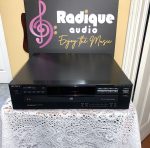
Large, Budget Friendly Kenwood Center Speaker CS-01
$45.00
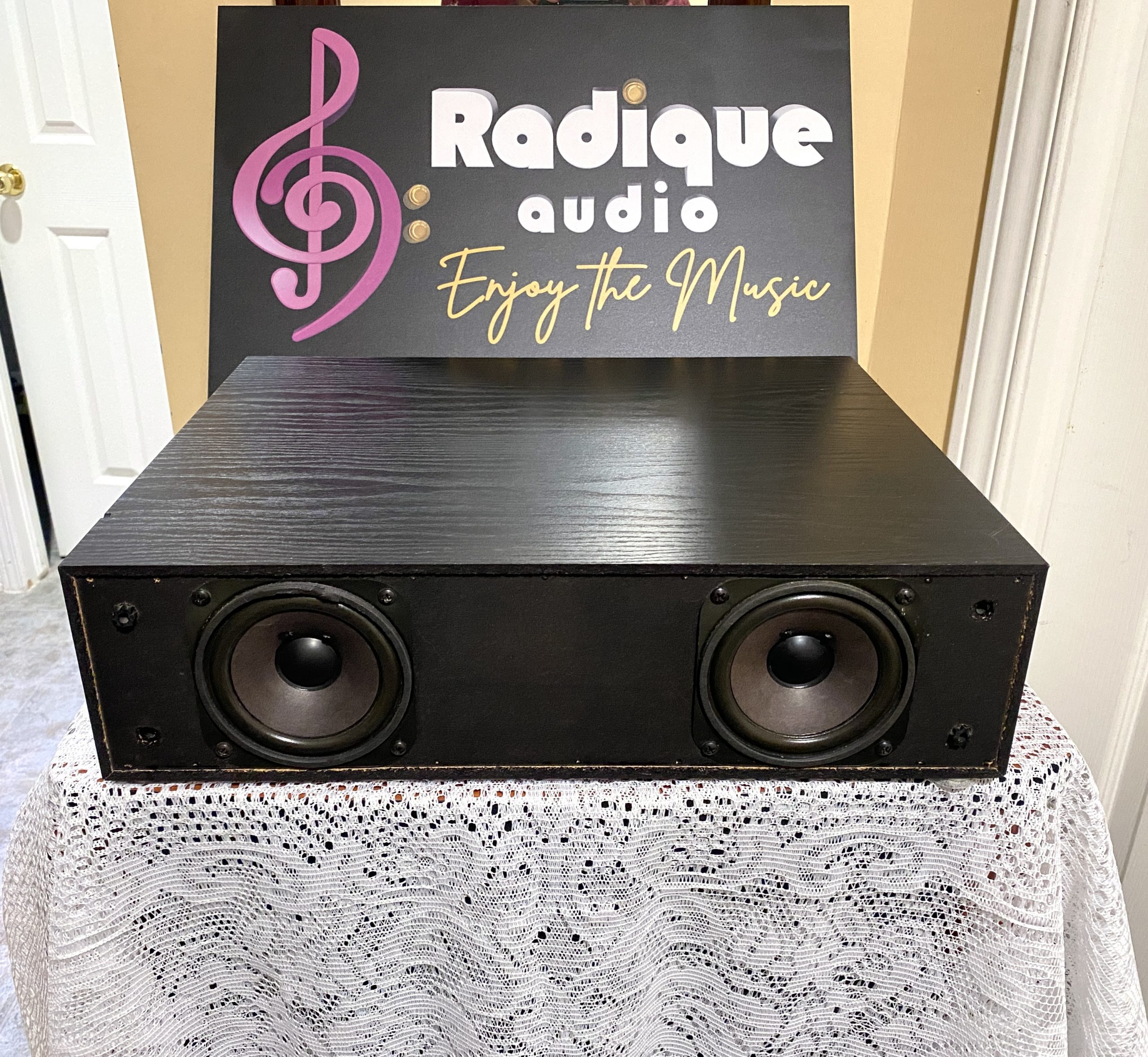
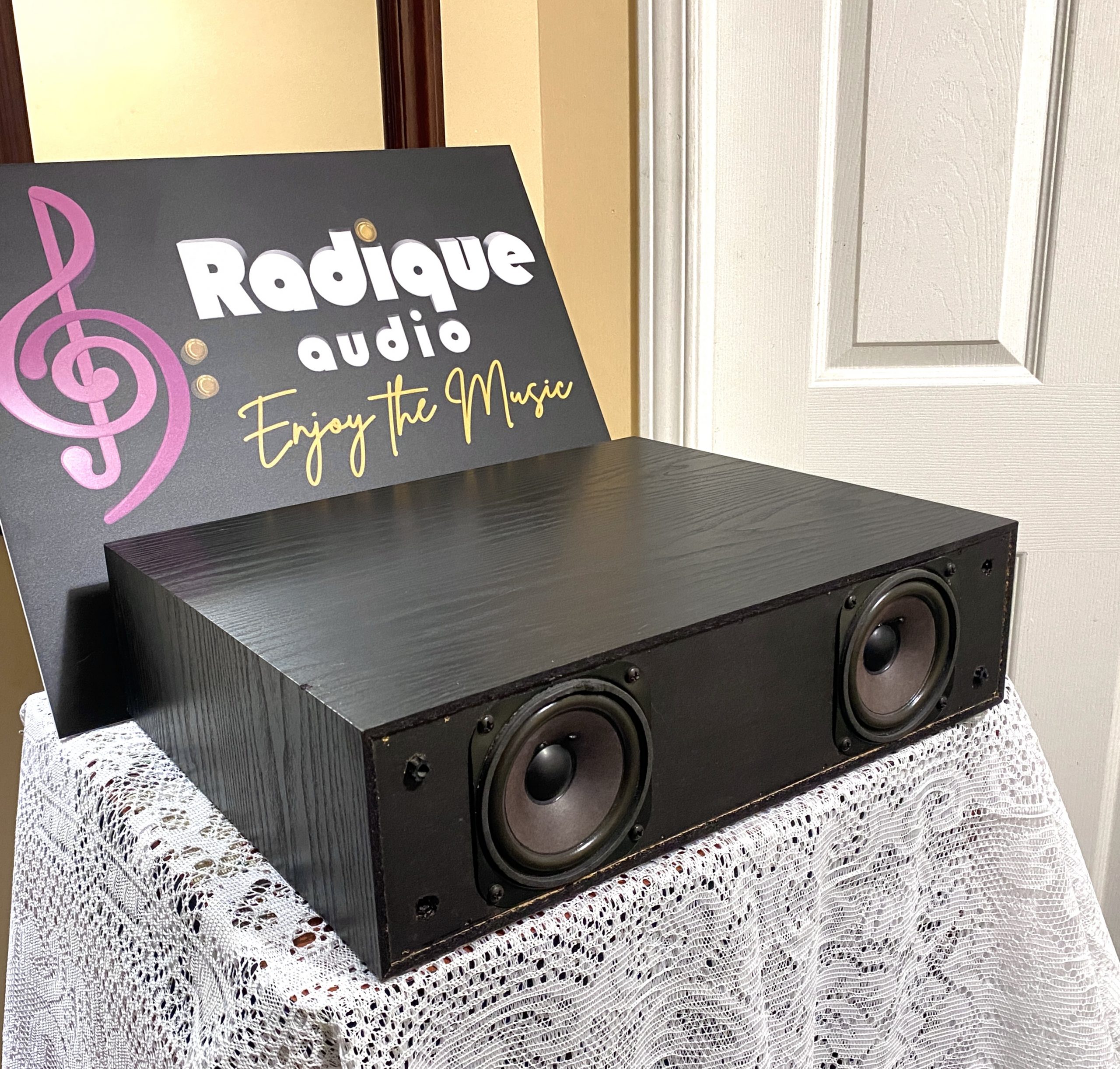
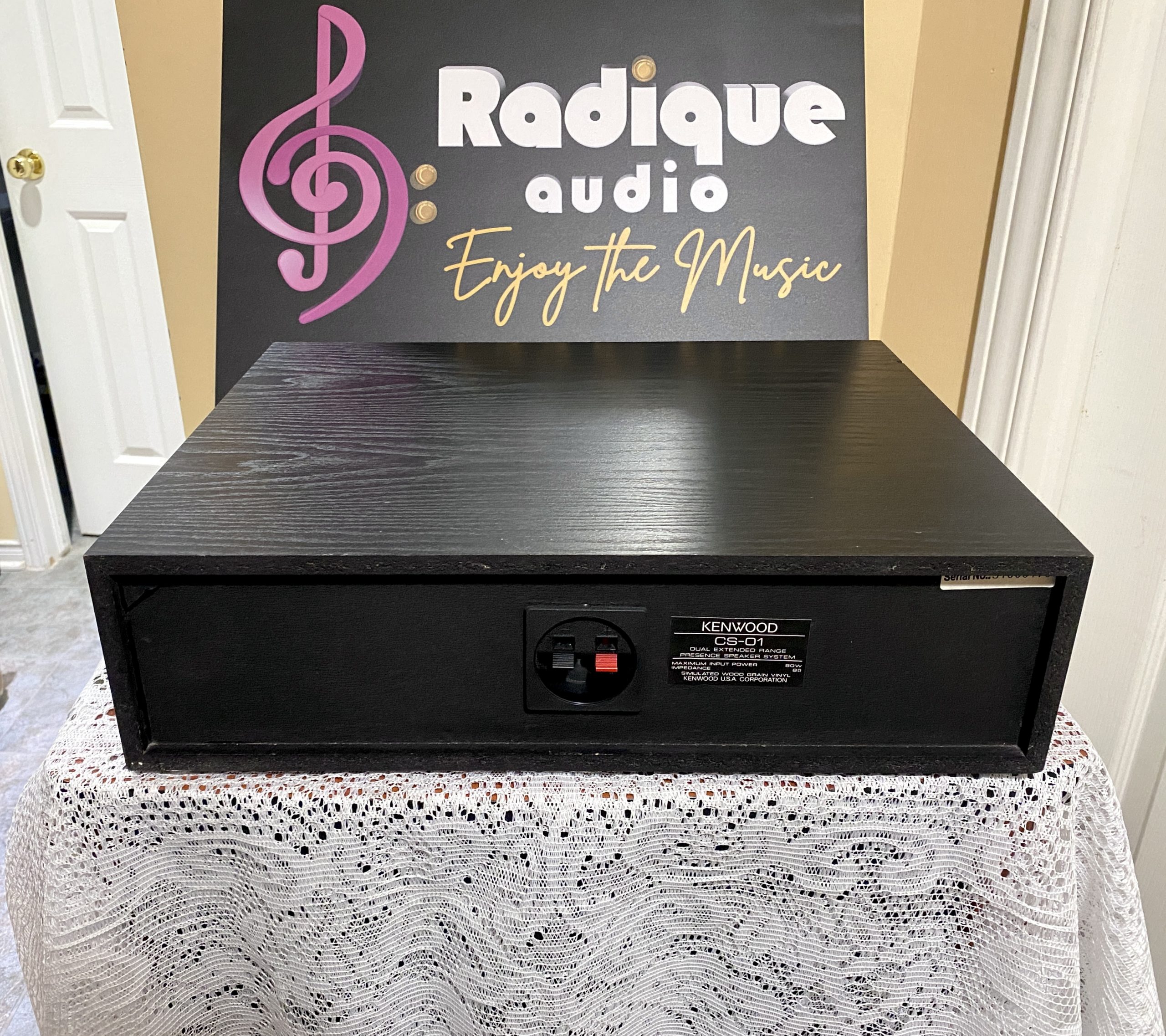
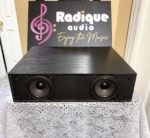
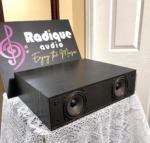
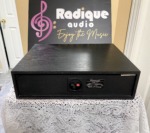
The unusually deep cabinet was not a styling decision — it was built as a platform for a CRT television to stand on, and it will still take a flat screen or a stack of components. Seventeen inches wide by fourteen deep and only 4.75 tall, about 10 lbs, rated 80 watts at 8 ohms. Tested and working nicely.
1 in stock
Large, Budget Friendly Kenwood Center Speaker
This unusually deep cabinet shape was originally designed as a suitable platform for a CRT Television, and can still be used under a flat screen monitor, or below stacked stereo components.
Rated for 80 Watts at 8 Ohms Impedance.
Dimensions: 17″ W x 14″ D x 4.75″ H
Weight: ~10 lbs (4.5 kg)
Asking just $45 for this large Kenwood Center speaker, tested and working nicely.
| Weight | 12 lbs |
|---|---|
| Dimensions | 18 × 21 × 8.75 in |
Kenwood began in 1946 as Kasuga Radio in Nagano Prefecture, Japan. As Trio, it sold its products in America under the Kenwood name, and took that name worldwide in 1986. We carry Kenwood stereo receivers and AV receivers, power amplifiers, preamplifiers, tuners and CD players. We've had nearly 60 Kenwood listings so far, covering about 50 different models. Every used Kenwood here is inspected, tested and serviced as required, then photographed in-house and covered by our Bumper-to-Bumper Warranty and Perpetual Trade-Back Program. Don't see the model you want? Tell us on First Dibs and we'll email you when one arrives.
Kenwood models we've sold more than once include the KM-208 power amplifier and the KA-550D integrated amplifier.
The Kenwood story, 1946 to today
Kasuga Radio was founded in 1946 in Nagano Prefecture, Japan, making radio components, and opened a mass-production plant in Tokyo in 1955. It was renamed Trio around 1960.
Where the name came from. Kenwood was coined in America. Bill Kasuga and George Aratani set up Kenwood Electronics in the early 1960s to sell Trio products in the US, and Kasuga said he chose "Ken" because it works as both a Japanese and an American name. Trio later bought Kenwood Electronics, and in 1986 the whole company became Kenwood Corporation.
The hi-fi years. Trio-Kenwood built KR receivers through the 1970s, the KA-1000 integrated amplifier with heat-pipe cooling in 1980, and late-1980s amplifiers with Sigma Drive, which takes the feedback loop out to the speaker terminals. The KR-A receivers ran from the mid 1980s to the mid 1990s.
Today. Kenwood merged with JVC between 2008 and 2011, and JVCKENWOOD Corporation now owns the brand. In Canada, Kenwood today sells car audio, two-way radios and earbuds rather than home hi-fi.
Which Kenwood is which?
1970s KR receivers: such as the KR-2600 of 1976 to 1978, at 15 watts per channel.
KA integrated amps: the KA-1000 of 1980, and the late-1980s "D" models such as the KA-990D, KA-880D and KA-550D, with Sigma Drive.
Power amps and separates: such as the KM-208 power amp of 1987 to 1988, the high-end L-series, and the Basic M and C separates.
KR-A receivers (1984 to 1996) and later AV receivers such as the KRF-A 4020 of 1999.
Tuners and CD players: KT tuners and DP CD players and changers.
You may also like…
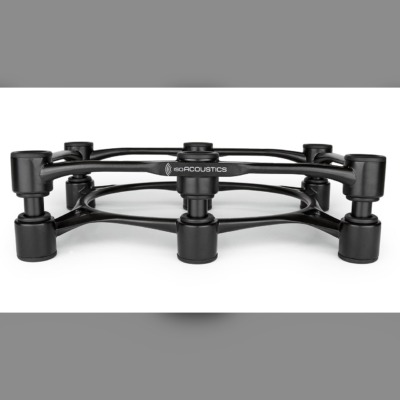

IsoAcoustics Aperta 300 Center Channel Isolation Stand
- ✔️ Genuine IsoAcoustics Aperta 300 center channel isolation stand, brand new in box
- ✔️ Single stand for center-channel speakers and similar applications up to 60 lbs (27.2 kg)
- ✔️ Available in Black or Silver with up to 6.5 degrees of tilt adjustment
- ✔️ Helps reduce cabinet resonance and improve clarity, focus, and dialogue intelligibility
- ✔️ Backed by a 2-year manufacturer's warranty in Canada
Related Products
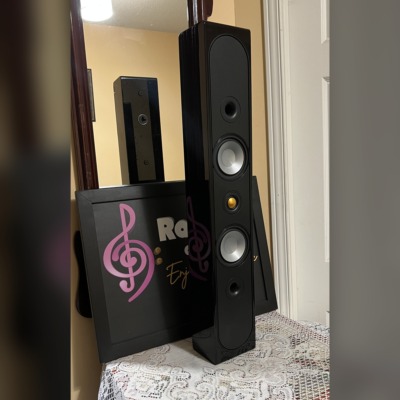
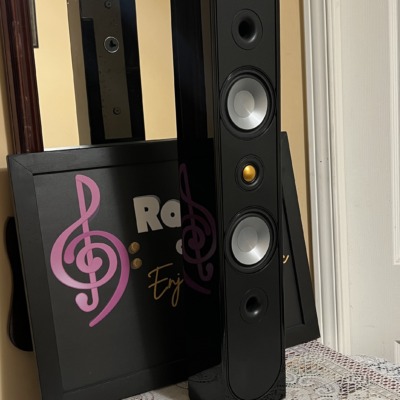
Monitor Audio Radius 250HD LCR Speaker – Gloss Black, Wall-Mount
A slim gloss black Monitor Audio speaker from the Radius HD range, in good condition, built to work as a left, center, right or rear speaker, standing upright, lying flat or hung on a wall.
✔️ Good condition — light scratches visible under bright light; grille included
✔️ One slim speaker for left, center, right or rear duty
✔️ Two rear keyhole slots; the matching wall bracket is listed separately
✔️ Covered by Radique Warranty
✔️ Includes Perpetual Trade-Back Program eligibility
✔️ Expertly packed for safe shipping
Monitor Audio Radius 250HD LCR Speakers, Pair – Gloss Black
A matched pair of slim gloss black Monitor Audio speakers from the Radius HD range, in good condition, each built to work as a left, center, right or rear speaker, standing upright, lying flat or hung on a wall.
✔️ Good condition — light scratches visible under bright light; grilles included
✔️ Two slim speakers for a stereo pair, left and right of a center, or a set of rears
✔️ Two rear keyhole slots on each; the matching wall bracket is listed separately
✔️ Covered by Radique Warranty
✔️ Includes Perpetual Trade-Back Program eligibility
✔️ Expertly packed for safe shipping
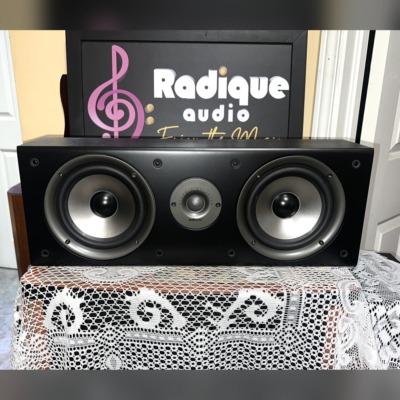
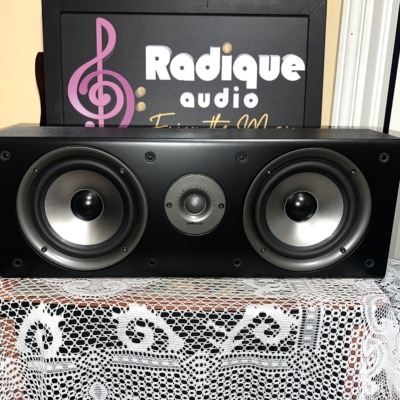
Polk CS2 Series II Center Channel Speaker – Dual 6.5″ Woofers
A Polk Audio Monitor CS2 Series II center channel speaker in black, with dual 6½-inch woofers for full-bodied, clear dialogue. It has been tested on our bench and is in very good condition.
✔️ Very good condition — black wood-grain, black cloth grille included
✔️ Dual 6½-inch Dynamic Balance woofers for clear, full-bodied dialogue
✔️ 90 dB, 8 ohms, magnetically shielded — tested on our bench
✔️ Covered by Radique Warranty
✔️ Includes Perpetual Trade-Back Program eligibility
✔️ Expertly packed for safe shipping
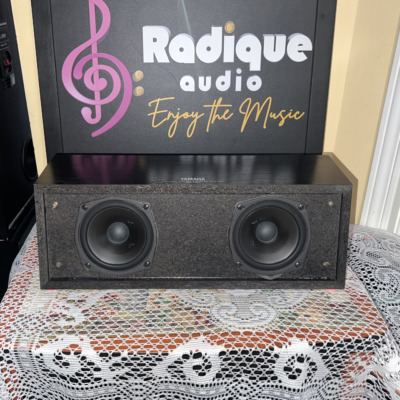
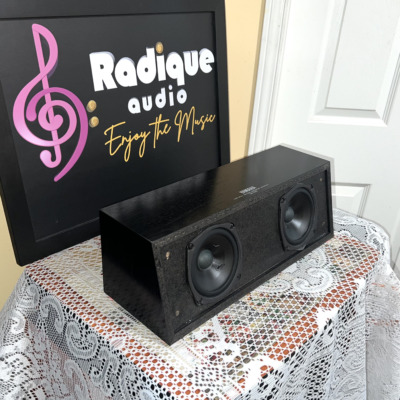
Yamaha NS-C90 Center Speaker – Dual-Angle Tilt, Made in Japan
The cabinet is asymmetrical on purpose: flip it over and it tilts the other way, aiming up at you from a low shelf or down at you from the top of a cabinet. Sealed rather than ported, so it needs no rear clearance. Two full-range drivers, nothing crossing in the vocal band. 6 ohms, 50 watts nominal. Built in Japan; very good condition.
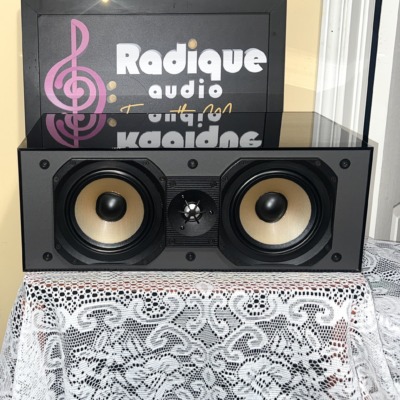
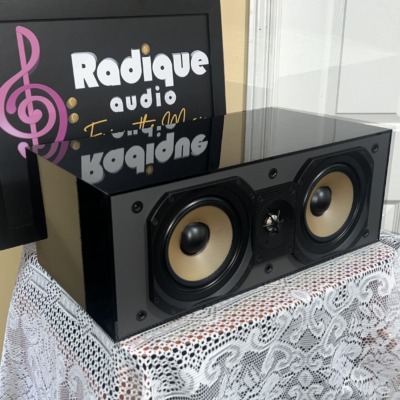
Paradigm Reference LCR-450 — Made in Canada, High Gloss Black
A Canadian-built Reference monitor in a high gloss black we have not had this model in before — the line of this era usually turns up in black, light cherry or dark rosenut. Sealed MTM design with Paradigm's pure-aluminium dome tweeter, and it works as a centre or as a left or right. Excellent, with its original box.
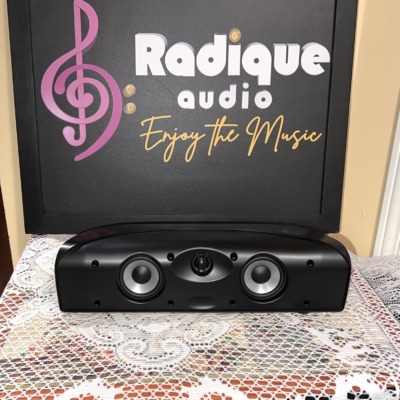
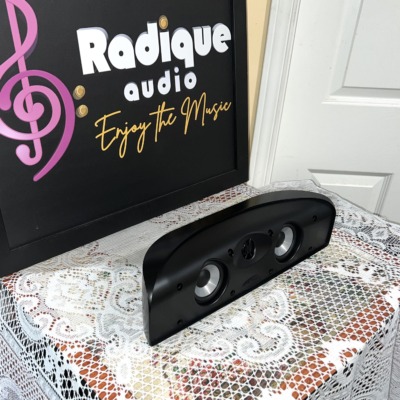
Polk Audio Blackstone TL1 Center Channel Speaker – Gloss Black
A slim, wall-mountable center channel from Polk Audio's Blackstone series, in very good condition, that gives movie dialogue the clarity and presence it deserves.
✔️ Very Good condition — cabinet, baffle and drivers present cleanly; grille included
✔️ Slim and wall-mountable — keyhole slots and a threaded insert on the back
✔️ Covered by Radique Warranty
✔️ Includes Perpetual Trade-Back Program eligibility
✔️ Expertly packed for safe shipping
