
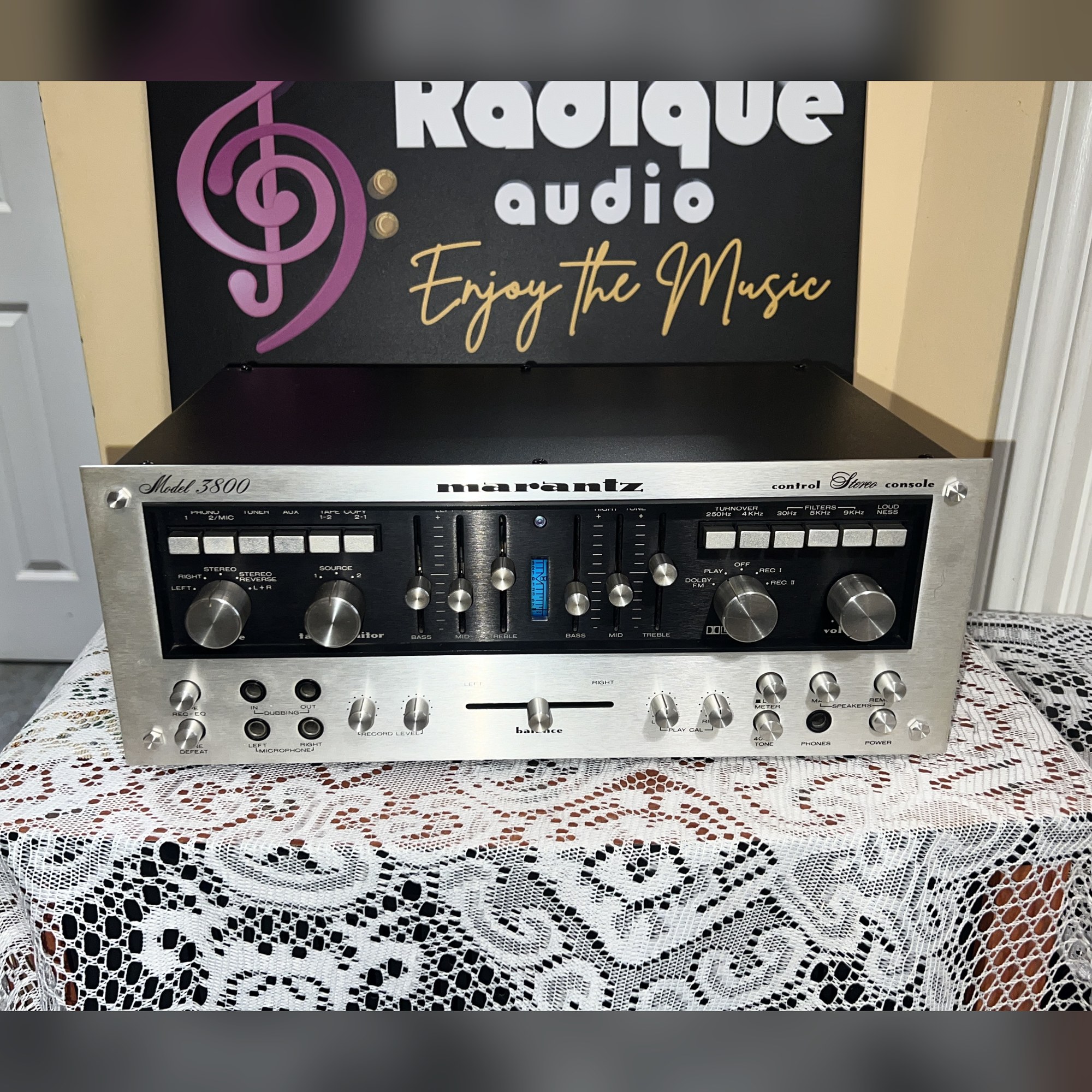
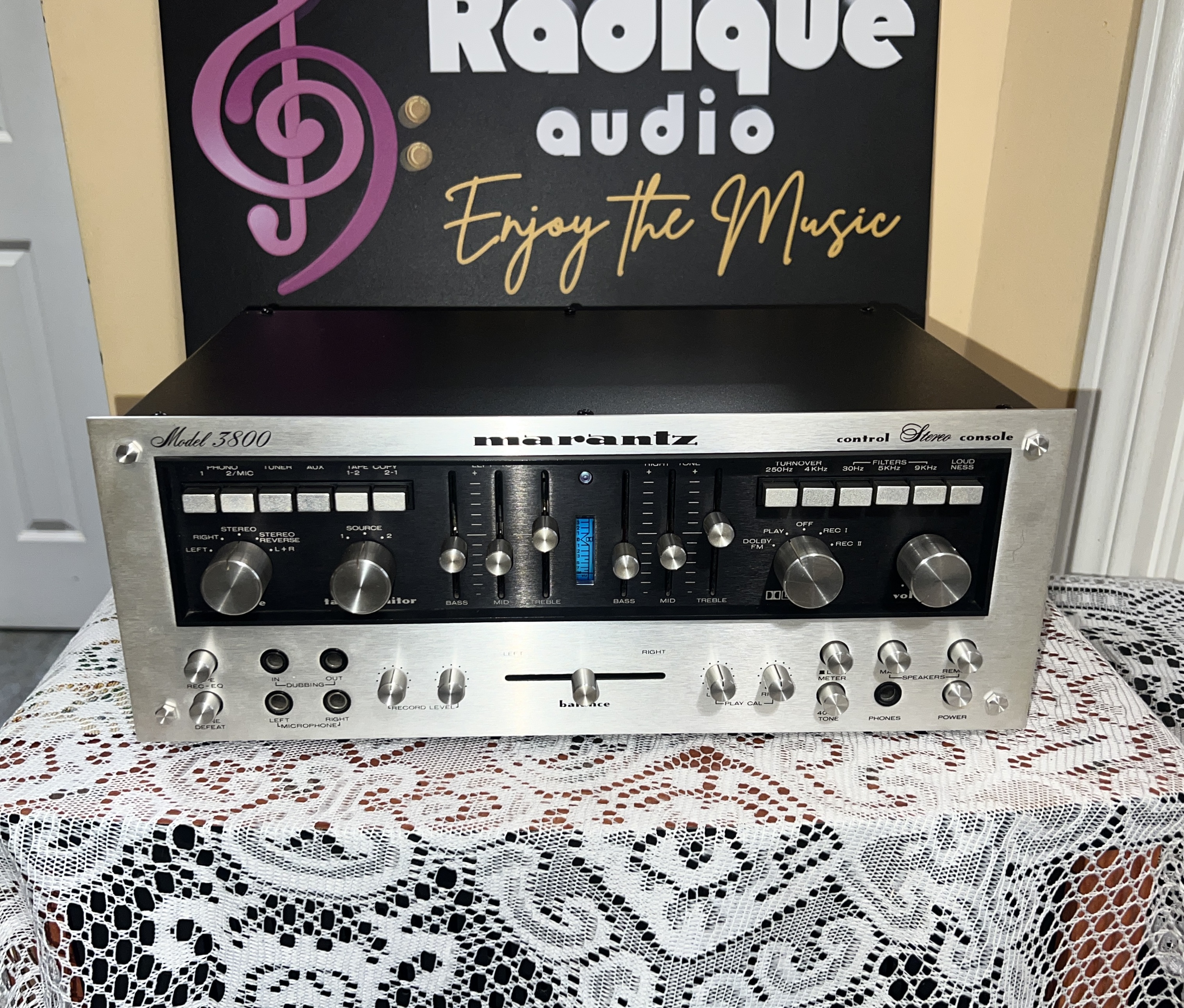
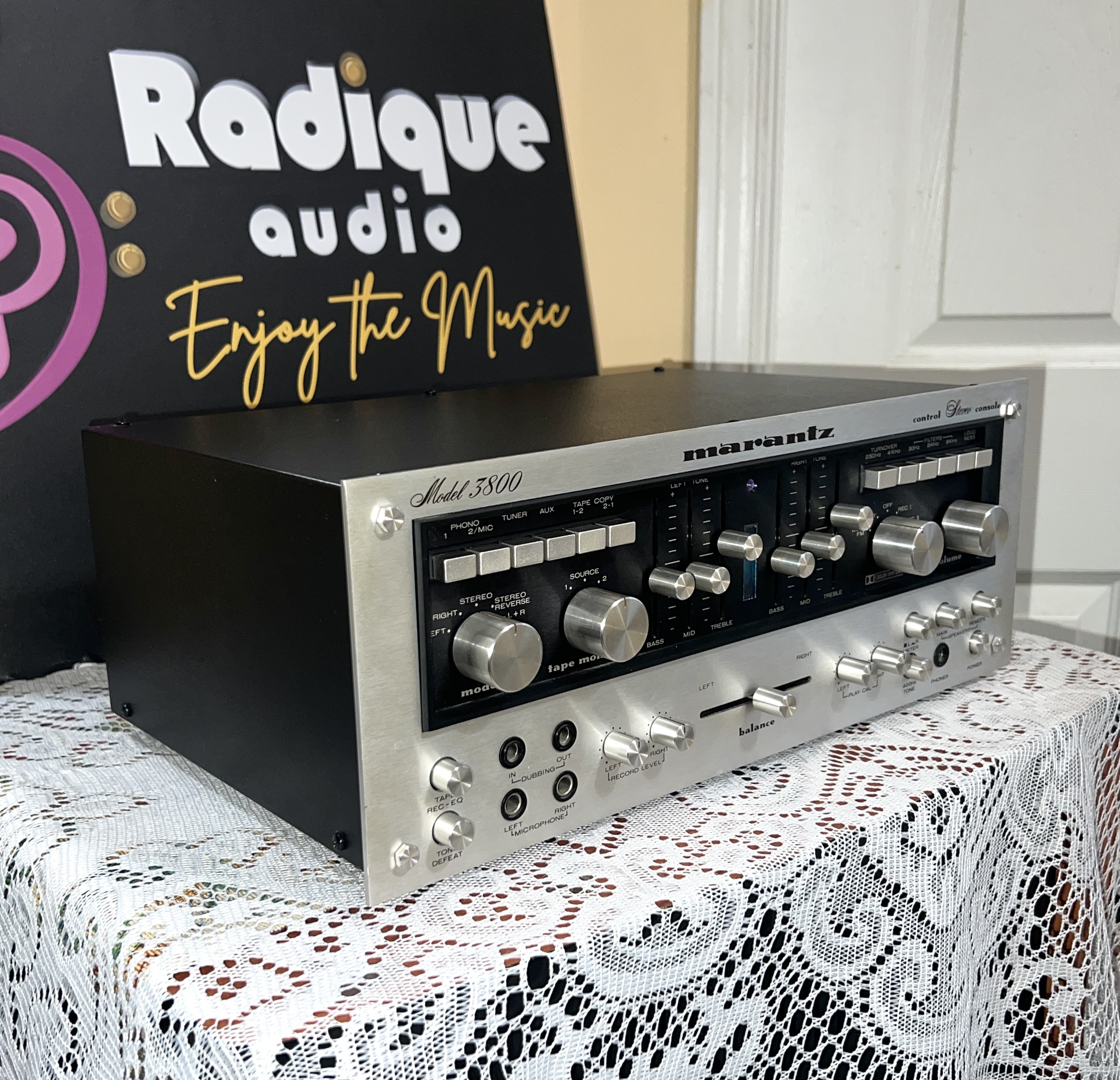


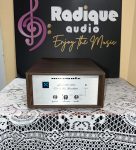
Marantz 3800 Audiophile Preamp – Made in USA
$1,495.00
- ✔️ Marantz Model 3800 preamplifier — precision built in the USA, 1976–78
- ✔️ 5Hz–60kHz, THD 0.25%, S/N 100dB line and 82dB MM phono
- ✔️ Built-in Dolby encoder/decoder with calibration metering and 400Hz tone generator
- ✔️ Independent L/R bass, mid and treble sliders, turnover selectors, three filters, tone defeat
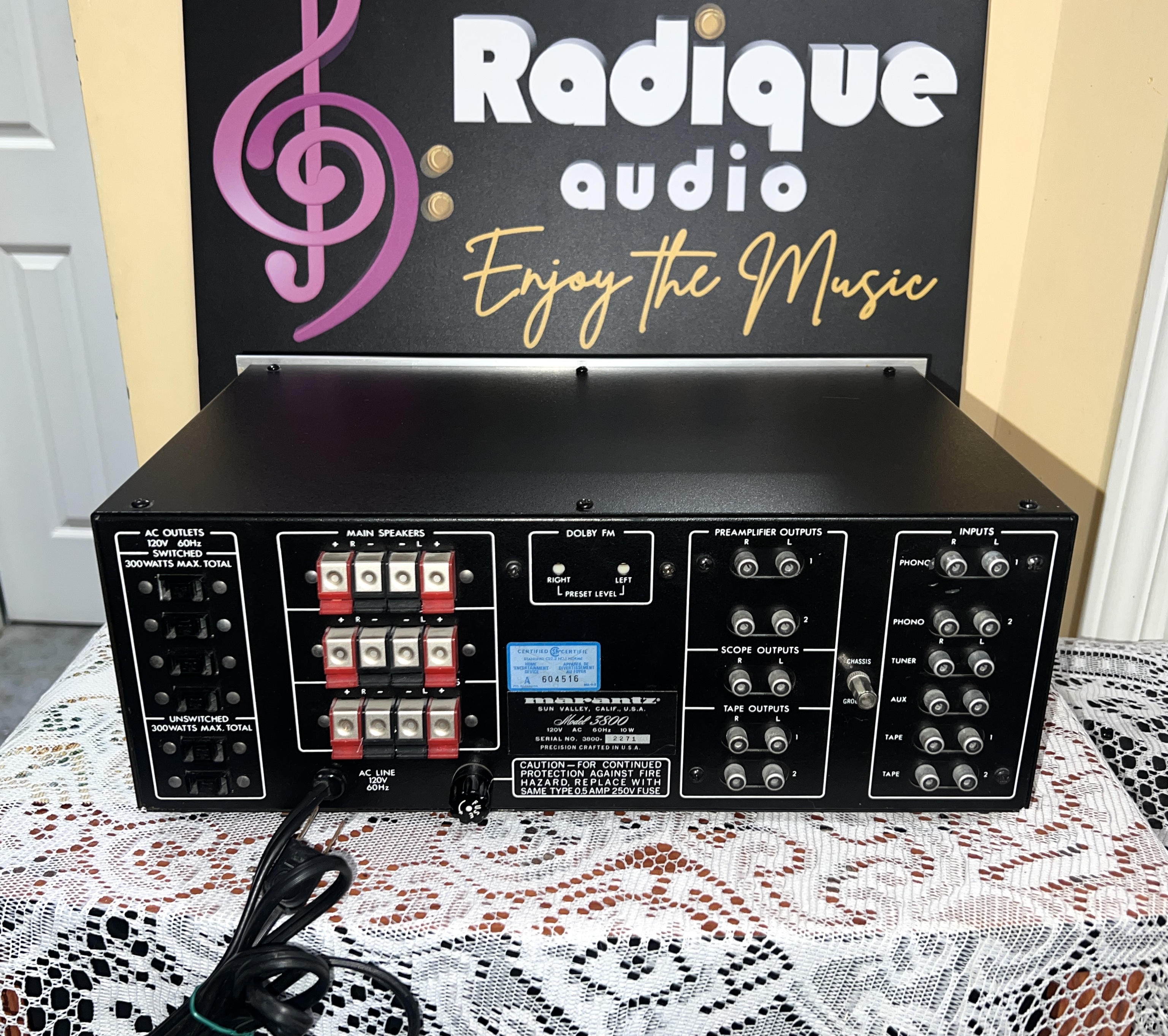
- ✔️ Dual preamp outputs for bi-amping · four switched AC outlets · Level 1 serviced
1 in stock
Precision crafted in the USA during Marantz’s 1976–78 era, the Model 3800 belongs to a small group of premium Marantz components manufactured entirely domestically. It combines exceptionally low distortion, whisper-quiet operation, and a feature set — including built-in Dolby encoding and decoding — that was rare for any preamplifier of the period.
Why the 3800 Is Still Respected
The numbers hold up by any standard: total harmonic distortion of 0.25% across the full 5Hz–60kHz range, with signal-to-noise ratios reaching 100dB on line inputs and 82dB on the MM phono stage. The phono section tracks the RIAA curve with real accuracy, and the line stage is ruler-flat from subsonic to ultrasonic. These are figures that still stand comparison with modern solid-state designs costing considerably more.
Inputs, Loops and the Dolby Section
The phono stage takes moving magnet cartridges at 1mV sensitivity with 60dB of gain — ample for vintage and modern MM cartridges alike. Four line-level inputs (Phono 1, Phono 2/Mic, Tuner, Aux) plus dual tape loops cover complex vintage systems, and the tape loops support full deck-to-deck dubbing.
The built-in Dolby encoder and decoder includes calibration controls and metering for both record and playback, with a 400Hz tone generator for tape calibration. Dolby FM broadcast has been obsolete for decades, but the tape encoding and decoding remains fully functional for archival cassette work.
Tone Control That Means It
The front panel carries independent left and right bass, mid and treble sliders for precise tonal shaping, along with turnover frequency selectors (250Hz, 4kHz) and high and low-cut filters (30Hz, 5kHz, 9kHz) for optimising vintage recordings or taming unruly source material. A tone defeat switch bypasses all EQ for purist listening. The mode selector offers stereo, mono, left, right and reverse, and the balance control provides fine channel matching.
Dual preamp outputs enable bi-amping or driving multiple power amplifiers at once. The speaker switching system allows two pairs of speakers (Main and Remote) when used with a power amplifier fed back through the speaker input jacks — unusual, and genuinely useful in a multi-room setup. Four switched and two unswitched AC outlets round out system power management.
A Natural Power Amplifier Partner
Those switched outlets matter more than they look. Several Golden Age Marantz power amplifiers have no power switch of their own and are designed to be woken by a preamplifier’s switched outlet — our Marantz 170DC power amplifier is exactly that case, and the two make a coherent all-Marantz Golden Age system.
Condition & Service
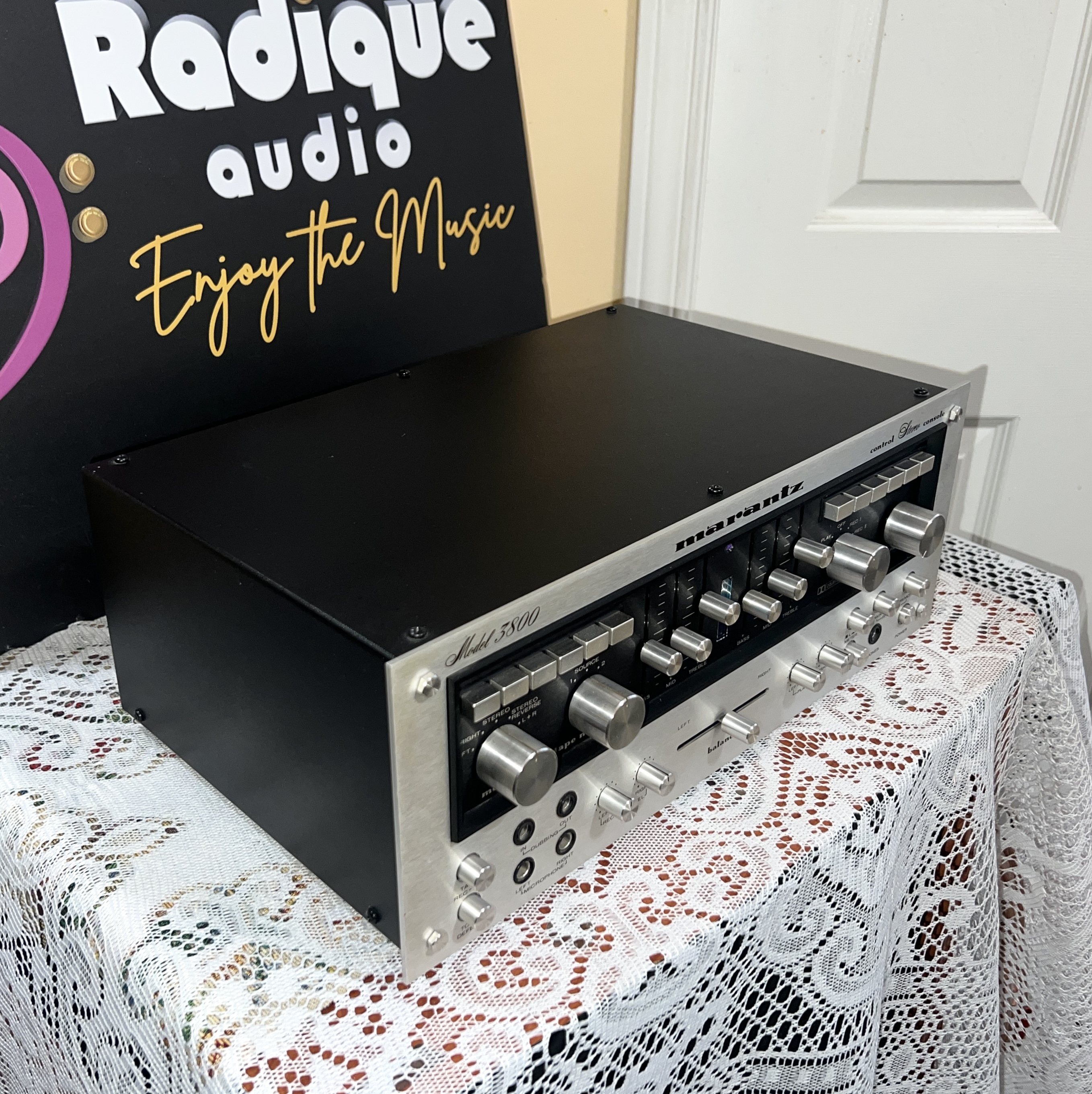
This 3800 has undergone Level One service, with all critical functions verified operating reliably and cleanly. Cosmetically it presents in very good condition — clean faceplate, functional meters and displays, smooth-operating sliders and switches, and minimal wear consistent with careful ownership over nearly five decades. At 14.5 lb the substantial metal chassis reflects American manufacturing standards of the 1970s: robust construction, quality circuit boards, and straightforward serviceability with socketed ICs throughout.
Specifications
- Type: Stereo preamplifier with built-in Dolby — made in the USA, 1976–78
- Frequency response: 5Hz–60kHz
- THD: 0.25%
- Signal-to-noise: 100dB (line) · 82dB (MM phono)
- Phono MM: 1mV sensitivity, 60dB gain
- Line inputs: Phono 1, Phono 2/Mic, Tuner, Aux — 100mV sensitivity, 20dB gain
- Tape: Dual loops with deck-to-deck dubbing
- Dolby: Encoder/decoder with calibration controls, metering, 400Hz tone generator
- Tone: Independent L/R bass, mid, treble sliders · turnover 250Hz / 4kHz · filters 30Hz, 5kHz, 9kHz · tone defeat
- Outputs: Dual preamp outputs (3V nominal, 9V max)
- AC outlets: Four switched, two unswitched
- Dimensions: 15.5″ W × 6″ H × 9.25″ D (394 × 152 × 235 mm)
- Weight: 14.5 lb (6.6 kg)
Completing the System
A preamplifier is the most vibration-sensitive component in most systems, and at 14.5 lb the 3800 is a comfortable match for the IsoAcoustics zaZen I platform, rated to 25 lb. We are an authorized IsoAcoustics dealer and happy to advise. For interconnects and speaker cable, our Custom Speaker Cable Builder makes exactly the length you need in our own shop.
Why Buy From Radique
This preamplifier is backed by our Bumper to Bumper Warranty and our Perpetual Trade-Back Program, so you can buy today and move up later without losing your investment. Audition by appointment at our Kanata North location in Ottawa, or order online for local pickup or shipping. Every order ships in our 275 lb-test double-wall packaging, engineered to protect your gear in transit.
⭐ Don’t Just Take Our Word For It
Radique Audio holds over 600 customer ratings averaging 4.97 stars across six public platforms — Facebook Marketplace, Kijiji, Canuck Audio Mart, Google and others. Every rating lives somewhere we don’t control, so you can read the originals yourself, including the less flattering ones. See what our customers say. 👉
| Weight | 16.5 lbs |
|---|---|
| Dimensions | 13.25 × 19.5 × 10 in |
Marantz began in 1953 in Queens, New York, where Saul Marantz built tube preamplifiers and amplifiers, and by the 1970s it was making receivers with champagne-gold faceplates, blue-lit dials and flywheel tuning. We carry Marantz receivers, amplifiers and preamps, turntables, tuners, CD players and cassette decks. We've had more than 150 Marantz listings so far, covering nearly 100 different models. Every used Marantz here is inspected, tested and serviced as required, then photographed in-house and covered by our Bumper-to-Bumper Warranty and Perpetual Trade-Back Program. Many Marantz components were sold without their wood case, so we also make new cherry WC-22 and WC-10 style cabinets. Don't see the model you want? Tell us on First Dibs and we'll email you when one arrives.
Our five best-selling Marantz models so far: the SR4023 stereo receiver, the vintage 2225, the SR7000 AV receiver, the SR4320 stereo receiver and the vintage 2238B.
The Marantz story, 1953 to today
Saul B. Marantz founded the company in New York in 1953. His first product, the Audio Consolette preamplifier, became the Model 1, and Marantz dates the first Consolettes to 1952–53. Marantz says the early factory was in Woodside, Queens.
The tube years. Through the late 1950s and early 1960s Marantz built a small run of tube separates in New York that collectors still chase: the Model 7 preamplifier (1958), the Model 9 power amplifier (1960) and the Model 10B tuner (1964).
Superscope and the move to Japan. In 1964 Superscope, the company that also distributed Sony tape recorders in the US, bought Marantz, and Saul Marantz resigned at the end of 1967. The Model Eighteen of 1968 was the first Marantz receiver, rated at 40 watts per channel. Under Superscope, design moved to California and, from the late 1960s, production moved to Japan through Standard Radio, which became Marantz Japan in 1975. Receivers such as the 2230 and 2270 are listed as designed in the USA and produced in Japan.
The power race. After a 1974 Federal Trade Commission rule tightened how amplifier power was rated, receiver makers competed on watts. Marantz's Model 2500 of the late 1970s was rated at 250 watts per channel and had an oscilloscope tuning display.
Philips, Denon and today. In 1980 Philips bought Superscope's stake in Marantz Japan and the brand outside the US and Canada. Marantz says its CD-63 of 1982 was one of the first CD players, and its "KI Signature" models carry the initials of Ken Ishiwata, who joined in 1978. In 2001 Marantz Japan bought the trademark back from Philips, and in 2002 it combined with Denon to form D&M Holdings. In September 2025 HARMAN, a Samsung company, completed its purchase of Sound United, the parent of Marantz and Denon.
Which Marantz is which?
Tube separates (1950s–60s): the Models 1, 7, 8B, 9 and 10B, built in New York. Rare collector pieces.
First receivers (from 1968): the Model Eighteen, followed by the Nineteen at the end of 1969.
22xx receivers (from 1972): the first set was the 2215, 2230, 2245 and 2270, with the champagne-gold faceplate, blue-lit dial and "Gyro-Touch" flywheel tuning. A higher number generally means more power: the 2230 is rated at 30 watts per channel, the 2270 at 70. Later "B" versions such as the 2220B and 2285B followed.
Big late-1970s receivers: the 2325 (125 watts per channel), the 2500 flagship and four-channel "Quad" receivers.
1000-series integrated amplifiers: for example the 1060 (30 watts per channel, from 1971), the 1070 and the 1150 (75 watts per channel). The slim 1030, 1040, 1060 and 1070 share their case size with tuners such as the 104, 105 and 112.
Tuners: from the tube Model 10B to solid-state models such as the 2130, with its oscilloscope display.
Wood cases: Marantz sold its wood cases separately: the WC-22 for the 22xx receivers, the WC-10 for the slim 1000-series amplifiers and 100-series tuners, and the WC-1 for larger models such as the 1200. That is why so many turn up bare. A customer who sold Marantz in Ontario in the 1970s told us the cases his shop ordered were built here in Canada, by Westinghouse. Our own cherry WC-22 and WC-10 style cabinets are made in Canada too.
CD players: from the CD-63 of 1982 to the KI Signature versions.
Buying used Marantz: what to check
Dial and meter lamps. Burnt-out bulbs are common on 1970s receivers and are often replaced, sometimes with LEDs. Ask which, if the look of the dial matters to you.
The dial itself. The diffuser sheet behind the dial ages and can dull the glow. Check that the Gyro-Touch pointer moves smoothly and tracks the stations; dial cords are a common replacement part.
Controls and switches. Crackle when you turn a control or work a switch usually means dirt. Try every input, and walk away from a unit that drops a channel.
Capacitors and bias. Electrolytic capacitors in 1970s gear are often past their best, and full restorations replace them. Restorers also set the bias and DC offset.
Cosmetics. Pitting on the faceplate points to damp storage, and dents or water stains to rough handling.
Everything we list is inspected, tested and serviced as required here, and comes with our warranty.
You may also like…
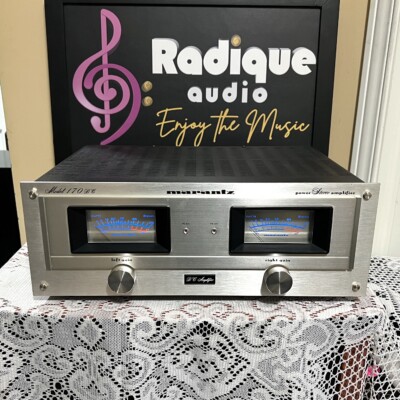
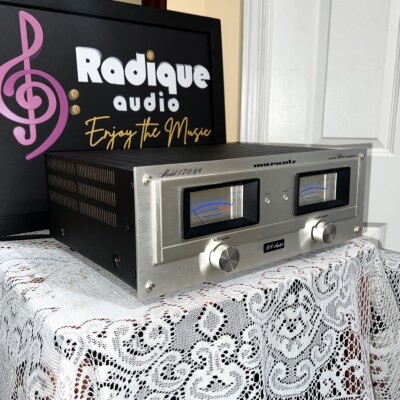
Marantz 170DC Vintage Power Amplifier – 86 WPC, Level 2 Service
- ✔️ Marantz Model 170DC stereo power amplifier — 86 WPC into 8Ω, 108 WPC into 4Ω, 170 WPC into 2Ω
- ✔️ True DC-coupled complementary OCL topology, shared in architecture with the legendary Model 250
- ✔️ Iconic blue-illuminated peak-reading VU meters, –40dB to +3dB with peak hold
- ✔️ ESP energy-sensing speaker protection and four-second turn-on delay — no thump
- ⚠️ No power switch by design — needs a preamplifier with a switched outlet, or a switched power bar
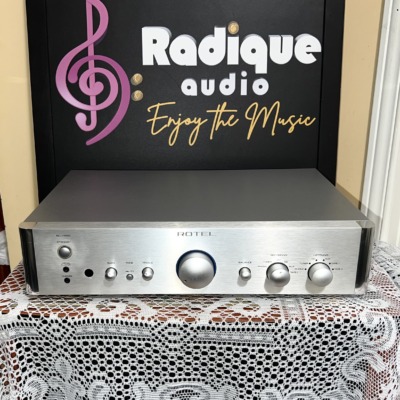

Rotel RC-1550 Stereo Preamplifier – Silver, Remote, MM Phono
A modern-era Rotel preamplifier in silver, with its remote, built around a proper power supply.
✔️ Condition: Very Good — silver facia clean, presents beautifully
✔️ Covered by Radique Warranty
✔️ Includes Perpetual Trade-Back Program eligibility
✔️ Expertly packed for safe shipping
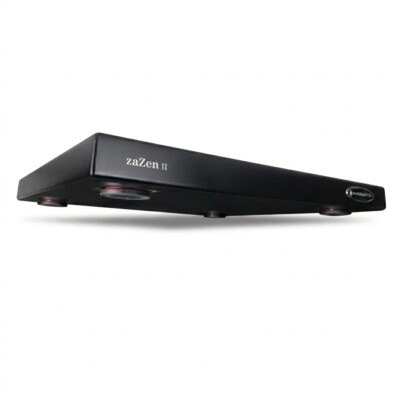
IsoAcoustics zaZen I Isolation Platform
- ✔️ Genuine IsoAcoustics zaZen I isolation platform, brand new in box
- ✔️ Designed for turntables, tube amps, and sensitive audio components up to 25 lbs (11.3 kg)
- ✔️ Platform measures 17" x 15" x 1.2" with dense construction and integrated isolators
- ✔️ Helps lower the noise floor and reduce structure-borne vibration for greater clarity and detail
- ✔️ Backed by a 2-year manufacturer's warranty in Canada
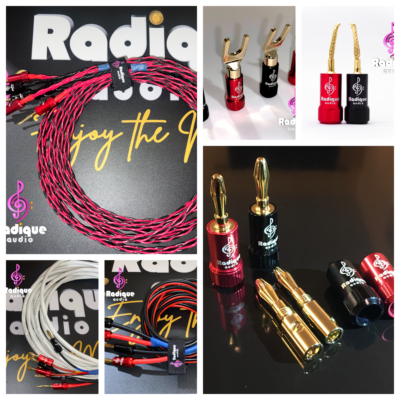
Custom Speaker Cable Builder
🎯 Your specs, your cable — choose cable type, length & connectors
💰 Live pricing — price updates instantly as you configure
↔️ Bi-wire capable — available on Kimber 4PR, Kimber 4TC and House Quad
🔥 Heat-shrink reinforced — colour-coordinated at every termination & joint
🍁 Hand-assembled in Ottawa — backed by our Bumper-to-Bumper Warranty
Related Products
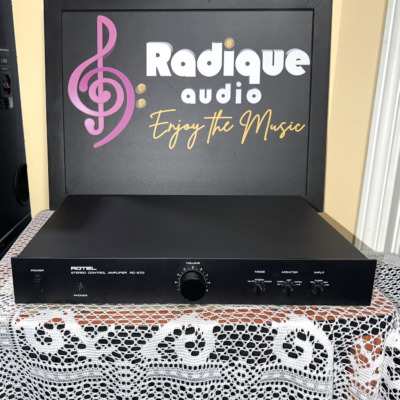
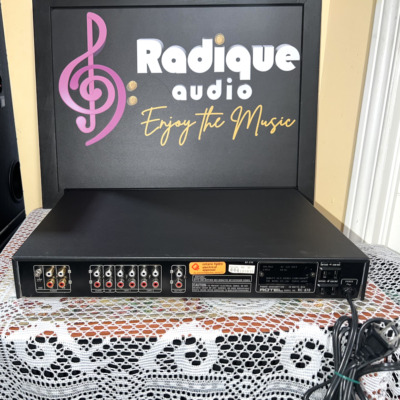
Rotel RC-870 Preamplifier – MM/MC Phono, Made in Japan, 1985
Rotel called this a stereo control amplifier rather than a preamp, and it earns the name — no tone controls, no filters, no loudness, just four line inputs and two tape loops with dubbing either way. The phono stage runs moving magnet and moving coil through separate buffers, and line distortion is no greater than 0.004%. Stamped Tokyo, Japan on the rear panel. Excellent cosmetic condition.
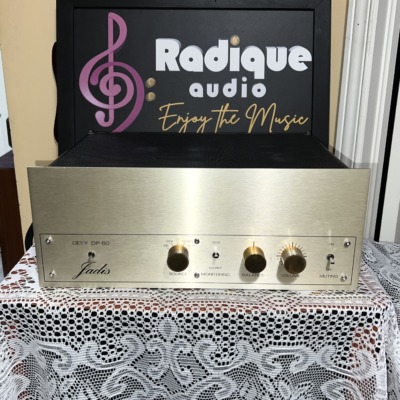
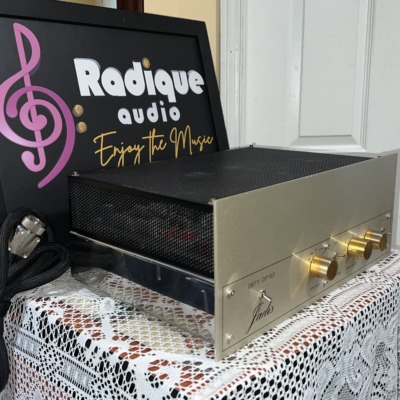
Jadis Defy DP-60 Tube Preamplifier — MM/MC Phono, Outboard PSU
A full-function valve preamplifier — line stage and a moving-magnet/moving-coil phono section, valves throughout, with the power supply in its own separate chassis. Hand-built in the south of France, in excellent condition, and it comes with the original factory cartons including the shaped foam box for the supply.
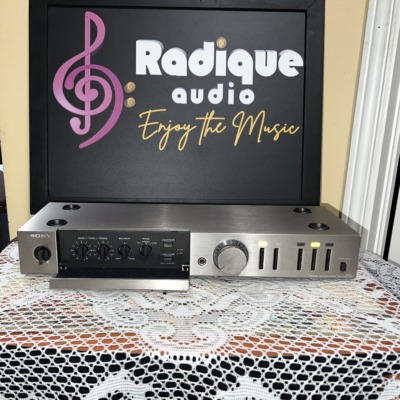
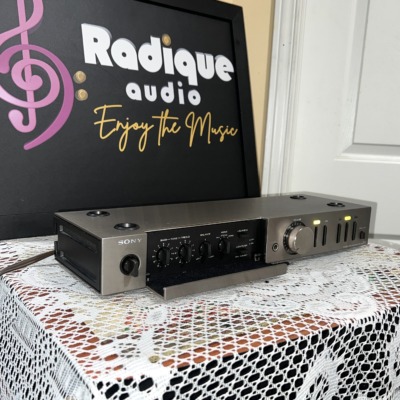
Sony TAE-20FB Falcon Preamplifier — Bronze, MM/MC Phono, Japan
The control amplifier from Sony's short-lived Falcon range — made in Japan for barely two years and rarely seen on this side of the Pacific. Bronze-anodised aluminium case, a real moving-coil phono input alongside moving-magnet, and a signal path that has been freshly recapped. A couple of light marks on the casework, otherwise Very Good. Ships from Kanata, ON.
Rotel RC-1550 Stereo Preamplifier – Silver, Remote, MM Phono
A modern-era Rotel preamplifier in silver, with its remote, built around a proper power supply.
✔️ Condition: Very Good — silver facia clean, presents beautifully
✔️ Covered by Radique Warranty
✔️ Includes Perpetual Trade-Back Program eligibility
✔️ Expertly packed for safe shipping
