
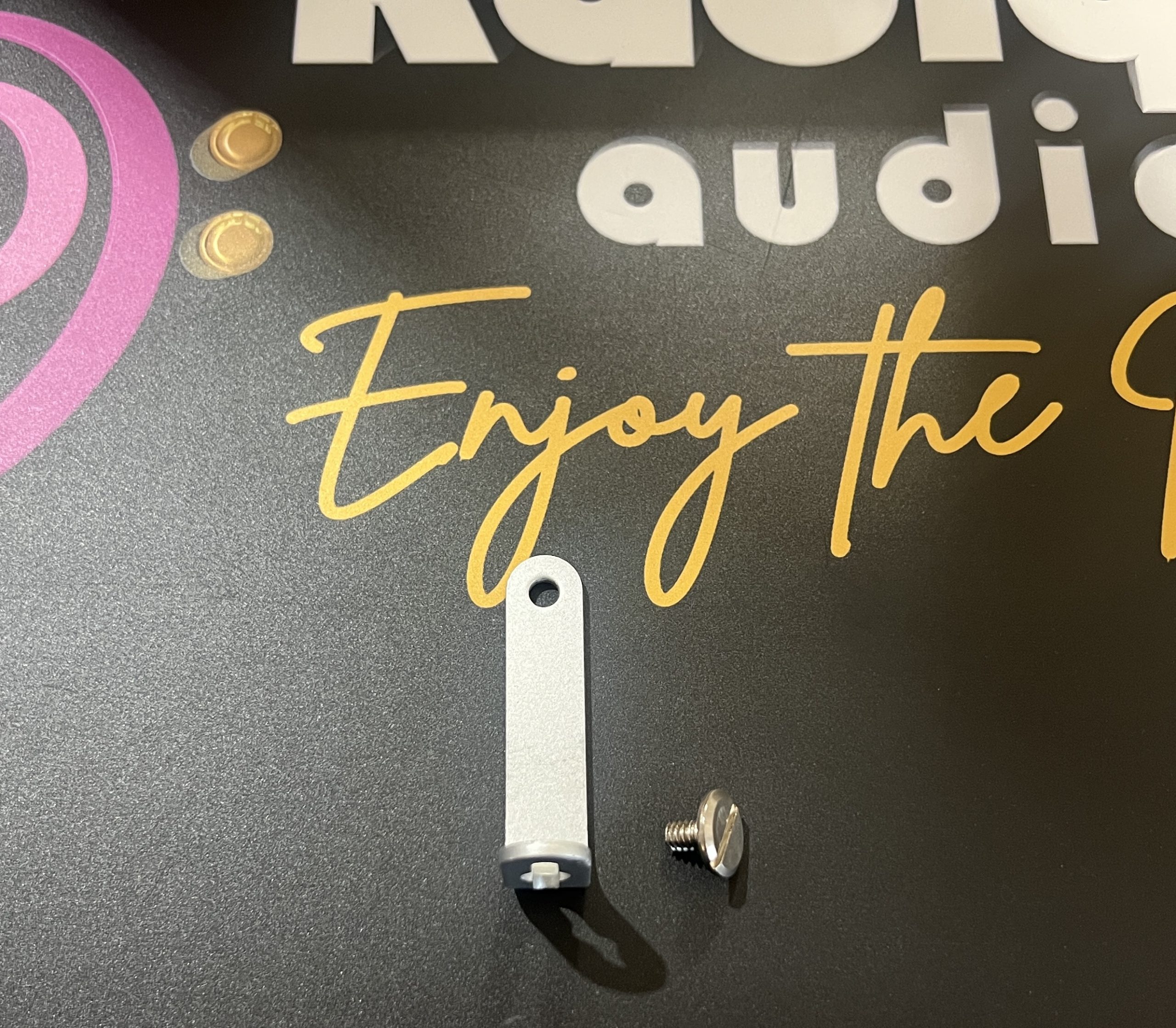




Mirage Nanosat Wall/Ceiling Mount Bracket (Original) | Radique
$15.00
- Genuine original Mirage factory wall/ceiling mount bracket for the Nanosat satellite speaker
- Compatible with all Nanosat v1 finishes — Black/Silver, All Black, and All White
- Single-screw keyhole slot system — speaker clicks on and off cleanly
- Positions speaker right-side up or inverted for ideal Omnipolar® sound dispersion
- Includes mounting screw
4 in stock
Keep your Mirage Nanosats off the shelf and up where they belong — these are the genuine original Mirage factory wall/ceiling mount brackets, designed specifically for the Nanosat satellite speaker.
Thanks to the Nanosat’s unique Omnipolar® design, wall and ceiling mounting is actually the ideal placement — the 360° sound dispersion means the speaker performs brilliantly even mounted high near the ceiling, filling the room evenly from any position. Mirage specifically engineered this bracket with that in mind.
Mount Features
- Genuine original Mirage factory bracket — not a generic third-party mount
- Single-screw installation with keyhole slot system — speaker clicks on and off cleanly
- Positions speaker right-side up or inverted — Mirage recommends inverted when mounted more than 6 feet off the floor, so the Omniguide points toward the listening position
- Holds speaker approximately ¼” from the wall for ideal Omnipolar® sound dispersion
Mount Specifications
- Dimensions: 2.76″ L × 1.42″ W × 0.63″ D (70 × 36 × 16 mm)
- Weight: 1.3 oz (37 g) — includes mounting screw
- Mounting: Single screw keyhole slot — hardware included
Compatibility
- Fits all Nanosat v1 finish variants: Black/Silver, All Black, and All White
- Speaker dimensions for reference: 5.8″ H × 4.3″ D × 4.2″ W (14.9 × 10.7 × 11.1 cm)
- Speaker weight: 2.9 lbs / 1.3 kg per speaker
Sold individually. Sourced from original Mirage Nanosat systems.
| Weight | .1 lbs |
|---|---|
| Dimensions | 3 × 2 × 1 in |
| Mirage Nanosats | Mirage Nanosats pair black & silver, Mirage Nanosats v1 mount |
Mirage is a Canadian speaker brand, founded in Toronto in the late 1970s and later built by Audio Products International in Scarborough, in the same factory as Energy. Its bipolar and Omnipolar designs send sound in more than one direction. We carry Mirage towers, satellites, centre channels and subwoofers. We've had more than 110 Mirage listings so far. Every used Mirage here is inspected, tested and serviced as required, then photographed in-house and covered by our Bumper-to-Bumper Warranty and Perpetual Trade-Back Program. Don't see the model you want? Tell us on First Dibs and we'll email you when one arrives.
The Mirage story
Jeff Percy, Jeff Soltysek and Patrick Dempster founded Mirage in Toronto in the late 1970s (1979, according to Stereophile). Kevin Voecks, later of Snell and Revel, did the original designs. Audio Products International of Scarborough, which already assembled Mirage speakers, took the company over in the mid-1980s.
Bipolar. The M-1 of 1987, begun by Voecks and completed by API's Ian Paisley, fired identical drivers forward and backward, in phase. Mirage's engineers worked with the National Research Council's loudspeaker research here in Ottawa.
Omnipolar. The OM-6 of 1997 was the first commercial version of Mirage's Omnipolar idea, and the Omnisat satellite system followed in 2002.
New owners. Klipsch bought API in 2006, and VOXX bought Klipsch in 2011. Later models were made in China; the 2007 OMD-28 was "designed by API in Canada and built in China". Around the end of 2022, Oscar Bernardo, a former API executive, bought the Mirage brand himself to relaunch it.
Which Mirage is which?
Early two-ways (1980s to early 1990s): models owners discuss include the SM-1, 190, 290, M-360 and M-460.
M-series bipolar (1987 to late 1990s): the M-1, M-3, and the "si" models such as the M-1si, M-3si and M-7si.
OM-series Omnipolar (1997 to early 2000s): the OM-6, OM-7 and OM-9, and the OM-5 subwoofer.
Home theatre: FRx (2001), Omnisat and Nanosat satellites (2002 to 2005), OMD (2007) and MX (2009), plus the OMNI towers and Uni-Theater.
Subwoofers: the BPS bipolar subs, the LF-150 and MM-6, and the Nano subwoofers.
Buying used Mirage: what to check
Surrounds. Materials vary by model: some M-series midranges use foam surrounds that turn brittle, while many woofers use rubber. Check the rear-firing drivers too.
Tweeters. Owners report that original M-1 tweeters become fragile and have been unavailable for years. Check that every tweeter plays, front and rear.
Powered woofers and subwoofers. Test the built-in amplifier at volume; owners report failed sub amplifiers with no replacement available.
Finish and pairs. M-series panels are lacquered and some clip off plastic fasteners, so look for damage. The M-1si was built in mirror-image pairs.
Placement. Omnipolar and bipolar speakers sound best well out from the wall.
Everything we list is inspected, tested and serviced as required here, and comes with our warranty.
You may also like…

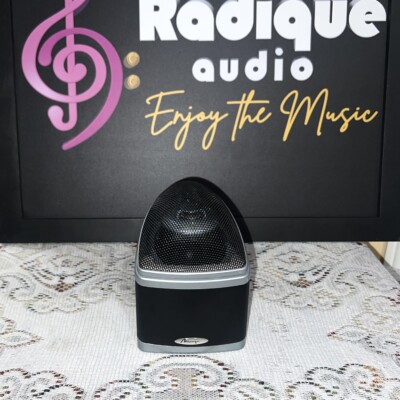
Mirage Nanosat Satellite Speaker — Refurbished | Radique
The Mirage Nanosat is one of the most capable compact speakers ever made — a palm-sized powerhouse delivering a full 360° Omnipolar® soundstage that fills any room, from any position. 🎵
-
- >Available as a single speaker or a stereo pair
>Individually inspected, tested, and refurbished by the Radique team
>Covered by our Bumper-to-Bumper Warranty 🔵
>Optional wall/ceiling mount available — select from the options below
>📸 Photos show a stereo pair. Singles and pairs available — select your quantity below.
Related Products
Mirage Omnisat Wall & Ceiling Mount Clip – Original Factory Part
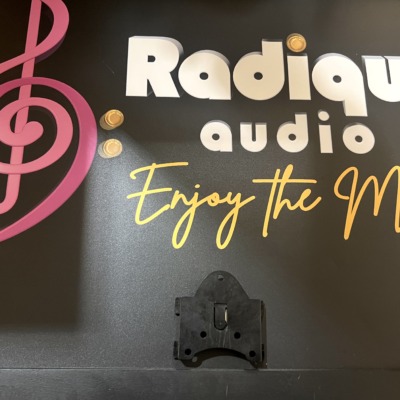
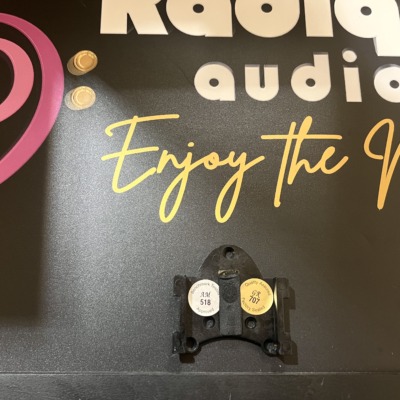
The factory clip supplied with the first-generation Omnisat, and the part its moulded base was shaped to accept. The clip goes on the wall or ceiling first and the speaker slides down onto it under its own weight — a one-person job, and the speaker lifts off again in seconds. Three-quarters of an inch of profile. Not the v2 bracket; the two do not interchange. Very good condition.
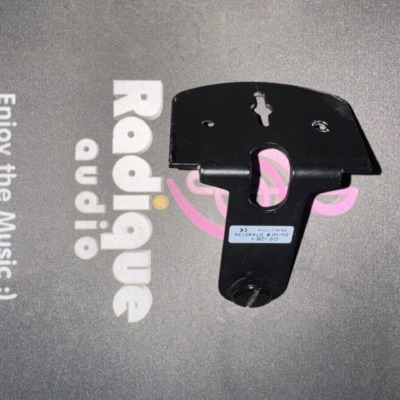
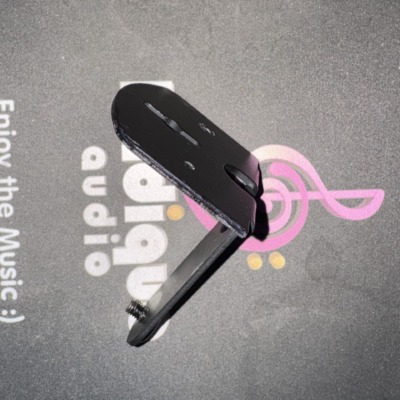
Mirage Omnisat V2 Wall/Ceiling Mount Bracket (OS v2B-1)
The factory bracket for the Omnisat v2, model OS v2B-1, for wall or ceiling. A single bolt threads into the base of the speaker and the plate anchors to the surface, keeping the satellite close in and correctly aimed — tidier and safer than a universal mount. The screw is included. Some paint transfer on the wall-facing side; the hardware itself is very good.
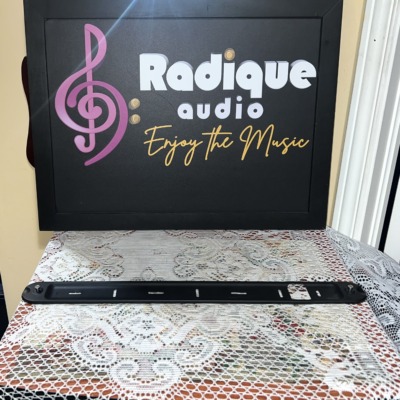
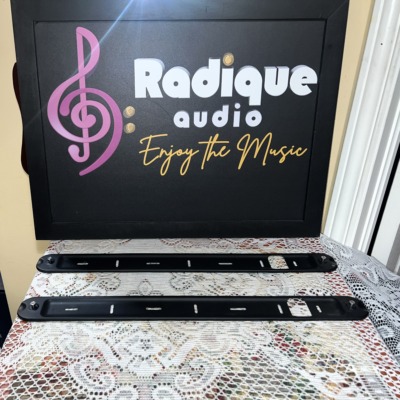
Monitor Audio Radius 250HD Wall Bracket – Black Metal Rail
A dedicated wall bracket for the Monitor Audio Radius 250HD LCR speaker: a slim black metal rail that mounts the speaker on the wall, horizontally or vertically.
✔️ Very good condition — free of significant marks
✔️ Mounts the Radius 250HD horizontally or vertically
✔️ Sold individually — order two for a pair
✔️ Covered by Radique Warranty
✔️ Includes Perpetual Trade-Back Program eligibility
✔️ Expertly packed for safe shipping
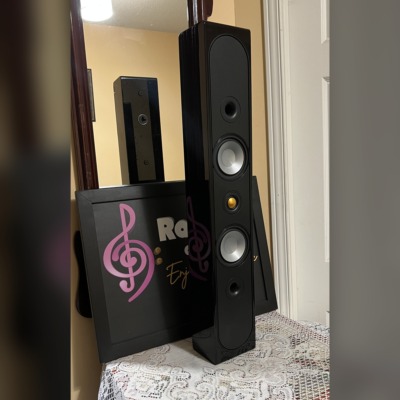
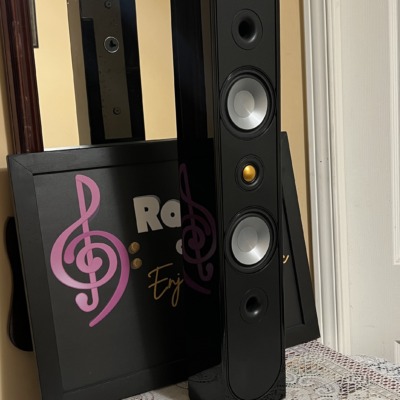
Monitor Audio Radius 250HD LCR Speakers, Pair – Gloss Black
A matched pair of slim gloss black Monitor Audio speakers from the Radius HD range, in good condition, each built to work as a left, center, right or rear speaker, standing upright, lying flat or hung on a wall.
✔️ Good condition — light scratches visible under bright light; grilles included
✔️ Two slim speakers for a stereo pair, left and right of a center, or a set of rears
✔️ Two rear keyhole slots on each; the matching wall bracket is listed separately
✔️ Covered by Radique Warranty
✔️ Includes Perpetual Trade-Back Program eligibility
✔️ Expertly packed for safe shipping
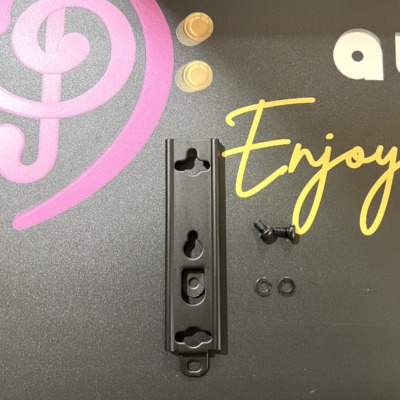
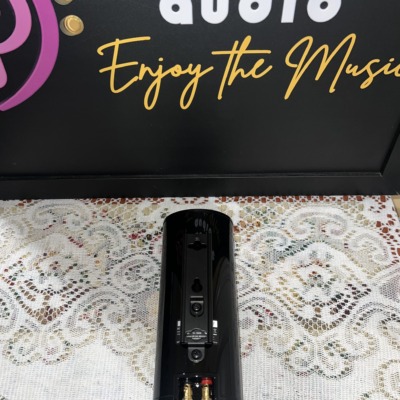
KEF HTS7001 Matching Wall Mount Bracket
A rigid metal plate that screws to the back of an HTS7001 satellite — the two machine screws for that are included — and then hangs on two wall screws through integrated keyhole slots. It goes up vertically or horizontally, whichever suits the channel. Five inches long, in black, sitting discreetly behind the speaker. Wall anchors and screws are yours to supply. Excellent condition, lightly used.
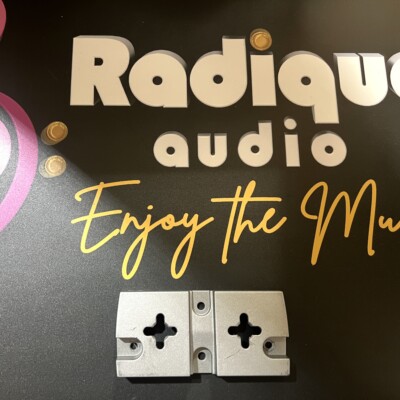
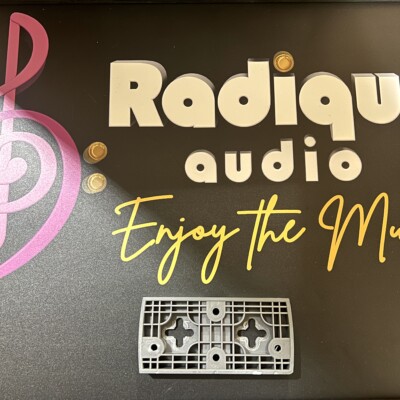
Paradigm Cinema 330 v3 – Genuine Wall-Mount Bracket 330 v3 Wall-mount
The factory bracket for Paradigm's Cinema 330 v3 on-wall speaker, mating directly to the rear interface for a close-to-wall fit. It sits behind the cabinet and is largely hidden once installed, which is why we supply whatever colour is in stock — black, silver or white — and cannot guarantee a choice. Wall anchors and screws are not included.
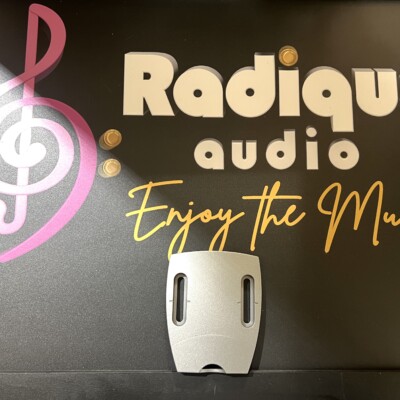
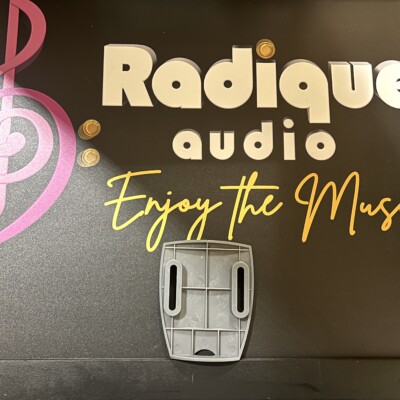
Paradigm Cinema 330 v3 – Genuine Shelf-Mount Support 330 v3 Shelf-mount
The genuine Paradigm support that lets a Cinema 330 v3 sit horizontally on a shelf, mating with the speaker’s base and tilting so the tweeter can be aimed at ear level. Four inches by 3.75, 28 grams, and no additional hardware is needed. Stock comes in black, silver or white; the colour cannot be chosen in advance.
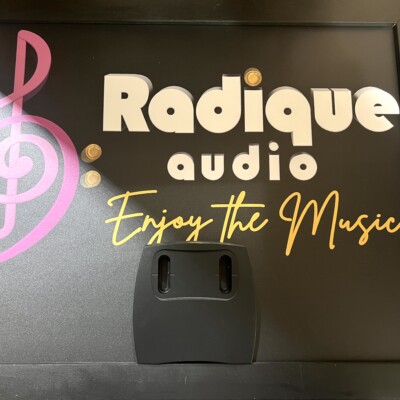
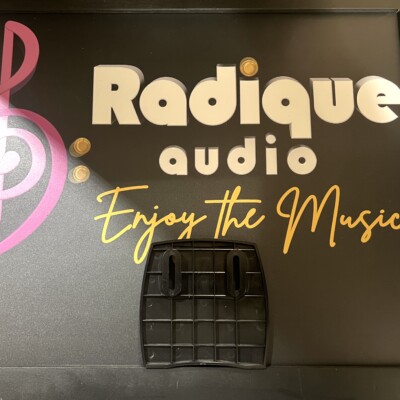
Paradigm Cinema 200/400/Trio – Horizontal Shelf-Mount Support
The genuine Paradigm support that lets a Cinema 200, 400 or Trio sit horizontally on a shelf rather than on a wall, with adjustable tilt so the tweeter can be aimed at ear height — which matters most when it is under a television. It stays visible in use and is styled to match. 4.75 by 4.5 inches, 57 grams. Supplied in black, silver or white as stock allows; the colour cannot be chosen.
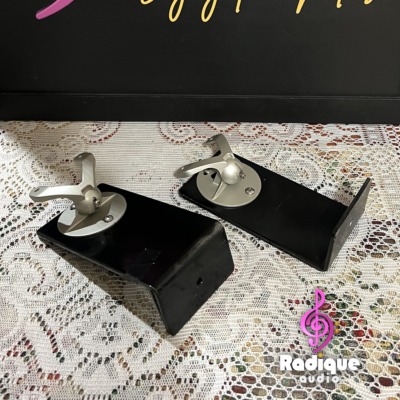
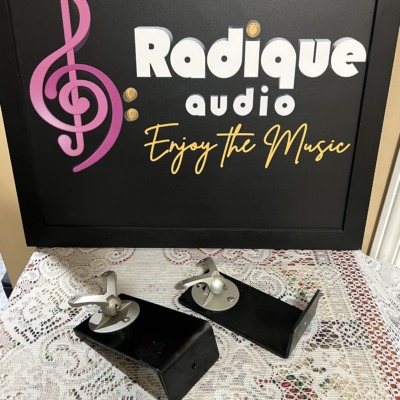
Monitor Audio Radius 90 Wall Brackets, Pair – Steel, Swivel Arm
A pair of wall brackets made for the Monitor Audio Radius 90: heavy black steel wall plates with silver ball-joint swivel arms.
✔️ Good condition — the light scuffs of a working accessory
✔️ Made for the Monitor Audio Radius 90 — sold as a pair
✔️ Ball-joint swivel arms to aim each speaker at the listening seat
✔️ Covered by Radique Warranty
✔️ Includes Perpetual Trade-Back Program eligibility
✔️ Expertly packed for safe shipping
