
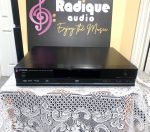
NAD 7225PE Vintage Stereo Receiver – 25 WPC, Power Envelope
$345.00
1 in stock
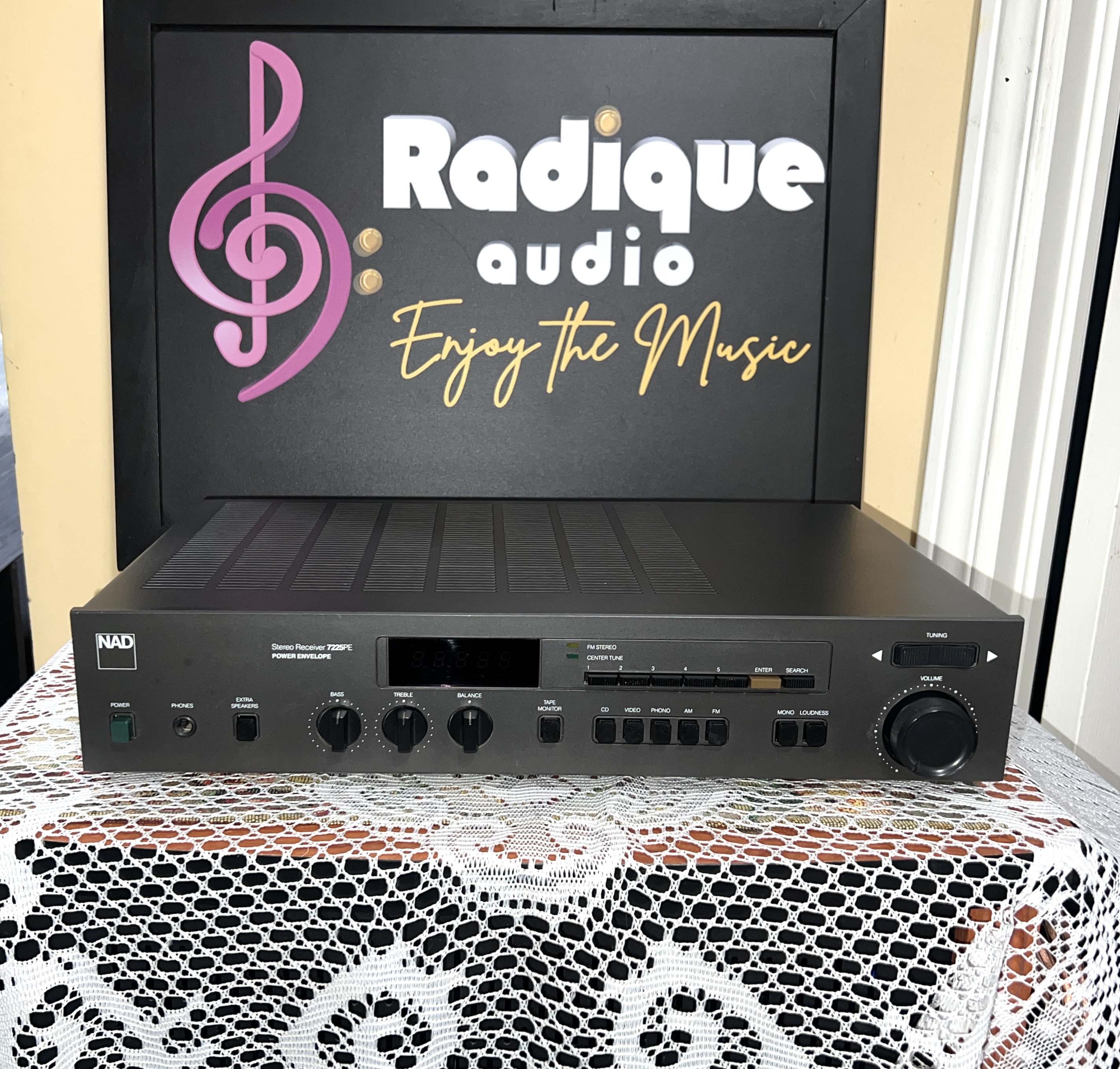
NAD 7225PE — Twenty-Five Honest Watts That Get Stronger as the Load Gets Harder
A small, unfashionable, genuinely clever receiver from the years when NAD was quietly embarrassing companies charging three times as much.
Power Envelope
The number on the front says 25 watts per channel, and that number has been misleading people for nearly forty years. NAD’s Power Envelope supply was built on the observation that music is not a sine wave — it is mostly quiet with brief violent peaks — so a power supply sized for continuous output is sized for the wrong job. The 7225PE holds 25 watts per channel indefinitely into 8 ohms with both channels driven, which is an honest rating measured the hard way. Ask it for a transient and it delivers 60 watts into 8 ohms, 85 into 4, and 90 into 2.
Stronger Into Harder Loads
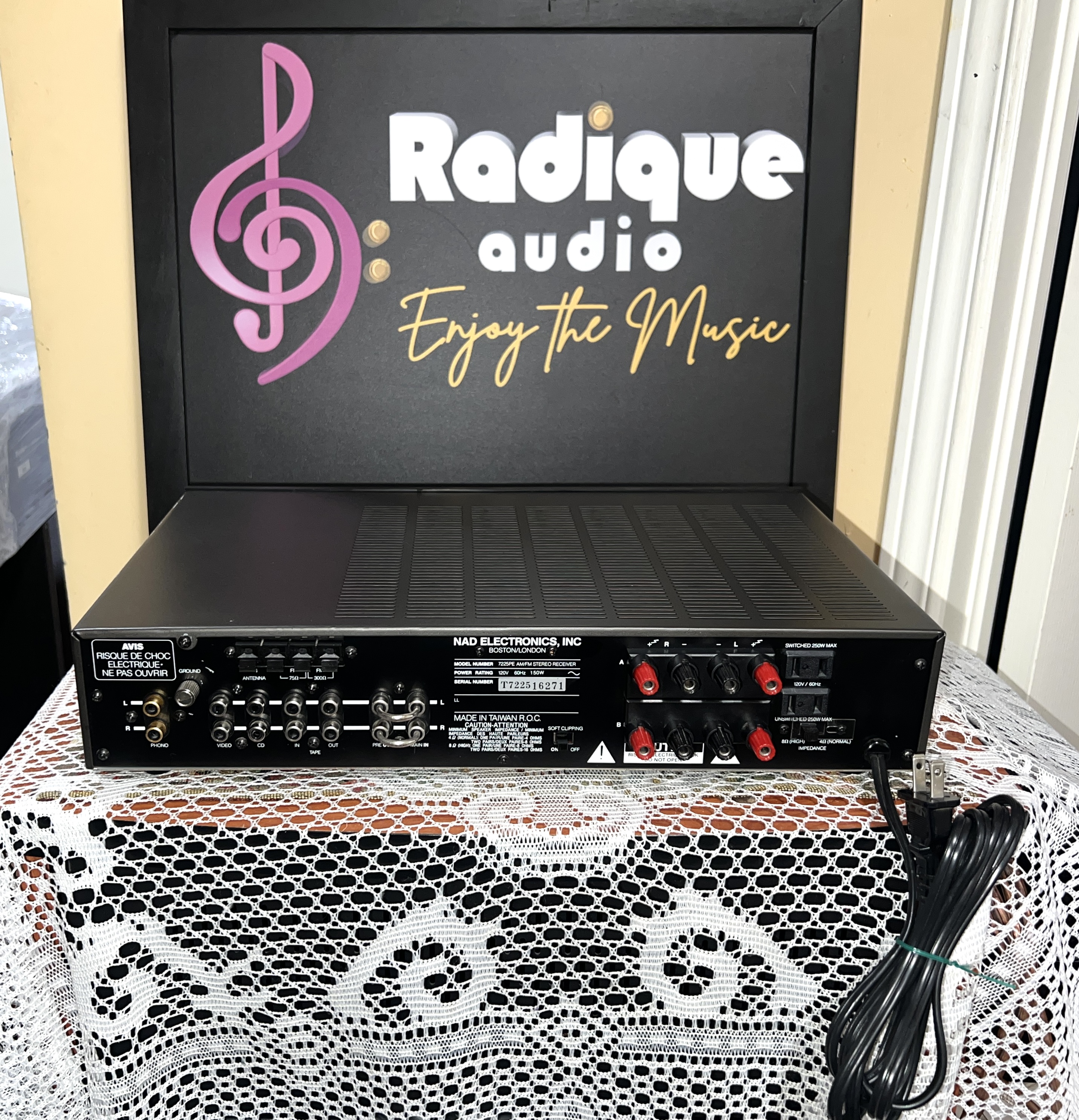
Read that sequence again, because it is the whole point. Most budget receivers get weaker as the load gets harder, running out of current and going sour into a demanding speaker. This one gets stronger. That is why a 25-watt NAD drives speakers that make 60-watt receivers of the same era sound strained, and why these have kept a following among people who own difficult small speakers. A rear-panel impedance selector lets you tell it what it is working into, and the speaker terminals are proper five-way binding posts rather than the spring clips its price bracket usually got.
Soft Clipping
Soft Clipping is the other NAD idea worth knowing about. When an amplifier is pushed past its limit the waveform normally squares off, which is both audibly nasty and hard on tweeters. NAD’s circuit rounds that limit instead, so the sound compresses rather than tearing. On a 25-watt amplifier asked to fill a room, that is not a specification — it is the difference between a good evening and a blown tweeter.
The Rest of the Feature Set
The rest is sensibly done. The moving-magnet phono stage is a real one on gold-flashed jacks, quoted at 75 dB signal-to-noise with RIAA accuracy inside half a decibel, which is a better phono input than most of what was sold alongside it. There are line inputs for tuner, CD, video and auxiliary, a tape loop, and pre-out and main-in jacks that let you keep the preamp and tuner while adding a bigger power amplifier later. Bass and treble run to plus or minus 10 dB and 7 dB respectively, there is a loudness contour, and a fixed infrasonic filter rolls off below 15 Hz to stop warped records wasting cone excursion. Speaker A and B outputs, and a headphone jack.
Condition
Cosmetically this example is graded Very Good, showing the light marks a well-kept component of its age carries. It has been thoroughly inspected and tested to confirm full functionality.
Twenty-five honest watts that behave like far more when the music asks, a phono stage worth using, and the pre-out that means it need never be the last amplifier you own.
Available for pickup in Kanata, or shipped across Canada and internationally — we have sent equipment to fifteen countries in the past year, each piece packed in-house in 275 lb test double-wall boxes. Live shipping rates for your address are calculated at checkout. Backed by Radique Audio’s Bumper-to-Bumper Warranty and our Perpetual Trade-Back Program. Available for audition by appointment in Kanata.
NAD 7225PE Specifications
- Design: Solid-state AM/FM stereo receiver with Power Envelope supply
- Continuous power output: 25 watts per channel into 8 ohms, 20 Hz to 20 kHz, both channels driven
- Clipping power: 40 watts per channel
- IHF dynamic power: 60 watts into 8 ohms, 85 watts into 4 ohms, 90 watts into 2 ohms
- Dynamic headroom: +4 dB at 8 ohms
- Total harmonic distortion: 0.03%
- Damping factor: Better than 50 (8 ohms, 50 Hz)
- Power amplifier frequency response: 12 Hz to 45 kHz (+0, -3 dB)
- Phono input: Moving magnet, 2.5 mV sensitivity, 75 dB signal-to-noise, RIAA accuracy plus or minus 0.5 dB
- Line inputs: 160 mV sensitivity, 99 dB signal-to-noise, 20 Hz to 20 kHz
- Tone controls: Bass plus or minus 10 dB at 50 Hz, treble plus or minus 7 dB at 10 kHz
- Infrasonic filter: -3 dB at 15 Hz, 24 dB per octave, fixed
- Speaker terminals: Five-way binding posts, A and B, with impedance selector
- Other features: Soft Clipping, pre-out and main-in, tape loop, loudness, headphone output
- Power consumption: 150 watts
- Year: 1988
- Dimensions: (Width x Height x Depth) 16.5 x 3.6 x 10.75 inches (420 x 91 x 273 mm)
- Weight: 12.1 lbs (5.5 kg)
⚠️ Important Information for International Buyers
This unit is configured for North American 110/120V power. Buyers outside North America will require a step-down transformer and appropriate plug adapter.
✅ Buy With Confidence — The Radique Promise
Backed by Radique Audio’s Bumper-to-Bumper Warranty and our Perpetual Trade-Back Program. When you’re ready to move on, we’ll take it back. That’s the Radique difference.
📦 Watch how we protect your gear — our unboxing video.
📺 Curious about our business? Check out our YouTube channel for behind-the-scenes videos and more!
📞 Questions? Use the Ask a Question button above, or call us at 613-416-9995.
| Weight | 14.1 lbs |
|---|---|
| Dimensions | 14.75 × 20.5 × 7.6 in |
You may also like…
Related Products
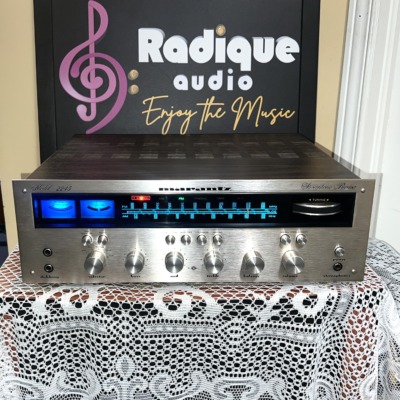
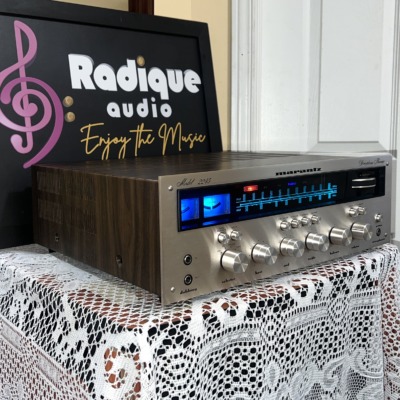
Marantz 2245 Vintage Stereo Receiver – 45 WPC, Level 1 Serviced
A Marantz 2245 from the golden age of the receiver, serviced on our bench and wearing its original Marantz case.
✔️ Condition: Very Good — original vented woodgrain case, sound
✔️ Level 1 service on our own bench, with post-service testing
✔️ 45 WPC · MM phono stage · tape loop · pre-out / main-in · two speaker pairs
✔️ Made in Japan — confirmed on the rear rating plate
✔️ Covered by Radique Warranty
✔️ Includes Perpetual Trade-Back Program eligibility
✔️ Ottawa Valley cherry cabinet available to order
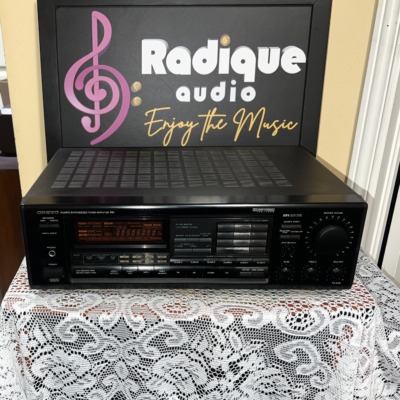
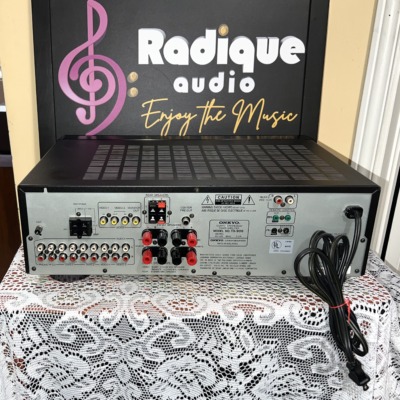
Onkyo TX-906 Stereo Receiver – 80 WPC, Dolby Pro Logic
An early-nineties Onkyo receiver with real power behind it and a phono input for your turntable, through our Level 1 service and playing as it should.
✔️ Good condition — works as it should; the black cabinet and faceplate present well
✔️ Through our Level 1 service — cleaned, deoxidized, checked and thoroughly tested on our bench
✔️ Phono input for your turntable, plus CD and two tape inputs
✔️ Covered by Radique Warranty
✔️ Includes Perpetual Trade-Back Program eligibility
✔️ Expertly packed for safe shipping
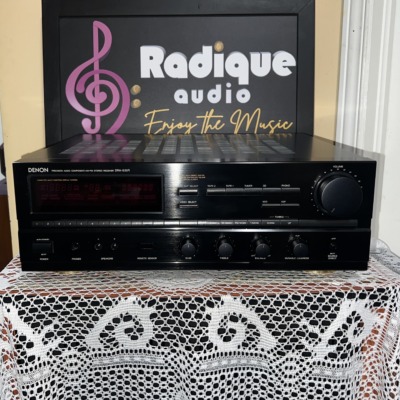
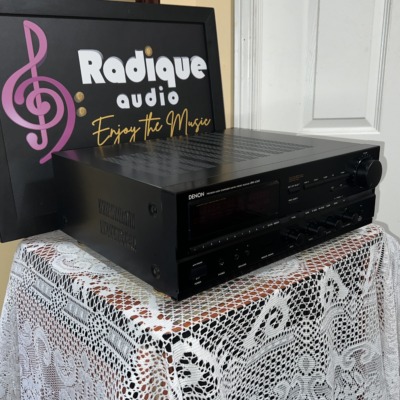
Denon DRA-835R Vintage Stereo Receiver – 100 WPC, Made in Japan
The second-from-the-top model in Denon's early-nineties stereo receiver range, made in Japan and in very good condition, with 100 watts per channel, a phono stage, motorized volume and its original remote.
✔️ Very good condition — free of significant marks
✔️ 100 WPC, MM phono and motorized volume — made in Japan
✔️ Original Denon remote included
✔️ Covered by Radique Warranty
✔️ Includes Perpetual Trade-Back Program eligibility
✔️ Expertly packed for safe shipping
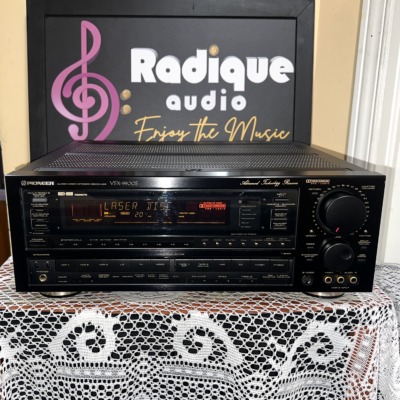
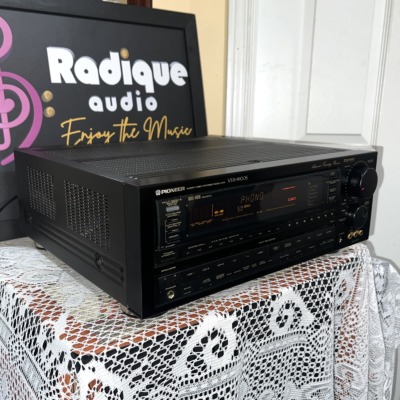
Pioneer VSX-9900S Stereo Receiver – 125 WPC, Phono, 110–240V
A big, heavy early-nineties Pioneer receiver, made in Japan, with 125 watts per channel and selectable mains voltage from 110 to 240 volts, so it runs on household power almost anywhere in the world. It comes with a phono stage for your turntable and its original remote, through our Level 1 service and in good condition.
✔️ Good condition, with the original Pioneer remote
✔️ 125 watts per channel, MM phono and selectable 110–240 V mains
✔️ Radique Level 1 service, bench-tested twice before listing
✔️ Covered by Radique Warranty
✔️ Includes Perpetual Trade-Back Program eligibility
✔️ Expertly packed for safe shipping
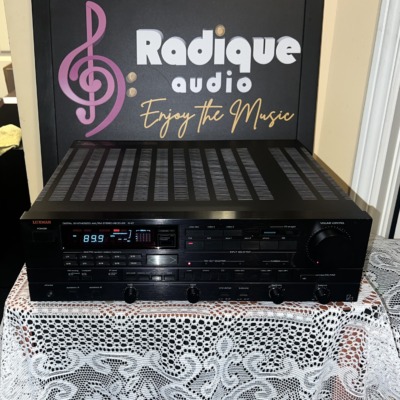
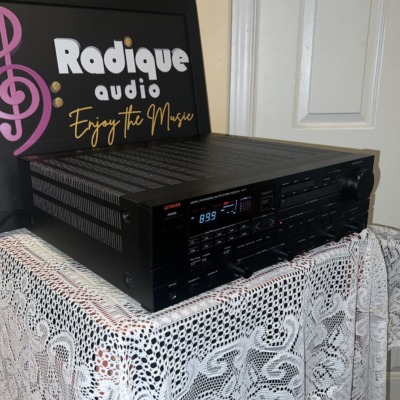
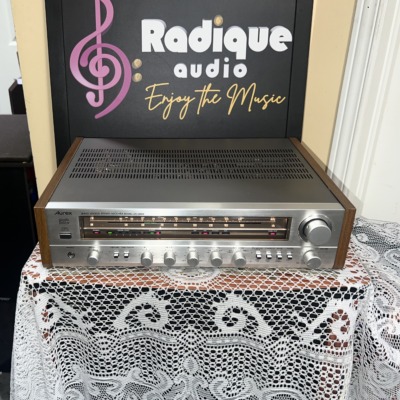
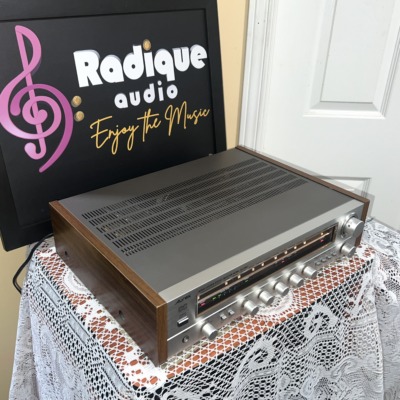
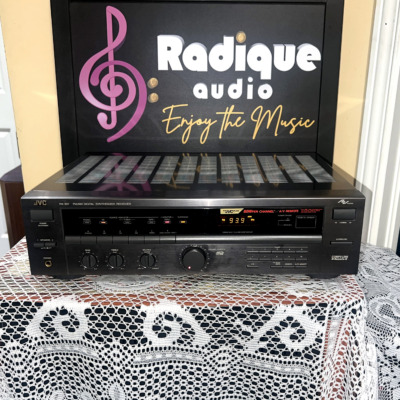
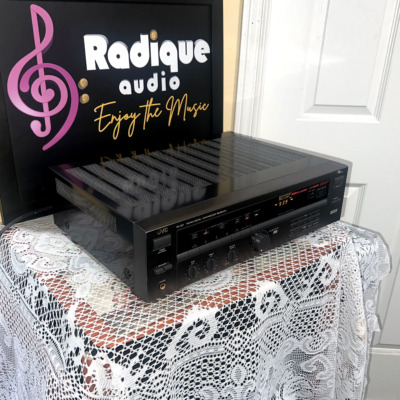
JVC RX-307 Stereo Receiver – 80 WPC, Original Remote & Manual
Eighty watts a side, a proper phono input, and the two things these almost never come with any more: the original remote and the printed manual.
✔️ Condition: Very Good
✔️ Covered by Radique Warranty
✔️ Includes Perpetual Trade-Back Program eligibility
✔️ Expertly packed for safe shipping
