


Pioneer SX-525 Vintage Stereo Receiver – 17 WPC, Blue-Light Era
$445.00
Out of stock
Get first dibs on the next one
Pioneer SX-525 Stereo Receiver – 17WPC Blue-Light Era
Made in Japan during Pioneer’s legendary blue-light era (1972-74), this versatile mid-tier receiver combines classic styling with genuine wood veneer cabinetry and a musical, engaging sound character that defined this iconic manufacturing period. The SX-525 was positioned as a step above the entry-level SX-424, offering additional features and refined circuitry while maintaining the warm, tube-like character that made Pioneer a favorite among serious music listeners.
This SX-525 has undergone Level One service and testing, ensuring all critical functions operate reliably and cleanly. Our technician’s bench testing confirmed the unit delivers 22 watts per channel—exceeding the original 17-watt specification, indicating exceptional internal condition and robust power supply performance. Cosmetically, this receiver presents in very good condition with authentic wood veneer cabinet (not vinyl), clean silver faceplate with iconic blue tuning dial, and minimal wear consistent with careful ownership over five decades.
The 17 watts per channel (officially rated, verified at 22 watts in bench testing) output delivers surprisingly robust, clean power capable of driving efficient speakers with authority and musical conviction. The direct-coupled, early transistor topology with limited negative feedback produces a notably smooth, warm sound signature—engaging and musically communicative. The damping factor of 40 ensures excellent speaker control, while the frequency response extends from 15Hz to 30kHz. Total harmonic distortion remains below 1%, and the 80dB signal-to-noise ratio delivers clean background performance.
The phono stage accommodates moving magnet cartridges with 2.7mV sensitivity, offering RIAA-accurate reproduction. Additional inputs include microphone (6mV), auxiliary inputs, and dual tape loops—enabling cassette playback from two separate decks, unusual at this price point in 1972. The dual tape monitor loops provide exceptional flexibility for outboard signal processing or EQ integration. Tone controls offer ±9dB bass adjustment and variable treble, with loudness compensation for low-volume listening.
The FM/AM tuner section delivers excellent reception quality with 2.2µV FM sensitivity, providing the tactile satisfaction of analog tuning with a large illuminated blue dial. The speaker selector switch enables playback to either speaker pair A or B, or both simultaneously—a practical feature for multi-room listening or system flexibility. Front-panel controls include input selector, mode switch, balance, bass, treble, and the satisfying click of mechanical switches characteristic of 1970s Japanese engineering.
Note on RCA Connectivity: The RCA input connectors on this series are positioned close together, which can create challenges with standard-width interconnect plugs. Radique Audio Gold Series Interconnects are specifically designed to work seamlessly with this spacing, ensuring reliable, solid connections without tension or intermittency issues.
Important Note on Speaker Connections: This receiver features Pioneer’s proprietary AC-type speaker terminals (resembling AC wall plugs). One set of speaker adapters is included, enabling connection of one pair of modern speakers with standard binding posts or banana plugs. A second pair can drive additional speakers if you source another adapter set (available on eBay) or use vintage speakers with matching AC-style connectors.
At 8 kg (17.6 lbs), the SX-525’s solid metal chassis reflects Pioneer’s build-quality standards—robust transformer, quality circuit boards, and reliable construction that has enabled this receiver to function for over fifty years. The slightly heavier weight compared to the SX-424 reflects additional transformer capacity and robust power supply design typical of this tier.
Key Features & Specifications:
17 watts per channel into 8Ω (bench tested at 22 wpc—exceeding spec)
Level One service and testing; all functions verified working
Genuine wood veneer cabinet (not vinyl) in very good condition
Made in Japan during Pioneer’s blue-light era (1972-74)
Phono MM input: 2.7mV sensitivity, RIAA-accurate reproduction
Microphone input: 6mV sensitivity
Dual tape loops for cassette playback from two separate decks
Tape monitor loops for outboard EQ or signal processing
FM/AM tuner: 2.2µV sensitivity with analog tuning dial
Frequency response: 15Hz–30kHz
Tone controls: ±9dB bass, variable treble, loudness compensation
Damping factor: 40; THD: <1%
Speaker selector: A, B, or A+B for multi-pair flexibility
Proprietary AC-type speaker terminals; one adapter set included
RCA connectors work best with Radique Audio Gold Series Interconnects
Classic blue tuning dial with analog scale
Thoroughly tested and ready for reliable listening
Dimensions: 450 x 145 x 360 mm (17.7 x 5.7 x 14.2 inches)
Weight: 8 kg (17.6 lbs)
For collectors and music lovers seeking authentic blue-light era Pioneer performance with dual tape loops, speaker selector flexibility, and genuine wood cabinetry, the SX-525 delivers warm, engaging sound with timeless styling.
Backed by Radique Audio’s 90-day warranty and our perpetual trade-back policy, you can purchase with confidence.
Asking $445 CAD.
| Weight | 19.6 lbs |
|---|---|
| Dimensions | 18.2 × 21.7 × 9.7 in |
Pioneer began in Tokyo in January 1938, when Nozomu Matsumoto set up shop around the A-8 speaker he had built the year before. By the late 1970s its SX receivers were at the heart of the hi-fi power race. We carry Pioneer stereo receivers and AV receivers, CD players, cassette decks, tuners and equalizers. We've had more than 240 Pioneer listings so far, covering 140 different models. Every used Pioneer here is inspected, tested and serviced as required, then photographed in-house and covered by our Bumper-to-Bumper Warranty and Perpetual Trade-Back Program. Don't see the model you want? Tell us on First Dibs and we'll email you when one arrives.
Pioneer is one of our two top-selling brands of vintage amps and receivers, along with Marantz. Our five best-selling Pioneer models so far: the SX-650, SX-750, SX-580, SX-780 and SX-680, all vintage stereo receivers from the 1976 and 1978 SX families. We also offer our custom cherry cabinets for these vintage Pioneers, hand-made from all-natural Ottawa Valley cherry, and we've upgraded dozens of Pioneers with them so far.
The Pioneer story, 1938 to today
Nozomu Matsumoto developed the A-8 speaker in 1937, and in January 1938 he set up Fukuin Shokai Denki Seisakusho in Tokyo. "Pioneer" was first the name of that speaker. Some histories give 1936 in Osaka as the start, but Pioneer dates itself to January 1938 in Tokyo. The company was incorporated in 1947 and renamed Pioneer Electronic Corporation in 1961.
Stereo and the US. In 1962 Pioneer introduced the PSC-5A, which it calls the first stereo with separate speaker cabinets, and its first PL turntables. Pioneer Electronics U.S.A. was founded in New York in 1966.
The power race. After a 1974 US Federal Trade Commission rule tightened how amplifier power was rated, receiver makers competed on watts. Pioneer's SX-1250 of 1976 was rated at 160 watts per channel, and the SX-1980 of 1978 to 1980 at 270.
CD and Elite. The P-D1 of 1982 was Pioneer's first CD player, and Elite-branded components were on sale by 1985.
Today. Pioneer sold its home audio business to Onkyo in 2015, keeping its car and DJ businesses, and Pioneer-branded home theatre gear was later made under licence. In December 2025 CarUX, part of Taiwan's Innolux, completed its purchase of Pioneer Corporation, which now focuses on in-car products.
Which Pioneer is which?
Early-1970s SX receivers: models such as the SX-424 to SX-828, rated at about 15 to 50 watts per channel.
The 1976 "x50" SX receivers: from the SX-450 at 15 watts per channel up to the SX-1250 at 160. Our best-selling SX-650 and SX-750 come from this family.
The 1978 "x80" SX receivers: including the SX-580, SX-680 and SX-780 we sell most, up to the SX-1980 flagship with quartz-lock tuning, which weighs more than 35 kg.
Spec and Exclusive separates: higher-end amplifiers such as the Spec-1 preamplifier (1976 to 1980) and the Exclusive C3/M3 pair (1974).
Elite: Pioneer's upper line from the mid-1980s, for example the PD-9010X CD player.
PL turntables, CT cassette decks and CD players: PL turntables from 1962, such as the PL-12 and the linear-tracking PL-L1; CT decks such as the three-head CT-F1000; and CD players from the 1982 P-D1 to magazine-loading changers such as the PD-M6.
Buying used Pioneer: what to check
Controls and switches. Crackle when you turn a control or work a switch usually means dirt, and restorers clean every pot and switch.
Capacitors. Electrolytic capacitors in 1970s receivers are often past their best, and full restorations replace them.
Big SX models. Owners and restorers report heat stress on the power-supply board of large receivers such as the SX-1250. Ask what has been done.
Relay, lamps and bias. The protection relay is a common replacement, dial lamps burn out and are often converted to LED, and restorers set the bias and DC offset.
Cassette decks. Check the heads, fast-forward and rewind, Dolby and every button. Belts age even when the deck looks perfect.
Everything we list is inspected, tested and serviced as required here, and comes with our warranty.
Related Products
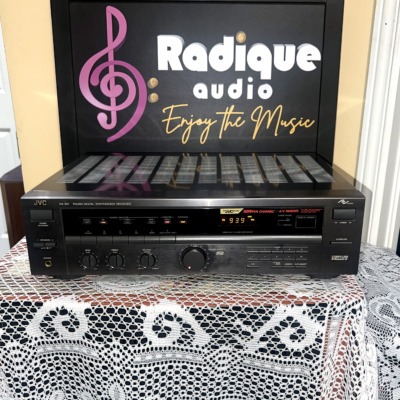
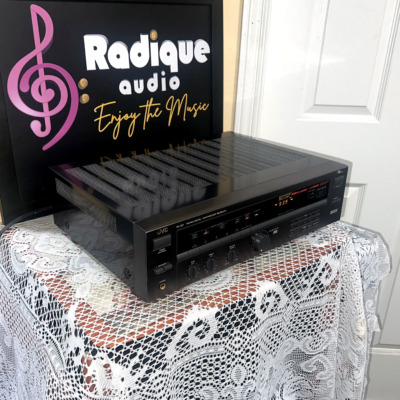
JVC RX-307 Stereo Receiver – 80 WPC, Original Remote & Manual
Eighty watts a side, a proper phono input, and the two things these almost never come with any more: the original remote and the printed manual.
✔️ Condition: Very Good
✔️ Covered by Radique Warranty
✔️ Includes Perpetual Trade-Back Program eligibility
✔️ Expertly packed for safe shipping
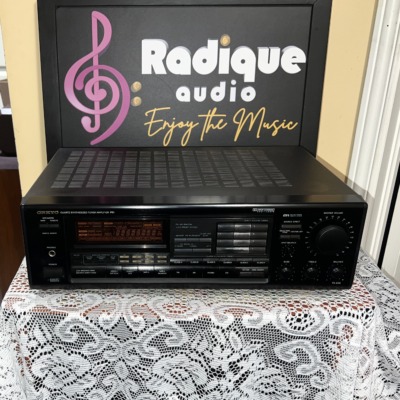
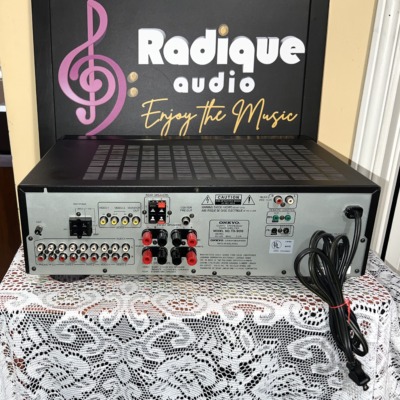
Onkyo TX-906 Stereo Receiver – 80 WPC, Dolby Pro Logic
An early-nineties Onkyo receiver with real power behind it and a phono input for your turntable, through our Level 1 service and playing as it should.
✔️ Good condition — works as it should; the black cabinet and faceplate present well
✔️ Through our Level 1 service — cleaned, deoxidized, checked and thoroughly tested on our bench
✔️ Phono input for your turntable, plus CD and two tape inputs
✔️ Covered by Radique Warranty
✔️ Includes Perpetual Trade-Back Program eligibility
✔️ Expertly packed for safe shipping
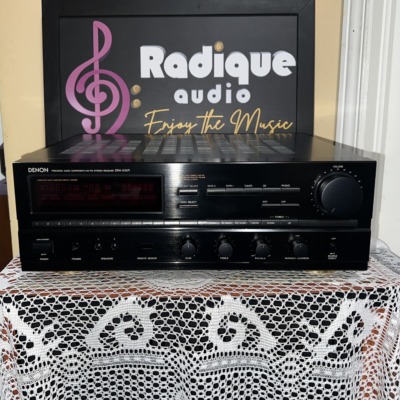
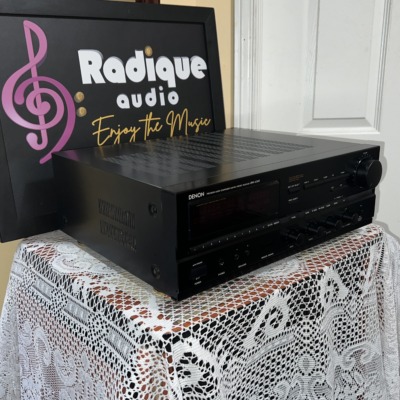
Denon DRA-835R Vintage Stereo Receiver – 100 WPC, Made in Japan
The second-from-the-top model in Denon's early-nineties stereo receiver range, made in Japan and in very good condition, with 100 watts per channel, a phono stage, motorized volume and its original remote.
✔️ Very good condition — free of significant marks
✔️ 100 WPC, MM phono and motorized volume — made in Japan
✔️ Original Denon remote included
✔️ Covered by Radique Warranty
✔️ Includes Perpetual Trade-Back Program eligibility
✔️ Expertly packed for safe shipping
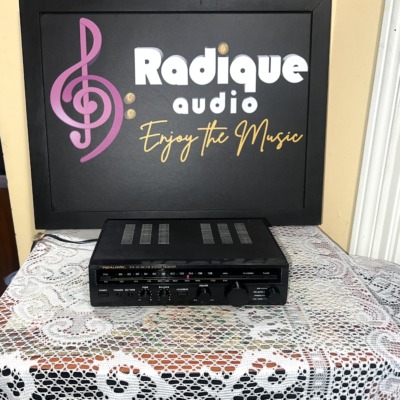
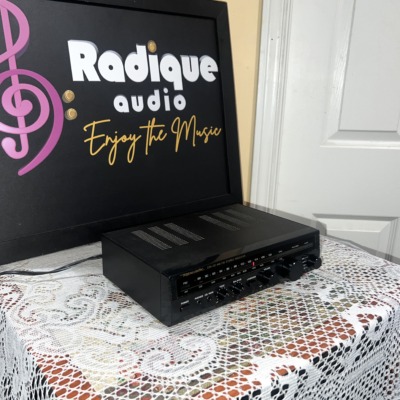
Realistic STA-20 Compact AM/FM Stereo Receiver – 5 WPC, Serviced
Radio Shack's smallest AM/FM stereo receiver of the 1990s, the Realistic STA-20: 5 watts per channel, a rear EQ switch made for mini-speakers, a phono input and a front jack for a phone.
✔️ Serviced on our bench to our Level 1 standard
✔️ Very good condition
✔️ Covered by Radique Warranty
✔️ Includes Perpetual Trade-Back Program eligibility
✔️ Expertly packed for safe shipping
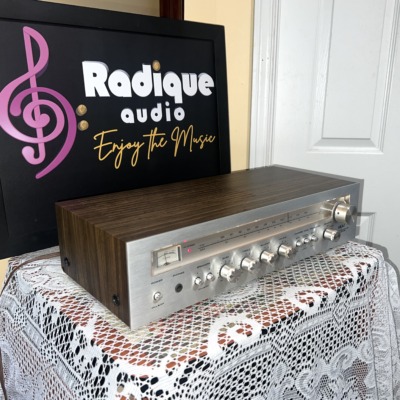
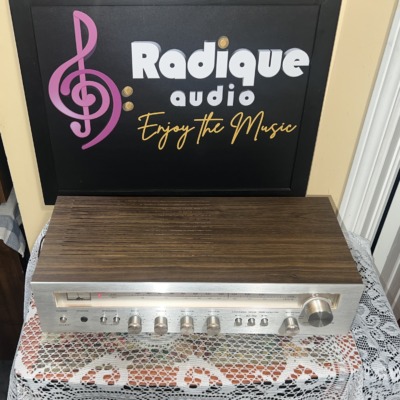
Akai AA-1115 Vintage Stereo Receiver – 15 WPC, Made in Japan
A slim late-1970s Akai AA-1115 AM/FM stereo receiver, made in Japan, silver face in its original woodgrain cabinet.
✔️ Tested on our bench, every input, output and control
✔️ Very good condition
✔️ MM phono, PLL FM tuner, speakers A and B
✔️ Covered by Radique Warranty
✔️ Includes Perpetual Trade-Back Program eligibility
✔️ Expertly packed for safe shipping
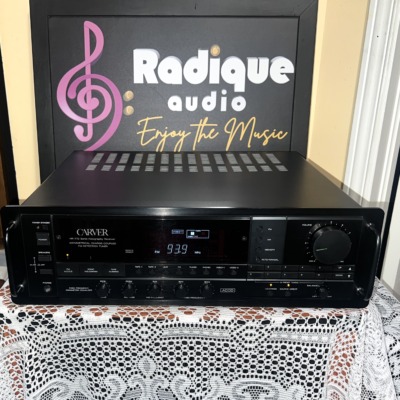
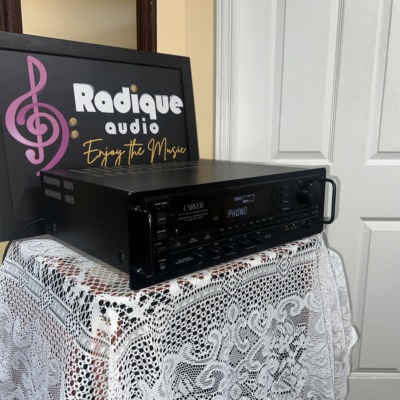
Carver HR-772 Sonic Holography Receiver – 140 WPC, Rack Ears
A Carver HR-772 stereo receiver, Carver's early-1990s flagship: 140 watts per channel, Sonic Holography, and rack ears with front handles.
✔️ Tested on our bench, Sonic Holography included
✔️ Very good condition
✔️ 140 WPC, stable to 2 ohms, MM phono, five-band EQ
✔️ Rack ears and handles for a 19-inch rack
✔️ Covered by Radique Warranty
✔️ Includes Perpetual Trade-Back Program eligibility
✔️ Expertly packed for safe shipping
