
PSB VisionSound VS300 Aluminum On-Wall Speaker
Price range: $305.00 through $319.00
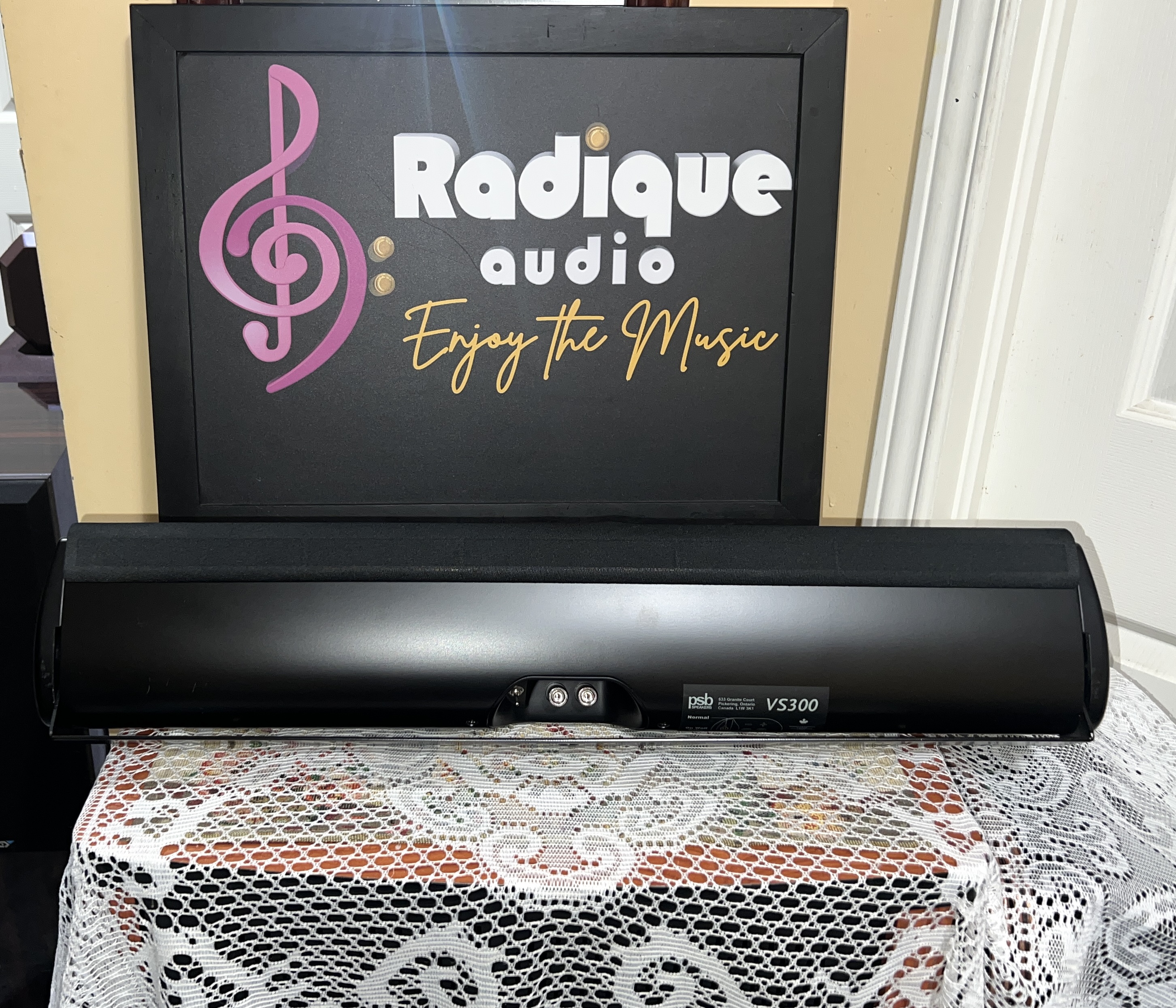
An on-wall speaker engineered as one rather than adapted into one. It shares the tweeter, terminals and crossover of PSB’s VS400 floorstander, but the port was moved to the front so the cabinet can sit flat to a wall without the wall changing what it does — and a rear switch selects NORMAL or ON-WALL, filling the 400 to 500 Hz dip that hard mounting creates. Extruded aluminium, built in Pickering, Ontario. Graded Excellent or Very Good; the only thing separating the two is a single Tic Tac-sized hole at the extreme edge of one grille frame.
PSB VisionSound VS300 — An On-Wall Speaker Actually Designed as One, in Extruded Canadian Aluminum
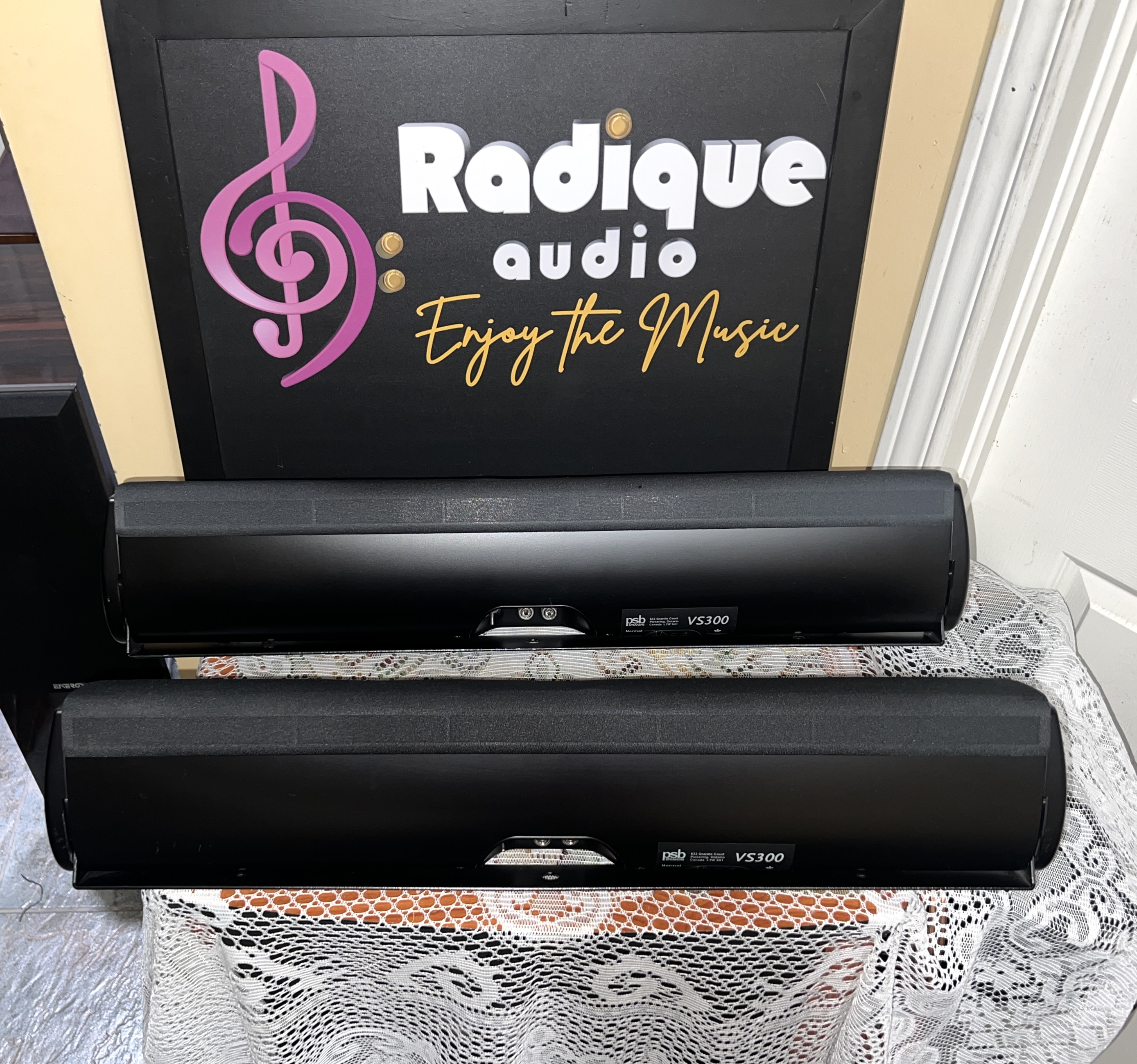
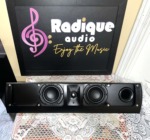
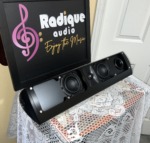
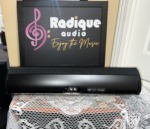
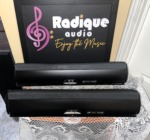
A PSB VisionSound VS300 in black, built in Canada, and one of the very few on-wall speakers that was engineered as an on-wall rather than adapted into one.
The Front Port
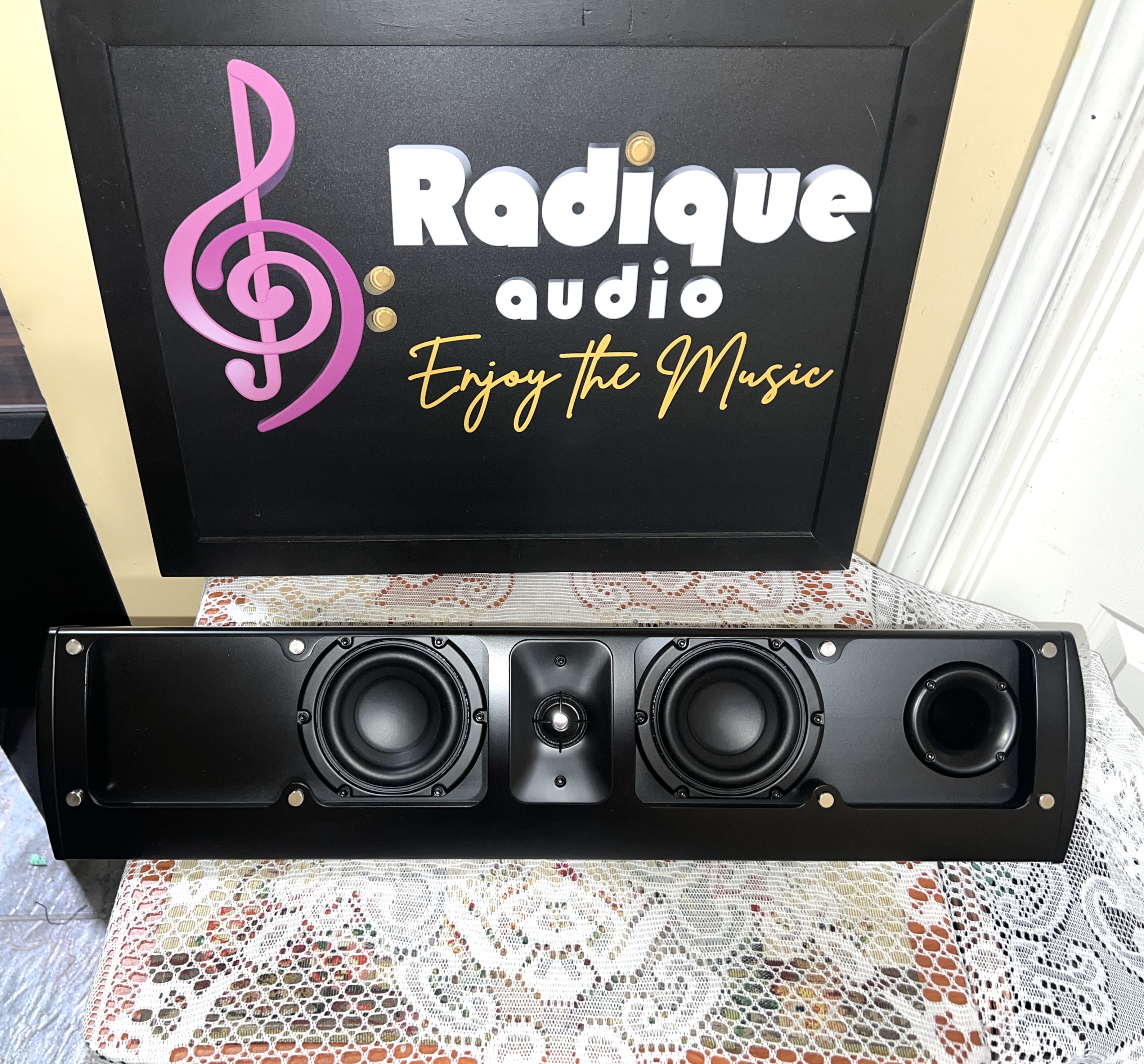
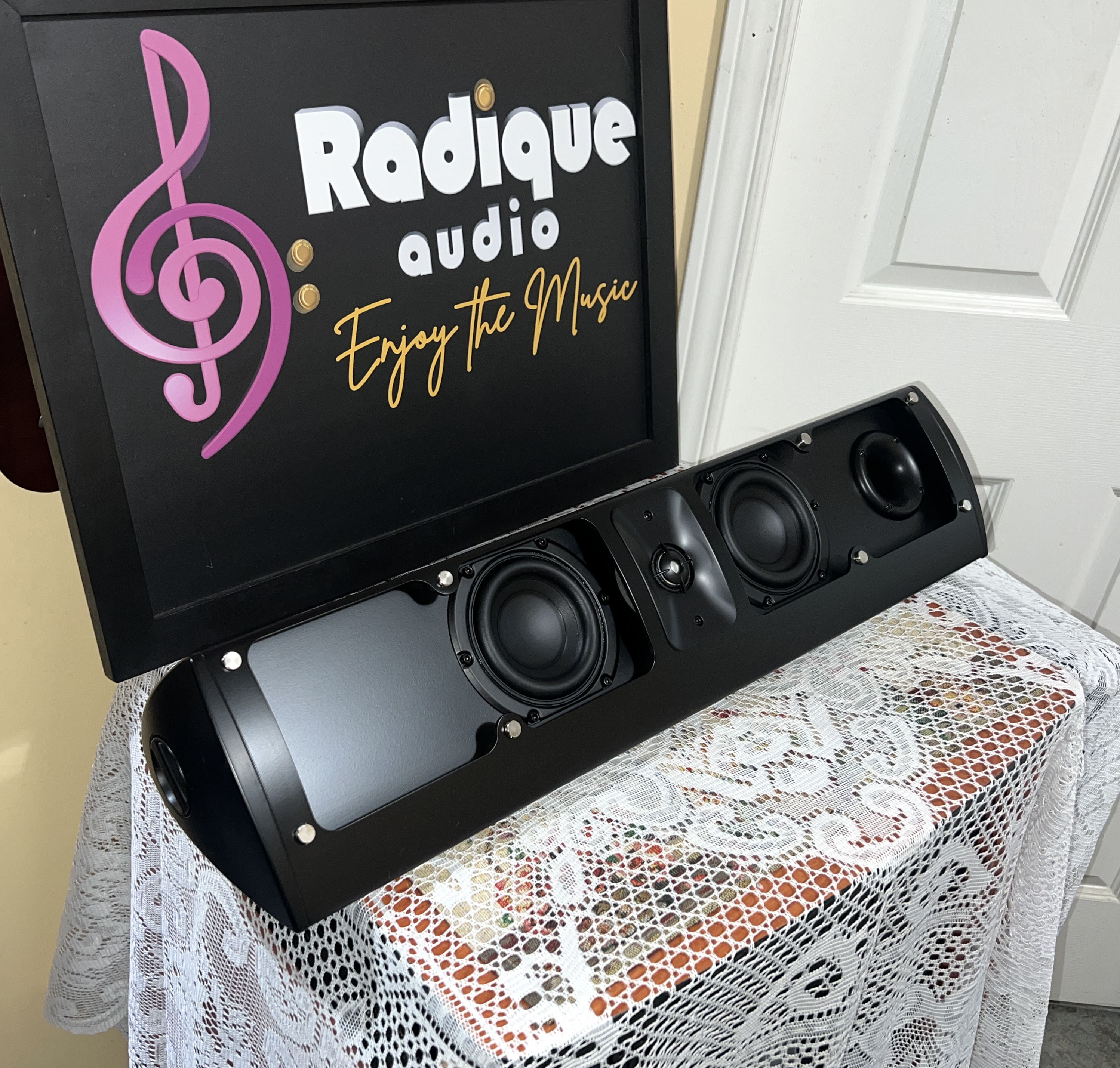
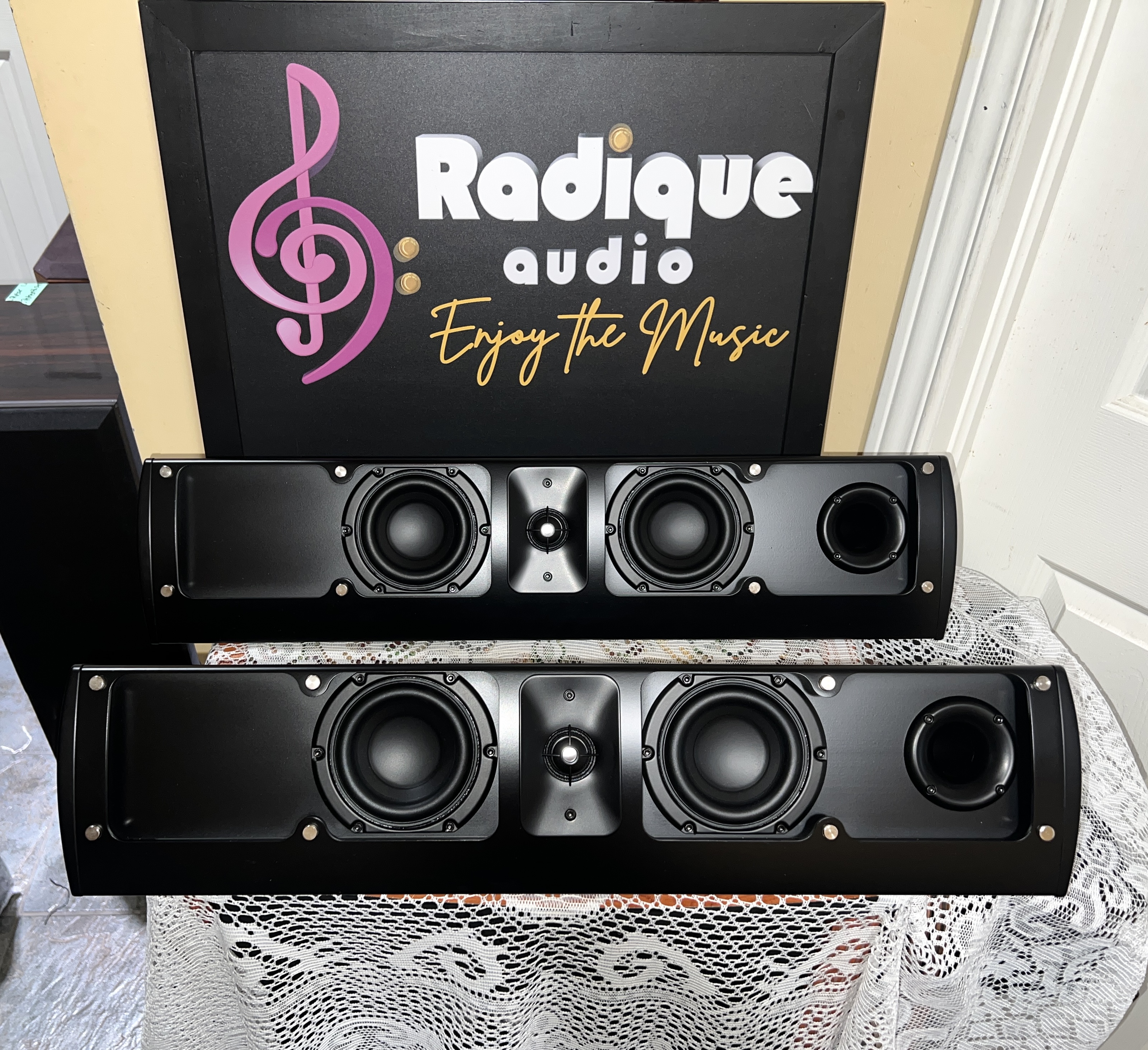
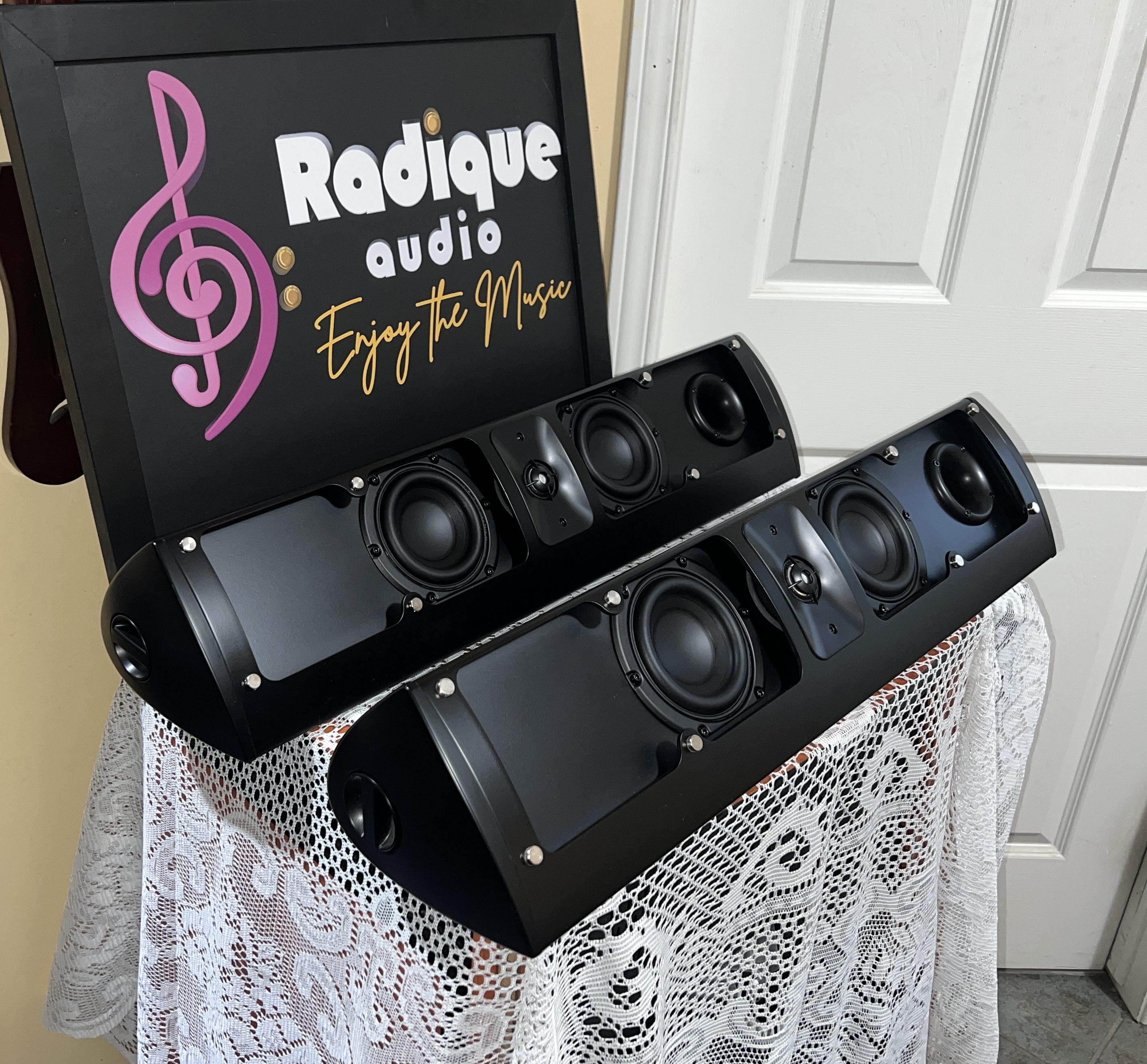
The difference is visible from the front, and it is the port. The VS300 shares its tweeter, its terminals, its crossover and its grille with the VS400 floorstander that sat above it in the same line — but the VS400 vents out the back, and a speaker that vents out the back cannot be pushed flat against a wall without the wall itself changing how it sounds. PSB moved the VS300’s port to the front. That single decision is what separates a speaker designed to hang on a wall from a bookshelf speaker with a bracket screwed to it, and almost nothing else in the category made it.
On-Wall Correction
The second decision is a switch on the back, and it is the reason these measure flat where they are actually used. Mounting any speaker hard against a wall creates a dip in its response centred around 400 to 500 Hz, where the sound reflecting off the wall behind arrives late and cancels part of what came forward. PSB’s David Smith found it during the VS300’s development and built a corrective circuit into the crossover to fill it in. The switch selects NORMAL for free-standing use or ON-WALL for wall mounting, so the speaker is flat in either position rather than compromised in one of them. On the used market this is the feature people go looking for and rarely find.
The Bracket
The mounting bracket is the third, and it is the one you will appreciate every time you change the room. It fixes to the cabinet and rotates through a wide arc, locked by a knob at one end that tightens and loosens by hand — so a speaker already hung on the wall can be aimed inward toward the seat, or tilted up or down, with no tools and nothing taken down. The same bracket lets the speaker lie horizontally on a shelf, a console or above a display and be angled at the listener from there, which makes it a genuine centre-channel option as well as a wall speaker.
The Aluminum Cabinet
The cabinet is extruded aluminum — a vented metal enclosure rather than moulded plastic or thin MDF — and the difference is obvious the moment you pick one up. A metal extrusion of this section is far stiffer for its wall thickness than anything that could be moulded, which keeps cabinet resonance out of a design whose whole purpose is to be slim, and it is why these still feel like precision hardware two decades on when their plastic contemporaries feel like accessories. In black the anodised finish reads as equipment rather than decor, and it disappears against a dark wall or a display bezel.
The Driver Array
Behind the grille is a two-way, three-driver array: a pair of 4.5 inch polypropylene woofers on butyl rubber surrounds flanking a one inch aluminum dome, crossed over at 2.5 kHz. Two small woofers rather than one larger one buys low-frequency output while keeping the baffle narrow, and it keeps the vertical dispersion tidy, which is what you want from a speaker sitting at ear height on a wall. Response runs to 68 Hz on axis with output to 52 Hz, so a subwoofer belongs in the system, as it does with any speaker this size.
Connections
Connection is by five-way gold-plated binding posts, which is not a given at this size — plenty of on-walls of the era shipped with spring clips, and a spring clip limits you to bare wire for the life of the speaker. Five-way posts take banana plugs, spades or bare wire, so these accept a properly terminated cable and a mechanical connection that will not work loose behind a speaker you would rather not take down again.
What to Drive Them With
One honest note on partnering equipment: at 86 dB sensitivity and six ohms nominal, dipping to four, these are not a lifestyle speaker for a lifestyle amplifier. They want a receiver or amplifier with real current delivery, and PSB rated them for 25 to 100 watts. Given proper power they repay it — the aluminum cabinet and the metal dome are both there to be transparent, and they will show you what the amplifier upstream is doing.
Radique’s Take
The cabinets are stamped made in Canada, which on a wall-mounted speaker is worth more than provenance for its own sake. PSB has built its reputation on measured, repeatable engineering rather than styling, and the VS300 is that approach pointed at a format the rest of the industry was treating as a furniture problem. A front port, a corrective crossover, an aluminum extrusion and real binding posts are what it looks like when a speaker company builds an on-wall instead of an accessory. It sold for $749 USD each when new.
Testing
This unit has been thoroughly inspected and tested to confirm full functionality.
Condition
Cosmetically the speakers are either graded Excellent or Very Good.
The speakers that are in excellent condition, the cabinet and grille are unmarked.
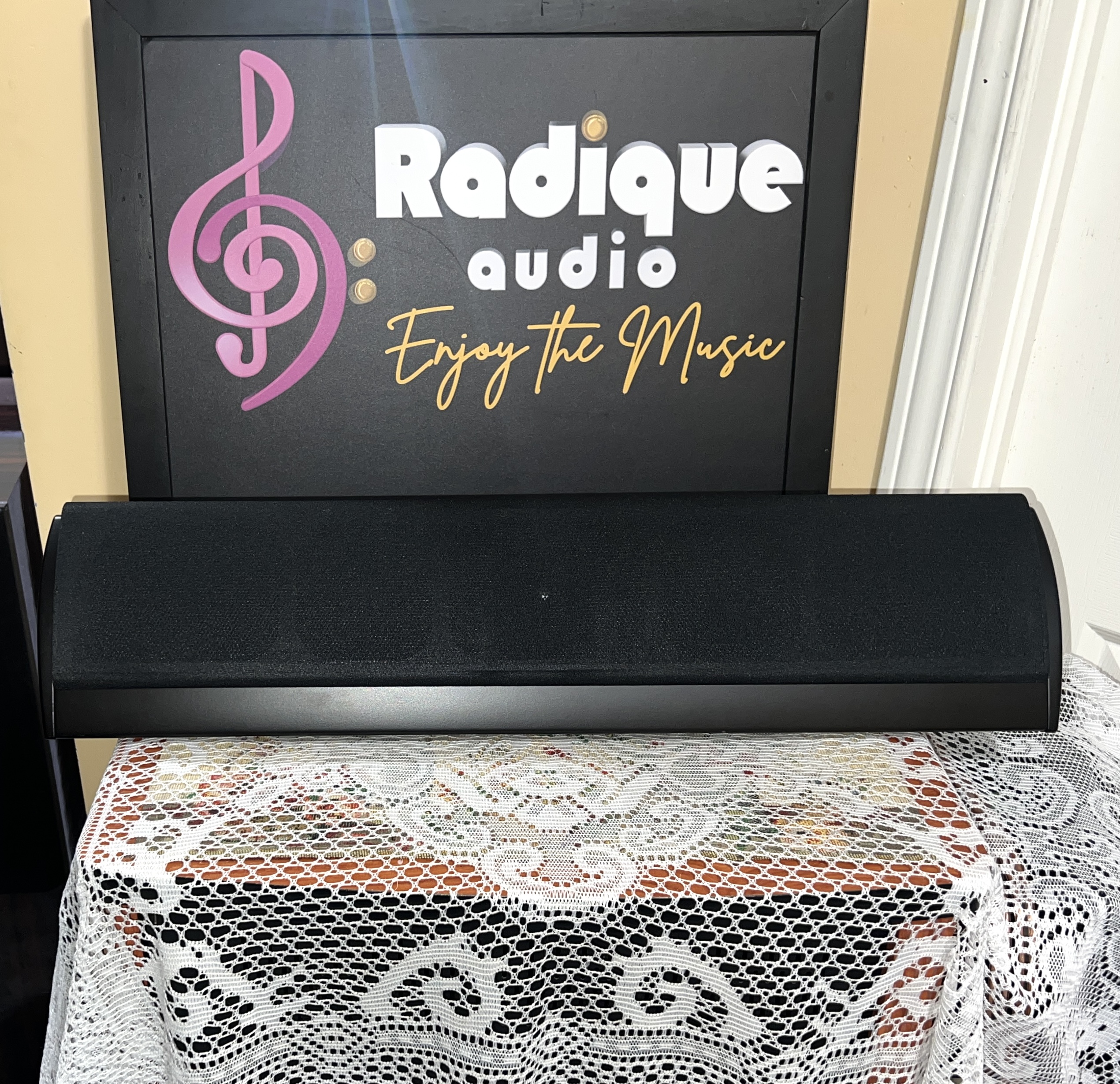
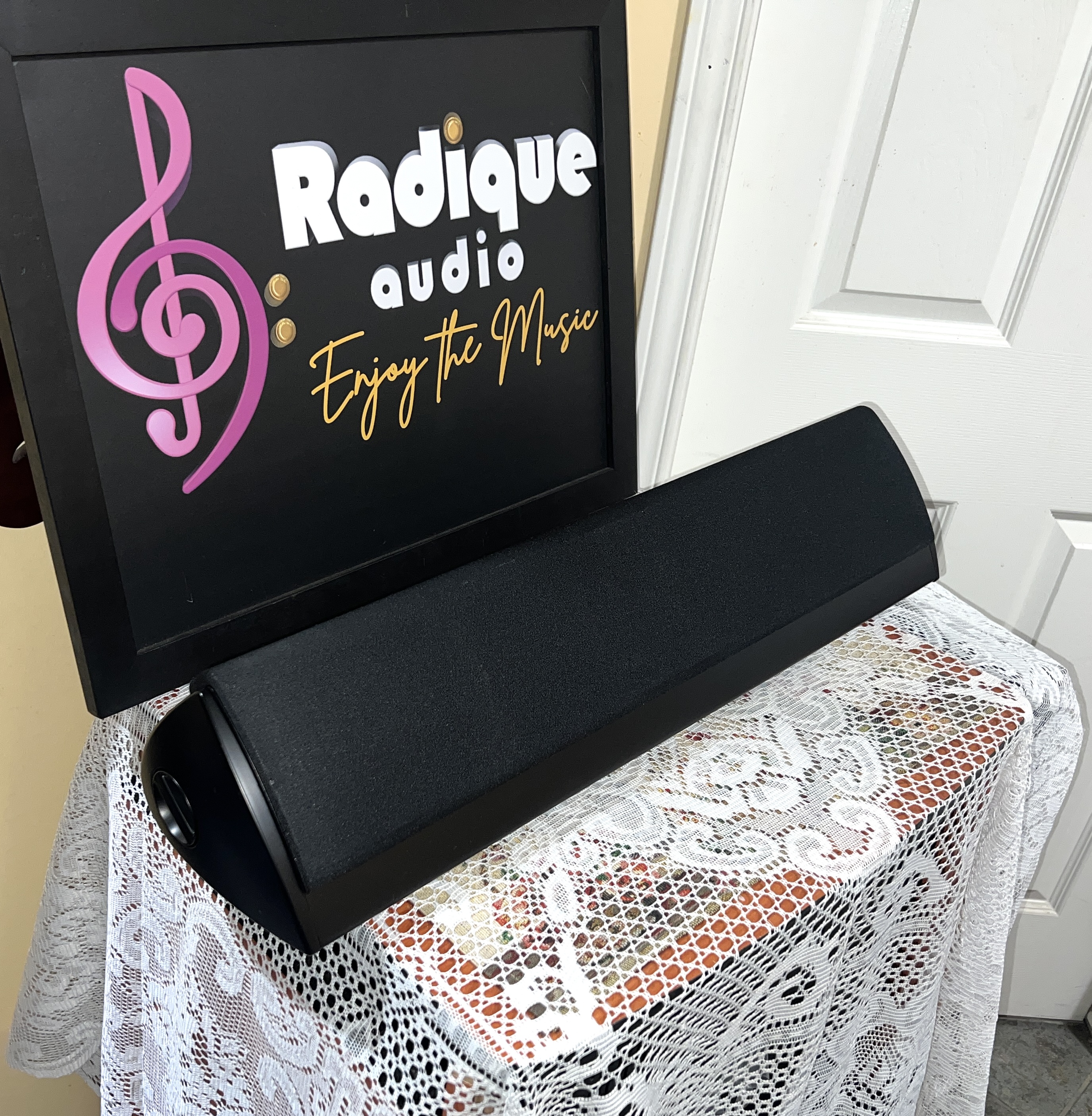
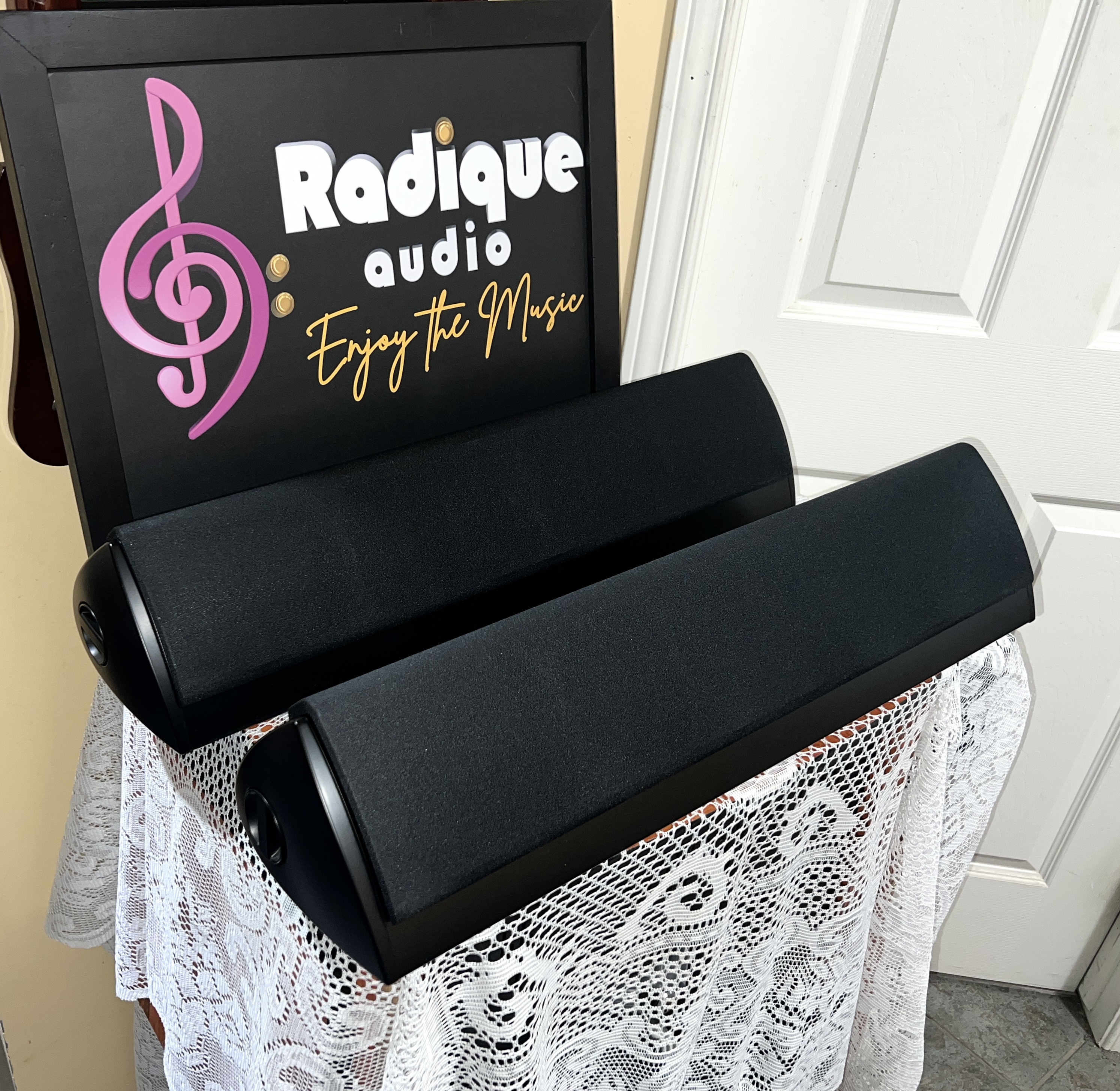
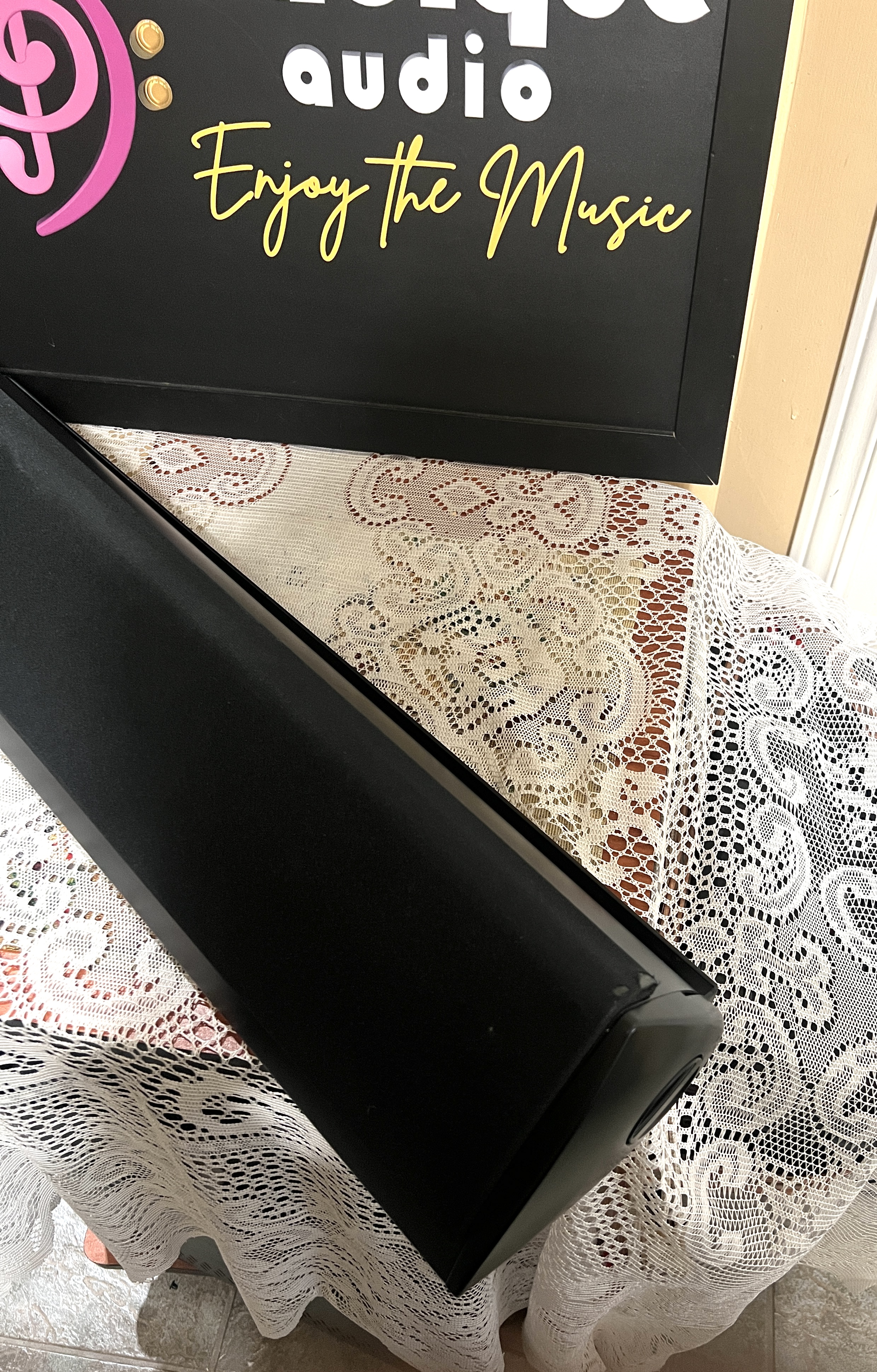
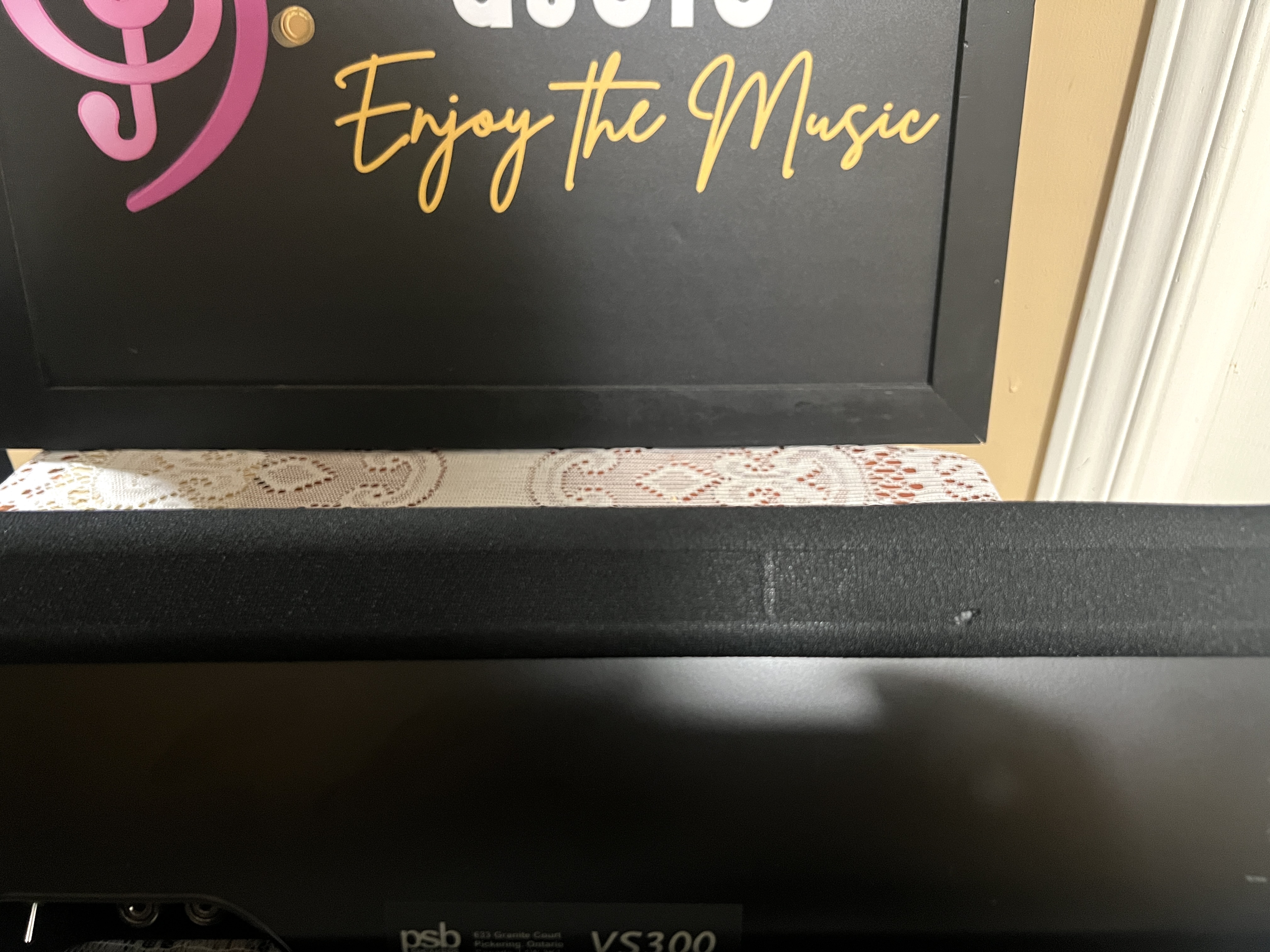
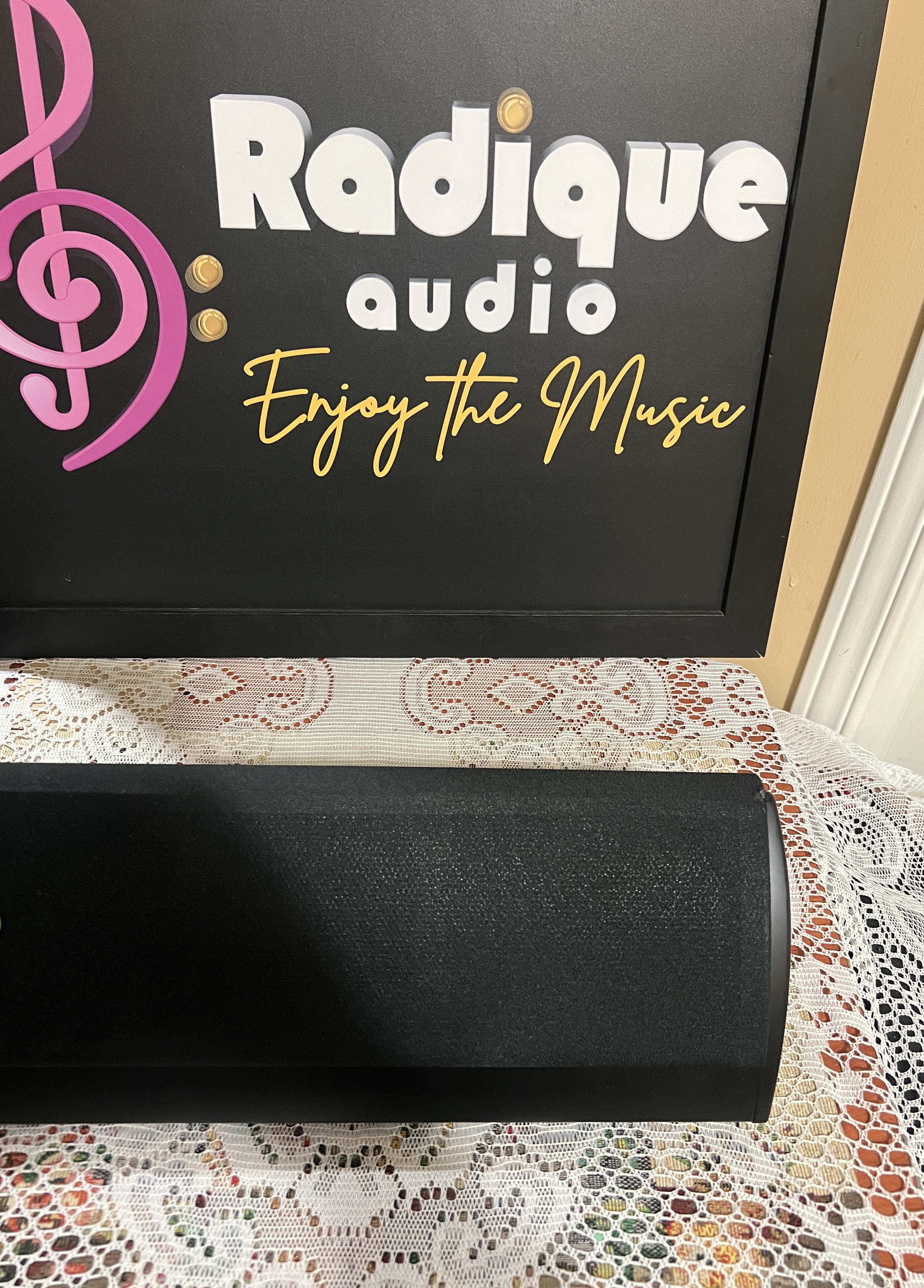
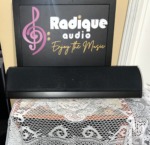
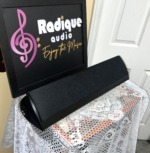
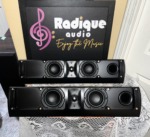
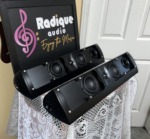
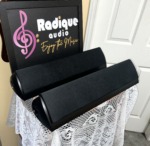
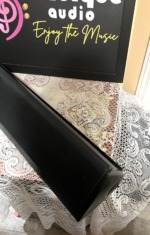
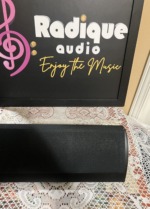
The speakers that are in very good condition, the cabinet is unmarked. The grille cloth carries a single small hole, roughly the size of a Tic Tac, at the extreme edge of the frame — it is the only thing separating this unit from the Excellent-graded ones, and with the grille in place at normal viewing distance the two are difficult to tell apart. The grille is removable, and on a wall or surround position it sits well away from the eye. Last three pictures show the grilles for these speakers.
Speaker Cable to Suit
Because these terminate in five-way binding posts, they are a straightforward match for our Custom Speaker Cable Builder, built to order in any length you specify and terminated to suit. Banana plugs are the natural choice on a wall-mounted speaker — a banana seats positively in a five-way post and can be disconnected and reseated without retermination, which matters on something hung out of easy reach. Spades are available if you prefer a captive connection, and long runs are no trouble, which on a wall installation is usually what you want.
A Canadian-built on-wall speaker in a metal cabinet, front-ported so it can actually go against a wall, with wall-bounce correction in the crossover and a bracket you can aim by hand. Available for pickup in Kanata, or shipped across Canada and internationally — we have sent equipment to fifteen countries in the past year, each piece packed in-house in 275 lb test double-wall boxes. Live shipping rates for your address are calculated at checkout. Backed by Radique Audio’s Bumper-to-Bumper Warranty and our Perpetual Trade-Back Program. Available for audition by appointment in Kanata.
PSB VisionSound VS300 Specifications
- Type: Two-way, three-driver on-wall loudspeaker, vented extruded aluminum enclosure, front-ported
- Drive units: One 1 inch aluminum-dome tweeter, two 4.5 inch polypropylene-cone woofers with butyl rubber surrounds
- Crossover frequency: 2.5 kHz
- On-wall correction: Switch-selectable NORMAL / ON-WALL crossover compensation
- Frequency range: 68 Hz – 23,000 Hz on axis; low-frequency cutoff 52 Hz at -10 dB
- Sensitivity: 86 dB at 2.83 V
- Nominal impedance: 6 ohms, minimum 4 ohms
- Recommended amplifier power: 25 – 100 watts
- Connections: Five-way gold-plated binding posts
- Mounting: Adjustable rotating wall bracket included, hand-tightened, no tools required
- Finish: Black
- Country of manufacture: Canada
- Original retail: $749 USD each
- Dimensions: (Width x Height x Depth) 6.3 x 26.0 x 5.3 inches (161 x 660 x 135 mm), with bracket fitted
- Weight: 14 lbs (6.4 kg) each, with wall bracket fitted
✅ Buy With Confidence — The Radique Promise
Backed by Radique Audio’s Bumper-to-Bumper Warranty and our Perpetual Trade-Back Program. When you’re ready to move on, we’ll take it back. That’s the Radique difference.
📦 Watch how we protect your gear — our unboxing video.
📺 Curious about our business? Check out our YouTube channel for behind-the-scenes videos and more!
📞 Questions? Use the Ask a Question button above, or call us at 613-416-9995.
⭐ Don’t Just Take Our Word For It
Radique Audio holds over 600 customer ratings averaging 4.97 stars across six public platforms — Facebook Marketplace, Kijiji, Canuck Audio Mart, Google and others. Every rating lives somewhere we don’t control, so you can read the originals yourself, including the less flattering ones. See what our customers say. 👉
| Weight | N/A |
|---|---|
| Dimensions | N/A |
| PSB VisionSound VS300 | PSB VisionSound VS300 Excellent Condition, PSB VisionSound VS300 Very Good Condition |
PSB began in the summer of 1972 in St. Jacobs, Ontario, where Paul Barton and two high-school friends started building speakers. The name stands for Paul and Sue Barton. PSB says every speaker it makes is voiced in the National Research Council's anechoic chambers here in Ottawa. We carry PSB towers, bookshelf speakers, centre channels and subwoofers. We've had more than 440 PSB listings so far, covering nearly 90 different models, second only to our other big Canadian brand, Paradigm. Every used PSB here is inspected, tested and serviced as required, then photographed in-house and covered by our Bumper-to-Bumper Warranty and Perpetual Trade-Back Program. Don't see the model you want? Tell us on First Dibs and we'll email you when one arrives.
Our five best-selling PSB models so far: the Alpha Intro LR bookshelf speakers, the Image 8C centre, the Image 4T towers, the Alpha SubZero i subwoofer and the Alpha B bookshelf speakers.
The PSB story, 1972 to today
Paul Barton founded PSB in St. Jacobs, Ontario, in the summer of 1972 with two high-school friends, and named it for himself and Sue Barton, his high-school sweetheart and now his wife. PSB stayed in St. Jacobs for about its first eight years.
The Ottawa connection. In 1973 or 1974 (sources differ) PSB's Beta II caught the attention of Dr. Floyd Toole at the National Research Council in Ottawa, and Barton has used the NRC's Ottawa facilities since 1974. PSB says every speaker it makes is still voiced in the NRC's anechoic chambers.
Lenbrook and Stratus. The Lenbrook Group of Pickering, Ontario bought PSB in the mid-1980s (PSB's own timeline says 1985), and PSB is now based in Pickering. The Stratus series began in the late 1980s, and Stereophile first reviewed the Stratus Gold in 1991.
Alpha, Image and beyond. The budget Alpha launched in 1991, and more than 50,000 pairs had sold by 2000. The Image series replaced the Century series in 1999, the Platinum flagship followed in 2002, then Synchrony in 2007 and Imagine in 2008. PSB marked its 50th anniversary in 2022 with the Passif 50.
Which PSB is which?
Early models (1970s and 1980s): the Beta II, Avanté II, Passif II and Project B2, then the R series after the Lenbrook purchase.
Stratus (late 1980s to the 2000s): the upper line, including the Mini, Silver, Gold and Gold i. The Gold is a three-way with a 10" woofer.
Alpha (1991 to today): the entry line, including the Alpha A/V, Alpha B, Alpha B1 and later the Alpha P5. Our best-selling Alpha Intro LR and Alpha B come from this family.
Image (1999 to the 2010s): one step above Alpha. Our best-selling Image 8C centre and Image 4T towers come from this family.
Platinum (2002), Synchrony (2007) and Imagine (2008): the higher lines of the 2000s.
SubSeries and SubZero: PSB's powered subwoofers, such as the Alpha SubZero i we sell often.
Buying used PSB: what to check
Where it was made. Lines launched from about 2008 onward, such as Imagine and later Image and Alpha models, were made in China. Check the label before calling an older PSB "made in Canada"; spec sheets from the 1990s list only the Pickering address.
Amplifier load. The Stratus Gold and Gold i have a 4-ohm nominal impedance, and owners say Stratus models want an amplifier with plenty of current.
Image tweeters. On Image series speakers, check that every tweeter works and sounds as bright as its partner. A dim or dead tweeter is a frequent point of failure on that line. We sell a new Peerless 1" replacement tweeter that drops straight in (Image 1B, 2B, 4T, 5T, 8C, 10S and more) and is more robust than the original, and we can install it while you wait.
Drivers. Owners report occasional woofer failures on older towers. Listen to each driver on its own.
Surrounds. Many PSB woofers, such as the Platinum T8's, use rubber surrounds rather than foam, but press gently on any woofer surround to check it.
Everything we list is inspected, tested and serviced as required here, and comes with our warranty.
You may also like…

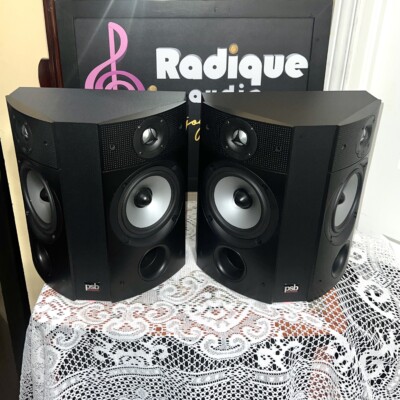
PSB Image 10S Bipole Surround Speakers — Black | Canada
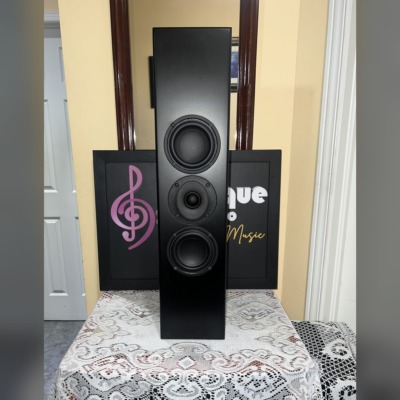
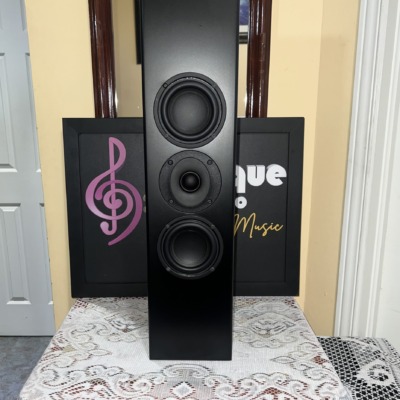
Two driver modules per cabinet — a 25mm aluminium dome tweeter and a 133mm polypropylene woofer in each — angled rather than run out of phase, which widens the listening window without the comb filtering a true dipole introduces. Crossover at 2,500 Hz, 91 dB sensitivity into 6 ohms, 65 Hz to 23 kHz. Made in Canada, and a set of flush wall mounts comes with them.
Related Products
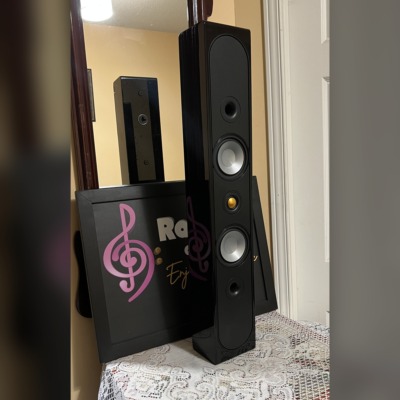
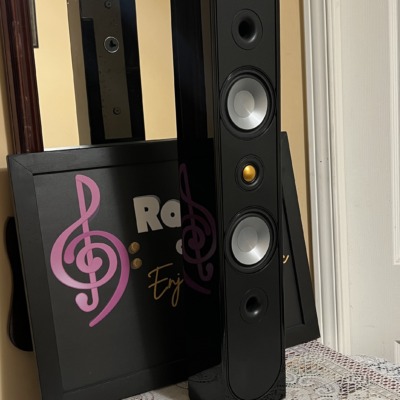
Monitor Audio Radius 250HD LCR Speakers, Pair – Gloss Black
A matched pair of slim gloss black Monitor Audio speakers from the Radius HD range, in good condition, each built to work as a left, center, right or rear speaker, standing upright, lying flat or hung on a wall.
✔️ Good condition — light scratches visible under bright light; grilles included
✔️ Two slim speakers for a stereo pair, left and right of a center, or a set of rears
✔️ Two rear keyhole slots on each; the matching wall bracket is listed separately
✔️ Covered by Radique Warranty
✔️ Includes Perpetual Trade-Back Program eligibility
✔️ Expertly packed for safe shipping


KEF HTS1001 Uni-Q Satellite Speakers Black (Single)
KEF's Uni-Q array puts a 0.6-inch aluminium dome at the acoustic centre of the 3-inch mid-bass, so dispersion stays even off-axis and the far seat hears what the middle seat does. Sealed cast aluminium cabinet in high-gloss black, magnetically shielded, 120 Hz to 22 kHz, 86 dB, 10 to 100 watts. Terminals take bare wire or pin connectors. Very good cosmetic condition.


KEF HTS1001 Uni-Q Satellite Speakers Black Pair
KEF’s Uni-Q array puts a 0.6-inch aluminium dome at the acoustic centre of a 3-inch mid-bass cone, so the pair behaves as a single source and the tonal balance holds across the room rather than in one chair. Sealed cast aluminium enclosures, 120 Hz to 22 kHz, 86 dB, magnetically shielded. Very good cosmetic condition.
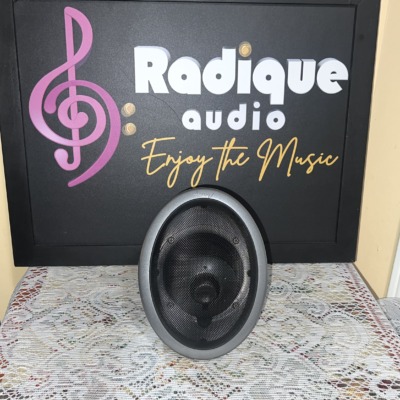
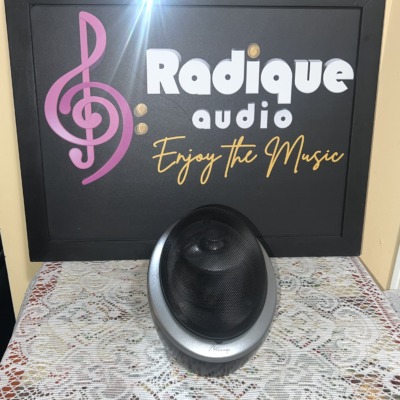
Mirage Omnisat OS 1PB-1 Omnipolar Satellite – Made in Canada
Both drivers fire upward into spoon-shaped reflectors Mirage calls OMNIGUIDEs, throwing sound through a full 360 degrees with a deliberate bias toward the front — which is what takes the sweet spot off a single chair. This is the original version at a genuine 7 lbs each, with a cast aluminium baffle and butyl rubber surrounds rather than foam. Built in Canada; condition very good.
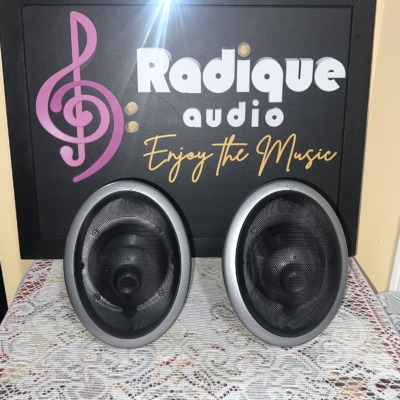
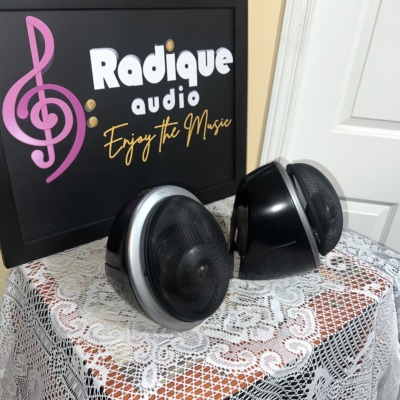
Mirage Omnisat OS 1PB-1 Omnipolar Satellite (Pair) – Made in Canada
Both drivers fire upward into spoon-shaped OMNIGUIDE reflectors, giving 360-degree dispersion with a deliberate forward bias. 70 Hz to 20 kHz, 89 dB, cast aluminum woofer baffle and butyl surrounds rather than foam. These are the original 7 lb version; the later revisions come in under five. Very good condition.
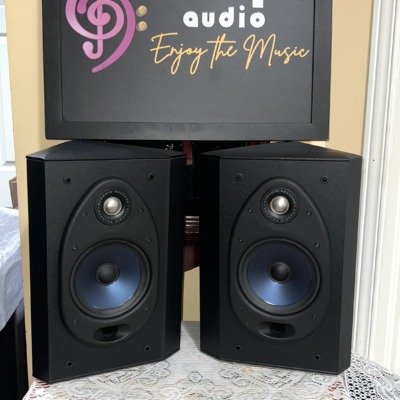
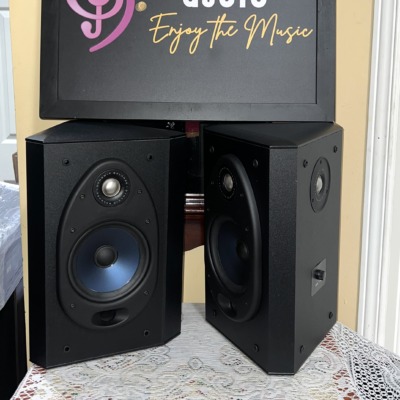
Polk Audio f/x 500i Bipole/Dipole Surrounds — Made in USA, Pair
A genuine mirror-imaged pair, labelled LC and RC, with two driver arrays set 45 degrees apart and a rear-panel switch that flips them between bipole and dipole — locatable effects on the wall behind you, a diffuse field on the side walls, same speakers either way. 19.4 lbs each, half again the weight of the FXi A6 that replaced them, and 2 dB more sensitive. Built in the United States, with keyhole mounts moulded into the cabinet. Very Good condition.
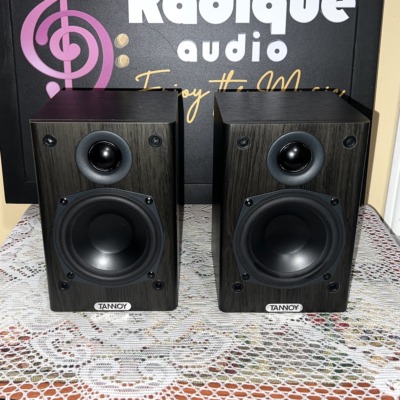
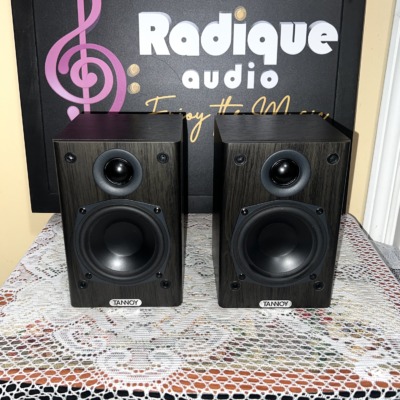
Tannoy Mercury FR Custom Compact Speakers – Dark Oak, Pair
A pair of compact two-way Tannoy speakers from the limited Custom edition of Tannoy's Mercury F-series, in very good condition, with a wall bracket built into the back of each cabinet.
✔️ Very good condition — free of significant marks; both grilles included
✔️ The limited Custom edition of Tannoy's Mercury F-series, in Dark Oak
✔️ Built-in wall bracket — hang them, or stand them on a shelf
✔️ Covered by Radique Warranty
✔️ Includes Perpetual Trade-Back Program eligibility
✔️ Expertly packed for safe shipping
Monitor Audio Radius 250HD LCR Speaker – Gloss Black, Wall-Mount
A slim gloss black Monitor Audio speaker from the Radius HD range, in good condition, built to work as a left, center, right or rear speaker, standing upright, lying flat or hung on a wall.
✔️ Good condition — light scratches visible under bright light; grille included
✔️ One slim speaker for left, center, right or rear duty
✔️ Two rear keyhole slots; the matching wall bracket is listed separately
✔️ Covered by Radique Warranty
✔️ Includes Perpetual Trade-Back Program eligibility
✔️ Expertly packed for safe shipping
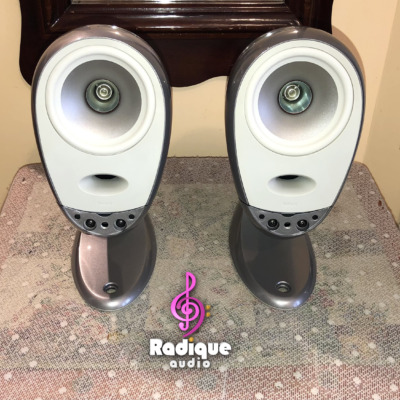
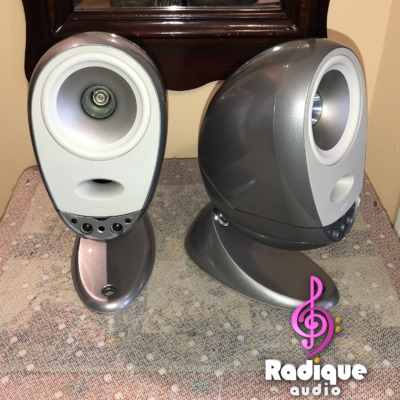
Tannoy Arena Satellites, Pair – Dual Concentric, Four Finishes
Tannoy's die-cast aluminum Arena satellites, in very good condition, offered by the pair in four gloss finishes (white, gloss black, bronze and silver), with or without their matching cast bases.
✔️ Very good condition — the lacquered aluminum shells present well
✔️ Tannoy Dual Concentric drivers in cast aluminum, magnetically shielded
✔️ Four gloss finishes; matching cast bases on the silver, black and bronze pairs
✔️ Covered by Radique Warranty
✔️ Includes Perpetual Trade-Back Program eligibility
✔️ Expertly packed for safe shipping
