
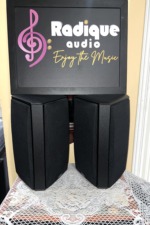
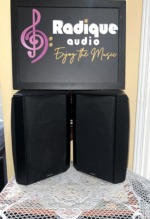
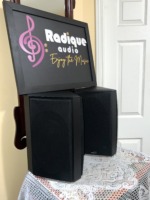
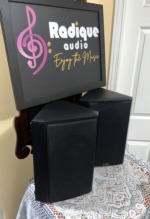
Polk Audio f/x 500i Bipole/Dipole Surrounds — Made in USA, Pair
$445.00
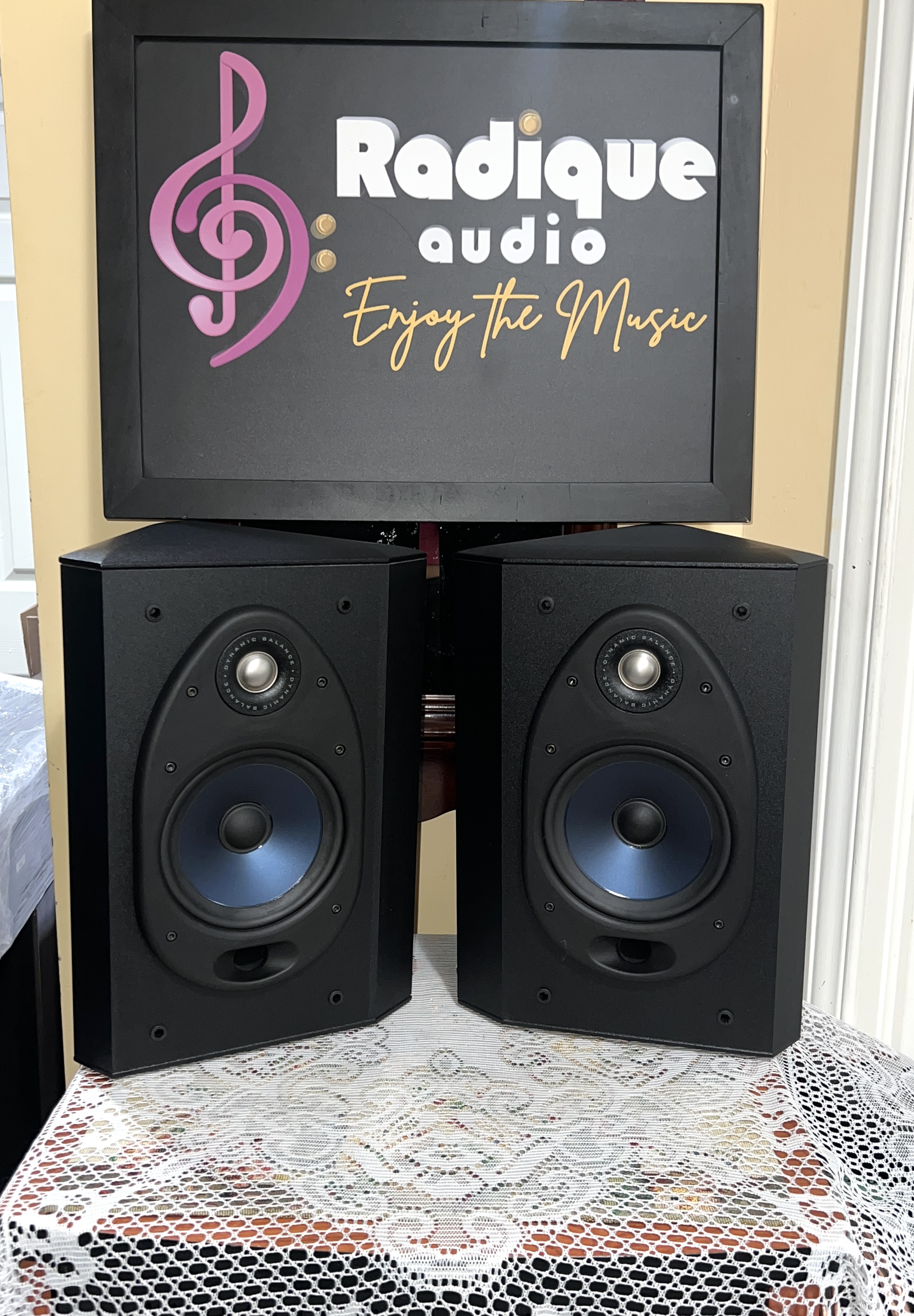
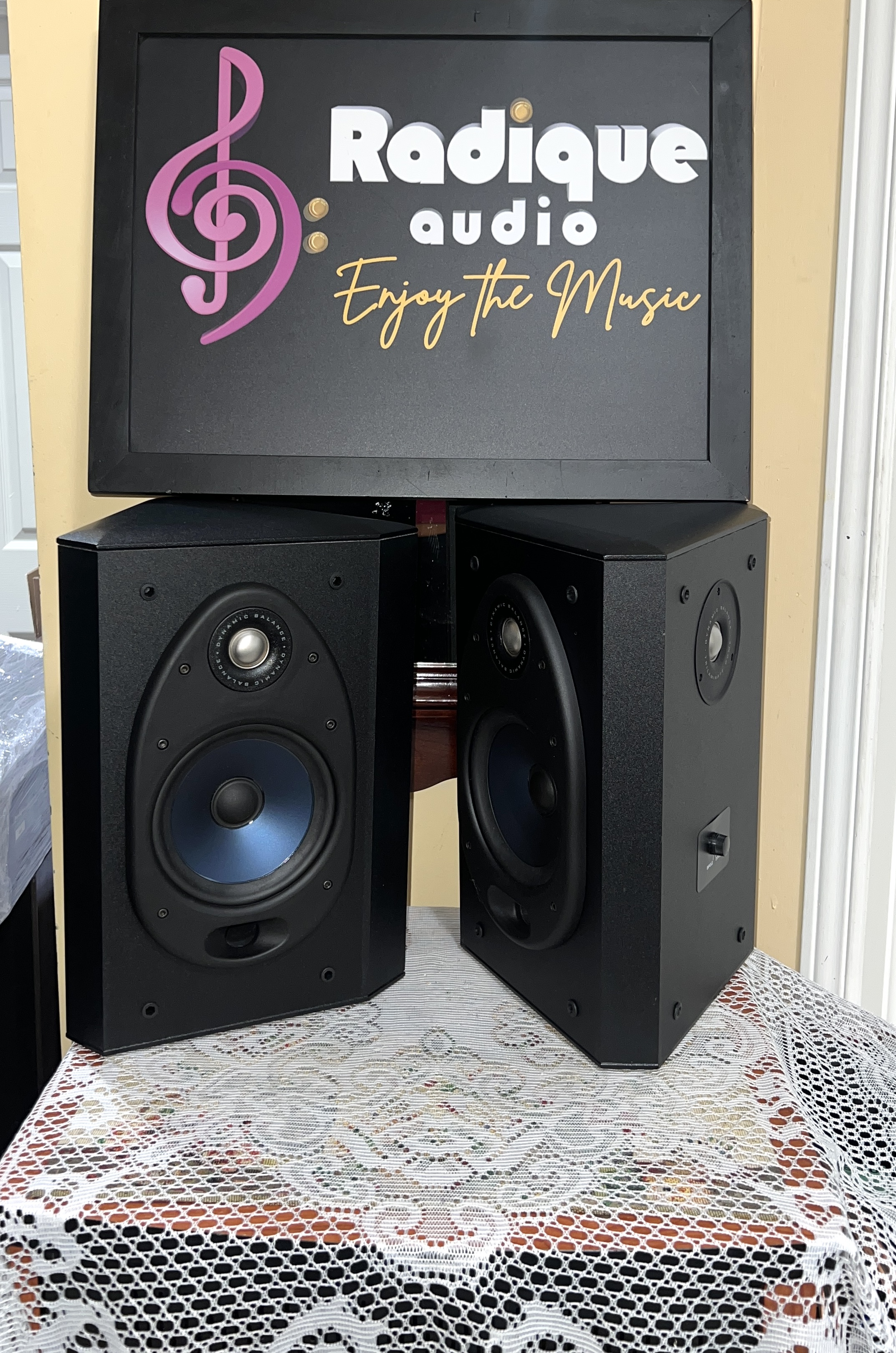
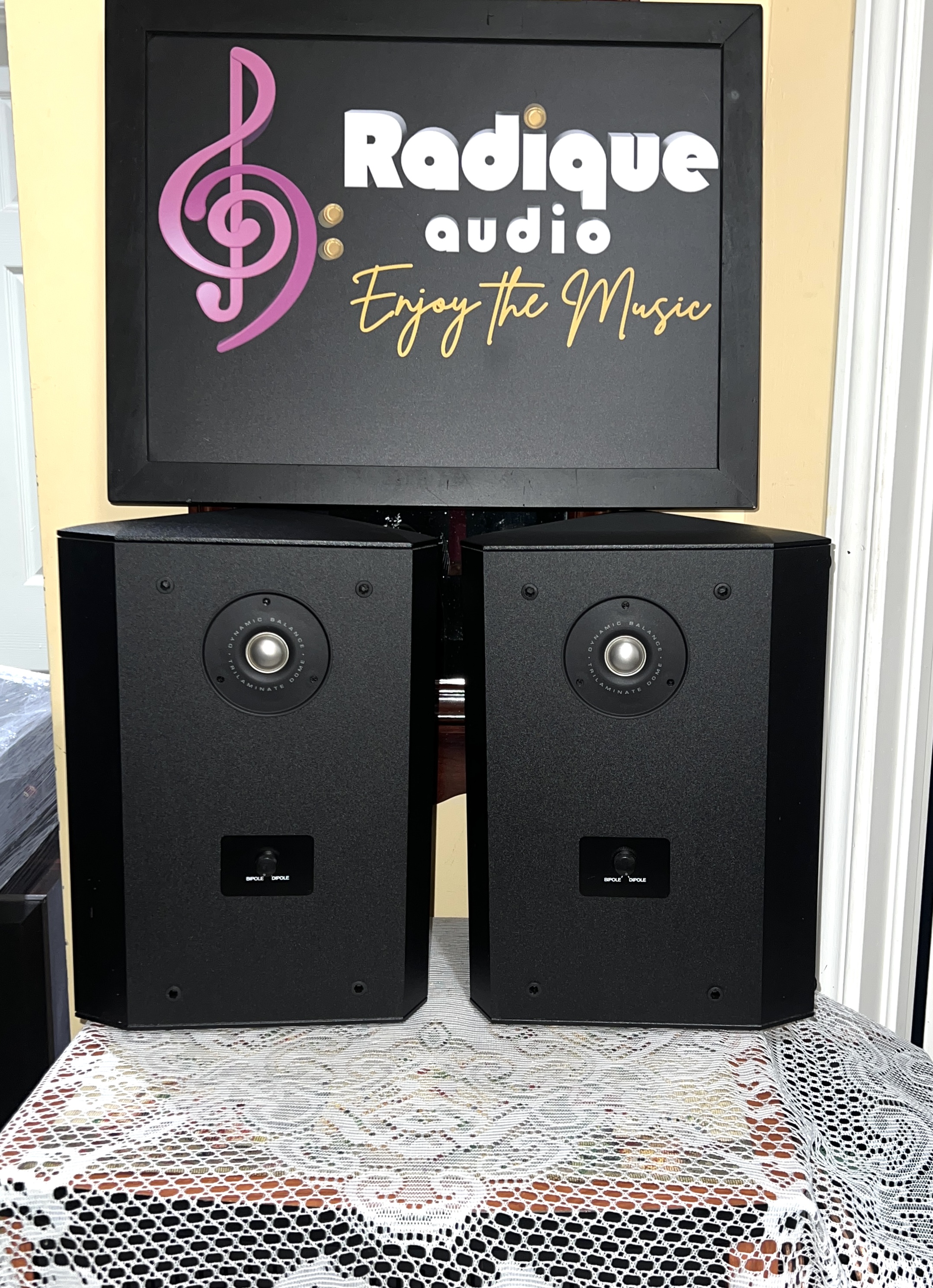
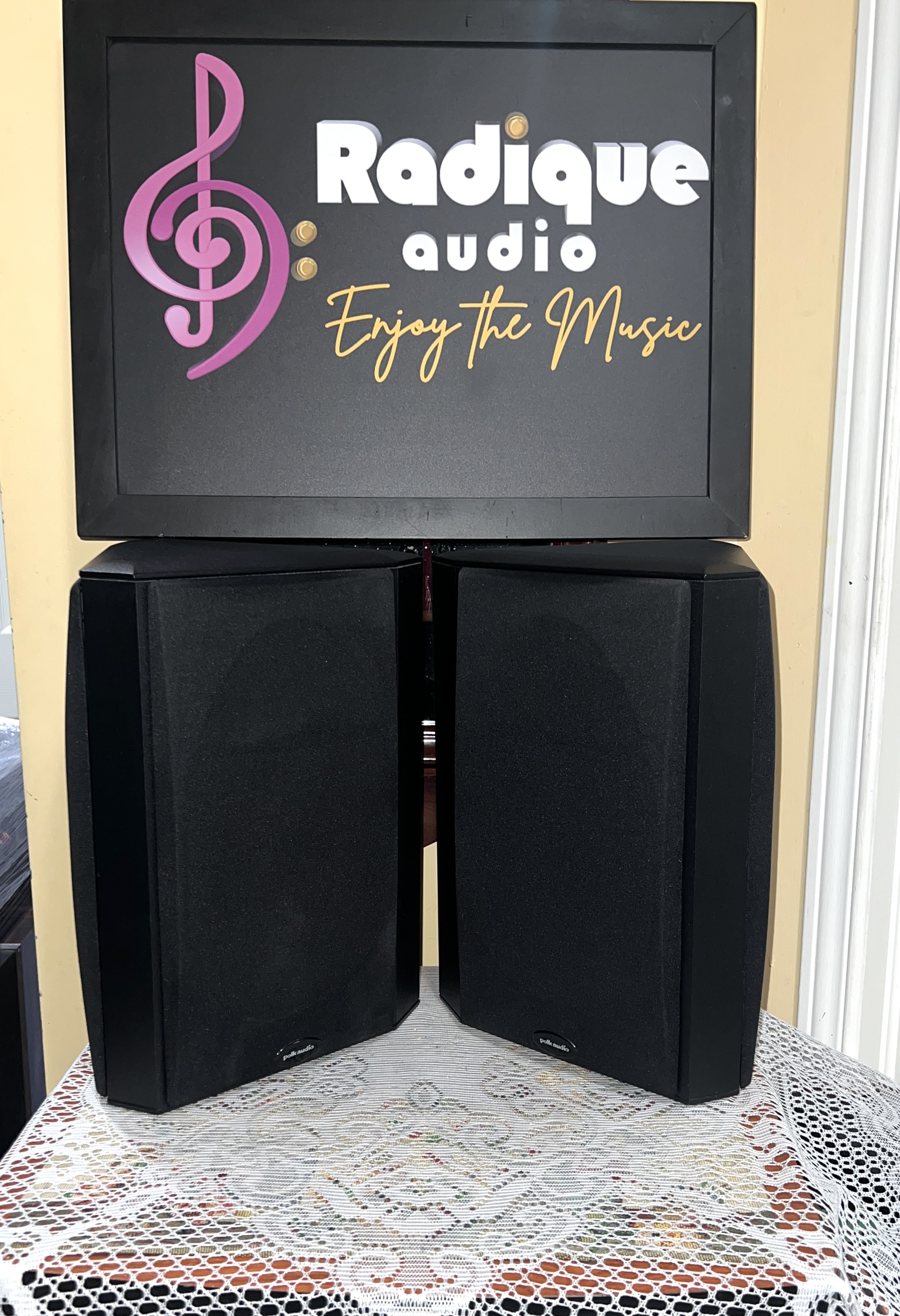
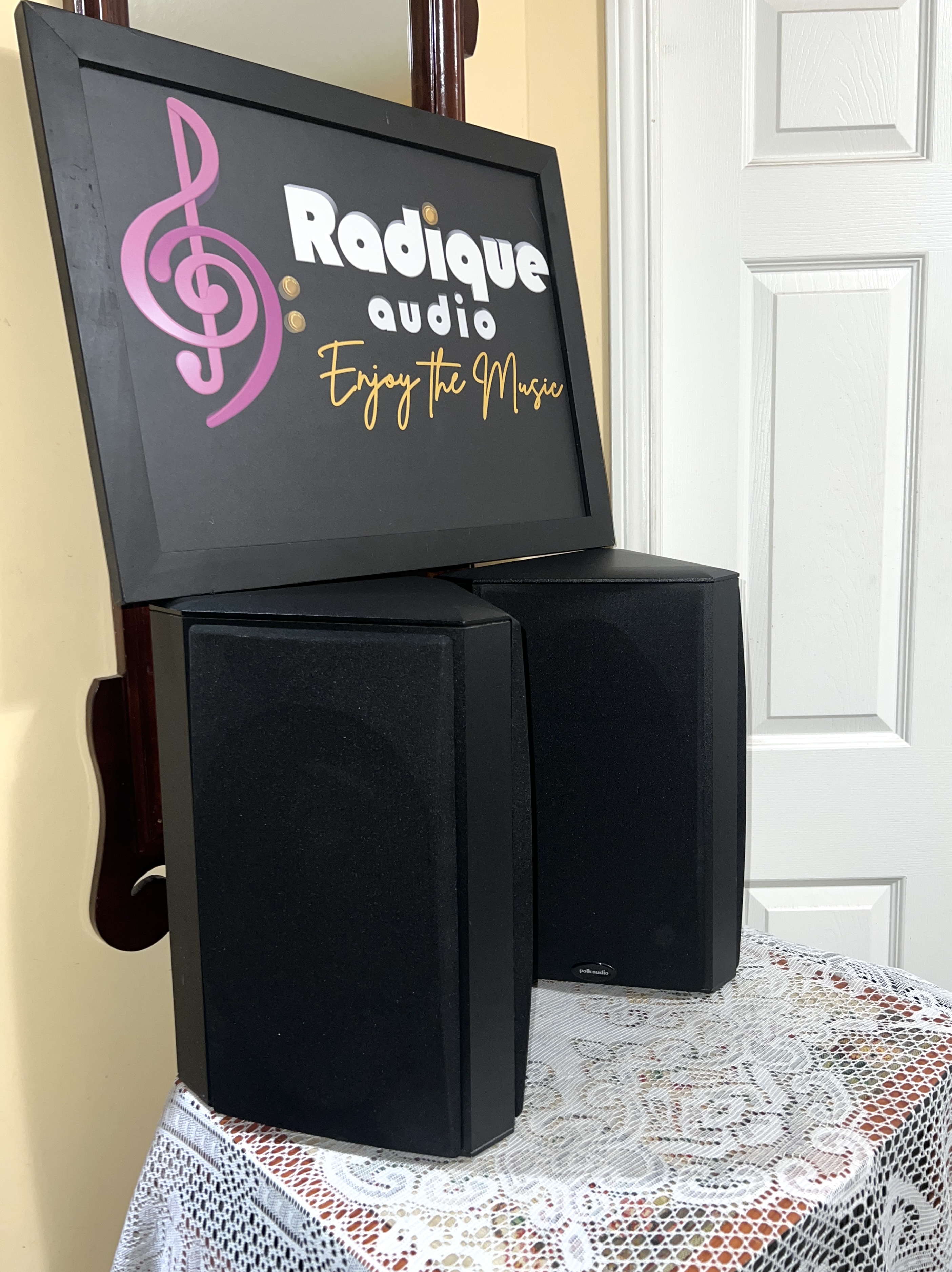
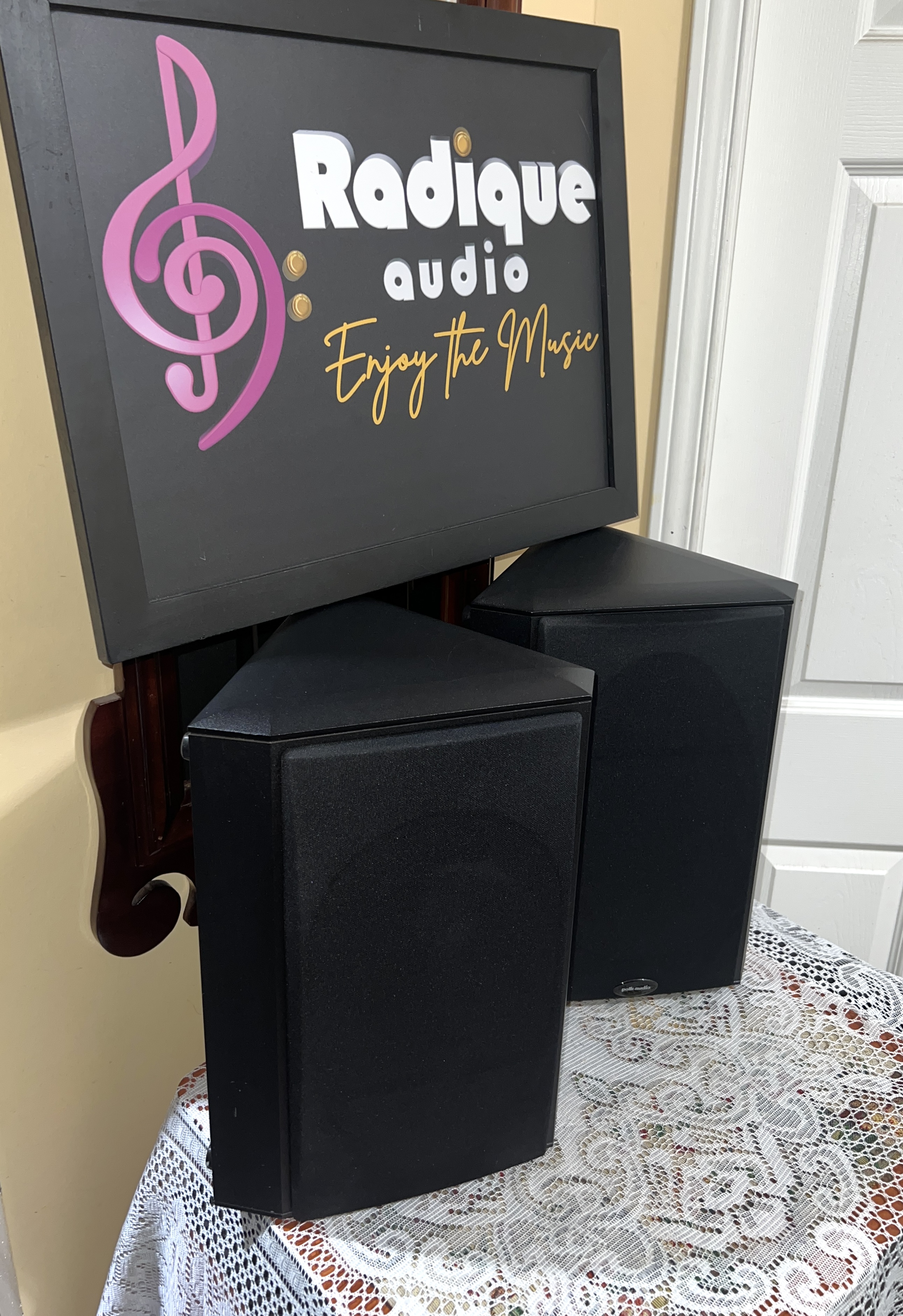
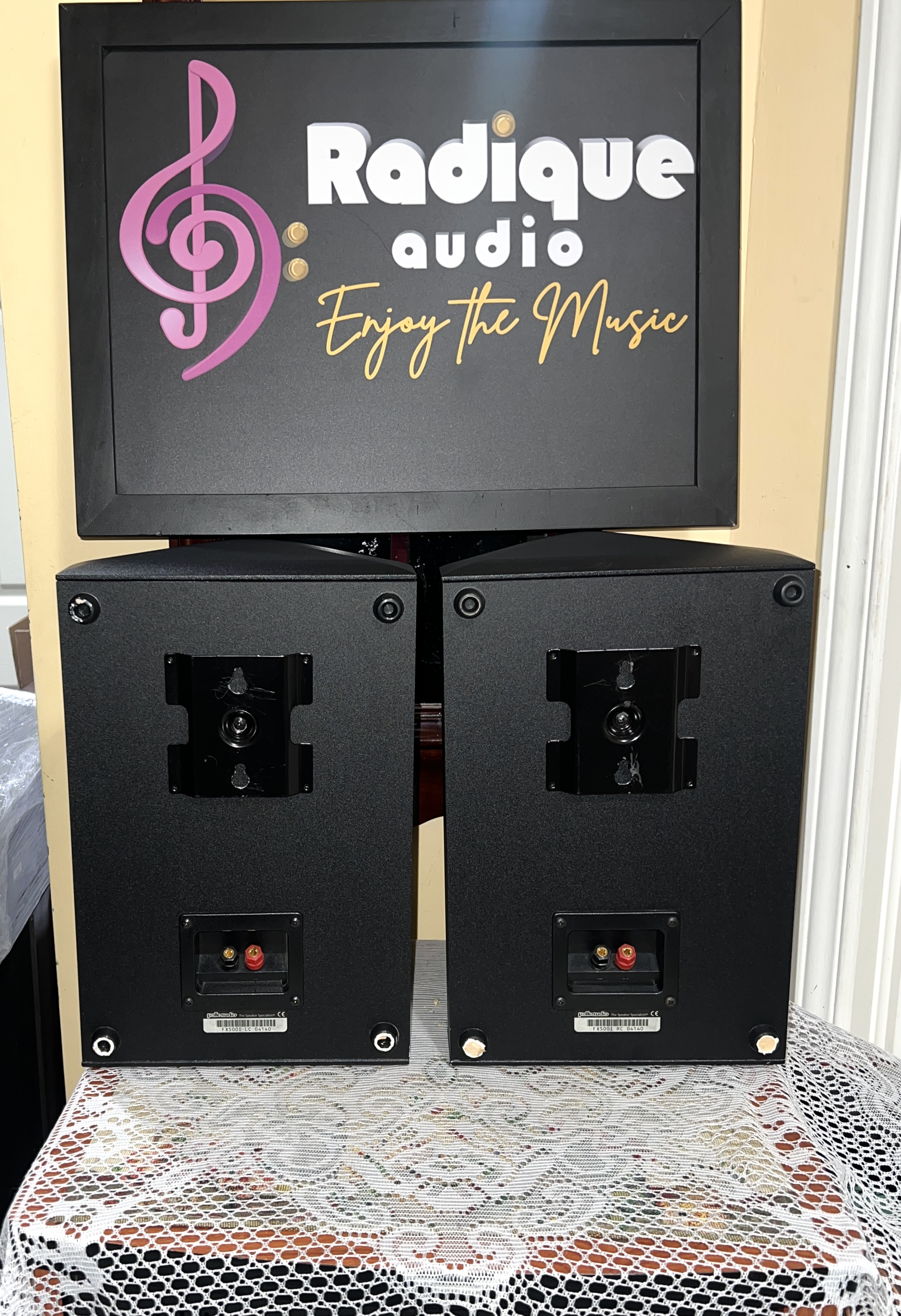
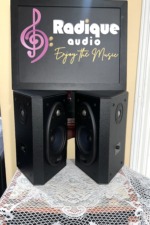
A genuine mirror-imaged pair, labelled LC and RC, with two driver arrays set 45 degrees apart and a rear-panel switch that flips them between bipole and dipole — locatable effects on the wall behind you, a diffuse field on the side walls, same speakers either way. 19.4 lbs each, half again the weight of the FXi A6 that replaced them, and 2 dB more sensitive. Built in the United States, with keyhole mounts moulded into the cabinet. Very Good condition.
1 in stock
Polk Audio f/x 500i — 19.4 lb Mirror-Imaged Surrounds, Switchable Bipole or Dipole, Made in the USA
A matched left/right pair of Polk Audio f/x 500i surround speakers, built in the United States, and a good deal more speaker than the surrounds most people end up with.
Why the Weight Matters
Weight tells the story before anything else does. These are 19.4 lbs each — half again as heavy as Polk’s own FXi A6 that followed them, and more than double the FXi A4, in a cabinet that is slightly smaller than the A6’s. That is not incidental. A surround speaker is usually where a manufacturer economises, because it is the one nobody auditions; a 19 lb cabinet is what it looks like when they did not.
The Driver Arrays
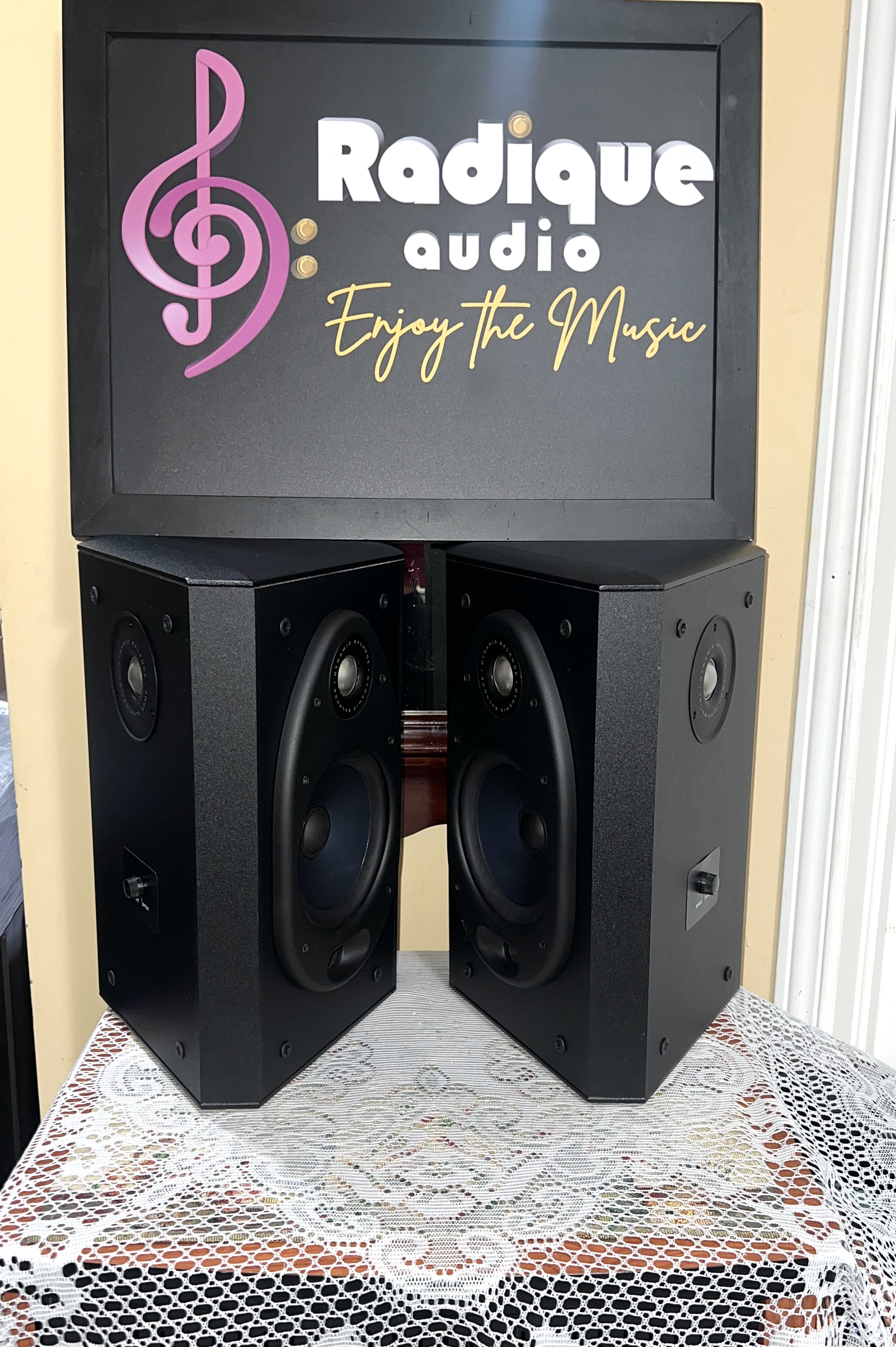
Inside each is a two-array design on a triangular cabinet. One angled face carries a 1 inch tri-laminate dome tweeter alongside a 6.5 inch blue composite Dynamic Balance woofer and the port. The opposite face carries a second matching tweeter, and the two arrays sit 45 degrees apart so the speaker throws a deliberate mix of direct and reflected sound rather than pointing everything at one seat. The tri-laminate domes are built from vapour-deposited micro-layers of stainless steel and aluminium — the tweeter Polk reserved for its upper models in this era, and a different material from the silk domes used in the FXi range that replaced these.
Bipole or Dipole
The rear-panel switch flips between bipole and dipole, and it is what makes the pair work in any room rather than one. Bipole runs the two arrays in phase and gives distinct, locatable effects, which is what you want on the wall behind the listening position. Dipole runs them out of phase and produces a diffuse, enveloping field with no obvious source, which is what you want on the side walls. Most surrounds force the room to suit the speaker. These adapt to the room you have, and you can change your mind later without changing speakers.
Mounting and Connections
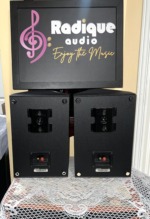
Two details on the back that will matter more than they sound. The wall mounts are keyhole slots cut into the cabinet itself, so there is no bracket to source, match or lose — the speaker goes straight onto a screw in the wall. And Polk fitted heavy-duty moulded rubber standoffs around them, which do two jobs at once: they hold the cabinet off the wall surface so it is mechanically isolated rather than buzzing against drywall, and the gap they create is exactly where the speaker cable runs. Anyone who has hung a speaker and then discovered the cable will not sit flat behind it will recognise the problem being solved. It is the sort of thing that only gets designed by someone who has actually installed one.
Driving Them
At 90 dB sensitivity into 8 ohms these are also easier to drive than either FXi model that succeeded them, both of which are 88 dB. That gap is small on paper and matters more than it looks, because surround channels are where a receiver’s amplifier section is thinnest — the front three get the attention and the rear pair gets what is left. Two decibels of efficiency is the difference between surrounds that keep up during a loud scene and surrounds that quietly fall behind it. They handle up to 150 watts, so there is no practical limit at the other end either.
A Matched Pair
These are a genuine mirror-imaged pair, labelled LC and RC. Because the woofer sits on one angled face rather than in the middle, two identical cabinets hung on opposite walls would end up firing in opposite directions relative to the room; the handed pair keeps both oriented the same way about the listening position. It is a real design decision, and it is the reason two singles bought separately are not the same thing as a pair.
Bandwidth
Frequency response runs 50 Hz to 25 kHz, and the cabinet is finished in black vinyl. Polk backed these with a five-year warranty when they were new, which for a surround speaker was unusual and says something about what they expected the cabinets to survive.
Testing
These have been thoroughly inspected and tested to confirm full functionality.
Condition
Cosmetically this pair is graded Very Good.
Speaker Cable to Suit
Because these terminate in five-way binding posts, they are a straightforward match for our Custom Speaker Cable Builder, built to order in the length you need and terminated to suit. Surround runs are usually the longest cables in a system and the most awkward to route, so having them made to length rather than coiling the excess behind the speaker is worth doing properly. Banana plugs, spades or bare wire all work here.
A properly built American-made surround pair, heavier than the models that replaced it, more efficient than both, switchable between bipole and dipole for whatever your room needs, and designed by someone who thought about what happens behind the speaker once it is on the wall. Available for pickup in Kanata, or shipped across Canada and internationally — we have sent equipment to fifteen countries in the past year, each piece packed in-house in 275 lb test double-wall boxes. Live shipping rates for your address are calculated at checkout. Backed by Radique Audio’s Bumper-to-Bumper Warranty and our Perpetual Trade-Back Program. Available for audition by appointment in Kanata.
Polk Audio f/x 500i Specifications
- Type: Bipole/dipole surround speakers, pair, ported triangular cabinet
- Drive units per speaker: Two 1 inch tri-laminate dome tweeters, one 6.5 inch blue composite Dynamic Balance woofer with rubber surround
- Driver geometry: Two arrays at 45 degrees, anti-diffraction raised bezel
- Mode switching: Rear-panel bipole / dipole selector
- Frequency response: 50 Hz – 25,000 Hz (-3 dB)
- Sensitivity: 90 dB
- Nominal impedance: 8 ohms
- Power handling: Up to 150 watts
- Connections: Five-way binding posts
- Mounting: Integrated keyhole slots with moulded rubber wall standoffs
- Finish: Black vinyl
- Country of manufacture: United States
- Original factory warranty: 5 years
- Dimensions each: (Width x Height x Depth) 9.9 x 15.4 x 9.6 inches (252 x 391 x 244 mm)
- Weight: 19.4 lbs (8.8 kg) each
✅ Buy With Confidence — The Radique Promise
Backed by Radique Audio’s Bumper-to-Bumper Warranty and our Perpetual Trade-Back Program. When you’re ready to move on, we’ll take it back. That’s the Radique difference.
📦 Watch how we protect your gear — our unboxing video.
📺 Curious about our business? Check out our YouTube channel for behind-the-scenes videos and more!
📞 Questions? Use the Ask a Question button above, or call us at 613-416-9995.
⭐ Don’t Just Take Our Word For It
Radique Audio holds over 600 customer ratings averaging 4.97 stars across six public platforms — Facebook Marketplace, Kijiji, Canuck Audio Mart, Google and others. Every rating lives somewhere we don’t control, so you can read the originals yourself, including the less flattering ones. See what our customers say. 👉
| Weight | 40.8 lbs |
|---|---|
| Dimensions | 25.2 × 13.9 × 19.4 in |
- Hard-to-beat pricing
- Free shipping across Canada
- Manufacturer's warranty
- Get a quote on new Polk
Polk Audio began in Baltimore in 1972, founded by Matthew Polk, George Klopfer and Sandy Gross. Its SDA speakers of the 1980s used a cable between the left and right speakers to widen the stereo image. We carry Polk towers, bookshelf speakers, centre channels and subwoofers. We've had more than 180 Polk listings so far, covering more than 80 different models. Every used Polk here is inspected, tested and serviced as required, then photographed in-house and covered by our Bumper-to-Bumper Warranty and Perpetual Trade-Back Program. Looking for new Polk? We also quote new Polk Audio direct from the Canadian distributor, with free shipping within Canada: request a quote below. Don't see the model you want? Tell us on First Dibs and we'll email you when one arrives.
Our five best-selling Polk models so far: the RTi10 towers, the PSW10 and PSW125 subwoofers, the RTi4 bookshelf speakers and the CSi3 centre.
The Polk story, 1972 to today
Matthew Polk, George Klopfer and Sandy Gross, graduates of Johns Hopkins, founded Polk Audio in Baltimore, Maryland, in 1972. The Monitor 7 of 1974 was their first model to succeed, and the Monitor 10 followed in 1976.
SDA. In 1984 Polk introduced SDA (Stereo Dimensional Array). A cable between the left and right speakers lets each one cancel the sound that crosses over to the wrong ear, for a wider stereo image.
Growth. Polk went public in 1986 and moved to new premises in Baltimore. It began moving manufacturing to Tijuana, Mexico, in 1988, and by 2012 Stereophile reported that Polk designed in the US and built in China.
New owners. Directed Electronics agreed to buy Polk in 2006. Polk later became part of Sound United, Masimo bought Sound United in 2022, and in September 2025 HARMAN, a Samsung company, completed its purchase of Sound United. The 2018 Legend series brought SDA back.
Which Polk is which?
Monitor (1970s to early 1990s): the Monitor 4, 5, 7, 10 and 12, with A, B and C revisions.
SDA (1984 to about 1991): the SDA-1 and SDA-2 families, CRS, SRS and the later "TL" models.
RTA (1979 to 1992): towers such as the RTA 11t, with two woofers and two passive radiators.
RT and RTi (2001 onward): Polk's lower-priced lines. Our best-selling RTi10 towers and RTi4 bookshelf speakers come from here.
CSi centres and PSW subwoofers: the CSi3 centre and the PSW10 and PSW125 subwoofers are among the Polks we sell most.
LSi (about 2001 to 2010) and LSiM (2011): Polk's flagship lines of that decade, followed by Signature (2016), Legend (2018) and Reserve (2021).
Buying used Polk: what to check
SDA cable. SDA speakers need the interconnect cable between them for the SDA effect, and early SDA models need a common-ground amplifier. Make sure the cable comes with the pair.
Tweeters. Owners report that some SL3000 tweeters on the 1989 to 1991 SDA TL models leaked their ferrofluid and failed, and that Monitor-series pairs may carry mismatched factory or replacement tweeters. Check that every tweeter plays.
Surrounds. Some early Polks used foam surrounds, which rot with age; later models such as the RTA 11t and LSiM use rubber. Press gently on each woofer surround.
Everything we list is inspected, tested and serviced as required here, and comes with our warranty.
You may also like…


Polk Audio RT55 Bookshelf Speakers – Real Wood, 200W
Two 6.5-inch Dynamic Balance drivers and a 1-inch trilaminate dome tweeter per cabinet, 91 dB sensitive and rated 20 to 200 watts into 8 ohms. Real wood veneer in black, with dual 5-way binding posts for bi-wiring or bi-amping, 35 lbs each. The grilles have been freshly re-clothed. Condition very good.
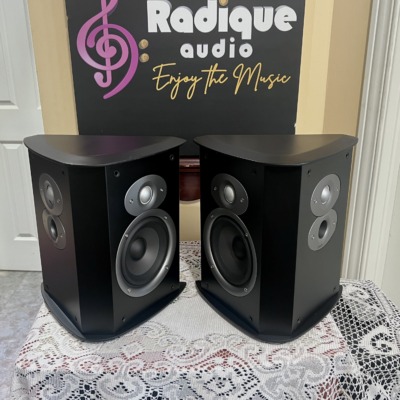

Polk FXi A4 Dipole Bipole Surround Speakers, Pair
Two 1-inch silk/polymer dome tweeters aimed 45 degrees apart and a 5.25-inch Dynamic Balance woofer in a triangular, side-ported cabinet, with a switch that moves them between dipole and bipole. 88 dB, 8 ohms, 20 to 150 watts, keyhole-slotted for wall mounting. Voice-matched to Polk's RTi and CSi models. Good working condition, fully tested.
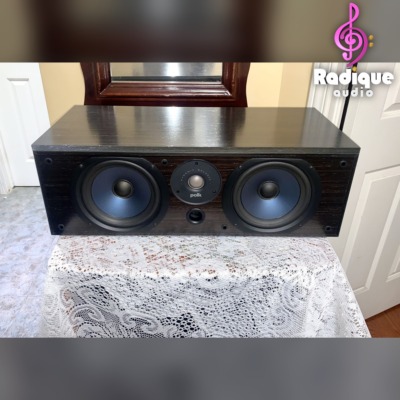
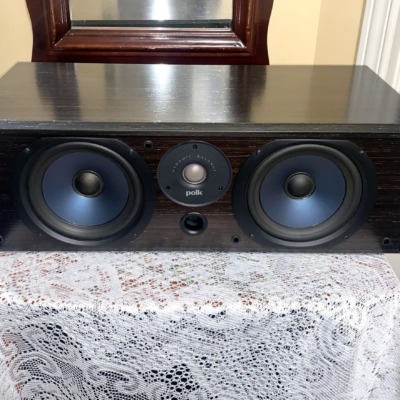
Large, Heavy TOTL Polk Center Channel w/ Real Wood CSi40
Dual 6.5-inch Dynamic Balance drivers either side of a 1-inch silk/polymer dome, in a real black wood veneer cabinet 22⅝ inches wide and 24 pounds heavy. Response runs to 50 Hz at 91 dB into 8 ohms, and it will take up to 250 watts. Two sets of gold-plated 5-way posts, so biamping or biwiring is open to you. Voice-matched to the Polk RTi series.
Related Products
Polk FXi A4 Dipole Bipole Surround Speakers, Pair
Two 1-inch silk/polymer dome tweeters aimed 45 degrees apart and a 5.25-inch Dynamic Balance woofer in a triangular, side-ported cabinet, with a switch that moves them between dipole and bipole. 88 dB, 8 ohms, 20 to 150 watts, keyhole-slotted for wall mounting. Voice-matched to Polk's RTi and CSi models. Good working condition, fully tested.
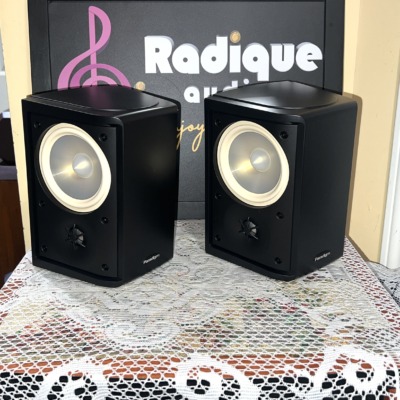
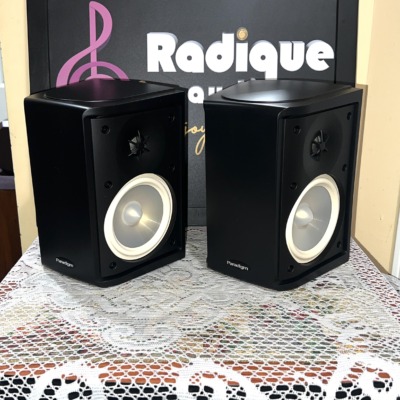
Paradigm ADP-190 v.6 Dipole Surround Speakers, Pair – Black
A beautiful pair of modern Paradigm Monitor ADP-190 v.6 dipole surround speakers in satin black, with excellent sound and their black cloth grilles. They have been tested on our bench and are in very good condition.
✔️ Very good condition — satin black, black cloth grilles included
✔️ Dipole design: two angled baffles for an enveloping surround field
✔️ Monitor v.6 series — the surround partner of the Monitor 7 towers
✔️ Covered by Radique Warranty
✔️ Includes Perpetual Trade-Back Program eligibility
✔️ Expertly packed for safe shipping
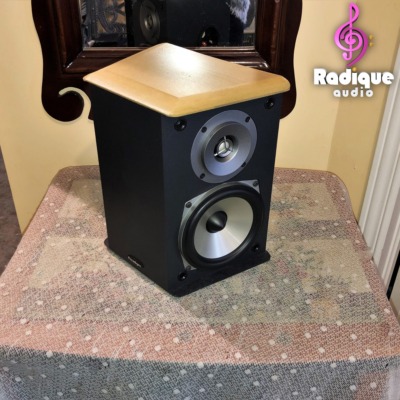
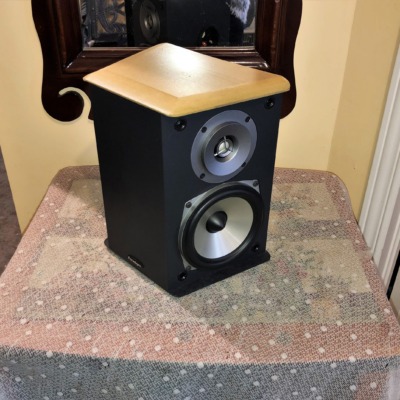
Single Paradigm 4-Driver, 2-Way Dipole Speaker ADP-170 v4
One speaker, not a pair. Four drivers on two angled baffles — two 19 mm CMC domes and two 140 mm MPC cones on die-cast chassis — running out of phase above the 2 kHz crossover and in phase below it. That is what Paradigm meant by adapted dipole: a diffuse surround field without giving up the bass. The upper piece of vinyl cladding has been removed, so the top wants painting or a spot out of sight.

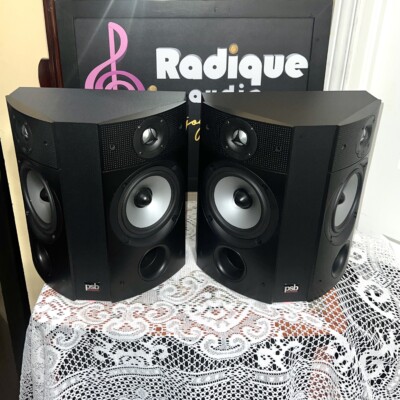
PSB Image 10S Bipole Surround Speakers — Black | Canada
Two driver modules per cabinet — a 25mm aluminium dome tweeter and a 133mm polypropylene woofer in each — angled rather than run out of phase, which widens the listening window without the comb filtering a true dipole introduces. Crossover at 2,500 Hz, 91 dB sensitivity into 6 ohms, 65 Hz to 23 kHz. Made in Canada, and a set of flush wall mounts comes with them.
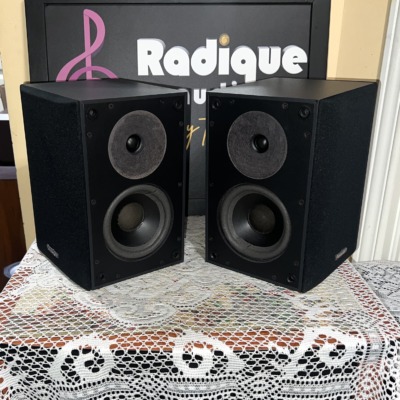
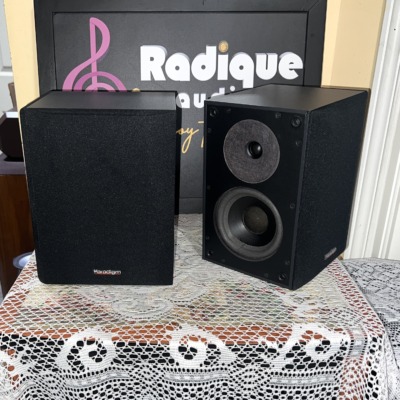
Paradigm ADP-150 Dipole Surround Speakers, Pair – Made in Canada
A heavy, solidly built pair of Paradigm ADP-150 dipole surround speakers, made in Canada, in black with their cloth grilles. All four woofers have been freshly re-foamed, the pair has been tested on our bench, and it is in very good condition.
✔️ Very good condition — black cloth grilles included
✔️ All four woofers freshly re-foamed, tested on our bench
✔️ Dipole surround design — made in Canada
✔️ Covered by Radique Warranty
✔️ Includes Perpetual Trade-Back Program eligibility
✔️ Expertly packed for safe shipping
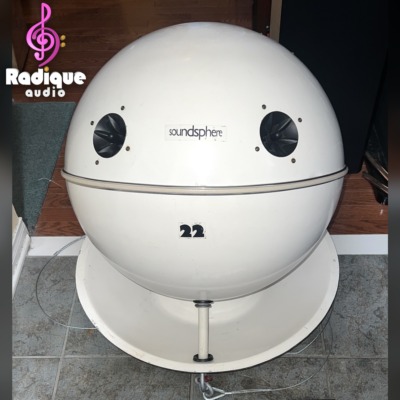
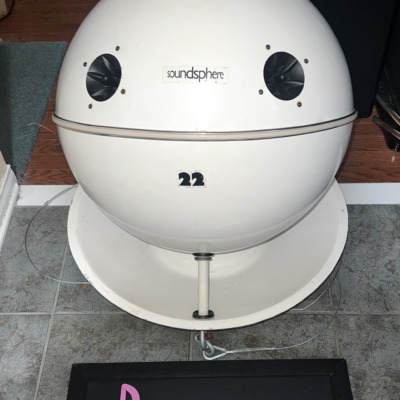
SoundSphere 2212-1 Omnidirectional Speakers, Pair – Made in USA
A pair of vintage SoundSphere 2212-1 omnidirectional speakers, made in the USA: the big white hanging spheres that fill a whole room with sound, with their steel cables for hanging from the ceiling. They have been cleaned up and thoroughly tested on our bench, and they are in good condition.
✔️ Good condition — cleaned up, commercial history disclosed below
✔️ 360° hemispherical sound: 12-inch driver plus four piezo tweeters
✔️ Steel hanging cables included — made in the USA
✔️ Covered by Radique Warranty
✔️ Includes Perpetual Trade-Back Program eligibility
✔️ Curbside delivery, local collection or freight within Canada
