


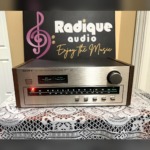

Realistic STA-64 Vintage Stereo Receiver – 16 WPC, Real Walnut
$295.00
Out of stock
This one has sold. Want first dibs on the next one?
We take these in regularly. Leave your name and email, and we’ll email you the moment one is listed, so you hear first. No cost, no obligation.
Email me when one is listed
Give your next receiver Bluetooth. RA-Twin II, $39.00 →
Other stereo receivers we have in stock now
3 in stock · $125.00–$295.00 · all ship
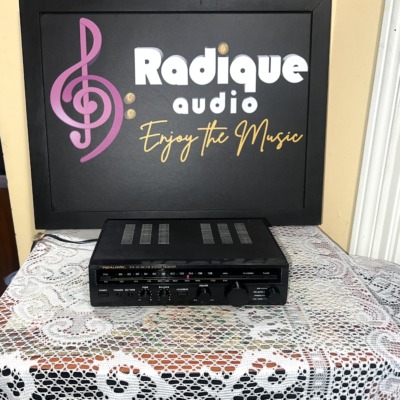 Realistic STA-20 Compact AM/FM Stereo Receiver – 5 WPC, Serviced$125.00Ships
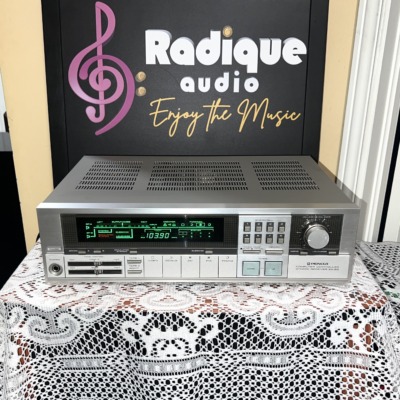 Pioneer SX-50 Vintage Stereo Receiver – 50 WPC, Silver Face$295.00Ships
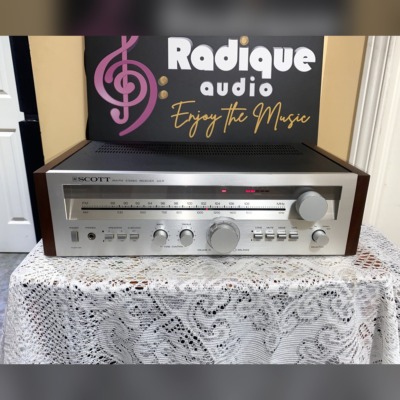 Scott 325R Vintage Stereo Receiver – 25 WPC, Silver Face$295.00Ships
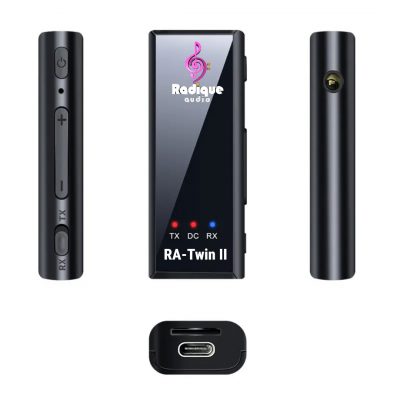
Give your next receiver Bluetooth.
The RA-Twin II adds Bluetooth streaming to any vintage receiver or amp with a spare input. Phone to stereo in about a minute, and nothing on the receiver is modified.
RA-Twin II, $39.00 →Realistic STA-64 AM/FM Stereo Receiver, 16 WPC, Real Walnut Veneer
This 16-watt-per-channel solid-state receiver from 1977 represents Radio Shack’s intelligent middle ground: compact enough for a bookshelf system, yet built with the kind of thoughtful engineering and genuine wood cabinetry that rewarded its owners with years of reliable, musical performance. Made in Korea and finished in authentic walnut veneer, the STA-64 pairs a sensitive FET-FM tuner with a straightforward but effective preamp and power amplifier, making it equally at home with vinyl spinners and casual radio listeners. This specific unit has undergone our Level One service and testing, which should ensure many more years of reliable performance ahead.
The heart of the STA-64 is its FM tuner, which achieves an excellent 2.2µV sensitivity and benefits from a phase-locked loop multiplex circuit that locks onto stations with audible ease and delivers solid stereo separation across the band. The amplifier section outputs a rated 16 watts per channel into 8 ohms with 0.8% total harmonic distortion, flat response across its 15Hz–30kHz bandwidth. While modest by modern standards, practical listening tests from restorers and users consistently report that this little receiver punches well above its wattage—clean power delivery with a warm, dynamic character well-suited to vintage speakers and modern efficient models alike. The preamp inputs include dedicated phono (MM), auxiliary, and tape monitor loops, giving users the flexibility to add external signal processors or graphic equalizers if desired. A tape monitor loop can be used for adding equalization or other outboard signal processors.
The aluminum faceplate features a large edge-lit tuning dial with linear FM scale, a mechanical signal-strength meter, an oversize tuning knob with precision flywheel action, and dual concentric bass and treble controls. The layout is clean and logically arranged—all controls respond smoothly, and the face remains unblemished with bright, clear labeling. The walnut veneer cabinet is finished in genuine wood, not vinyl wrap, and reflects the care Radio Shack took with mid-tier consumer audio in the 1970s. The rear panel offers standard speaker binding posts (4Ω–16Ω load compatible), RCA inputs and outputs with proper impedance matching, and a standard AC power inlet.
Key Features & Specifications
16 watts per channel into 8Ω (stereo); frequency response 15Hz to 30kHz
Total harmonic distortion: 0.8% at rated output
Phono input sensitivity: 2.5mV (MM cartridge), 65dB signal-to-noise ratio
Auxiliary input sensitivity: 150mV (line level), 70dB SNR
FM tuner sensitivity: 2.2µV (excellent for the era); AM tuner included
Tape monitor loop for external signal processors (graphic EQ, etc.)
Dual detented bass and treble tone controls; loudness switch
Preamp output and main amplifier input (allows external power amp integration)
Heavy-flywheel precision tuning dial with linear FM scale
Genuine walnut veneer cabinet; aluminum faceplate with bright meter and indicator lights
All silicon transistor design; quasi-complementary amplifier topology (stable, serviceable)
Made in Korea by Tandy Electronics; Category No. 31-2073
Dimensions & Weight
Width × Height × Depth: 470 × 133 × 356 mm (18.5 × 5.25 × 14 inches). At 13.9 kg (30.6 lbs), this unit reflects serious audio-first engineering with a robust power transformer and substantial internal construction—the weight itself is a testament to the no-compromise component selection typical of quality 1970s receivers.
A beautifully proportioned and solidly built receiver that still performs with musicality and ease decades after its debut. The STA-64 delivers the kind of reliable, uncolored amplification and tuner performance that made Radio Shack a genuine alternative to premium brands for budget-conscious enthusiasts. Whether paired with vintage bookshelf speakers, modern efficient models, or a turntable collection, this unit offers honest performance and genuine value.
Backed by Radique Audio’s 90-day warranty and our perpetual trade-back policy, you can purchase with confidence.
Asking $295.
| Weight | 32.6 lbs |
|---|---|
| Dimensions | 22.5 × 18 × 9.25 in |
Realistic was Radio Shack's own brand of audio and radio gear. Radio Shack, founded in Boston in 1921, launched the line in the mid-1950s, and Realistic gear was sold across Canada through Radio Shack stores. We carry Realistic stereo receivers, bookshelf speakers, turntables and equalizers. We've had more than 30 Realistic listings so far. Every used Realistic here is inspected, tested and serviced as required, then photographed in-house and covered by our Bumper-to-Bumper Warranty and Perpetual Trade-Back Program. Don't see the model you want? Tell us on First Dibs and we'll email you when one arrives.
The Realistic models we've sold most often include the Minimus-7 bookshelf speakers and the STA-720 and STA-2250 stereo receivers.
The Realistic story
Radio Shack began in Boston in 1921 as a store and mail-order business for radio amateurs. In 1954 Harman Kardon proposed a private-label audio line for it called Realist. The Realist camera company objected, so the line became Realistic, and Harman Kardon built its first FM tuner.
Tandy and the stereo years. Tandy Corporation took over Radio Shack in 1963 and grew it to thousands of stores across the US and Canada. Realistic covered everything from STA receivers and quadraphonic QTA receivers to LAB turntables, cassette decks and the little Minimus-7 speaker.
Who built it. Realistic products were built to Radio Shack's specifications, some in Tandy's own plants and many by outside suppliers in Asia, so the maker varies by model and year. Radio Shack phased out the Realistic name in the 1990s in favour of Optimus.
Which Realistic is which?
STA stereo receivers: from budget models such as the STA-16 and STA-21 to the 75-watt STA-2000 of 1977 and the STA-2270 of 1985.
Quadraphonic QTA receivers (mid-1970s): such as the QTA-770, with SQ, CD-4 and Radio Shack's own Quatravox modes.
Amplifiers and tuners: such as the SA-1000A and SA-2000 amplifiers and the TM-1000 tuner of 1977.
Turntables: the belt-drive LAB-50 to LAB-300, the direct-drive LAB-400, and Realistic/Miracord automatics.
Speakers: the Minimus-7 and Minimus-5 bookshelf speakers and the Mach One.
Optimus era (1990s): models such as the Optimus STA-20 receiver.
Buying used Realistic: what to check
Who made it. Realistic gear came from many suppliers, so service information and parts depend on the actual maker. Check the label and the service manual.
Quadraphonic receivers. High Fidelity found the QTA-770's distortion rose toward the frequency extremes, so test one in stereo at the volume you'll use.
Minimus-7. It needs roughly 30 to 50 watts and has little bass on its own, so pair it with a subwoofer. Enthusiasts say a crossover capacitor upgrade can make a big difference.
Age. Test every input and switch, inspect speaker surrounds, and check turntable belts and automatic mechanisms.
Everything we list is inspected, tested and serviced as required here, and comes with our warranty.
You may also like…
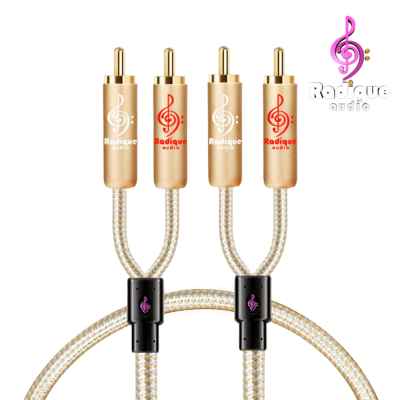
Radique Audio Gold Series RCA Stereo Interconnect Cable
RCA cables that are kind to vintage jacks: dual RCA to dual RCA, in 0.2, 0.75 or 1.5 m.
- Slim gold-plated plugs with vintage-safe grip pressure
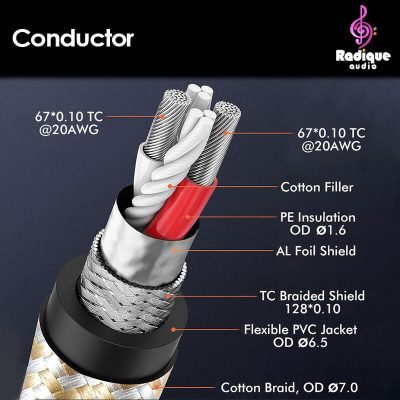
- Dual shielding: aluminum foil and 128-strand braided copper
- Reinforced splitters; 7 mm gold cotton and nylon mesh jacket
- Three lengths, chosen above the Add to Cart button
- 1-year warranty
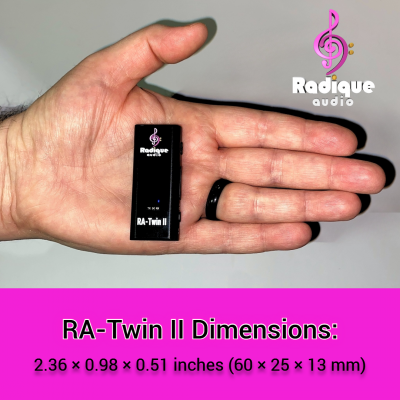
RA-Twin II Bluetooth Adapter for Vintage Stereo – Receiver & Transmitter
Add Bluetooth to any vintage stereo, amplifier or car stereo, or send your TV or stereo to Bluetooth headphones. Tiny but mighty, and set up in minutes.
- RX, TX and Mobile (microSD) modes
- Bluetooth 5.4, up to 10 m range
- Up to 10 hours per charge, USB-C
- Clear online manual in English & French
- 1-year warranty, Ottawa-based support
Related Products
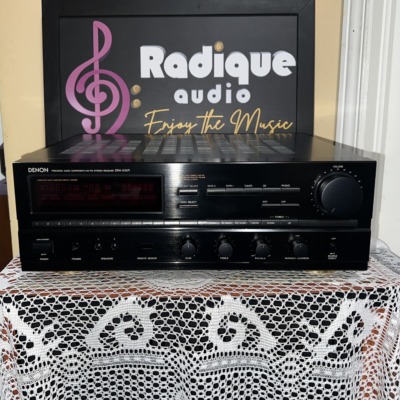
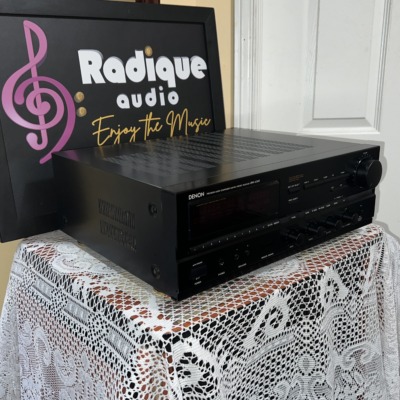
Denon DRA-835R Vintage Stereo Receiver – 100 WPC, Made in Japan
The second-from-the-top model in Denon's early-nineties stereo receiver range, made in Japan and in very good condition, with 100 watts per channel, a phono stage, motorized volume and its original remote.
✔️ Very good condition — free of significant marks
✔️ 100 WPC, MM phono and motorized volume — made in Japan
✔️ Original Denon remote included
✔️ Covered by Radique Warranty
✔️ Includes Perpetual Trade-Back Program eligibility
✔️ Expertly packed for safe shipping
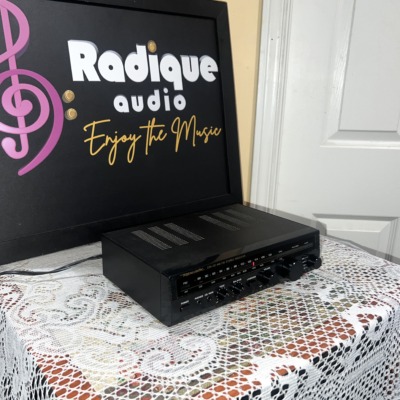
Realistic STA-20 Compact AM/FM Stereo Receiver – 5 WPC, Serviced
Radio Shack's smallest AM/FM stereo receiver of the 1990s, the Realistic STA-20: 5 watts per channel, a rear EQ switch made for mini-speakers, a phono input and a front jack for a phone.
✔️ Serviced on our bench to our Level 1 standard
✔️ Very good condition
✔️ Covered by Radique Warranty
✔️ Includes Perpetual Trade-Back Program eligibility
✔️ Expertly packed for safe shipping
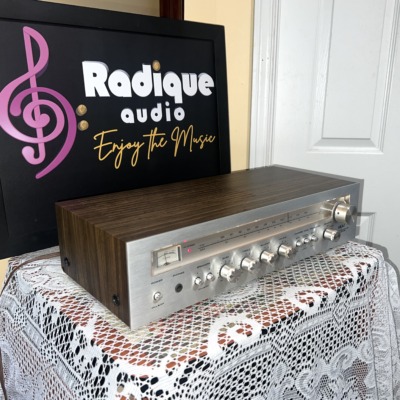
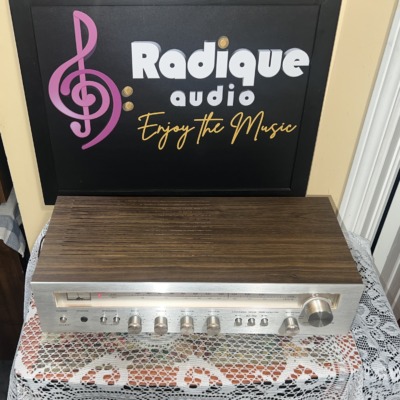
Akai AA-1115 Vintage Stereo Receiver – 15 WPC, Made in Japan
A slim late-1970s Akai AA-1115 AM/FM stereo receiver, made in Japan, silver face in its original woodgrain cabinet.
✔️ Tested on our bench, every input, output and control
✔️ Very good condition
✔️ MM phono, PLL FM tuner, speakers A and B
✔️ Covered by Radique Warranty
✔️ Includes Perpetual Trade-Back Program eligibility
✔️ Expertly packed for safe shipping
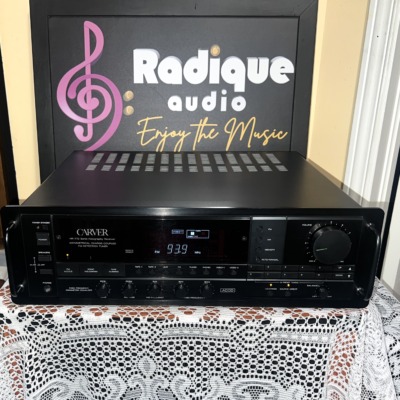
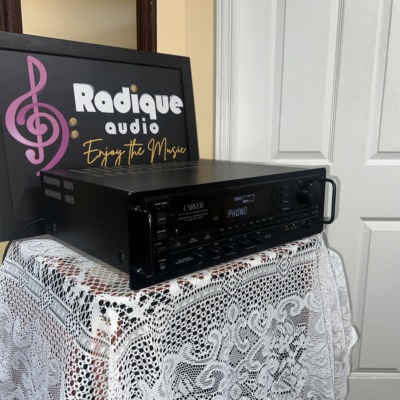
Carver HR-772 Sonic Holography Receiver – 140 WPC, Rack Ears
A Carver HR-772 stereo receiver, Carver's early-1990s flagship: 140 watts per channel, Sonic Holography, and rack ears with front handles.
✔️ Tested on our bench, Sonic Holography included
✔️ Very good condition
✔️ 140 WPC, stable to 2 ohms, MM phono, five-band EQ
✔️ Rack ears and handles for a 19-inch rack
✔️ Covered by Radique Warranty
✔️ Includes Perpetual Trade-Back Program eligibility
✔️ Expertly packed for safe shipping
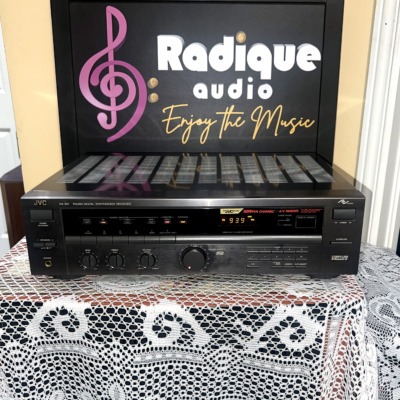
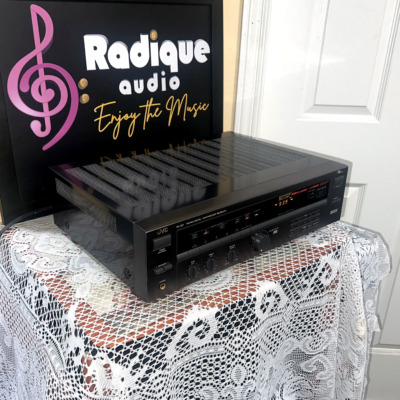
JVC RX-307 Stereo Receiver – 80 WPC, Original Remote & Manual
Eighty watts a side, a proper phono input, and the two things these almost never come with any more: the original remote and the printed manual.
✔️ Condition: Very Good
✔️ Covered by Radique Warranty
✔️ Includes Perpetual Trade-Back Program eligibility
✔️ Expertly packed for safe shipping
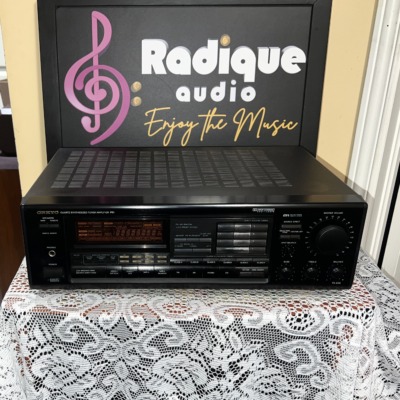
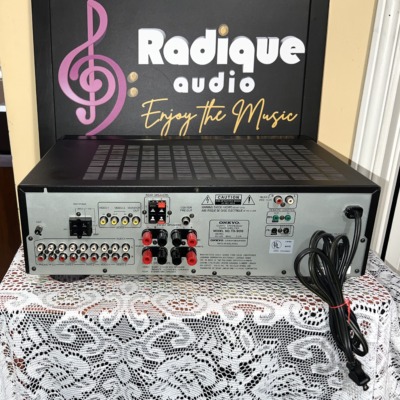
Onkyo TX-906 Stereo Receiver – 80 WPC, Dolby Pro Logic
An early-nineties Onkyo receiver with real power behind it and a phono input for your turntable, through our Level 1 service and playing as it should.
✔️ Good condition — works as it should; the black cabinet and faceplate present well
✔️ Through our Level 1 service — cleaned, deoxidized, checked and thoroughly tested on our bench
✔️ Phono input for your turntable, plus CD and two tape inputs
✔️ Covered by Radique Warranty
✔️ Includes Perpetual Trade-Back Program eligibility
✔️ Expertly packed for safe shipping
