


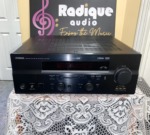
Yamaha HTR-5590 6.1-Channel AV Receiver – 600 Watts, Phono
$245.00
Out of stock
Get first dibs on the next one
Yamaha HTR-5590 6.1-Channel AV Receiver – 600 Watts of Total Power, Phono Input, Tested with Remote
Unleash the visceral power of early-2000s Yamaha engineering with the HTR-5590. As the flagship of the HTR line (equivalent to the highly regarded RX-V1300), this receiver was built during an era when heavy transformers and discrete amplification were the standard, not the exception. Weighing in at a substantial 33 lbs, this 6.1-channel powerhouse delivers 100 watts per channel of high-current, low-distortion power. Thoroughly tested and including a Yamaha remote, it is the perfect anchor for a high-performance stereo setup, a dedicated vinyl listening station, or a powerful optical-based home theater.
Digital Top-ART Engineering:
The HTR-5590 features Yamaha’s “Digital Top-ART” (Total Purity Audio Reproduction Technology) philosophy. This design maximizes signal purity by physically separating the digital, analog video, and audio amplifier sections to eliminate noise. The result is the signature Yamaha “Natural Sound”—uncolored, precise, and incredibly dynamic. Whether you are listening to delicate jazz or an explosive action movie soundtrack, the amplifier section maintains total control over your speakers.
Versatile Connectivity & Phono Stage:
While this unit predates HDMI, it offers superior audio connectivity for the serious enthusiast:
Dedicated Phono Input: Connect your turntable directly without needing an external preamp.
6.1 Channel Discrete Amplification: True surround sound with a dedicated rear center channel.
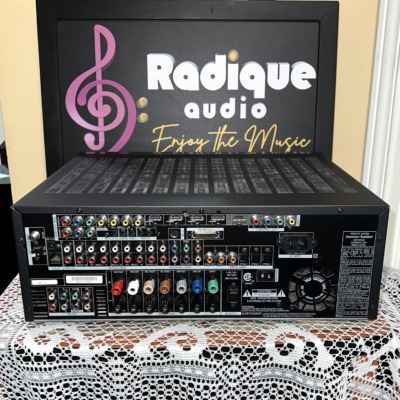
Pre-Outs for All Channels: Allows you to use this unit as a high-quality pre-amplifier if you ever decide to upgrade to separate power amps.
192kHz/24-bit DACs: High-resolution digital-to-analog conversion for all channels ensures pristine sound from CD players and streamers connected via Optical or Coax.
Specifications:
Power Output: 100 Watts per channel x 6 (8Ω, 20Hz–20kHz, 0.04% THD)
Surround Formats: Dolby Digital EX, DTS-ES Discrete 6.1, Dolby Pro Logic II, DTS Neo:6
Frequency Response: 10Hz to 100kHz (wide range for high-res audio)
Damping Factor: 80 (Main, 8Ω) – Excellent speaker control
Inputs: 4 Optical / 1 Coaxial Digital, Phono (MM), 5.1 Multi-Channel Analog
Dimensions: 435 x 171 x 434 mm (17-1/8″ x 6-3/4″ x 17-1/8”)
Weight: 15 kg (33.1 lbs)
Finish: Black / Gold accents
Condition:
This receiver is in very good cosmetic condition, showing only minor signs of use consistent with its age. The display is bright and clear.
Functionally Tested: All channels (Front, Center, Surround) output clean, powerful sound. The FM tuner locks onto stations, the Phono input is quiet and clear, and all digital/analog inputs have been verified.
Remote Included: Comes with a Yamaha remote control for convenient operation.
Summary:
The Yamaha HTR-5590 is a reminder of what “Flagship Receiver” used to mean: massive power supplies, heavy chassis construction, and discrete amplification. If you don’t require HDMI switching and prioritize raw audio performance—especially for 2-channel music or vinyl—this receiver offers incredible value and performance that modern lightweight units simply cannot match.
Purchase with Confidence
Includes Radique Audio “Bumper to Bumper” Warranty
Perpetual Trade-Back Policy—upgrade or swap with peace of mind
Classic Yamaha “Natural Sound” engineering—tested, very good condition, ready to play; asking $245 for this former flagship Yamaha.
| Weight | 35.1 lbs |
|---|---|
| Dimensions | 21.1 × 21.1 × 10.75 in |
Yamaha began as an organ maker in Hamamatsu, Japan, in 1887. It made gramophones from the 1920s and began hi-fi with the 1954 HiFi Player. We carry Yamaha AV receivers, vintage stereo receivers, CD players, subwoofers and speakers. We've had more than 280 Yamaha listings so far, covering nearly 200 different models. Every used Yamaha here is inspected, tested and serviced as required, then photographed in-house and covered by our Bumper-to-Bumper Warranty and Perpetual Trade-Back Program. Every AV receiver we list is tested input by input on our bench: each HDMI input and output, the analog, optical and coaxial inputs, the subwoofer outputs and the wireless features where it has them. Don't see the model you want? Tell us on First Dibs and we'll email you when one arrives.
Yamaha models we've sold most often: the SW-3 subwoofer, the NX-E270 surrounds, and the RX-V1400, RX-V850 and RX-V800 AV receivers.
The Yamaha hi-fi story
Torakusu Yamaha built his first reed organ in Hamamatsu in 1887 and founded Nippon Gakki in 1897; the company was renamed Yamaha Corporation in 1987. Yamaha calls the 1954 HiFi Player its first audio product, and dates its first Natural Sound (NS) speakers to 1967.
1970s hi-fi. The CA-700 and CA-500 of 1972 were Yamaha's first integrated amplifiers, and the CA-1000 of 1973 could switch its output stage between Class A and Class A/B. The NS-1000 and NS-1000M speakers of 1974 used beryllium dome drivers, and the NS-10M of 1978, sold for home use, became a studio monitor.
CD and surround. The CD-1 of 1982 was Yamaha's first CD player. The DSP-1 of 1986 was a Digital Sound Field Processor, and in 1993 the RX-V870 became the first Yamaha receiver with CINEMA DSP. The RX-V992 of 1997 added built-in Dolby Digital decoding.
AVENTAGE. The AVENTAGE (RX-A) receiver line launched in 2010, above the RX-V range.
Which Yamaha is which?
CA integrated amplifiers (1972 to about 1979): the CA-500, CA-700, CA-1000 and CA-2000, followed by the A-series.
CR receivers (mid-1970s to about 1980): the CR-1000, then the CR-620 to CR-2020 generation of 1977 to 1979.
NS speakers: from the NS-690 and the beryllium NS-1000 to the NS-10M bookshelf speaker, made from 1978 to 2001.
CD players: from the CD-1 of 1982 to the CDX and GT-CD models.
RX-V AV receivers (from at least 1991): such as the RX-V800, RX-V850 and RX-V1400 we sell often. Built-in Dolby Digital arrived in 1997, YPAO room calibration in 2003 and HDMI in the mid-2000s.
RX-A AVENTAGE (from 2010): the step-up AV receivers. The RX-Z models were the flagships until 2007.
Buying used Yamaha: what to check
Formats. On an AV receiver, check what it decodes and connects to: Dolby Digital from 1997, room calibration from 2003, HDMI from the mid-2000s.
HDMI boards. On modern AV receivers, HDMI is usually the first thing to fail. We test every HDMI input and output before listing.
CR receivers. Owners suggest asking whether service bulletins were done on a CR-2020, and expect scratchy controls and burnt-out dial lamps on any unserviced unit.
NS speakers. Check that the tweeters on an NS-10M are original and both work, and inspect the beryllium domes on an NS-1000, since Yamaha stopped making beryllium diaphragms in 1997.
Everything we list is inspected, tested and serviced as required here, and comes with our warranty.
You may also like…


Related Products
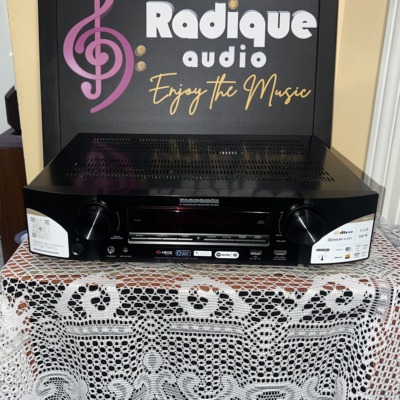
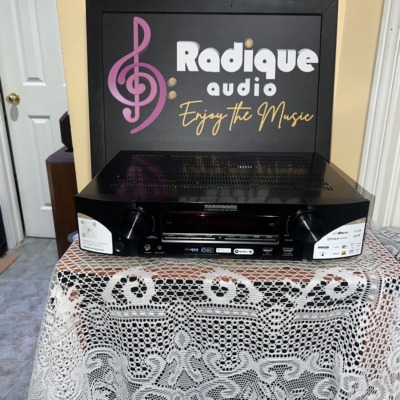
Marantz NR1510 Slim 5.2 AV Receiver – 4K, Wi-Fi, Phono, Remote
A slim Marantz NR1510 5.2-channel AV receiver, just over 4 inches tall, with 4K HDR video switching, HEOS streaming over Wi-Fi, Bluetooth and AirPlay 2, and a phono input for your turntable. It is in excellent condition, comes with its original Marantz remote, and has been thoroughly tested on our bench.
✔️ Excellent condition, with the original Marantz RC040SR remote
✔️ 4K HDR with Dolby Vision and eARC, HEOS, Wi-Fi, Bluetooth and AirPlay 2
✔️ Phono input and two subwoofer outputs — thoroughly tested on our bench
✔️ Covered by Radique Warranty
✔️ Includes Perpetual Trade-Back Program eligibility
✔️ Expertly packed for safe shipping
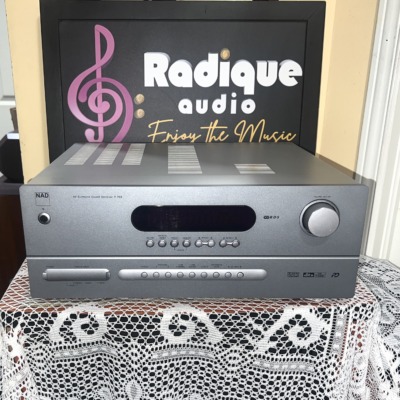
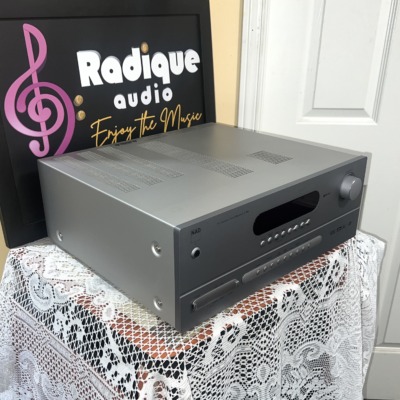
NAD T 753 6.1 AV Receiver – 70 WPC, 6 Digital Inputs, Remote
A NAD T 753 6.1-channel AV receiver in NAD's matte grey, designed and engineered in Canada, rated at 70 watts per channel, with six digital inputs, Soft Clipping and a pre-programmed remote. It has been thoroughly tested on our bench and is in very good condition.
✔️ Very good condition, with a pre-programmed remote and a power cable
✔️ 70 WPC conservatively rated — Sound & Vision measured 93.7 W, five channels
✔️ Six digital inputs, 7.1 pre-outs, Soft Clipping — thoroughly tested
✔️ Covered by Radique Warranty
✔️ Includes Perpetual Trade-Back Program eligibility
✔️ Curbside delivery, local collection or freight within Canada
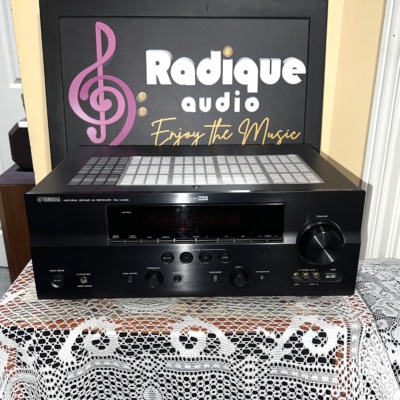
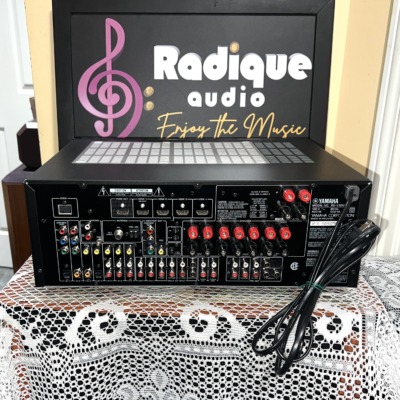
Yamaha RX-V1065 7.2 AV Receiver – 105 WPC, Phono, Zone 2, Remote
A Yamaha RX-V1065 7.2-channel AV receiver, 105 watts per channel, with four HDMI inputs, a phono input and Zone 2, plus its original remote and manual.
✔️ Tested on our bench, every input and output
✔️ Very good condition
✔️ Original Yamaha remote and printed owner's manual
✔️ 4 HDMI in, 1080p, YPAO, MM phono, Zone 2
✔️ Covered by Radique Warranty
✔️ Includes Perpetual Trade-Back Program eligibility
✔️ Expertly packed for safe shipping
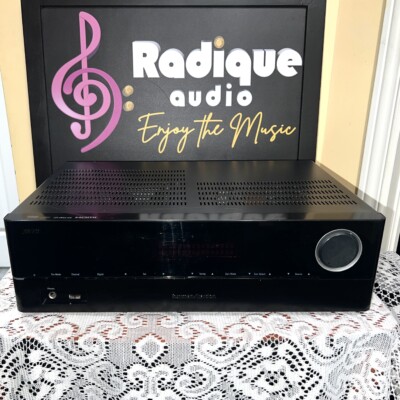
SLS QG-500AVR 5.1 AV Receiver – Q-Line Gold, 100 WPC
An SLS QG-500AVR 5.1-channel AV receiver, the receiver from SLS and Quincy Jones's Q-Line Gold home theater system, with every function on the front panel.
✔️ Tested on our bench, all five channels and the sub out
✔️ Very good condition
✔️ Dolby Digital, DTS, Pro Logic II, AM/FM with 30 presets
✔️ Covered by Radique Warranty
✔️ Includes Perpetual Trade-Back Program eligibility
✔️ Expertly packed for safe shipping
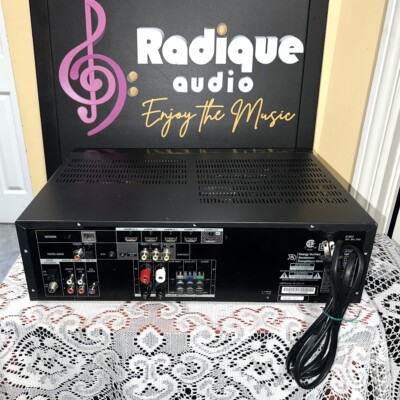
Harman Kardon AVR 1510S 375W 5.1 Receiver – 4K HDMI, Spotify
Seventy-five watts to each of five channels, four 3D-ready HDMI inputs with 4K pass-through, and one HDMI output with ARC. Spotify Connect, vTuner and DLNA over Ethernet, front-panel USB, optical and coaxial digital in. A digital supply keeps the whole thing to ten pounds. Level 1 serviced here; cosmetically graded Good.
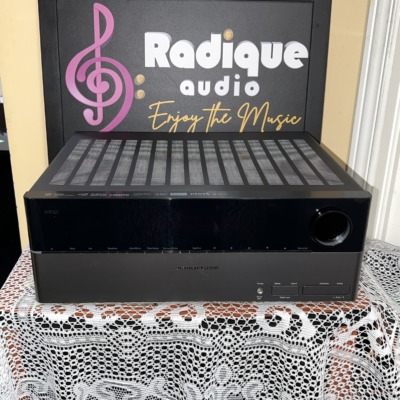
Yamaha RX-V561 5.1 AVR 500W — 2x HDMI, 3 Digital In, Remote
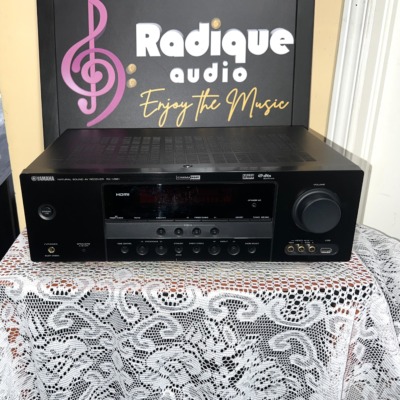
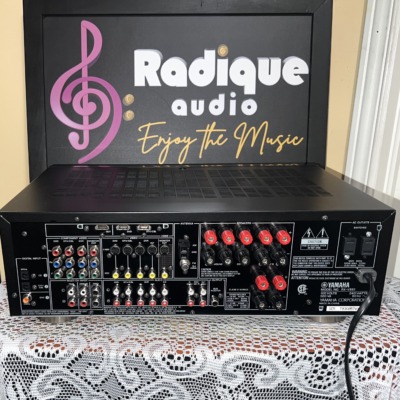
100 watts minimum RMS on every one of the five channels into 8 ohms, and dynamic power that climbs to 110, 130, 160 and 180 watts into 8, 6, 4 and 2 ohms — a receiver that keeps increasing output as the load gets harder has a supply with something in reserve. Where it earns its keep is bass management: a crossover selectable across nine points from 40 Hz to 200 Hz with a 12 dB per octave high-pass on front, centre and surround. Two HDMI inputs, three digital, remote included. Very good condition.
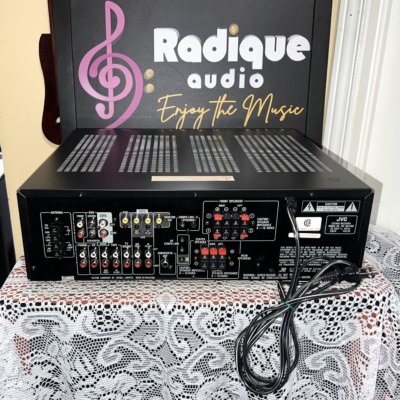
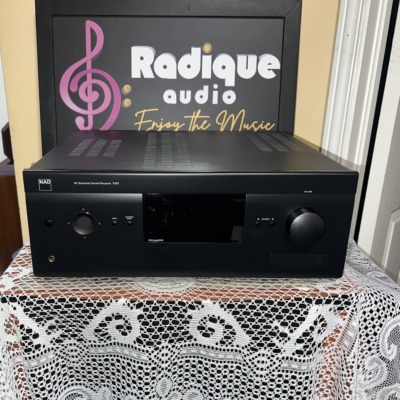
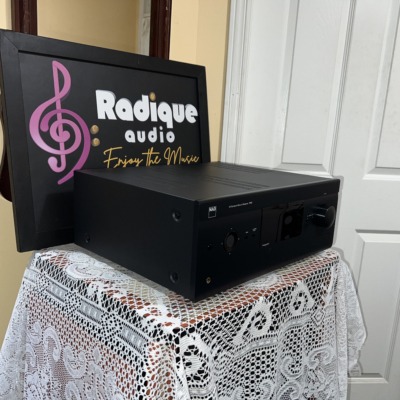
NAD T 757 7.1 AV Receiver – 7 x 60W, 7 Digital Inputs, Remote
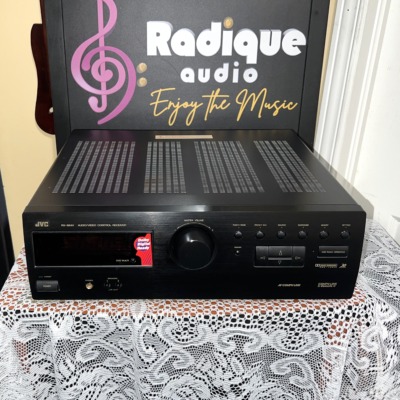
A 7.1-channel NAD surround receiver in very good condition, rated at 60 watts per channel with all seven channels driven, with seven digital audio inputs, NAD's modular design and a remote.
✔️ Very good condition — free of significant marks; remote included
✔️ 7 x 60 W, all channels driven — Dolby TrueHD and DTS-HD Master Audio
✔️ Seven digital audio inputs and four HDMI inputs (1080p and 3D)
✔️ Covered by Radique Warranty
✔️ Includes Perpetual Trade-Back Program eligibility
✔️ Expertly packed for safe shipping
