


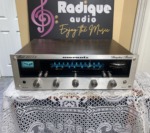

Yamaha NS-440RM 2-Way Speakers 9″ Woofers, Vintage
$225.00
Out of stock
Get first dibs on the next one
Yamaha NS-440RM 2-Way Speakers 9″ Woofers, Vintage – Canadian-Made, Very Good Condition, Tested
Discover the punchy, full-bodied sound of the Yamaha NS-440RM—a rare, Canadian-built “Rock Monitor” model that combines vintage Yamaha voicing with a rugged, substantial cabinet design. Unlike the clinical presentation of some studio monitors, these speakers were voiced for enjoyment, delivering a lively, engaging performance that brings rock, pop, and jazz to life. Thoroughly tested and in very good condition, they offer reliable, room-filling sound in a distinctive vintage package.
Canadian Build, Yamaha Voicing:
The NS-440RM stands out with its “Made in Canada” heritage, featuring a solid cabinet construction that feels more substantial than many mass-market competitors of the era. The design centers around a large 9-inch woofer, an uncommon size that provides satisfying bass weight and warmth without requiring a subwoofer. This is paired with a 3-inch dome tweeter mounted on a striking contrasting baffle, giving the speakers a classic 1970s/80s aesthetic that looks great on stands or shelves.
Drivers & Capability:
9-Inch Low Frequency Driver – Delivers authoritative bass response and a full lower-midrange, ideal for “real-world” listening levels.
3-Inch High Frequency Driver – Provides the signature Yamaha clarity—crisp and detailed without being fatiguing.
Easy to Drive – With a nominal impedance of 8Ω, these are an easy load for virtually any amplifier, from low-powered vintage silver-face receivers to modern home theater AVRs.
Versatile Placement – At 22 inches tall, they bridge the gap between large bookshelf speakers and compact floorstanders. They perform best on low stands or sturdy shelves.
Specifications:
System Type: 2-Way, 2-Driver Loudspeaker System
Power Handling: 60W RMS / 100W Peak
Impedance: 8Ω
Woofer: 9″ (230mm) Cone
Tweeter: 3″ (75mm) Dome
Dimensions: 560 × 330 × 267 mm (22″ H × 13″ W × 10.5″ D)
Weight: 10 kg (22 lbs) per speaker
Made in: Canada
Sound Character:
The NS-440RM lives up to its “Rock Monitor” lineage. The voicing is energetic and forward, with a “fun” factor that makes drums snap and guitars cut through the mix. The 9-inch woofer digs deeper than standard 8-inch models, providing a solid foundation for bass lines and kick drums. They fill small-to-medium rooms with ease, offering a presentation that is clear enough for critical listening but robust enough for casual parties.
Condition:
These speakers are in very good cosmetic condition, showing only light signs of age consistent with responsible ownership. The cabinets are structurally sound, and the contrasting baffles present beautifully.
Functionally Tested: Both speakers have been sweep-tested; drivers output clean, undistorted sound with no rubbing, buzzing, or voice coil issues.
Summary:
The Yamaha NS-440RM is a solid, Canadian-built workhorse for anyone wanting vintage character and real bass performance without breaking the bank. Whether serving as the main speakers in a vintage vinyl setup or adding rugged reliability to a garage or office system, they deliver authentic, full-range sound that modern Bluetooth speakers simply cannot match.
Purchase with Confidence
Includes Radique Audio “Bumper to Bumper” Warranty
Perpetual Trade-Back Policy—upgrade or swap with peace of mind
Classic Yamaha engineering—tested, very good condition, ready to play, asking $225.
| Weight | 47 lbs |
|---|---|
| Dimensions | 27 × 17 × 26 in |
Yamaha began as an organ maker in Hamamatsu, Japan, in 1887. It made gramophones from the 1920s and began hi-fi with the 1954 HiFi Player. We carry Yamaha AV receivers, vintage stereo receivers, CD players, subwoofers and speakers. We've had more than 280 Yamaha listings so far, covering nearly 200 different models. Every used Yamaha here is inspected, tested and serviced as required, then photographed in-house and covered by our Bumper-to-Bumper Warranty and Perpetual Trade-Back Program. Every AV receiver we list is tested input by input on our bench: each HDMI input and output, the analog, optical and coaxial inputs, the subwoofer outputs and the wireless features where it has them. Don't see the model you want? Tell us on First Dibs and we'll email you when one arrives.
Yamaha models we've sold most often: the SW-3 subwoofer, the NX-E270 surrounds, and the RX-V1400, RX-V850 and RX-V800 AV receivers.
The Yamaha hi-fi story
Torakusu Yamaha built his first reed organ in Hamamatsu in 1887 and founded Nippon Gakki in 1897; the company was renamed Yamaha Corporation in 1987. Yamaha calls the 1954 HiFi Player its first audio product, and dates its first Natural Sound (NS) speakers to 1967.
1970s hi-fi. The CA-700 and CA-500 of 1972 were Yamaha's first integrated amplifiers, and the CA-1000 of 1973 could switch its output stage between Class A and Class A/B. The NS-1000 and NS-1000M speakers of 1974 used beryllium dome drivers, and the NS-10M of 1978, sold for home use, became a studio monitor.
CD and surround. The CD-1 of 1982 was Yamaha's first CD player. The DSP-1 of 1986 was a Digital Sound Field Processor, and in 1993 the RX-V870 became the first Yamaha receiver with CINEMA DSP. The RX-V992 of 1997 added built-in Dolby Digital decoding.
AVENTAGE. The AVENTAGE (RX-A) receiver line launched in 2010, above the RX-V range.
Which Yamaha is which?
CA integrated amplifiers (1972 to about 1979): the CA-500, CA-700, CA-1000 and CA-2000, followed by the A-series.
CR receivers (mid-1970s to about 1980): the CR-1000, then the CR-620 to CR-2020 generation of 1977 to 1979.
NS speakers: from the NS-690 and the beryllium NS-1000 to the NS-10M bookshelf speaker, made from 1978 to 2001.
CD players: from the CD-1 of 1982 to the CDX and GT-CD models.
RX-V AV receivers (from at least 1991): such as the RX-V800, RX-V850 and RX-V1400 we sell often. Built-in Dolby Digital arrived in 1997, YPAO room calibration in 2003 and HDMI in the mid-2000s.
RX-A AVENTAGE (from 2010): the step-up AV receivers. The RX-Z models were the flagships until 2007.
Buying used Yamaha: what to check
Formats. On an AV receiver, check what it decodes and connects to: Dolby Digital from 1997, room calibration from 2003, HDMI from the mid-2000s.
HDMI boards. On modern AV receivers, HDMI is usually the first thing to fail. We test every HDMI input and output before listing.
CR receivers. Owners suggest asking whether service bulletins were done on a CR-2020, and expect scratchy controls and burnt-out dial lamps on any unserviced unit.
NS speakers. Check that the tweeters on an NS-10M are original and both work, and inspect the beryllium domes on an NS-1000, since Yamaha stopped making beryllium diaphragms in 1997.
Everything we list is inspected, tested and serviced as required here, and comes with our warranty.
You may also like…
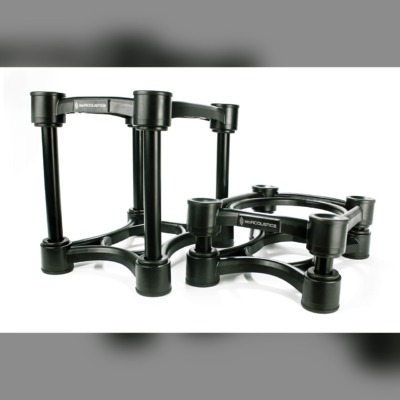

IsoAcoustics ISO-200 Isolation Stands (Pair)
- ✔️ Genuine IsoAcoustics, brand new, from an authorized Canadian dealer
- ✔️ A pair of isolation stands for large speakers and studio monitors
- ✔️ Rated to 75 lb (34 kg) short or 60 lb (27 kg) tall
- ✔️ Short 3.75 in (95 mm) or tall 8.5 in (215 mm), up to 6.5° of tilt
- ✔️ Pick up in Kanata by appointment, or shipped across Canada and internationally
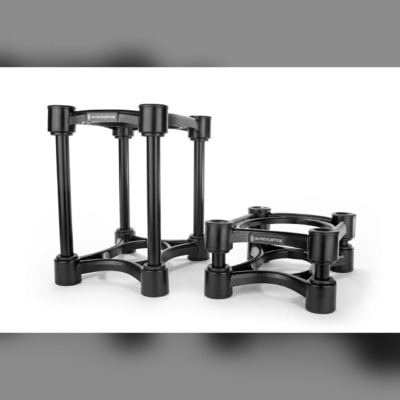

IsoAcoustics ISO-155 Isolation Stands (Pair)
- ✔️ Genuine IsoAcoustics, brand new, from an authorized Canadian dealer
- ✔️ A pair of isolation stands for medium speakers and studio monitors
- ✔️ Rated to 40 lb (18 kg) short or 35 lb (16 kg) tall
- ✔️ Short 3 in (76 mm) or tall 8.25 in (210 mm), up to 6.5° of tilt
- ✔️ Pick up in Kanata by appointment, or shipped across Canada and internationally


IsoAcoustics ISO-130 Isolation Stands (Pair)
- ✔️ Genuine IsoAcoustics, brand new, from an authorized Canadian dealer
- ✔️ A pair of isolation stands for small speakers and studio monitors, rated to 20 lb (9 kg)
- ✔️ Short 2.8 in (71 mm) or tall 8.25 in (210 mm), up to 6.5° of tilt
- ✔️ Top plate 5.1 × 6 in (130 × 152 mm)
- ✔️ Pick up in Kanata by appointment, or shipped across Canada and internationally
Related Products
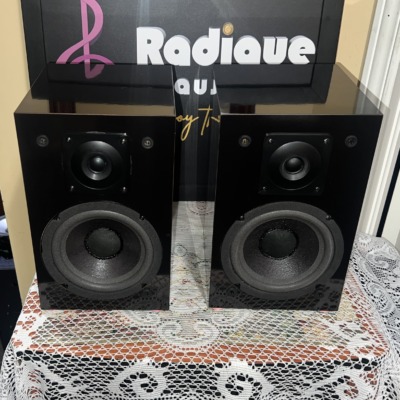
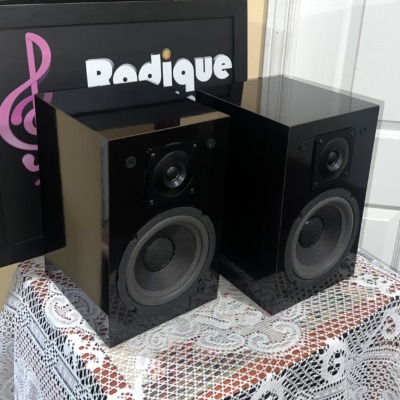
NHT Model 1C Bookshelf Speakers, Pair – Gloss Black, Re-Foamed
A pair of NHT Model 1C bookshelf speakers in gloss black, dated 1992, in very good condition and freshly re-foamed by us.
✔️ Very good condition — free of significant marks; grilles included
✔️ Freshly re-foamed by us — new woofer surrounds
✔️ Sealed and magnetically shielded — made in the USA in 1992
✔️ Covered by Radique Warranty
✔️ Includes Perpetual Trade-Back Program eligibility
✔️ Expertly packed for safe shipping
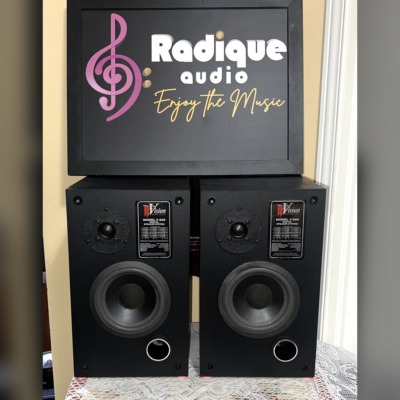
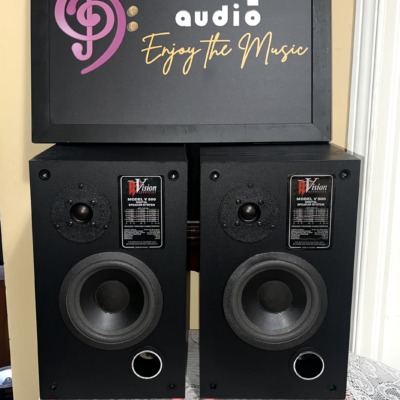
Vision Acoustics V500 Bookshelf Speakers, Pair – Made in Canada
A pair of solidly built, Canadian-made Vision Acoustics V 500 bookshelf speakers in black ash, rated at a sensitive 92 dB, fully tested on our bench and in very good condition.
✔️ Very good condition — free of significant marks, in black ash
✔️ Efficient 92 dB design, easy for a modest receiver to drive
✔️ Made in Canada, with 5-way binding posts
✔️ Covered by Radique Warranty
✔️ Includes Perpetual Trade-Back Program eligibility
✔️ Expertly packed for safe shipping
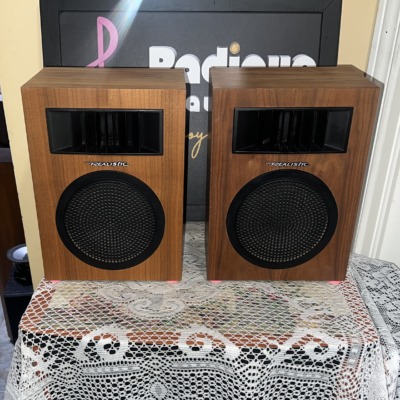
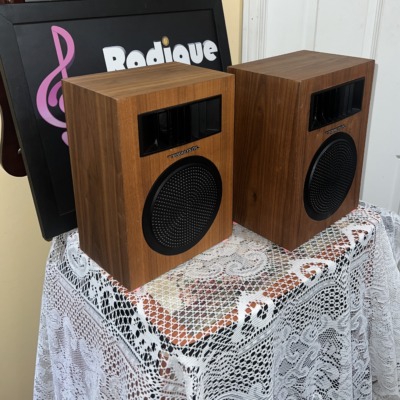
Realistic Minimus-5 Speakers, Pair – Vintage, Real Wood Veneer
A vintage pair of Realistic Minimus-5 two-way bookshelf speakers from Radio Shack, in a warm brown real wood veneer, with horn tweeters, fully tested on our bench and in very good condition.
✔️ Very good condition — free of significant marks
✔️ Real wood veneer, with rigid grilles over the woofers
✔️ Two ways in: small binding posts and an RCA-type speaker-level jack
✔️ Covered by Radique Warranty
✔️ Includes Perpetual Trade-Back Program eligibility
✔️ Expertly packed for safe shipping
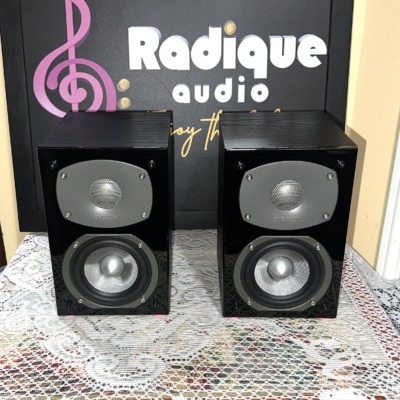
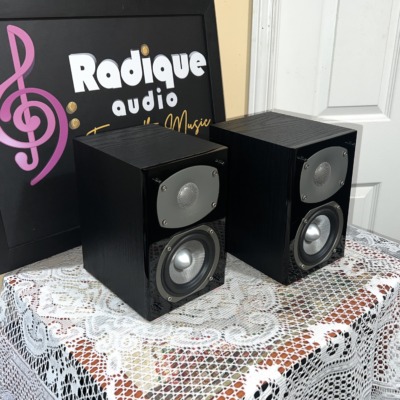
Energy C-50 Bookshelf Speakers, Pair – Ultra-Compact, Black Ash
A pair of ultra-compact Energy C-50 bookshelf speakers, designed and engineered in Canada, in black ash with gloss black front baffles and their black cloth grilles. They have been tested on our bench and are in very good condition.
✔️ Very good condition — black ash with gloss baffles, grilles included
✔️ 1-inch aluminum tweeter and 4½-inch woofer, video-shielded
✔️ Five-way binding posts — designed and engineered in Canada
✔️ Covered by Radique Warranty
✔️ Includes Perpetual Trade-Back Program eligibility
✔️ Expertly packed for safe shipping
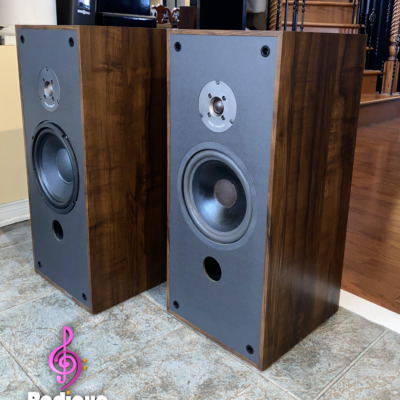
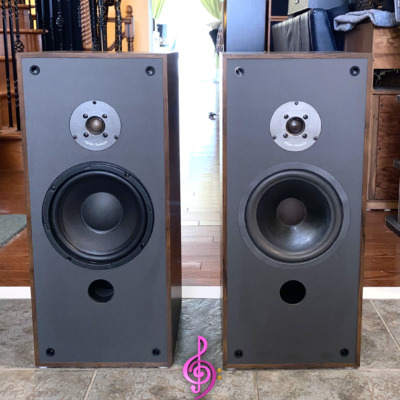
Paisley Reference Two Bookshelf Speakers, Pair – Made in Canada
A pair of Paisley Research Reference Two bookshelf speakers, made in Canada, in walnut-finish cabinets with black front baffles and their black cloth grilles. They have been tested on our bench, they play nicely, and they are in very good condition. One woofer is a replacement fitted by a previous owner, not by us; the details are under Condition.
✔️ Very good condition — walnut-finish cabinets, grilles included
✔️ Tested and playing nicely; one replacement woofer, disclosed below
✔️ 8-inch woofers, front-ported — made in Canada
✔️ Covered by Radique Warranty
✔️ Includes Perpetual Trade-Back Program eligibility
✔️ Expertly packed for safe shipping
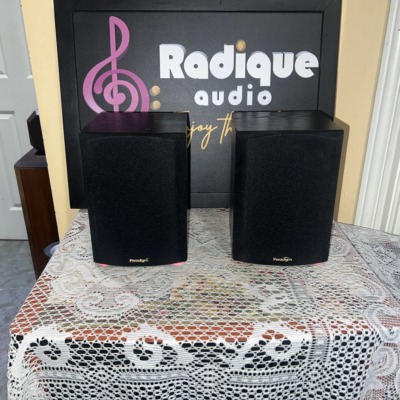
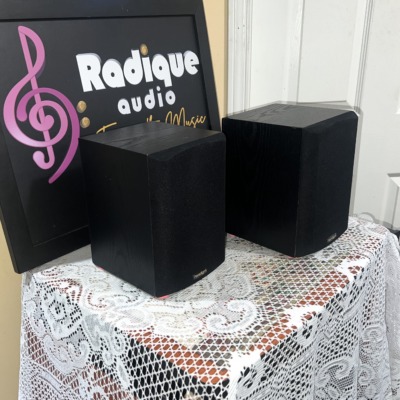
Paradigm Micro v.3 Bookshelf Speakers, Pair – Black Ash
A pair of Paradigm Micro v.3 speakers, the smallest of Paradigm's Canadian-designed Performance Series, with rubber woofer surrounds that will never need refoaming.
✔️ Tested on our bench
✔️ Fair condition, priced to match
✔️ Covered by Radique Warranty
✔️ Includes Perpetual Trade-Back Program eligibility
✔️ Expertly packed for safe shipping
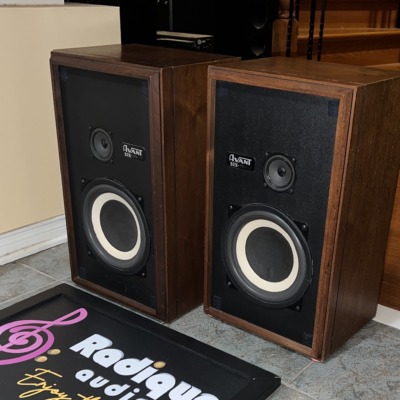
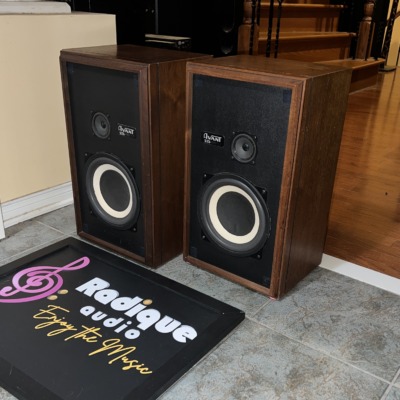
Avant 1AX Bookshelf Speakers, Pair – Canadian, Real Wood Veneer
A matched pair of Avant 1AX bookshelf speakers: Canadian-built, dressed in real wood veneer, with freshly refoamed woofers and sequential serial numbers.
✔️ Good condition — the real wood veneer is sound, with light scuffs on the tops
✔️ Woofers refoamed on our bench with new surrounds
✔️ Made in Canada — a sequential-serial matched pair
✔️ Covered by Radique Warranty
✔️ Includes Perpetual Trade-Back Program eligibility
✔️ Expertly packed for safe shipping
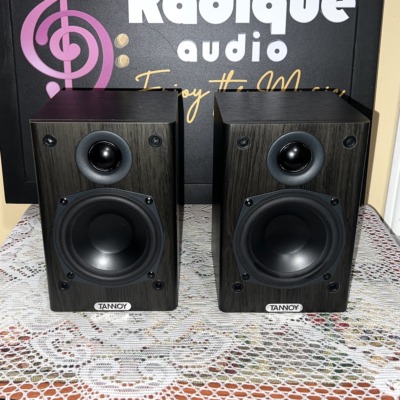
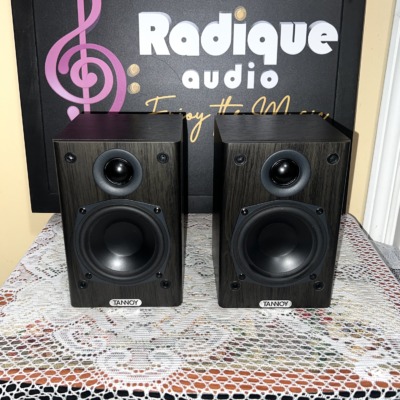
Tannoy Mercury FR Custom Compact Speakers – Dark Oak, Pair
A pair of compact two-way Tannoy speakers from the limited Custom edition of Tannoy's Mercury F-series, in very good condition, with a wall bracket built into the back of each cabinet.
✔️ Very good condition — free of significant marks; both grilles included
✔️ The limited Custom edition of Tannoy's Mercury F-series, in Dark Oak
✔️ Built-in wall bracket — hang them, or stand them on a shelf
✔️ Covered by Radique Warranty
✔️ Includes Perpetual Trade-Back Program eligibility
✔️ Expertly packed for safe shipping
