
Paradigm Monitor 3 v3 Bookshelf Speakers – 8″ Woofer, Canada
$395.00
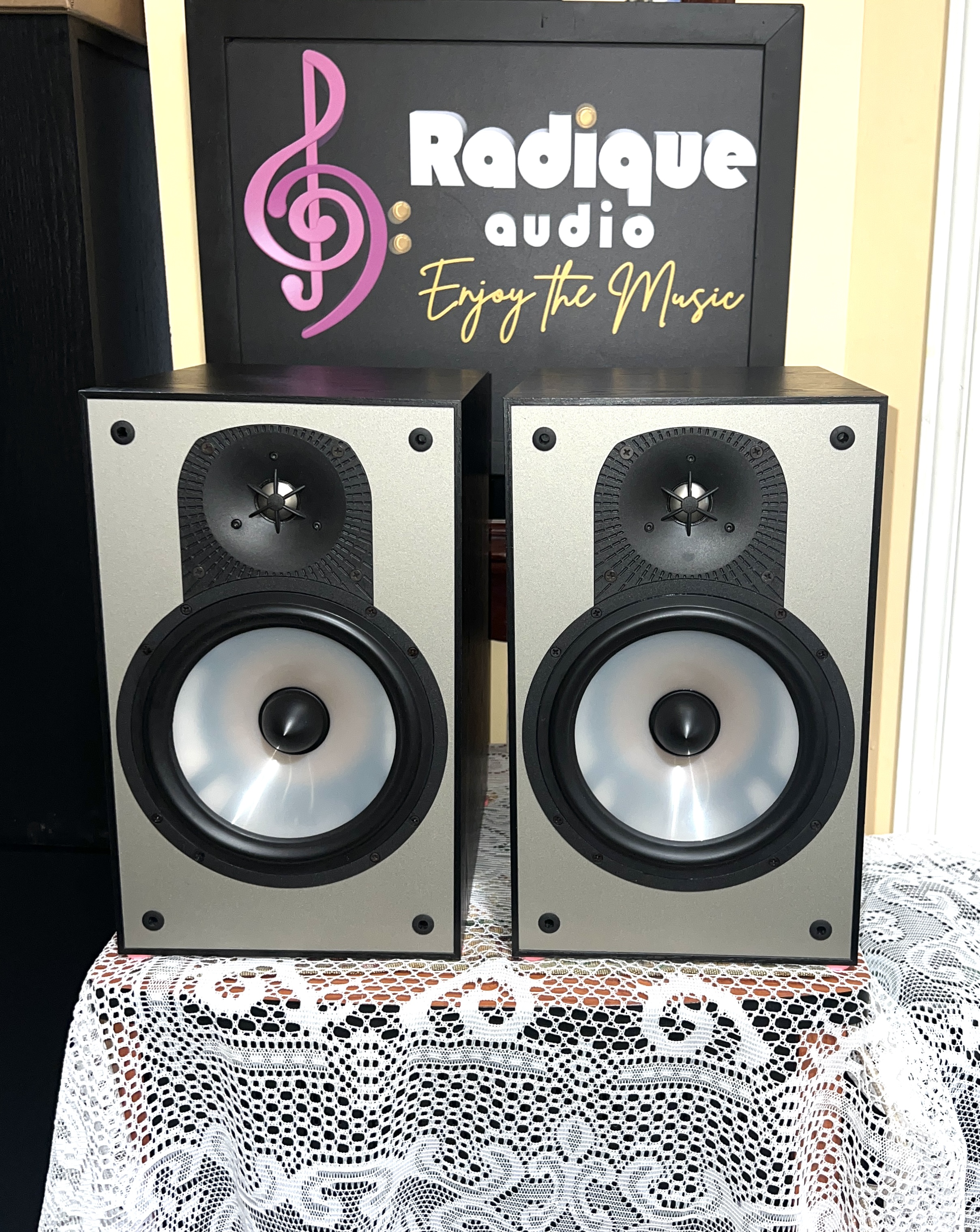
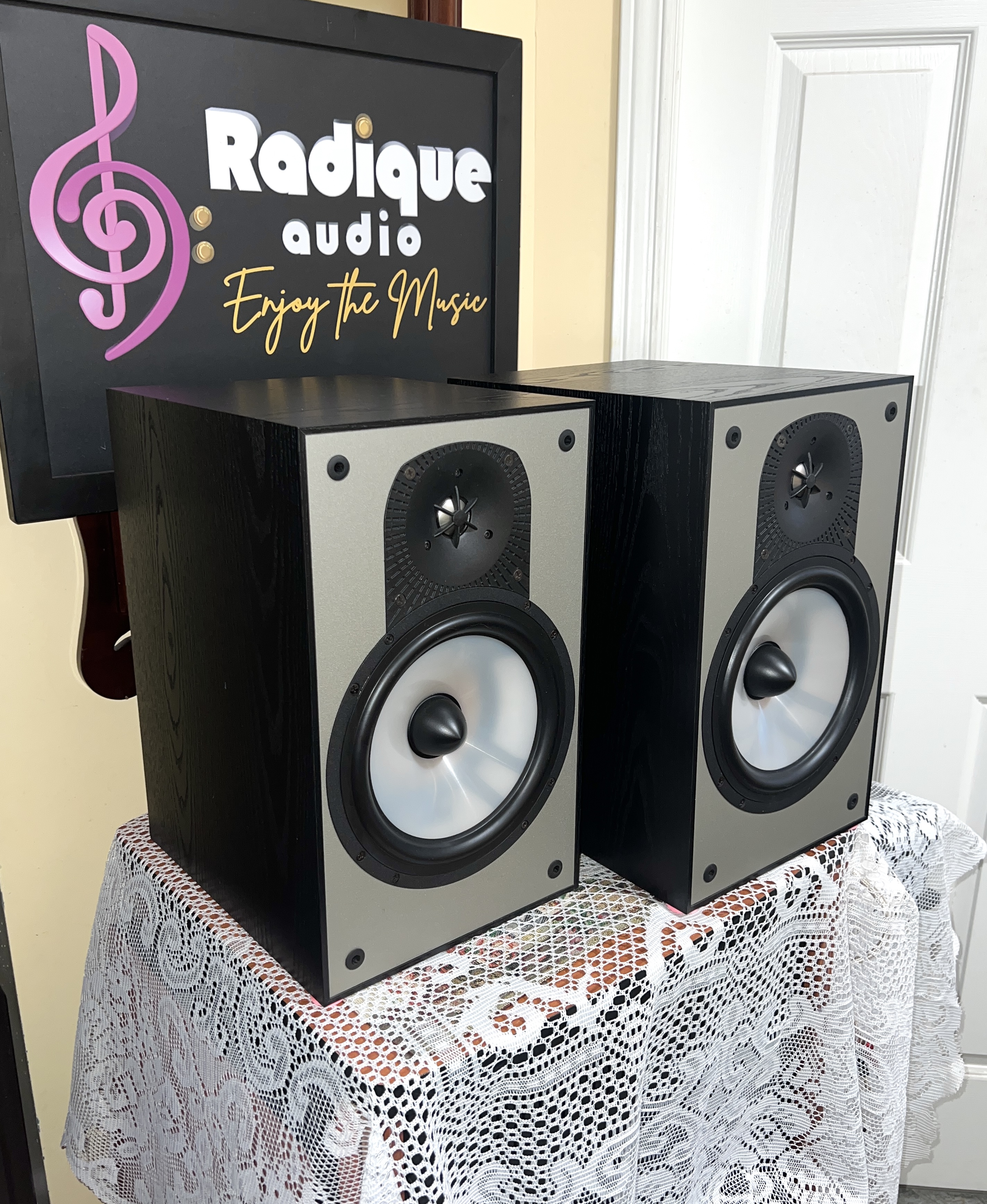
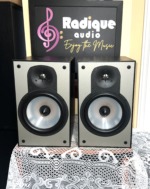
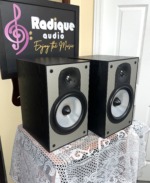
An 8-inch woofer in a cabinet small enough to sit on a stand — a 210 mm ICP cone on a die-cast chassis, with a third-generation titanium dome on the Studio-series waveguide faceplate, crossed at 2.0 kHz. Low frequency extension to 38 Hz and 91 dB room sensitivity, so 15 watts drives them and 150 is just headroom. Built in Canada, in Black Ash. Very good condition.
1 in stock
Paradigm Monitor 3 v3 Bookshelf Speakers – 8-Inch ICP Woofer, Studio-Series Waveguide Tweeter, Black Ash, Made in Canada
A Canadian-made stand-mounted speaker with a full 8-inch woofer, which is what separates the Monitor 3 from every compact bookshelf it gets shelved beside.
The 8-Inch Woofer
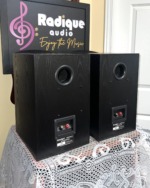
Most bookshelf speakers stop at six and a half inches, and the bass stops with them. The Monitor 3 was Paradigm’s answer to that: a 210-mm ICP cone on a die-cast chassis, loaded by a quasi-third-order resistive port firing from the rear, in a cabinet still small enough to sit on a stand. Low frequency extension runs to 38 Hz, and the response holds within 2 dB from 56 Hz all the way to 20 kHz. That is genuine low end from a speaker you can put behind a sofa rather than beside one, and it is the reason people who owned these tend to talk about them years later.
What Changed at v3
The v3 generation is the one to have. When Paradigm replaced the v2 in May 2002 the headline change was the high frequency driver: a third-generation 25-mm pure-titanium dome mounted on the Waveguide faceplate developed for the company’s Studio series. The mid/bass drivers were redesigned at the same time with new motor structures, bullet dust caps and larger magnets, which is where the extra sensitivity and the tighter, more defined bass come from. The crossover is third-order electro-acoustic at 2.0 kHz.
Amplifier Matching
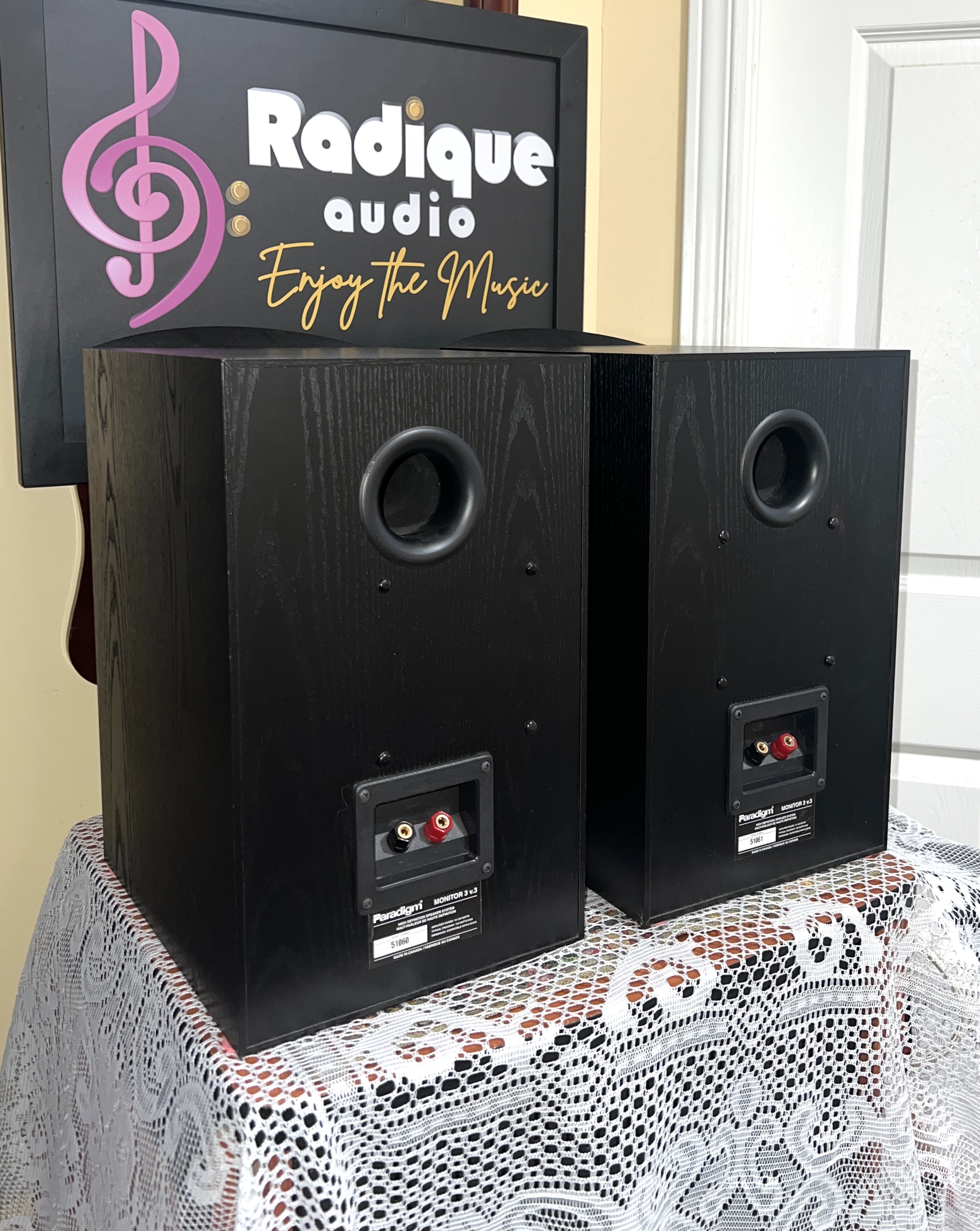
They are also easy to live with electrically. Room sensitivity is 91 dB, the load is compatible with 8 ohms, and Paradigm rates them for anything from 15 to 150 watts, so a modest integrated drives them properly and a larger amplifier is simply headroom. Connection is through Paradigm’s own 5-way binding posts, which take banana plugs, spades or bare wire.
Made in Canada
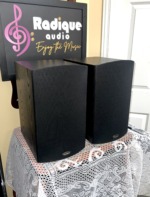
Designed, engineered and built in Canada at Paradigm’s Mississauga facility, and finished in Black Ash.
Condition and Service
This pair is in very good condition and has been thoroughly inspected and tested to confirm full functionality.
Why This Pair
An 8-inch two-way that fits on a stand, from the era when Paradigm was still building the Monitor series in Ontario. Rarely the speaker anyone expects to hear in a room that size.
Features
- 210-mm (8 in) ICP injection-moulded co-polymer polypropylene cone on a die-cast chassis
- 25-mm (1 in) PTD pure-titanium dome tweeter on the Studio-series Waveguide faceplate
- Quasi-third-order resistive rear port
- Third-order electro-acoustic crossover at 2.0 kHz
- 91 dB room sensitivity — easy to drive
- Paradigm 5-way binding posts, suitable for banana plugs
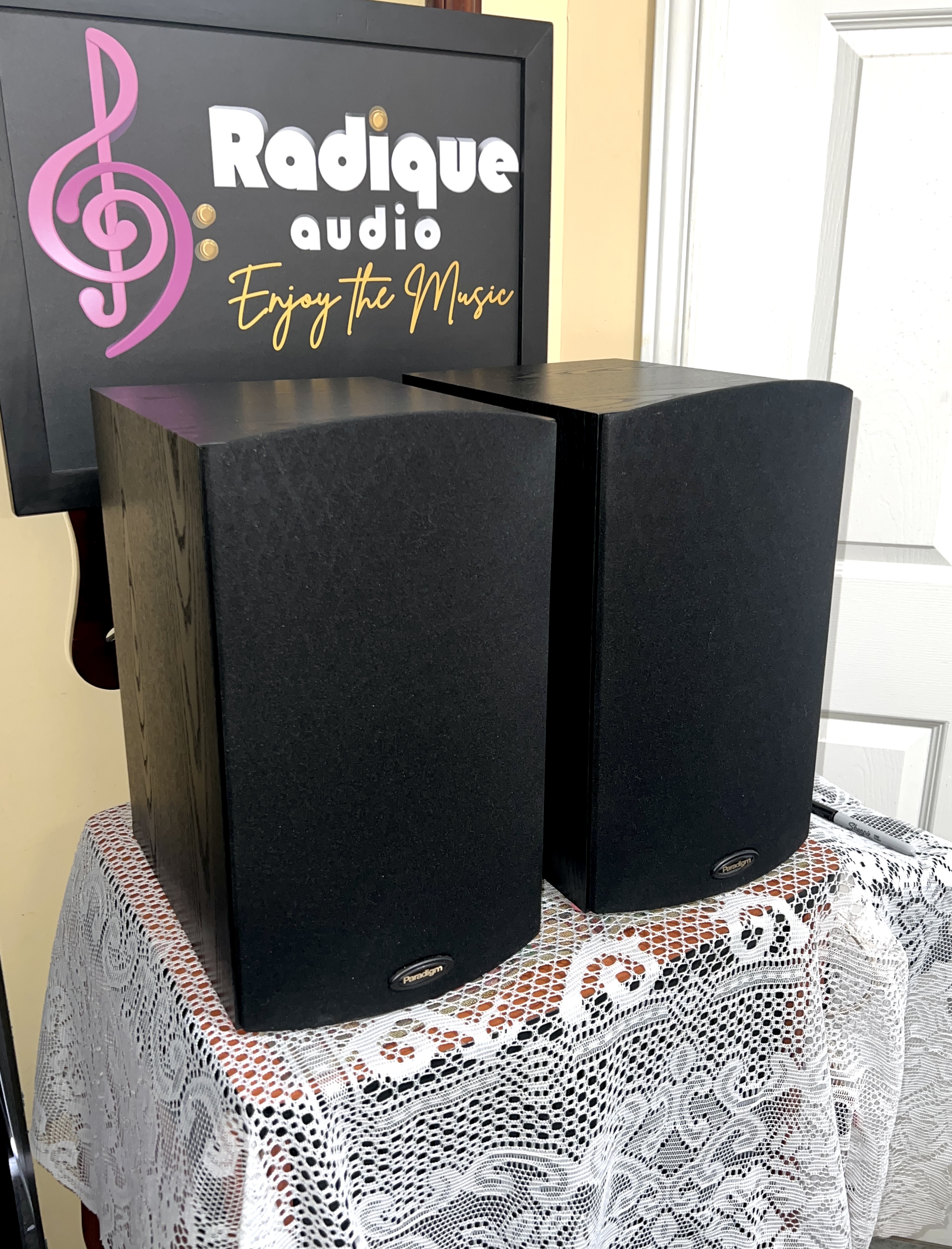
- Black Ash finish
- Designed, engineered and built in Canada
Paradigm Monitor 3 v3 Bookshelf Speakers Specifications
- Model: Monitor 3 v3
- Design: 2-driver, 2-way bass reflex, quasi-third-order resistive port, bookshelf / stand-mounted
- Crossover: Third-order electro-acoustic at 2.0 kHz
- Frequency Response On-Axis: ±2 dB from 56 Hz to 20 kHz
- Frequency Response 30° Off-Axis: ±2 dB from 56 Hz to 18 kHz
- High Frequency Driver: 25-mm (1 in) PTD dome
- Mid/Bass Frequency Driver: 210-mm (8 in) ICP cone, die-cast chassis
- Low Frequency Extension: 38 Hz (DIN)
- Sensitivity Room / Anechoic: 91 dB / 88 dB
- Impedance: Compatible with 8 ohms
- Suitable Amplifier Power Range: 15 to 150 watts
- Finish: Black Ash
- Dimensions: (Width x Height x Depth) 9.2 x 15.6 x 12.75 inches (233 x 397 x 324 mm)
- Weight: 18 lbs (8.2 kg) each
🔌 Speaker Cable, Built on Our Own Bench
The speaker terminals here are five-way binding posts, so they take banana plugs or spade lugs and you have the run of the options. We hand-build speaker cable here in any length you need — choose the gauge and the terminations on our Custom Speaker Cable Builder. If you would rather terminate cable you already own, we make our own gold-plated banana plugs and spade connectors as well. 👉
✅ Buy With Confidence — The Radique Promise
Backed by Radique Audio’s Bumper-to-Bumper Warranty and our Perpetual Trade-Back Program. When you’re ready to move on, we’ll take it back. That’s the Radique difference.
📦 Watch how we protect your gear — our unboxing video.
📺 Curious about our business? Check out our YouTube channel for behind-the-scenes videos and more!
📞 Questions? Use the Ask a Question button above, or call us at 613-416-9995.
| Weight | 38 lbs |
|---|---|
| Dimensions | 16.75 × 24.4 × 19.6 in |
Paradigm has designed loudspeakers in the Toronto area since 1982, with engineering roots that run through Ottawa: it took part in the National Research Council's loudspeaker research here, and its research lab has been in Ottawa since 1993. We've had more than 600 Paradigm listings so far, covering 193 different models, more than any other brand. Every used Paradigm here is inspected, tested and photographed in-house, then covered by our Bumper-to-Bumper Warranty and Perpetual Trade-Back Program. Don't see the model you want? Tell us on First Dibs and we'll email you when one arrives.
The Paradigm story, 1982 to today
Jerry VanderMarel and Scott Bagby founded Paradigm in 1982 in the Toronto area, VanderMarel running sales and marketing and Bagby design and manufacturing. Their first speakers made their debut at a Toronto audio show that year, and Paradigm says 12 dealers signed on.
The Ottawa years. In the 1980s almost every major Canadian speaker maker measured its designs in the National Research Council's anechoic chamber here in Ottawa, and Paradigm took part in the research Dr. Floyd Toole led at the NRC, which paired chamber measurements with blind listening tests. Paradigm built its own anechoic chamber in 1988, sparing its engineers the five-hour drive to Ottawa. In the late 1980s and early 1990s it was one of several Canadian companies in the NRC's Athena project, which studied speakers that adapt to the room. NRC scientists Peter Schuck and Marc Bonneville then joined Paradigm, which says it opened its Ottawa research centre, PARC, for them in 1993. That lab went on to design Anthem's electronics and its room-correction system. A 1990s Paradigm Titan is now part of the collection at Ingenium, Canada's science and technology museums, here in Ottawa.
Growth. Paradigm moved into the US market in the mid-1980s, added its first in-wall speaker in 1989 and launched the Monitor series in 1990. The Titan was a hit by 1991, the Atom followed in 1992, and the PS-1000 of 1994 was its first powered subwoofer. By 1992 Stereophile counted about 256 Paradigm dealers in the US.
Reference and the new factory. The Reference line, with its Studio speakers, arrived in the mid-1990s; Stereophile reviewed the Studio/100 in 1997. In 1998 Paradigm bought Sonic Frontiers, which brought Anthem into the family. In 2001 it moved into a new Mississauga factory with what it calls the hemisphere's largest privately owned anechoic chamber, at 33,000 cubic feet. A tour that year found the plant finishing 1,500 speakers a day, with driver frames cast, cones moulded and voice coils wound in-house.
Changes of hands. Co-founder Jerry VanderMarel left in 2005, when the private-equity firm ShoreView Industries became Scott Bagby's partner; together they went on to buy MartinLogan. Compact lines such as Cinema were built overseas from the start, and from the 2010s Monitor was too, while Prestige (2014), Persona (2016) and Founder (2021) have been built in Mississauga. In 2019 Scott Bagby and his son John bought Paradigm, Anthem and MartinLogan back from ShoreView, and their company, PML Sound International, added GoldenEar at the start of 2025.
Which Paradigm is which?
Performance Series (1990s to 2006): the entry line, with the Atom, Titan, Focus, Esprit and Phantom. A 1990s Titan's label reads "Performance Series … Made in Canada". At the end of 2006 the Atom and Titan moved into the Monitor line.
Monitor (from 1990): the step-up line, and from 2006 the entry line; today's version is Monitor SE. In the early 1990s it was topped by the Studio Monitor tower, in real wood veneer.
Reference Studio (mid-1990s to mid-2010s): the Studio/20, 40, 60, 80 and 100 plus matching centres, with die-cast aluminium driver chassis and aluminium-dome tweeters, made in numbered versions. From the v.2 generation of 1999 the sides came in laminate or, for a little more, real wood veneer. A favourite here is the Studio/80 v.2, a slim 2.5-way tower from about 1999 to 2003; the pairs with real wood sides are the ones to find.
Signature (2004–2016): the flagship of its day, part of the Reference family.
Cinema (from about 2000): compact home-theatre satellites and centres in polymer cabinets, designed to be used with a subwoofer, later sold as Cinema CT packages.
Millenia (from 2006): slim aluminium-cabinet speakers made to suit flat-panel TVs. The little MilleniaOne was Sound & Vision's 2011 Product of the Year.
Stylus (from 1999): weatherproof outdoor speakers.
Today's lines: Monitor SE, Premier (2018), Prestige (2014), Founder (2021) and the Persona flagship (2016).
Subwoofers: from the PS-1000 (1994) and Servo-15 (1996) through the PS and PW series to Defiance (2018).
Buying used Paradigm: what to check
The rear label. Where a Paradigm was built depends on the line and the year, and some names were reused (the Atom and Titan moved from Performance to Monitor, and the Esprit name appeared in more than one line), so the label tells you exactly what you have.
Veneer or laminate. On Reference Studio models from 1999 on, real wood veneer sides were an option; look closely at the sides before you assume.
Woofer surrounds. Owners report foam surrounds needing replacement on some older models, including early Titans. Press gently around each one.
Powered subwoofers. The amplifier is the part most likely to have aged. Run a used sub at volume and check that auto-on still works.
Everything we list is inspected, tested and photographed here first, and comes with our warranty.
You may also like…


Paradigm J-60 26″ Fillable Welded Steel Speaker Stands – Pair
Three welded steel columns rising from a 12 by 12 inch base to a 7.5 by 9 inch top plate — the stand Paradigm sold for the Studio 20 and the Active 20. The columns are hollow and meant to be filled: a bag of dry play sand roughly doubles their mass and stops the ringing. Supplied unfilled, with felt pads fitted and the original spikes included. Very good condition.
Related Products
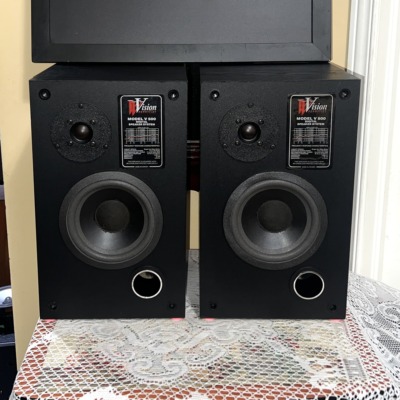
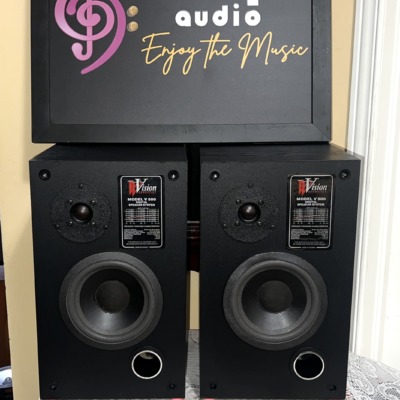
Vision Acoustics V500 Bookshelf Speakers, Pair – Made in Canada
A pair of solidly built, Canadian-made Vision Acoustics V 500 bookshelf speakers in black ash, rated at a sensitive 92 dB, fully tested on our bench and in very good condition.
✔️ Very good condition — free of significant marks, in black ash
✔️ Efficient 92 dB design, easy for a modest receiver to drive
✔️ Made in Canada, with 5-way binding posts
✔️ Covered by Radique Warranty
✔️ Includes Perpetual Trade-Back Program eligibility
✔️ Expertly packed for safe shipping
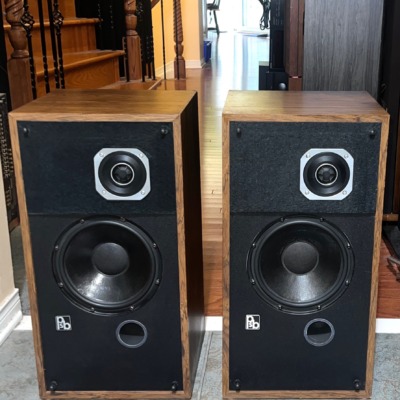
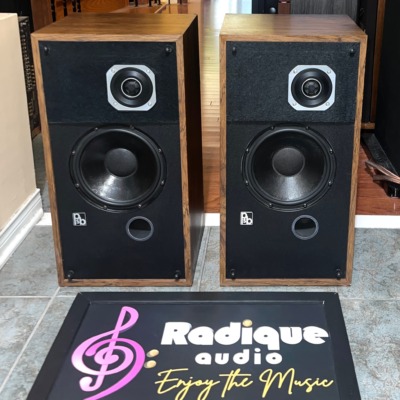
PSB Avante Bookshelf Speakers, Pair – Vintage, Made in Canada
A vintage pair of PSB Avante two-way speakers in walnut, from the early years of one of Canada's best-known speaker makers, with 8-inch woofers, fully tested on our bench and still sounding great.
✔️ Fair cosmetics, great sound — the details are below
✔️ 8-inch woofer and 1-inch dome tweeter in a front-ported cabinet
✔️ Early PSB, made in Canada
✔️ Covered by Radique Warranty
✔️ Includes Perpetual Trade-Back Program eligibility
✔️ Expertly packed for safe shipping
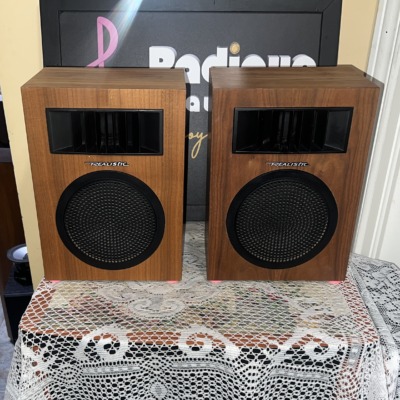
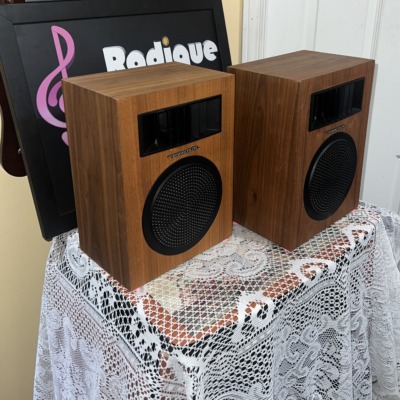
Realistic Minimus-5 Speakers, Pair – Vintage, Real Wood Veneer
A vintage pair of Realistic Minimus-5 two-way bookshelf speakers from Radio Shack, in a warm brown real wood veneer, with horn tweeters, fully tested on our bench and in very good condition.
✔️ Very good condition — free of significant marks
✔️ Real wood veneer, with rigid grilles over the woofers
✔️ Two ways in: small binding posts and an RCA-type speaker-level jack
✔️ Covered by Radique Warranty
✔️ Includes Perpetual Trade-Back Program eligibility
✔️ Expertly packed for safe shipping
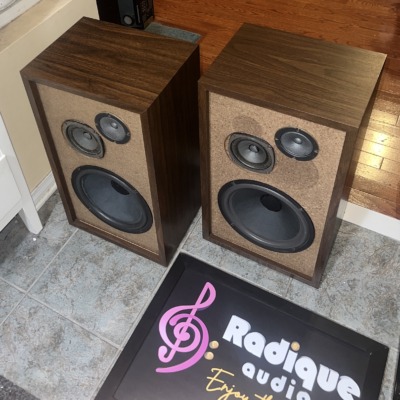
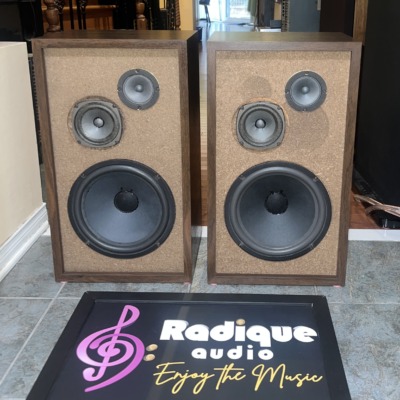
Fisher XP-65S Speakers, Pair — Walnut, Refoamed, 3-Way Sealed
A pair of Fisher XP-65S three-way sealed speakers, freshly refoamed, in walnut.
✔️ Condition: Very Good — walnut cabinets present well
✔️ woofers freshly refoamed in-house
✔️ Covered by Radique Warranty
✔️ Includes Perpetual Trade-Back Program eligibility
✔️ Expertly packed for safe shipping
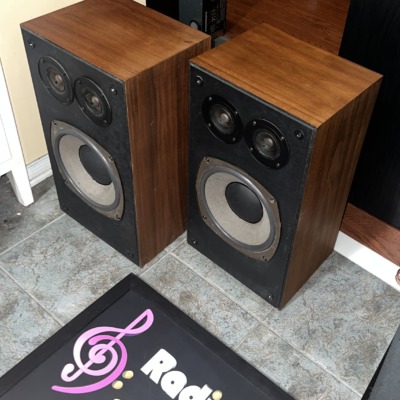
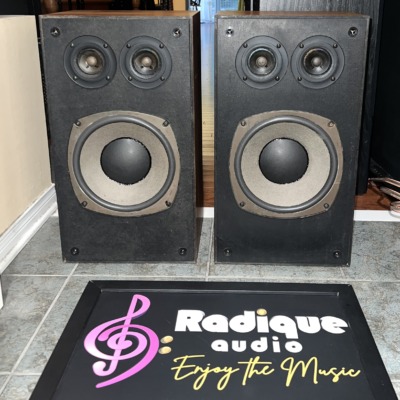
Realistic Optimus-21 Speakers, Pair — Walnut, Serviced, Japan
A pair of Realistic Optimus-21s, fully gone through, in their original oiled walnut veneer.
✔️ Covered by Radique Warranty
✔️ Includes Perpetual Trade-Back Program eligibility
✔️ Expertly packed for safe shipping
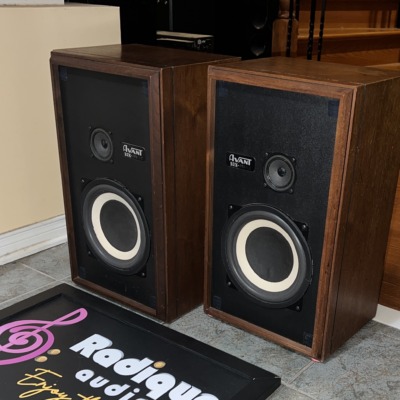
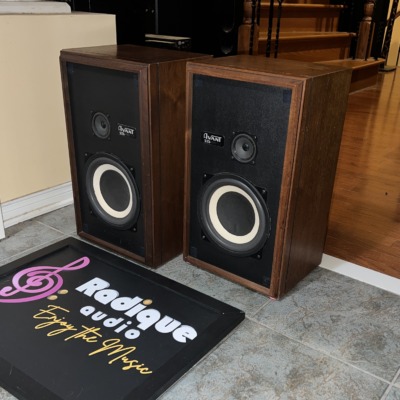
Avant 1AX Bookshelf Speakers, Pair – Canadian, Real Wood Veneer
A matched pair of Avant 1AX bookshelf speakers: Canadian-built, dressed in real wood veneer, with freshly refoamed woofers and sequential serial numbers.
✔️ Good condition — the real wood veneer is sound, with light scuffs on the tops
✔️ Woofers refoamed on our bench with new surrounds
✔️ Made in Canada — a sequential-serial matched pair
✔️ Covered by Radique Warranty
✔️ Includes Perpetual Trade-Back Program eligibility
✔️ Expertly packed for safe shipping
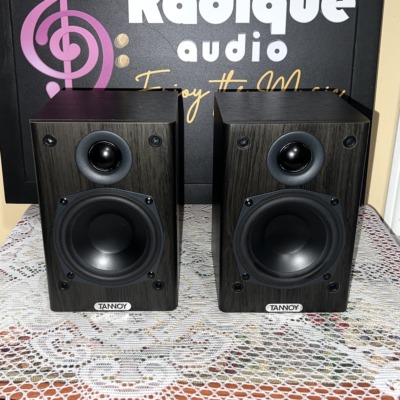
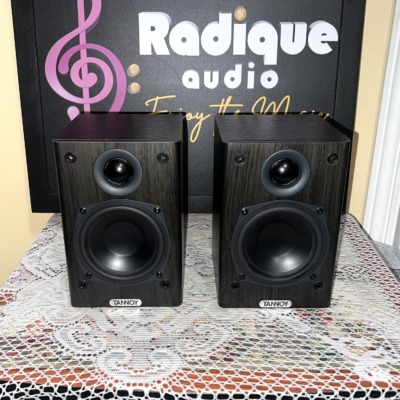
Tannoy Mercury FR Custom Compact Speakers – Dark Oak, Pair
A pair of compact two-way Tannoy speakers from the limited Custom edition of Tannoy's Mercury F-series, in very good condition, with a wall bracket built into the back of each cabinet.
✔️ Very good condition — free of significant marks; both grilles included
✔️ The limited Custom edition of Tannoy's Mercury F-series, in Dark Oak
✔️ Built-in wall bracket — hang them, or stand them on a shelf
✔️ Covered by Radique Warranty
✔️ Includes Perpetual Trade-Back Program eligibility
✔️ Expertly packed for safe shipping
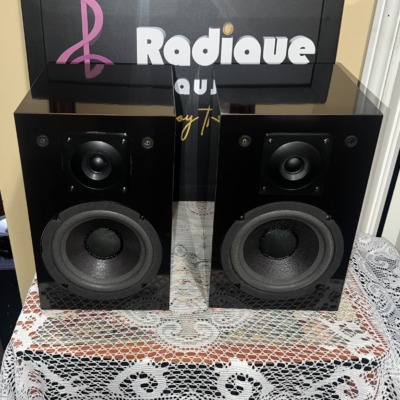
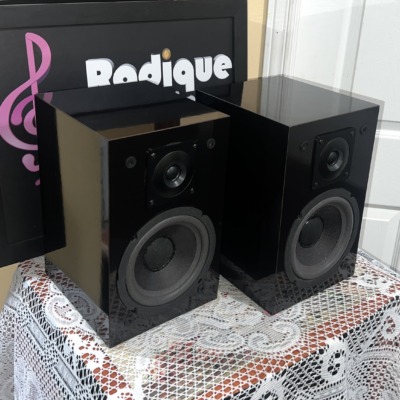
NHT Model 1C Bookshelf Speakers, Pair – Gloss Black, Re-Foamed
A pair of NHT Model 1C bookshelf speakers in gloss black, dated 1992, in very good condition and freshly re-foamed by us.
✔️ Very good condition — free of significant marks; grilles included
✔️ Freshly re-foamed by us — new woofer surrounds
✔️ Sealed and magnetically shielded — made in the USA in 1992
✔️ Covered by Radique Warranty
✔️ Includes Perpetual Trade-Back Program eligibility
✔️ Expertly packed for safe shipping
