

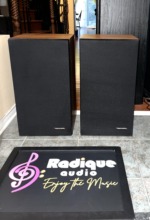


Realistic Optimus-21 Speakers, Pair — Walnut, Serviced, Japan
$245.00
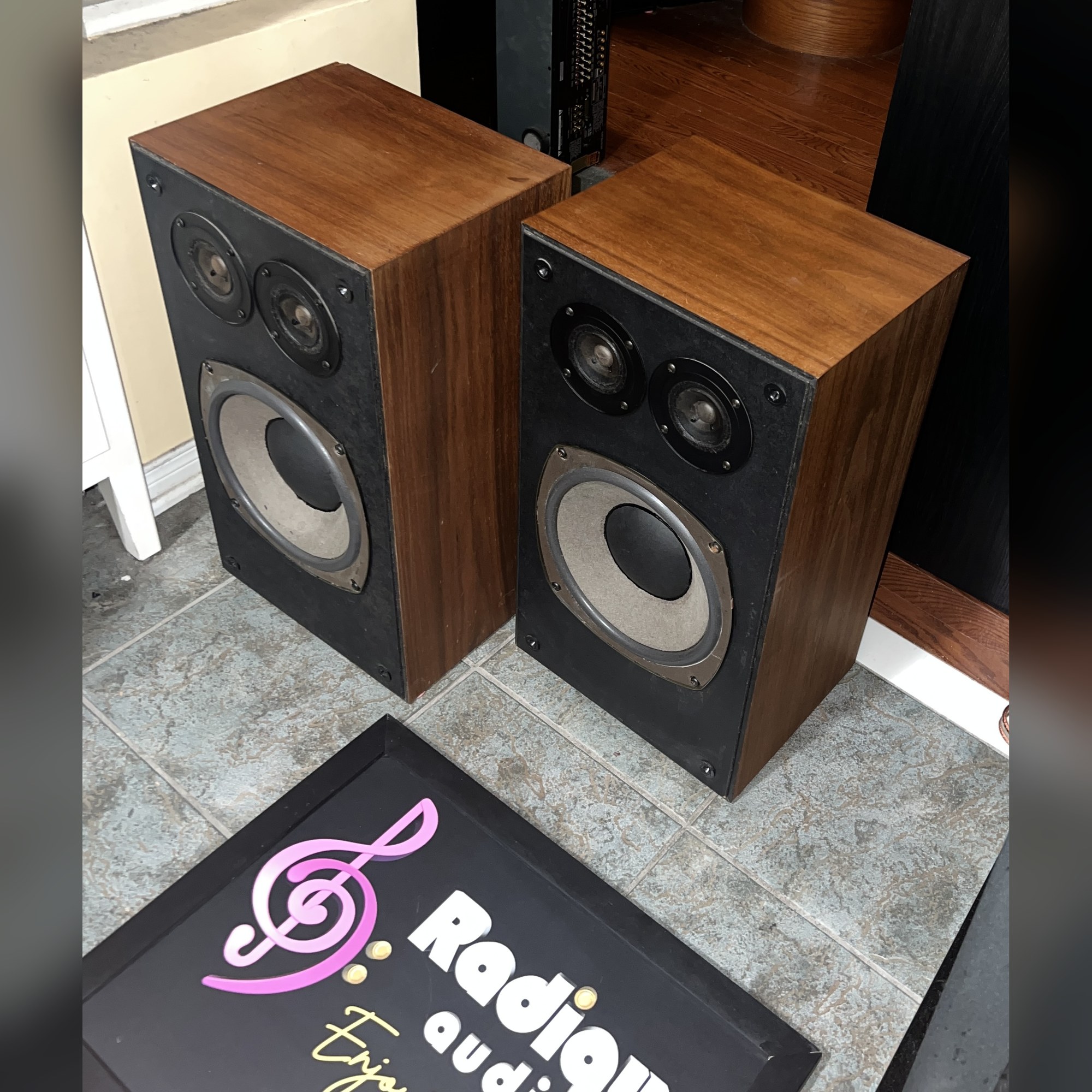
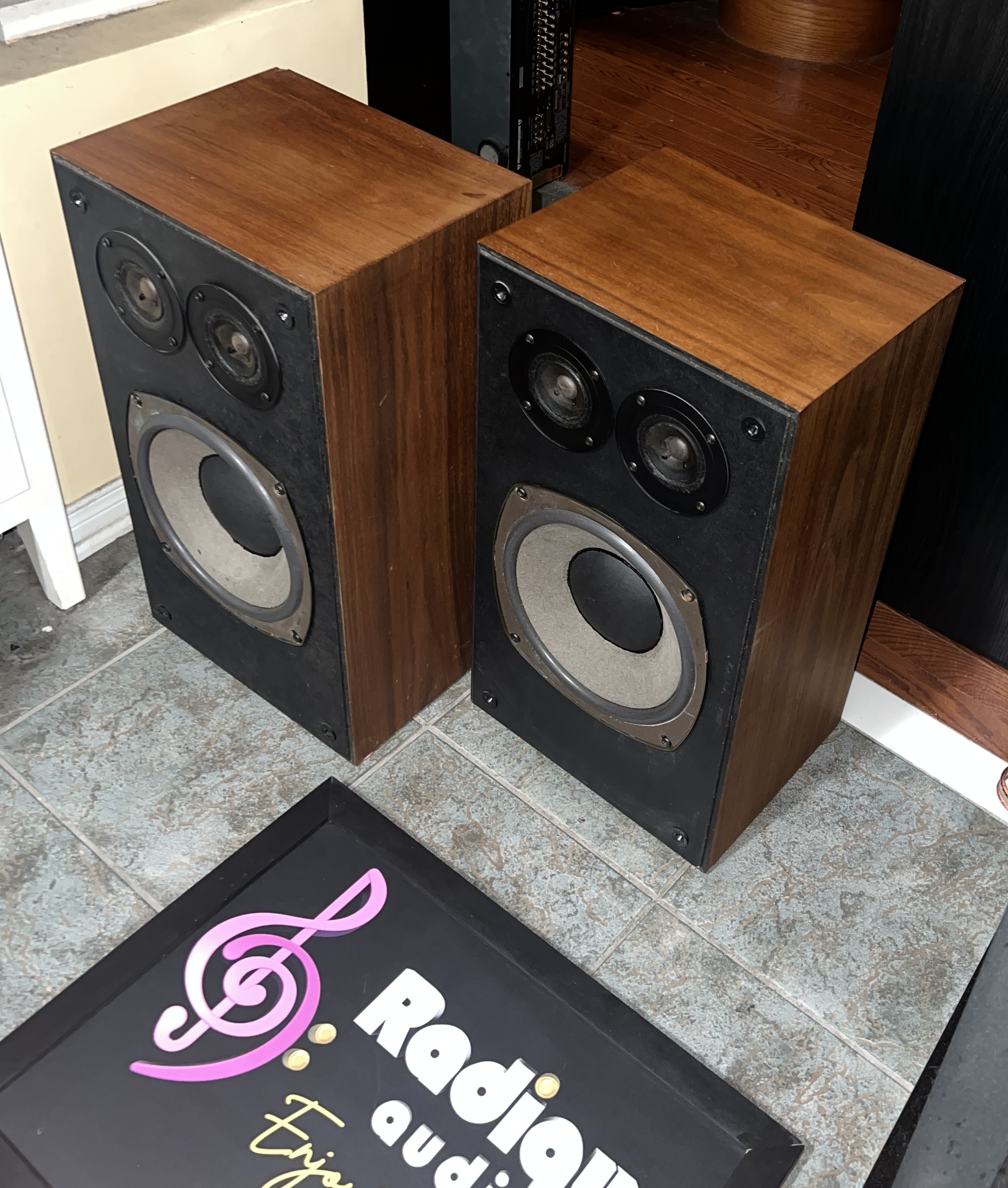
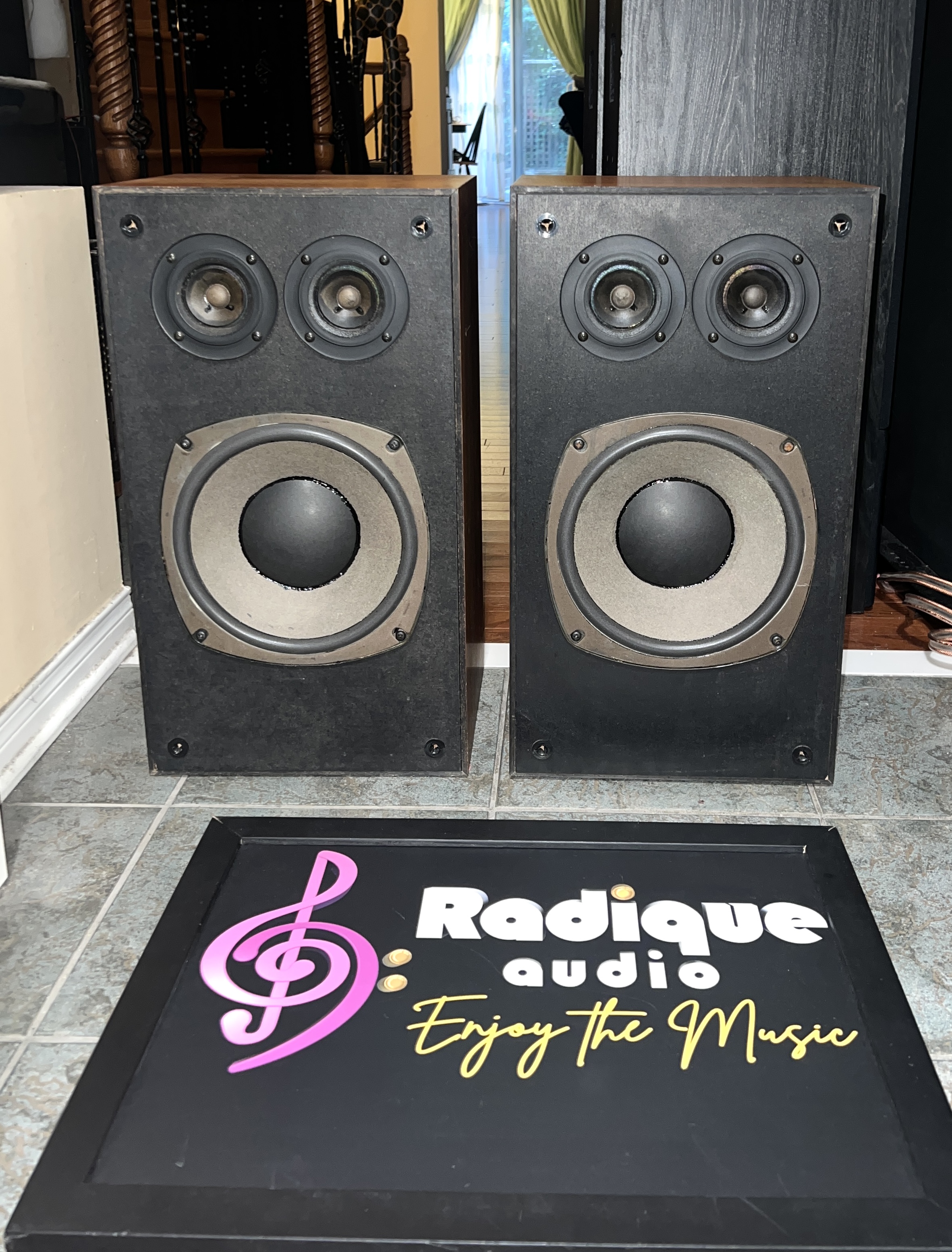
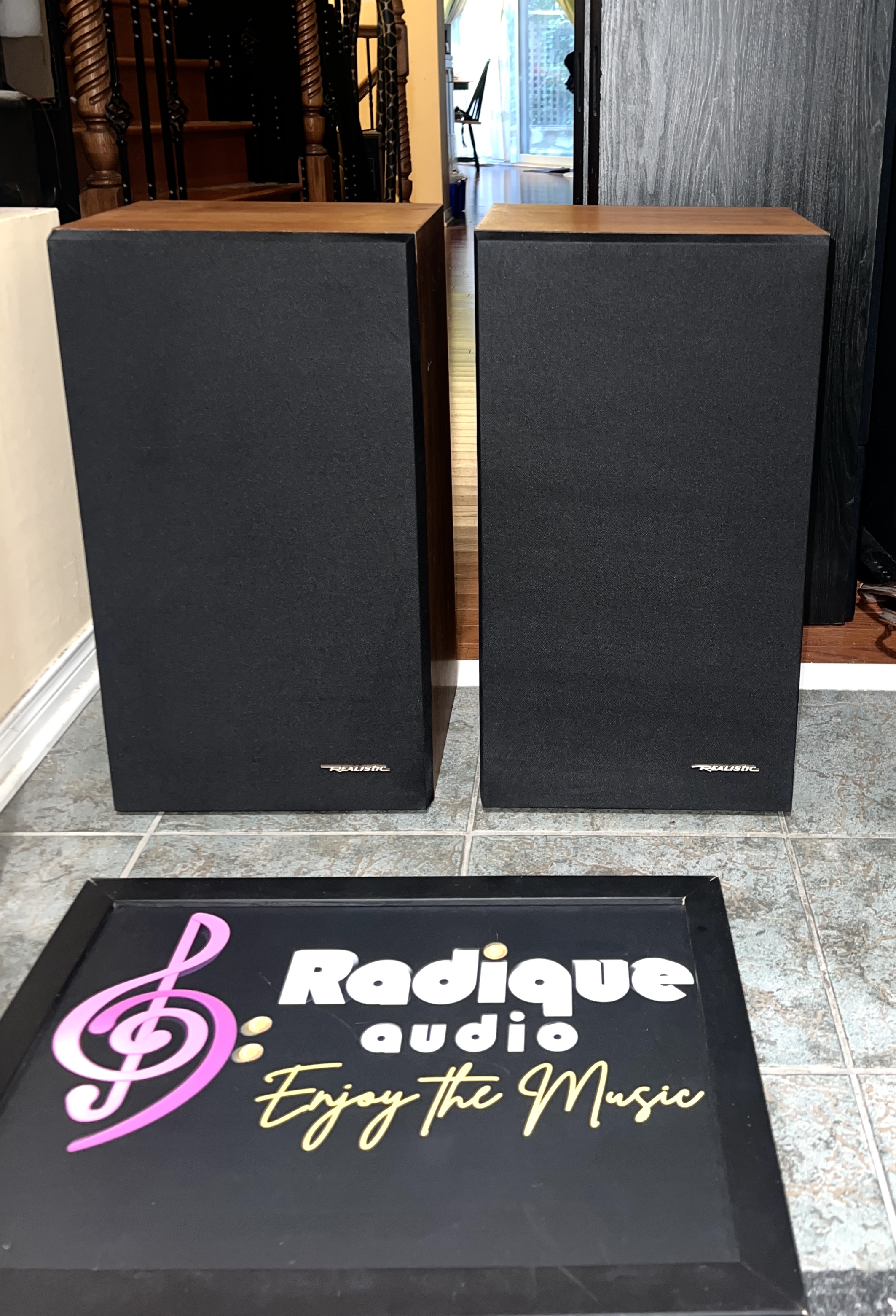
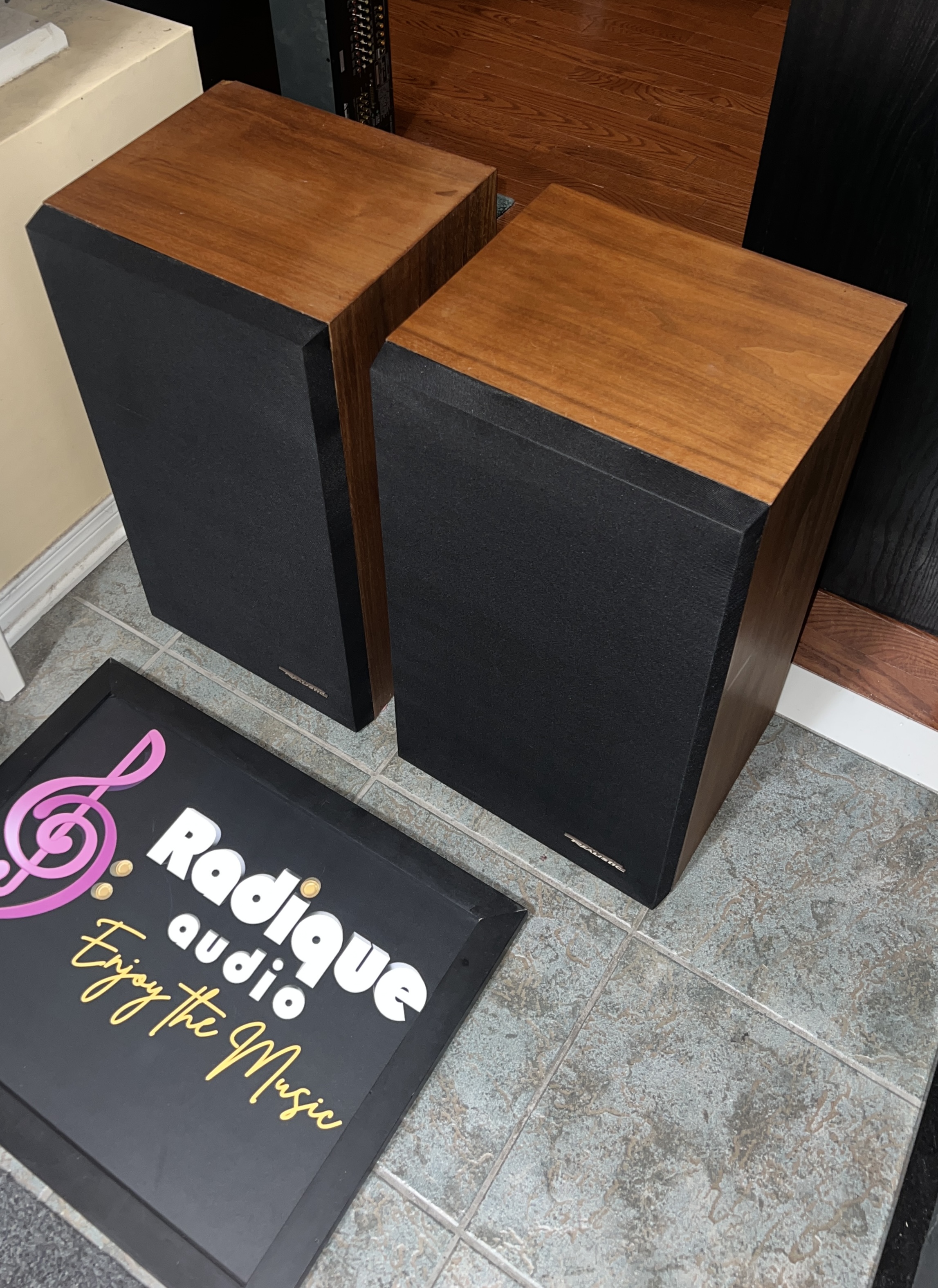
A pair of Realistic Optimus-21s, fully gone through, in their original oiled walnut veneer.
✔️ Covered by Radique Warranty
✔️ Includes Perpetual Trade-Back Program eligibility
✔️ Expertly packed for safe shipping
Out of stock
This one has sold. Want first dibs on the next one?
We take these in regularly. Leave your name and email, and we’ll email you the moment one is listed, so you hear first. No cost, no obligation.
Email me when one is listed
Whatever you end up with, it needs cable. Build a set to length →
Other bookshelf speakers we have in stock now
3 in stock · $145.00–$245.00 · all ship
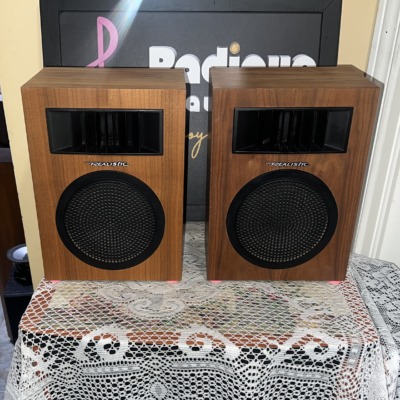 Realistic Minimus-5 Speakers, Pair – Vintage, Real Wood Veneer$145.00Ships
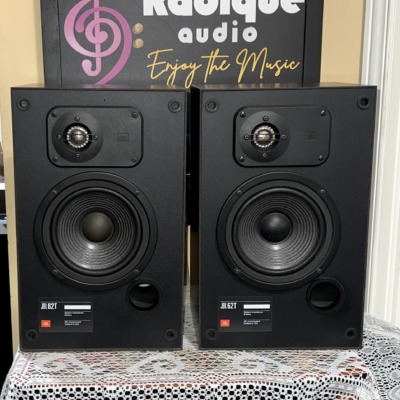 JBL 62T Bookshelf Speakers – Rosewood Finish, Titanium Dome$245.00Ships
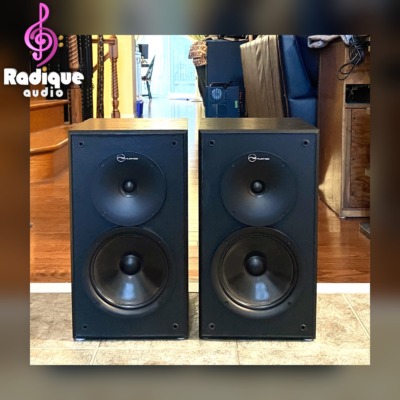 Large, High-End Nuance Advantage Bookshelf Speakers$245.00Ships
Whatever you end up with, it needs cable.
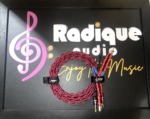
We hand-build speaker cable to your exact length and terminate it however you like: banana, spade, pin or bare wire. Tell us the run and the ends, and it ships ready to plug in.
Build a set to length →A pair of Realistic Optimus-21s, fully gone through, in their original oiled walnut veneer.
What they are
Radio Shack sold an enormous amount of forgettable gear under the Realistic name, and then occasionally sold something like this. The Optimus-21 was custom manufactured in Japan for Radio Shack, and the build quality tells you which of those two categories it belongs in: real oiled walnut veneer over a sealed cabinet, three drivers, and a rear panel with controls most speakers at any price never offered.
It was only in the catalogue for two years, at the end of the seventies, which is part of why they are not a common sight.
The cabinet is a proper acoustic-suspension design — completely sealed and packed with fibreglass, the same principle Advent and AR built their reputations on. Sealed boxes trade a little efficiency for bass that stops when the note stops, rather than the loose overhang a ported box of the era would have given you. At twenty-two inches tall these are a substantial speaker, not a compact, and the numbers follow: Radio Shack rated them 45 Hz to 18 kHz within three decibels. Note the tolerance. Plenty of speakers then and now claim twenty to twenty thousand without saying how far the response wanders to get there; a maker willing to publish a window of three decibels either way is telling you something the bigger number does not.
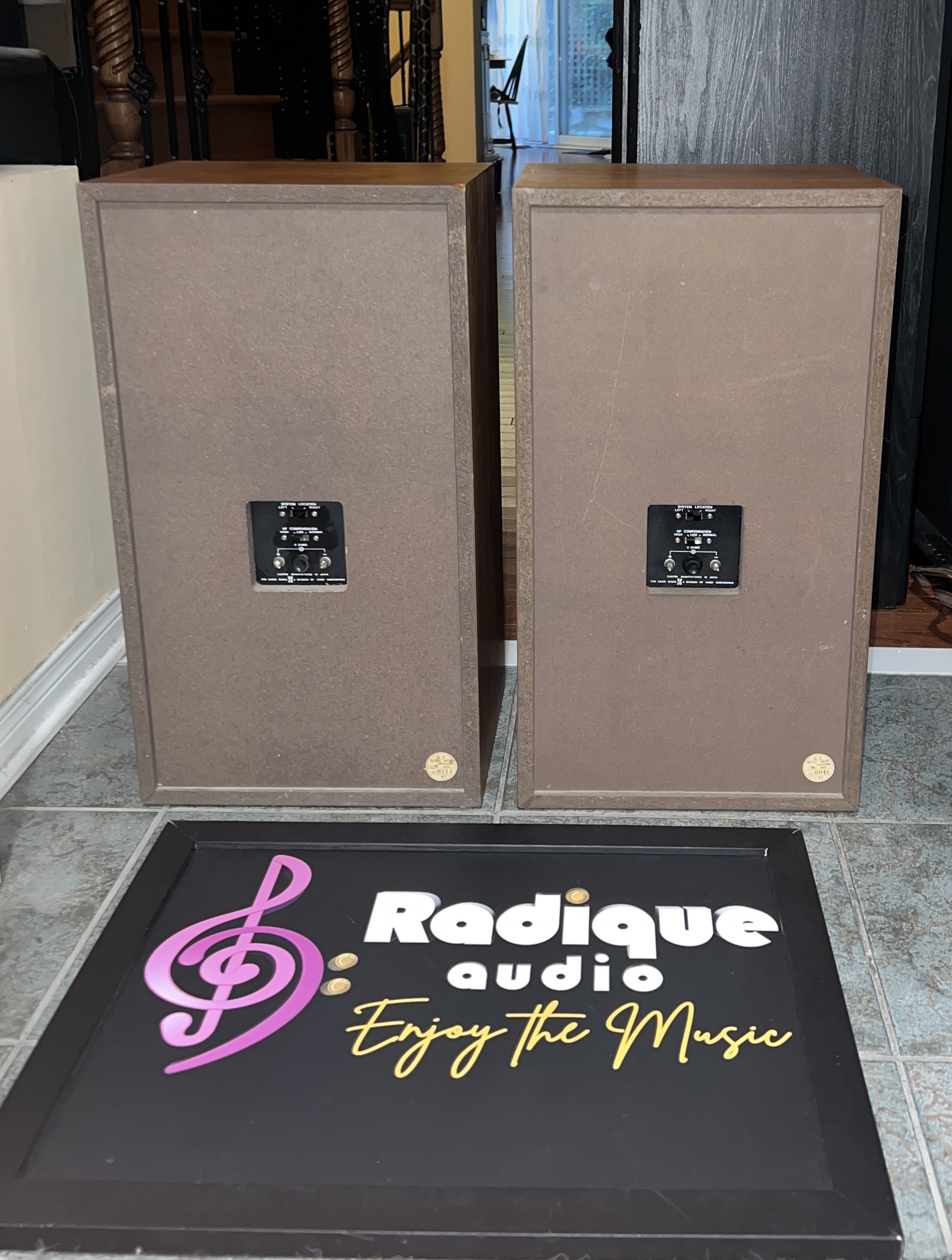
The rear panel is the giveaway
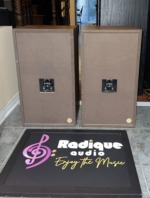
Two switches sit on the back of each cabinet, and both are unusual at this level.
The first is marked SYSTEM LOCATION, and it selects LEFT or RIGHT. That is a speaker designed to be voiced for which side of the room it stands on, rather than an identical pair left to fend for themselves.
The second is HF COMPENSATION, with three positions: HIGH, LOW and NORMAL. It adjusts the top end to suit the room — bright walls and bare floors want one setting, heavy curtains and carpet want another. Having that choice at the speaker, rather than reaching for tone controls on the amplifier, is genuinely useful in a real listening space, and it is the sort of thing that quietly disappeared from speakers as the years went on.
What it does, in short, is steer the top end according to which side of the room the speaker stands on. Both of the small drivers stay working; the switch changes their relationship to one another so the highest frequencies are aimed in toward where you are actually sitting. It is a neat piece of thinking for a speaker sold in a high-street chain.
Connection is by a pair of screw terminals, 8 ohms, with the impedance marked on the plate.
The work that has been done
These have been properly serviced rather than dusted off.
The woofer surrounds have been replaced. That matters more than anything else on a speaker of this age, because the original foam perishes on every example eventually, and a pair still wearing its factory surrounds is a pair with a bill attached to it.
The tweeters have been serviced.
The grille cloth is new, cut and fitted here.
Condition
Very Good, with one honest exception: there is a significant chip in the veneer on one cabinet. It is named here rather than discovered later, and it is the reason these are priced where they are. Everything else presents well — the finish is the original factory veneer, a warm orange-tan that has aged into itself, and from a normal listening distance the pair looks the part.
A well-built Japanese speaker wearing a Radio Shack badge, serviced where it matters, and priced for the mark it carries rather than in spite of it.
Available for pickup in Kanata, or shipped across Canada and internationally — we have sent equipment to fifteen countries in the past year, each piece packed in-house in 275 lb test double-wall boxes. Live shipping rates for your address are calculated at checkout. Backed by Radique Audio’s Bumper-to-Bumper Warranty and our Perpetual Trade-Back Program. Available for audition by appointment in Kanata.
Realistic Optimus-21 Specifications
- Realistic Optimus-21, Catalogue No. 40-2026
- Custom manufactured in Japan for Radio Shack, a division of Tandy Corporation
- Nominal impedance: 8 ohms
- SYSTEM LOCATION switch: left / right
- HF COMPENSATION switch: high / low / normal
- Connections: screw terminals
- Two-way, three-driver acoustic-suspension design, sealed and fibreglass filled
- Frequency response: 45 Hz to 18,000 Hz, plus or minus 3 dB
- One woofer and two 3-inch cone drivers per cabinet
- Power handling: 70 watts
- Finish: original oiled walnut veneer
- Dimensions: (Width x Height x Depth) 12.4 x 22.3 x 11.0 inches (314 x 565 x 279 mm)
- Weight: 25.4 lbs (11.5 kg) each
🔌 Speaker Cable, Built on Our Own Bench
We hand-build speaker cable here in any length you need — pick the gauge and the terminations on our Custom Speaker Cable Builder. We also make our own gold-plated banana plugs, spades and pin connectors if you would rather terminate cable you already have. 👉
✅ Buy With Confidence — The Radique Promise
Backed by Radique Audio’s Bumper-to-Bumper Warranty and our Perpetual Trade-Back Program. When you’re ready to move on, we’ll take it back. That’s the Radique difference.
📦 Watch how we protect your gear — our unboxing video.
📺 Curious about our business? Check out our YouTube channel for behind-the-scenes videos and more!
📞 Questions? Use the Ask a Question button above, or call us at 613-416-9995.
| Weight | 52.8 lbs |
|---|---|
| Dimensions | 28 × 16.4 × 26.3 in |
| Impedance | 8 Ω |
| Power Handling | 51–100 W |
Realistic was Radio Shack's own brand of audio and radio gear. Radio Shack, founded in Boston in 1921, launched the line in the mid-1950s, and Realistic gear was sold across Canada through Radio Shack stores. We carry Realistic stereo receivers, bookshelf speakers, turntables and equalizers. We've had more than 30 Realistic listings so far. Every used Realistic here is inspected, tested and serviced as required, then photographed in-house and covered by our Bumper-to-Bumper Warranty and Perpetual Trade-Back Program. Don't see the model you want? Tell us on First Dibs and we'll email you when one arrives.
The Realistic models we've sold most often include the Minimus-7 bookshelf speakers and the STA-720 and STA-2250 stereo receivers.
The Realistic story
Radio Shack began in Boston in 1921 as a store and mail-order business for radio amateurs. In 1954 Harman Kardon proposed a private-label audio line for it called Realist. The Realist camera company objected, so the line became Realistic, and Harman Kardon built its first FM tuner.
Tandy and the stereo years. Tandy Corporation took over Radio Shack in 1963 and grew it to thousands of stores across the US and Canada. Realistic covered everything from STA receivers and quadraphonic QTA receivers to LAB turntables, cassette decks and the little Minimus-7 speaker.
Who built it. Realistic products were built to Radio Shack's specifications, some in Tandy's own plants and many by outside suppliers in Asia, so the maker varies by model and year. Radio Shack phased out the Realistic name in the 1990s in favour of Optimus.
Which Realistic is which?
STA stereo receivers: from budget models such as the STA-16 and STA-21 to the 75-watt STA-2000 of 1977 and the STA-2270 of 1985.
Quadraphonic QTA receivers (mid-1970s): such as the QTA-770, with SQ, CD-4 and Radio Shack's own Quatravox modes.
Amplifiers and tuners: such as the SA-1000A and SA-2000 amplifiers and the TM-1000 tuner of 1977.
Turntables: the belt-drive LAB-50 to LAB-300, the direct-drive LAB-400, and Realistic/Miracord automatics.
Speakers: the Minimus-7 and Minimus-5 bookshelf speakers and the Mach One.
Optimus era (1990s): models such as the Optimus STA-20 receiver.
Buying used Realistic: what to check
Who made it. Realistic gear came from many suppliers, so service information and parts depend on the actual maker. Check the label and the service manual.
Quadraphonic receivers. High Fidelity found the QTA-770's distortion rose toward the frequency extremes, so test one in stereo at the volume you'll use.
Minimus-7. It needs roughly 30 to 50 watts and has little bass on its own, so pair it with a subwoofer. Enthusiasts say a crossover capacitor upgrade can make a big difference.
Age. Test every input and switch, inspect speaker surrounds, and check turntable belts and automatic mechanisms.
Everything we list is inspected, tested and serviced as required here, and comes with our warranty.
You may also like…
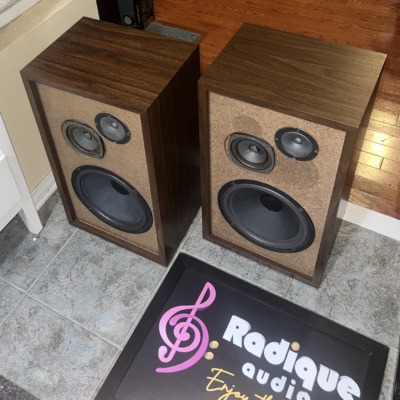
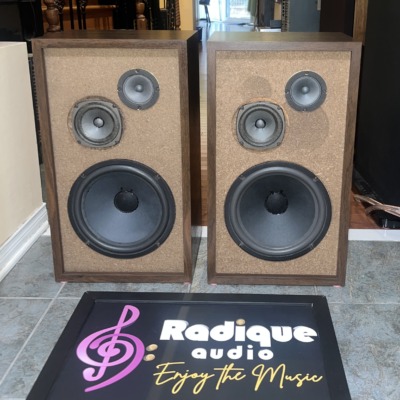
Fisher XP-65S Speakers, Pair — Walnut, Refoamed, 3-Way Sealed
A pair of Fisher XP-65S three-way sealed speakers, freshly refoamed, in walnut.
✔️ Condition: Very Good — walnut cabinets present well
✔️ woofers freshly refoamed in-house
✔️ Covered by Radique Warranty
✔️ Includes Perpetual Trade-Back Program eligibility
✔️ Expertly packed for safe shipping
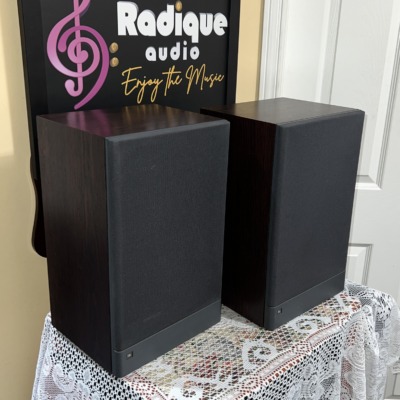
JBL 62T Bookshelf Speakers – Rosewood Finish, Titanium Dome
Discounted for the aftermarket screw holes a previous owner left in the back panels, and very good everywhere else — original drivers, clean rosewood finish, both tested here. A mid-1980s two-way with a pure titanium tweeter that runs out to 23 kHz, and an easy 89 dB load that a thirty-watt vintage receiver drives properly.
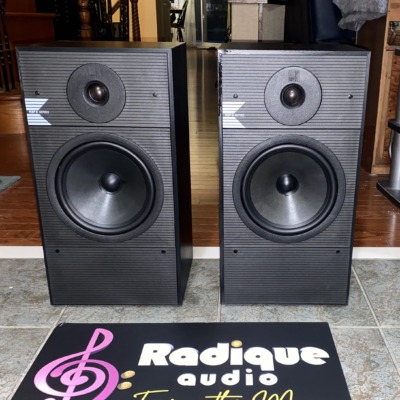
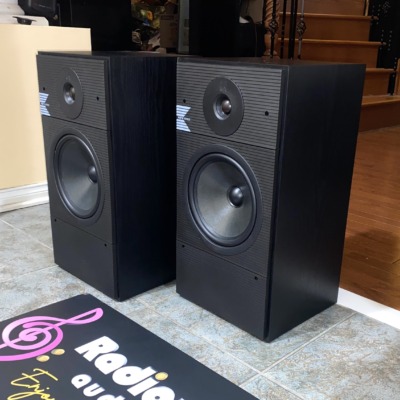
KEF K140 Vintage Bookshelf Speakers – Made in England
A sealed box from KEF's K Series, built in Maidstone between 1991 and 1993 — an 8-inch bass/midrange driver and a 25mm dome, 55 Hz to 20 kHz, 89 dB and an easy 8 ohm load that suits anything from 10 to 100 watts. Wood veneer cabinets with the fluorescent green KEF badges still on both. Very good condition.
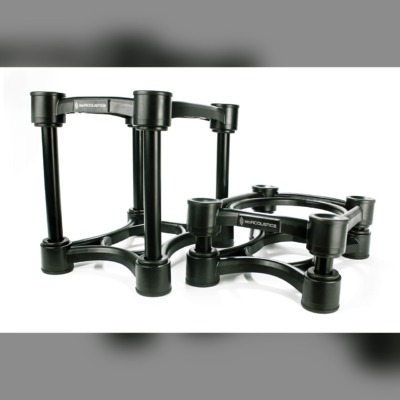

IsoAcoustics ISO-200 Isolation Stands (Pair)
- ✔️ Genuine IsoAcoustics, brand new, from an authorized Canadian dealer
- ✔️ A pair of isolation stands for large speakers and studio monitors
- ✔️ Rated to 75 lb (34 kg) short or 60 lb (27 kg) tall
- ✔️ Short 3.75 in (95 mm) or tall 8.5 in (215 mm), up to 6.5° of tilt
- ✔️ Pick up in Kanata by appointment, or shipped across Canada and internationally
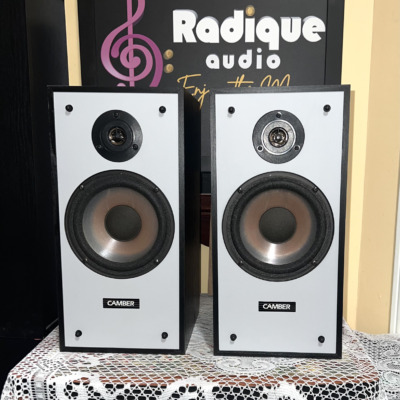
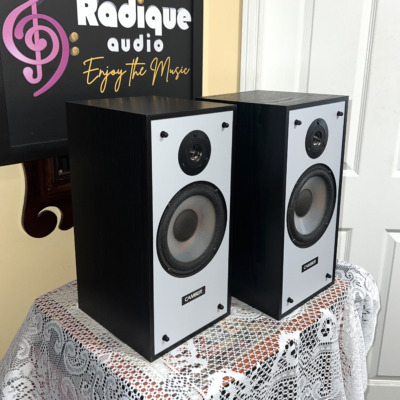
Camber Laser 3 Bookshelf Speakers – Made in Ottawa, Canada
Built in Ottawa, a short drive from where they now sit. A 6.5-inch Audax mid-bass on a translucent polypropylene cone and a 1-inch dome with a centre diffusor, in light grey bezels against a dark cabinet. Two-way rear-ported, 8 ohms, 10 to 100 watts, spring clips on the back — give them room off the wall. Grilles included; very good condition.
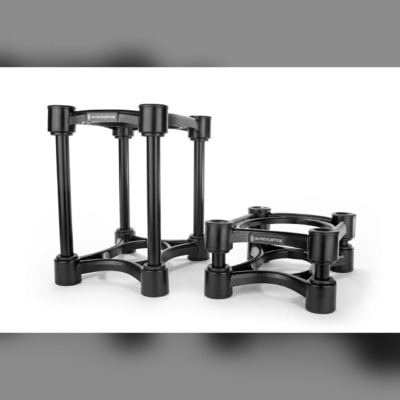

IsoAcoustics ISO-155 Isolation Stands (Pair)
- ✔️ Genuine IsoAcoustics, brand new, from an authorized Canadian dealer
- ✔️ A pair of isolation stands for medium speakers and studio monitors
- ✔️ Rated to 40 lb (18 kg) short or 35 lb (16 kg) tall
- ✔️ Short 3 in (76 mm) or tall 8.25 in (210 mm), up to 6.5° of tilt
- ✔️ Pick up in Kanata by appointment, or shipped across Canada and internationally

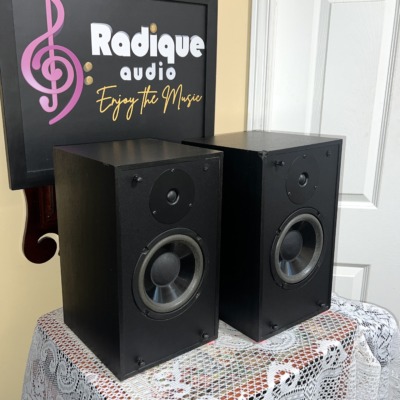


IsoAcoustics ISO-130 Isolation Stands (Pair)
- ✔️ Genuine IsoAcoustics, brand new, from an authorized Canadian dealer
- ✔️ A pair of isolation stands for small speakers and studio monitors, rated to 20 lb (9 kg)
- ✔️ Short 2.8 in (71 mm) or tall 8.25 in (210 mm), up to 6.5° of tilt
- ✔️ Top plate 5.1 × 6 in (130 × 152 mm)
- ✔️ Pick up in Kanata by appointment, or shipped across Canada and internationally
Related Products
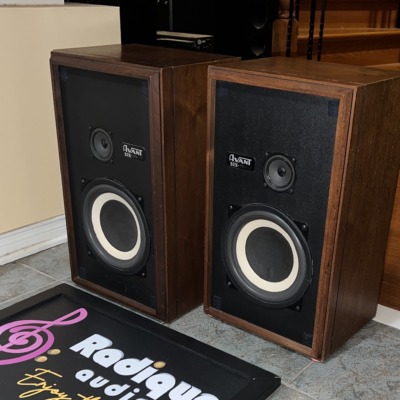
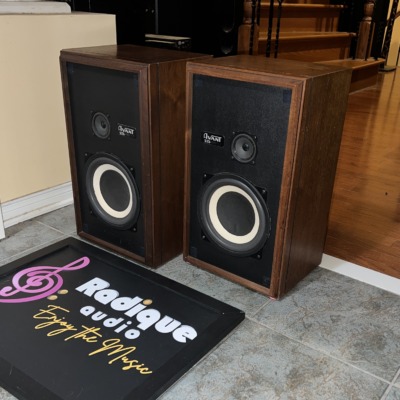
Avant 1AX Bookshelf Speakers, Pair – Canadian, Real Wood Veneer
A matched pair of Avant 1AX bookshelf speakers: Canadian-built, dressed in real wood veneer, with freshly refoamed woofers and sequential serial numbers.
✔️ Good condition — the real wood veneer is sound, with light scuffs on the tops
✔️ Woofers refoamed on our bench with new surrounds
✔️ Made in Canada — a sequential-serial matched pair
✔️ Covered by Radique Warranty
✔️ Includes Perpetual Trade-Back Program eligibility
✔️ Expertly packed for safe shipping
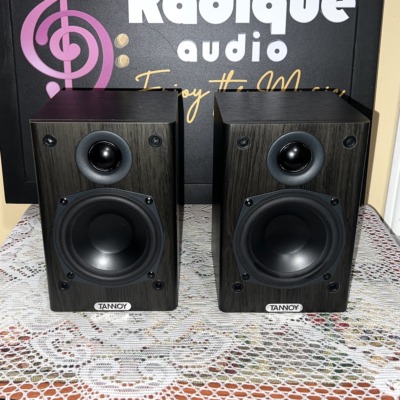
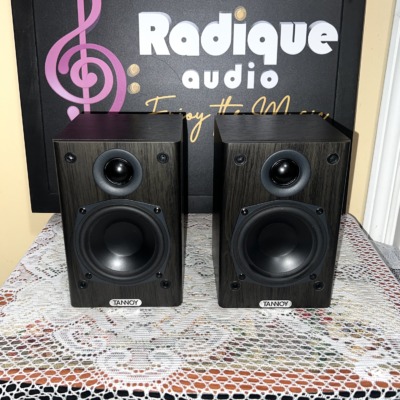
Tannoy Mercury FR Custom Compact Speakers – Dark Oak, Pair
A pair of compact two-way Tannoy speakers from the limited Custom edition of Tannoy's Mercury F-series, in very good condition, with a wall bracket built into the back of each cabinet.
✔️ Very good condition — free of significant marks; both grilles included
✔️ The limited Custom edition of Tannoy's Mercury F-series, in Dark Oak
✔️ Built-in wall bracket — hang them, or stand them on a shelf
✔️ Covered by Radique Warranty
✔️ Includes Perpetual Trade-Back Program eligibility
✔️ Expertly packed for safe shipping
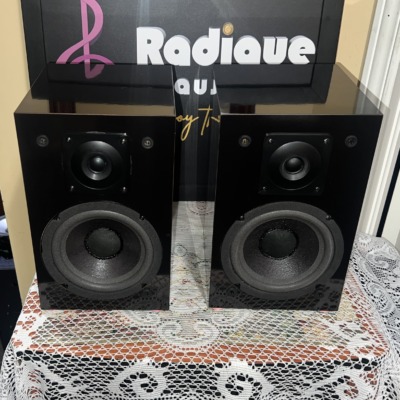
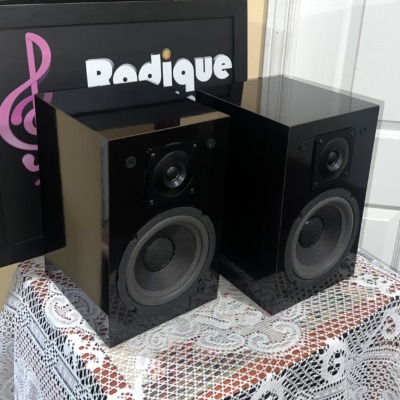
NHT Model 1C Bookshelf Speakers, Pair – Gloss Black, Re-Foamed
A pair of NHT Model 1C bookshelf speakers in gloss black, dated 1992, in very good condition and freshly re-foamed by us.
✔️ Very good condition — free of significant marks; grilles included
✔️ Freshly re-foamed by us — new woofer surrounds
✔️ Sealed and magnetically shielded — made in the USA in 1992
✔️ Covered by Radique Warranty
✔️ Includes Perpetual Trade-Back Program eligibility
✔️ Expertly packed for safe shipping
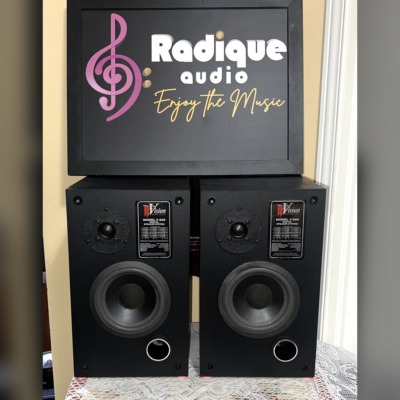
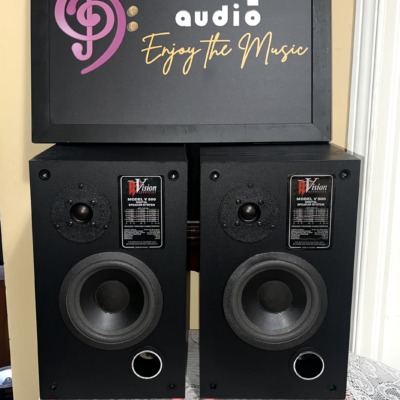
Vision Acoustics V500 Bookshelf Speakers, Pair – Made in Canada
A pair of solidly built, Canadian-made Vision Acoustics V 500 bookshelf speakers in black ash, rated at a sensitive 92 dB, fully tested on our bench and in very good condition.
✔️ Very good condition — free of significant marks, in black ash
✔️ Efficient 92 dB design, easy for a modest receiver to drive
✔️ Made in Canada, with 5-way binding posts
✔️ Covered by Radique Warranty
✔️ Includes Perpetual Trade-Back Program eligibility
✔️ Expertly packed for safe shipping
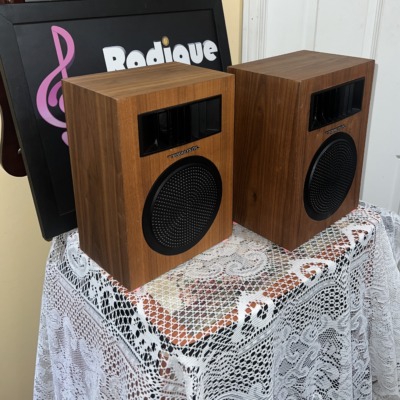
Realistic Minimus-5 Speakers, Pair – Vintage, Real Wood Veneer
A vintage pair of Realistic Minimus-5 two-way bookshelf speakers from Radio Shack, in a warm brown real wood veneer, with horn tweeters, fully tested on our bench and in very good condition.
✔️ Very good condition — free of significant marks
✔️ Real wood veneer, with rigid grilles over the woofers
✔️ Two ways in: small binding posts and an RCA-type speaker-level jack
✔️ Covered by Radique Warranty
✔️ Includes Perpetual Trade-Back Program eligibility
✔️ Expertly packed for safe shipping
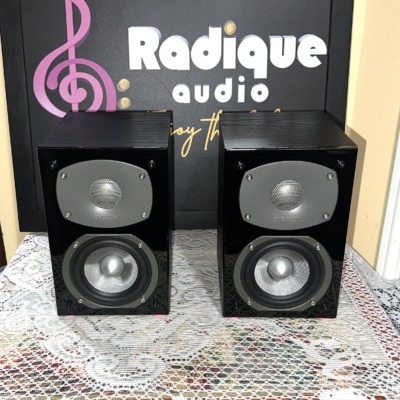
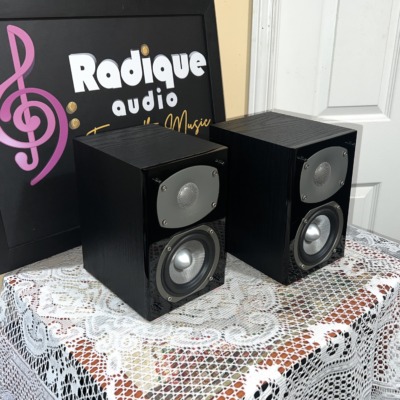
Energy C-50 Bookshelf Speakers, Pair – Ultra-Compact, Black Ash
A pair of ultra-compact Energy C-50 bookshelf speakers, designed and engineered in Canada, in black ash with gloss black front baffles and their black cloth grilles. They have been tested on our bench and are in very good condition.
✔️ Very good condition — black ash with gloss baffles, grilles included
✔️ 1-inch aluminum tweeter and 4½-inch woofer, video-shielded
✔️ Five-way binding posts — designed and engineered in Canada
✔️ Covered by Radique Warranty
✔️ Includes Perpetual Trade-Back Program eligibility
✔️ Expertly packed for safe shipping
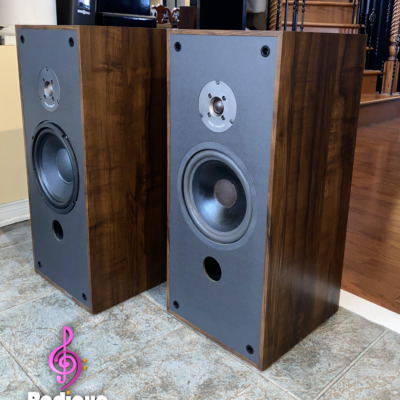
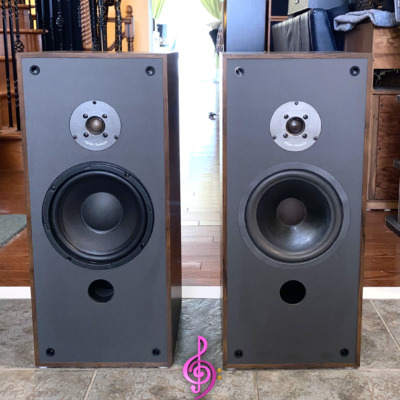
Paisley Reference Two Bookshelf Speakers, Pair – Made in Canada
A pair of Paisley Research Reference Two bookshelf speakers, made in Canada, in walnut-finish cabinets with black front baffles and their black cloth grilles. They have been tested on our bench, they play nicely, and they are in very good condition. One woofer is a replacement fitted by a previous owner, not by us; the details are under Condition.
✔️ Very good condition — walnut-finish cabinets, grilles included
✔️ Tested and playing nicely; one replacement woofer, disclosed below
✔️ 8-inch woofers, front-ported — made in Canada
✔️ Covered by Radique Warranty
✔️ Includes Perpetual Trade-Back Program eligibility
✔️ Expertly packed for safe shipping
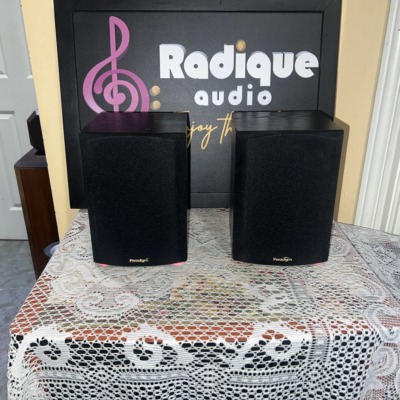
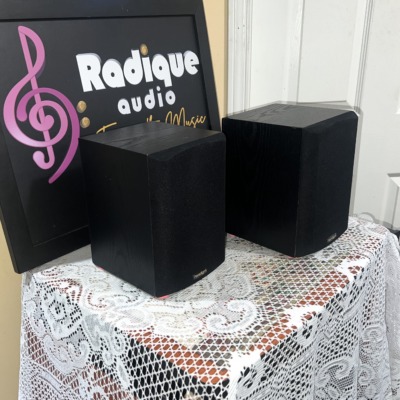
Paradigm Micro v.3 Bookshelf Speakers, Pair – Black Ash
A pair of Paradigm Micro v.3 speakers, the smallest of Paradigm's Canadian-designed Performance Series, with rubber woofer surrounds that will never need refoaming.
✔️ Tested on our bench
✔️ Fair condition, priced to match
✔️ Covered by Radique Warranty
✔️ Includes Perpetual Trade-Back Program eligibility
✔️ Expertly packed for safe shipping
