



Highly Efficient Modern Klipsch 400 Watt (Peak) Towers R-26F
$595.00
Out of stock
Get first dibs on the next one
Highly Efficient Modern Klipsch 400 Watt (Peak) Towers with dual 6.5″ Woofers.
The R-26F delivers lots of what we’ve come to expect from Klipsch: energetic, room-filling sound that brings your music and movie soundtracks to life. Use a pair of these dynamic towers to anchor your home theater system’s front soundstage with authority. Or set them up with your two-channel music system and enjoy big, rich stereo sound.
Iconic Klipsch design
Over the years Klipsch has become famous for their Tractrix® horn-loaded tweeter. This design produces clear, accurate high frequencies. The R-26F utilizes this tweeter along with two 6-1/2″ copper spun woofers to create natural, full-range sound with solid bass response. It’s also very efficient, so you won’t need a lot of power to drive it. Two sets of sturdy 5-way binding posts allow for bi-amping or bi-wiring.
Product highlights:
90° x 90° Hybrid Cross-Section Tractrix® horn with 1″ LTS (Linear Travel Suspension) aluminum diaphragm compression tweeter
Dual 6-1/2″ copper spun magnetically shielded IMG woofers
Bass-reflex design
Front-firing port provides fast, efficient airflow from the cabinet for clear, powerful bass, and versatile placement options
Removable grille offers a clean, streamlined look
Durable polymer veneer finish
Dual 5-way binding post speaker terminals can be bi-wired or bi-amped
Specifications:
Frequency response: 38-24,000 Hz (±3dB)
Impedance: 8 ohms compatible
Sensitivity: 97 dB
Power handling: up to 100 watts RMS (400 watts peak)
Dimensions: 10-7/8″W x 40-3/16″H x 14-1/2″D, Weight: 41.9 lbs. each
Asking just $595 for these very efficient, modern Klipsch towers, capable of very high volumes with only moderate power.
| Weight | 88 lbs |
|---|---|
| Dimensions | 18.5 × 28 × 44.4 in |
Klipsch began in Hope, Arkansas, in 1946, when Paul W. Klipsch started building his corner-horn Klipschorn, and its Heritage speakers are still built by hand in Hope. We carry Klipsch towers, centre channels, bookshelf speakers and subwoofers. We've had more than 160 Klipsch listings so far. Every used Klipsch here is inspected, tested and serviced as required, then photographed in-house and covered by our Bumper-to-Bumper Warranty and Perpetual Trade-Back Program. Don't see the model you want? Tell us on First Dibs and we'll email you when one arrives.
The Klipsch story, 1946 to today
Paul W. Klipsch was posted to Hope, Arkansas, in 1941 as an Army officer. He patented his corner-horn design in the mid-1940s and founded Klipsch in Hope in 1946; Klipsch says its first speaker was built by hand there that year, with the horn made in a tin shed. He hired his first employee in 1948.
The Heritage line. The Klipschorn of 1946 was followed by the Heresy (1957), designed as a centre speaker to sit between a pair of Klipschorns, the Cornwall (1959), the La Scala (1963) and the Forte (1985).
A new generation. Fred Klipsch bought the company from Paul Klipsch in 1989, and headquarters later moved to Indianapolis. Paul Klipsch died in 2002 at 98. The Reference Series arrived in 1999.
A Canadian connection. In 2006 Klipsch bought Audio Products International of Toronto, with its Energy and Mirage brands. Audiovox, later VOXX, bought Klipsch in 2011, and Gentex bought VOXX in 2025.
Which Klipsch is which?
Heritage: the Klipschorn, Heresy, Cornwall, La Scala and Forte, built to order by hand in Hope. Drivers change between generations, so identify the version.
KG series (mid-1980s to early 1990s): lower-priced horn-tweeter floorstanders such as the KG 4 (1985 to 1992) and KG 5.5.
Reference (1999 onward): horn-tweeter towers, bookshelf speakers and centres, from the RB-5 and RF-7 to the later RF, RB and RC models.
Synergy (late 1990s and 2000s): such as the KSF 8.5 and the SF-1.
Subwoofers: powered models such as the RPW-10.
Buying used Klipsch: what to check
Horn diaphragms. The compression drivers in older Klipsch speakers age; owners report tired midrange diaphragms on Heritage models and raspy tweeters on some KG pairs. Listen to each horn on its own at a moderate level.
Reference tweeters. A crackling tweeter can be a loose connection, and owners say these tweeters can fail if played very loud.
Crossovers and passive radiators. Many Heritage and KG owners recap their crossovers, and KG passive radiators can have cracked surrounds.
Modifications. Aftermarket diaphragms and crossovers are common upgrades on Heritage and KG models. Ask what has been changed.
Where it was made. Heritage models are built in Hope. Check the label before calling any other Klipsch "made in USA".
Everything we list is inspected, tested and serviced as required here, and comes with our warranty.
You may also like…


IsoAcoustics GAIA II Speaker Isolators (Set of 4)
- ✔️ Genuine IsoAcoustics, brand new, from an authorized Canadian dealer
- ✔️ A set of 4 isolators for one floor-standing speaker or subwoofer up to 120 lb (54 kg)
- ✔️ Screws in place of your spikes: M6-1.0, M8-1.25 and 1/4″-20 adaptors included
- ✔️ Machined stainless steel, dark chrome, 2 × 1.7 in (51 × 43 mm) per isolator
- ✔️ Pick up in Kanata by appointment, or shipped across Canada and internationally


IsoAcoustics GAIA III Speaker Isolators (Set of 4)
- ✔️ Genuine IsoAcoustics, brand new, from an authorized Canadian dealer
- ✔️ A set of 4 isolators for one floor-standing speaker or subwoofer up to 70 lb (32 kg)
- ✔️ Screws in place of your spikes: M6-1.0, M8-1.25 and 1/4″-20 adaptors included
- ✔️ Stainless steel, 1.7 × 1.5 in (43 × 39 mm) per isolator
- ✔️ Pick up in Kanata by appointment, or shipped across Canada and internationally
Related Products
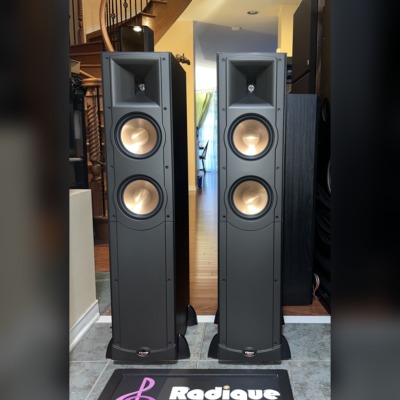
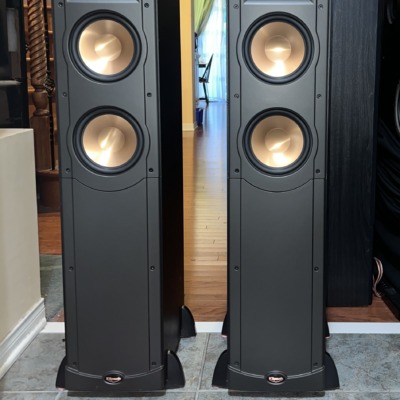
Klipsch RF-62 Reference IV Floorstanding Speakers, Pair — 97dB
The RF-62 is the tower that made Klipsch's Reference line the default answer for anyone who wanted a big, unforced sound without buying a big, expensive amplifier to get it.
✔️ Condition: Good — cabinets carry touched-up wear; drivers Very Good throughout
✔️ Covered by Radique Warranty
✔️ Includes Perpetual Trade-Back Program eligibility
✔️ Curbside delivery, local collection or freight within Canada
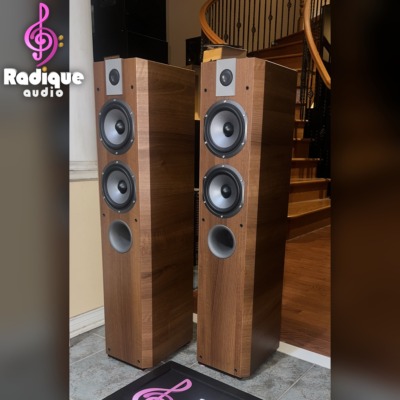
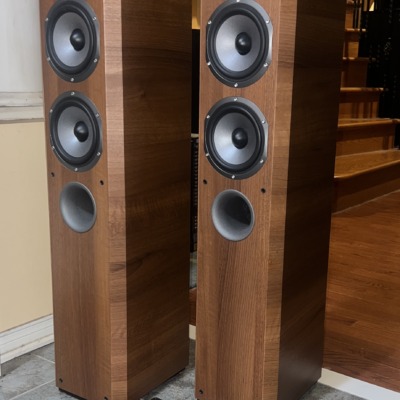
Focal Chorus 714V Floorstanders, Pair — Light Walnut, France
A pair of Focal Chorus 714V floorstanding loudspeakers in Light Walnut, made in France.
✔️ Condition: Very Good — thoroughly inspected and tested
✔️ Covered by Radique Warranty
✔️ Includes Perpetual Trade-Back Program eligibility
✔️ Expertly packed for safe shipping
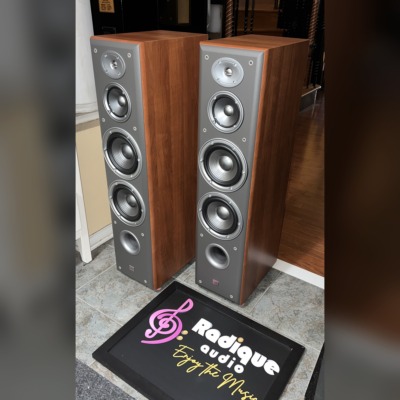
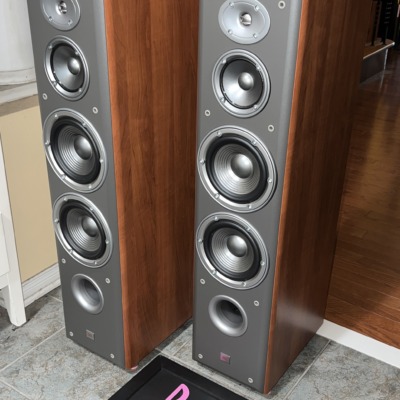
JBL Northridge E80 3-Way Towers – Cherry, Bi-Wirable, Pair
A four-driver JBL tower in the Cherry finish, with a genuine bi-amp panel.
✔️ Condition: Very Good — cabinets present well, working properly
✔️ Covered by Radique Warranty
✔️ Includes Perpetual Trade-Back Program eligibility
✔️ Expertly packed for safe shipping
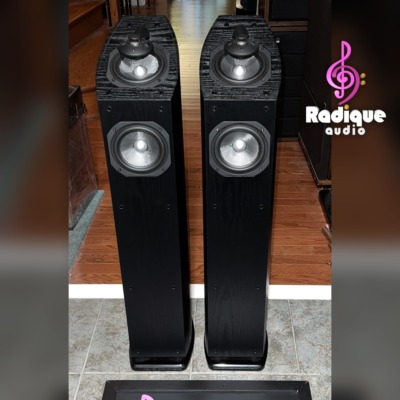
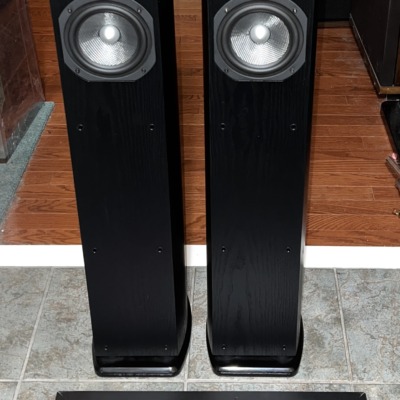
Mirage OMNI 350 Omnipolar Towers – Designed in Canada, Black Ash
A pair of slim Mirage towers built around the company's Omnipolar design, in very good condition, that fill a room with sound instead of aiming it at one chair.
✔️ Very Good condition — black ash cabinets, drivers and grilles present cleanly
✔️ Designed and engineered in Canada around Mirage's room-filling Omnipolar sound
✔️ Covered by Radique Warranty
✔️ Includes Perpetual Trade-Back Program eligibility
✔️ Expertly packed for safe shipping
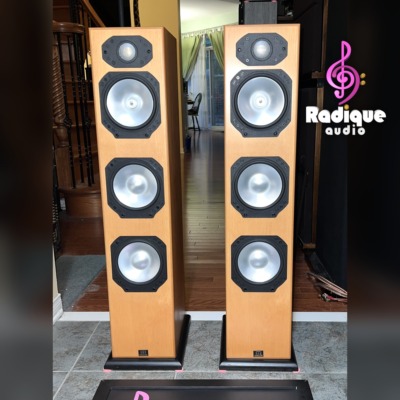
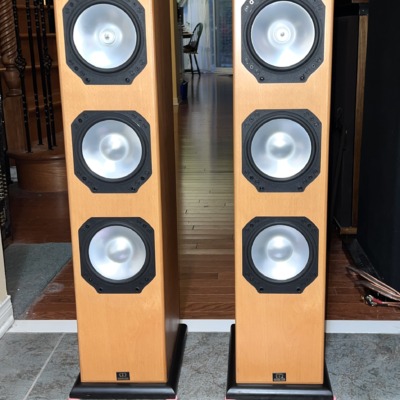
Monitor Audio Silver S8 Towers – Made in England, Warm Beech
A pair of three-way Monitor Audio towers from the Silver S range, in very good condition, with a metal driver in every position and a warm beech veneer that suits almost any room.
✔️ Very good condition — free of significant marks, in Warm Beech real wood veneer
✔️ Made in England, with Monitor Audio's C-CAM metal drivers throughout
✔️ Bi-wire and bi-amp ready — two pairs of 5-way binding posts per speaker
✔️ Covered by Radique Warranty
✔️ Includes Perpetual Trade-Back Program eligibility
✔️ Expertly packed for safe shipping
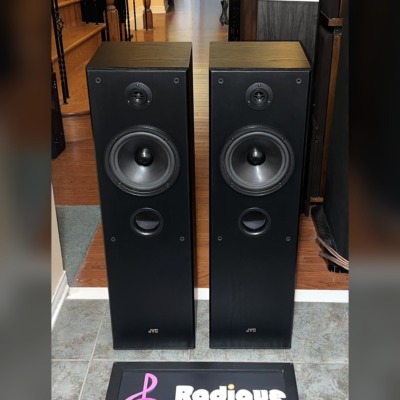
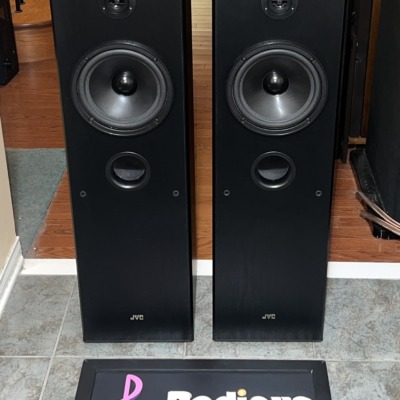
JVC Theatre Series SP-5500 Tower Speakers, Pair – 8-inch Woofers
A pair of JVC Theatre Series SP-5500 two-way tower speakers in black woodgrain, with front-ported bass-reflex cabinets, tested on our bench and in very good condition.
✔️ Very good condition — free of significant marks, grilles included
✔️ 8-inch woofers in front-ported Theatre Series towers
✔️ Built-in circuit breaker protects the tweeters
✔️ Covered by Radique Warranty
✔️ Includes Perpetual Trade-Back Program eligibility
✔️ Expertly packed for safe shipping
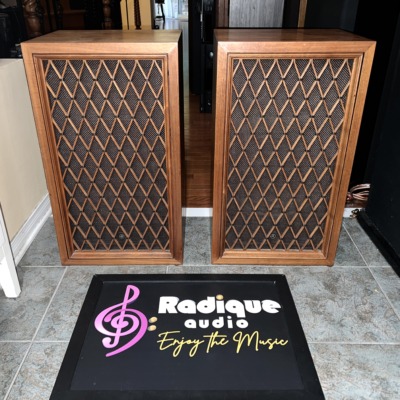
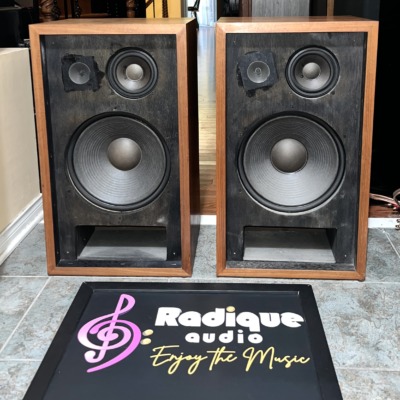
Vintage Pioneer CS-77 12″ 3-Way Speakers, Pair – Made in Japan
A pair of late-1960s Pioneer CS-77 three-way speakers, made in Japan, in walnut veneer cabinets with their wooden diamond-lattice grilles. Their High Level controls have been freshly serviced, they have been tested on our bench, and they are in good condition.
✔️ Good condition — walnut veneer, wooden lattice grilles included
✔️ High Level controls freshly serviced, tested on our bench
✔️ 12-inch woofer, three-way design — made in Japan, late 1960s
✔️ Covered by Radique Warranty
✔️ Includes Perpetual Trade-Back Program eligibility
✔️ Expertly packed for safe shipping
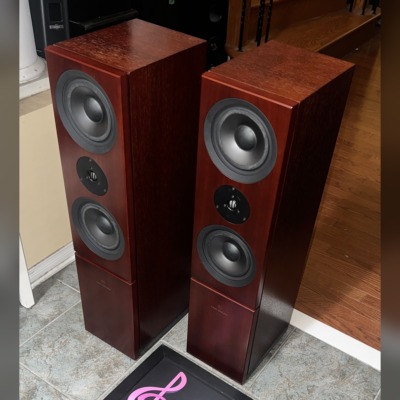
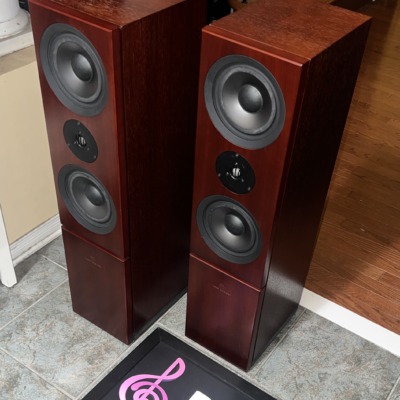
Linn Keilidh Floorstanding Speakers, Pair – Made in Scotland
A pair of Linn Keilidh floorstanding speakers, built in Glasgow, Scotland, in Linn's deep red Rosenut veneer, set up for bi-wiring.
✔️ Tested on our bench
✔️ Very good condition
✔️ Bi-wire ready: build your cable with our Cable Builder
✔️ Covered by Radique Warranty
✔️ Includes Perpetual Trade-Back Program eligibility
✔️ Expertly packed for safe shipping
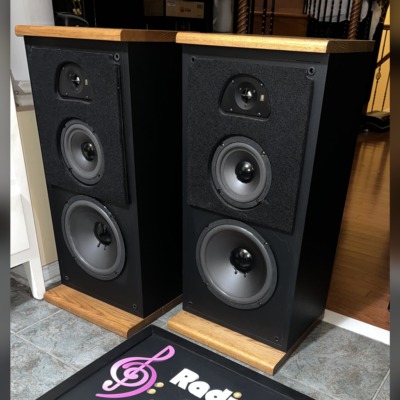
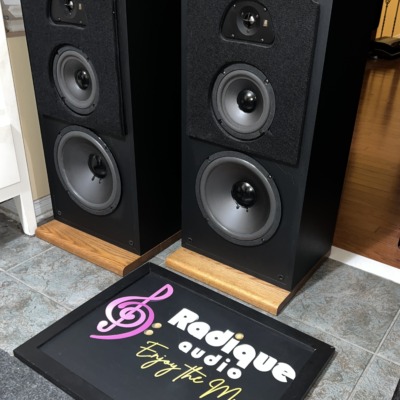
Acoustic Research TSW 510 Vintage Towers, Pair – Refoamed, Oak
A pair of Acoustic Research TSW 510 three-way floorstanding speakers from the late 1980s, with solid oak tops and plinths, freshly refoamed.
✔️ Freshly refoamed woofers and midranges
✔️ Very good condition, grilles included
✔️ 3-way acoustic suspension, 10" woofer, titanium tweeter
✔️ Covered by Radique Warranty
✔️ Includes Perpetual Trade-Back Program eligibility
✔️ Curbside delivery, local collection or freight within Canada
