
JBL 62T Bookshelf Speakers – Rosewood Finish, Titanium Dome
$245.00
Discounted for the aftermarket screw holes a previous owner left in the back panels, and very good everywhere else — original drivers, clean rosewood finish, both tested here. A mid-1980s two-way with a pure titanium tweeter that runs out to 23 kHz, and an easy 89 dB load that a thirty-watt vintage receiver drives properly.
1 in stock
JBL 62T Two-Way Bookshelf Speakers – 6.5-Inch Woofer, Pure Titanium Dome Tweeter, Rosewood Finish, Mid-1980s
A mid-1980s JBL two-way in a rosewood finish, discounted for a flaw on the back panel and otherwise very good throughout.
Condition First
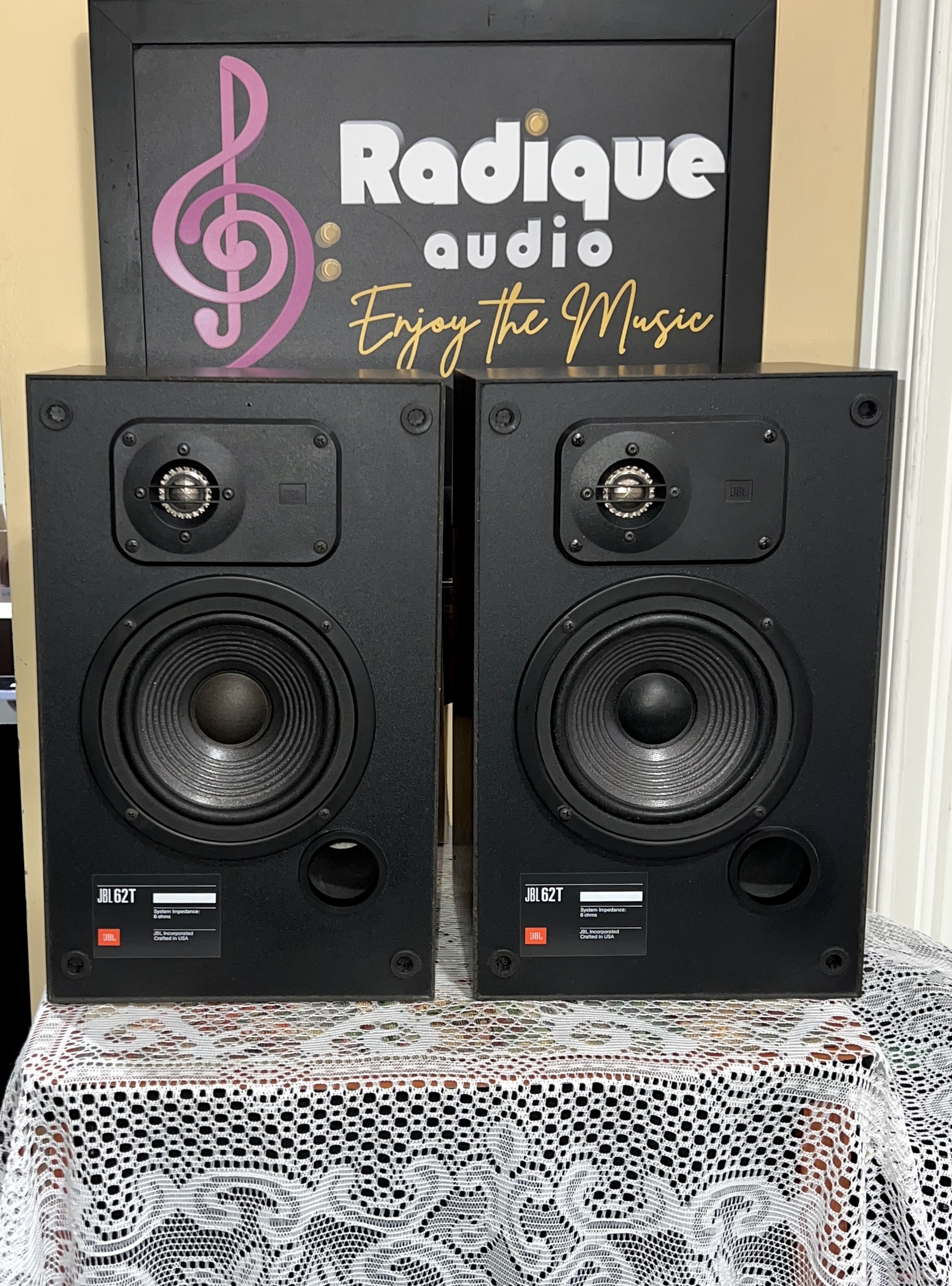
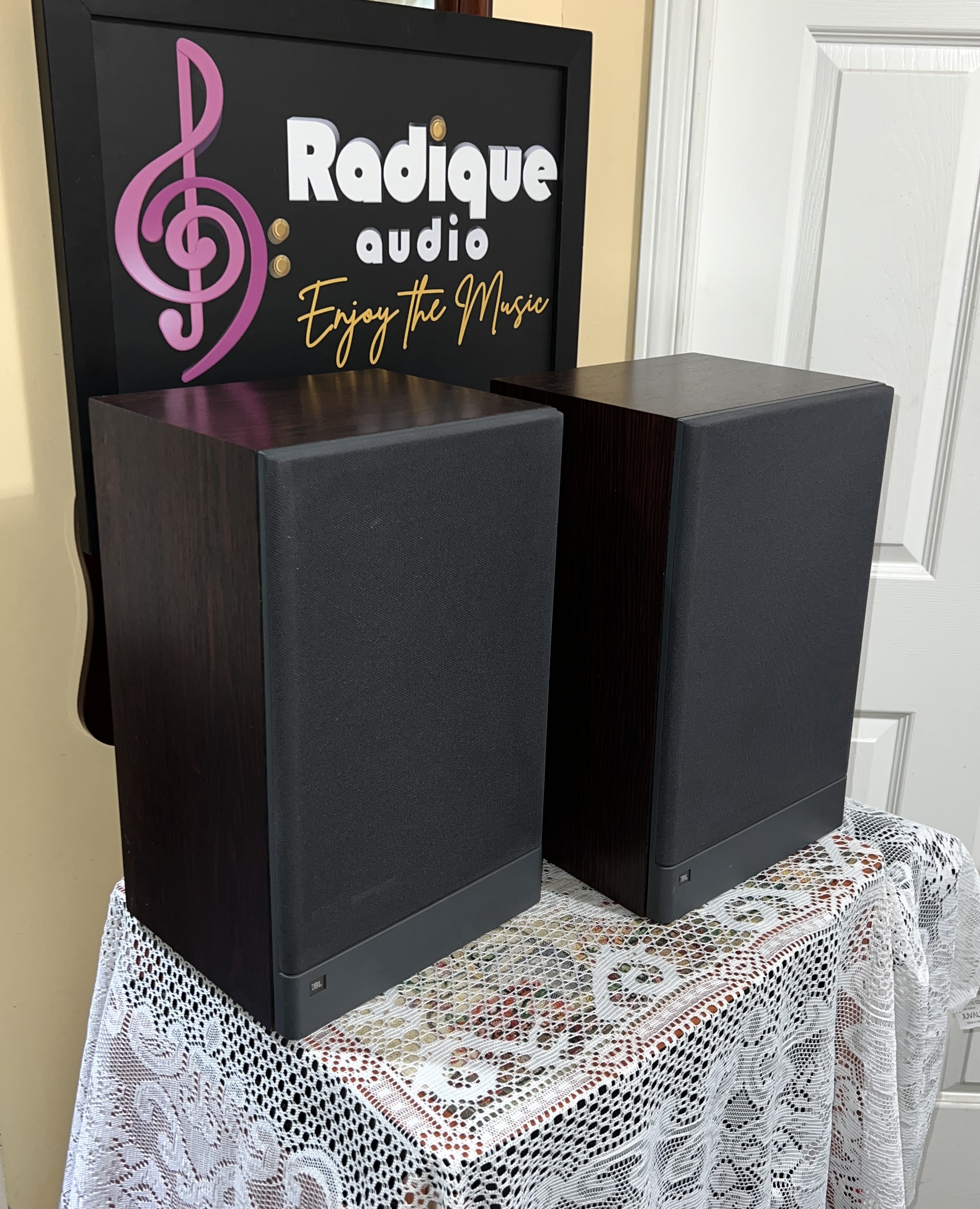
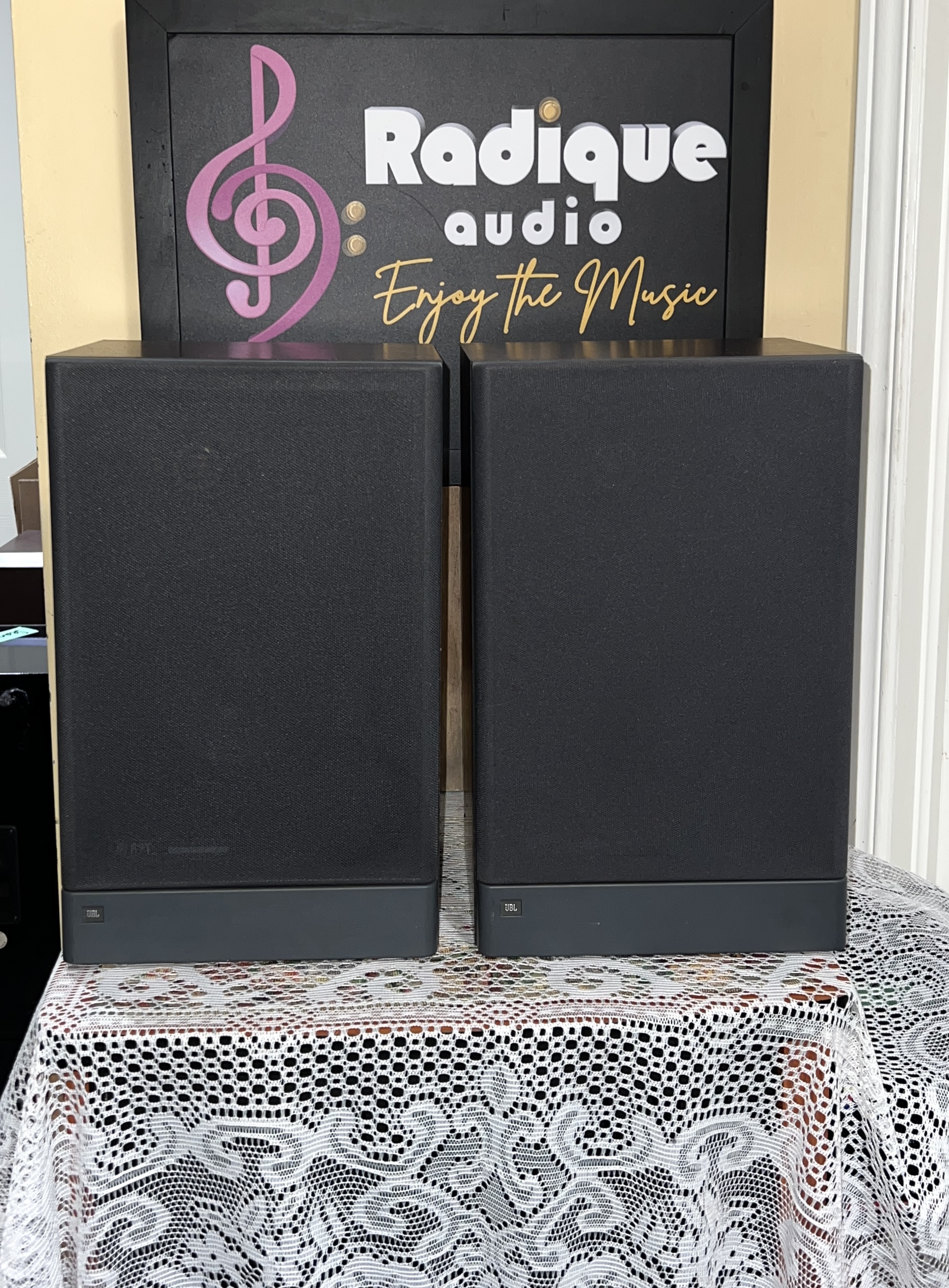
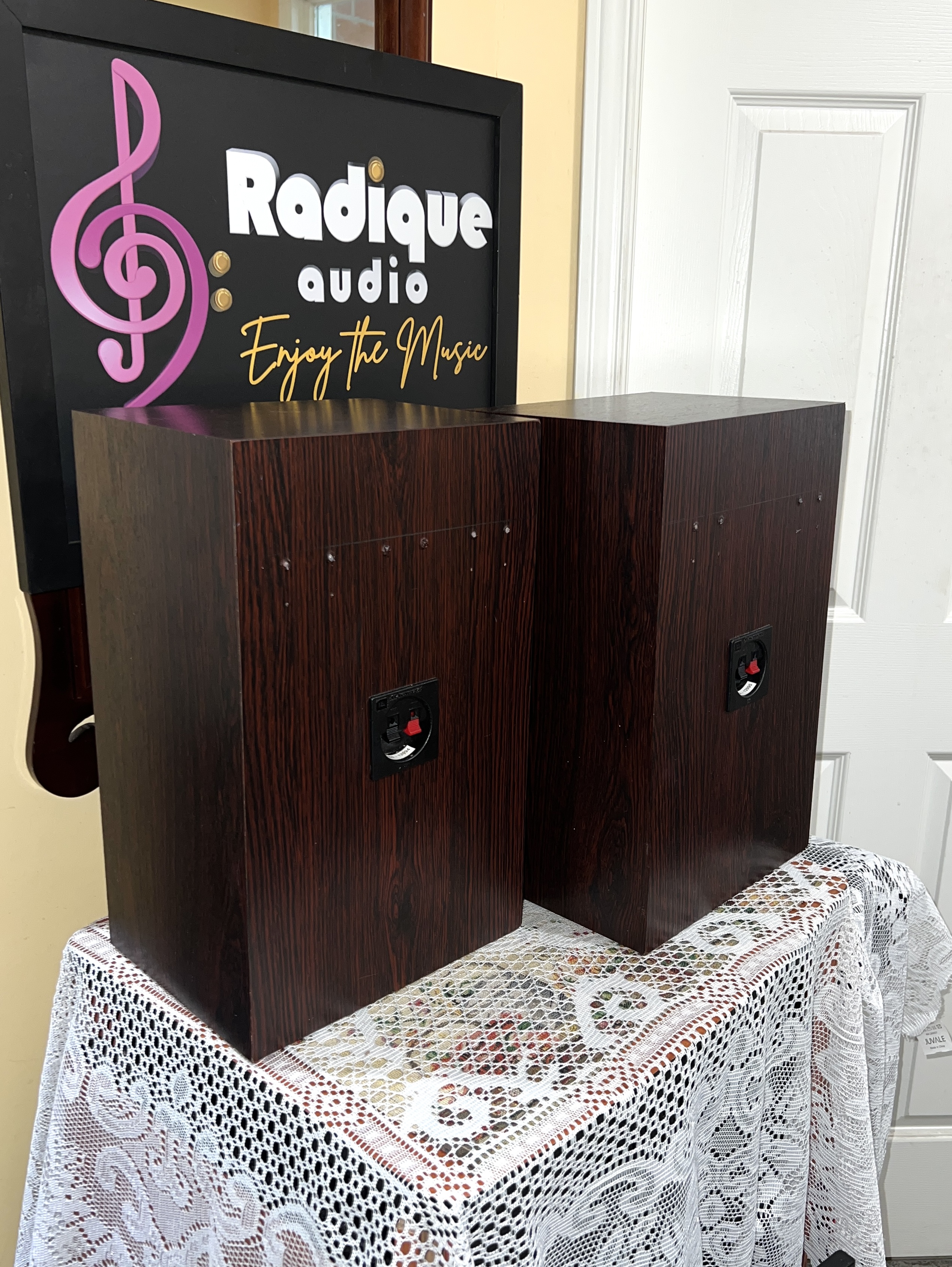
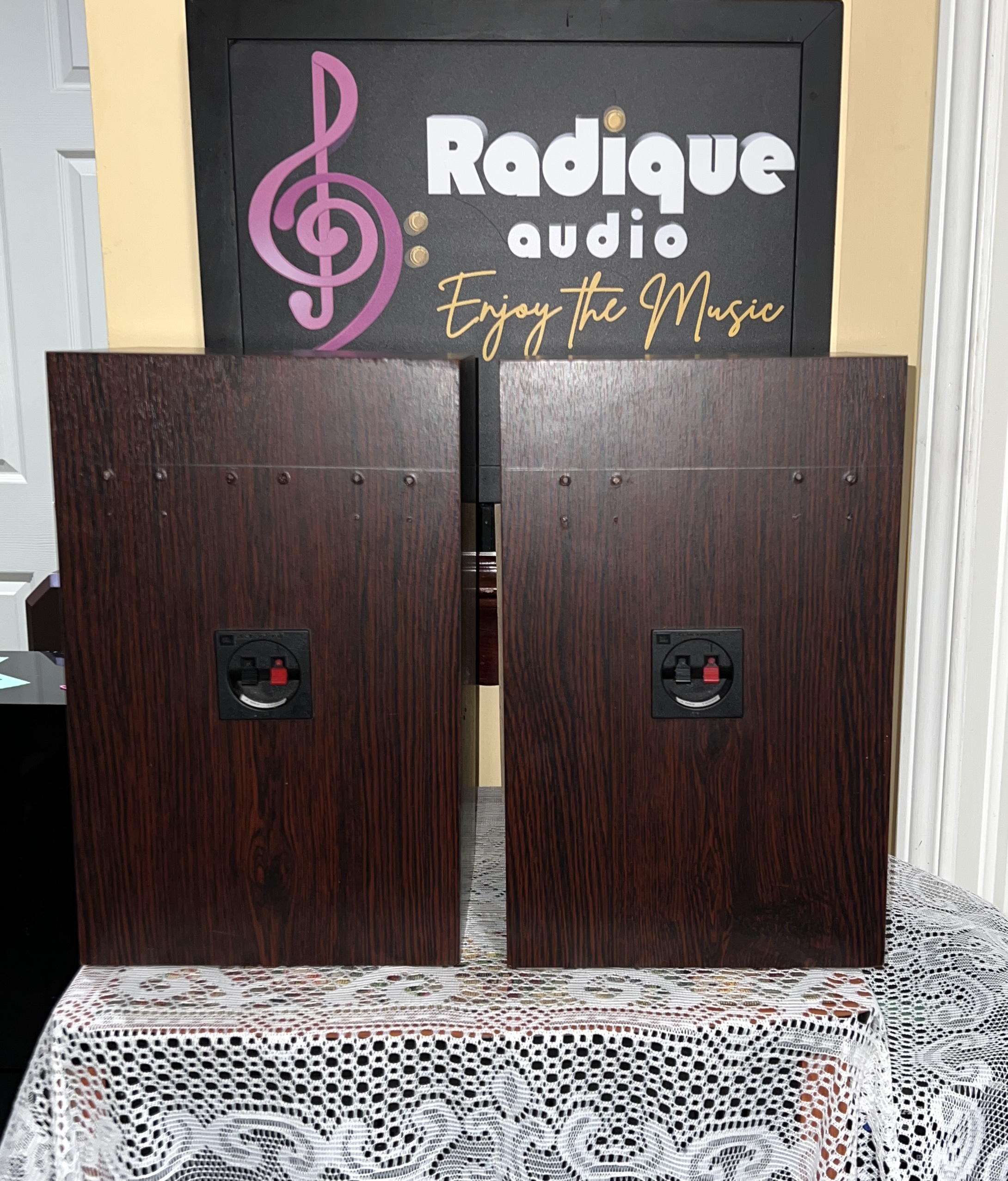
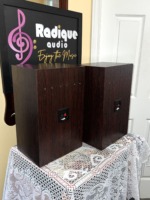
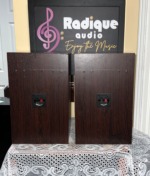
Start with the condition, because it is the reason for the price. Each cabinet has aftermarket screw holes in the rear panel, left behind by a previous owner’s wall mounts. They are shown in the photographs. Everything else grades very good: the drivers are original and correct, the finish is clean, and both speakers have been tested here to confirm they perform as originally designed.
The 62T Design
Now the speaker. The 62T is a two-way vented design from the middle of the 1980s, built around a 6.5-inch woofer with a high polymer laminate cone and a one-inch tweeter with a pure titanium diaphragm, crossed over at 3 kHz. Titanium was not a common tweeter material at that price in 1985, and it is the reason the response runs out to 23 kHz — well past where most two-ways of the era gave up.
Amplifier Matching
They are also unusually easy to drive. Sensitivity is 89 dB at one watt, the load is a straightforward 8 ohms, and JBL rated them from 10 watts to 100. A vintage receiver of twenty or thirty watts drives these properly rather than merely adequately, which is not something you can say about most modern bookshelf speakers of similar size.
Front Port, Easy Placement
The port fires forward, out of the front baffle rather than the back. That matters more than it sounds: a front-ported speaker can sit on a shelf or reasonably close to a wall without the bass turning thick and boomy, which is exactly where most people actually need to put a bookshelf speaker.
Size and Weight
At 16 inches tall and 16 pounds each these have real presence — closer to a compact monitor than to the small plastic-cabinet speakers the term “bookshelf” usually calls to mind. On a pair of 23-inch stands they sit at the right height for a seated listener and look the part.
Why This Pair
Good candidates for a vintage receiver system, a second room, or anyone who wants the JBL sound in a cabinet that does not need a floor plan of its own.
A proper mid-1980s JBL monitor with a titanium tweeter and a rosewood finish, at a price it only reaches because somebody once put it on a wall.
Features
- Two-way vented bookshelf design
- 6.5-inch (165 mm) high polymer laminate cone woofer, JBL 306G-4A
- 1-inch (25 mm) pure titanium diaphragm dome tweeter, JBL 022Ti
- Front-firing port — tolerates shelf and near-wall placement
- 89 dB sensitivity — easy to drive with a modest amplifier
- 8 ohm load, rated 10 to 100 watts
- Rosewood finish cabinets
- Sold as a pair
JBL 62T Two-Way Bookshelf Speakers Specifications
- Model: 62T
- Design: Two-way vented bookshelf loudspeaker
- High Frequency Driver: 1 in (25 mm) 022Ti pure titanium diaphragm
- Low Frequency Driver: 6.5 in (165 mm) 306G-4A high polymer laminate cone
- Crossover Network: NJBL62T, 3 kHz
- Frequency Response: 75 Hz to 23 kHz
- Sensitivity: 89 dB SPL (1 watt at 1 metre)
- Nominal Impedance: 8 ohms
- Power Rating: 10 to 100 watts
- Finish: Rosewood
- Condition: Very good — aftermarket screw holes on the rear panel of each cabinet, from previous wall mounting
- Dimensions: (Width x Height x Depth) 10.0 x 16.0 x 8.5 inches (254 x 406 x 216 mm)
- Weight: 16 lbs (7.3 kg) each
🔌 Speaker Cable and the Right Connector
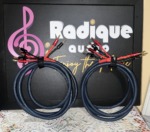
Our own gold-plated pin connectors are the right fit for the speaker terminals here, and they make connecting and disconnecting far easier than stripping bare wire back every time. We also hand-build speaker cable here in any length you need, terminated to suit, on our Custom Speaker Cable Builder. 👉
✅ Buy With Confidence — The Radique Promise
Backed by Radique Audio’s Bumper-to-Bumper Warranty and our Perpetual Trade-Back Program. When you’re ready to move on, we’ll take it back. That’s the Radique difference.
📦 Watch how we protect your gear — our unboxing video.
📺 Curious about our business? Check out our YouTube channel for behind-the-scenes videos and more!
📞 Questions? Use the Ask a Question button above, or call us at 613-416-9995.
⭐ Don’t Just Take Our Word For It
Radique Audio holds over 600 customer ratings averaging 4.97 stars across six public platforms — Facebook Marketplace, Kijiji, Canuck Audio Mart, Google and others. Every rating lives somewhere we don’t control, so you can read the originals yourself, including the less flattering ones. See what our customers say. 👉
| Weight | 34 lbs |
|---|---|
| Dimensions | 23 × 14 × 20 in |
JBL was founded in Los Angeles in 1946 by loudspeaker engineer James B. Lansing, first as Lansing Sound, Inc., and the JBL name came into use in the 1950s. We carry JBL bookshelf speakers, towers, centre channels, subwoofers and portable speakers. We've had more than 75 JBL listings so far, covering more than 50 different models. Every used JBL here is inspected, tested and serviced as required, then photographed in-house and covered by our Bumper-to-Bumper Warranty and Perpetual Trade-Back Program. Don't see the model you want? Tell us on First Dibs and we'll email you when one arrives.
Our best-selling JBL models so far: the Link 10 portable speaker, then the Northridge EC25 and N Center centre channels, the E30 bookshelf speakers and the vintage L46.
The JBL story, 1946 to today
James B. Lansing, who had been vice-president of engineering at Altec Lansing, set up Lansing Sound in Los Angeles in 1946. Its first product was the D101 15-inch woofer, and the D130 followed in 1948. Altec objected to the Lansing name, so the company became James B. Lansing Sound, and later simply JBL.
After Lansing. Lansing died in 1949, and William H. Thomas took the company over and cleared its debts. JBL drivers went into Fender guitar amplifiers, the Paragon stereo cabinet of the late 1950s and, through Capitol Records, recording studios.
Harman. In 1969 Sidney Harman's Jervis Corporation bought JBL, and the L100 bookshelf speaker followed in 1970. Harman calls it the best-selling speaker system of the decade. Harman sold JBL to Beatrice Foods in 1977 and bought it back in 1980.
Today. JBL is part of HARMAN, which Samsung Electronics has owned since 2017, and it marked its 80th anniversary in 2026. Harman's acoustic research was long led by Floyd Toole, who came to Harman from Canada's National Research Council here in Ottawa.
Which JBL is which?
Classic L series (1970s to 1980s): the L100 of 1970 and its successors, and two-ways such as the L46 of 1982, with its 8-inch 117H woofer.
Studio monitors: the 4310 of 1968, and the 4311 and 4312.
HLS series (late 1990s): such as the HLS610 and the HLS Center, with polycarbonate dome tweeters on horns.
Northridge N series (about 1999 to 2003): the N24, N26, N28 and N38, the N Center and their II versions, with titanium-laminate tweeters.
Northridge E series (2003 to 2005): from the E10 to the E100, the EC25 and EC35 centres and the E150P and E250P powered subwoofers. JBL's support pages say the E30, EC25 and E150P were made in Mexico.
Portables and today's ranges: the Link 10 and other Link speakers of 2017, the Stage series, and the L100 Classic of 2018.
Buying used JBL: what to check
Foam surrounds. A factory-authorized service centre says older JBL foam surrounds dry-rot, faster in humid climates, causing weak bass and buzzing. Repair shops add that JBL woofers have a tight voice-coil gap, so re-foaming needs care.
Tweeters. Play every tweeter. Owners report dead tweeters on 2000s Northridge models, and some original replacement tweeters are no longer available.
Crossovers. On older models, ageing crossover capacitors can dull the treble.
Link portables. Run a Link 10 on its battery to see how much capacity is left. JBL rated it at about five hours when new.
Fakes. JBL warns about counterfeit portables. A genuine one has a flush power button and an embedded grille logo.
Everything we list is inspected, tested and serviced as required here, and comes with our warranty.
You may also like…
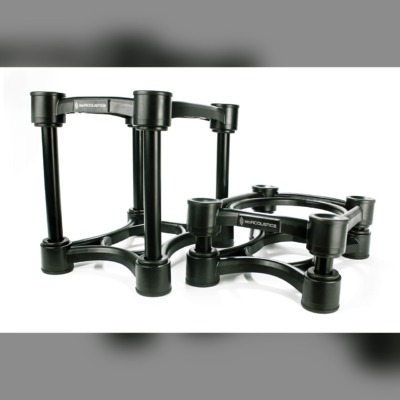

IsoAcoustics ISO-200 Isolation Stands (Pair)
- ✔️ Genuine IsoAcoustics, brand new, from an authorized Canadian dealer
- ✔️ A pair of isolation stands for large speakers and studio monitors
- ✔️ Rated to 75 lb (34 kg) short or 60 lb (27 kg) tall
- ✔️ Short 3.75 in (95 mm) or tall 8.5 in (215 mm), up to 6.5° of tilt
- ✔️ Pick up in Kanata by appointment, or shipped across Canada and internationally
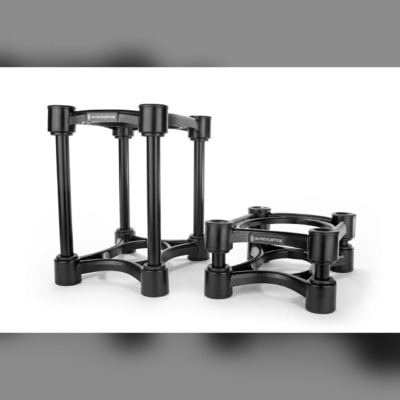

IsoAcoustics ISO-155 Isolation Stands (Pair)
- ✔️ Genuine IsoAcoustics, brand new, from an authorized Canadian dealer
- ✔️ A pair of isolation stands for medium speakers and studio monitors
- ✔️ Rated to 40 lb (18 kg) short or 35 lb (16 kg) tall
- ✔️ Short 3 in (76 mm) or tall 8.25 in (210 mm), up to 6.5° of tilt
- ✔️ Pick up in Kanata by appointment, or shipped across Canada and internationally


IsoAcoustics ISO-130 Isolation Stands (Pair)
- ✔️ Genuine IsoAcoustics, brand new, from an authorized Canadian dealer
- ✔️ A pair of isolation stands for small speakers and studio monitors, rated to 20 lb (9 kg)
- ✔️ Short 2.8 in (71 mm) or tall 8.25 in (210 mm), up to 6.5° of tilt
- ✔️ Top plate 5.1 × 6 in (130 × 152 mm)
- ✔️ Pick up in Kanata by appointment, or shipped across Canada and internationally
Related Products
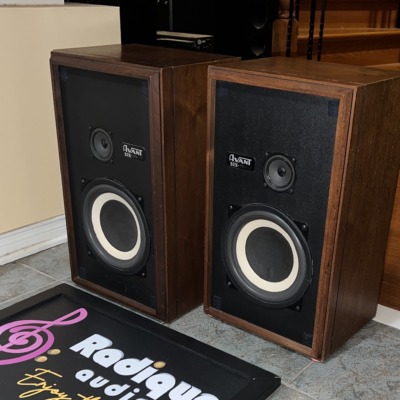
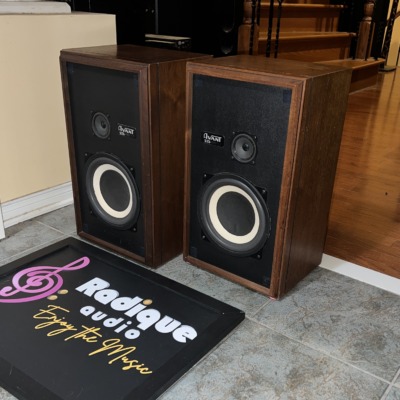
Avant 1AX Bookshelf Speakers, Pair – Canadian, Real Wood Veneer
A matched pair of Avant 1AX bookshelf speakers: Canadian-built, dressed in real wood veneer, with freshly refoamed woofers and sequential serial numbers.
✔️ Good condition — the real wood veneer is sound, with light scuffs on the tops
✔️ Woofers refoamed on our bench with new surrounds
✔️ Made in Canada — a sequential-serial matched pair
✔️ Covered by Radique Warranty
✔️ Includes Perpetual Trade-Back Program eligibility
✔️ Expertly packed for safe shipping
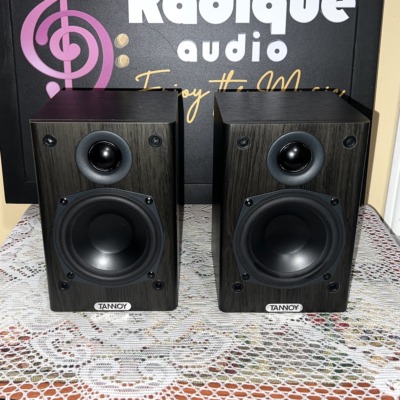
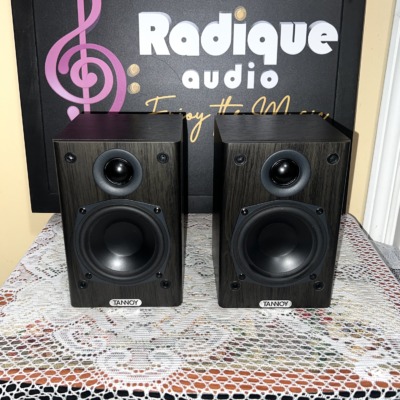
Tannoy Mercury FR Custom Compact Speakers – Dark Oak, Pair
A pair of compact two-way Tannoy speakers from the limited Custom edition of Tannoy's Mercury F-series, in very good condition, with a wall bracket built into the back of each cabinet.
✔️ Very good condition — free of significant marks; both grilles included
✔️ The limited Custom edition of Tannoy's Mercury F-series, in Dark Oak
✔️ Built-in wall bracket — hang them, or stand them on a shelf
✔️ Covered by Radique Warranty
✔️ Includes Perpetual Trade-Back Program eligibility
✔️ Expertly packed for safe shipping
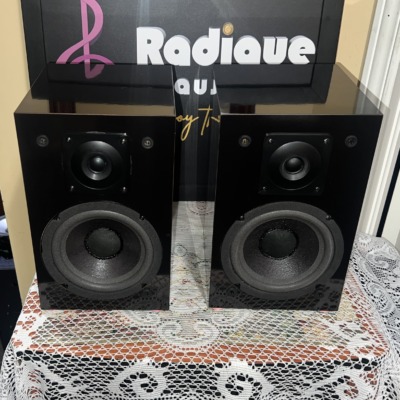
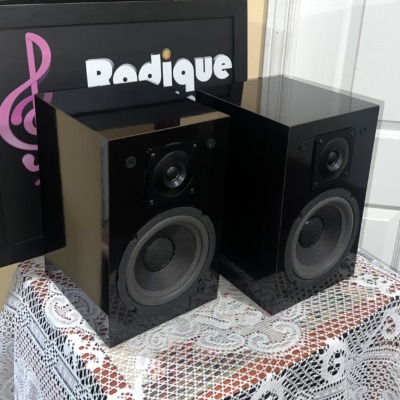
NHT Model 1C Bookshelf Speakers, Pair – Gloss Black, Re-Foamed
A pair of NHT Model 1C bookshelf speakers in gloss black, dated 1992, in very good condition and freshly re-foamed by us.
✔️ Very good condition — free of significant marks; grilles included
✔️ Freshly re-foamed by us — new woofer surrounds
✔️ Sealed and magnetically shielded — made in the USA in 1992
✔️ Covered by Radique Warranty
✔️ Includes Perpetual Trade-Back Program eligibility
✔️ Expertly packed for safe shipping
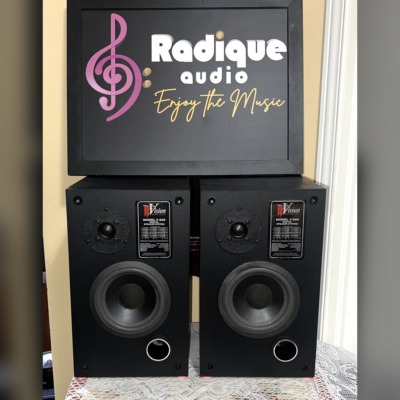
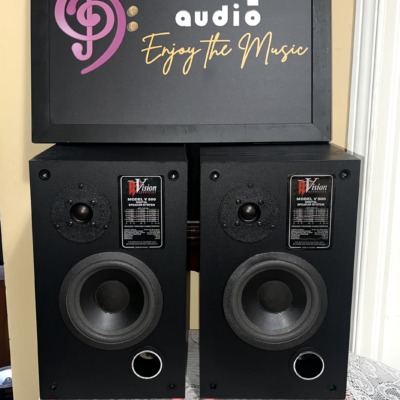
Vision Acoustics V500 Bookshelf Speakers, Pair – Made in Canada
A pair of solidly built, Canadian-made Vision Acoustics V 500 bookshelf speakers in black ash, rated at a sensitive 92 dB, fully tested on our bench and in very good condition.
✔️ Very good condition — free of significant marks, in black ash
✔️ Efficient 92 dB design, easy for a modest receiver to drive
✔️ Made in Canada, with 5-way binding posts
✔️ Covered by Radique Warranty
✔️ Includes Perpetual Trade-Back Program eligibility
✔️ Expertly packed for safe shipping
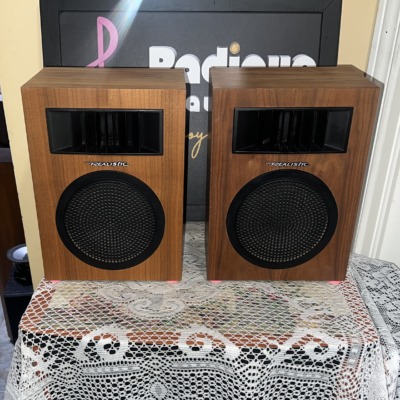
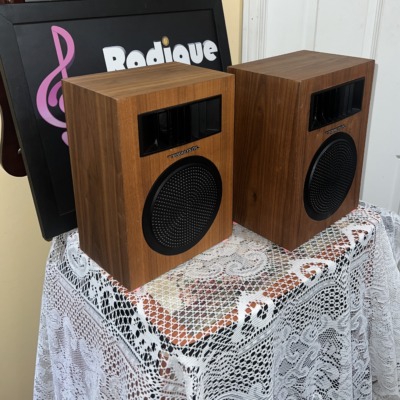
Realistic Minimus-5 Speakers, Pair – Vintage, Real Wood Veneer
A vintage pair of Realistic Minimus-5 two-way bookshelf speakers from Radio Shack, in a warm brown real wood veneer, with horn tweeters, fully tested on our bench and in very good condition.
✔️ Very good condition — free of significant marks
✔️ Real wood veneer, with rigid grilles over the woofers
✔️ Two ways in: small binding posts and an RCA-type speaker-level jack
✔️ Covered by Radique Warranty
✔️ Includes Perpetual Trade-Back Program eligibility
✔️ Expertly packed for safe shipping
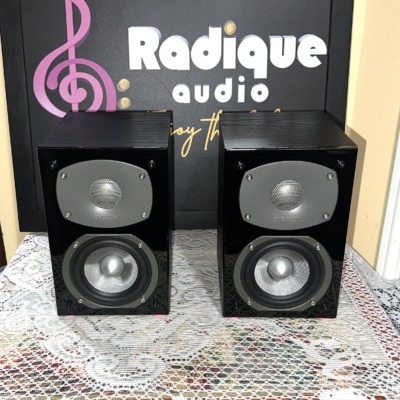
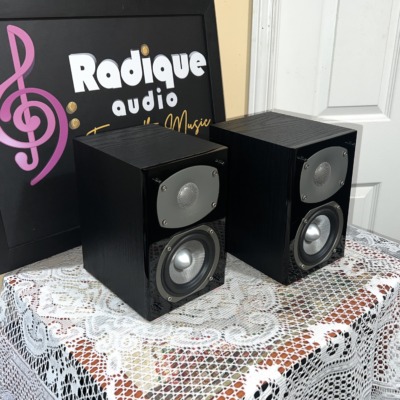
Energy C-50 Bookshelf Speakers, Pair – Ultra-Compact, Black Ash
A pair of ultra-compact Energy C-50 bookshelf speakers, designed and engineered in Canada, in black ash with gloss black front baffles and their black cloth grilles. They have been tested on our bench and are in very good condition.
✔️ Very good condition — black ash with gloss baffles, grilles included
✔️ 1-inch aluminum tweeter and 4½-inch woofer, video-shielded
✔️ Five-way binding posts — designed and engineered in Canada
✔️ Covered by Radique Warranty
✔️ Includes Perpetual Trade-Back Program eligibility
✔️ Expertly packed for safe shipping
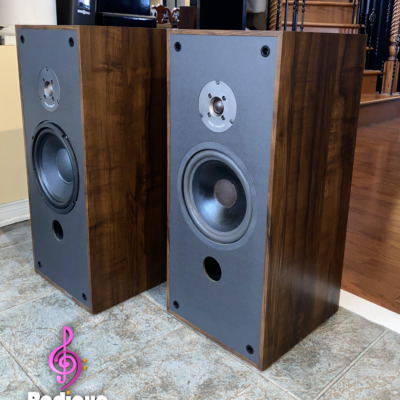
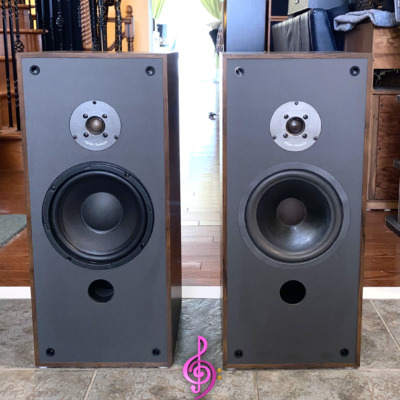
Paisley Reference Two Bookshelf Speakers, Pair – Made in Canada
A pair of Paisley Research Reference Two bookshelf speakers, made in Canada, in walnut-finish cabinets with black front baffles and their black cloth grilles. They have been tested on our bench, they play nicely, and they are in very good condition. One woofer is a replacement fitted by a previous owner, not by us; the details are under Condition.
✔️ Very good condition — walnut-finish cabinets, grilles included
✔️ Tested and playing nicely; one replacement woofer, disclosed below
✔️ 8-inch woofers, front-ported — made in Canada
✔️ Covered by Radique Warranty
✔️ Includes Perpetual Trade-Back Program eligibility
✔️ Expertly packed for safe shipping
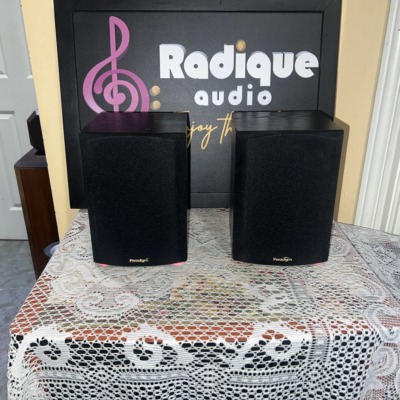
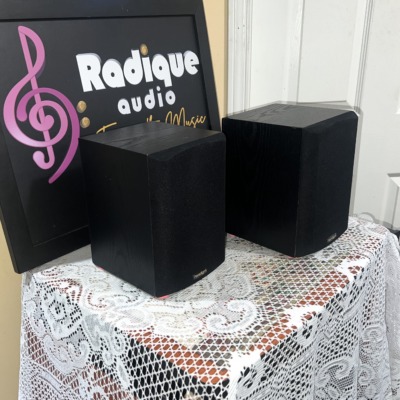
Paradigm Micro v.3 Bookshelf Speakers, Pair – Black Ash
A pair of Paradigm Micro v.3 speakers, the smallest of Paradigm's Canadian-designed Performance Series, with rubber woofer surrounds that will never need refoaming.
✔️ Tested on our bench
✔️ Fair condition, priced to match
✔️ Covered by Radique Warranty
✔️ Includes Perpetual Trade-Back Program eligibility
✔️ Expertly packed for safe shipping
