
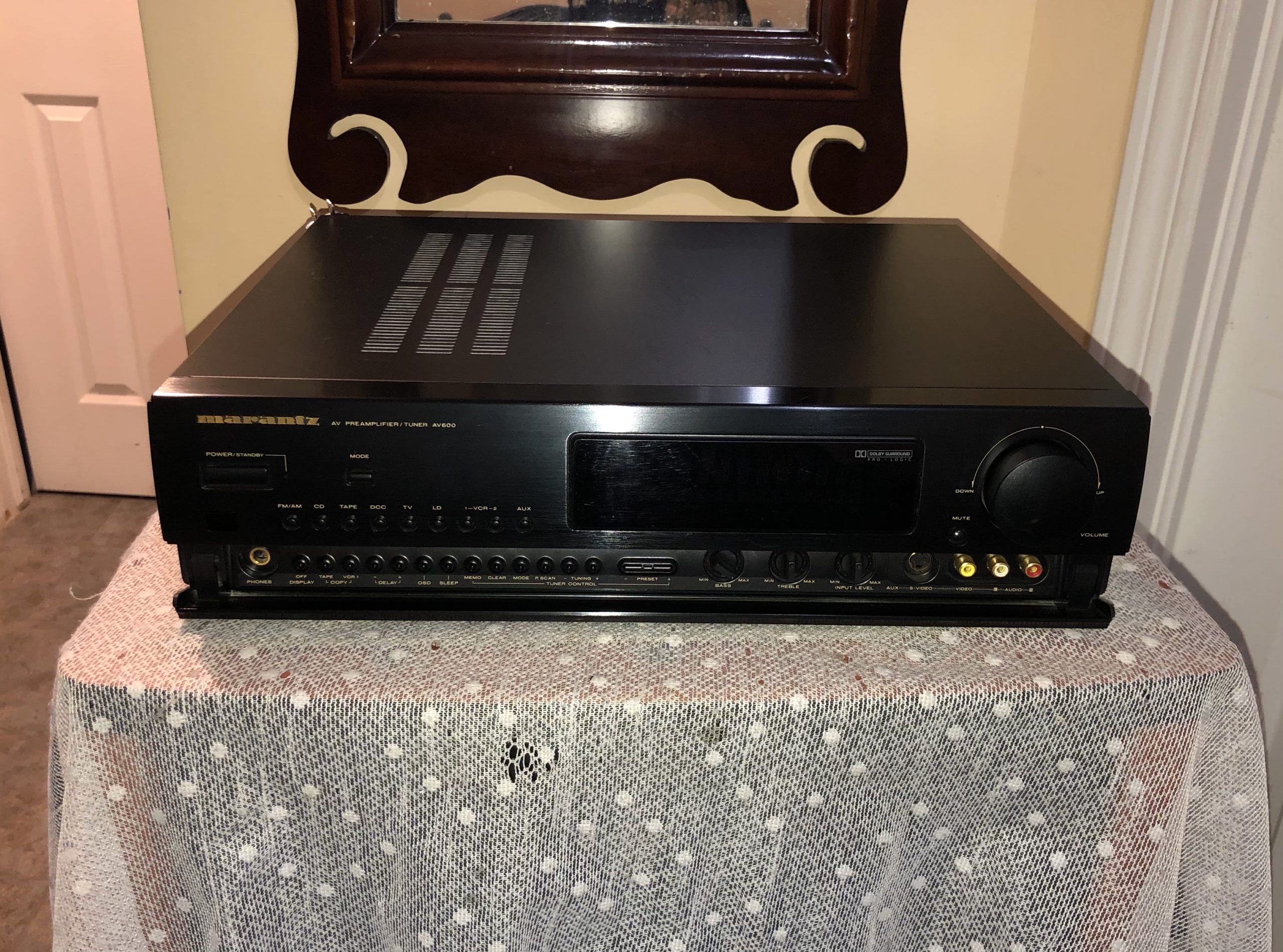
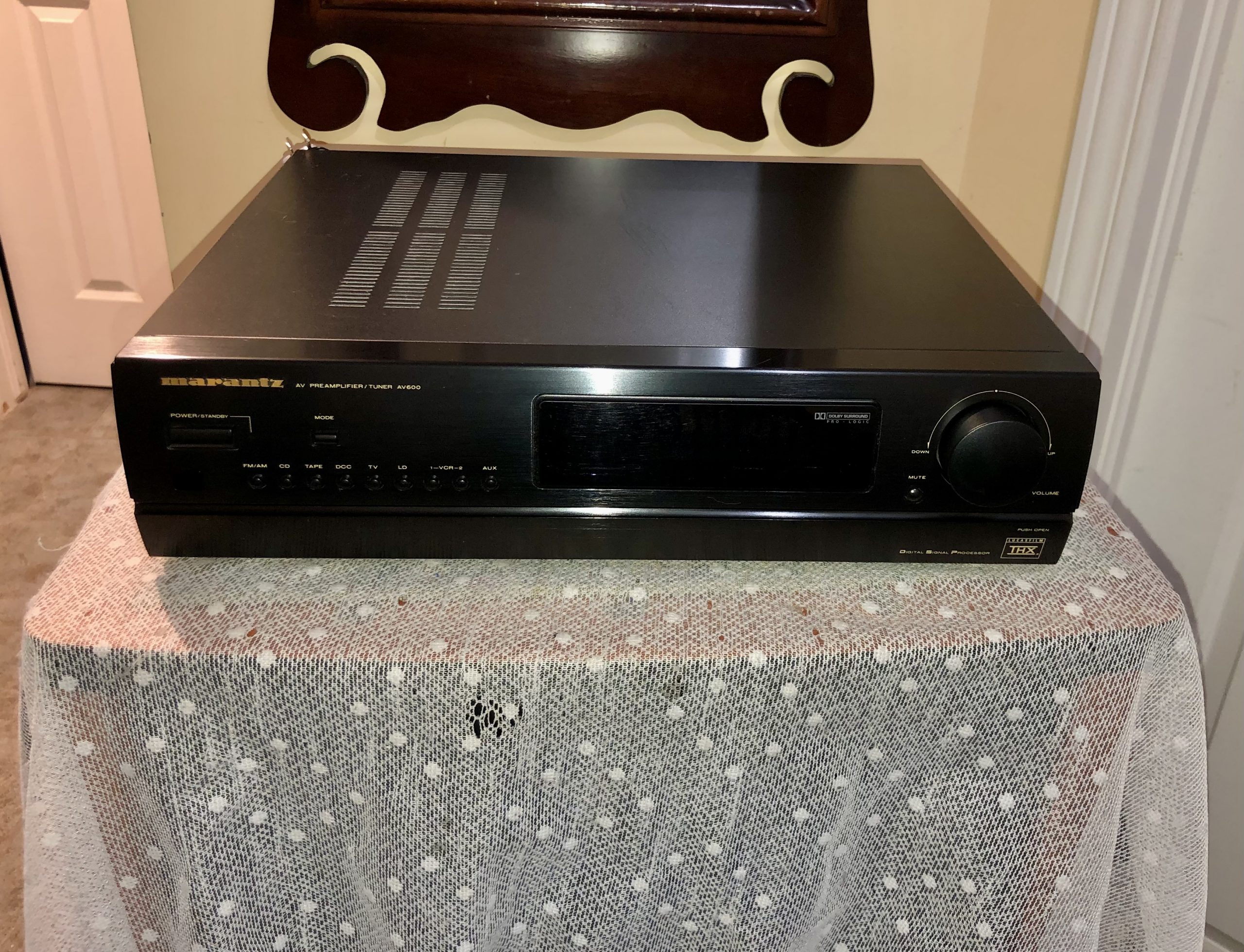
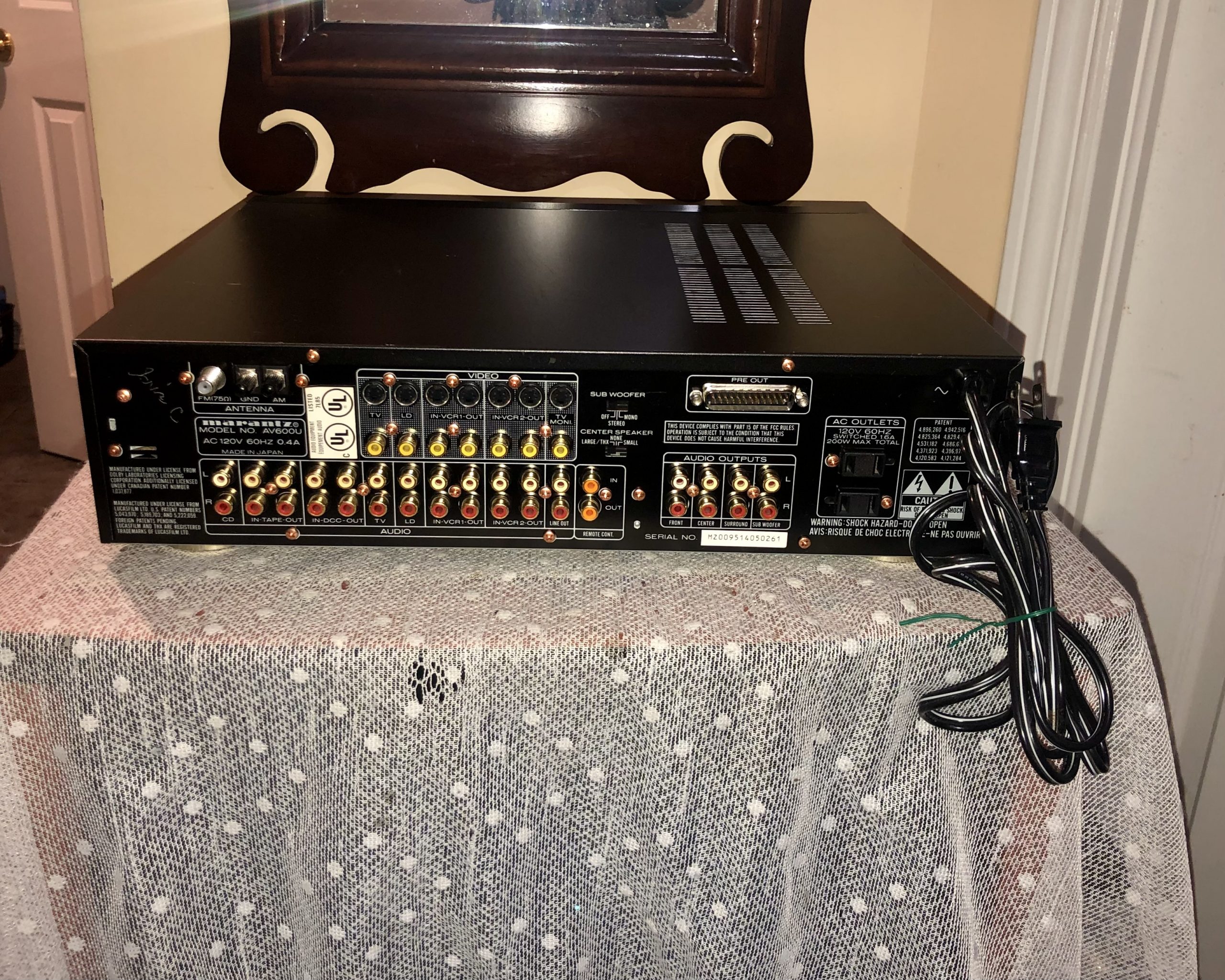
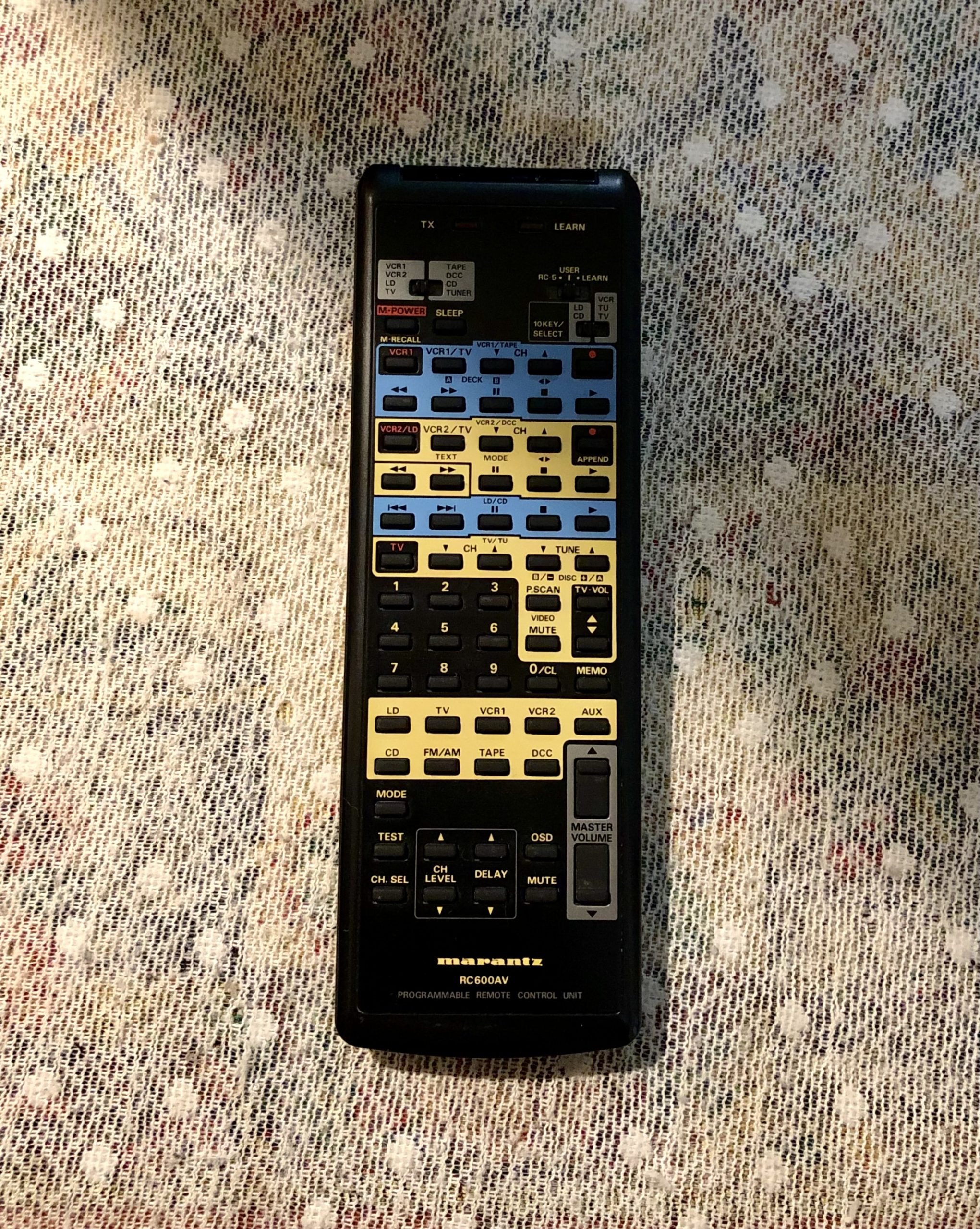
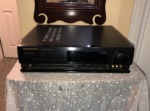
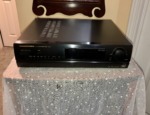


Marantz THX AV Preamplifier Tuner with Remote AV600
$395.00
Marantz’s second Home THX component — Pro Logic decoding with THX enhancement, a 30-preset AM/FM tuner, and two subwoofer outputs you can switch between mono and stereo. Eight sources switch through it, five of them with both composite and S-video, and a 25-pin D-connector feeds a multichannel THX amp down one cable. No phono stage. Remote and a PDF manual included.
Out of stock
This one has sold. Want first dibs on the next one?
We take these in regularly. Leave your name and email, and we’ll email you the moment one is listed, so you hear first. No cost, no obligation.
Email me when one is listed
Give your next receiver Bluetooth. RA-Twin II, $39.00 →
Other preamps we have in stock now
3 in stock · $345.00–$1,495.00 · all ship
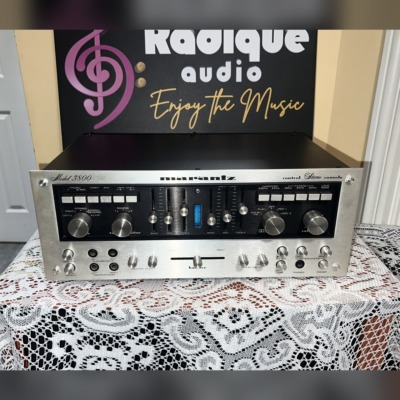 Marantz 3800 Audiophile Preamp – Made in USA$1,495.00Ships
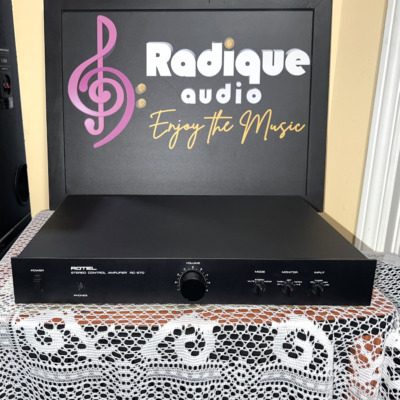 Rotel RC-870 Preamplifier – MM/MC Phono, Made in Japan, 1985$395.00Ships
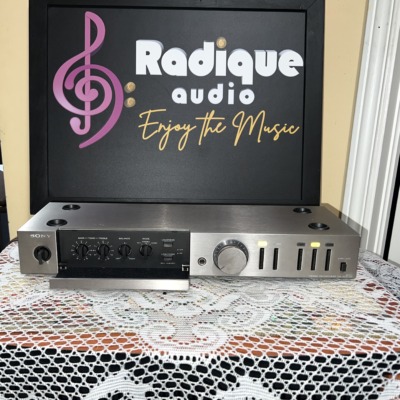 Sony TAE-20FB Falcon Preamplifier — Bronze, MM/MC Phono, Japan$345.00Ships
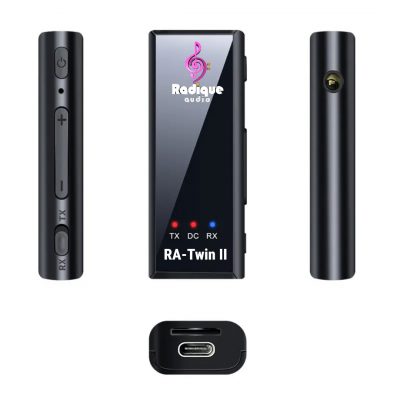
Give your next receiver Bluetooth.
The RA-Twin II adds Bluetooth streaming to any vintage receiver or amp with a spare input. Phone to stereo in about a minute, and nothing on the receiver is modified.
RA-Twin II, $39.00 →The AV600 A/V tuner/preamplifier is Marantz’s second Home THX component, following the compact and versatile MA500 single channel power amp. Besides full Home THX enhancement of Dolby Pro Logic processing, an AM/FM tuner, and considerable A/V switching capability, the AV600 has a few features that set it apart in usability and convenience from most other Home THX controllers.
The AV600’s most unusual feature is its provision of two subwoofer outputs, selectable via a rear-panel switch to operate in monaural (parallel) or stereo. Although the actual usefulness of stereo subwoofers – particularly those operating only below 80 Hz, as they do in Home THX systems – is still controversial, the AV600 at least will let you decide for yourself. Separate low-pass filtering is provided for each subwoofer output, and 80-Hz high-pass filtering is switched into all channels when the subwoofer outputs are turned on.
Also unusual is the front-panel input-level control, which operates in conjunction with a set of flashing indicator lights. This knob, located along with quite a few other controls behind a front-panel fold-down door, is best considered an input-overload prevention knob. You adjust it so that a red peak-indicator light “only flashes briefly during the very loudest passages.” This adjustment helps ensure that the peak outputs of your signal source are not overloading the Dolby Pro Logic decoder chip. There has been a de facto standard output level from home CD and laserdisc players for quite some time, however, so when you’re playing the digital soundtracks of a laserdisc or using a home CD player you should not have to turn the input-level control more than a couple of “dots” away from its center detent to get the indicators to light up properly. If you do, there is something amiss with the player’s output level or its connection to the AV600.
Marantz hasn’t forgotten the “standard” A/V tuner/preamp features either. For example, you can separately select audio and video sources to get the FM-tuner audio to go along with broadcast video for that rare stereo simulcast. You can also select the source to be recorded on any attached audio or video deck independently of what is being heard or watched. The tuner comes with more preset memories than you’ll probably ever need: thirty, distributable in any fashion over the AM and FM bands.
Besides Home THX processing, several other surround-sound modes are provided. These include straight Dolby Pro Logic, Movie (which allows a very long surround-channel delay time), and Hall and Matrix (for music enhancement). A mono mode feeds everything through the center speaker. The processing mode is selected with a front-panel button that’s duplicated on the remote control.
Convenience features include bass and treble controls and a front-panel quarter-inch headphone jack. The front panel also has buttons for activating the useful on-screen display, for turning off the even more useful front-panel fluorescent display, and for setting the preamp’s sleep timer, which will also turn off whatever’s plugged into the two switched rear-panel AC outlets. The AV600’s mute control is available on both the front panel and the remote, which is vastly more convenient than just on the remote.
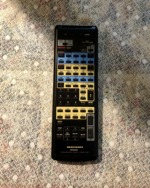
The handset itself has lots of non-AV600 buttons suitable for programming with the commands used by other infrared handsets. It also has a full complement of speaker-balancing controls, including a test signal that, for once, is manually switched between speakers – and switches without interruption or muting. You’re also free to alter the speaker balances, including the levels of any subwoofers, separately for the soundtrack modes (THX, Dolby Pro Logic, Movie) and the others (Hall, Matrix, Monaural). The only typical feature lacking in the AV600 is a phono-preamp section. If you’re looking to include a turntable to your Surround system, you could always add a separate Phono Pre-Amp to the mix.
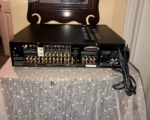
Connections and switching are provided for eight external sources, three audio only (CD, tape, DCC) and five audio/video with both composite- and S-video connectors (TV, laserdisc, two VCR’s, and aux). The auxiliary input is located behind the front-panel door.
Several outputs are available. First, there’s the video-monitor output, either composite or S-video. Next there’s a line output that feeds out a duplicate of the selected input. Then there are the main preamp outputs, eight phono jacks: a pair each for left and right front, center (in parallel), left and right surround, and left and right subwoofer. A 25-pin D-connector is available for feeding these outputs to a similarly equipped multichannel Home THX power amplifier via a single multi conductor cable. Additional rear-panel connections include one for a remote-control relay that hooks up to other Marantz equipment, a screw-on F-connector FM antenna terminal, and thumb screw connections for an AM antenna. Back-panel switches that must be properly set during initial setup, or possibly if you change speakers, control the subwoofer status (none, mono, or stereo) and the center-channel bandwidth – “none” (corresponding to the Phantom mode in the more usual Pro Logic nomenclature), “large/ THX” (corresponding to Wide, delivering the same bandwidth to all three front speakers), and “small” (corresponding to Normal, splitting low frequencies in the center channel out to the front left and right outputs).
Specifications:
Frequency response: 10Hz to 30kHz
Total harmonic distortion: 0.006%
Input sensitivity: 168mV (line)
Signal to noise ratio: 90dB (line)
Output: 1V (Pre out)
Video Connections: composite, SVHS
Dimensions: 426 x 112.5 x 366.6mm, Weight: 5.4kg
Includes Marantz remote and soft copy of manual in PDF. Retailed new for $1395 USD. ~$2100 CND with HST. Asking just $395 for this high quality Marantz AV Preamplifier Tuner.
| Weight | 13.90 lbs |
|---|---|
| Dimensions | 20.77 × 8.43 × 18.43 in |
Marantz began in 1953 in Queens, New York, where Saul Marantz built tube preamplifiers and amplifiers, and by the 1970s it was making receivers with champagne-gold faceplates, blue-lit dials and flywheel tuning. We carry Marantz receivers, amplifiers and preamps, turntables, tuners, CD players and cassette decks. We've had more than 150 Marantz listings so far, covering nearly 100 different models. Every used Marantz here is inspected, tested and serviced as required, then photographed in-house and covered by our Bumper-to-Bumper Warranty and Perpetual Trade-Back Program. Many Marantz components were sold without their wood case, so we also make new cherry WC-22 and WC-10 style cabinets. Don't see the model you want? Tell us on First Dibs and we'll email you when one arrives.
Our five best-selling Marantz models so far: the SR4023 stereo receiver, the vintage 2225, the SR7000 AV receiver, the SR4320 stereo receiver and the vintage 2238B.
The Marantz story, 1953 to today
Saul B. Marantz founded the company in New York in 1953. His first product, the Audio Consolette preamplifier, became the Model 1, and Marantz dates the first Consolettes to 1952–53. Marantz says the early factory was in Woodside, Queens.
The tube years. Through the late 1950s and early 1960s Marantz built a small run of tube separates in New York that collectors still chase: the Model 7 preamplifier (1958), the Model 9 power amplifier (1960) and the Model 10B tuner (1964).
Superscope and the move to Japan. In 1964 Superscope, the company that also distributed Sony tape recorders in the US, bought Marantz, and Saul Marantz resigned at the end of 1967. The Model Eighteen of 1968 was the first Marantz receiver, rated at 40 watts per channel. Under Superscope, design moved to California and, from the late 1960s, production moved to Japan through Standard Radio, which became Marantz Japan in 1975. Receivers such as the 2230 and 2270 are listed as designed in the USA and produced in Japan.
The power race. After a 1974 Federal Trade Commission rule tightened how amplifier power was rated, receiver makers competed on watts. Marantz's Model 2500 of the late 1970s was rated at 250 watts per channel and had an oscilloscope tuning display.
Philips, Denon and today. In 1980 Philips bought Superscope's stake in Marantz Japan and the brand outside the US and Canada. Marantz says its CD-63 of 1982 was one of the first CD players, and its "KI Signature" models carry the initials of Ken Ishiwata, who joined in 1978. In 2001 Marantz Japan bought the trademark back from Philips, and in 2002 it combined with Denon to form D&M Holdings. In September 2025 HARMAN, a Samsung company, completed its purchase of Sound United, the parent of Marantz and Denon.
Which Marantz is which?
Tube separates (1950s–60s): the Models 1, 7, 8B, 9 and 10B, built in New York. Rare collector pieces.
First receivers (from 1968): the Model Eighteen, followed by the Nineteen at the end of 1969.
22xx receivers (from 1972): the first set was the 2215, 2230, 2245 and 2270, with the champagne-gold faceplate, blue-lit dial and "Gyro-Touch" flywheel tuning. A higher number generally means more power: the 2230 is rated at 30 watts per channel, the 2270 at 70. Later "B" versions such as the 2220B and 2285B followed.
Big late-1970s receivers: the 2325 (125 watts per channel), the 2500 flagship and four-channel "Quad" receivers.
1000-series integrated amplifiers: for example the 1060 (30 watts per channel, from 1971), the 1070 and the 1150 (75 watts per channel). The slim 1030, 1040, 1060 and 1070 share their case size with tuners such as the 104, 105 and 112.
Tuners: from the tube Model 10B to solid-state models such as the 2130, with its oscilloscope display.
Wood cases: Marantz sold its wood cases separately: the WC-22 for the 22xx receivers, the WC-10 for the slim 1000-series amplifiers and 100-series tuners, and the WC-1 for larger models such as the 1200. That is why so many turn up bare. A customer who sold Marantz in Ontario in the 1970s told us the cases his shop ordered were built here in Canada, by Westinghouse. Our own cherry WC-22 and WC-10 style cabinets are made in Canada too.
CD players: from the CD-63 of 1982 to the KI Signature versions.
Buying used Marantz: what to check
Dial and meter lamps. Burnt-out bulbs are common on 1970s receivers and are often replaced, sometimes with LEDs. Ask which, if the look of the dial matters to you.
The dial itself. The diffuser sheet behind the dial ages and can dull the glow. Check that the Gyro-Touch pointer moves smoothly and tracks the stations; dial cords are a common replacement part.
Controls and switches. Crackle when you turn a control or work a switch usually means dirt. Try every input, and walk away from a unit that drops a channel.
Capacitors and bias. Electrolytic capacitors in 1970s gear are often past their best, and full restorations replace them. Restorers also set the bias and DC offset.
Cosmetics. Pitting on the faceplate points to damp storage, and dents or water stains to rough handling.
Everything we list is inspected, tested and serviced as required here, and comes with our warranty.
Related Products
- ✔️ Marantz Model 3800 preamplifier — precision built in the USA, 1976–78
- ✔️ 5Hz–60kHz, THD 0.25%, S/N 100dB line and 82dB MM phono
- ✔️ Built-in Dolby encoder/decoder with calibration metering and 400Hz tone generator
- ✔️ Independent L/R bass, mid and treble sliders, turnover selectors, three filters, tone defeat
- ✔️ Dual preamp outputs for bi-amping · four switched AC outlets · Level 1 serviced
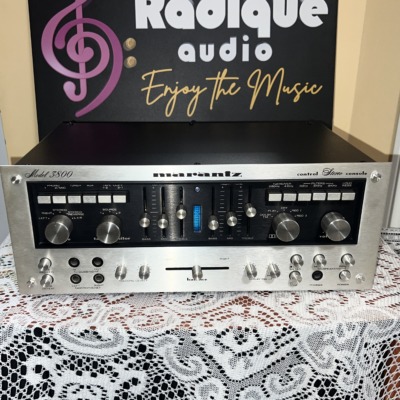
Marantz 3800 Audiophile Preamp – Made in USA
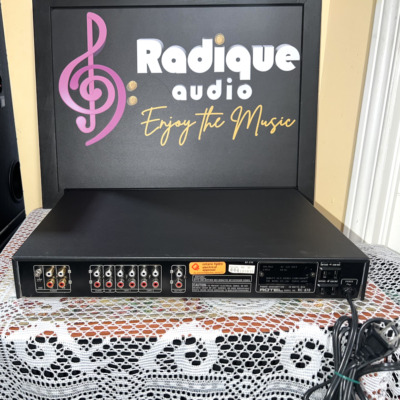
Rotel RC-870 Preamplifier – MM/MC Phono, Made in Japan, 1985
Rotel called this a stereo control amplifier rather than a preamp, and it earns the name — no tone controls, no filters, no loudness, just four line inputs and two tape loops with dubbing either way. The phono stage runs moving magnet and moving coil through separate buffers, and line distortion is no greater than 0.004%. Stamped Tokyo, Japan on the rear panel. Excellent cosmetic condition.
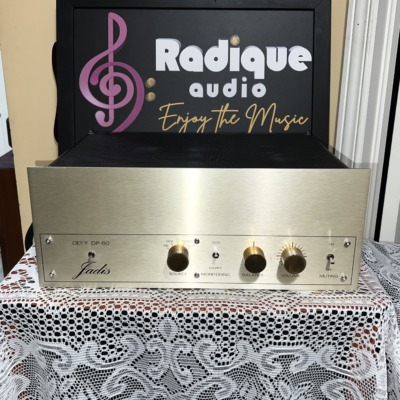
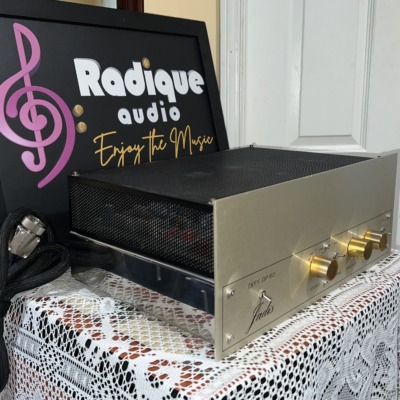
Jadis Defy DP-60 Tube Preamplifier — MM/MC Phono, Outboard PSU
A full-function valve preamplifier — line stage and a moving-magnet/moving-coil phono section, valves throughout, with the power supply in its own separate chassis. Hand-built in the south of France, in excellent condition, and it comes with the original factory cartons including the shaped foam box for the supply.
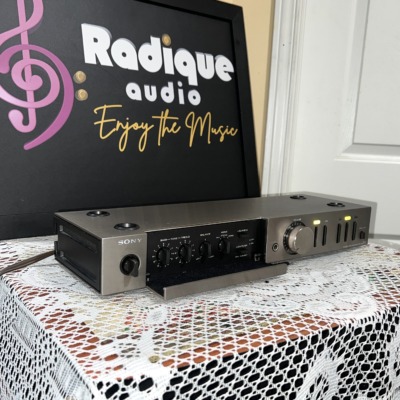
Sony TAE-20FB Falcon Preamplifier — Bronze, MM/MC Phono, Japan
The control amplifier from Sony's short-lived Falcon range — made in Japan for barely two years and rarely seen on this side of the Pacific. Bronze-anodised aluminium case, a real moving-coil phono input alongside moving-magnet, and a signal path that has been freshly recapped. A couple of light marks on the casework, otherwise Very Good. Ships from Kanata, ON.
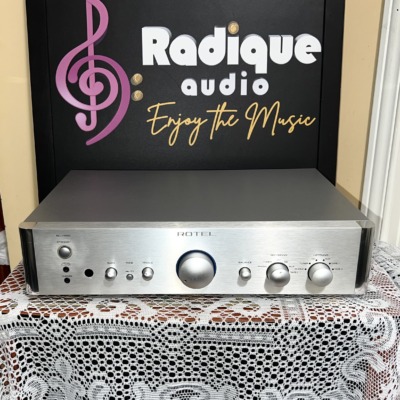

Rotel RC-1550 Stereo Preamplifier – Silver, Remote, MM Phono
A modern-era Rotel preamplifier in silver, with its remote, built around a proper power supply.
✔️ Condition: Very Good — silver facia clean, presents beautifully
✔️ Covered by Radique Warranty
✔️ Includes Perpetual Trade-Back Program eligibility
✔️ Expertly packed for safe shipping
