





Paradigm Millenia 20 Trio LCR – Black Chrome, With Wall Mount
$695.00
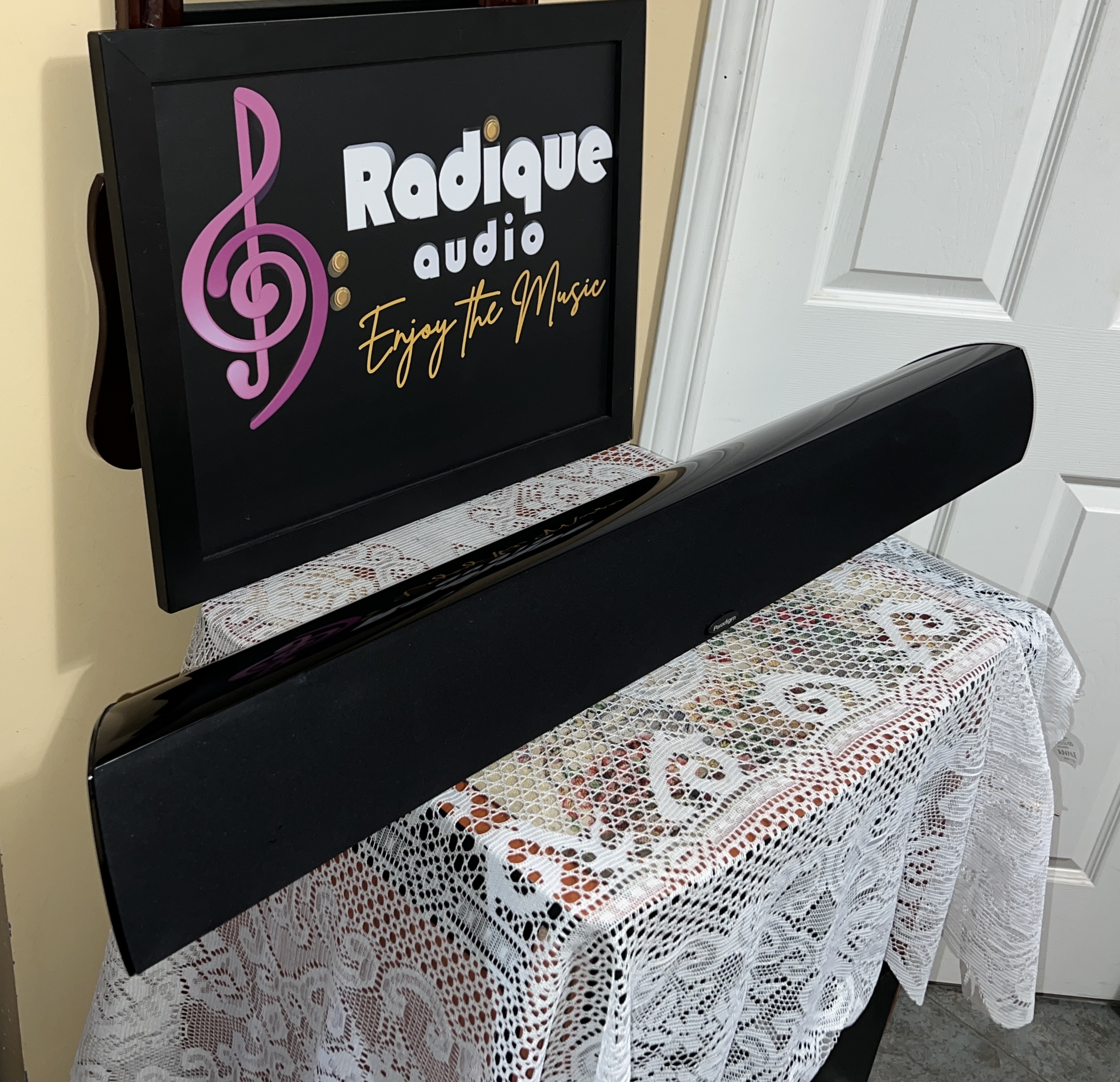
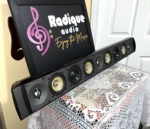
Nine drivers, three channels, one 41-inch cabinet — the whole front stage of a home theatre in a single bar, with the Paradigm wall bracket included.
✔️ Condition: Very Good — black chrome presents well, working properly
✔️ Covered by Radique Warranty
✔️ Includes Perpetual Trade-Back Program eligibility
✔️ Expertly packed for safe shipping
1 in stock
Nine drivers, three channels, one 41-inch cabinet — the whole front stage of a home theatre in a single bar, with the Paradigm wall bracket included.
What it is
The Millenia 20 Trio is Paradigm’s answer to the front stage when you do not want three cabinets standing around the television.
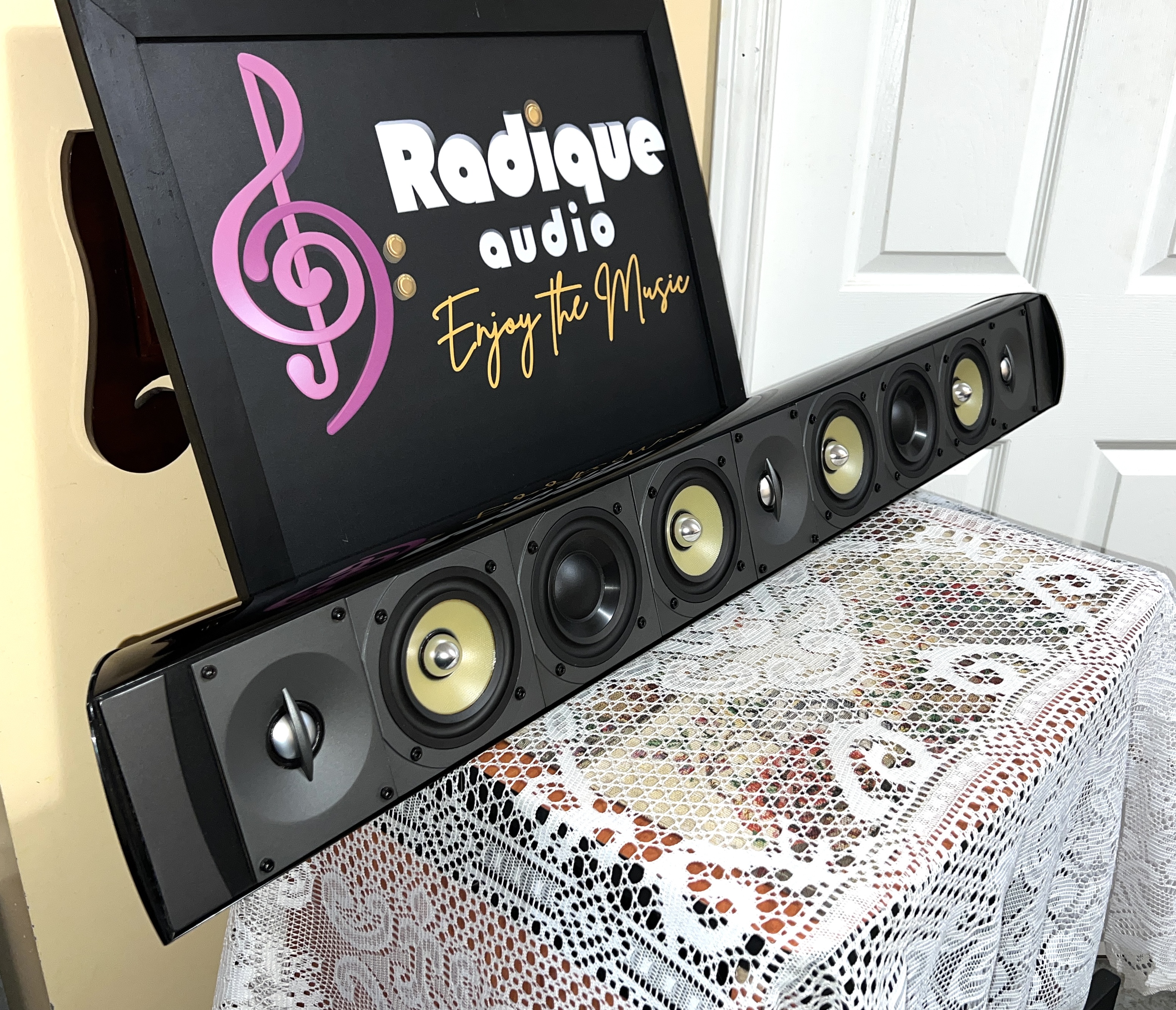
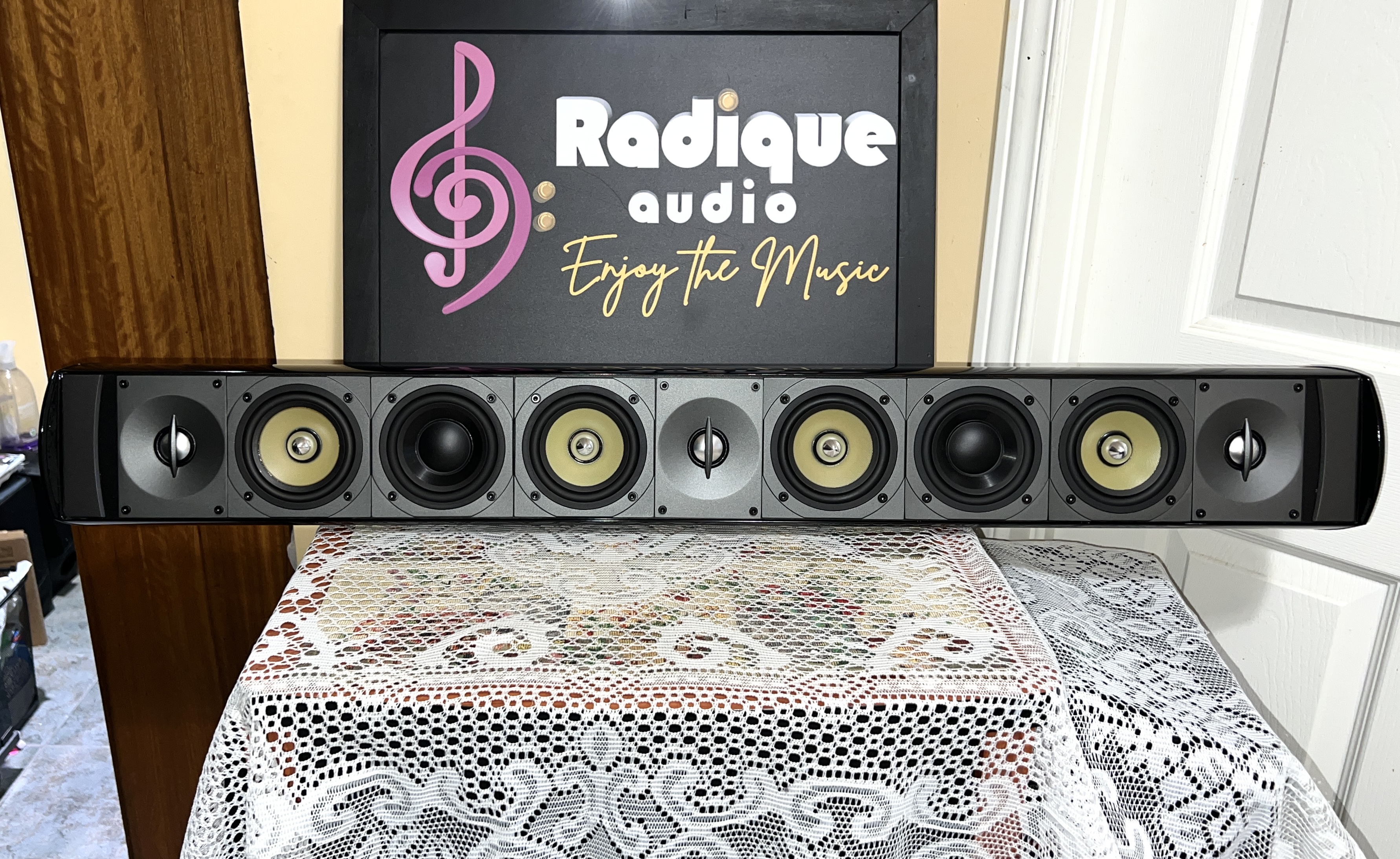
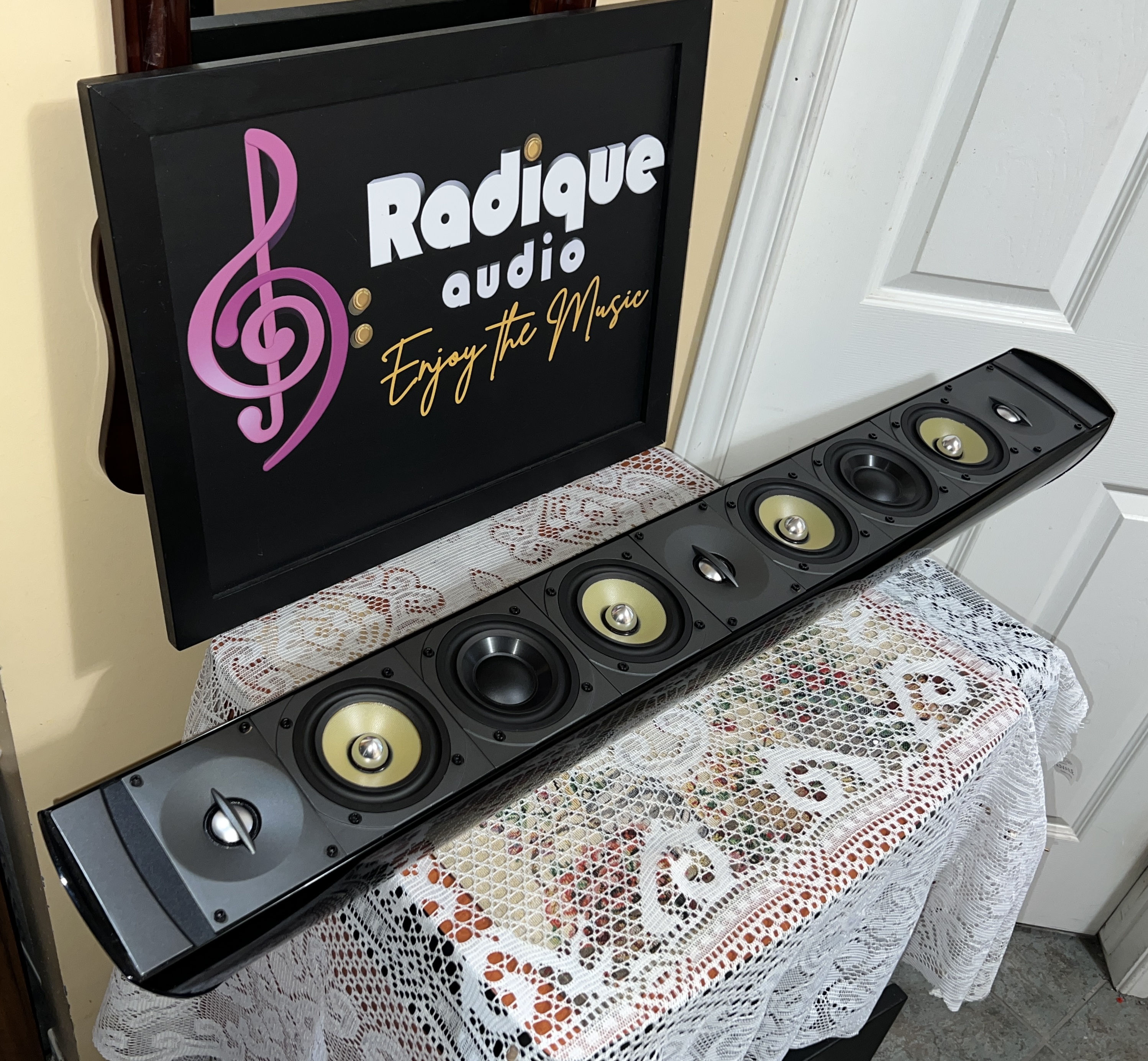
Nine drivers is the number that stops people. It is not a marketing count of every moving part — it is three complete loudspeakers, each with its own drivers and its own crossover section, sharing one extruded aluminum enclosure forty-one inches across. A left, a center and a right. Three S-PAL tweeters, six 4-1/2 inch cones, and a crossover network doing three separate jobs at once.
That is a different proposition from a soundbar. A soundbar processes a stereo signal and tries to throw an image wider than the box. This does not process anything — it is three passive loudspeakers that happen to share a cabinet, wired to three amplifier channels the way any front stage would be. What you gain is the cabinet count. What you do not give up is the separation.
The driver array
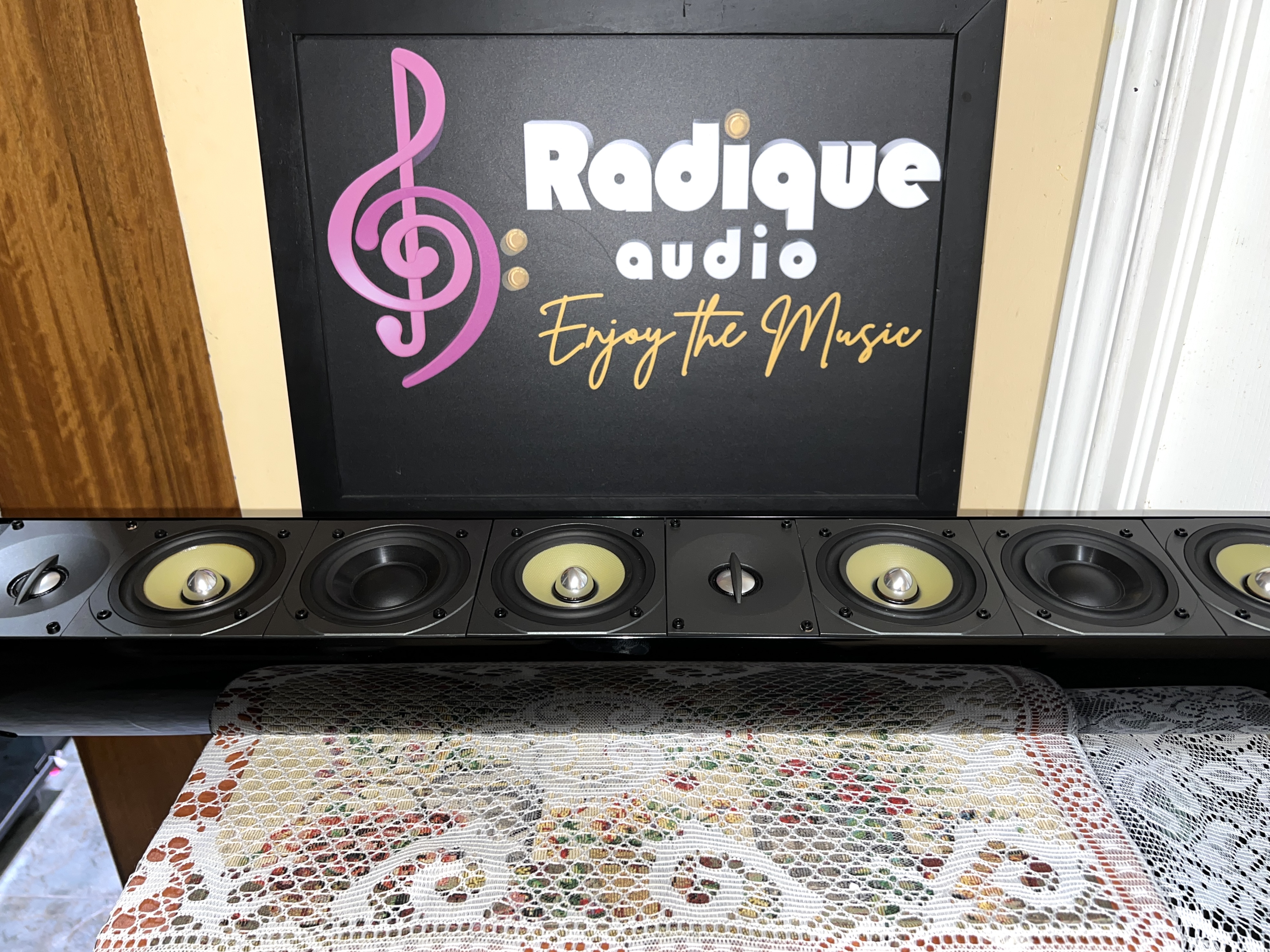
Nine drivers, and they are not all doing the same job. Three 25 mm S-PAL satin-anodized pure-aluminum domes handle the highs, one per channel. Four 115 mm MLP mica-loaded polymer cones cover mid and bass. Two further 115 mm mineral-filled polypropylene cones handle low frequencies on the left and right channels only.
That last detail is the interesting one. The center channel runs as a straightforward two-way. The left and right get an extra bass driver each, crossed in at 800 Hz, which makes them effectively two-and-a-half-way — more low-end capability where the music actually sits, and a center optimised for dialogue. Paradigm did not have to do that in a single-cabinet product, and it is the difference between a serious LCR and a compromise.
The cabinet
It is extruded aluminum rather than wood, at a fraction of the thickness a wooden enclosure would need, and the extrusion is what makes it work — no panel resonance to speak of, and the curved sides add stiffness as well as looking the part. The finish is Paradigm’s highly polished Black Chrome, the grilles attach magnetically, and the ports are aluminum, shaped for high velocity and low turbulence.
What you should know before you buy
Paradigm designed the Millenia series to be run with a subwoofer, and said so plainly at the time. Low frequency extension is 80 Hz. These are not intended to carry the bottom octaves on their own, and if you are planning to run them without a sub you will be disappointed. With one underneath them they are a very capable front stage. That is how they were designed and how they should be used.
The wall mount
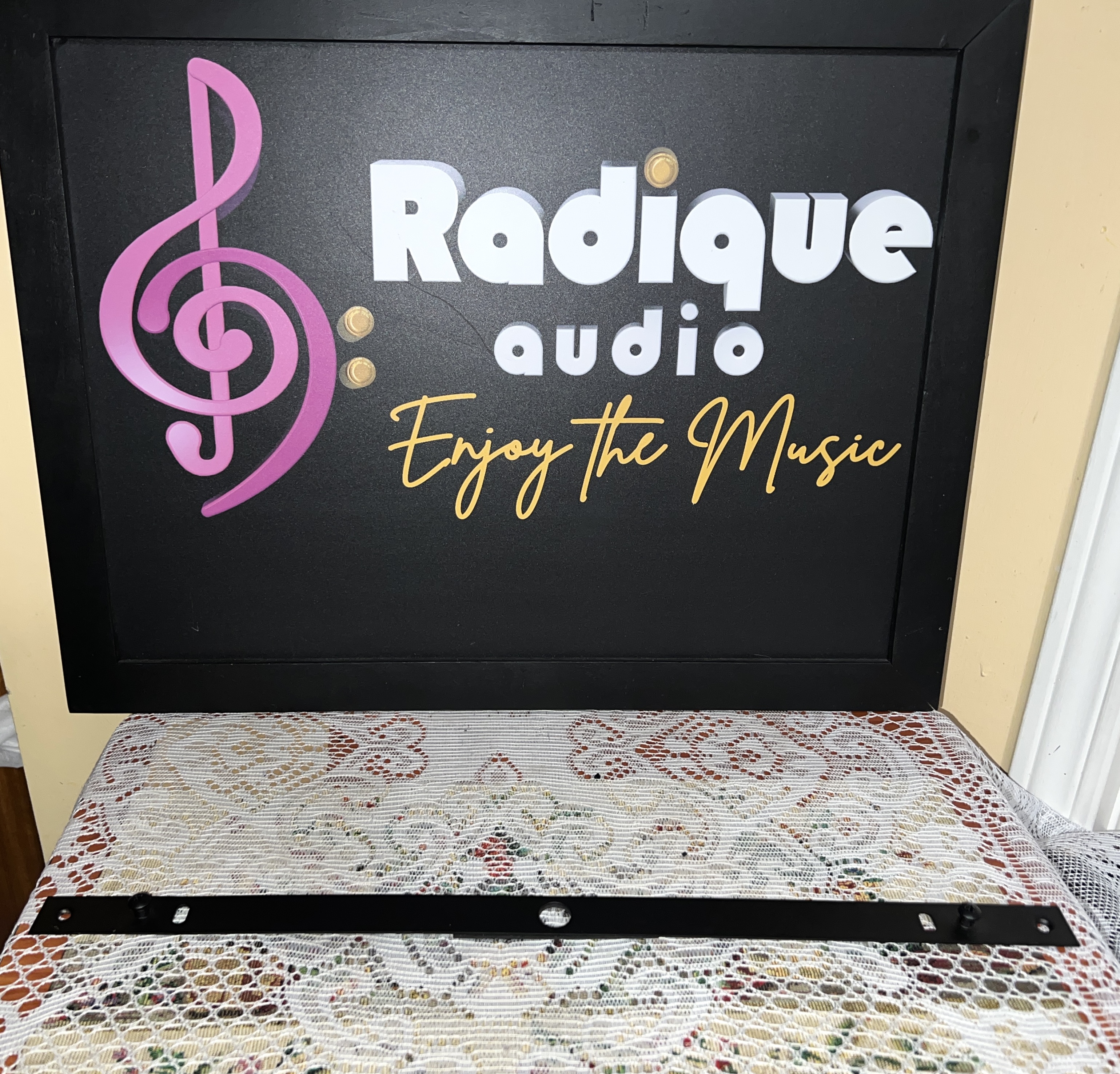
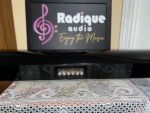
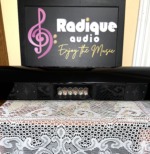
The low-profile Paradigm wall bracket is included. Worth saying plainly, because these brackets are model-specific, they are routinely lost between owners, and finding one for a discontinued Millenia afterwards is its own small project.
Condition
Very good. The black chrome presents well and the unit is working properly.
Canadian retail was $1,499 plus tax.
Three channels, nine drivers and the bracket, in one aluminum bar.
Available for pickup in Kanata, or shipped across Canada and internationally — we have sent equipment to fifteen countries in the past year, each piece packed in-house in 275 lb test double-wall boxes. Live shipping rates for your address are calculated at checkout. Backed by Radique Audio’s Bumper-to-Bumper Warranty and our Perpetual Trade-Back Program. Available for audition by appointment in Kanata.
Paradigm Millenia 20 Trio Specifications
- Design: 9-driver, 3-channel, 2-way acoustic suspension, on-wall or shelf-mounted
- Crossover: 2nd-order electro-acoustic at 2.0 kHz; 2nd-order electro-acoustic at 800 Hz on the left and right bass drivers
- High-frequency drivers: three 25 mm (1 in) S-PAL satin-anodized pure-aluminum domes, ferrofluid damped and cooled, die-cast chassis
- Mid/bass drivers: four 115 mm (4-1/2 in) MLP cones, 25 mm dual-layer voice coils, HTD die-cast heatsink chassis
- Low-frequency drivers: two 115 mm (4-1/2 in) mineral-filled polypropylene cones, 25 mm dual-layer voice coils, HTD die-cast heatsink chassis
- Frequency response on axis: +/-2 dB from 120 Hz to 20 kHz
- Frequency response 30 degrees off axis: +/-2 dB from 120 Hz to 18 kHz
- Low frequency extension: 80 Hz (DIN) — subwoofer intended
- Sensitivity: 90 dB room / 87 dB anechoic
- Impedance: compatible with 8 ohms
- Suitable amplifier power range: 15 to 150 watts
- Enclosure: extruded aluminum, highly polished Black Chrome
- Grilles: magnetically attached
- Ports: high-velocity low-noise aluminum
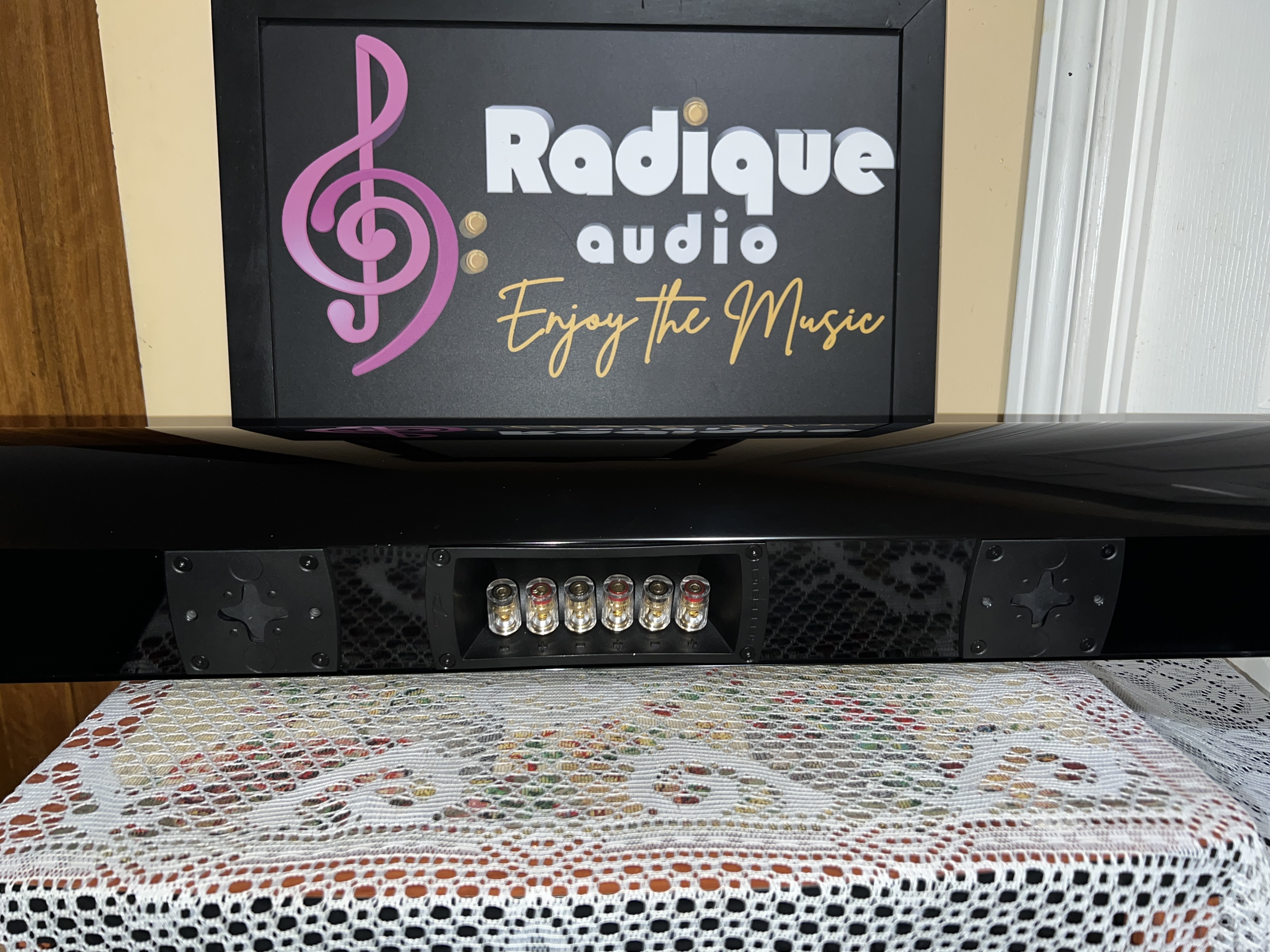
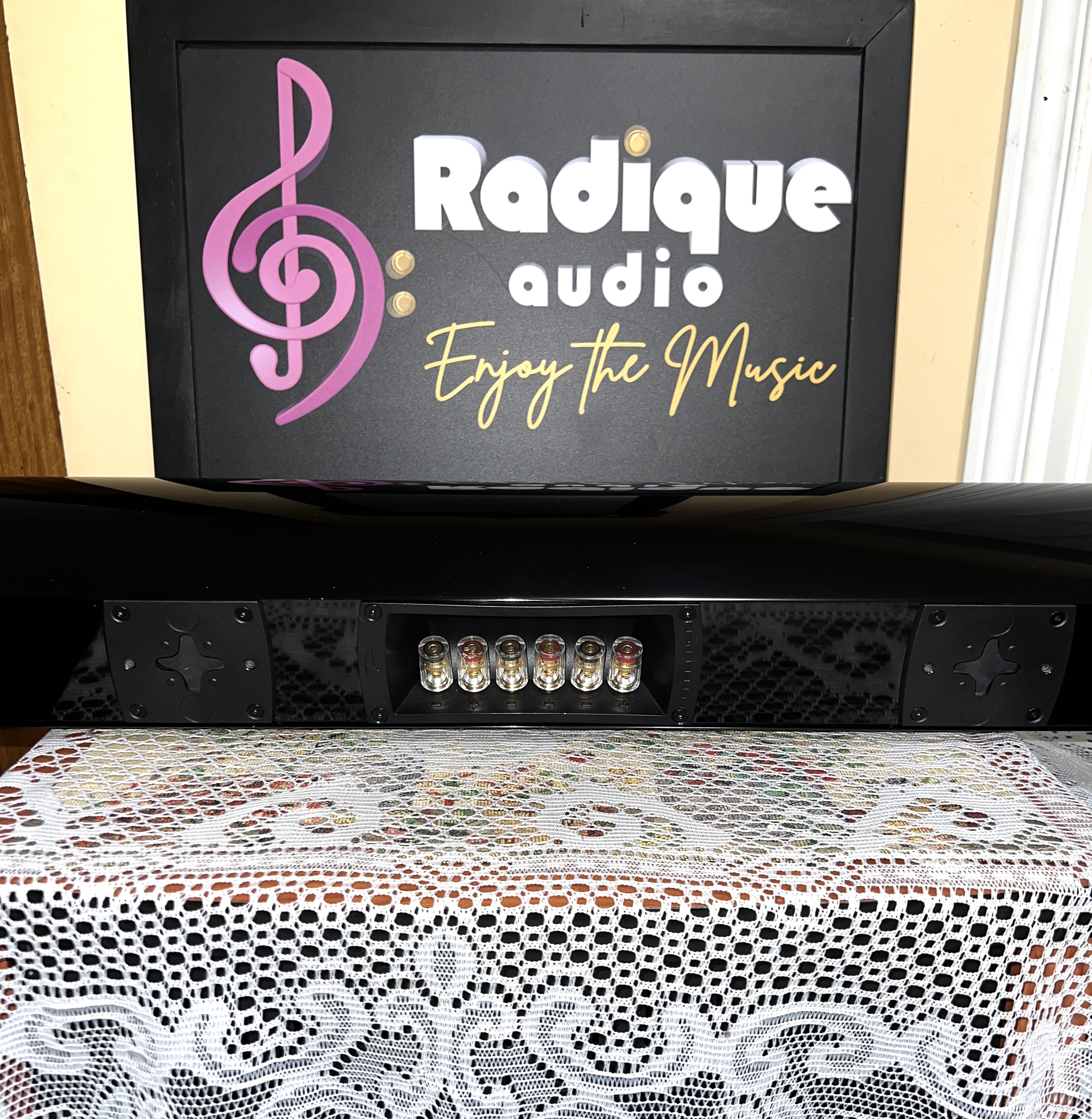
- Terminals: five-way binding posts
- Includes: low-profile Paradigm wall mount
- Dimensions: (Height x Width x Depth) 5.1 x 41.1 x 4.6 inches (13 x 104.5 x 11.7 cm)
- Weight: 18 lbs (8.2 kg)
🔌 Speaker Cable, Built on Our Own Bench
The speaker terminals here are five-way binding posts, so they take banana plugs or spade lugs and you have the run of the options. We hand-build speaker cable here in any length you need — choose the gauge and the terminations on our Custom Speaker Cable Builder. If you would rather terminate cable you already own, we make our own gold-plated banana plugs and spade connectors as well. 👉
✅ Buy With Confidence — The Radique Promise
Backed by Radique Audio’s Bumper-to-Bumper Warranty and our Perpetual Trade-Back Program. When you’re ready to move on, we’ll take it back. That’s the Radique difference.
📦 Watch how we protect your gear — our unboxing video.
📺 Curious about our business? Check out our YouTube channel for behind-the-scenes videos and more!
📞 Questions? Use the Ask a Question button above, or call us at 613-416-9995.
| Weight | 20 lbs |
|---|---|
| Dimensions | 8.6 × 45.1 × 9.1 in |
| Impedance | 8 Ω |
| Power Handling | 101–200 W |
| Sensitivity | 86–89 dB |
| Woofer Size | 5″ and under |
Paradigm has designed loudspeakers in the Toronto area since 1982, and we've had more than 600 Paradigm listings so far, covering 193 different models, more than any other brand. Every used Paradigm here is inspected, tested and photographed in-house, then covered by our Bumper-to-Bumper Warranty and Perpetual Trade-Back Program. Don't see the model you want? Tell us on First Dibs and we'll email you when one arrives.
The Paradigm story, 1982 to today
Jerry VanderMarel and Scott Bagby founded Paradigm in 1982 in Mississauga, just outside Toronto, starting with two speakers: the Model 7 and the Model 9.
The early 1990s made the name. The Titan became Paradigm's best seller in 1991, the compact Atom followed in 1992, and the PS-1000 of 1994 was its first powered subwoofer. Paradigm also says it opened its Advanced Research Centre here in Ottawa in 1993.
The Reference Studio line arrived in 1996 and ran through several numbered versions. In 1998 Paradigm bought the electronics maker Sonic Frontiers, which brought Anthem into the family, and in 2001 it moved into a new Mississauga factory where it made its own cabinets, driver parts and crossovers.
Co-founder Jerry VanderMarel left in 2005, when the private-equity firm ShoreView Industries became Scott Bagby's partner; together they went on to buy MartinLogan. From the 2010s some lines, notably Monitor, were made in China, while Prestige (2014), Persona (2016) and Founder (2021) have been built in Mississauga.
In 2019 Scott Bagby and his son John bought Paradigm, Anthem and MartinLogan back from ShoreView, and their company, PML Sound International, added GoldenEar at the start of 2025.
Which Paradigm is which?
Titan and Atom: compact bookshelf speakers, made in numbered versions (v1, v2 and so on). The Titan was Paradigm's best seller by 1991.
Monitor: Paradigm's entry-level line for decades; Monitor SE is today's version.
Reference Studio, later Studio (1996 to the mid-2010s): the Studio 20, 40, 60 and 100 plus matching centres, each in numbered versions.
Signature (2004–2016): the flagship of its day.
Prestige (2014), Premier (2018), Founder (2021) and Persona (2016): Prestige and Premier are the middle lines, Founder sits above them, and Persona is the flagship.
Subwoofers: from the PS-1000 (1994) through the PS, PW and Servo series to Defiance (2018).
Buying used Paradigm: what to check
Where it was made. That depends on the line and the year, so go by the rear label rather than assume "Made in Canada".
Woofer surrounds. Owners report foam surrounds needing replacement on some older models, including early Titans. Press gently around each one.
Powered subwoofers. The amplifier is the part most likely to have aged. Run a used sub at volume and check that auto-on still works.
Everything we list is inspected, tested and photographed here first, and comes with our warranty.
You may also like…
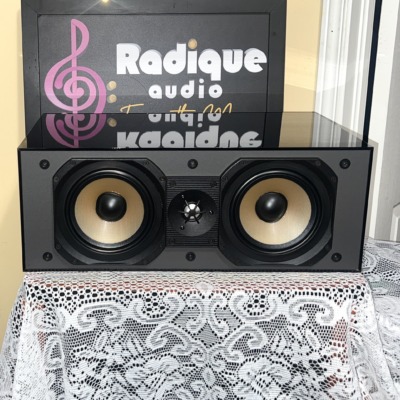
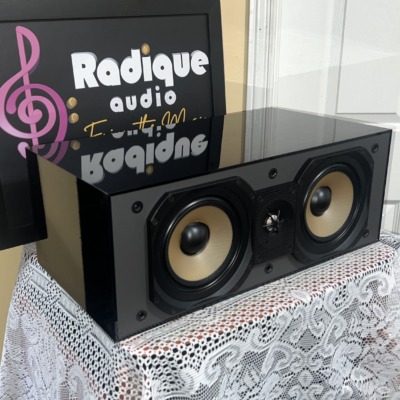
Paradigm Reference LCR-450 — Made in Canada, High Gloss Black
A Canadian-built Reference monitor in a high gloss black we have not had this model in before — the line of this era usually turns up in black, light cherry or dark rosenut. Sealed MTM design with Paradigm's pure-aluminium dome tweeter, and it works as a centre or as a left or right. Excellent, with its original box.
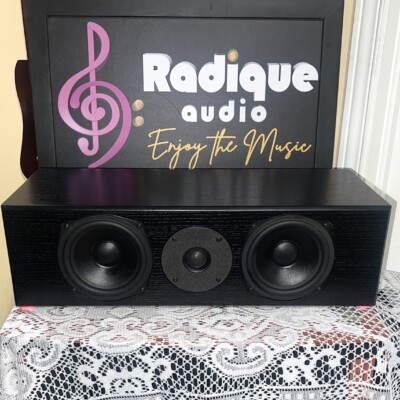
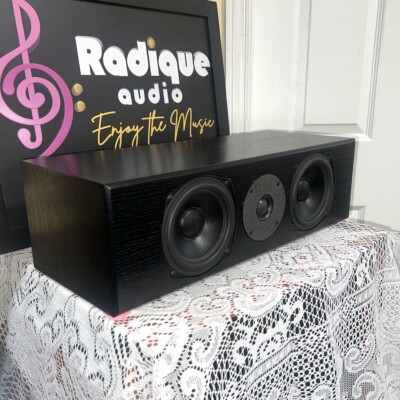


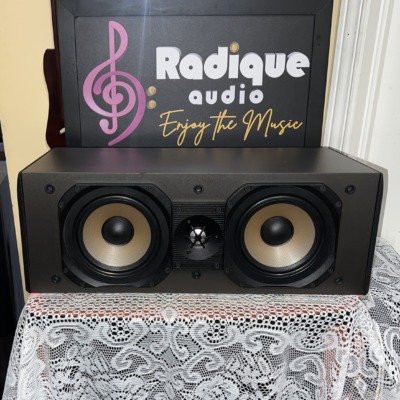
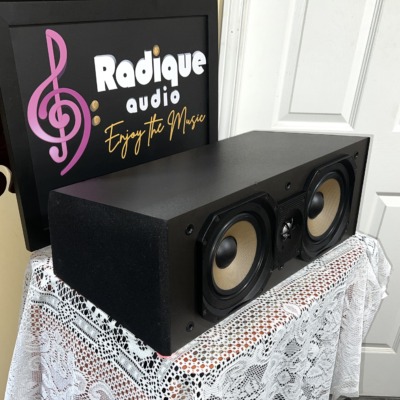
Paradigm Studio CC v2 Center Channel – 32 lb, Made in Canada
Thirty-two pounds of Paradigm Reference center channel, in original fabric-panel form.
✔️ Condition: Good — a couple of small marks on the top surface; fabric side panels a little worn
✔️ Covered by Radique Warranty
✔️ Includes Perpetual Trade-Back Program eligibility
✔️ Expertly packed for safe shipping
Mirage Uni-Theater 3-in-1 LCR Speaker – Omnipolar – Glass Stand
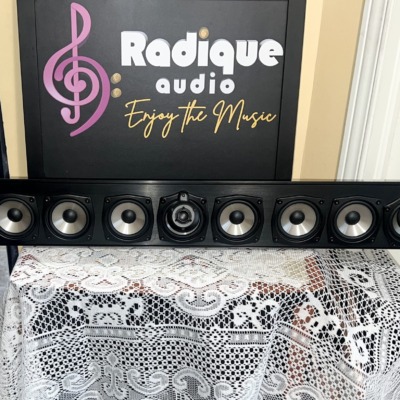
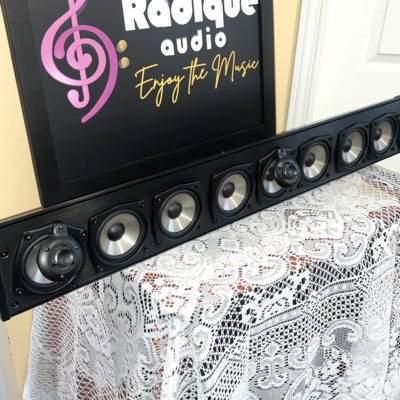
One aluminum cabinet holding three acoustically isolated channels — each with a 3/4-inch titanium hybrid dome in Mirage's Omniguide module, a 3-inch woofer and two 3-inch passive radiators. The left and right modules angle outward; the centre fires straight ahead. It is passive, so it needs an AVR with discrete L, C and R outputs. 36.5 inches wide, 19 lbs, with the original glass table stand and wall bracket.
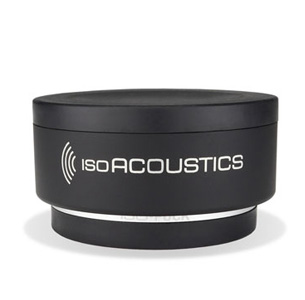
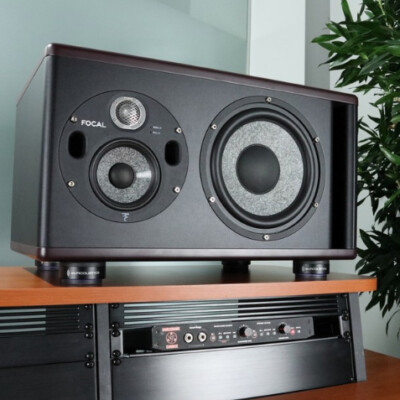
IsoAcoustics ISO-PUCK Isolators (Pack of 2)
- ✔️ Genuine IsoAcoustics ISO-PUCK isolators, brand new in box
- ✔️ 2-pack for studio monitors, speakers, amplifiers, DJ gear, and similar equipment
- ✔️ Each puck measures 2.4" x 1.2" and supports up to 20 lbs (9 kg)
- ✔️ Low-profile design helps reduce vibration transfer for greater clarity, focus, and control
- ✔️ Backed by a 2-year manufacturer's warranty in Canada
Related Products


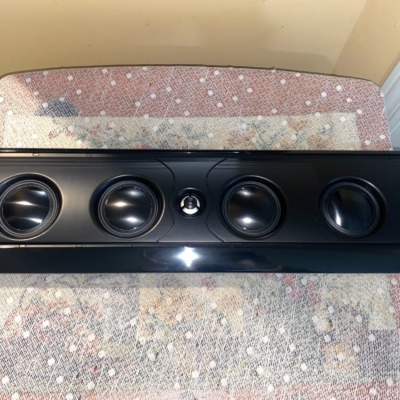
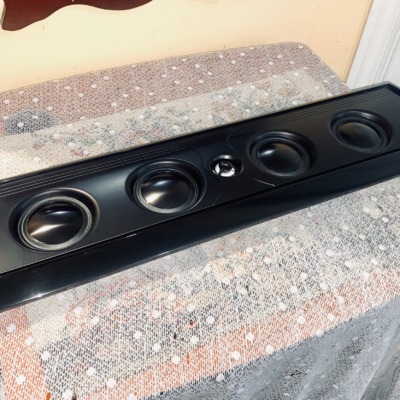
Definitive Technology 5-Driver Wall-mount Speaker XTR-40
Five drivers in an aircraft-grade extruded aluminium cabinet an inch and a half deep: two 3.5-inch XTDD dome drivers, each pressure-coupled to its own low-bass radiator, around the same one-inch aluminium dome tweeter used in Definitive's Mythos ST towers. 92 dB, 8 ohms, up to 100 watts. The wall bracket is included and takes it vertical or horizontal.
Mirage Uni-Theater 3-in-1 LCR Speaker – Omnipolar – Glass Stand
One aluminum cabinet holding three acoustically isolated channels — each with a 3/4-inch titanium hybrid dome in Mirage's Omniguide module, a 3-inch woofer and two 3-inch passive radiators. The left and right modules angle outward; the centre fires straight ahead. It is passive, so it needs an AVR with discrete L, C and R outputs. 36.5 inches wide, 19 lbs, with the original glass table stand and wall bracket.

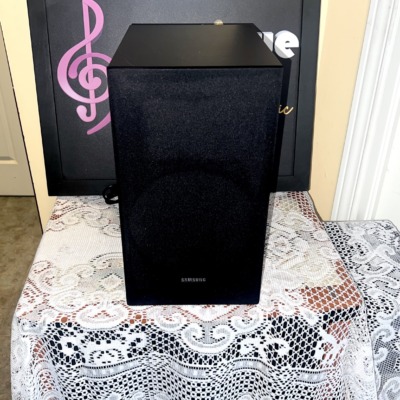
Samsung HW-T550 2.1 Soundbar + Wireless Sub, Bluetooth
The soundbar and its matching PS-WR55D wireless subwoofer, 160 watts each for 320 total — four drivers in the bar, a 6.5-inch front-firing woofer in the sub, joined over 2.4 GHz with no audio cable between them. HDMI ARC, optical, an HDMI 1.4 pass-through, Bluetooth 4.2 and DTS Virtual:X. Original remote and wall bracket included. Very good cosmetic condition.
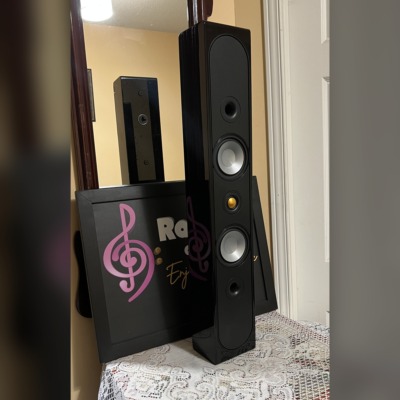
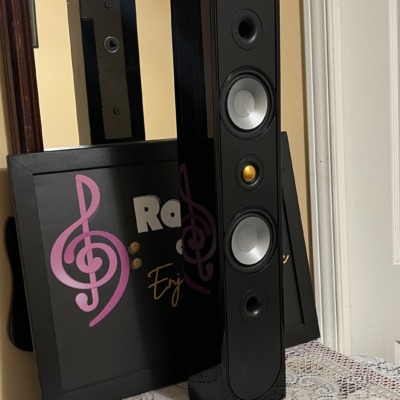
Monitor Audio Radius 250HD LCR Speaker – Gloss Black, Wall-Mount
A slim gloss black Monitor Audio speaker from the Radius HD range, in good condition, built to work as a left, center, right or rear speaker, standing upright, lying flat or hung on a wall.
✔️ Good condition — light scratches visible under bright light; grille included
✔️ One slim speaker for left, center, right or rear duty
✔️ Two rear keyhole slots; the matching wall bracket is listed separately
✔️ Covered by Radique Warranty
✔️ Includes Perpetual Trade-Back Program eligibility
✔️ Expertly packed for safe shipping
Monitor Audio Radius 250HD LCR Speakers, Pair – Gloss Black
A matched pair of slim gloss black Monitor Audio speakers from the Radius HD range, in good condition, each built to work as a left, center, right or rear speaker, standing upright, lying flat or hung on a wall.
✔️ Good condition — light scratches visible under bright light; grilles included
✔️ Two slim speakers for a stereo pair, left and right of a center, or a set of rears
✔️ Two rear keyhole slots on each; the matching wall bracket is listed separately
✔️ Covered by Radique Warranty
✔️ Includes Perpetual Trade-Back Program eligibility
✔️ Expertly packed for safe shipping
