
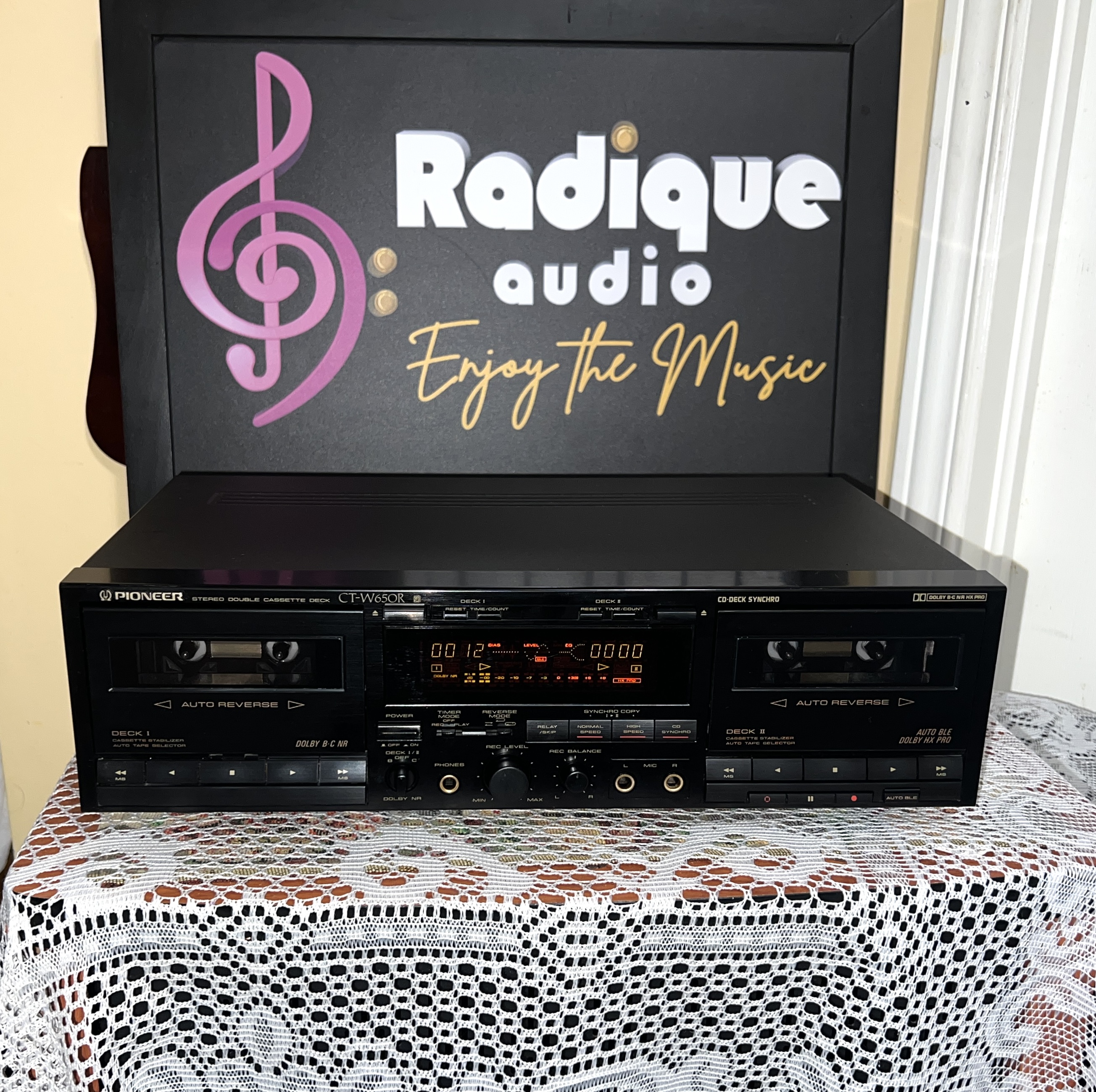
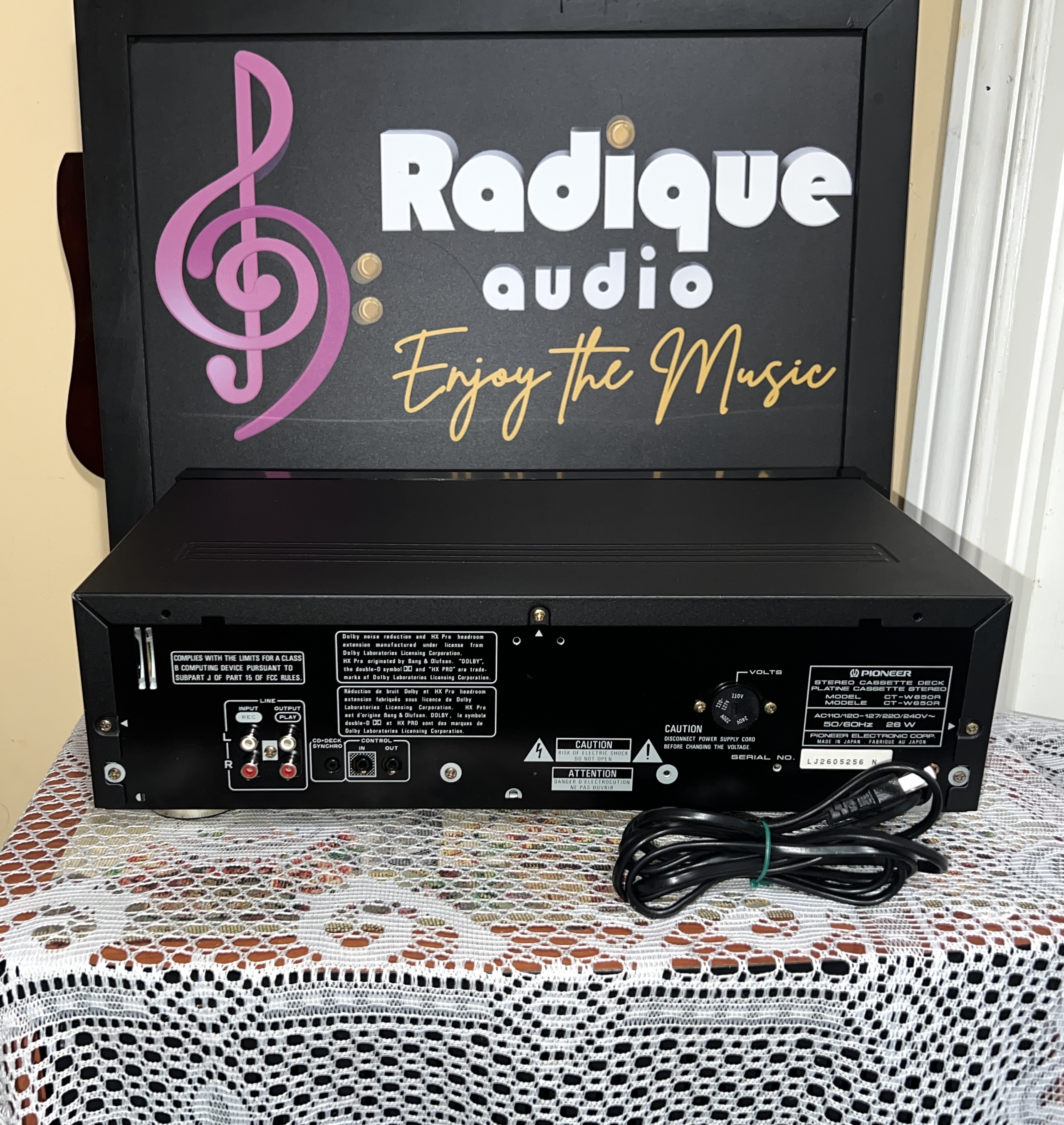

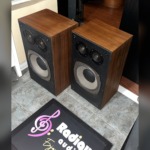
Pioneer CT-W650R Dual Cassette Deck – Level 1 Serviced, Japan
$245.00
A twin-transport Pioneer from 1991, built in Japan, with both decks auto-reversing and Dolby HX Pro on the recording side.
✔️ Condition: Very Good — black facia and controls present well
✔️ Covered by Radique Warranty
✔️ Includes Perpetual Trade-Back Program eligibility
✔️ Expertly packed for safe shipping
Out of stock
This one has sold. Want first dibs on the next one?
We take these in regularly. Leave your name and email, and we’ll email you the moment one is listed, so you hear first. No cost, no obligation.
Email me when one is listed
Stock up on tape. Maxell UR 120 Blank Cassette, $15.00 →
Other cassette decks we have in stock now
3 in stock · $225.00–$595.00 · all ship
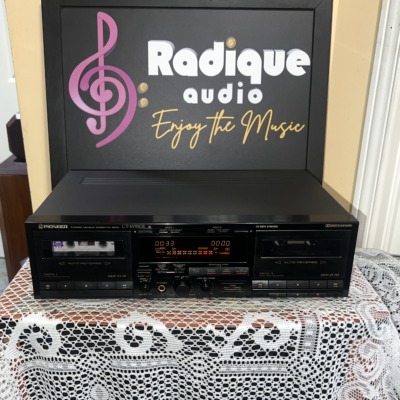 Pioneer CT-W550R Dual Cassette Deck – Dolby B/C, HX Pro, Japan$225.00Ships
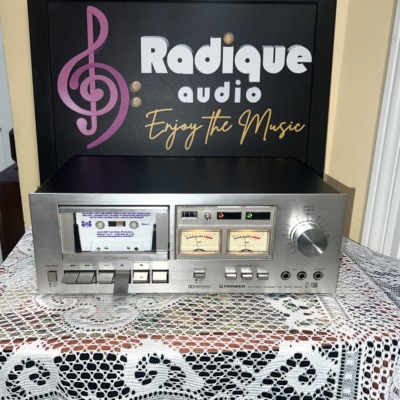 Pioneer CT-F500 Silver Face Cassette Deck – Serviced, Japan$395.00Ships
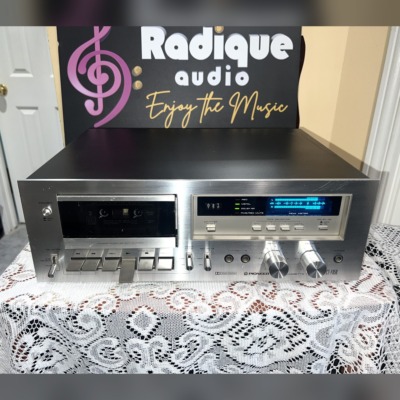 Pioneer CT-F650 Stereo Cassette Deck Metal Tape Made in Japan$595.00Ships
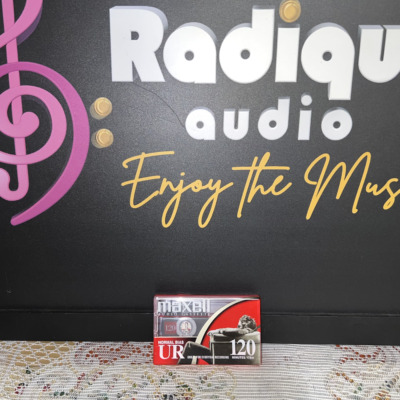
Stock up on tape.
Sealed Maxell UR 120 blank cassettes, normal bias: sixty minutes a side, ready for any deck.
Maxell UR 120 Blank Cassette, $15.00 →A twin-transport Pioneer from 1991, built in Japan, with both decks auto-reversing and Dolby HX Pro on the recording side.
What it is
The CT-W650R is Pioneer’s answer to a problem most dual decks of the era solved badly. Twin-transport machines were usually built to a price — dub a tape, play a tape, never mind how it sounds. This one was aimed at the buyer who wanted two transports without giving up the things that make a single deck worth owning, and the spec sheet shows where the money went.
Both transports auto-reverse, not just the playback side. Each has its own four-digit counter. Recording gets manual level and manual balance control, peak-hold meters, and a switchable multiplex filter tied to the Dolby switch. There are microphone inputs on the front and a headphone output beside them. Dubbing runs at normal speed or high speed, and there is CD synchro recording for starting a disc and the tape together.
Dolby and HX Pro
Dolby B and C are both here, and C is the one that matters — roughly twenty decibels of noise reduction above 1 kHz, double what B manages, which is the difference between tape hiss you stop noticing and tape hiss you never hear.
HX Pro is the more interesting inclusion. It is not noise reduction at all. It adjusts bias continuously during recording in response to the high-frequency content of the music itself, which lets the tape hold treble it would otherwise compress away. It works on playback anywhere, on any deck, because the improvement is recorded into the tape. On a twin deck at this price it was not a given.
The deck also carries Pioneer’s Auto BLE, which reads the tape in the transport and sets bias, level and equalisation to suit it. Type I, chrome and metal are all supported, and the tape type is detected automatically.
The work that has been done
Level 1 Service
This unit has undergone our Level 1 service and testing, which should ensure many more years of reliable performance ahead. That covers thorough testing of all inputs, outputs and controls, deep cleaning and deoxidation of all pots and switches, replacement of any blown indicator lamps, a check and clean of the power supply wiring, and post-service burn-in and sign-off testing.
Level 1 is the level a well-kept machine needs. It is not a lesser standard — every unit that leaves our bench meets the same performance standard whatever level of work got it there, carries the full Bumper-to-Bumper Warranty, and is eligible for the Perpetual Trade-Back Program. A deck that only needed Level 1 arrived in good order, and it is usually the better value for it.
Condition
Very good. The black facia and controls present well for a machine of this age.
A well-specified twin deck from the years when Pioneer was still building them properly, serviced and ready to work.
Available for pickup in Kanata, or shipped across Canada and internationally — we have sent equipment to fifteen countries in the past year, each piece packed in-house in 275 lb test double-wall boxes. Live shipping rates for your address are calculated at checkout. Backed by Radique Audio’s Bumper-to-Bumper Warranty and our Perpetual Trade-Back Program. Available for audition by appointment in Kanata.
Pioneer CT-W650R Specifications
- Type: double cassette deck, auto-reverse on both transports
- Track system: 4-track, 2-channel stereo
- Heads: one record/playback, one playback, one erase
- Motors: two DC servo, two DC reel
- Tape types: Type I, CrO2 and Metal, selected automatically
- Noise reduction: Dolby B and C
- Headroom extension: Dolby HX Pro
- Auto BLE bias, level and equalisation calibration
- Frequency response: 20 Hz to 19 kHz (metal), 20 Hz to 18 kHz (chrome), 20 Hz to 17 kHz (normal)
- Signal to noise ratio: 76 dB (Dolby C)
- Wow and flutter: 0.055%
- Total harmonic distortion: under 0.8%
- Dubbing: normal and high speed
- CD synchro recording
- Switchable MPX filter, linked to the Dolby NR switch
- Manual recording level and balance
- Peak-hold level meters
- Four-digit counter on each deck
- Microphone inputs and headphone output
- Input: 63 mV (line) · Output: 0.3 V (line)
- Power consumption: 26 W
- Made in Japan, 1991
- Dimensions: (Width x Height x Depth) 16.5 x 5 x 10.6 inches (420 x 128 x 268 mm)
- Weight: 10.4 lbs (4.7 kg)
🎚️ Gold Series RCA Interconnects
Our own Gold Series RCA Stereo Interconnect is a shielded, gold-plated stereo pair, in stock and ready to go. It is the cable that connects this to the rest of your system, and it is a straightforward upgrade on the free leads that come in the box with most equipment. 👉
⚠️ Important Information for International Buyers
This unit is configured for North American 110/120V power. Buyers outside North America will require a step-down transformer and appropriate plug adapter.
✅ Buy With Confidence — The Radique Promise
Backed by Radique Audio’s Bumper-to-Bumper Warranty and our Perpetual Trade-Back Program. When you’re ready to move on, we’ll take it back. That’s the Radique difference.
📦 Watch how we protect your gear — our unboxing video.
📺 Curious about our business? Check out our YouTube channel for behind-the-scenes videos and more!
📞 Questions? Use the Ask a Question button above, or call us at 613-416-9995.
| Weight | 12.4 lbs |
|---|---|
| Dimensions | 14.6 × 20.5 × 9 in |
| Cassette Wells | Dual Well (Dubbing) |
| Noise Reduction | Dolby B, Dolby C |
Pioneer began in Tokyo in January 1938, when Nozomu Matsumoto set up shop around the A-8 speaker he had built the year before. By the late 1970s its SX receivers were at the heart of the hi-fi power race. We carry Pioneer stereo receivers and AV receivers, CD players, cassette decks, tuners and equalizers. We've had more than 240 Pioneer listings so far, covering 140 different models. Every used Pioneer here is inspected, tested and serviced as required, then photographed in-house and covered by our Bumper-to-Bumper Warranty and Perpetual Trade-Back Program. Don't see the model you want? Tell us on First Dibs and we'll email you when one arrives.
Pioneer is one of our two top-selling brands of vintage amps and receivers, along with Marantz. Our five best-selling Pioneer models so far: the SX-650, SX-750, SX-580, SX-780 and SX-680, all vintage stereo receivers from the 1976 and 1978 SX families. We also offer our custom cherry cabinets for these vintage Pioneers, hand-made from all-natural Ottawa Valley cherry, and we've upgraded dozens of Pioneers with them so far.
The Pioneer story, 1938 to today
Nozomu Matsumoto developed the A-8 speaker in 1937, and in January 1938 he set up Fukuin Shokai Denki Seisakusho in Tokyo. "Pioneer" was first the name of that speaker. Some histories give 1936 in Osaka as the start, but Pioneer dates itself to January 1938 in Tokyo. The company was incorporated in 1947 and renamed Pioneer Electronic Corporation in 1961.
Stereo and the US. In 1962 Pioneer introduced the PSC-5A, which it calls the first stereo with separate speaker cabinets, and its first PL turntables. Pioneer Electronics U.S.A. was founded in New York in 1966.
The power race. After a 1974 US Federal Trade Commission rule tightened how amplifier power was rated, receiver makers competed on watts. Pioneer's SX-1250 of 1976 was rated at 160 watts per channel, and the SX-1980 of 1978 to 1980 at 270.
CD and Elite. The P-D1 of 1982 was Pioneer's first CD player, and Elite-branded components were on sale by 1985.
Today. Pioneer sold its home audio business to Onkyo in 2015, keeping its car and DJ businesses, and Pioneer-branded home theatre gear was later made under licence. In December 2025 CarUX, part of Taiwan's Innolux, completed its purchase of Pioneer Corporation, which now focuses on in-car products.
Which Pioneer is which?
Early-1970s SX receivers: models such as the SX-424 to SX-828, rated at about 15 to 50 watts per channel.
The 1976 "x50" SX receivers: from the SX-450 at 15 watts per channel up to the SX-1250 at 160. Our best-selling SX-650 and SX-750 come from this family.
The 1978 "x80" SX receivers: including the SX-580, SX-680 and SX-780 we sell most, up to the SX-1980 flagship with quartz-lock tuning, which weighs more than 35 kg.
Spec and Exclusive separates: higher-end amplifiers such as the Spec-1 preamplifier (1976 to 1980) and the Exclusive C3/M3 pair (1974).
Elite: Pioneer's upper line from the mid-1980s, for example the PD-9010X CD player.
PL turntables, CT cassette decks and CD players: PL turntables from 1962, such as the PL-12 and the linear-tracking PL-L1; CT decks such as the three-head CT-F1000; and CD players from the 1982 P-D1 to magazine-loading changers such as the PD-M6.
Buying used Pioneer: what to check
Controls and switches. Crackle when you turn a control or work a switch usually means dirt, and restorers clean every pot and switch.
Capacitors. Electrolytic capacitors in 1970s receivers are often past their best, and full restorations replace them.
Big SX models. Owners and restorers report heat stress on the power-supply board of large receivers such as the SX-1250. Ask what has been done.
Relay, lamps and bias. The protection relay is a common replacement, dial lamps burn out and are often converted to LED, and restorers set the bias and DC offset.
Cassette decks. Check the heads, fast-forward and rewind, Dolby and every button. Belts age even when the deck looks perfect.
Everything we list is inspected, tested and serviced as required here, and comes with our warranty.
You may also like…
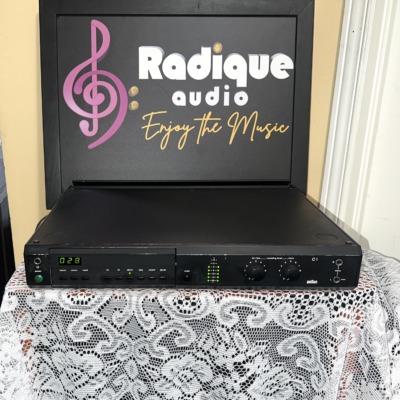
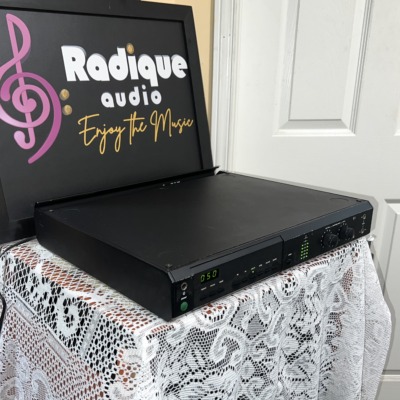
Braun Atelier C1 Slim Cassette Deck — Motorized Drawer, Japan
70 mm tall, almost exactly the height of a cassette case, and that is not a coincidence. The tape does not stand upright behind a door the way it does in every Japanese deck of the era — it lies flat and is drawn in horizontally on a motorised tray, the mechanism disappearing into a slot barely thicker than the cassette itself. The C1 arrived in 1980, two years before a CD player made that gesture familiar. Built for Braun in Japan, the matching deck to the Atelier A1 and T1. Good condition.


IsoAcoustics ISO-PUCK Mini Isolators (Pack of 8)
- ✔️ Genuine IsoAcoustics ISO-PUCK Mini isolators, brand new in box
- ✔️ 8-pack for lighter speakers, studio monitors, turntables, mixers, and similar gear
- ✔️ Each puck measures 1.7” x 0.9” and supports up to 6 lbs (2.75 kg)
- ✔️ Use 3 or more per item depending on weight to reduce vibration transfer and improve clarity
- ✔️ Backed by a 2-year manufacturer’s warranty in Canada
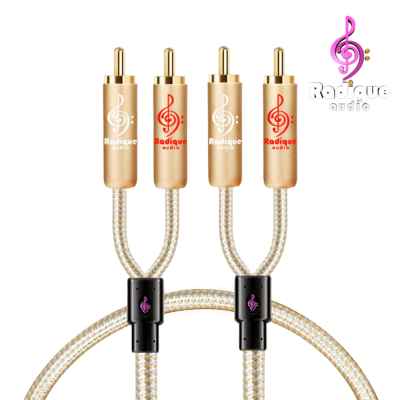
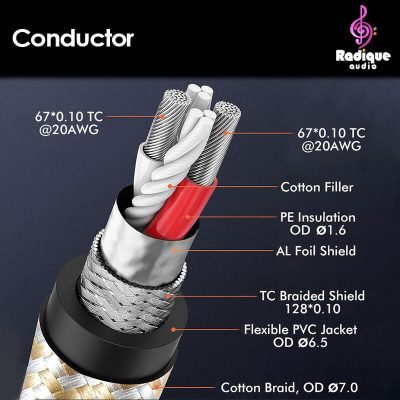
Radique Audio Gold Series RCA Stereo Interconnect Cable
RCA cables that are kind to vintage jacks: dual RCA to dual RCA, in 0.2, 0.75 or 1.5 m.
- Slim gold-plated plugs with vintage-safe grip pressure
- Dual shielding: aluminum foil and 128-strand braided copper
- Reinforced splitters; 7 mm gold cotton and nylon mesh jacket
- Three lengths, chosen above the Add to Cart button
- 1-year warranty
Related Products
Braun Atelier C1 Slim Cassette Deck — Motorized Drawer, Japan
70 mm tall, almost exactly the height of a cassette case, and that is not a coincidence. The tape does not stand upright behind a door the way it does in every Japanese deck of the era — it lies flat and is drawn in horizontally on a motorised tray, the mechanism disappearing into a slot barely thicker than the cassette itself. The C1 arrived in 1980, two years before a CD player made that gesture familiar. Built for Braun in Japan, the matching deck to the Atelier A1 and T1. Good condition.
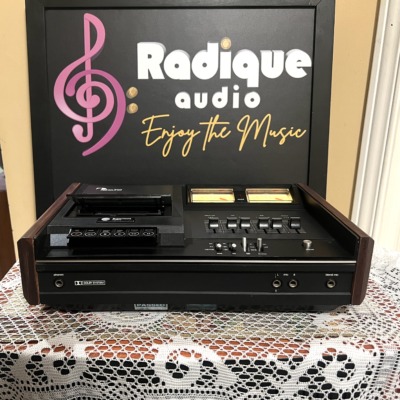
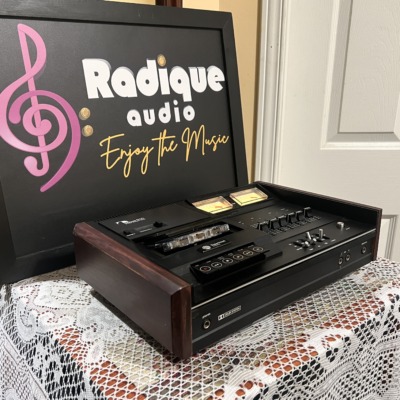
Nakamichi 500 Dual-Tracer Cassette Deck – Walnut, Made in Japan
Nakamichi's mid-seventies top-loading deck with walnut side panels, serviced on our bench and playing as it should.
✔️ Good condition — honest general wear for a fifty-year-old deck, and no damage
✔️ Serviced on our bench — our standard cassette deck service before it was listed
✔️ Walnut side panels fitted, with the original white side panels included
✔️ Covered by Radique Warranty
✔️ Includes Perpetual Trade-Back Program eligibility
✔️ Expertly packed for safe shipping
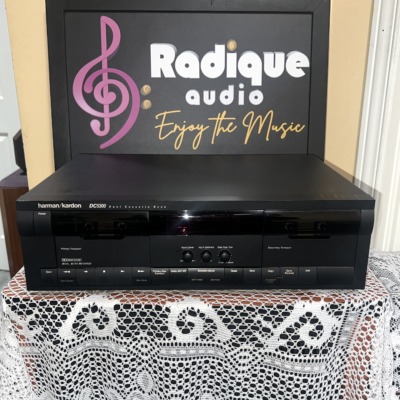
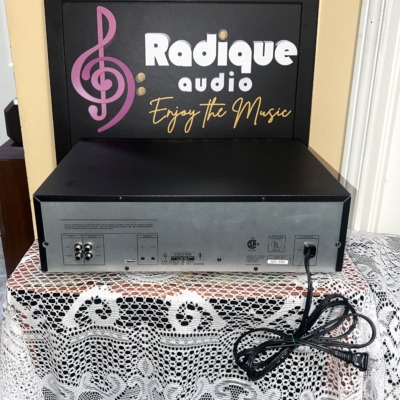
Harman Kardon DC5300 Dual Cassette Deck – Serviced, Japan
A Japanese-built Harman Kardon dual cassette deck from the early nineties, serviced on our bench and in very good condition.
✔️ Very Good condition — faceplate, cassette doors and display window present cleanly
✔️ Serviced on our bench — our standard cassette deck service before it was listed
✔️ Two auto-reverse decks with Dolby B and C, made in Japan
✔️ Covered by Radique Warranty
✔️ Includes Perpetual Trade-Back Program eligibility
✔️ Expertly packed for safe shipping
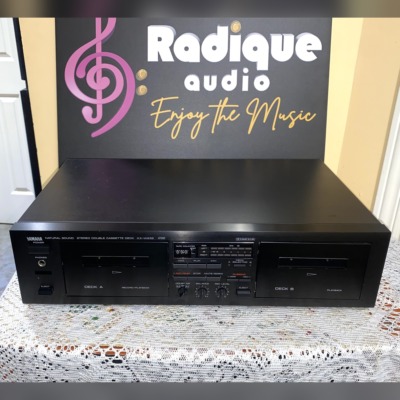
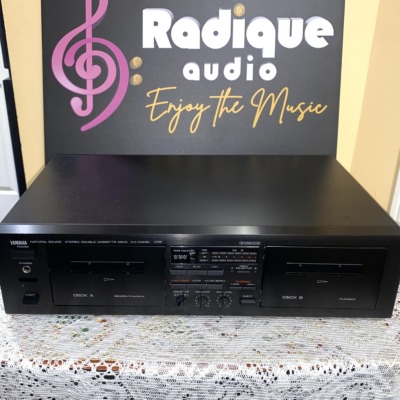
Yamaha KX-W232 Dual Cassette Deck – Dolby B & C, Made in Japan
A Japanese-built Yamaha dual cassette deck from the early nineties, tested on our bench and in good condition, priced to reflect one door quirk we describe below.
✔️ Good condition — a rear-panel crack and a Deck A door quirk, both explained below
✔️ Tested on our bench and working as it should
✔️ Two decks with Dolby B and C — made in Japan
✔️ Covered by Radique Warranty
✔️ Includes Perpetual Trade-Back Program eligibility
✔️ Expertly packed for safe shipping
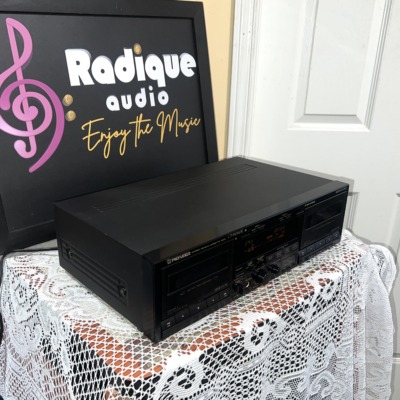
Pioneer CT-W550R Dual Cassette Deck – Dolby B/C, HX Pro, Japan
A 1991 Pioneer CT-W550R twin cassette deck, made in Japan, with auto-reverse on both decks, Dolby B and C and Dolby HX Pro.
✔️ Serviced on our bench
✔️ Very good condition
✔️ High-speed dubbing, CD synchro recording, music search
✔️ Covered by Radique Warranty
✔️ Includes Perpetual Trade-Back Program eligibility
✔️ Expertly packed for safe shipping
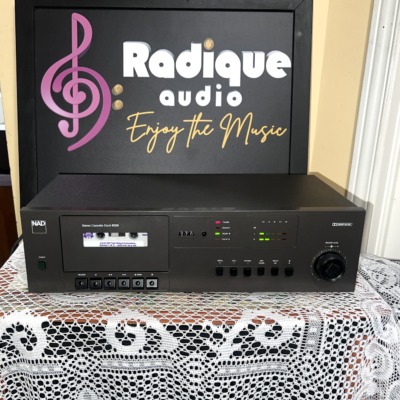
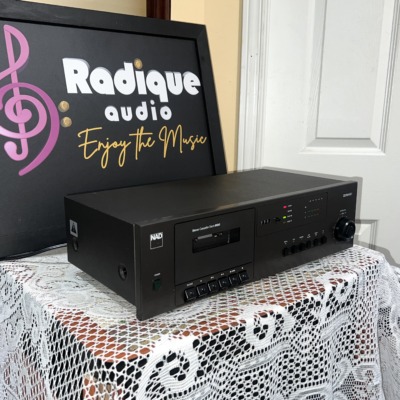
NAD 6130 Stereo Cassette Deck – Dolby B/C, Serviced, Japan
A mid-1980s NAD 6130 cassette deck, made in Japan, with Dolby B and C, a hard permalloy head and a belt-driven flywheel transport.
✔️ Serviced on our bench
✔️ Very good condition
✔️ Covered by Radique Warranty
✔️ Includes Perpetual Trade-Back Program eligibility
✔️ Expertly packed for safe shipping
