

Paradigm Studio CC v2 Center Channel Speaker w/ Apple Wood
$445.00
1 in stock
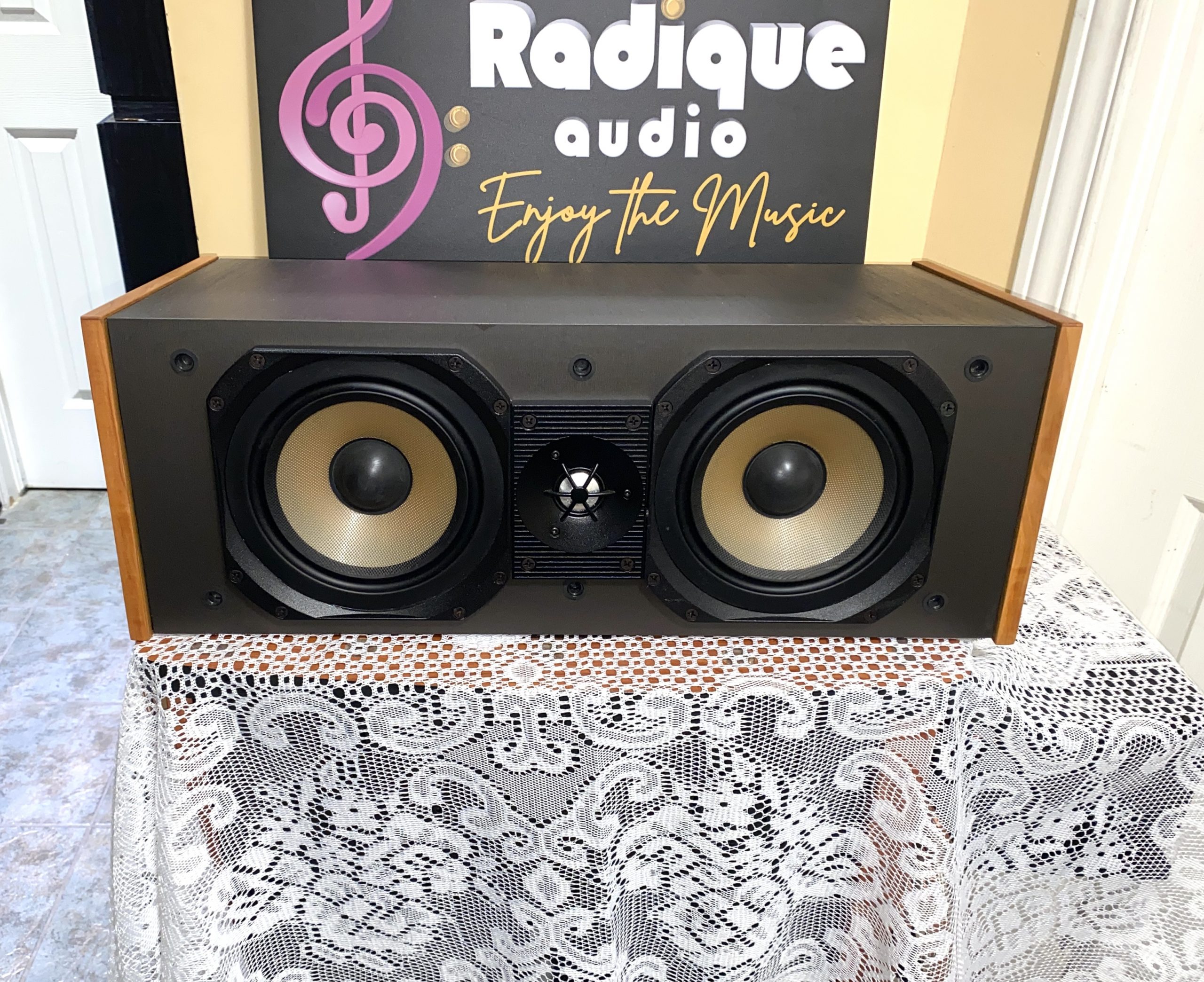
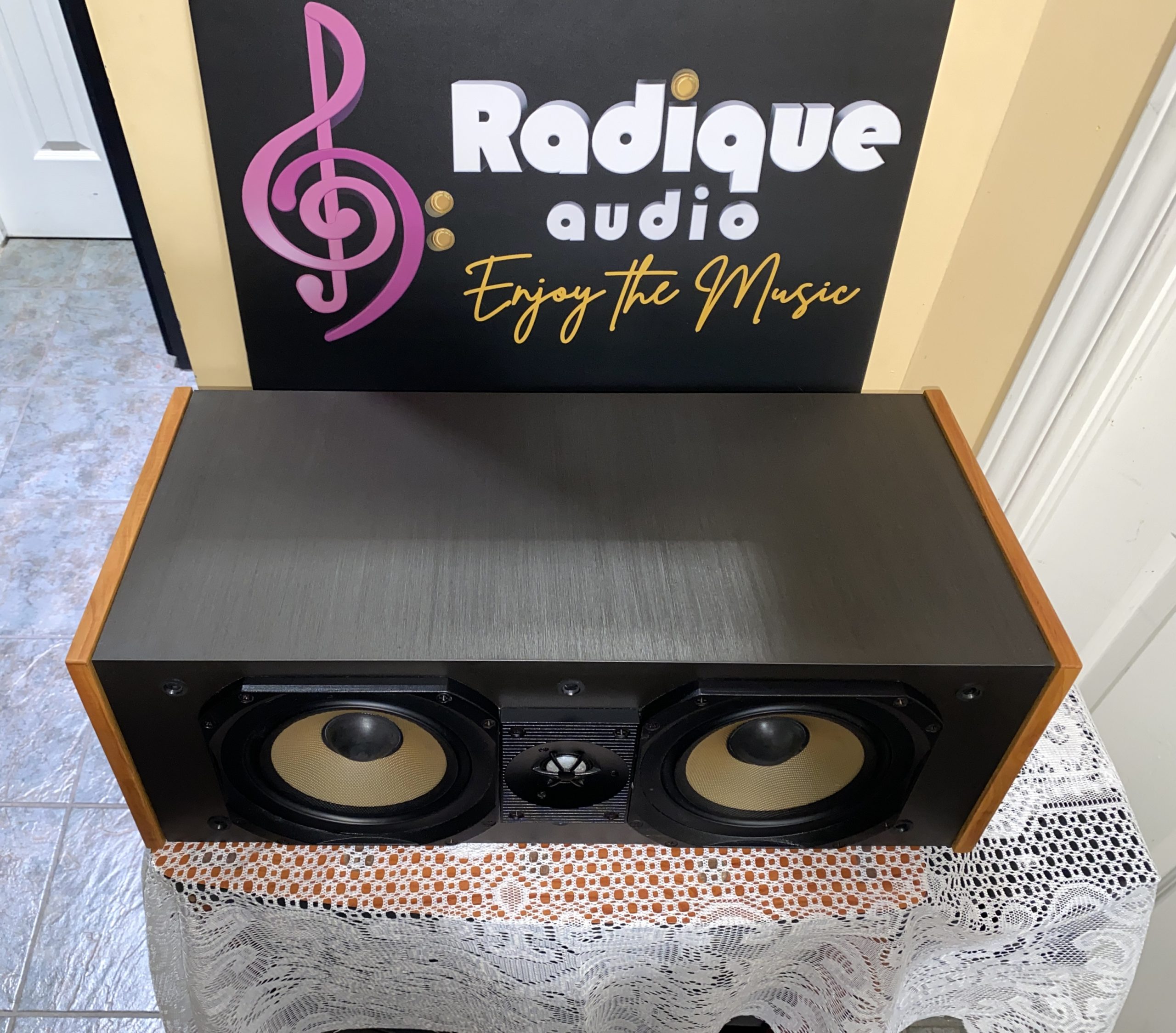
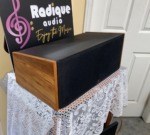
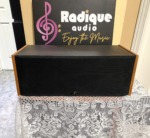
Paradigm Studio CC v2 Center Channel Speaker – Premium Solid Apple Wood Upgrade, Very Good Cosmetic Condition, Tested and Working Perfectly. Made in Canada, and custom-upgraded right here in Ottawa.
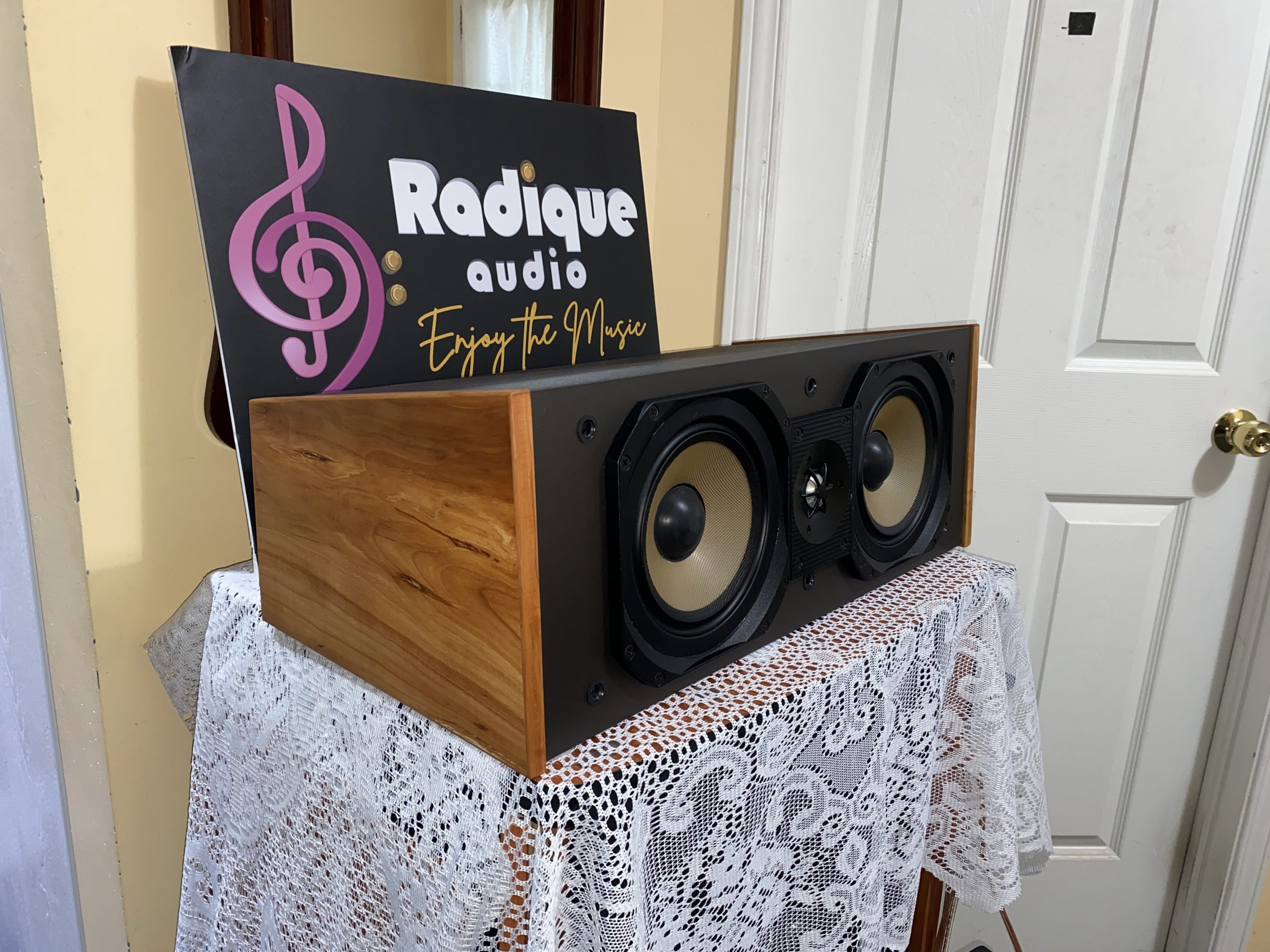
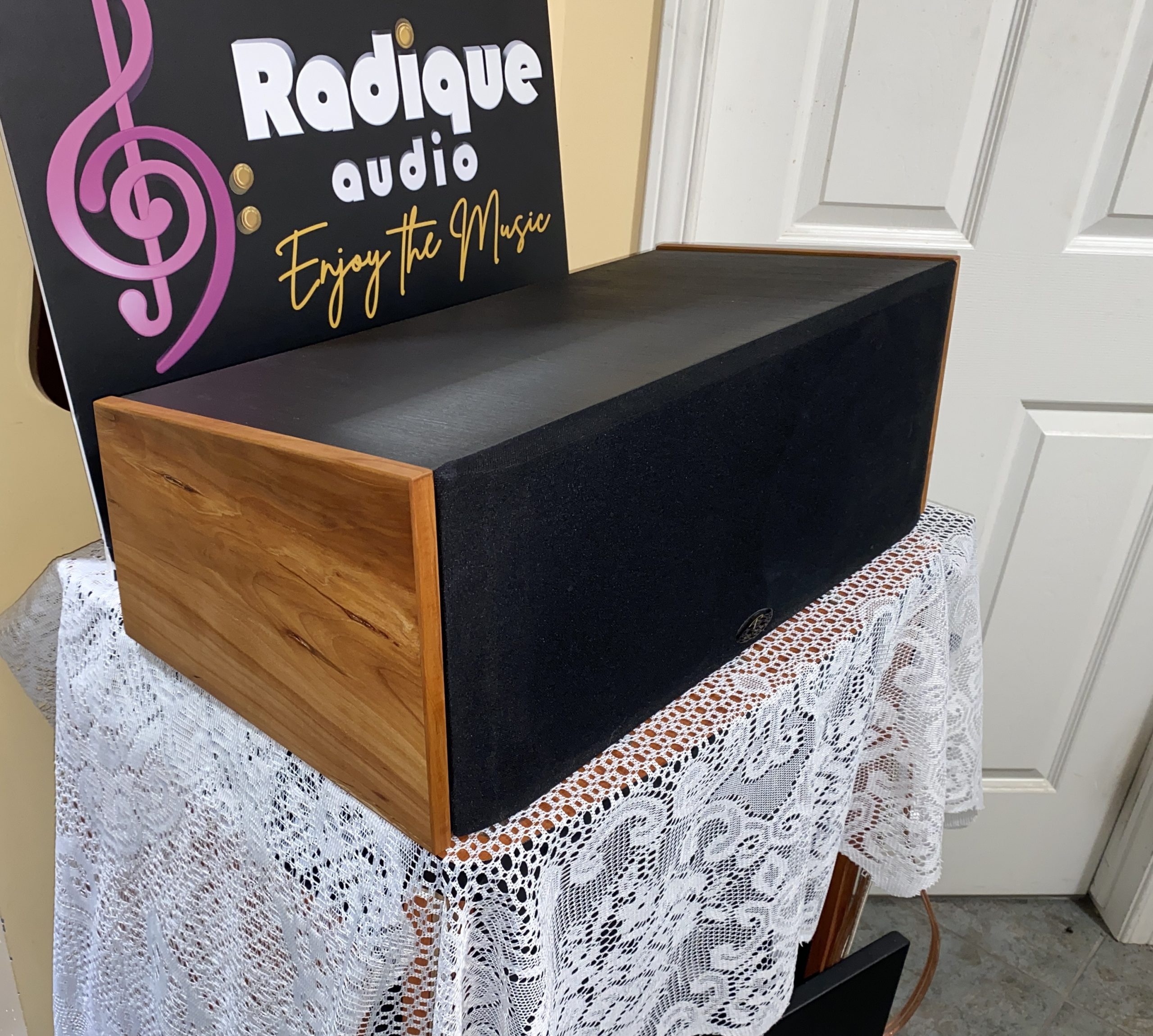
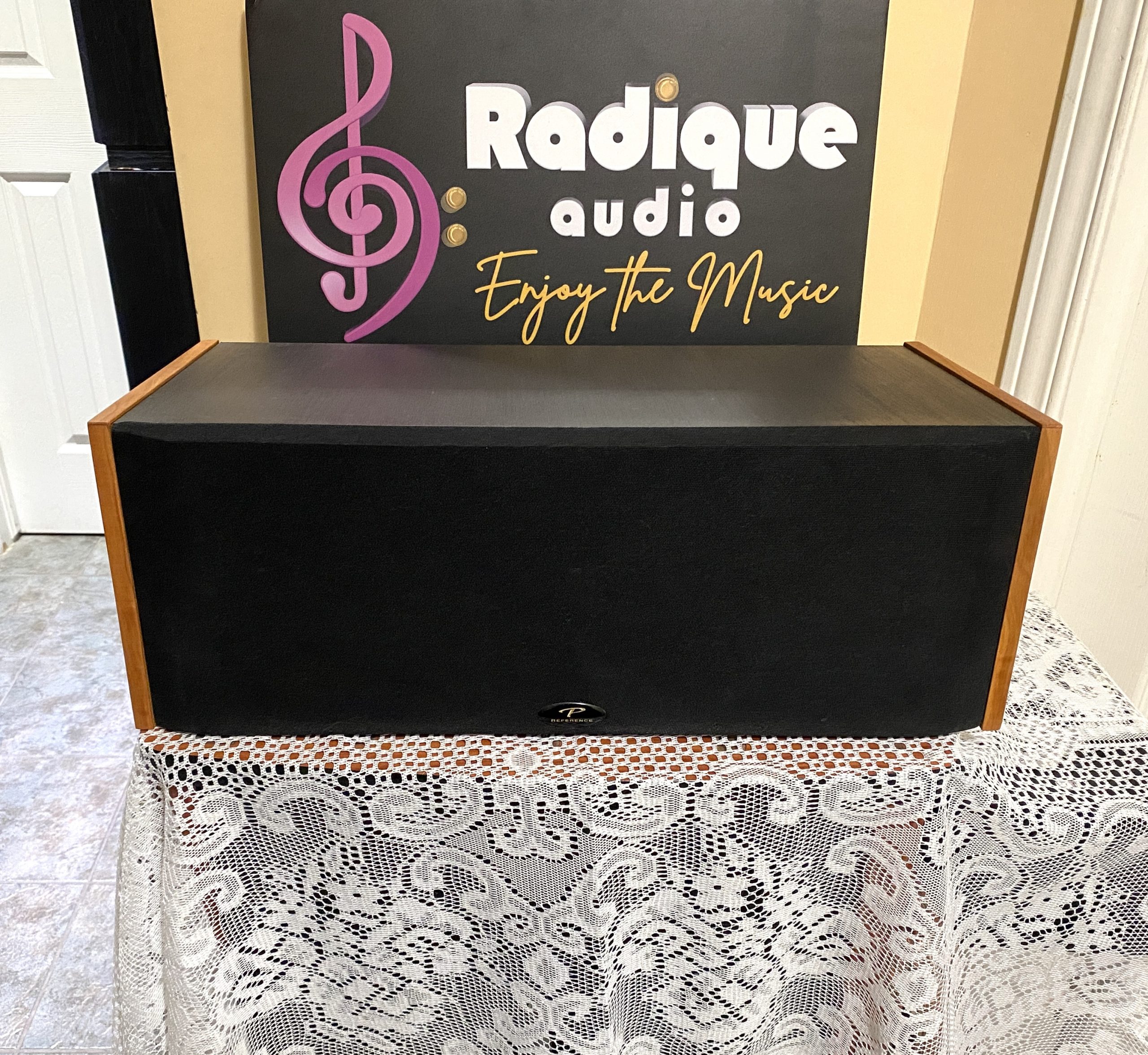
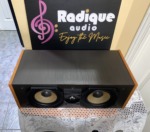
Elevate your home theater with the Paradigm Studio CC v2—a legendary center channel speaker that anchors your soundstage with exceptional clarity and precision dialogue reproduction. This particular unit has been enhanced with premium solid apple wood side panels replacing the original cloth-covered design, transforming it into a truly stunning aesthetic statement. Very good cosmetic condition, fully tested and working perfectly.
The Studio CC v2 is a masterclass in center channel design, developed during Paradigm’s golden era of speaker engineering in the late 1990s. Its 3-driver, 2-way configuration employs two 6.75-inch MLP mica-polymer woofers flanking a 1-inch PAL pure-aluminum dome tweeter, delivering the exceptional tonal balance and seamless driver integration that defines Paradigm’s exacting acoustic philosophy. The middle-tweeter-middle layout ensures accurate, centered imaging regardless of listening position—essential for movie dialogue and vocal clarity.
The precision passive crossover maintains phase coherence across the frequency range, ensuring that every word of dialogue, musical note, and sound effect integrates smoothly across the soundstage. The result is crystal-clear dialogue localization, excellent off-axis response, and natural vocal reproduction—making this speaker a reference standard for center channel performance.
The Custom Apple Wood Enhancement
What truly sets this unit apart is the bespoke solid apple wood side panel upgrade, meticulously crafted to replace the original cloth-covered panels. This transformation elevates the speaker’s appearance from utilitarian home theater component to furniture-grade showcase piece. The warm, rich grain of solid apple wood complements any décor—whether you’re integrating it into a luxury home theater or displaying it in a refined living room system. The wood panels maintain acoustic integrity while dramatically improving visual presentation.
Connectivity & Installation
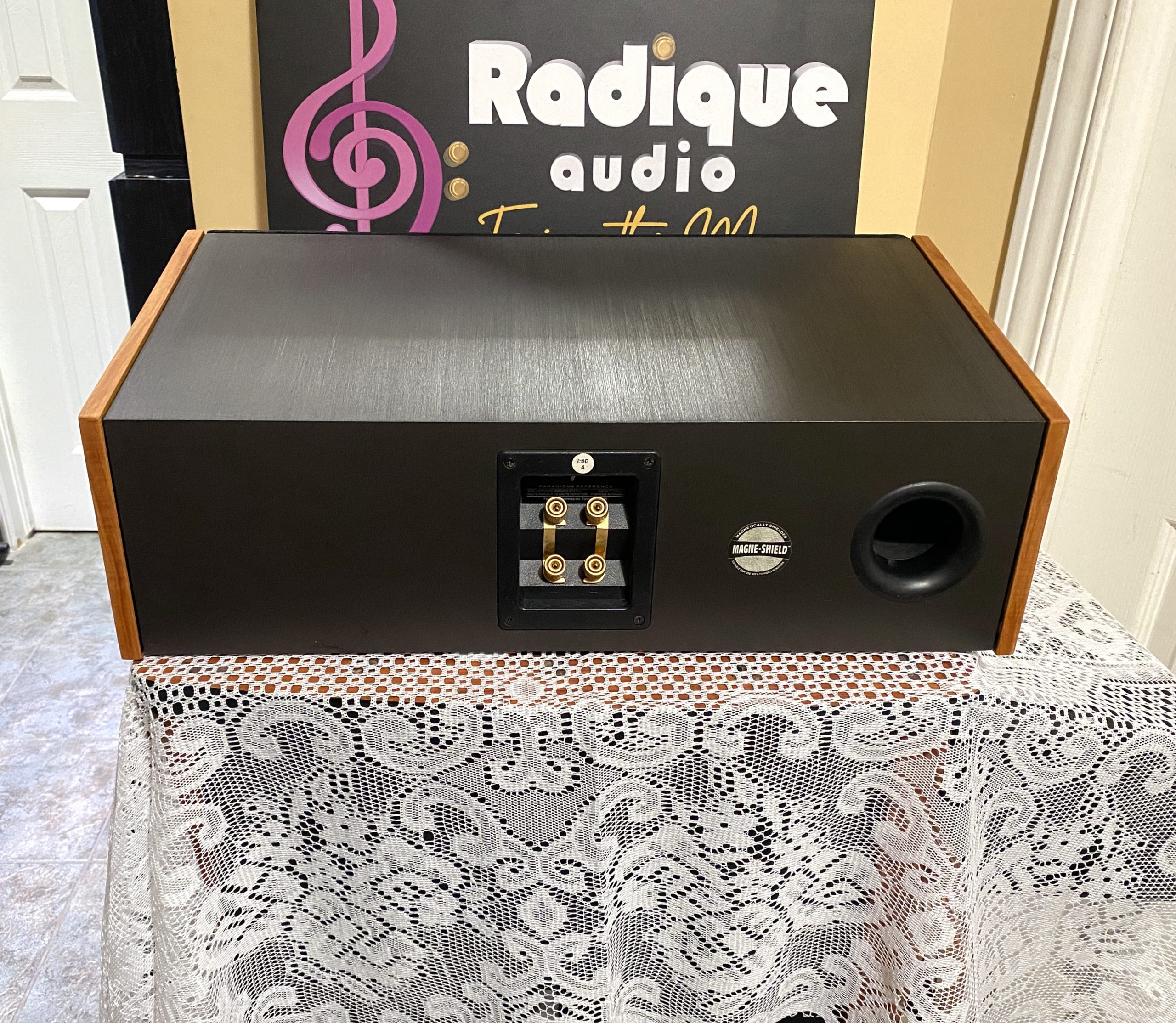
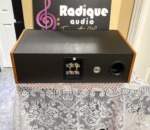
Gold-plated binding posts (banana-plug compatible)
Dual ported design for controlled, low-distortion bass extension
Compatible with both traditional theater setups and modern systems
Key Features
Dual 6.75″ MLP mica-polymer woofers with sophisticated damping
1″ PAL pure-aluminum tweeter for smooth, articulate highs
Paradigm’s precision passive crossover maintaining phase coherence
MLP woofer technology for controlled, distortion-free midrange
Exceptional dialogue clarity and off-axis response
Premium solid apple wood side panels (custom upgrade)
Very good cosmetic condition throughout
Fully tested and working perfectly
Gold-plated five-way binding posts (banana-plug compatible)
Rear port design for extended bass performance
Specifications
Configuration: 3-driver, 2-way center channel (MTM array)
Woofers: Two 6.75″ MLP mica-polymer drivers
Tweeter: 1″ PAL pure-aluminum dome
Frequency Response: 70Hz–22kHz (±2dB)
Sensitivity: 89dB (2.83V/1m)
Impedance: 8 ohms compatible
Crossover: 2.5kHz passive, first-order
Binding Posts: Gold-plated, banana-plug compatible
Dimensions: 22″ W × 8″ H × 11.625″ D (56 × 20 × 29.5 cm)
Weight: 32 lbs (14.5 kg)
Paradigm’s Studio Series Legacy
The Studio CC v2 remains a benchmark for center channel excellence—praised for delivering the tonal accuracy, dialogue intelligibility, and dynamic range that made it the reference center channel for thousands of dedicated home theater enthusiasts throughout the late 1990s and 2000s. Combined with solid apple wood accents, this becomes a statement piece worthy of any distinguished listening room, asking $445; buy with confidence and benefit from Radique’s “Bumper to Bumper” warranty and Perpetual trade back policy.
⭐ Don’t Just Take Our Word For It
Radique Audio holds over 600 customer ratings averaging 4.97 stars across six public platforms — Facebook Marketplace, Kijiji, Canuck Audio Mart, Google and others. Every rating lives somewhere we don’t control, so you can read the originals yourself, including the less flattering ones. See what our customers say. 👉
| Weight | 35 lbs |
|---|---|
| Dimensions | 16 × 26 × 12 in |
Paradigm has designed loudspeakers in the Toronto area since 1982, with engineering roots that run through Ottawa: it took part in the National Research Council's loudspeaker research here, and its research lab has been in Ottawa since 1993. We've had more than 600 Paradigm listings so far, covering 193 different models, more than any other brand. Every used Paradigm here is inspected, tested and photographed in-house, then covered by our Bumper-to-Bumper Warranty and Perpetual Trade-Back Program. Don't see the model you want? Tell us on First Dibs and we'll email you when one arrives.
The Paradigm story, 1982 to today
Jerry VanderMarel and Scott Bagby founded Paradigm in 1982 in the Toronto area, VanderMarel running sales and marketing and Bagby design and manufacturing. Their first speakers made their debut at a Toronto audio show that year, and Paradigm says 12 dealers signed on.
The Ottawa years. In the 1980s almost every major Canadian speaker maker measured its designs in the National Research Council's anechoic chamber here in Ottawa, and Paradigm took part in the research Dr. Floyd Toole led at the NRC, which paired chamber measurements with blind listening tests. Paradigm built its own anechoic chamber in 1988, sparing its engineers the five-hour drive to Ottawa. In the late 1980s and early 1990s it was one of several Canadian companies in the NRC's Athena project, which studied speakers that adapt to the room. NRC scientists Peter Schuck and Marc Bonneville then joined Paradigm, which says it opened its Ottawa research centre, PARC, for them in 1993. That lab went on to design Anthem's electronics and its room-correction system. A 1990s Paradigm Titan is now part of the collection at Ingenium, Canada's science and technology museums, here in Ottawa.
Growth. Paradigm moved into the US market in the mid-1980s, added its first in-wall speaker in 1989 and launched the Monitor series in 1990. The Titan was a hit by 1991, the Atom followed in 1992, and the PS-1000 of 1994 was its first powered subwoofer. By 1992 Stereophile counted about 256 Paradigm dealers in the US.
Reference and the new factory. The Reference line, with its Studio speakers, arrived in the mid-1990s; Stereophile reviewed the Studio/100 in 1997. In 1998 Paradigm bought Sonic Frontiers, which brought Anthem into the family. In 2001 it moved into a new Mississauga factory with what it calls the hemisphere's largest privately owned anechoic chamber, at 33,000 cubic feet. A tour that year found the plant finishing 1,500 speakers a day, with driver frames cast, cones moulded and voice coils wound in-house.
Changes of hands. Co-founder Jerry VanderMarel left in 2005, when the private-equity firm ShoreView Industries became Scott Bagby's partner; together they went on to buy MartinLogan. Compact lines such as Cinema were built overseas from the start, and from the 2010s Monitor was too, while Prestige (2014), Persona (2016) and Founder (2021) have been built in Mississauga. In 2019 Scott Bagby and his son John bought Paradigm, Anthem and MartinLogan back from ShoreView, and their company, PML Sound International, added GoldenEar at the start of 2025.
Which Paradigm is which?
Performance Series (1990s to 2006): the entry line, with the Atom, Titan, Focus, Esprit and Phantom. A 1990s Titan's label reads "Performance Series … Made in Canada". At the end of 2006 the Atom and Titan moved into the Monitor line.
Monitor (from 1990): the step-up line, and from 2006 the entry line; today's version is Monitor SE. In the early 1990s it was topped by the Studio Monitor tower, in real wood veneer.
Reference Studio (mid-1990s to mid-2010s): the Studio/20, 40, 60, 80 and 100 plus matching centres, with die-cast aluminium driver chassis and aluminium-dome tweeters, made in numbered versions. From the v.2 generation of 1999 the sides came in laminate or, for a little more, real wood veneer. A favourite here is the Studio/80 v.2, a slim 2.5-way tower from about 1999 to 2003; the pairs with real wood sides are the ones to find.
Signature (2004–2016): the flagship of its day, part of the Reference family.
Cinema (from about 2000): compact home-theatre satellites and centres in polymer cabinets, designed to be used with a subwoofer, later sold as Cinema CT packages.
Millenia (from 2006): slim aluminium-cabinet speakers made to suit flat-panel TVs. The little MilleniaOne was Sound & Vision's 2011 Product of the Year.
Stylus (from 1999): weatherproof outdoor speakers.
Today's lines: Monitor SE, Premier (2018), Prestige (2014), Founder (2021) and the Persona flagship (2016).
Subwoofers: from the PS-1000 (1994) and Servo-15 (1996) through the PS and PW series to Defiance (2018).
Buying used Paradigm: what to check
The rear label. Where a Paradigm was built depends on the line and the year, and some names were reused (the Atom and Titan moved from Performance to Monitor, and the Esprit name appeared in more than one line), so the label tells you exactly what you have.
Veneer or laminate. On Reference Studio models from 1999 on, real wood veneer sides were an option; look closely at the sides before you assume.
Woofer surrounds. Owners report foam surrounds needing replacement on some older models, including early Titans. Press gently around each one.
Powered subwoofers. The amplifier is the part most likely to have aged. Run a used sub at volume and check that auto-on still works.
Everything we list is inspected, tested and photographed here first, and comes with our warranty.
You may also like…
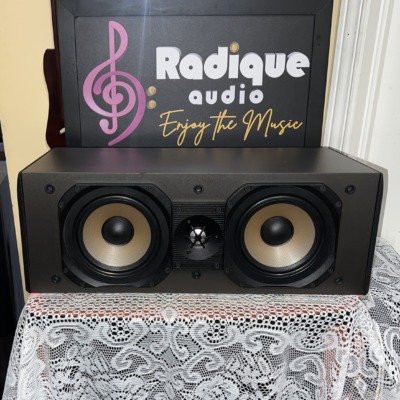
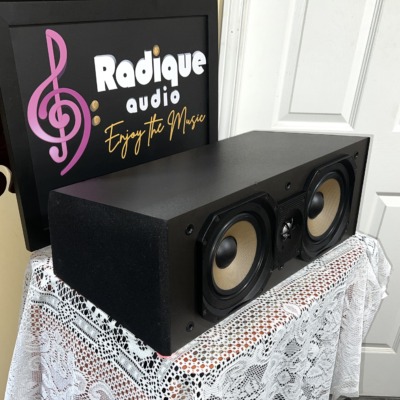
Paradigm Studio CC v2 Center Channel – 32 lb, Made in Canada
Thirty-two pounds of Paradigm Reference center channel, in original fabric-panel form.
✔️ Condition: Good — a couple of small marks on the top surface; fabric side panels a little worn
✔️ Covered by Radique Warranty
✔️ Includes Perpetual Trade-Back Program eligibility
✔️ Expertly packed for safe shipping
Related Products
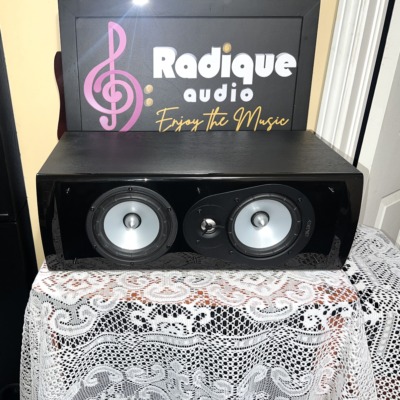
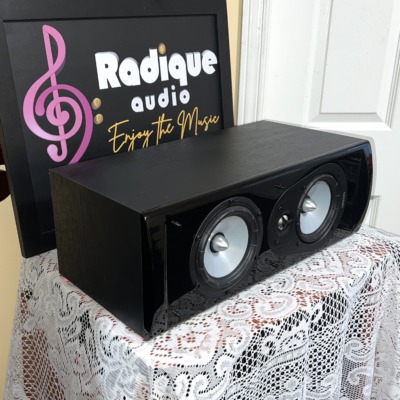
Energy Connoisseur CC-10 Centre Channel – 92dB, 200W
Tweeter and woofers sit as close together as physically possible — Energy's Convergent Source Module — so they behave as one source and hold the balance across a wide seating area rather than one chair. Dual 5.5-inch woofers on the patented Ribbed Elliptical Surround, a 1-inch hyperbolic aluminium dome, 92 dB and up to 200 watts, rear-ported to 60 Hz. The grille is not included. Condition very good.
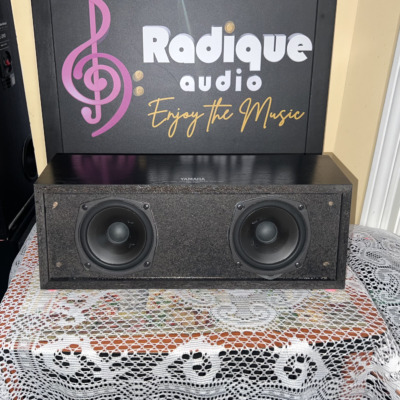
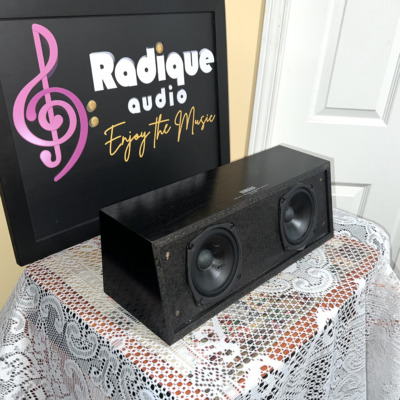
Yamaha NS-C90 Center Speaker – Dual-Angle Tilt, Made in Japan
The cabinet is asymmetrical on purpose: flip it over and it tilts the other way, aiming up at you from a low shelf or down at you from the top of a cabinet. Sealed rather than ported, so it needs no rear clearance. Two full-range drivers, nothing crossing in the vocal band. 6 ohms, 50 watts nominal. Built in Japan; very good condition.
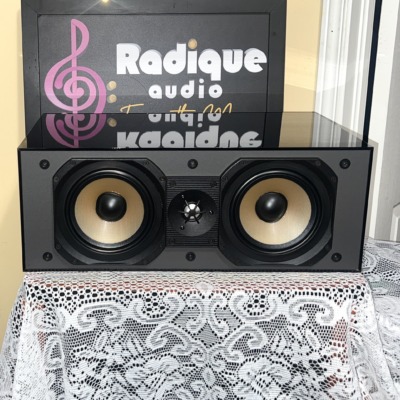
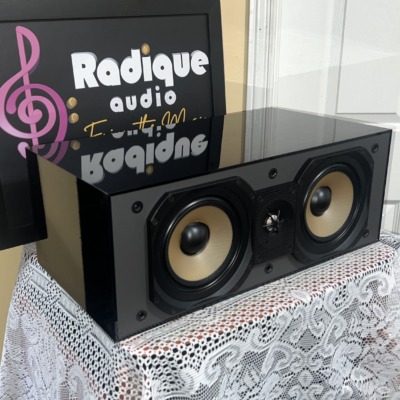
Paradigm Reference LCR-450 — Made in Canada, High Gloss Black
A Canadian-built Reference monitor in a high gloss black we have not had this model in before — the line of this era usually turns up in black, light cherry or dark rosenut. Sealed MTM design with Paradigm's pure-aluminium dome tweeter, and it works as a centre or as a left or right. Excellent, with its original box.
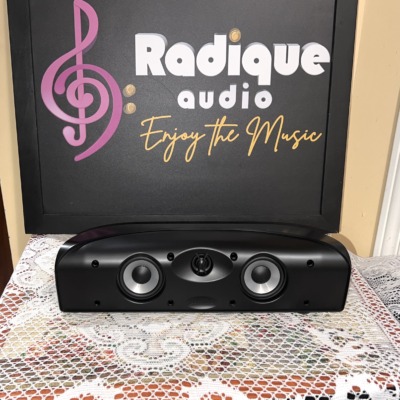
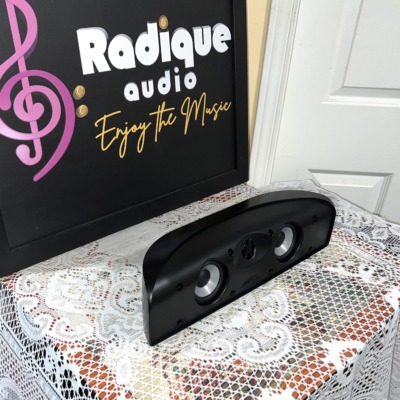
Polk Audio Blackstone TL1 Center Channel Speaker – Gloss Black
A slim, wall-mountable center channel from Polk Audio's Blackstone series, in very good condition, that gives movie dialogue the clarity and presence it deserves.
✔️ Very Good condition — cabinet, baffle and drivers present cleanly; grille included
✔️ Slim and wall-mountable — keyhole slots and a threaded insert on the back
✔️ Covered by Radique Warranty
✔️ Includes Perpetual Trade-Back Program eligibility
✔️ Expertly packed for safe shipping
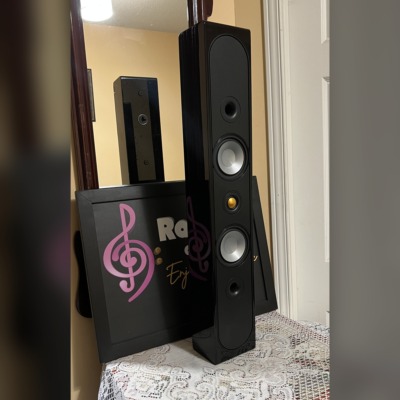
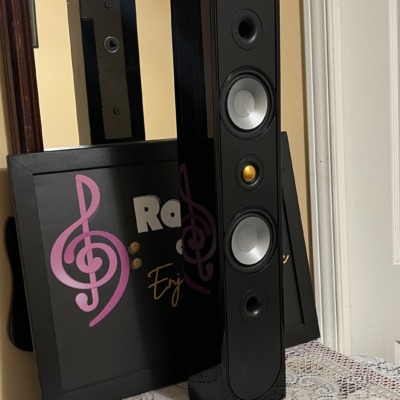
Monitor Audio Radius 250HD LCR Speaker – Gloss Black, Wall-Mount
A slim gloss black Monitor Audio speaker from the Radius HD range, in good condition, built to work as a left, center, right or rear speaker, standing upright, lying flat or hung on a wall.
✔️ Good condition — light scratches visible under bright light; grille included
✔️ One slim speaker for left, center, right or rear duty
✔️ Two rear keyhole slots; the matching wall bracket is listed separately
✔️ Covered by Radique Warranty
✔️ Includes Perpetual Trade-Back Program eligibility
✔️ Expertly packed for safe shipping
Monitor Audio Radius 250HD LCR Speakers, Pair – Gloss Black
A matched pair of slim gloss black Monitor Audio speakers from the Radius HD range, in good condition, each built to work as a left, center, right or rear speaker, standing upright, lying flat or hung on a wall.
✔️ Good condition — light scratches visible under bright light; grilles included
✔️ Two slim speakers for a stereo pair, left and right of a center, or a set of rears
✔️ Two rear keyhole slots on each; the matching wall bracket is listed separately
✔️ Covered by Radique Warranty
✔️ Includes Perpetual Trade-Back Program eligibility
✔️ Expertly packed for safe shipping
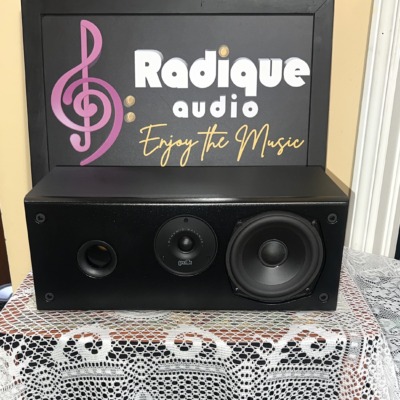
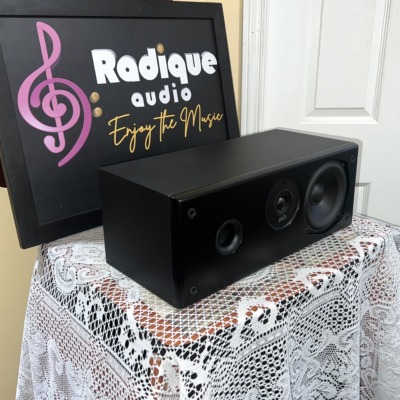
Polk Audio CS175 Center Channel Speaker – Front-Ported, Black
A Polk Audio CS175 two-way center channel speaker in black, a solidly built cabinet at nearly 14 pounds, with a front port and proper 5-way binding posts, fully tested on our bench and in very good condition.
✔️ Very good condition — free of significant marks, grille included
✔️ Front-ported two-way center with 5-way binding posts
✔️ Solidly built, at nearly 14 pounds
✔️ Covered by Radique Warranty
✔️ Includes Perpetual Trade-Back Program eligibility
✔️ Expertly packed for safe shipping
