
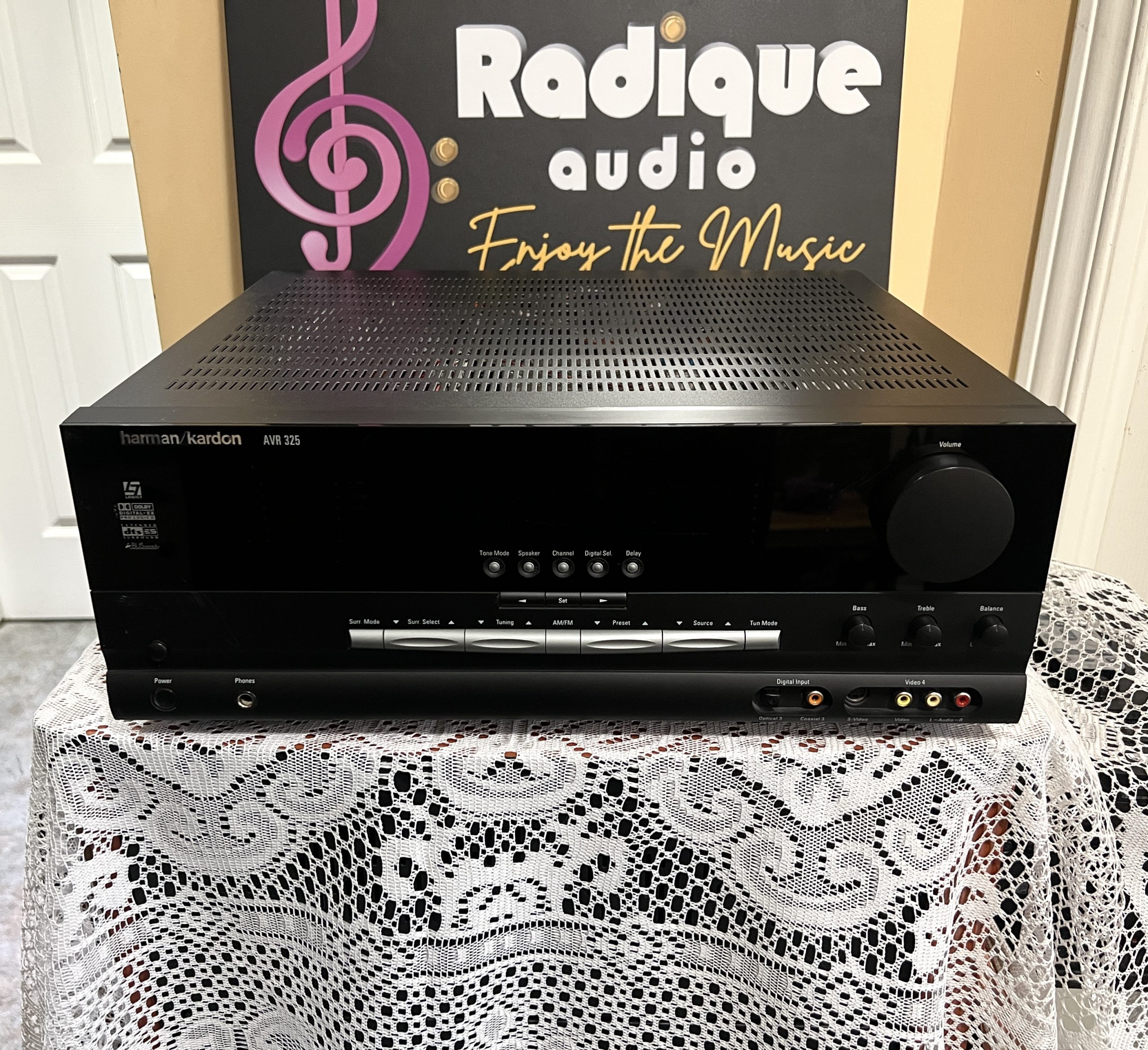
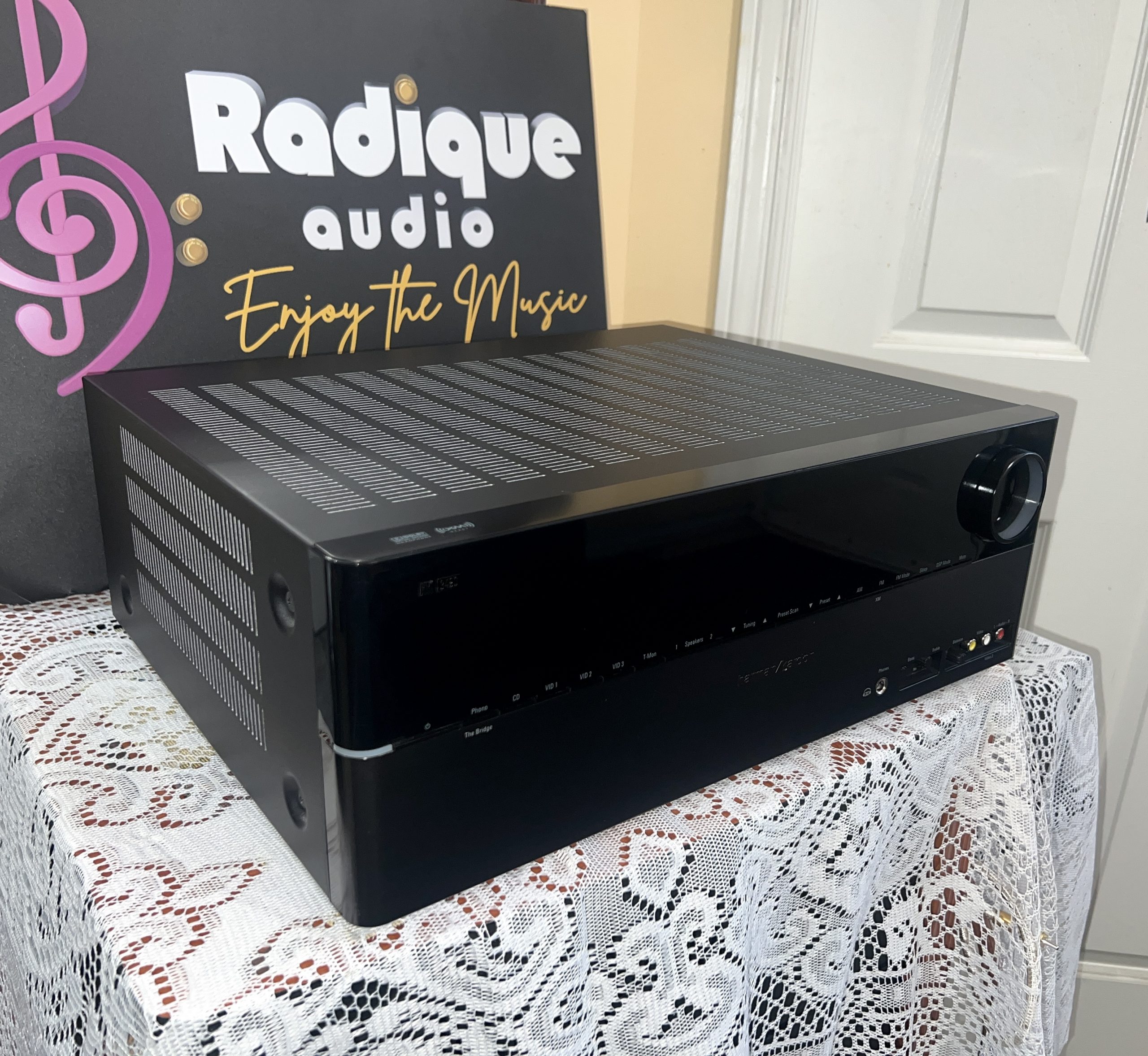



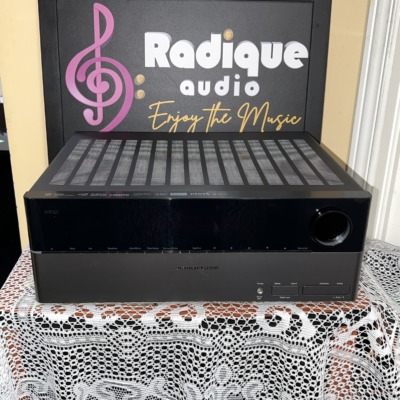
Harman Kardon AVR 325 7.1 AV Receiver 50WPC – 40 lbs!
$295.00
Fifty watts into 8 ohms on all seven channels, 65 in stereo, from the high-current supply that accounts for most of the forty pounds. Dolby Digital EX, DTS-ES in both matrix and discrete, Pro Logic II, Neo:6 and Harman Kardon’s own Logic 7. Three optical and three coaxial inputs, two component video, and the seven channels will run 5.1 plus a powered Zone 2 instead. Original remote. Good cosmetic condition.
1 in stock
Harman Kardon AVR 325 7.1 AV Receiver 50WPC – 40 lbs! w/ Remote
7.1-channel Harman Kardon home theater receiver with high-current amplification, Dolby Digital EX, DTS-ES, Logic 7 processing, and component video switching, in good condition with original remote.
The Harman Kardon AVR 325 is a substantial 7.1-channel AV receiver from the mid-2000s, designed to deliver Harman Kardon’s signature high-current amplification and polished sound quality in a full-featured home theater package. Rated at 50 watts per channel across all seven channels (65 watts in stereo mode) into 8 ohms, this receiver uses a robust power supply and discrete output stages that give it surprising dynamic capability and control over real-world loudspeakers. The AVR 325 supports Dolby Digital EX, DTS-ES (both matrix and discrete), Dolby Pro Logic II, DTS Neo:6, and Harman Kardon’s proprietary Logic 7 Cinema and Music modes in both 5.1 and 7.1 versions, creating a wide, enveloping surround field from a variety of source material. This unit is in good cosmetic condition and includes the original Harman Kardon remote.
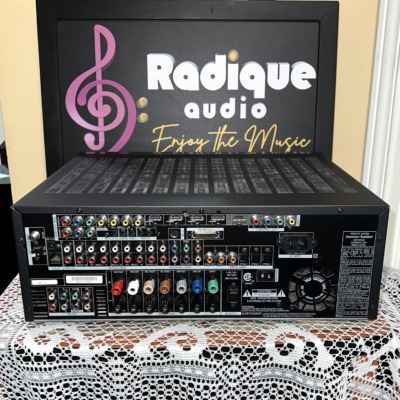
The back panel offers generous connectivity: three optical and three coaxial digital inputs (one of each on the front panel for convenient access), two component video inputs with wideband switching for HDTV sources and progressive-scan DVD players, plus composite and S-video connections for legacy gear. An eight-channel analog input accommodates external decoders or multichannel sources like SACD and DVD-Audio players. The seven amplifier channels are configurable for either 7.1-channel operation or 5.1-channel main room plus powered stereo Zone 2, making the AVR 325 a capable whole-house audio hub. AM/FM tuner with 30 presets, on-screen display, and RS-232 control port round out the feature set.
Key Specifications:
Power output: 65 watts per channel into 8 ohms (stereo, 20 Hz–20 kHz, 0.07% THD); 50 watts x 7 into 8 ohms (surround mode, 20 Hz–20 kHz, 0.07% THD)
Frequency response: 10 Hz – 100 kHz
Total harmonic distortion: 0.07%
Input sensitivity: 200 mV (line)
Signal-to-noise ratio: 95 dB (line)
Minimum speaker impedance: 8 ohms
Surround formats: Dolby Digital EX, DTS-ES (matrix and discrete), Dolby Pro Logic II, DTS Neo:6
Proprietary modes: Logic 7 Cinema and Music (5.1 and 7.1), VMAx, Hall, Theater
Digital inputs: 3 optical (1 front panel), 3 coaxial (1 front panel)
Digital outputs: 1 optical, 1 coaxial
Video: 2 component video inputs, composite and S-video switching
Multichannel input: 8-channel analog input for external decoders/SACD/DVD-Audio
Preamp outputs: 7.1-channel pre-outs for external amplification
Multiroom: Powered Zone 2, preamp Zone 2, A-BUS capability
Tuner: AM/FM with 30 presets
Remote: Original Harman Kardon learning/multibrand EzSet remote included
Condition: Good cosmetic condition, fully tested and operational
Dimensions: (Width x Height x Depth) 440 x 165 x 435 mm (17.3 x 6.5 x 17.1 inches)
Weight: 18.1 kg (40 lbs)
At 40 lbs, the AVR 325 has the mass and power supply capacity expected from a serious Harman Kardon receiver, reflecting substantial transformer and heatsinking that contribute directly to its dynamic authority and ability to drive demanding speaker loads.
This Harman Kardon AVR 325 offers a strong combination of high-current amplification, flexible surround processing, component video switching, and multi room capability, making it an excellent choice for building or upgrading a capable 7.1-channel home theater system with classic Harman Kardon sound quality.
Backed by Radique Audio’s Bumper-to-Bumper Warranty and our Perpetual Trade-Back Program, you can purchase with confidence.
| Weight | 43 lbs |
|---|---|
| Dimensions | 21 × 21.3 × 10.5 in |
Harman Kardon began in New York in 1953, founded by Sidney Harman, who was born in Montreal, and Bernard Kardon. Harman Kardon calls its 1954 Festival D1000 the first hi-fi receiver. We carry Harman Kardon stereo receivers, AV receivers, integrated amplifiers, cassette decks and CD players. We've had more than 130 Harman Kardon listings so far. Every used Harman Kardon here is inspected, tested and serviced as required, then photographed in-house and covered by our Bumper-to-Bumper Warranty and Perpetual Trade-Back Program. Every AV receiver we list is tested input by input on our bench: each HDMI input and output, the analog, optical and coaxial inputs, the subwoofer outputs and the wireless features where it has them. Don't see the model you want? Tell us on First Dibs and we'll email you when one arrives.
The Harman Kardon story, 1953 to today
Sidney Harman and Bernard Kardon left the David Bogen Company, where Kardon was chief engineer, and founded Harman Kardon in New York in 1953. Harman was born in Montreal in 1918 and grew up in New York. Kardon retired in the 1950s.
Receivers first. Harman Kardon calls the Festival D1000 of 1954 the first hi-fi receiver and the Festival TA230 of 1958 the first stereo receiver. The Citation II tube power amplifier of 1959, designed by Stu Hegeman, sold as a kit or ready-built.
Cassette and the 1970s. Harman Kardon says its CAD-5 of 1970 was the first hi-fi cassette recorder with Dolby noise reduction. Its "Twin Powered" receivers of the 1970s, such as the 430 and 730, gave each channel its own power supply.
Owners. Sidney Harman sold the company to Beatrice Foods in the late 1970s, when he became US Deputy Secretary of Commerce. He formed Harman International in 1980 and bought Harman Kardon back in 1985. Samsung bought HARMAN in 2017, and Harman Kardon remains one of its brands.
Which Harman Kardon is which?
Tube era (1950s and 1960s): Festival receivers, and Citation kits and factory-built units such as the Citation I preamplifier and II amplifier.
1970s receivers: the 330 series, the Twin Powered 630, 930, 430 and 730, and the HK670.
1980s receivers: the "i" models such as the hk690i, advertised for its high current capability, and the 330i.
Citation separates: solid-state Citation amplifiers and preamplifiers from 1970 to the 1990s, including the Citation XX of the early 1980s.
Cassette decks: from the CAD-4 and CAD-5 to the 1980s decks numbered CD91 to CD491. Those "CD" models are cassette decks, not CD players; Harman Kardon CD players carry "HD" names.
AV receivers (late 1990s on) and later stereo: the AVR line, such as the AVR 3600, and stereo models such as the HK 3700 and HK 990.
Buying used Harman Kardon: what to check
Dial and meter lamps. Owners report dead or flickering lamps on 1970s receivers such as the 930, 430 and 330C; many are replaced with LEDs.
Capacitors. Expect a 1970s receiver that hasn't been recapped to need it.
Output stage. Owners report blown output transistors on the 730 and 430, often caused by a failed part nearby. Both channels should play cleanly at a realistic level.
Switches. Owners say the 1980s "i" receivers are prone to dirty switches that make channels cut out. Try every input and the balance control.
AV receivers. HDMI is usually the first thing to fail on a modern AV receiver. We test every HDMI input and output before listing.
Everything we list is inspected, tested and serviced as required here, and comes with our warranty.
You may also like…
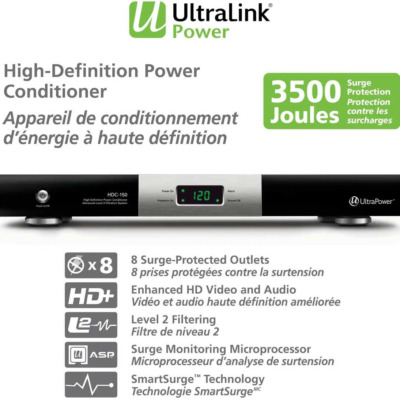
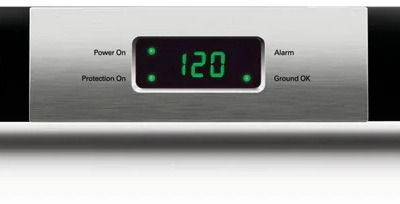
Ultralink High Def Power Conditioner with Display, BNIB HDC150
Eight surge-protected, filtered AC outlets with isolated banks for digital, video, audio and high-current components — four always-on, four switched.
Enough outlets for the whole stack, not just the amplifier — television, Blu-ray and streamer alongside a receiver, or turntable, CD player and cassette deck alongside a vintage amp. 3,500 joule protection, EMI/RFI filtration to 58 dB, and surge protection on the coax and network lines most conditioners leave unguarded. Patented ASP voltage monitoring and a 15 amp resettable breaker.
Brand new, unopened, in original packaging with full manufacturer warranty.
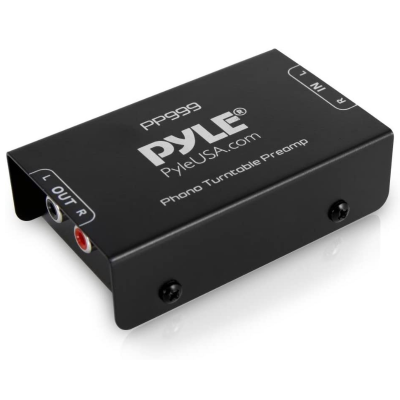
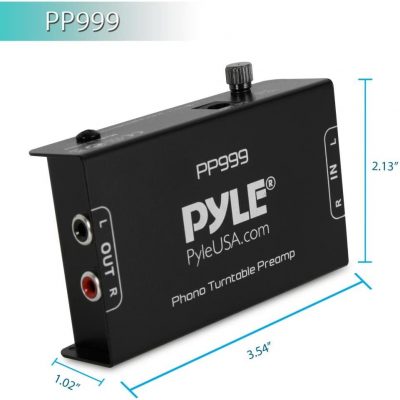
Pyle PP999 Phono Preamp — Turntable to Line Level, New in Box
Puts a turntable back into a system that has no phono input. Turntable in, receiver out, on ordinary RCA cables — the signal arrives at line level ready for any AUX or CD socket on a modern amplifier.
Rear ground terminal for the turntable's ground wire, and the 12 volt power adapter is included. Metal alloy housing, 70 dB signal-to-noise, 20 Hz to 20 kHz ±2 dB. New and unopened in retail packaging.
Related Products
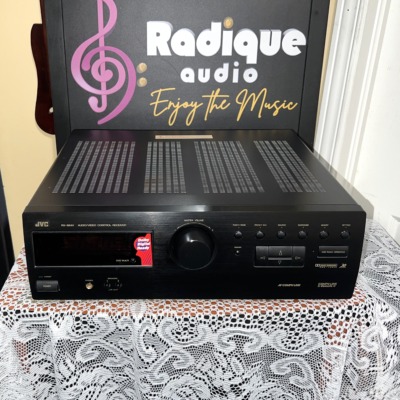
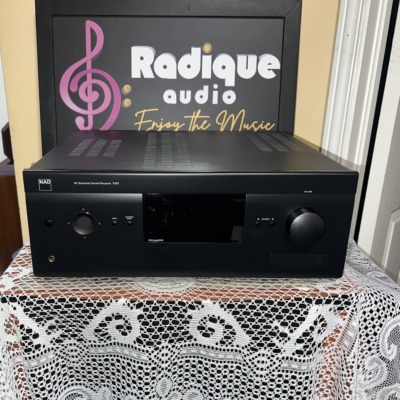
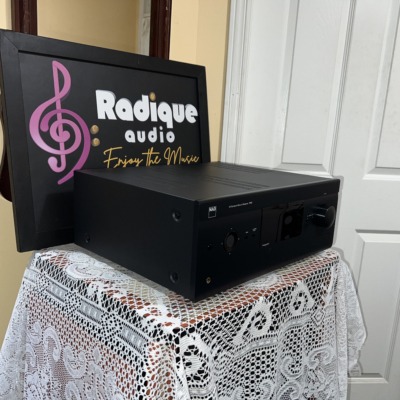
NAD T 757 7.1 AV Receiver – 7 x 60W, 7 Digital Inputs, Remote
A 7.1-channel NAD surround receiver in very good condition, rated at 60 watts per channel with all seven channels driven, with seven digital audio inputs, NAD's modular design and a remote.
✔️ Very good condition — free of significant marks; remote included
✔️ 7 x 60 W, all channels driven — Dolby TrueHD and DTS-HD Master Audio
✔️ Seven digital audio inputs and four HDMI inputs (1080p and 3D)
✔️ Covered by Radique Warranty
✔️ Includes Perpetual Trade-Back Program eligibility
✔️ Expertly packed for safe shipping
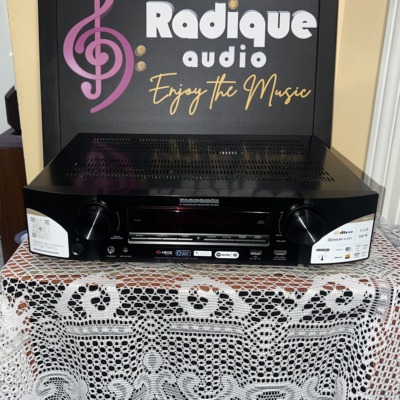
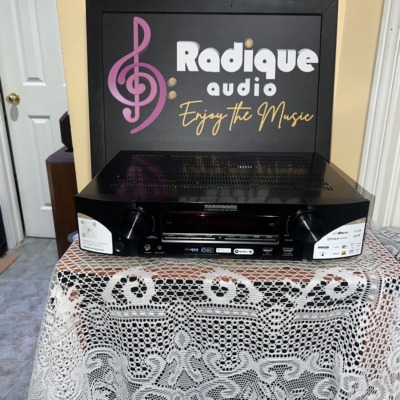
Marantz NR1510 Slim 5.2 AV Receiver – 4K, Wi-Fi, Phono, Remote
A slim Marantz NR1510 5.2-channel AV receiver, just over 4 inches tall, with 4K HDR video switching, HEOS streaming over Wi-Fi, Bluetooth and AirPlay 2, and a phono input for your turntable. It is in excellent condition, comes with its original Marantz remote, and has been thoroughly tested on our bench.
✔️ Excellent condition, with the original Marantz RC040SR remote
✔️ 4K HDR with Dolby Vision and eARC, HEOS, Wi-Fi, Bluetooth and AirPlay 2
✔️ Phono input and two subwoofer outputs — thoroughly tested on our bench
✔️ Covered by Radique Warranty
✔️ Includes Perpetual Trade-Back Program eligibility
✔️ Expertly packed for safe shipping
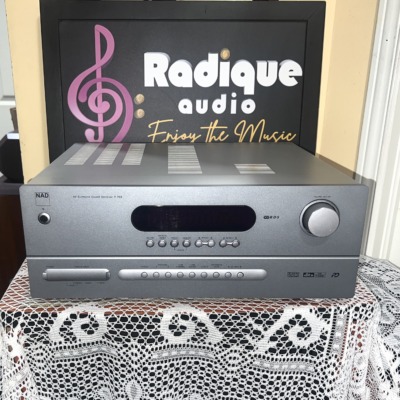
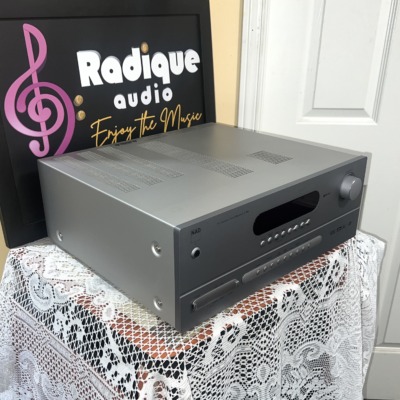
NAD T 753 6.1 AV Receiver – 70 WPC, 6 Digital Inputs, Remote
A NAD T 753 6.1-channel AV receiver in NAD's matte grey, designed and engineered in Canada, rated at 70 watts per channel, with six digital inputs, Soft Clipping and a pre-programmed remote. It has been thoroughly tested on our bench and is in very good condition.
✔️ Very good condition, with a pre-programmed remote and a power cable
✔️ 70 WPC conservatively rated — Sound & Vision measured 93.7 W, five channels
✔️ Six digital inputs, 7.1 pre-outs, Soft Clipping — thoroughly tested
✔️ Covered by Radique Warranty
✔️ Includes Perpetual Trade-Back Program eligibility
✔️ Curbside delivery, local collection or freight within Canada
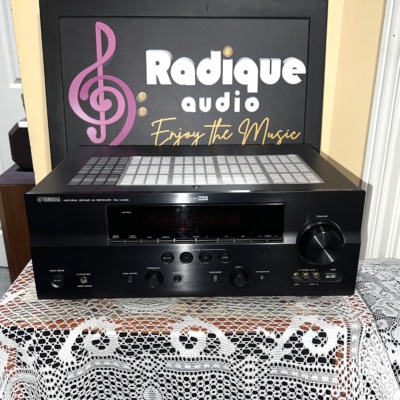
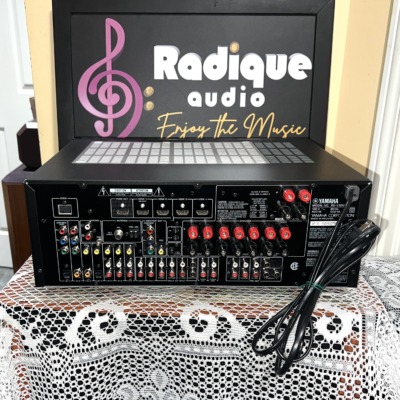
Yamaha RX-V1065 7.2 AV Receiver – 105 WPC, Phono, Zone 2, Remote
A Yamaha RX-V1065 7.2-channel AV receiver, 105 watts per channel, with four HDMI inputs, a phono input and Zone 2, plus its original remote and manual.
✔️ Tested on our bench, every input and output
✔️ Very good condition
✔️ Original Yamaha remote and printed owner's manual
✔️ 4 HDMI in, 1080p, YPAO, MM phono, Zone 2
✔️ Covered by Radique Warranty
✔️ Includes Perpetual Trade-Back Program eligibility
✔️ Expertly packed for safe shipping
SLS QG-500AVR 5.1 AV Receiver – Q-Line Gold, 100 WPC
An SLS QG-500AVR 5.1-channel AV receiver, the receiver from SLS and Quincy Jones's Q-Line Gold home theater system, with every function on the front panel.
✔️ Tested on our bench, all five channels and the sub out
✔️ Very good condition
✔️ Dolby Digital, DTS, Pro Logic II, AM/FM with 30 presets
✔️ Covered by Radique Warranty
✔️ Includes Perpetual Trade-Back Program eligibility
✔️ Expertly packed for safe shipping
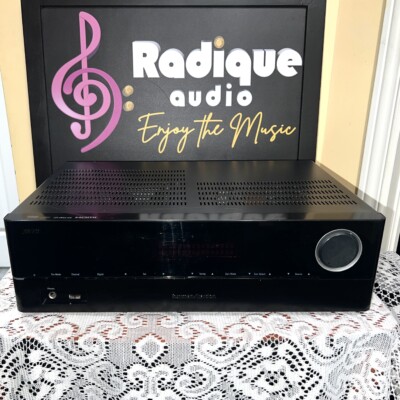
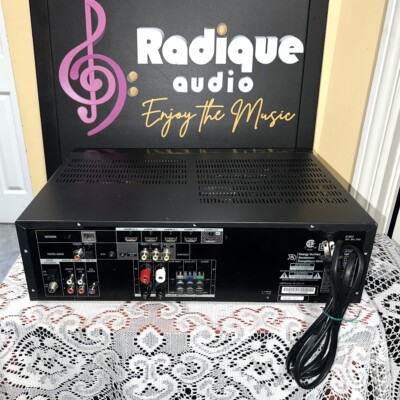
Harman Kardon AVR 1510S 375W 5.1 Receiver – 4K HDMI, Spotify
Seventy-five watts to each of five channels, four 3D-ready HDMI inputs with 4K pass-through, and one HDMI output with ARC. Spotify Connect, vTuner and DLNA over Ethernet, front-panel USB, optical and coaxial digital in. A digital supply keeps the whole thing to ten pounds. Level 1 serviced here; cosmetically graded Good.
Yamaha RX-V561 5.1 AVR 500W — 2x HDMI, 3 Digital In, Remote
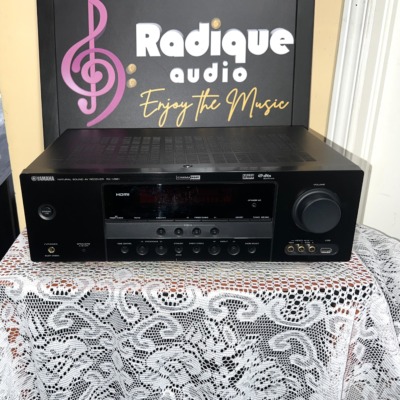
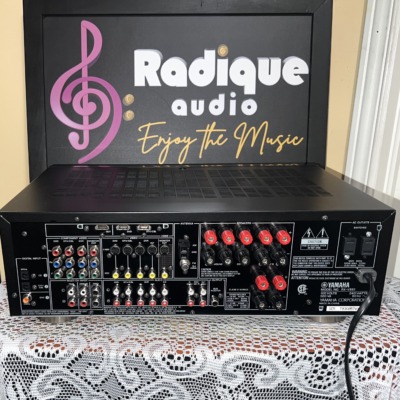
100 watts minimum RMS on every one of the five channels into 8 ohms, and dynamic power that climbs to 110, 130, 160 and 180 watts into 8, 6, 4 and 2 ohms — a receiver that keeps increasing output as the load gets harder has a supply with something in reserve. Where it earns its keep is bass management: a crossover selectable across nine points from 40 Hz to 200 Hz with a 12 dB per octave high-pass on front, centre and surround. Two HDMI inputs, three digital, remote included. Very good condition.
