

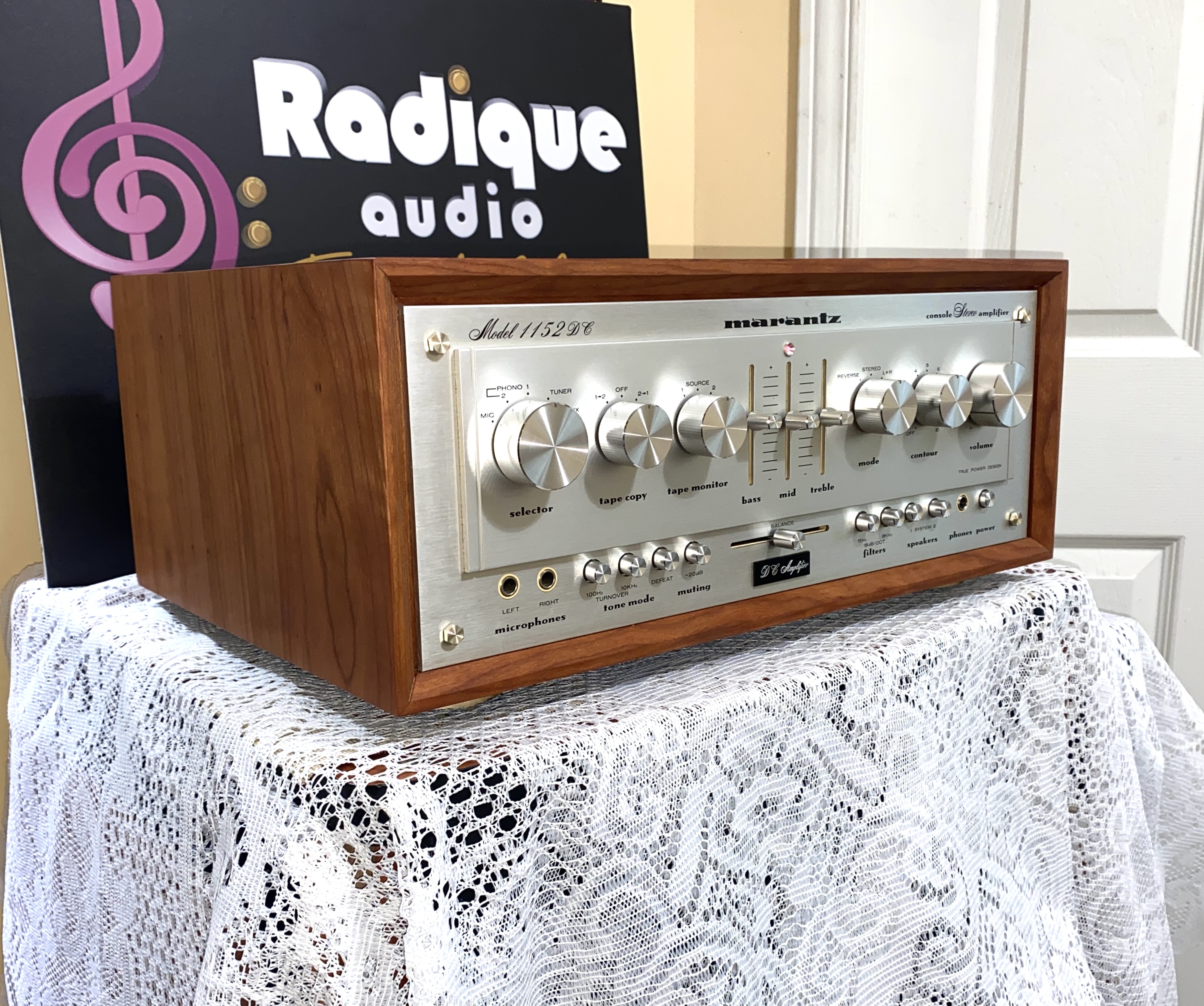


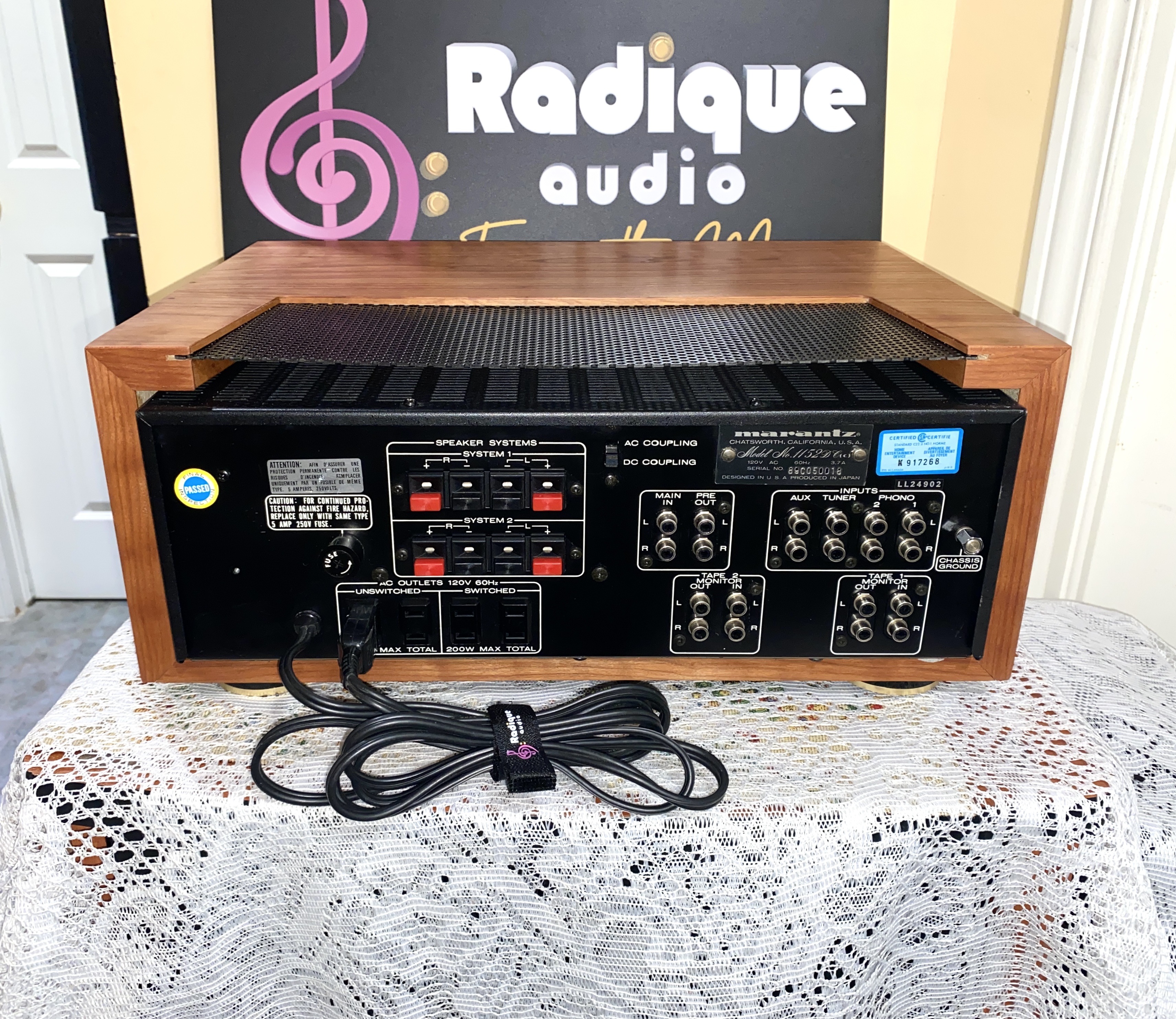


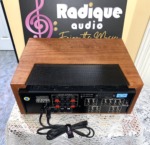
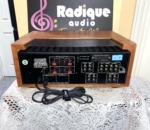

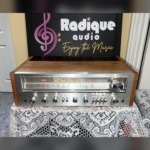
Marantz 1152DC Vintage Integrated Amp – 76 WPC, Cherry Cabinet
$2,195.00
- ✔️ Marantz 1152DC integrated amplifier — 76W per channel (8Ω), 95W (4Ω), direct-coupled, Made in Japan
- ✔️ Level 2 serviced: controls deoxidised, components tested, bias and DC offset calibrated, lamps replaced
- ✔️ Bespoke cherry cabinet — book-matched Pennsylvania black cherry veneer, 320-grit, linseed oil and beeswax
- ✔️ Dual MM phono inputs, two tape loops, pre-out — 7Hz–70kHz, THD 0.03%, S/N 91dB
- ✔️ Currently the most powerful vintage Marantz we have, in excellent cosmetic condition
Out of stock
This one has sold. Want first dibs on the next one?
We take these in regularly. Leave your name and email, and we’ll email you the moment one is listed, so you hear first. No cost, no obligation.
Email me when one is listed
Give your next receiver Bluetooth. RA-Twin II Gold Series RX Bundle, $69.00 →
Other integrated amps we have in stock now
3 in stock · $895.00–$1,895.00 · all ship
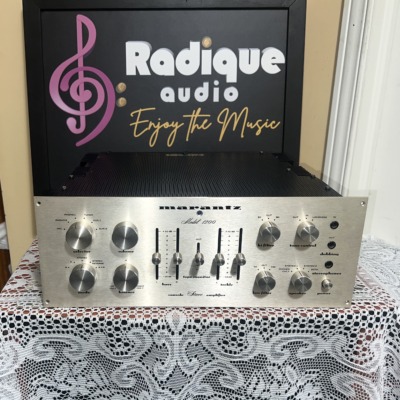 Marantz 1200 Vintage Integrated Amplifier – 100 WPC, Made in USA$1,895.00Ships
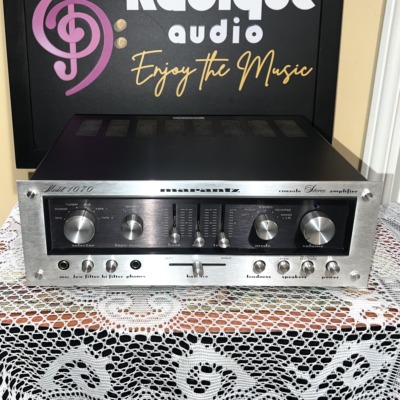 Marantz 1070 Vintage Integrated Amplifier – 35 WPC, Serviced$995.00Ships
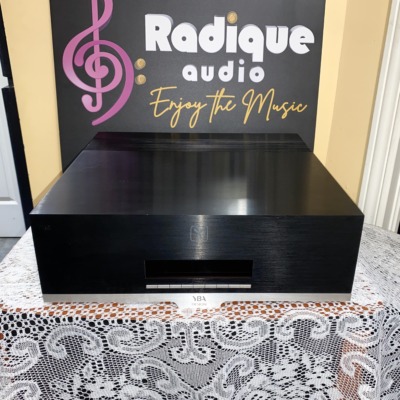 YBA YA201 Integrated Amplifier – 100 WPC$895.00Ships
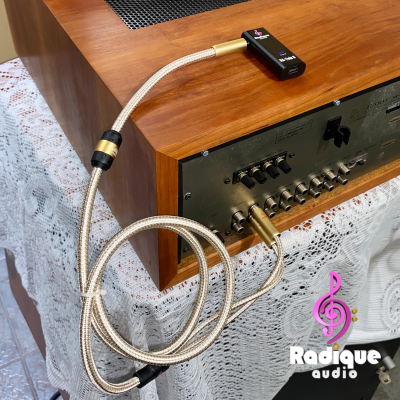
Give your next receiver Bluetooth.
The RA-Twin II adds Bluetooth streaming to any vintage receiver or amp with a spare input. The Gold Series RX bundle pairs it with our shielded 3.5 mm to RCA cable, a serious step up from the starter cable, for a higher-end system.
RA-Twin II Gold Series RX Bundle, $69.00 →A classic Marantz integrated amplifier from the Golden Era, housed in a bespoke cherry cabinet built in our own shop — currently the most powerful vintage Marantz we have, and in excellent cosmetic condition.
Golden Era Engineering, Fully Serviced
Produced in Japan during Marantz’s legendary 1970s “Golden Era,” this 1152DC integrated amplifier combines robust engineering with audiophile-grade performance. Fresh from our Level 2 service protocol, it has been thoroughly revitalized to deliver decades of reliable, high-fidelity sound.
- 76W per channel (8Ω) drives demanding speaker systems with authority, using a direct-coupled design for minimal signal degradation
- 7Hz–70kHz frequency response preserves the warmth and detail Marantz amplifiers are celebrated for
- Dual phono inputs with a low-noise MM stage (1.8mV sensitivity), plus aux, tuner and two tape monitor loops
Service & Restoration
Our Level 2 service on this unit included Deoxit-treated controls, capacitor, resistor and transistor testing with replacement where needed, bias and DC offset calibration, and lamp replacement to restore full illumination.
The Custom Cherry Cabinet
Our master woodworker has outdone himself here, and the cabinet is as much of this amplifier’s appeal as the circuit inside it.
- Material: Handpicked Pennsylvania black cherry, chosen for its rich colour and fine grain
- Veneer: The lumber was resawn into veneer, then book-matched to create a seamless waterfall grain cascading down the cabinet sides
- Finish: Sanded to an ultra-smooth 320 grit, treated with boiled linseed oil to draw out the natural beauty of the cherry, then finished with a beeswax polish for a subtle lustre and a protective layer
The result is a one-of-a-kind enclosure that complements the 1152DC’s classic design rather than competing with it.
Specifications
- Type: Integrated amplifier, solid state, direct-coupled
- Power output: 76W per channel (8Ω) · 95W per channel (4Ω)
- Frequency response: 7Hz–70kHz
- THD: 0.03% · Damping factor: 45 · S/N ratio: 91dB (line)
- Inputs: Phono MM ×2, Tuner, Aux, Tape ×2
- Outputs: Pre-out, Tape Rec
- Semiconductors: 73 transistors, 44 diodes, 4 FETs
- Dimensions (with cabinet): 17.75″ W × 14″ D × 8″ H (45.1 × 35.6 × 20.3 cm)
- Weight: 41.1 lb (18.64 kg)
- Built in: Japan · Cabinet built in Ottawa
Completing the System
A 41 lb amplifier in a wooden cabinet sits on whatever furniture you own, and that shelf has its own resonant behaviour. IsoAcoustics OREA Indigo feet are the correct match for this weight — each supports up to 16 lb, so three carry 48 lb and four carry 64 lb, giving real headroom over the 1152DC’s 41 lb. We are an authorized IsoAcoustics dealer; ask and we will help you choose between a three-foot and four-foot layout for your shelf.
For speaker cable, build exactly the length and gauge you need with our Custom Speaker Cable Builder — made to order in our own shop and terminated in Radique gold-plated banana plugs, with no excess coiled behind the rack.
🌳 Caring for Your Cherrywood Cabinet
Each refinished cherry cabinet is prepared to highlight the natural warmth and grain of real wood. For tips on keeping it looking its best for decades, including safe cleaners, what to avoid, and how to manage sunlight exposure, see our Cherrywood Cabinet Care Guide. 👉
Why Buy From Radique
This amplifier is backed by our Bumper to Bumper Warranty and our Perpetual Trade-Back Program, so you can buy today and move up later without losing your investment. Audition by appointment at our Kanata North location in Ottawa, or order online for local pickup or shipping. Every order ships in our 275 lb-test double-wall packaging, engineered to protect your gear in transit.
⭐ Don’t Just Take Our Word For It
Radique Audio holds over 600 customer ratings averaging 4.97 stars across six public platforms — Facebook Marketplace, Kijiji, Canuck Audio Mart, Google and others. Every rating lives somewhere we don’t control, so you can read the originals yourself, including the less flattering ones. See what our customers say. 👉
| Weight | 48 lbs |
|---|---|
| Dimensions | 18 × 22 × 12 in |
- Hard-to-beat pricing
- Free shipping across Canada
- Manufacturer's warranty
- Get a quote on new Marantz
Marantz began in 1953 in Queens, New York, where Saul Marantz built tube preamplifiers and amplifiers, and by the 1970s it was making receivers with champagne-gold faceplates, blue-lit dials and flywheel tuning. We carry Marantz receivers, amplifiers and preamps, turntables, tuners, CD players and cassette decks. We've had more than 150 Marantz listings so far, covering nearly 100 different models. Every used Marantz here is inspected, tested and serviced as required, then photographed in-house and covered by our Bumper-to-Bumper Warranty and Perpetual Trade-Back Program. Looking for new Marantz? We also quote new Marantz direct from the Canadian distributor, with free shipping within Canada: request a quote below. Don't see the model you want? Tell us on First Dibs and we'll email you when one arrives.
Marantz is one of our two top-selling brands of vintage amps and receivers, along with Pioneer. Our five best-selling Marantz models so far: the SR4023 stereo receiver, the vintage 2225, the SR7000 AV receiver, the SR4320 stereo receiver and the vintage 2238B. Many Marantz components were sold without their wood case, so we build our own line of Marantz-specific cabinets, hand-made in genuine Ottawa Valley cherrywood veneer: so far the WC-22 style for the 2220 through 2285B receivers and the WC-10 style for 16 slim-chassis models such as the 1060, 1070 and 112, with more models coming.
The Marantz story, 1953 to today
Saul B. Marantz founded the company in New York in 1953. His first product, the Audio Consolette preamplifier, became the Model 1, and Marantz dates the first Consolettes to 1952–53. Marantz says the early factory was in Woodside, Queens.
The tube years. Through the late 1950s and early 1960s Marantz built a small run of tube separates in New York that collectors still chase: the Model 7 preamplifier (1958), the Model 9 power amplifier (1960) and the Model 10B tuner (1964).
Superscope and the move to Japan. In 1964 Superscope, the company that also distributed Sony tape recorders in the US, bought Marantz, and Saul Marantz resigned at the end of 1967. The Model Eighteen of 1968 was the first Marantz receiver, rated at 40 watts per channel. Under Superscope, design moved to California and, from the late 1960s, production moved to Japan through Standard Radio, which became Marantz Japan in 1975. Receivers such as the 2230 and 2270 are listed as designed in the USA and produced in Japan.
The power race. After a 1974 Federal Trade Commission rule tightened how amplifier power was rated, receiver makers competed on watts. Marantz's Model 2500 of the late 1970s was rated at 250 watts per channel and had an oscilloscope tuning display.
Philips, Denon and today. In 1980 Philips bought Superscope's stake in Marantz Japan and the brand outside the US and Canada. Marantz says its CD-63 of 1982 was one of the first CD players, and its "KI Signature" models carry the initials of Ken Ishiwata, who joined in 1978. In 2001 Marantz Japan bought the trademark back from Philips, and in 2002 it combined with Denon to form D&M Holdings. In September 2025 HARMAN, a Samsung company, completed its purchase of Sound United, the parent of Marantz and Denon.
Which Marantz is which?
Tube separates (1950s–60s): the Models 1, 7, 8B, 9 and 10B, built in New York. Rare collector pieces.
First receivers (from 1968): the Model Eighteen, followed by the Nineteen at the end of 1969.
22xx receivers (from 1972): the first set was the 2215, 2230, 2245 and 2270, with the champagne-gold faceplate, blue-lit dial and "Gyro-Touch" flywheel tuning. A higher number generally means more power: the 2230 is rated at 30 watts per channel, the 2270 at 70. Later "B" versions such as the 2220B and 2285B followed.
Big late-1970s receivers: the 2325 (125 watts per channel), the 2500 flagship and four-channel "Quad" receivers.
1000-series integrated amplifiers: for example the 1060 (30 watts per channel, from 1971), the 1070 and the 1150 (75 watts per channel). The slim 1030, 1040, 1060 and 1070 share their case size with tuners such as the 104, 105 and 112.
Tuners: from the tube Model 10B to solid-state models such as the 2130, with its oscilloscope display.
Wood cases: Marantz sold its wood cases separately: the WC-22 for the 22xx receivers, the WC-10 for the slim 1000-series amplifiers and 100-series tuners, and the WC-1 for larger models such as the 1200. That is why so many turn up bare. A customer who sold Marantz in Ontario in the 1970s told us the cases his shop ordered were built here in Canada, by Westinghouse. Our own cherry WC-22 and WC-10 style cabinets are made in Canada too.
CD players: from the CD-63 of 1982 to the KI Signature versions.
Buying used Marantz: what to check
Dial and meter lamps. Burnt-out bulbs are common on 1970s receivers and are often replaced, sometimes with LEDs. Ask which, if the look of the dial matters to you.
The dial itself. The diffuser sheet behind the dial ages and can dull the glow. Check that the Gyro-Touch pointer moves smoothly and tracks the stations; dial cords are a common replacement part.
Controls and switches. Crackle when you turn a control or work a switch usually means dirt. Try every input, and walk away from a unit that drops a channel.
Capacitors and bias. Electrolytic capacitors in 1970s gear are often past their best, and full restorations replace them. Restorers also set the bias and DC offset.
Cosmetics. Pitting on the faceplate points to damp storage, and dents or water stains to rough handling.
Everything we list is inspected, tested and serviced as required here, and comes with our warranty.
You may also like…
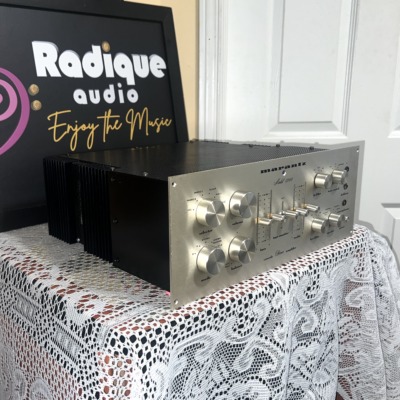
Marantz 1200 Vintage Integrated Amplifier – 100 WPC, Made in USA
Marantz's flagship integrated of the early seventies, built in Sun Valley, California, through our Level 2 service and playing as it should.
✔️ Very Good condition — faceplate and knobs present well, light marks of age; offered in the stock black metal case
✔️ Through our Level 2 service — a substantial round of component replacement on the bench, then bias and offset set and the amp run in
✔️ Covered by Radique Warranty
✔️ Includes Perpetual Trade-Back Program eligibility
✔️ Expertly packed for safe shipping
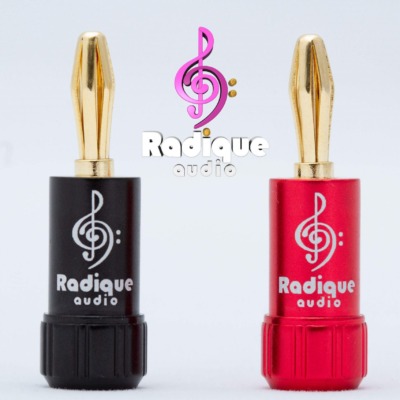
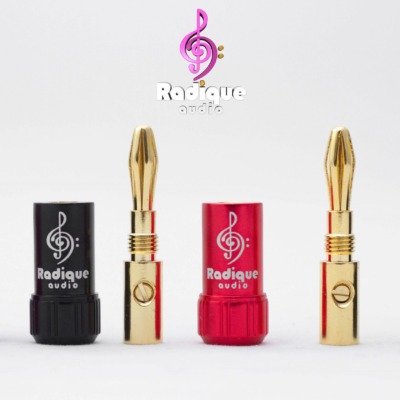
Radique Audio Banana Plugs – Gold-Plated, Dual Set Screws
Banana plugs that stay put: gold-plated, with two set screws holding the wire instead of one.
- Six-leaf gold-plated springs for a tight fit in the binding post
- Full-length non-conductive jackets, colour-coded red and black
- Fits 12 to 18 AWG speaker wire; 19.4 g a pair
- Packs of 1, 2, 4, 5, 7 or 14 pairs
- 1-year warranty


IsoAcoustics OREA Indigo Audio Isolation Foot (Single)
- ✔️ Genuine IsoAcoustics, brand new, from an authorized Canadian dealer
- ✔️ One isolation foot, rated 16 lb (7.2 kg); use three or more per component
- ✔️ Three carry 48 lb (21.6 kg), four carry 64 lb (28.8 kg)
- ✔️ Machined stainless steel, 2.3 in wide and 1.3 in tall (58 × 33 mm)
- ✔️ Pick up in Kanata by appointment, or shipped across Canada and internationally
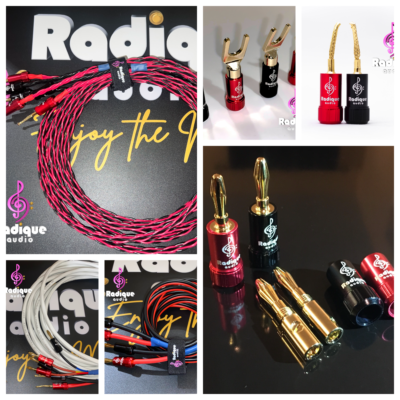
Custom Speaker Cable Builder
Your specs, your cable: choose the cable, the length and each connector, with live pricing.
- House CCA, House OFC, House Quad, Kimber 4PR or Kimber 4TC
- Banana, spade, pin, small spade or bare wire, chosen for each end
- Bi-wire on Kimber 4PR, Kimber 4TC and House Quad
- Hand-assembled, heat-shrink reinforced and colour-coordinated
- 1-year warranty
Related Products
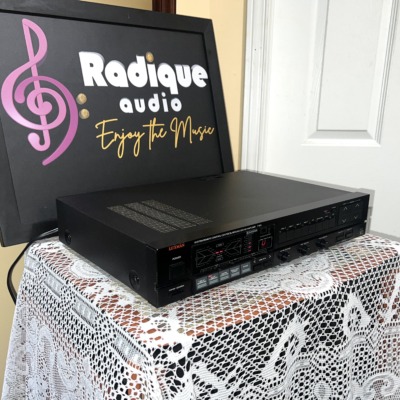
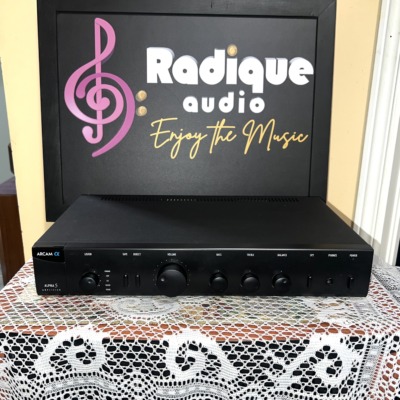
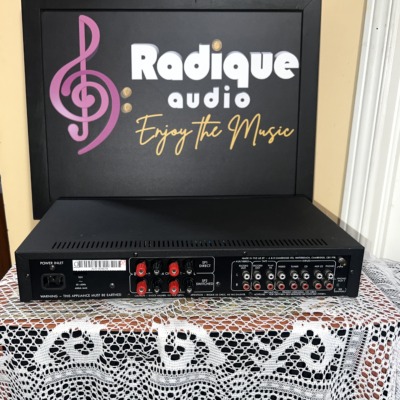
Arcam Alpha 5 Integrated Amplifier – 40 WPC, Made in England
A British integrated amplifier from Arcam's Cambridge factory, 40 watts a side, built on the principle that anything which does not improve the sound does not go in the box.
✔️ Condition: Very Good — tested and working properly
✔️ Covered by Radique Warranty
✔️ Includes Perpetual Trade-Back Program eligibility
✔️ Expertly packed for safe shipping
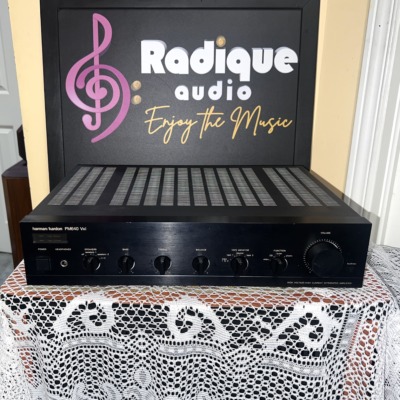
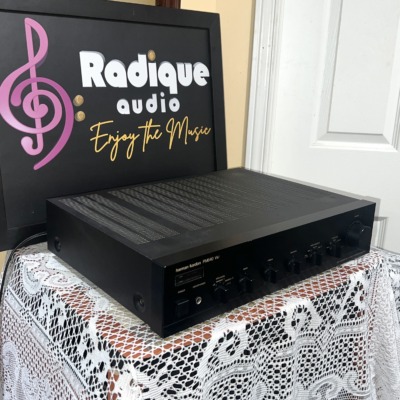
Harman Kardon PM640VXi Vintage Integrated Amp – 45 WPC, Japan
A 45-watt amplifier built by a company that spent the 1980s arguing the watts were the wrong thing to look at.
✔️ Condition: Very Good
✔️ Covered by Radique Warranty
✔️ Includes Perpetual Trade-Back Program eligibility
✔️ Expertly packed for safe shipping
Marantz 1200 Vintage Integrated Amplifier – 100 WPC, Made in USA
Marantz's flagship integrated of the early seventies, built in Sun Valley, California, through our Level 2 service and playing as it should.
✔️ Very Good condition — faceplate and knobs present well, light marks of age; offered in the stock black metal case
✔️ Through our Level 2 service — a substantial round of component replacement on the bench, then bias and offset set and the amp run in
✔️ Covered by Radique Warranty
✔️ Includes Perpetual Trade-Back Program eligibility
✔️ Expertly packed for safe shipping
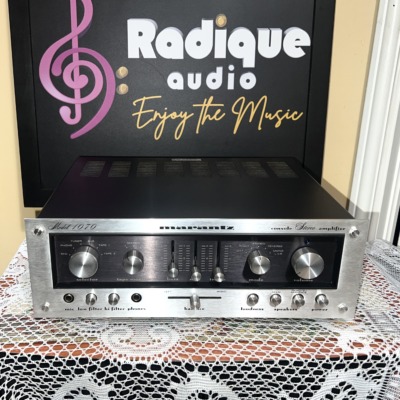
Marantz 1070 Vintage Integrated Amplifier – 35 WPC, Serviced
A slim mid-seventies Marantz integrated amplifier, through our Level 1 service, in very good condition, with a phono stage, a three-band tone section and a microphone input on the front panel.
✔️ Very good condition — free of significant marks
✔️ Through our Level 1 service on our own bench
✔️ MM phono stage, three-band tone sliders and a front-panel mic input
✔️ Covered by Radique Warranty
✔️ Includes Perpetual Trade-Back Program eligibility
✔️ Expertly packed for safe shipping
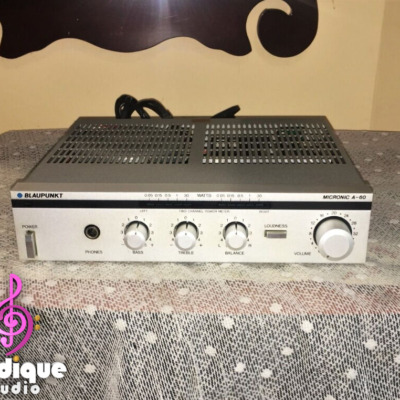
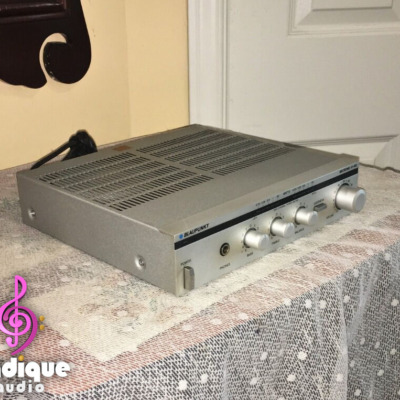
Blaupunkt Micronic A-60 Micro Amplifier – 20 WPC, Made in Japan
A rare Blaupunkt Micronic A-60 micro amplifier from 1981, designed in Germany and made in Japan: 20 watts per channel with LED power meters, in a case 25 cm wide.
✔️ Tested on our bench, input, outputs and every control
✔️ Very good condition
✔️ 20 WPC, LED power meters, one RCA input
✔️ Covered by Radique Warranty
✔️ Includes Perpetual Trade-Back Program eligibility
✔️ Expertly packed for safe shipping
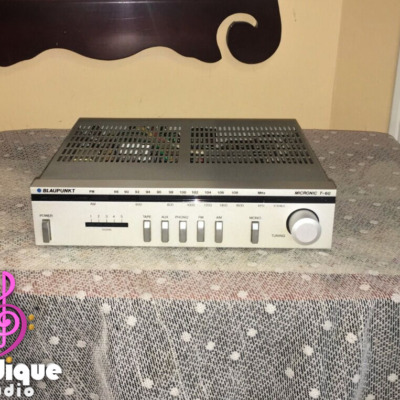
Blaupunkt Micronic A-60 + T-60 Micro System – 20 WPC, Bundle
The complete Blaupunkt Micronic 60 system from 1981, the A-60 amplifier and the matching T-60 AM/FM tuner and preamplifier, together for less than buying them separately.
✔️ Tested on our bench, both units
✔️ Both very good
✔️ Radio, phono, tape and a 20-watt amplifier in a stack 25 cm wide
✔️ Covered by Radique Warranty
✔️ Includes Perpetual Trade-Back Program eligibility
✔️ Expertly packed for safe shipping
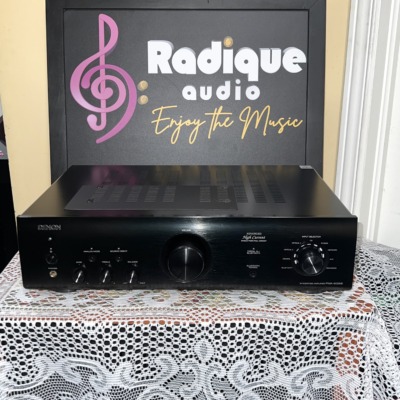
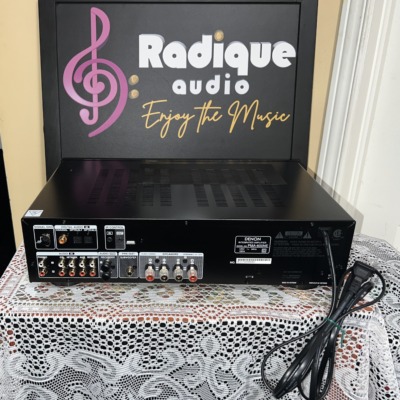
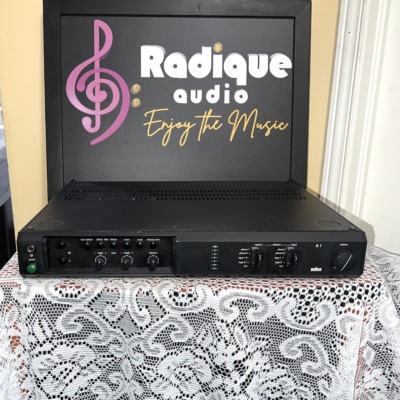
Braun Atelier A1 Vintage Integrated Amp – 55 WPC, Pre-Out, Japan
The component that makes the rest of an Atelier system work, and the one people hunting these usually look for first. 55 watts per channel into 8 ohms and 80 into 4, with a preamplifier section that separates from the power stage — engineering that is not an afterthought to the industrial design. 445 mm wide and 70 mm tall, the exact footprint of the T1 tuner and C1 deck, so the stack reads as one machined object. Made in Japan for Braun. Good condition.
