
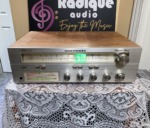
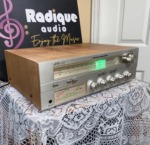
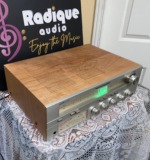
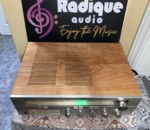
Marantz MR 1135 Vintage Stereo Receiver – 30 WPC, Cherry Cabinet
$795.00
1 in stock
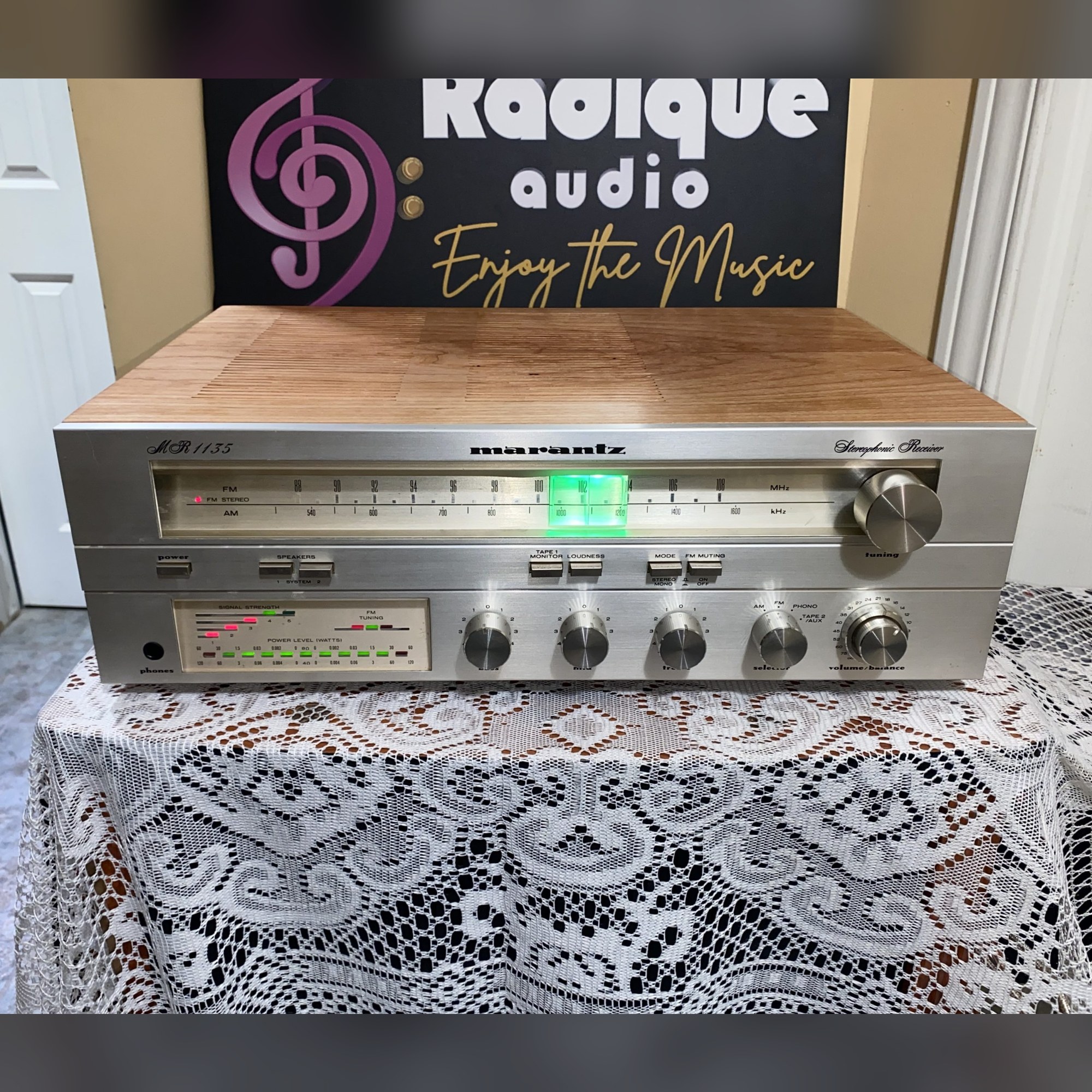
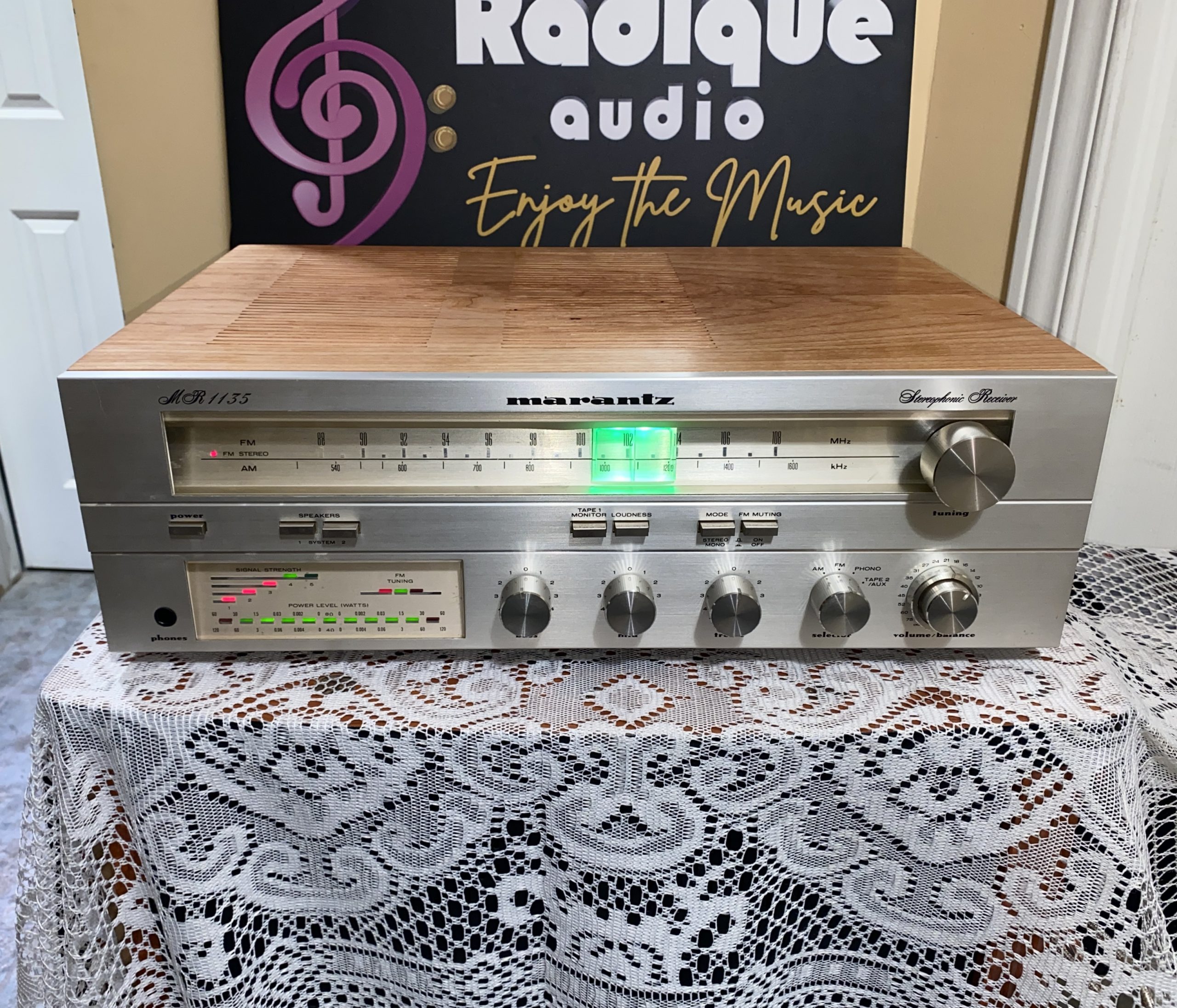
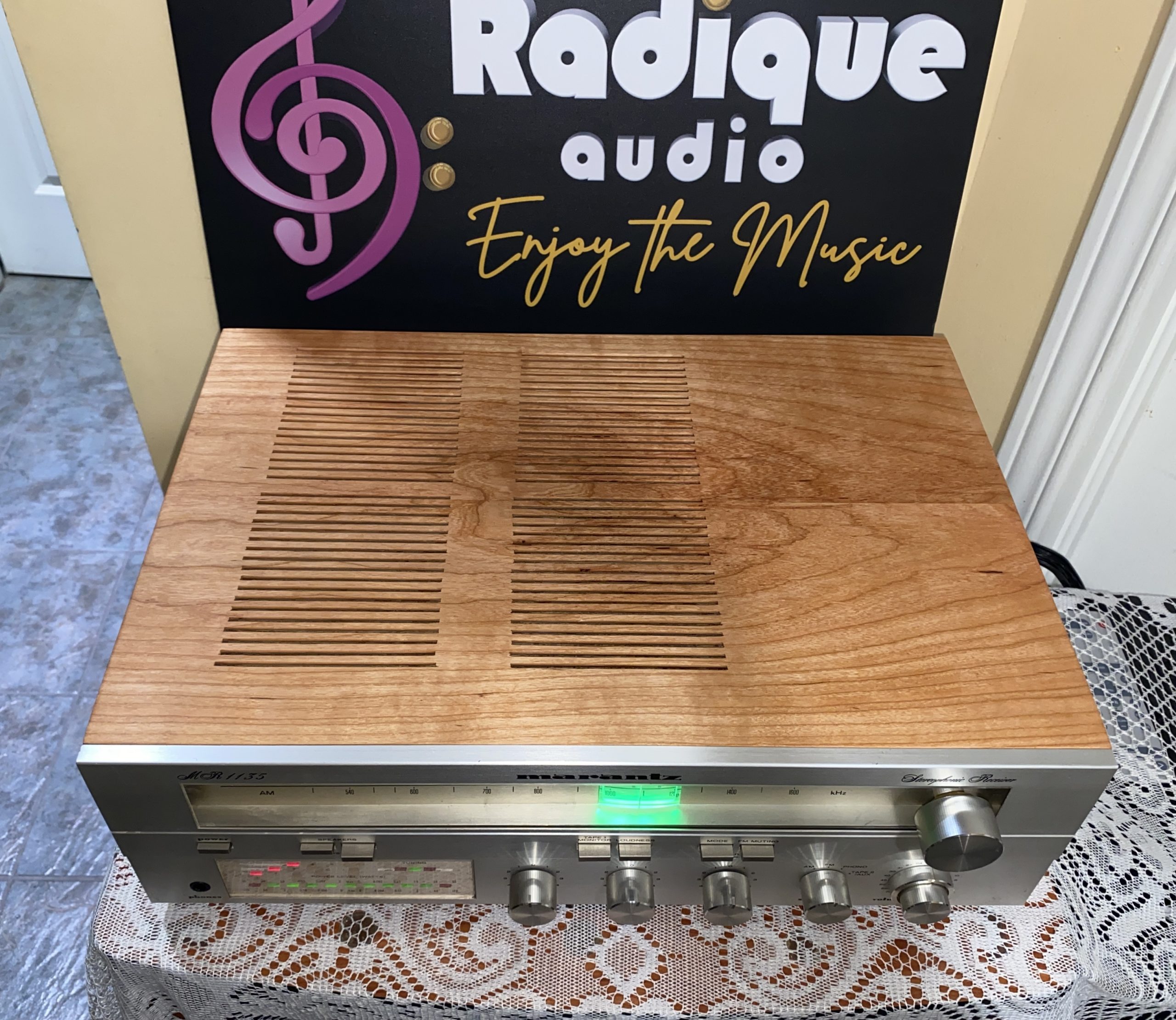
Marantz MR 1135 Stereo Receiver – 30 WPC with Custom Cherry Cabinet
Vintage Japanese Stereo Receiver with Custom Ottawa Valley Cherry Wood Cabinet
Design and Sound
The Marantz MR 1135 represents solid early-1980s Japanese engineering from the legendary Marantz line. This 30-watt-per-channel stereophonic receiver delivers exceptional frequency response (15Hz to 50kHz) with remarkably low total harmonic distortion of just 0.04 percent, ensuring clean, detailed playback across all sources. While the MR series receivers were manufactured during Marantz’s transition period under Superscope and Standard Radio Corporation in Japan, they maintain the brand’s commitment to quality sound reproduction with excellent signal-to-noise ratios of 86dB for phono and 98dB for line inputs.
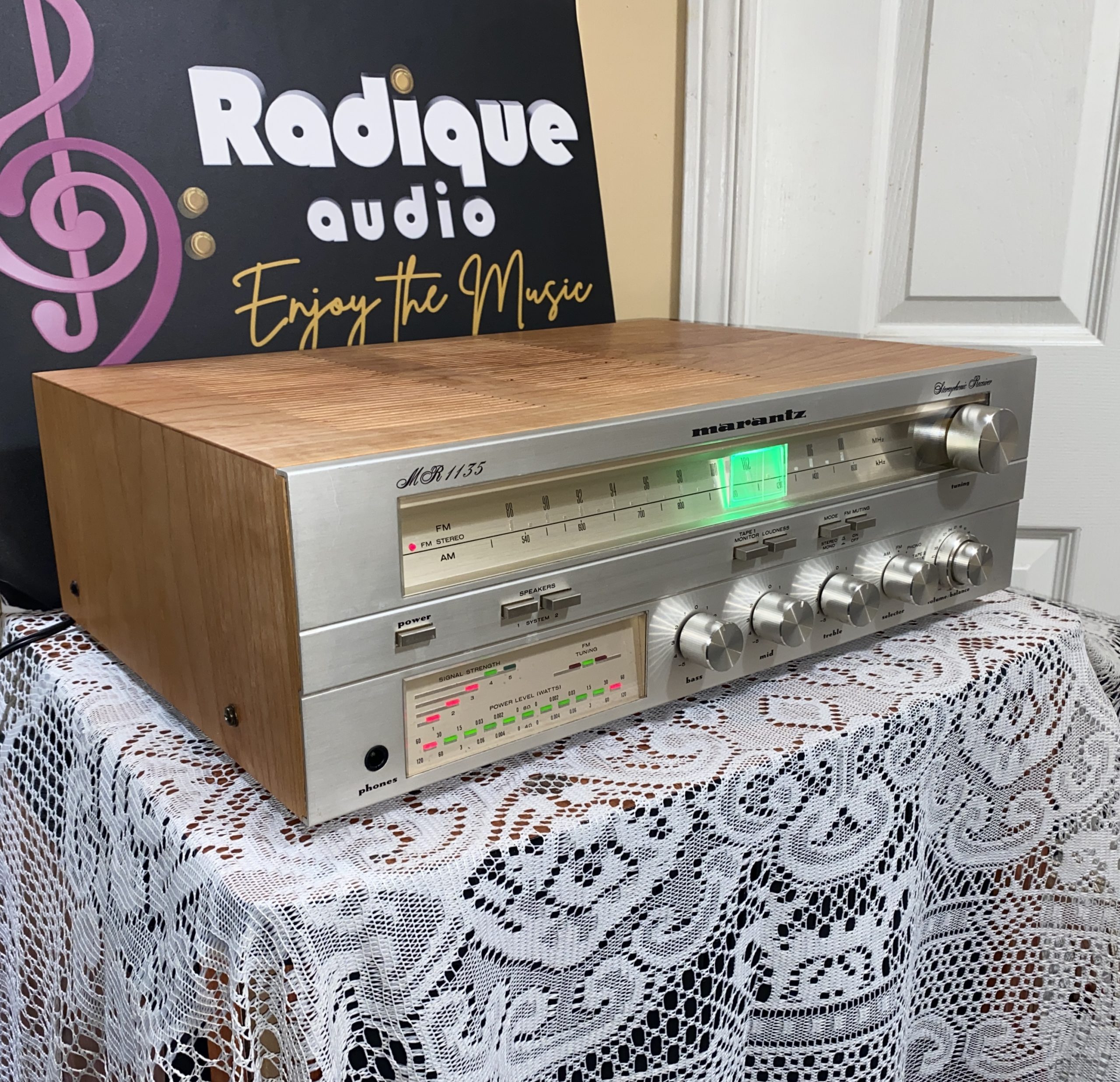
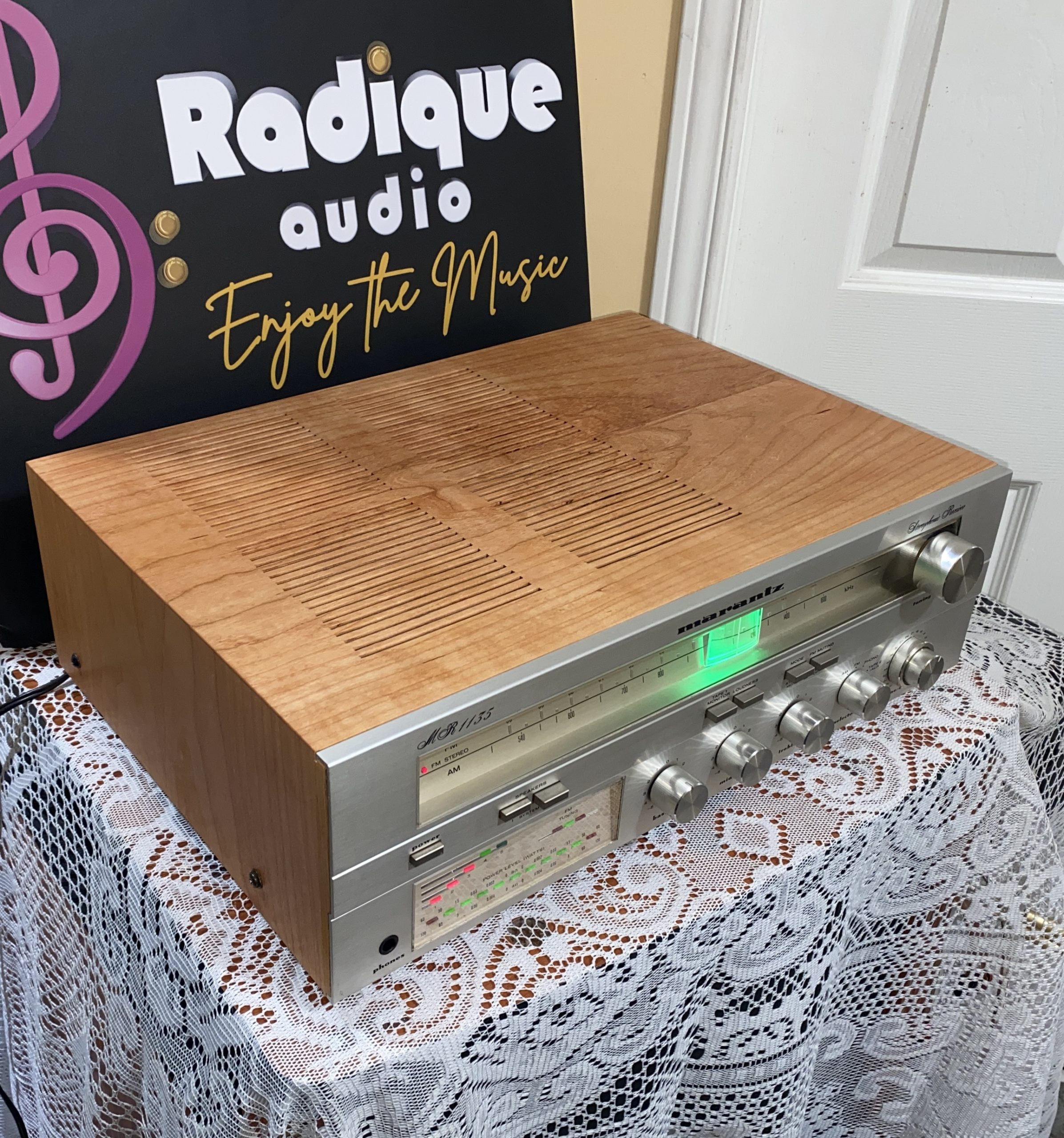
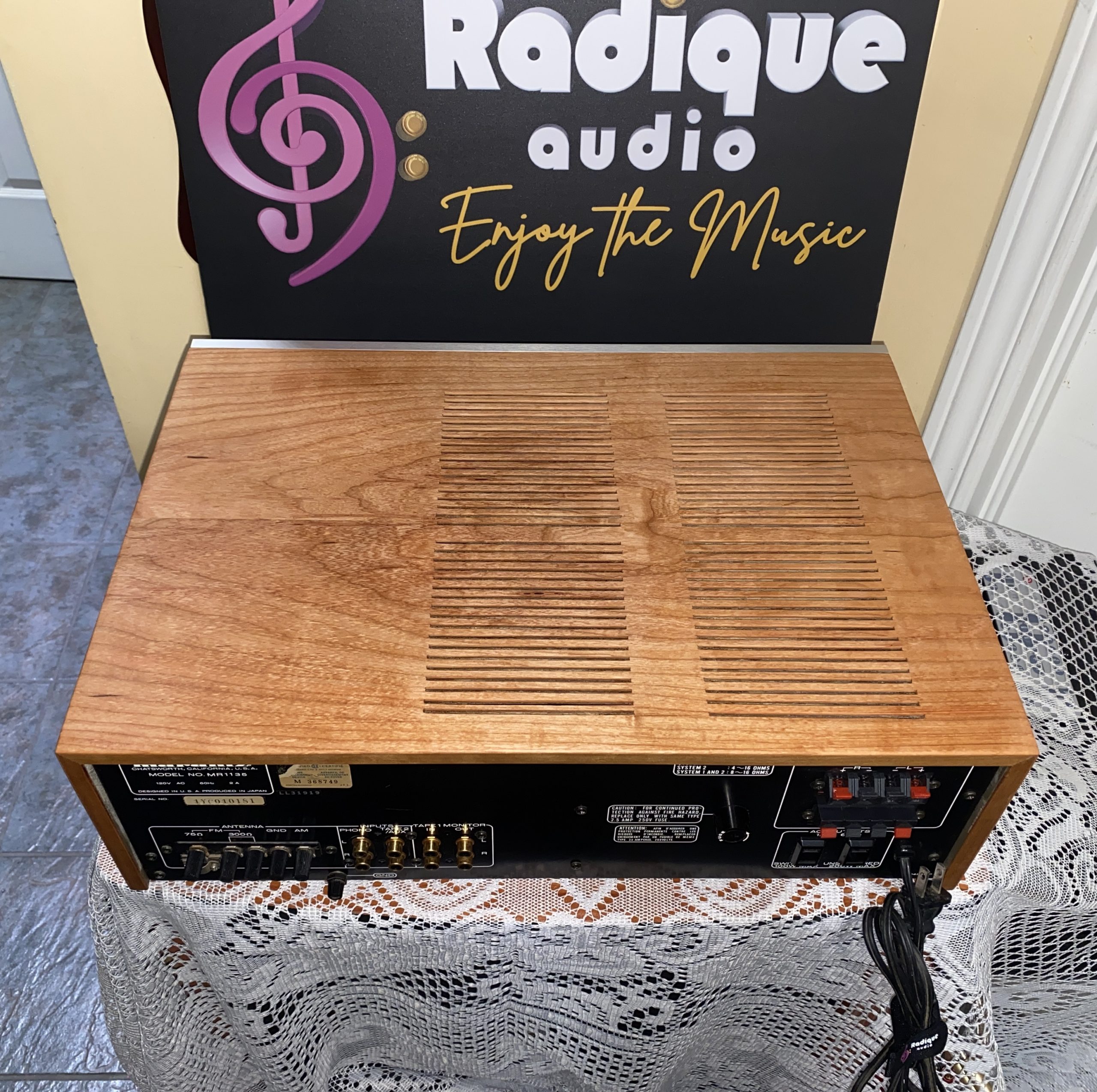
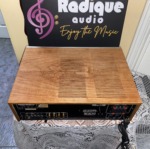
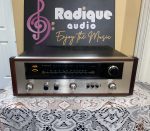
What elevates this particular MR 1135 is its stunning transformation with a completely refinished wraparound wood cabinet in authentic Ottawa Valley cherry wood. Our master woodworker has hand-veneered the entire cabinet, replacing the original vinyl woodgrain with genuine cherry that brings warmth and organic beauty to the classic silver faceplate design. The rich grain and natural luster of real cherry wood creates a stunning visual statement that commands attention in any listening space.
This receiver has undergone our Level One service and testing which should ensure many more years of reliable performance ahead. All inputs, outputs, and controls have been thoroughly tested, pots and switches deep-cleaned and deoxidized, blown lamps replaced, and the power supply carefully inspected. The unit lights up beautifully with all illumination functioning perfectly, and it’s ready to anchor your vintage system with reliable, musical sound.
Featured in Our Workshop
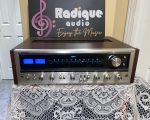
This Marantz MR-1135 was recently featured in one of our holiday videos, and watching it come to life in our workshop really captures why we love restoring these beauties. The receiver’s warm red and green display lamps glow against the hand-veneered cherry wood cabinet in a way that photos alone can’t quite convey. It’s a perfect reminder that vintage audio gear isn’t just about the sound—it’s about the craftsmanship, the presence, and the joy of watching these pieces work exactly as they were designed to nearly 50 years ago.
Features and Capabilities
FM/MW tuner with excellent sensitivity
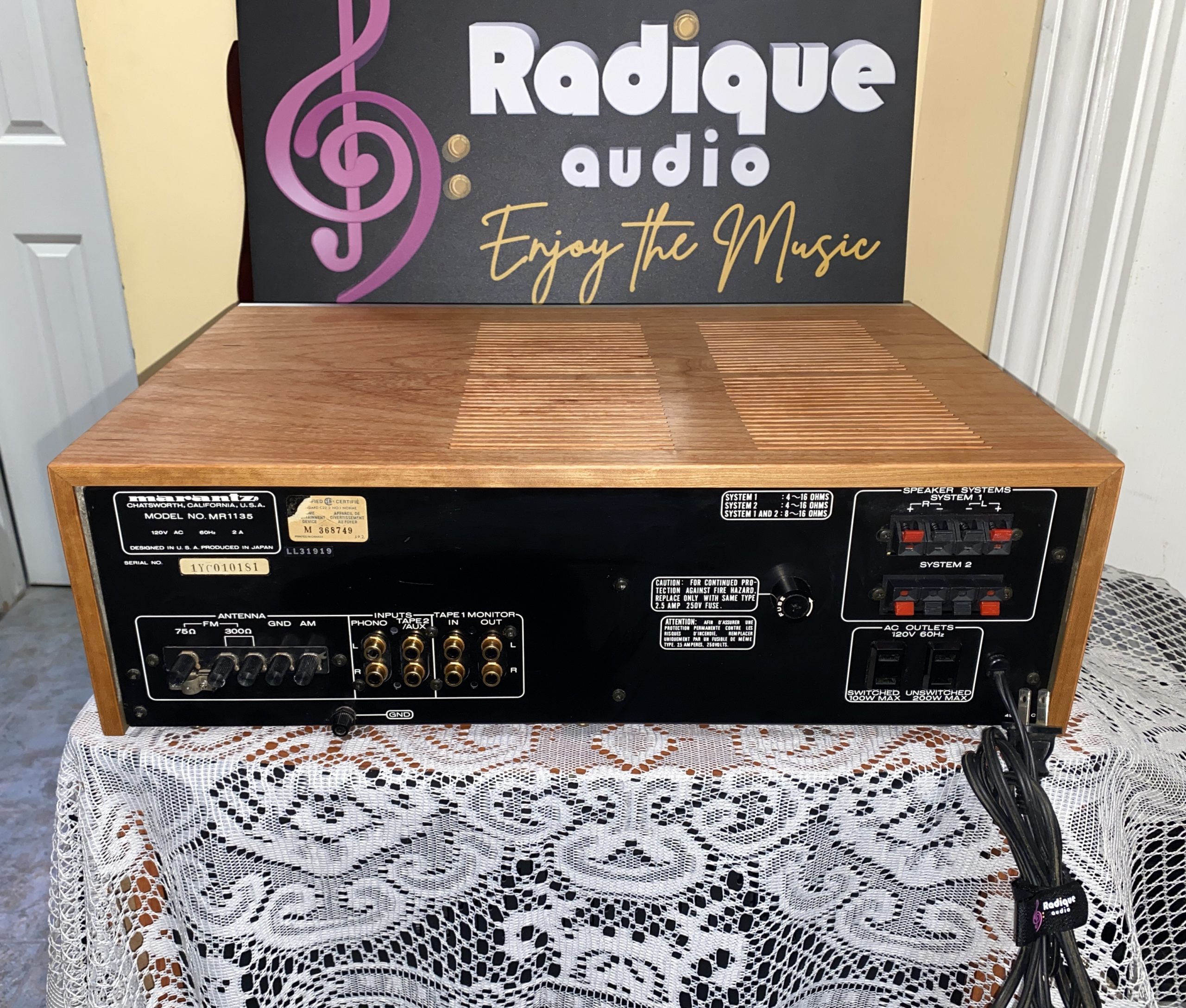
Multiple inputs including phono (MM) and line-level sources
Front-panel tone controls for bass and treble adjustment
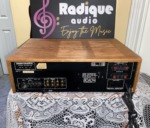
Two speaker outputs with easy switching
Headphone jack for private listening
Classic Marantz silver faceplate design
Custom wraparound Ottawa Valley cherry wood cabinet
Technical Specifications
Power Output: 30 watts per channel into 8Ω (stereo)
Frequency Response: 15Hz to 50kHz
Total Harmonic Distortion: 0.04%
Damping Factor: 36
Input Sensitivity: 2.7mV (MM phono), 160mV (line)
Signal-to-Noise Ratio: 86dB (MM), 98dB (line)
Speaker Load Impedance: 4Ω minimum
Tuning Range: FM, MW (AM)
Dimensions: 466 x 140 x 323 mm (18.3 x 5.5 x 12.7 inches)
Weight: 8 kg (17.6 lbs)
Cosmetically, this receiver presents in very good condition with the freshly refinished cherry cabinet providing a dramatic upgrade from its original appearance. The silver faceplate shows normal signs of careful use appropriate to a vintage component, with all controls operating smoothly and positively. Functionally, the MR 1135 has been fully tested and performs perfectly across all inputs and outputs.
This Japanese-made Marantz receiver combines vintage charm with musical performance and now features an heirloom-quality real wood cabinet that will only improve with age.
Purchase with Confidence
Includes Radique Audio “Bumper to Bumper” Warranty
Perpetual Trade-Back Policy—upgrade or swap with peace of mind
Custom Ottawa Valley cherry wood cabinetry by our master woodworker adds lasting value and beauty; asking $795.
🌳 Caring for Your Cherrywood Cabinet
Each refinished cherry cabinet is prepared to highlight the natural warmth and grain of real wood. For tips on keeping it looking its best for decades, including safe cleaners, what to avoid, and how to manage sunlight exposure, see our Cherrywood Cabinet Care Guide. 👉
⭐ Don’t Just Take Our Word For It
Radique Audio holds over 600 customer ratings averaging 4.97 stars across six public platforms — Facebook Marketplace, Kijiji, Canuck Audio Mart, Google and others. Every rating lives somewhere we don’t control, so you can read the originals yourself, including the less flattering ones. See what our customers say. 👉
| Weight | 20 lbs |
|---|---|
| Dimensions | 16.7 × 22.3 × 9.5 in |
Marantz began in 1953 in Queens, New York, where Saul Marantz built tube preamplifiers and amplifiers, and by the 1970s it was making receivers with champagne-gold faceplates, blue-lit dials and flywheel tuning. We carry Marantz receivers, amplifiers and preamps, turntables, tuners, CD players and cassette decks. We've had more than 150 Marantz listings so far, covering nearly 100 different models. Every used Marantz here is inspected, tested and serviced as required, then photographed in-house and covered by our Bumper-to-Bumper Warranty and Perpetual Trade-Back Program. Many Marantz components were sold without their wood case, so we also make new cherry WC-22 and WC-10 style cabinets. Don't see the model you want? Tell us on First Dibs and we'll email you when one arrives.
Our five best-selling Marantz models so far: the SR4023 stereo receiver, the vintage 2225, the SR7000 AV receiver, the SR4320 stereo receiver and the vintage 2238B.
The Marantz story, 1953 to today
Saul B. Marantz founded the company in New York in 1953. His first product, the Audio Consolette preamplifier, became the Model 1, and Marantz dates the first Consolettes to 1952–53. Marantz says the early factory was in Woodside, Queens.
The tube years. Through the late 1950s and early 1960s Marantz built a small run of tube separates in New York that collectors still chase: the Model 7 preamplifier (1958), the Model 9 power amplifier (1960) and the Model 10B tuner (1964).
Superscope and the move to Japan. In 1964 Superscope, the company that also distributed Sony tape recorders in the US, bought Marantz, and Saul Marantz resigned at the end of 1967. The Model Eighteen of 1968 was the first Marantz receiver, rated at 40 watts per channel. Under Superscope, design moved to California and, from the late 1960s, production moved to Japan through Standard Radio, which became Marantz Japan in 1975. Receivers such as the 2230 and 2270 are listed as designed in the USA and produced in Japan.
The power race. After a 1974 Federal Trade Commission rule tightened how amplifier power was rated, receiver makers competed on watts. Marantz's Model 2500 of the late 1970s was rated at 250 watts per channel and had an oscilloscope tuning display.
Philips, Denon and today. In 1980 Philips bought Superscope's stake in Marantz Japan and the brand outside the US and Canada. Marantz says its CD-63 of 1982 was one of the first CD players, and its "KI Signature" models carry the initials of Ken Ishiwata, who joined in 1978. In 2001 Marantz Japan bought the trademark back from Philips, and in 2002 it combined with Denon to form D&M Holdings. In September 2025 HARMAN, a Samsung company, completed its purchase of Sound United, the parent of Marantz and Denon.
Which Marantz is which?
Tube separates (1950s–60s): the Models 1, 7, 8B, 9 and 10B, built in New York. Rare collector pieces.
First receivers (from 1968): the Model Eighteen, followed by the Nineteen at the end of 1969.
22xx receivers (from 1972): the first set was the 2215, 2230, 2245 and 2270, with the champagne-gold faceplate, blue-lit dial and "Gyro-Touch" flywheel tuning. A higher number generally means more power: the 2230 is rated at 30 watts per channel, the 2270 at 70. Later "B" versions such as the 2220B and 2285B followed.
Big late-1970s receivers: the 2325 (125 watts per channel), the 2500 flagship and four-channel "Quad" receivers.
1000-series integrated amplifiers: for example the 1060 (30 watts per channel, from 1971), the 1070 and the 1150 (75 watts per channel). The slim 1030, 1040, 1060 and 1070 share their case size with tuners such as the 104, 105 and 112.
Tuners: from the tube Model 10B to solid-state models such as the 2130, with its oscilloscope display.
Wood cases: Marantz sold its wood cases separately: the WC-22 for the 22xx receivers, the WC-10 for the slim 1000-series amplifiers and 100-series tuners, and the WC-1 for larger models such as the 1200. That is why so many turn up bare. A customer who sold Marantz in Ontario in the 1970s told us the cases his shop ordered were built here in Canada, by Westinghouse. Our own cherry WC-22 and WC-10 style cabinets are made in Canada too.
CD players: from the CD-63 of 1982 to the KI Signature versions.
Buying used Marantz: what to check
Dial and meter lamps. Burnt-out bulbs are common on 1970s receivers and are often replaced, sometimes with LEDs. Ask which, if the look of the dial matters to you.
The dial itself. The diffuser sheet behind the dial ages and can dull the glow. Check that the Gyro-Touch pointer moves smoothly and tracks the stations; dial cords are a common replacement part.
Controls and switches. Crackle when you turn a control or work a switch usually means dirt. Try every input, and walk away from a unit that drops a channel.
Capacitors and bias. Electrolytic capacitors in 1970s gear are often past their best, and full restorations replace them. Restorers also set the bias and DC offset.
Cosmetics. Pitting on the faceplate points to damp storage, and dents or water stains to rough handling.
Everything we list is inspected, tested and serviced as required here, and comes with our warranty.
You may also like…
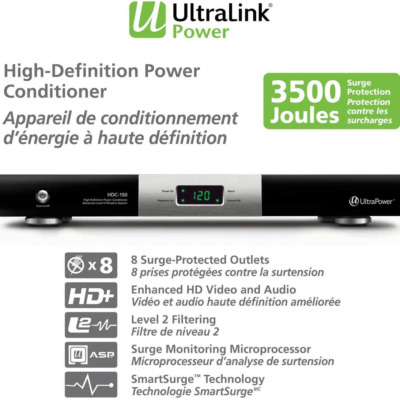
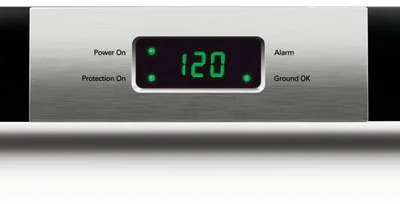
Ultralink High Def Power Conditioner with Display, BNIB HDC150
Eight surge-protected, filtered AC outlets with isolated banks for digital, video, audio and high-current components — four always-on, four switched.
Enough outlets for the whole stack, not just the amplifier — television, Blu-ray and streamer alongside a receiver, or turntable, CD player and cassette deck alongside a vintage amp. 3,500 joule protection, EMI/RFI filtration to 58 dB, and surge protection on the coax and network lines most conditioners leave unguarded. Patented ASP voltage monitoring and a 15 amp resettable breaker.
Brand new, unopened, in original packaging with full manufacturer warranty.
Related Products
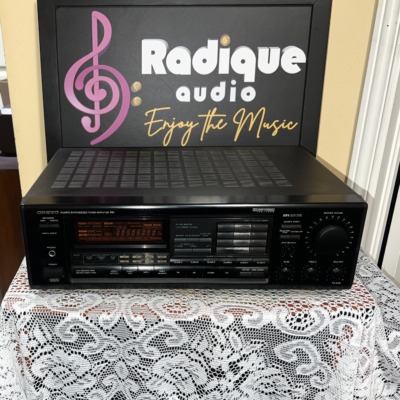
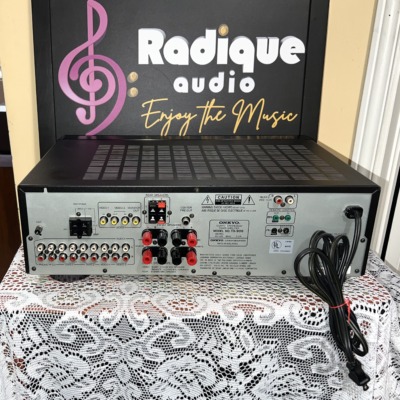
Onkyo TX-906 Stereo Receiver – 80 WPC, Dolby Pro Logic
An early-nineties Onkyo receiver with real power behind it and a phono input for your turntable, through our Level 1 service and playing as it should.
✔️ Good condition — works as it should; the black cabinet and faceplate present well
✔️ Through our Level 1 service — cleaned, deoxidized, checked and thoroughly tested on our bench
✔️ Phono input for your turntable, plus CD and two tape inputs
✔️ Covered by Radique Warranty
✔️ Includes Perpetual Trade-Back Program eligibility
✔️ Expertly packed for safe shipping
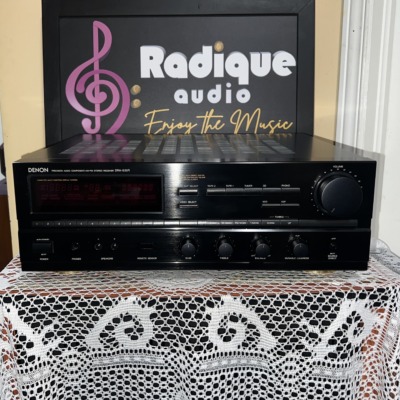
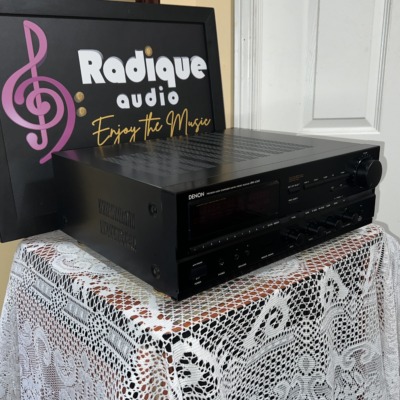
Denon DRA-835R Vintage Stereo Receiver – 100 WPC, Made in Japan
The second-from-the-top model in Denon's early-nineties stereo receiver range, made in Japan and in very good condition, with 100 watts per channel, a phono stage, motorized volume and its original remote.
✔️ Very good condition — free of significant marks
✔️ 100 WPC, MM phono and motorized volume — made in Japan
✔️ Original Denon remote included
✔️ Covered by Radique Warranty
✔️ Includes Perpetual Trade-Back Program eligibility
✔️ Expertly packed for safe shipping
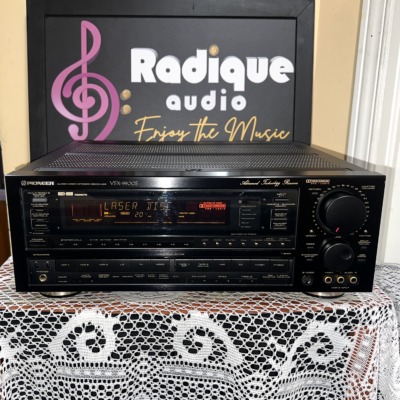
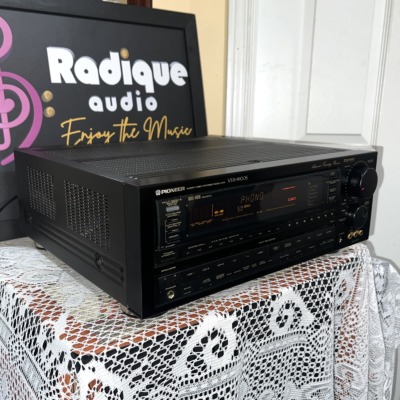
Pioneer VSX-9900S Stereo Receiver – 125 WPC, Phono, 110–240V
A big, heavy early-nineties Pioneer receiver, made in Japan, with 125 watts per channel and selectable mains voltage from 110 to 240 volts, so it runs on household power almost anywhere in the world. It comes with a phono stage for your turntable and its original remote, through our Level 1 service and in good condition.
✔️ Good condition, with the original Pioneer remote
✔️ 125 watts per channel, MM phono and selectable 110–240 V mains
✔️ Radique Level 1 service, bench-tested twice before listing
✔️ Covered by Radique Warranty
✔️ Includes Perpetual Trade-Back Program eligibility
✔️ Expertly packed for safe shipping
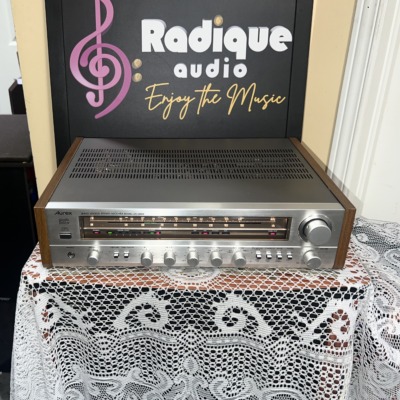
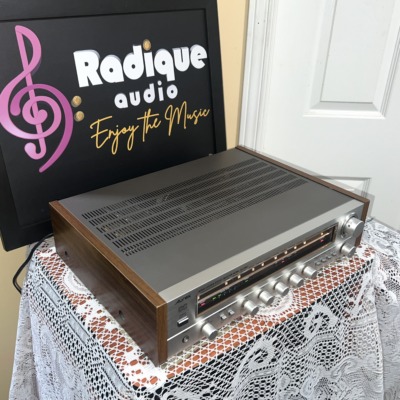
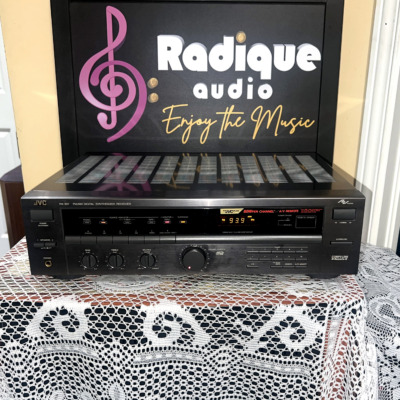
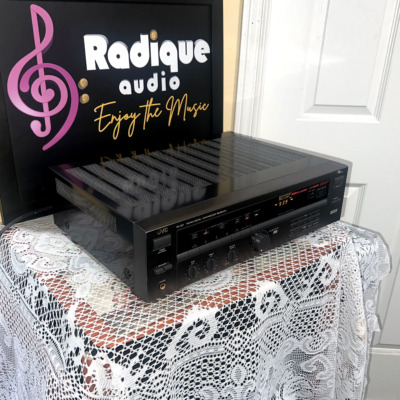
JVC RX-307 Stereo Receiver – 80 WPC, Original Remote & Manual
Eighty watts a side, a proper phono input, and the two things these almost never come with any more: the original remote and the printed manual.
✔️ Condition: Very Good
✔️ Covered by Radique Warranty
✔️ Includes Perpetual Trade-Back Program eligibility
✔️ Expertly packed for safe shipping
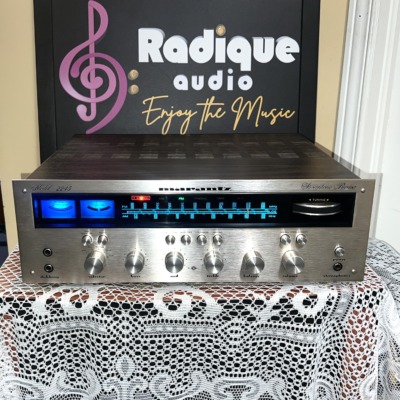
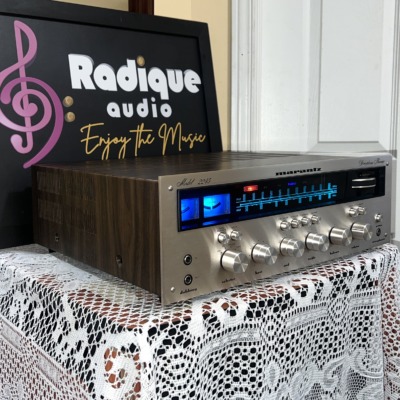
Marantz 2245 Vintage Stereo Receiver – 45 WPC, Level 1 Serviced
A Marantz 2245 from the golden age of the receiver, serviced on our bench and wearing its original Marantz case.
✔️ Condition: Very Good — original vented woodgrain case, sound
✔️ Level 1 service on our own bench, with post-service testing
✔️ 45 WPC · MM phono stage · tape loop · pre-out / main-in · two speaker pairs
✔️ Made in Japan — confirmed on the rear rating plate
✔️ Covered by Radique Warranty
✔️ Includes Perpetual Trade-Back Program eligibility
✔️ Ottawa Valley cherry cabinet available to order
