
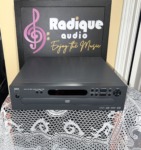
NAD C740 Stereo Receiver – 35 WPC, Remote Included
$345.00
Out of stock
Get first dibs on the next one
NAD C740 — Impedance Sensing Circuitry and 30 Amps of Current
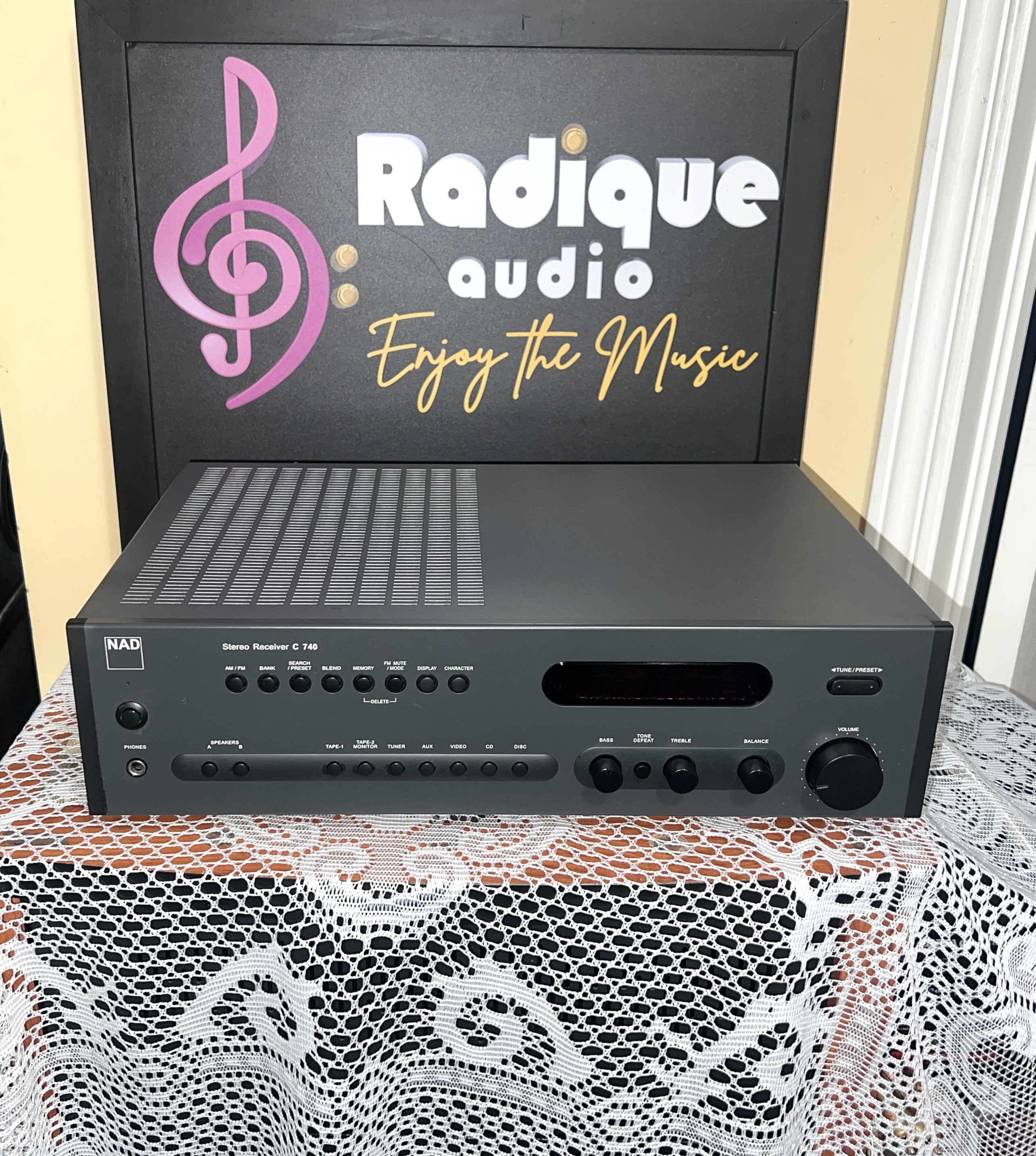
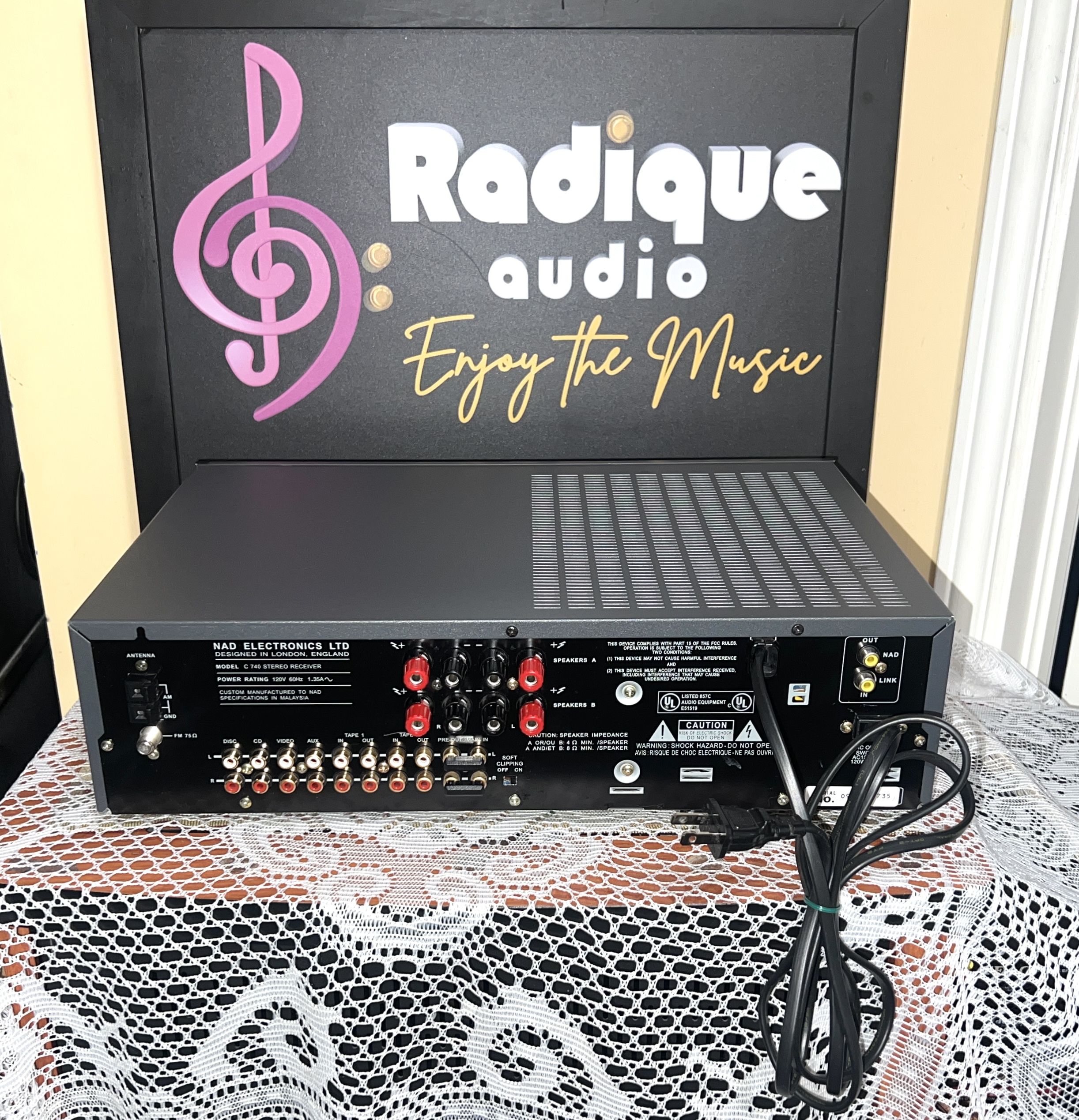
NAD C740 AM/FM Stereo Receiver – 35 Watts Per Channel, Impedance Sensing Circuitry, Pre-Out/Main-In, Very Good Condition
NAD’s design philosophy in one box: modest published power, serious real-world current, and nothing spent on anything you cannot hear.
The C740 is what NAD called a Building Block product — it is the C440 tuner and the C340 amplifier on a single chassis, and other than a slightly lower rated output it is genuinely the sum of those separates rather than a compromise between them.
The published figure is 35 watts per channel continuous, and NAD were always deliberately conservative with that number. What matters more is what happens when the music gets difficult. The amplifier is built around Impedance Sensing Circuitry, designed by NAD’s Bjorn Erik Edvardsen, which reads the impedance characteristics of whatever speaker is connected and adjusts the power supply to suit it. The result is 140 watts of dynamic power into 2 ohms and up to 30 amps of current capability. In practice that means it holds its composure driving demanding speakers that make bigger-numbered receivers audibly struggle — which is exactly why NAD earned the reputation it has.
Soft Clipping is included and switchable. When an amplifier is pushed past its limit it normally clips hard, and hard clipping is what kills tweeters; Soft Clipping rounds that transition off instead. If you play loud, it is genuinely protective of your speakers.
The flexibility is unusually good for a receiver. Six pairs of RCA analogue inputs, including two tape loops with dubbing, and a pre-out/main-in pair that lets you separate the preamp from the power amp — so you can bi-amp later, add a power amplifier, or run the C740’s preamp into something else entirely without making it redundant. Two pairs of speaker outputs on 5-way binding posts will drive two or four speakers, down to a 4 ohm minimum load. All sockets are gold plated, there are rotary bass, treble and balance controls with a tone defeat switch for a straight path, and the headphone socket will drive virtually anything.
The tuner section is a proper one rather than an afterthought. A MOS-FET RF section and front end give it the sensitivity for weak stations and the selectivity to separate close ones, with 25kHz tuning steps and 30 presets across three banks in any mix of AM and FM. Each preset can be named with up to eight characters, so the display tells you the station rather than the frequency.
NAD-Link is fitted, which allows the C740 to be operated as part of a linked NAD system.
Speaker connection is via banana plugs, and a universal remote is included.
One thing to know before you buy: the C740 has no phono stage. It is a line-level receiver, so a turntable will need an outboard phono preamp. We stock them, and it is an easy and inexpensive addition — but we would rather you knew now.
Condition
Cosmetically this is in very good condition, and it has been thoroughly inspected and tested to confirm full functionality.
Worth noting on value: this receiver sold new for $599 CAD (approx. US$425) plus tax. NAD’s compact stereo amplifier in this position today, the C 700 V2, retails at $1,599 USD — comfortably over $2,000 CAD (approx. US$1,420) before tax.
Features: Impedance Sensing Circuitry — adapts to the speaker load 140 watts dynamic power into 2 ohms, up to 30 amps current capability Switchable Soft Clipping to protect loudspeakers Pre-out / main-in for bi-amping or later upgrades 6 pairs of RCA analogue inputs including 2 tape loops with dubbing 2 pairs of speaker outputs on 5-way binding posts — drives 2 or 4 speakers 30 nameable presets in 3 banks, any mix of AM and FM MOS-FET RF section and front end NAD-Link Gold-plated sockets throughout Rotary bass, treble and balance controls with tone defeat Headphone output Universal remote included
NAD C740 Specifications
- Model: C740
- Type: AM/FM stereo receiver
- Year: 1998
- Continuous Power: 2 x 35 watts into 8 ohms
- Dynamic Power: 50 watts into 8 ohms, 140 watts into 2 ohms
- Current Capability: up to 30 amps
- Frequency Response: 20Hz – 20kHz
- Total Harmonic Distortion: 0.03%
- Signal to Noise Ratio: 104dB (line)
- Speaker Load Impedance: 4 ohms minimum
- Tuning Range: FM, AM
- Tuning Steps: 25kHz
- Presets: 30, in three banks
- Speaker Outputs: Two pairs, 5-way binding posts
- Phono Stage: Not fitted — line inputs only
- Dimensions: (Width x Height x Depth) 435 x 110 x 290 mm (17.1 x 4.3 x 11.4 inches)
- Weight: 8.1 kg (17.9 lbs)
⚠️ Important Information for International Buyers
This unit is configured for North American 110/120V power. Buyers outside North America will require a step-down transformer and appropriate plug adapter.
✅ Buy With Confidence — The Radique Promise
Backed by Radique Audio’s Bumper-to-Bumper Warranty and our Perpetual Trade-Back Program. When you’re ready to move on, we’ll take it back. That’s the Radique difference.
📦 Watch how we protect your gear — our unboxing video.
📺 Curious about our business? Check out our YouTube channel for behind-the-scenes videos and more!
📞 Questions? Use the Ask a Question button above, or call us at 613-416-9995.
| Weight | 19.9 lbs |
|---|---|
| Dimensions | 15.4 × 21.1 × 8.3 in |
NAD began in London in 1972 as New Acoustic Dimension, a brand created by a group of hi-fi distributors and led by American audio executive Martin L. Borish. Since 1999 it has been part of Lenbrook of Pickering, Ontario, which also owns PSB. We carry NAD stereo receivers and AV receivers, integrated and power amplifiers, phono preamps and CD players. We've had more than 110 NAD listings so far, covering nearly 70 different models. Every used NAD here is inspected, tested and serviced as required, then photographed in-house and covered by our Bumper-to-Bumper Warranty and Perpetual Trade-Back Program. Don't see the model you want? Tell us on First Dibs and we'll email you when one arrives.
Our five best-selling NAD models so far: the 2150 power amplifier, the 705 and 7020e stereo receivers, the T 531 DVD and CD player, and the 7140 receiver.
The NAD story, 1972 to today
NAD began in London in 1972, when a group of hi-fi distributors organized by Martin L. Borish, then of Acoustic Research, planned a new brand of affordable electronics they could sell: New Acoustic Dimension. Borish left his post as president of Acoustic Research in 1976 to run NAD full time, and in its early years NAD was run from his London apartment.
The 3020. Norwegian-born engineer Bjørn Erik Edvardsen designed the NAD 3020 integrated amplifier, introduced in 1978 at 20 watts per channel and built in Taiwan. It sold well over a million units, and Stereophile named it one of the 100 most significant audio products of its first 40 years. NAD calls it the best-selling hi-fi amplifier in history.
From distributors to owners. Lenbrook became NAD's Canadian distributor in 1978. In the 1990s NAD was owned by the Scandinavian distributor AudioNord, and in 1999 the Lenbrook Group of Pickering, Ontario, bought it.
Today. NAD is still part of Lenbrook, alongside PSB and Bluesound. Its range runs from C-series integrated amplifiers such as the C 320BEE, named with Edvardsen's initials, to direct-digital designs and the Masters Series. The C 3050 LE of 2023, a 50th-anniversary model, was limited to 1,972 units.
Which NAD is which?
1970s receivers: early models such as the 160 and 160a.
The 3020 family (from 1978): the 3020 and 3020e integrated amplifiers, and receivers such as the 7020 and the 7020e of 1988, which shares the 3020e's amplifier section.
1980s amplifiers: the 3140 and 3150 integrated amps and the 2150 and 2200 power amps, many with NAD's soft-clipping and bridging switches. Our best-selling 2150 is a 50-watt-per-channel power amp from the early 1980s.
Later receivers: the 7140 (about 1984 to 1989), the Monitor Series 7100 and its siblings from 1988, and the 705 of the early 1990s.
Home theatre: T-series AV receivers such as the T 757, whose Modular Design Construction lets the receiver be upgraded with new modules, and the T 531 DVD and CD player.
C-series and Masters Series (2000s on): the C 320BEE and later C-series integrated amps, the direct-digital C 390DD, and the Masters Series.
Buying used NAD: what to check
Pre-out and main-in jumpers. Many NAD integrated amps split the preamp and power amp at the back panel. If the jumpers between pre-out and main-in are missing, the inputs play nothing, so make sure they are there.
Switches on the back. Many 1980s NADs have soft-clipping, bridging or impedance switches. An amp that sounds wrong may just have one set oddly, so check every switch before blaming the amp.
Age. Technicians restoring 3020s report blown fuses, failed output transistors and leaky capacitors, and reviewers call cleaning the selectors and volume control almost mandatory on 1980s units. Ask what has been done.
Receivers. On late-1980s Monitor Series receivers, test every front-panel button, both speaker relays and the preset memory. The 7140's display can fail, though it can be repaired.
Disc players. Play both a CD and a DVD in a T-series player before you buy.
Everything we list is inspected, tested and serviced as required here, and comes with our warranty.
You may also like…
Radique Audio Banana Plugs – Gold-Plated, Dual Set Screws
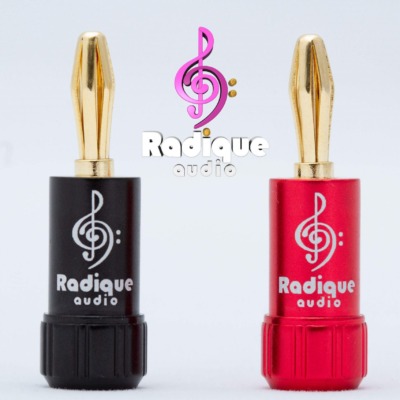
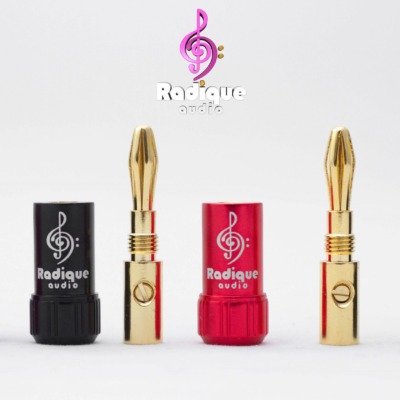
Banana plugs that stay put: gold-plated, with two set screws holding the wire instead of one.
- Six-leaf gold-plated springs for a tight fit in the binding post
- Full-length non-conductive jackets, colour-coded red and black
- Fits 12 to 18 AWG speaker wire; 19.4 g a pair
- Packs of 1, 2, 4, 5, 7 or 14 pairs
- 1-year warranty
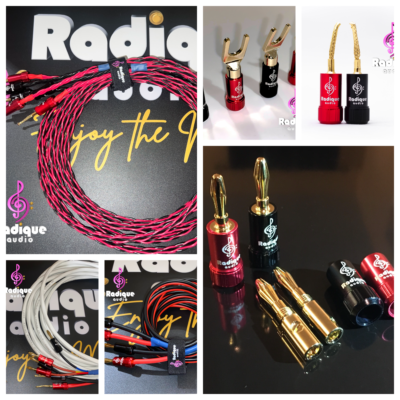
Custom Speaker Cable Builder
Your specs, your cable: choose the cable, the length and each connector, with live pricing.
- House CCA, House OFC, House Quad, Kimber 4PR or Kimber 4TC
- Banana, spade, pin, small spade or bare wire, chosen for each end
- Bi-wire on Kimber 4PR, Kimber 4TC and House Quad
- Hand-assembled, heat-shrink reinforced and colour-coordinated
- 1-year warranty
Related Products
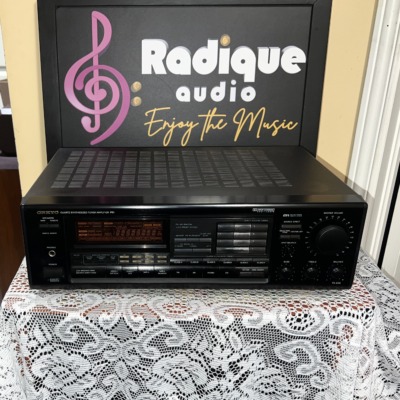
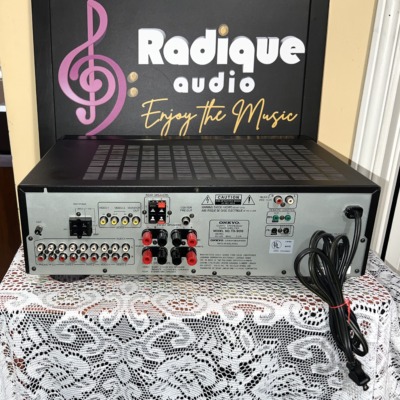
Onkyo TX-906 Stereo Receiver – 80 WPC, Dolby Pro Logic
An early-nineties Onkyo receiver with real power behind it and a phono input for your turntable, through our Level 1 service and playing as it should.
✔️ Good condition — works as it should; the black cabinet and faceplate present well
✔️ Through our Level 1 service — cleaned, deoxidized, checked and thoroughly tested on our bench
✔️ Phono input for your turntable, plus CD and two tape inputs
✔️ Covered by Radique Warranty
✔️ Includes Perpetual Trade-Back Program eligibility
✔️ Expertly packed for safe shipping
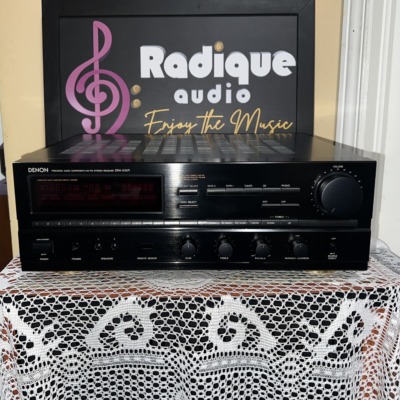
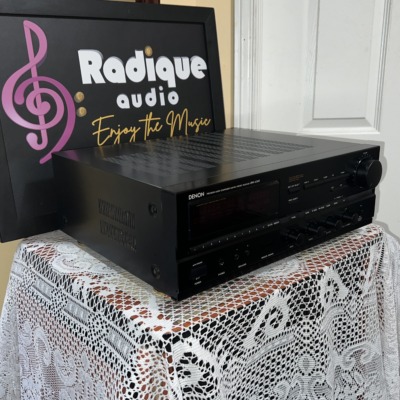
Denon DRA-835R Vintage Stereo Receiver – 100 WPC, Made in Japan
The second-from-the-top model in Denon's early-nineties stereo receiver range, made in Japan and in very good condition, with 100 watts per channel, a phono stage, motorized volume and its original remote.
✔️ Very good condition — free of significant marks
✔️ 100 WPC, MM phono and motorized volume — made in Japan
✔️ Original Denon remote included
✔️ Covered by Radique Warranty
✔️ Includes Perpetual Trade-Back Program eligibility
✔️ Expertly packed for safe shipping
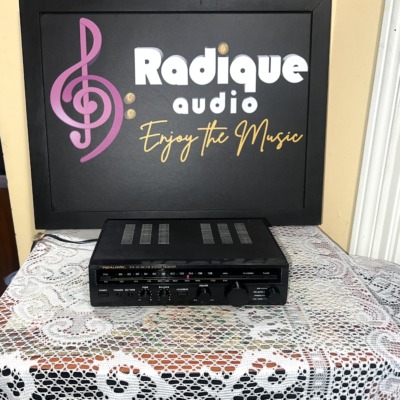
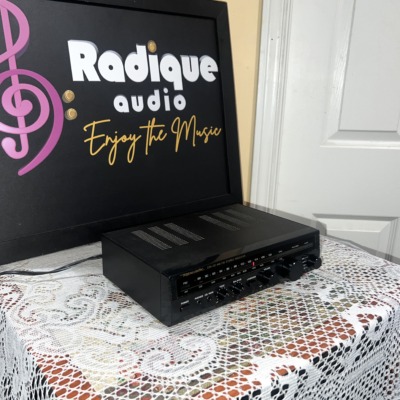
Realistic STA-20 Compact AM/FM Stereo Receiver – 5 WPC, Serviced
Radio Shack's smallest AM/FM stereo receiver of the 1990s, the Realistic STA-20: 5 watts per channel, a rear EQ switch made for mini-speakers, a phono input and a front jack for a phone.
✔️ Serviced on our bench to our Level 1 standard
✔️ Very good condition
✔️ Covered by Radique Warranty
✔️ Includes Perpetual Trade-Back Program eligibility
✔️ Expertly packed for safe shipping
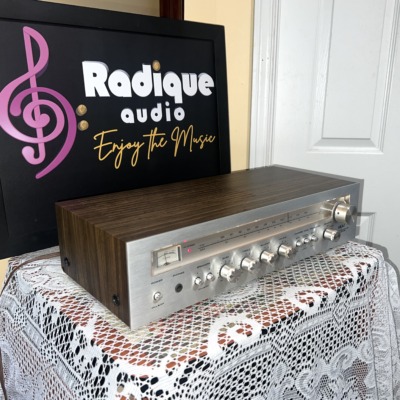
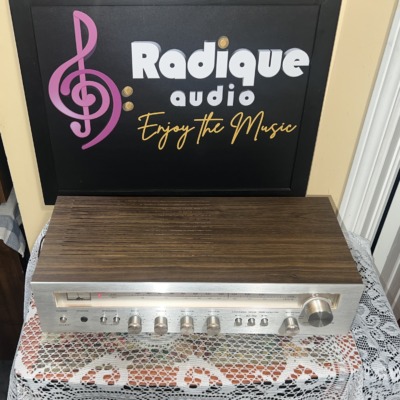
Akai AA-1115 Vintage Stereo Receiver – 15 WPC, Made in Japan
A slim late-1970s Akai AA-1115 AM/FM stereo receiver, made in Japan, silver face in its original woodgrain cabinet.
✔️ Tested on our bench, every input, output and control
✔️ Very good condition
✔️ MM phono, PLL FM tuner, speakers A and B
✔️ Covered by Radique Warranty
✔️ Includes Perpetual Trade-Back Program eligibility
✔️ Expertly packed for safe shipping
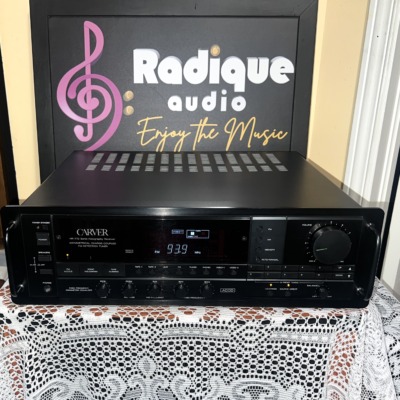
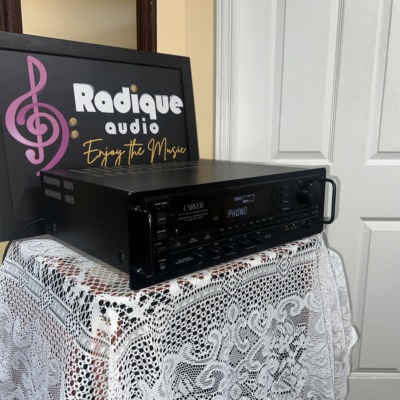
Carver HR-772 Sonic Holography Receiver – 140 WPC, Rack Ears
A Carver HR-772 stereo receiver, Carver's early-1990s flagship: 140 watts per channel, Sonic Holography, and rack ears with front handles.
✔️ Tested on our bench, Sonic Holography included
✔️ Very good condition
✔️ 140 WPC, stable to 2 ohms, MM phono, five-band EQ
✔️ Rack ears and handles for a 19-inch rack
✔️ Covered by Radique Warranty
✔️ Includes Perpetual Trade-Back Program eligibility
✔️ Expertly packed for safe shipping
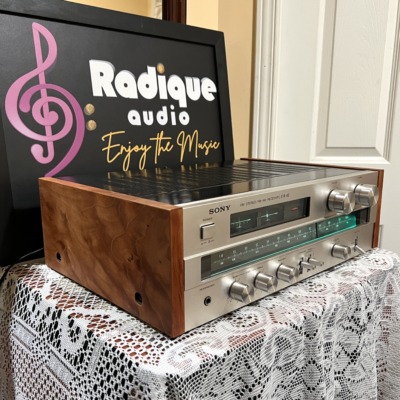
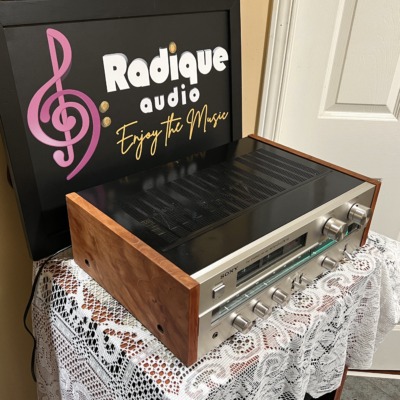
Sony STR-V2 Vintage Receiver – 25 WPC, Ottawa Valley Cherry
A 1978 Sony STR-V2 stereo receiver, dressed in Ottawa Valley cherry side panels hand-made by our master woodworker, Sean. Tested on our bench and working well.
✔️ 25 watts per channel, with a phono input for your turntable
✔️ Brushed silver faceplate with a long FM/AM dial and signal meter
✔️ Ottawa Valley cherry side panels, hand-made for this receiver
✔️ Tested on our bench and working well
✔️ Covered by Radique Warranty
✔️ Includes Perpetual Trade-Back Program eligibility
✔️ Expertly packed for safe shipping
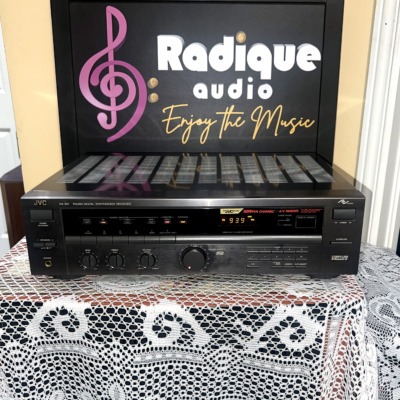
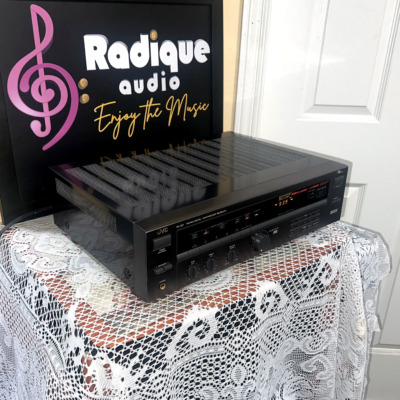
JVC RX-307 Stereo Receiver – 80 WPC, Original Remote & Manual
Eighty watts a side, a proper phono input, and the two things these almost never come with any more: the original remote and the printed manual.
✔️ Condition: Very Good
✔️ Covered by Radique Warranty
✔️ Includes Perpetual Trade-Back Program eligibility
✔️ Expertly packed for safe shipping
