
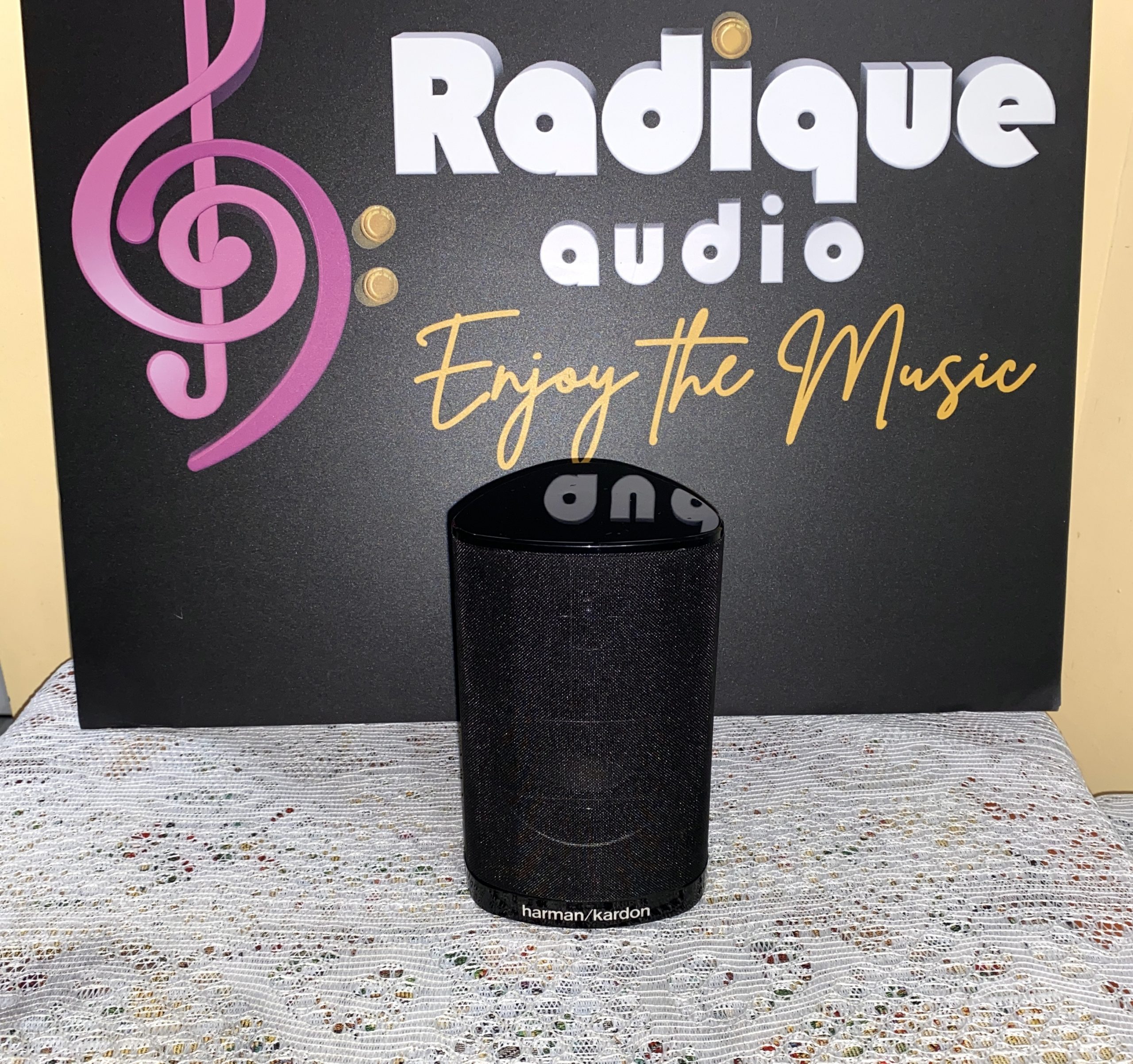
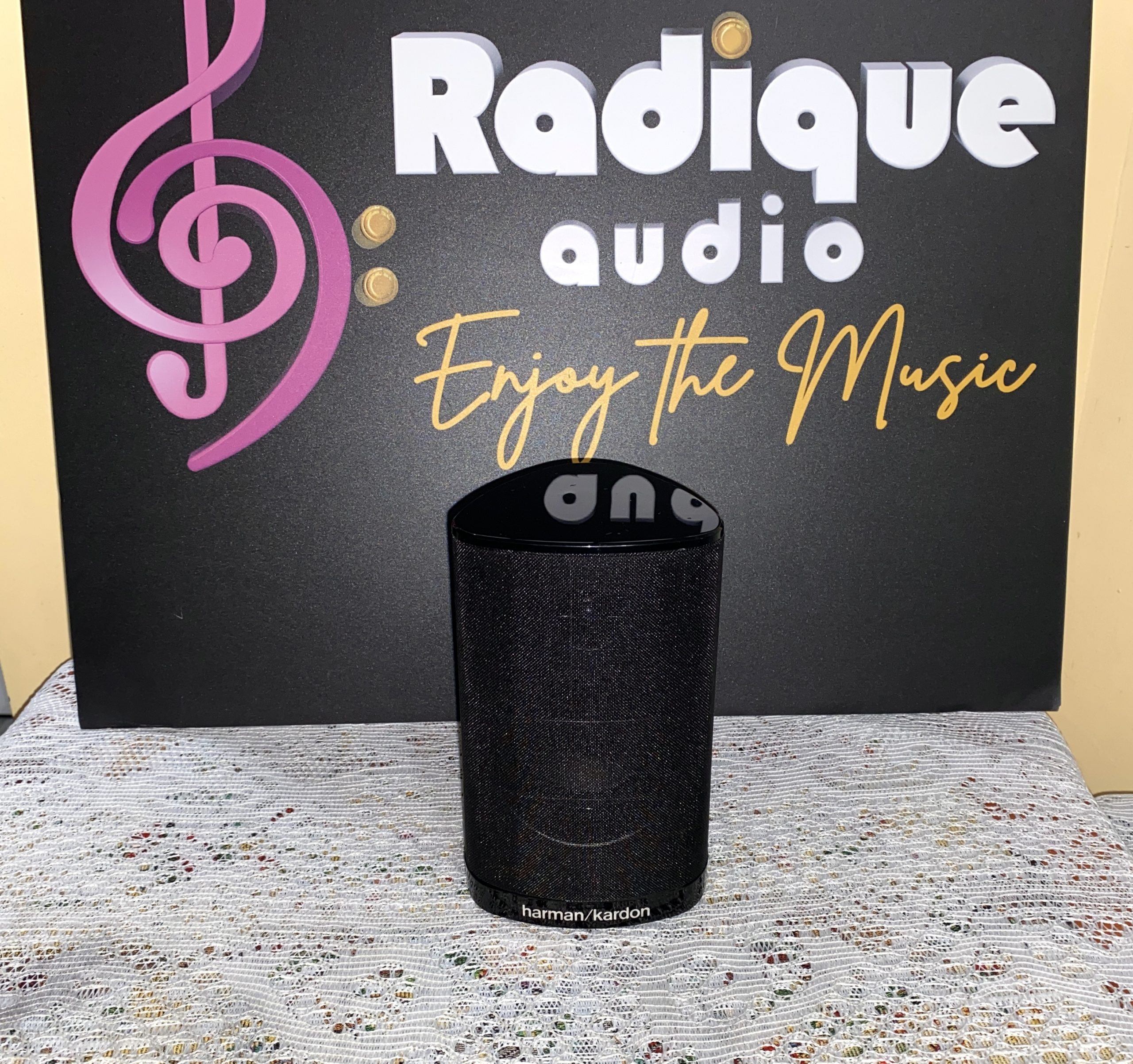

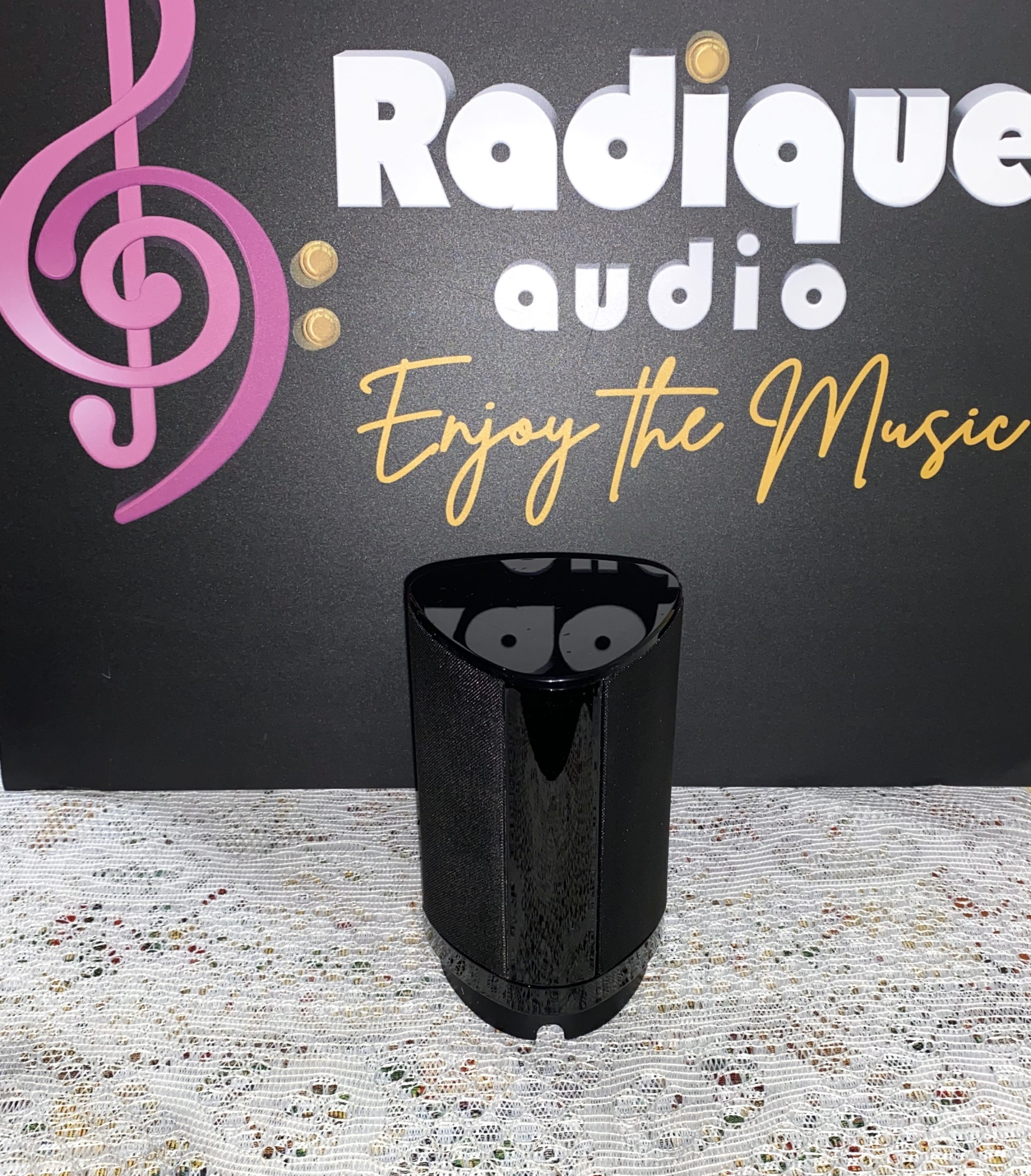

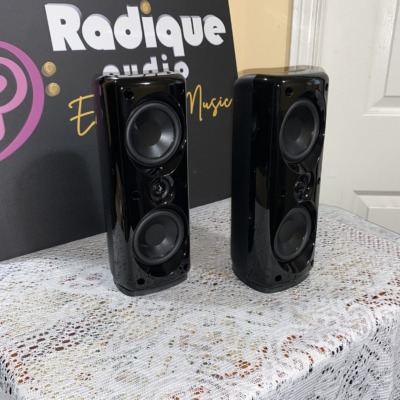
Harman Kardon SAT-TS15 Satellite Speaker – Single, Gloss Black
$40.00
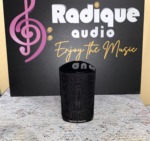
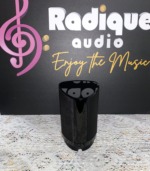
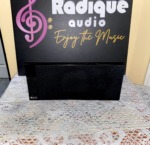
A single, beautiful Harman Kardon SAT-TS15 satellite speaker in high-gloss black, tested and working well. This is one speaker, not a pair.
✔️ One speaker, not a pair
✔️ 1/2-inch dome tweeter and 3-inch midrange, both video-shielded
✔️ Recommended power 10 to 80 watts
✔️ 86 dB sensitivity
✔️ High-gloss black finish
✔️ Tested and working well
✔️ Covered by Radique Warranty
✔️ Includes Perpetual Trade-Back Program eligibility
✔️ Expertly packed for safe shipping
1 in stock
A beautiful Harman Kardon satellite speaker. This is a single speaker.
Sounds even better than it looks
Featuring an eye-catching high-gloss-black finish and a sleek design, the SAT-TS15 would be a stunning addition to any home theater system based on looks alone. But the SAT-TS15 sounds even better than it looks.
Tested and working well.
Harman Kardon SAT-TS15 Specifications
- High-frequency transducer: One 1/2″ dome, video-shielded
- Midrange transducer: One 3″ driver, video-shielded
- Recommended power: 10 – 80 watts
- Sensitivity: 86dB @ 1 watt/1 meter
- Dimensions (H x W x D): 167mm x 100mm x 92mm
- Weight: 1.65 lb / 0.74kg
See everything we have in stock from Harman Kardon.
🔌 Speaker Cable, Built on Our Own Bench
We hand-build speaker cable here in any length you need — pick the gauge and the terminations on our Custom Speaker Cable Builder. We also make our own gold-plated banana plugs, spades and pin connectors if you would rather terminate cable you already have. 👉
✅ Buy With Confidence — The Radique Promise
Backed by Radique Audio’s Bumper-to-Bumper Warranty and our Perpetual Trade-Back Program. When you’re ready to move on, we’ll take it back. That’s the Radique difference.
📦 Watch how we protect your gear — our unboxing video.
📺 Curious about our business? Check out our YouTube channel for behind-the-scenes videos and more!
📞 Questions? Use the Ask a Question button above, or call us at 613-416-9995.
| Weight | 3 lbs |
|---|---|
| Dimensions | 7.6 × 8 × 10.6 in |
| Impedance | 8 Ω |
| Power Handling | 51–100 W |
| Sensitivity | 86–89 dB |
| Woofer Size | 5″ and under |
Harman Kardon began in New York in 1953, founded by Sidney Harman, who was born in Montreal, and Bernard Kardon. Harman Kardon calls its 1954 Festival D1000 the first hi-fi receiver. We carry Harman Kardon stereo receivers, AV receivers, integrated amplifiers, cassette decks and CD players. We've had more than 130 Harman Kardon listings so far. Every used Harman Kardon here is inspected, tested and serviced as required, then photographed in-house and covered by our Bumper-to-Bumper Warranty and Perpetual Trade-Back Program. Every AV receiver we list is tested input by input on our bench: each HDMI input and output, the analog, optical and coaxial inputs, the subwoofer outputs and the wireless features where it has them. Don't see the model you want? Tell us on First Dibs and we'll email you when one arrives.
The Harman Kardon story, 1953 to today
Sidney Harman and Bernard Kardon left the David Bogen Company, where Kardon was chief engineer, and founded Harman Kardon in New York in 1953. Harman was born in Montreal in 1918 and grew up in New York. Kardon retired in the 1950s.
Receivers first. Harman Kardon calls the Festival D1000 of 1954 the first hi-fi receiver and the Festival TA230 of 1958 the first stereo receiver. The Citation II tube power amplifier of 1959, designed by Stu Hegeman, sold as a kit or ready-built.
Cassette and the 1970s. Harman Kardon says its CAD-5 of 1970 was the first hi-fi cassette recorder with Dolby noise reduction. Its "Twin Powered" receivers of the 1970s, such as the 430 and 730, gave each channel its own power supply.
Owners. Sidney Harman sold the company to Beatrice Foods in the late 1970s, when he became US Deputy Secretary of Commerce. He formed Harman International in 1980 and bought Harman Kardon back in 1985. Samsung bought HARMAN in 2017, and Harman Kardon remains one of its brands.
Which Harman Kardon is which?
Tube era (1950s and 1960s): Festival receivers, and Citation kits and factory-built units such as the Citation I preamplifier and II amplifier.
1970s receivers: the 330 series, the Twin Powered 630, 930, 430 and 730, and the HK670.
1980s receivers: the "i" models such as the hk690i, advertised for its high current capability, and the 330i.
Citation separates: solid-state Citation amplifiers and preamplifiers from 1970 to the 1990s, including the Citation XX of the early 1980s.
Cassette decks: from the CAD-4 and CAD-5 to the 1980s decks numbered CD91 to CD491. Those "CD" models are cassette decks, not CD players; Harman Kardon CD players carry "HD" names.
AV receivers (late 1990s on) and later stereo: the AVR line, such as the AVR 3600, and stereo models such as the HK 3700 and HK 990.
Buying used Harman Kardon: what to check
Dial and meter lamps. Owners report dead or flickering lamps on 1970s receivers such as the 930, 430 and 330C; many are replaced with LEDs.
Capacitors. Expect a 1970s receiver that hasn't been recapped to need it.
Output stage. Owners report blown output transistors on the 730 and 430, often caused by a failed part nearby. Both channels should play cleanly at a realistic level.
Switches. Owners say the 1980s "i" receivers are prone to dirty switches that make channels cut out. Try every input and the balance control.
AV receivers. HDMI is usually the first thing to fail on a modern AV receiver. We test every HDMI input and output before listing.
Everything we list is inspected, tested and serviced as required here, and comes with our warranty.
You may also like…

Insignia NS-SP211 2-Way Satellite Speakers, Shielded
A 3-inch woofer and a half-inch PEI dome in a sealed cabinet, 150 Hz to 20 kHz, 8 ohms, 80 watts peak. Keyhole slots are moulded into the back so they hang on a screw in any orientation without a bracket, and a detachable rubber base is included for shelf use. Magnetically shielded. Good cosmetic condition, tested.
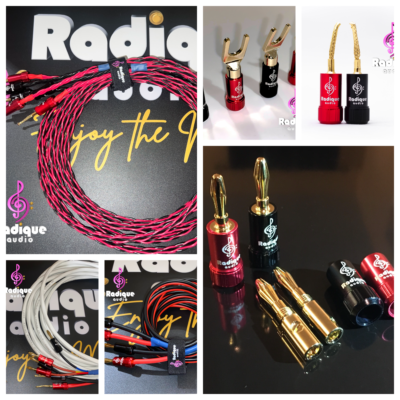
Custom Speaker Cable Builder
Your specs, your cable: choose the cable, the length and each connector, with live pricing.
- House CCA, House OFC, House Quad, Kimber 4PR or Kimber 4TC
- Banana, spade, pin, small spade or bare wire, chosen for each end
- Bi-wire on Kimber 4PR, Kimber 4TC and House Quad
- Hand-assembled, heat-shrink reinforced and colour-coordinated
- 1-year warranty
Related Products
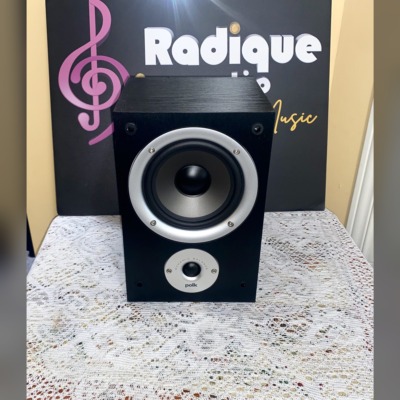
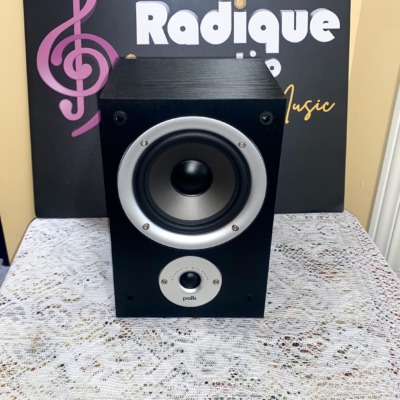
Polk Audio R150 Bookshelf Speaker – Single, 5-Way Posts
A single, great sounding Polk Audio R150 bookshelf speaker. This is one speaker; a pair of the same model is listed separately.
✔️ One speaker, not a pair
✔️ 5-1/4-inch Dynamic Balance woofer with butyl rubber surround
✔️ 3/4-inch Dynamic Balance tweeter with neodymium magnet
✔️ 65 Hz to 20 kHz, 89 dB, 8 ohms
✔️ Handles up to 100 watts
✔️ 5-way binding posts
✔️ Video-shielded
✔️ Covered by Radique Warranty
✔️ Includes Perpetual Trade-Back Program eligibility
✔️ Expertly packed for safe shipping
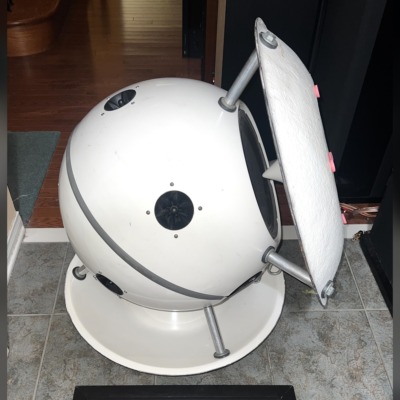
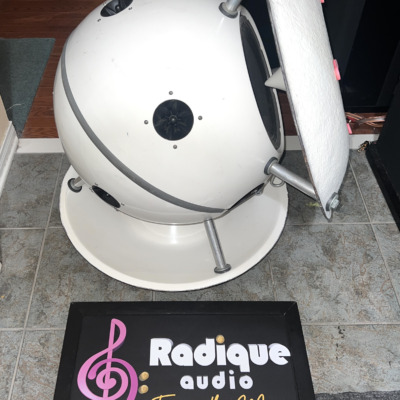
SoundSphere 2212-2 Omnidirectional Speaker – 400 W, Made in USA
A single SoundSphere 2212-2, the big two-reflector model, made in the USA: two 12-inch woofers, six tweeters and 400 watts, sending sound through 360 degrees.
✔️ Tested on our bench, both woofers and all six tweeters
✔️ Good condition, wear from use
✔️ Two reflectors, 400 W RMS, 4 ohms, 1/4-inch input
✔️ Covered by Radique Warranty
✔️ Includes Perpetual Trade-Back Program eligibility
✔️ Curbside delivery, local collection or freight within Canada
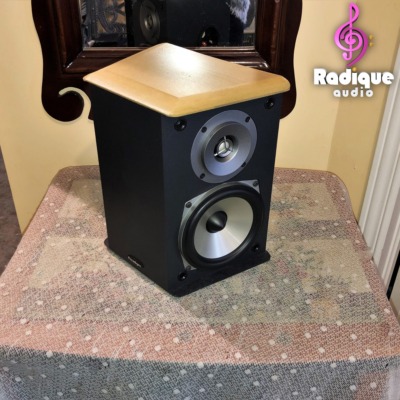
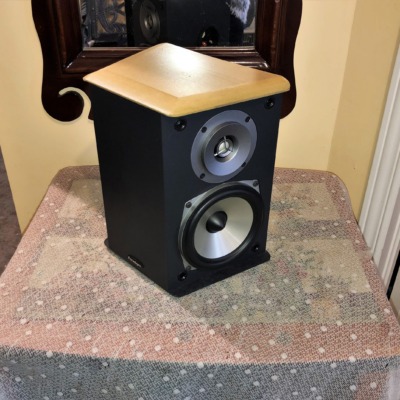
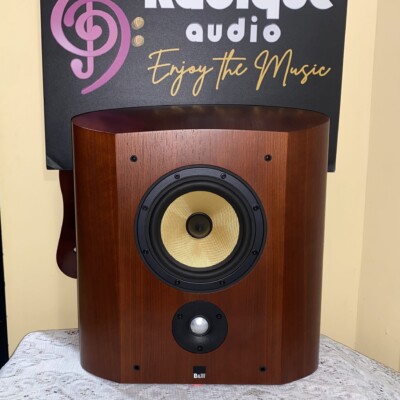
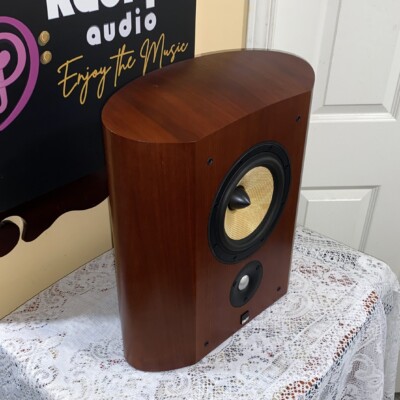
Paradigm ADP-170 v4 Dipole Surround Speaker – Single
A single (one) Paradigm ADP-170 v4 four-driver, two-way dipole surround speaker. Cosmetic flaw: the upper piece of vinyl cladding has been removed.
✔️ One speaker, not a pair
✔️ Adapted dipole: a diffuse soundfield with better bass than a conventional dipole
✔️ Two 3/4-inch CMC dome tweeters and two 5-1/2-inch MPC cones
✔️ 90 Hz to 20 kHz, 90 dB in room, 8 ohms
✔️ Handles 15 to 100 watts
✔️ Cosmetic flaw: the upper piece of vinyl cladding has been removed
✔️ Original MSRP of $549 plus tax per pair
✔️ Covered by Radique Warranty
✔️ Includes Perpetual Trade-Back Program eligibility
✔️ Expertly packed for safe shipping
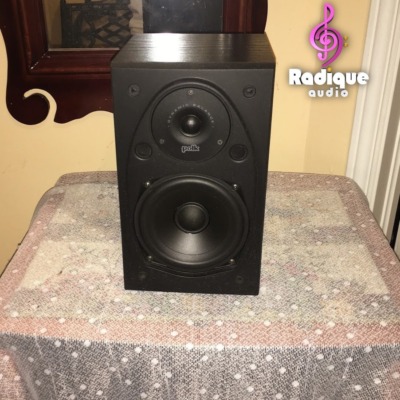

Polk Audio RT-15 Bookshelf Speaker – Single, 5-Way Posts
A single, great sounding Polk Audio RT-15 bookshelf speaker in great condition. This is one speaker, not a pair.
✔️ One speaker, not a pair
✔️ 5-1/4-inch Dynamic Balance mid/woofer
✔️ 3/4-inch Dynamic Balance silk dome tweeter
✔️ 63 Hz to 24 kHz, 89 dB, 8 ohms
✔️ Recommended amplifier power 20 to 100 watts per channel
✔️ 5-way binding posts and integrated keyhole slots
✔️ In great condition
✔️ Covered by Radique Warranty
✔️ Includes Perpetual Trade-Back Program eligibility
✔️ Expertly packed for safe shipping
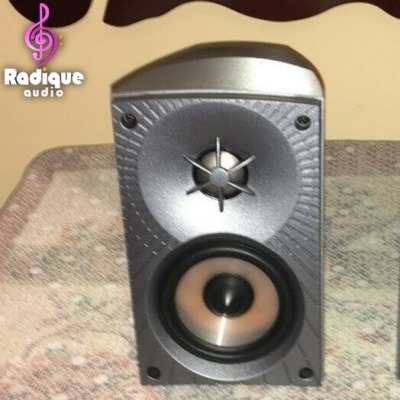

Paradigm Cinema 70 v3 Satellite Speaker – Single, Sealed
A single, high quality Paradigm Cinema 70 v3 satellite speaker with a sealed (acoustic suspension) cabinet. This is one speaker, not a pair.
✔️ One speaker, not a pair
✔️ 0.63-inch polymer-composite dome tweeter and 3.5-inch polypropylene cone woofer
✔️ 2-driver, 2-way acoustic suspension design
✔️ Handles 15 to 80 watts at 8 ohms
✔️ Mineral-filled polymer enclosure with MagneShield
✔️ Binding posts accept banana plugs, pins or stripped wire
✔️ Covered by Radique Warranty
✔️ Includes Perpetual Trade-Back Program eligibility
✔️ Expertly packed for safe shipping
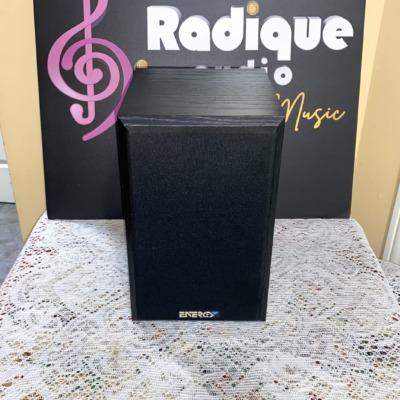
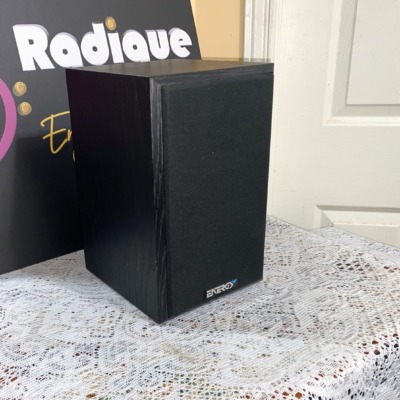
Energy Pro Series .5 Bookshelf Speaker – Single, Canadian Made
A single, great sounding Energy Pro Series .5 compact bookshelf speaker: designed, engineered and made in Canada. This is one speaker, not a pair.
✔️ One speaker, not a pair
✔️ 1/2-inch flared dome tweeter and 5 1/4-inch injection molded woofer
✔️ Rear ported, with a surprising amount of bass for its size
✔️ 60 Hz to 20 kHz, 86.5 dB anechoic, 8 ohms
✔️ Maximum power rating 80 watts
✔️ 5-way bindings suitable for banana plugs
✔️ Designed, engineered and made in Canada
✔️ Covered by Radique Warranty
✔️ Includes Perpetual Trade-Back Program eligibility
✔️ Expertly packed for safe shipping
