
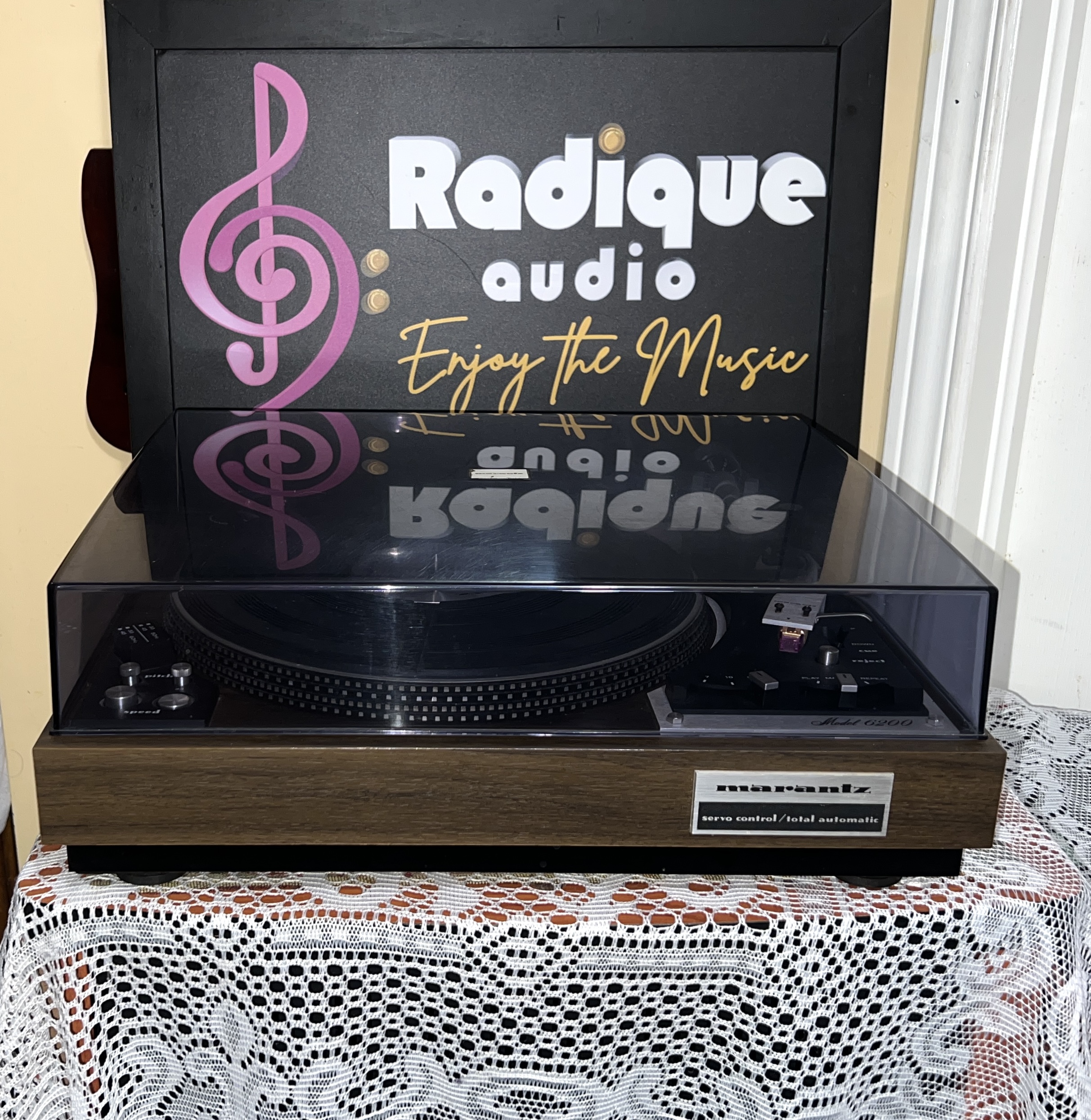

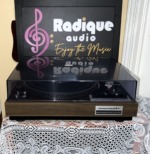
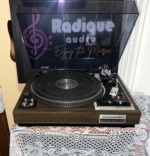
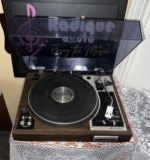
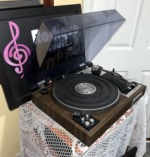
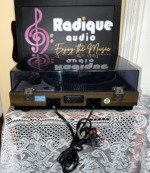

Marantz Model 6200 Turntable – Walnut, Empire 4000 XL-I
$895.00
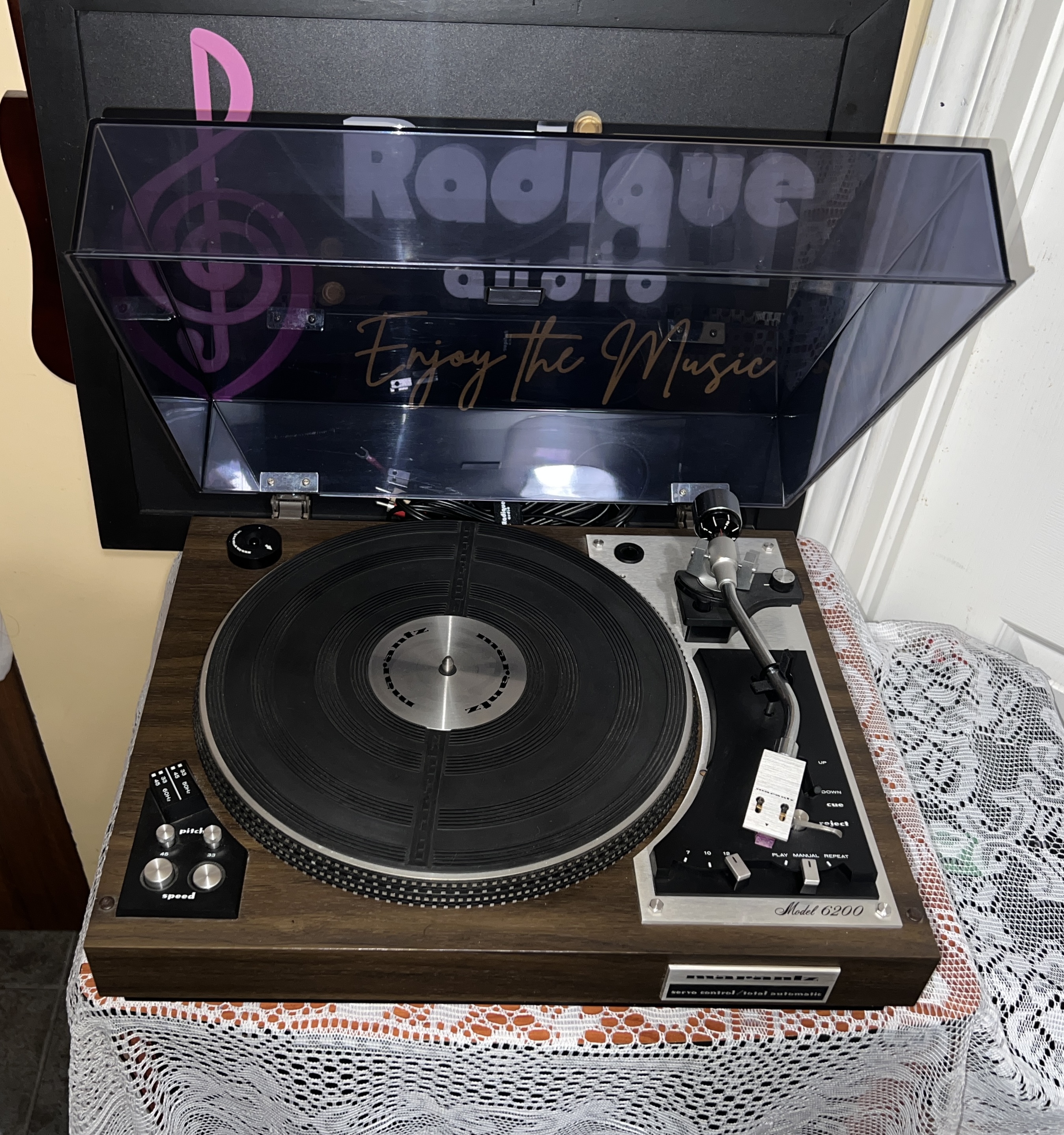
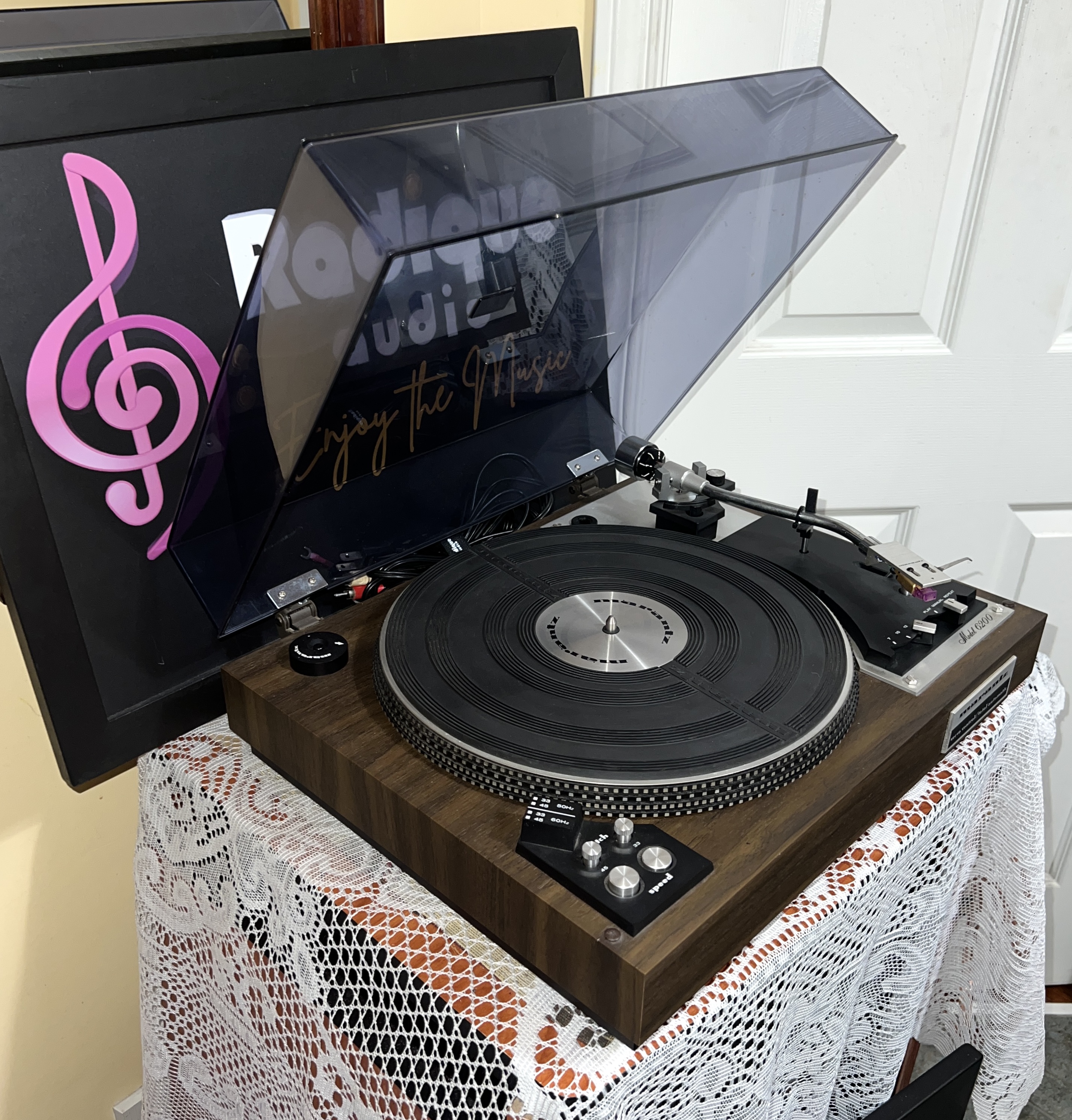
A fully automatic Marantz belt drive in walnut, carrying an Empire 4000 XL-I — a cartridge chosen for the same job this turntable was built for.
✔️ Condition: Very Good — every function runs smoothly
✔️ Covered by Radique Warranty
✔️ Includes Perpetual Trade-Back Program eligibility
✔️ Curbside delivery, local collection or freight within Canada
Out of stock
This one has sold. Want first dibs on the next one?
We take these in regularly. Leave your name and email, and we’ll email you the moment one is listed, so you hear first. No cost, no obligation.
Email me when one is listed
How we get a component ready for sale. What our bench covers →
Other turntables we have in stock now
3 in stock · $295.00–$495.00 · pickup in Kanata
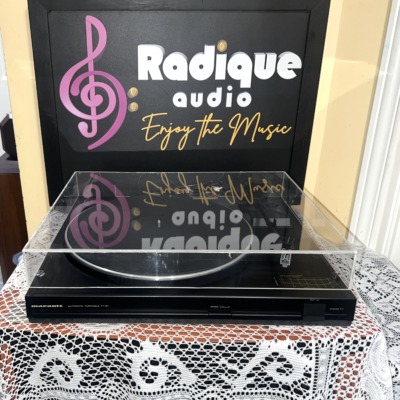 Marantz TT151 Belt-Drive Turntable – 1980s, Serviced$295.00Pickup in Kanata
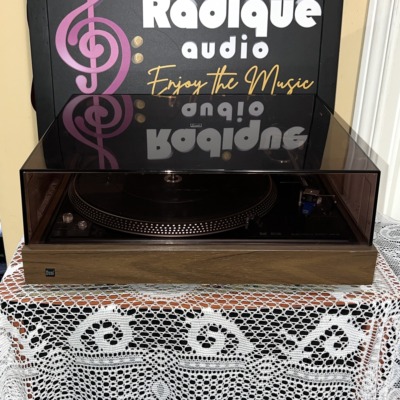 Dual 606 Direct-Drive Turntable – Made in Germany, Serviced$495.00Pickup in Kanata
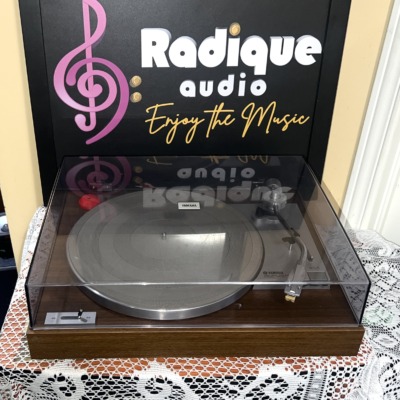 Yamaha YP-211 Belt-Drive Turntable – Made in Japan$445.00Pickup in Kanata
How we get a component ready for sale.
Before a used or vintage component is listed, it goes through our bench, and anything we service is tested again by a different tech. See exactly what our bench covers.
What our bench covers →A fully automatic Marantz belt drive in walnut, carrying an Empire 4000 XL-I — a cartridge chosen for the same job this turntable was built for.
What it is
The Model 6200 sits in the run of turntables Marantz had built by CEC in the mid-seventies, and they were built properly — a point people who have had the plinth off tend to make unprompted, comparing them favourably with the Pioneer belt drives of the same period.
The drive is a belt turned by an AC servo motor with a built-in frequency generator, which watches its own speed and corrects continuously rather than trusting the mains to stay honest. Speed is set against a strobe, with independent fine adjustment on each of the two speeds, so 33 and 45 are tuned separately instead of sharing one compromise. Wow and flutter is quoted at 0.06 percent and rumble at 60 dB down.
The tone arm is a static-balance S-shaped design with calibrated tracking force and anti-skate, and the cueing is hydraulically damped — the lever lowers the stylus at its own unhurried pace and will keep doing it after you have stopped paying attention. Automatic return and repeat are both there, and the platter is a 30 cm aluminum die-casting under a mat impregnated with anti-static compound, which keeps the record from collecting the dust it would otherwise attract.
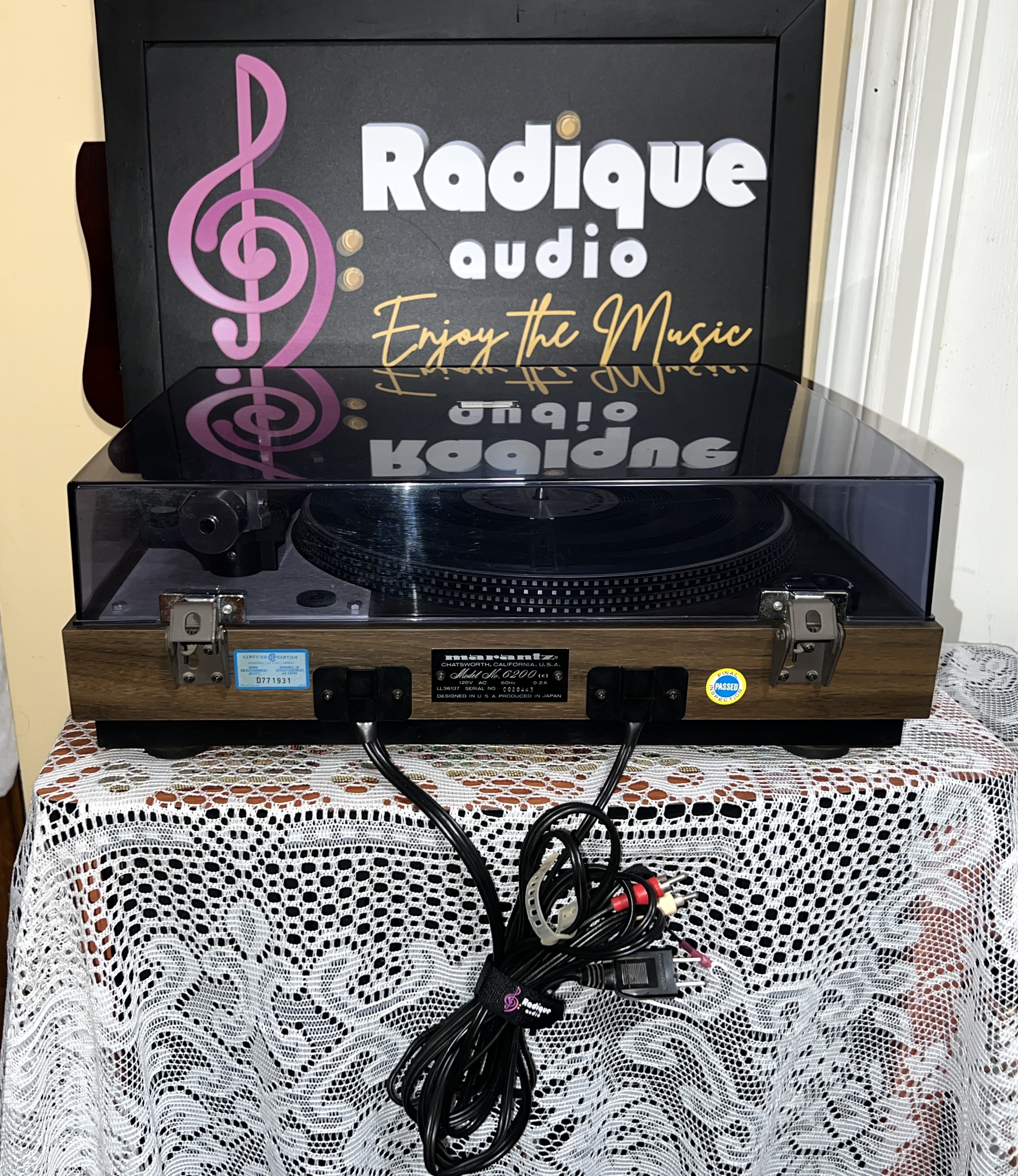
One detail worth pointing out: the output cables are deliberately low capacitance, specified for CD-4 quadraphonic playback. That mattered in 1976 for reasons most people have forgotten, and it matters again now, because a low-capacitance lead is simply the better electrical path for any cartridge with a wide response.
The cartridge
This is the part that makes this one worth a closer look, and it is not an accident.
Mounted in the headshell is an Empire 4000 XL-I, gold-bodied, with its magenta stylus. Empire split that range in two: the 2000 numbers were the stereo cartridges, the 4000 numbers were the wide-response line, built when the industry was chasing discrete four-channel records. Those needed a cartridge that could read information far above anything you can hear, because the rear channels rode on a carrier up around 30 kHz. Empire’s answer was the 4000 series — gold-plated bodies, miniature nude diamonds, and a response specification that runs to 40 kHz.
Now look back at the turntable. The 6200’s output cables are deliberately low capacitance, specified by Marantz for CD-4 playback — the same four-channel format, with the same requirement. Whoever put this cartridge on this table understood what both pieces were for. That is a considered pairing from the period, not a cartridge that happened to be in a drawer.
The practical benefit today has nothing to do with quadraphonic records, which almost nobody plays. It is that a cartridge engineered to stay accurate to 40 kHz is working comfortably within itself across the whole audible range, feeding an arm wired with the lowest-capacitance cable Marantz could specify. The four-channel era is long over. The front end it produced is still very good.
It sits in the original Marantz headshell, which is worth having on a table of this age — the arm takes any standard S-arm headshell, so the factory one is usually the first thing to go missing.
Other work
The ground wire has been fitted with a spade lug, so it lands properly on an amplifier’s ground post instead of being a bare strand wound round a screw.
Condition
Very good. Every function runs smoothly, and the walnut and the dust cover present well.
A well-made Marantz automatic wearing the cartridge it was meant to wear.
Marantz Model 6200 Specifications
- Drive: belt, AC servo motor with built-in frequency generator
- Speeds: 33 1/3 and 45 rpm, strobe referenced
- Speed control: independent fine adjustment on each speed
- Wow and flutter: 0.06% WRMS
- Rumble: -60 dB
- Platter: 30 cm aluminum die-cast, 800 g, anti-static impregnated mat
- Tone arm: static balance, S-shaped, calibrated tracking force and anti-skating
- Cueing: hydraulically damped
- Automatic functions: auto return, repeat, auto shutoff
- Output cables: low capacitance, CD-4 compatible
- Cartridge: Empire 4000 XL-I, gold-bodied, magenta stylus, in the original Marantz headshell
- Empire 4000 series: wide-response line, gold-plated body, miniature nude diamond
- Ground lead: upgraded with a spade lug
- Finish: walnut
- Built for Marantz by CEC, 1976 to 1977
- Dimensions: (Width x Height x Depth) 17.3 x 6.5 x 13.8 inches (440 x 165 x 350 mm)
- Weight: approximately 17 lbs (7.6 kg)
🚚 Curbside Delivery — This Item Ships Differently
We do not ship turntables by courier. Instead we offer personal curbside delivery by our own vehicle, collection in person from us in Kanata, or freight anywhere in Canada. Please contact us before purchasing — use the pink Ask a Question button on this page and include your postal code, and we will come back with pricing and timelines so you can decide before you buy. Full details and coverage area are on our Curbside Delivery page. 👉
⚠️ Important Information for International Buyers
This unit is configured for North American 110/120V power. Buyers outside North America will require a step-down transformer and appropriate plug adapter.
✅ Buy With Confidence — The Radique Promise
Backed by Radique Audio’s Bumper-to-Bumper Warranty and our Perpetual Trade-Back Program. When you’re ready to move on, we’ll take it back. That’s the Radique difference.
📦 Watch how we protect your gear — our unboxing video.
📺 Curious about our business? Check out our YouTube channel for behind-the-scenes videos and more!
📞 Questions? Use the Ask a Question button above, or call us at 613-416-9995.
| Drive Type | Belt Drive |
|---|---|
| Operation | Fully Automatic |
- Hard-to-beat pricing
- Free shipping across Canada
- Manufacturer's warranty
- Get a quote on new Marantz
Marantz began in 1953 in Queens, New York, where Saul Marantz built tube preamplifiers and amplifiers, and by the 1970s it was making receivers with champagne-gold faceplates, blue-lit dials and flywheel tuning. We carry Marantz receivers, amplifiers and preamps, turntables, tuners, CD players and cassette decks. We've had more than 150 Marantz listings so far, covering nearly 100 different models. Every used Marantz here is inspected, tested and serviced as required, then photographed in-house and covered by our Bumper-to-Bumper Warranty and Perpetual Trade-Back Program. Looking for new Marantz? We also quote new Marantz direct from the Canadian distributor, with free shipping within Canada: request a quote below. Don't see the model you want? Tell us on First Dibs and we'll email you when one arrives.
Marantz is one of our two top-selling brands of vintage amps and receivers, along with Pioneer. Our five best-selling Marantz models so far: the SR4023 stereo receiver, the vintage 2225, the SR7000 AV receiver, the SR4320 stereo receiver and the vintage 2238B. Many Marantz components were sold without their wood case, so we build our own line of Marantz-specific cabinets, hand-made in genuine Ottawa Valley cherrywood veneer: so far the WC-22 style for the 2220 through 2285B receivers and the WC-10 style for 16 slim-chassis models such as the 1060, 1070 and 112, with more models coming.
The Marantz story, 1953 to today
Saul B. Marantz founded the company in New York in 1953. His first product, the Audio Consolette preamplifier, became the Model 1, and Marantz dates the first Consolettes to 1952–53. Marantz says the early factory was in Woodside, Queens.
The tube years. Through the late 1950s and early 1960s Marantz built a small run of tube separates in New York that collectors still chase: the Model 7 preamplifier (1958), the Model 9 power amplifier (1960) and the Model 10B tuner (1964).
Superscope and the move to Japan. In 1964 Superscope, the company that also distributed Sony tape recorders in the US, bought Marantz, and Saul Marantz resigned at the end of 1967. The Model Eighteen of 1968 was the first Marantz receiver, rated at 40 watts per channel. Under Superscope, design moved to California and, from the late 1960s, production moved to Japan through Standard Radio, which became Marantz Japan in 1975. Receivers such as the 2230 and 2270 are listed as designed in the USA and produced in Japan.
The power race. After a 1974 Federal Trade Commission rule tightened how amplifier power was rated, receiver makers competed on watts. Marantz's Model 2500 of the late 1970s was rated at 250 watts per channel and had an oscilloscope tuning display.
Philips, Denon and today. In 1980 Philips bought Superscope's stake in Marantz Japan and the brand outside the US and Canada. Marantz says its CD-63 of 1982 was one of the first CD players, and its "KI Signature" models carry the initials of Ken Ishiwata, who joined in 1978. In 2001 Marantz Japan bought the trademark back from Philips, and in 2002 it combined with Denon to form D&M Holdings. In September 2025 HARMAN, a Samsung company, completed its purchase of Sound United, the parent of Marantz and Denon.
Which Marantz is which?
Tube separates (1950s–60s): the Models 1, 7, 8B, 9 and 10B, built in New York. Rare collector pieces.
First receivers (from 1968): the Model Eighteen, followed by the Nineteen at the end of 1969.
22xx receivers (from 1972): the first set was the 2215, 2230, 2245 and 2270, with the champagne-gold faceplate, blue-lit dial and "Gyro-Touch" flywheel tuning. A higher number generally means more power: the 2230 is rated at 30 watts per channel, the 2270 at 70. Later "B" versions such as the 2220B and 2285B followed.
Big late-1970s receivers: the 2325 (125 watts per channel), the 2500 flagship and four-channel "Quad" receivers.
1000-series integrated amplifiers: for example the 1060 (30 watts per channel, from 1971), the 1070 and the 1150 (75 watts per channel). The slim 1030, 1040, 1060 and 1070 share their case size with tuners such as the 104, 105 and 112.
Tuners: from the tube Model 10B to solid-state models such as the 2130, with its oscilloscope display.
Wood cases: Marantz sold its wood cases separately: the WC-22 for the 22xx receivers, the WC-10 for the slim 1000-series amplifiers and 100-series tuners, and the WC-1 for larger models such as the 1200. That is why so many turn up bare. A customer who sold Marantz in Ontario in the 1970s told us the cases his shop ordered were built here in Canada, by Westinghouse. Our own cherry WC-22 and WC-10 style cabinets are made in Canada too.
CD players: from the CD-63 of 1982 to the KI Signature versions.
Buying used Marantz: what to check
Dial and meter lamps. Burnt-out bulbs are common on 1970s receivers and are often replaced, sometimes with LEDs. Ask which, if the look of the dial matters to you.
The dial itself. The diffuser sheet behind the dial ages and can dull the glow. Check that the Gyro-Touch pointer moves smoothly and tracks the stations; dial cords are a common replacement part.
Controls and switches. Crackle when you turn a control or work a switch usually means dirt. Try every input, and walk away from a unit that drops a channel.
Capacitors and bias. Electrolytic capacitors in 1970s gear are often past their best, and full restorations replace them. Restorers also set the bias and DC offset.
Cosmetics. Pitting on the faceplate points to damp storage, and dents or water stains to rough handling.
Everything we list is inspected, tested and serviced as required here, and comes with our warranty.
You may also like…
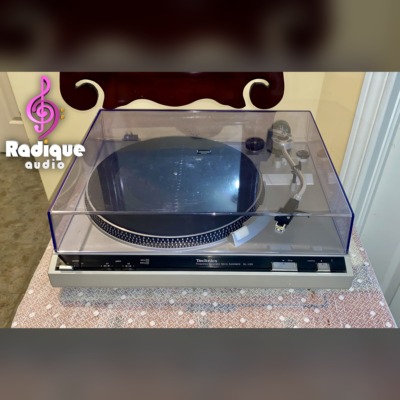
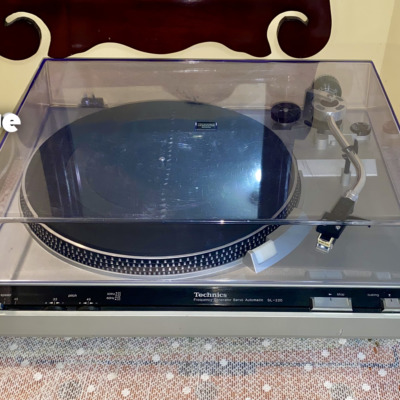
Technics SL-220 FG Servo Belt-Drive Turntable – Made in Japan
A late-1970s, made in Japan belt-drive Technics with a frequency-generator servo motor and an S-shaped arm, the quiet alternative to the direct-drive Technics everyone else buys. Choose a version for each deck's details.
✔️ Covered by Radique Warranty
✔️ Includes Perpetual Trade-Back Program eligibility
✔️ Curbside delivery along the Windsor–Québec City corridor, or pickup in Kanata
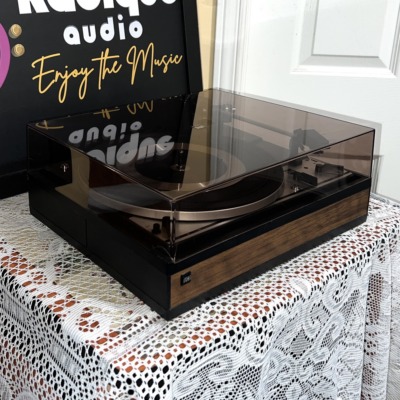
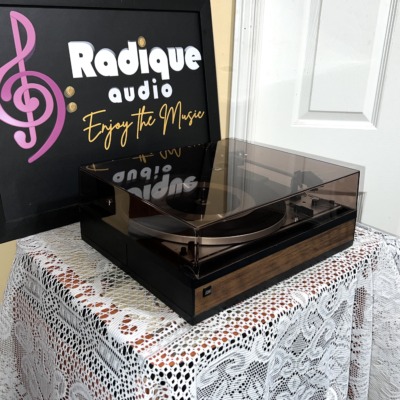
Dual 1214 Idler-Drive Turntable – German-Made 1972, Serviced
A compact, fully automatic German idler-drive from 1972, freshly serviced on our own bench.
✔️ freshly serviced on our own bench by Marc
✔️ Covered by Radique Warranty
✔️ Includes Perpetual Trade-Back Program eligibility
✔️ Curbside delivery, local collection or freight within Canada
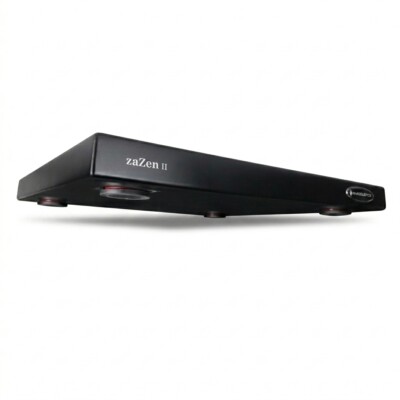
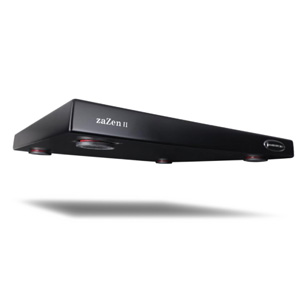
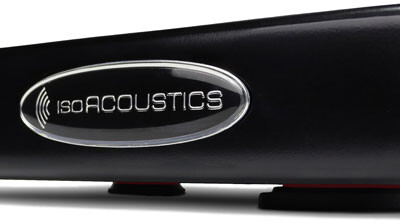
IsoAcoustics zaZen II Isolation Platform
- ✔️ Genuine IsoAcoustics, brand new, from an authorized Canadian dealer
- ✔️ Isolation platform for turntables and sensitive components up to 40 lb (18.1 kg)
- ✔️ 17 × 15 × 1.4 in (432 × 381 × 34 mm), dense fibre with built-in isolators
- ✔️ Medium-gloss black finish
- ✔️ Pick up in Kanata by appointment, or shipped across Canada and internationally
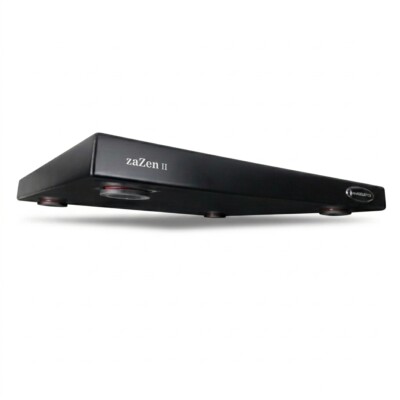
IsoAcoustics zaZen I Isolation Platform
- ✔️ Genuine IsoAcoustics, brand new, from an authorized Canadian dealer
- ✔️ Isolation platform for turntables and sensitive components up to 25 lb (11.3 kg)
- ✔️ 17 × 15 × 1.2 in (432 × 381 × 30 mm), dense fibre with built-in isolators
- ✔️ Medium-gloss black finish
- ✔️ Pick up in Kanata by appointment, or shipped across Canada and internationally
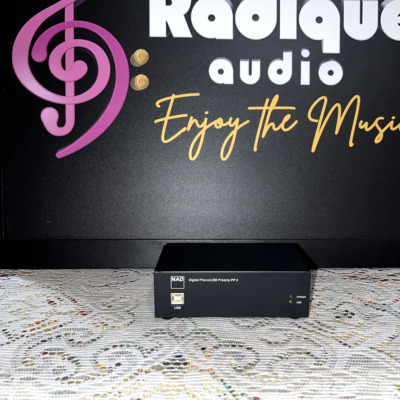
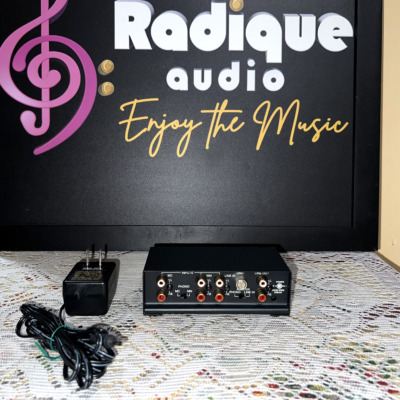
NAD PP 3 Digital Phono/USB Preamp – MM & MC, Power Supply
A proper moving-magnet and moving-coil phono stage that also digitises your records, with its original NAD power supply.
✔️ Covered by Radique Warranty
✔️ Includes Perpetual Trade-Back Program eligibility
✔️ Expertly packed for safe shipping


IsoAcoustics OREA Graphite Audio Isolation Foot (Single)
- ✔️ Genuine IsoAcoustics, brand new, from an authorized Canadian dealer
- ✔️ One isolation foot, rated 4 lb (1.8 kg); use three or more per component
- ✔️ Three carry 12 lb (5.4 kg), four carry 16 lb (7.2 kg)
- ✔️ Machined stainless steel, 1.6 in wide and 1.1 in tall (40 × 27 mm)
- ✔️ Pick up in Kanata by appointment, or shipped across Canada and internationally
Related Products
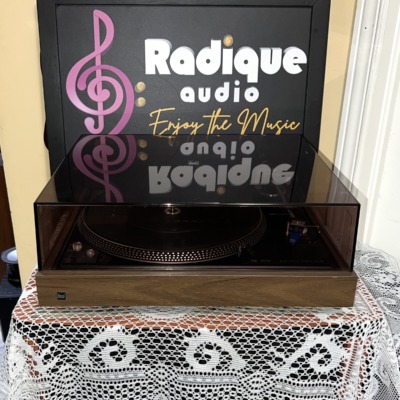
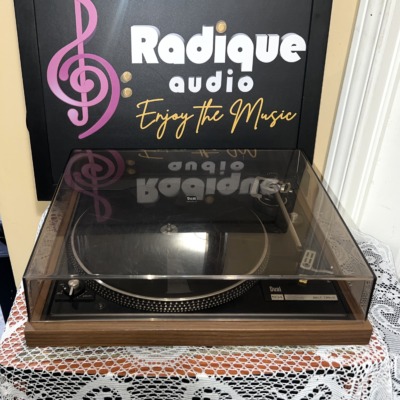
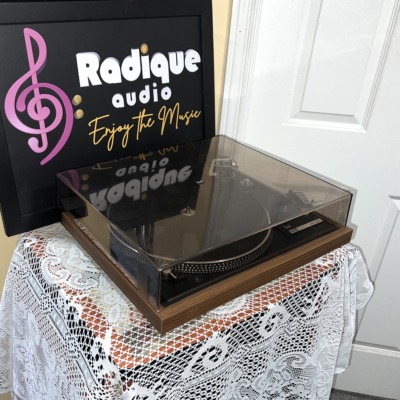
Dual 606 Direct-Drive Turntable – Made in Germany, Serviced
A German-made Dual 606 direct-drive turntable from around 1980, in a wood plinth with a polished dust cover, fully serviced by our turntable technician and in very good condition. It comes fitted with an Ortofon X1-MC moving-coil cartridge.
✔️ Very good condition — free of significant marks, smoked dust cover polished
✔️ Fully serviced by our turntable technician
✔️ Direct drive, a Dual ULM gimbal arm and an Ortofon X1-MC that plugs into any standard phono input
✔️ Covered by Radique Warranty
✔️ Includes Perpetual Trade-Back Program eligibility
✔️ Curbside delivery, local collection or freight within Canada
Dual 504 Belt-Drive Turntable – Made in Germany, Real Wood
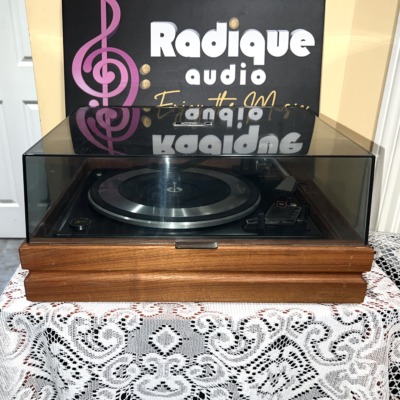
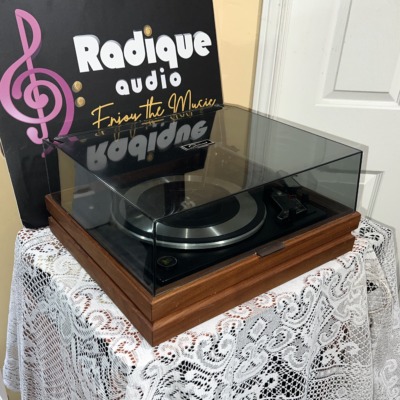
A vintage Dual 504 belt-drive turntable, made in Germany in the late 1970s, in a real wood plinth in walnut with a smoked dust cover, fitted with an Ortofon FF15XE MkII cartridge, fully tested on our bench and in very good condition.
✔️ Very good condition — free of significant marks
✔️ Real wood plinth in walnut, with a smoked dust cover
✔️ Made in Germany, fitted with an Ortofon FF15XE MkII elliptical cartridge
✔️ Covered by Radique Warranty
✔️ Includes Perpetual Trade-Back Program eligibility
✔️ Curbside delivery, local collection or freight within Canada
Garrard SL65B Idler-Drive Turntable – Made in England, Serviced
A Garrard SL65B automatic turntable from around 1970, made in England, in a real wood plinth with a lift-off dust cover. It has been fully serviced by our turntable technician and fitted with a new Audio-Technica stylus.
✔️ Very good condition — real wood plinth, polished lift-off dust cover
✔️ Fully serviced by our turntable technician, new Audio-Technica stylus
✔️ Idler drive, fully automatic, plays 33⅓, 45 and 78 — made in England
✔️ Covered by Radique Warranty
✔️ Includes Perpetual Trade-Back Program eligibility
✔️ Curbside delivery, local collection or freight within Canada
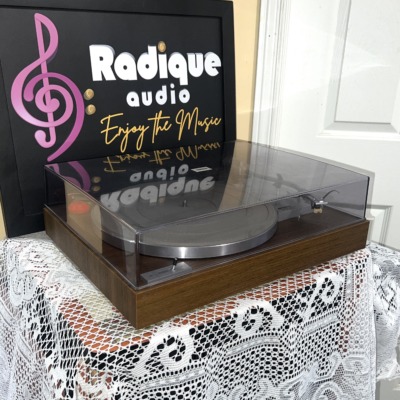
Yamaha YP-211 Belt-Drive Turntable – Made in Japan
A Yamaha YP-211 belt-drive turntable from the late 1970s, made in Japan, fitted with a Shure cartridge, tested on our bench and in very good condition.
✔️ Very good condition — hinged dust cover on good hinges
✔️ Belt drive with auto-return, tested on our bench
✔️ Shure cartridge fitted — made in Japan, late 1970s
✔️ Covered by Radique Warranty
✔️ Includes Perpetual Trade-Back Program eligibility
✔️ Curbside delivery, local collection or freight within Canada
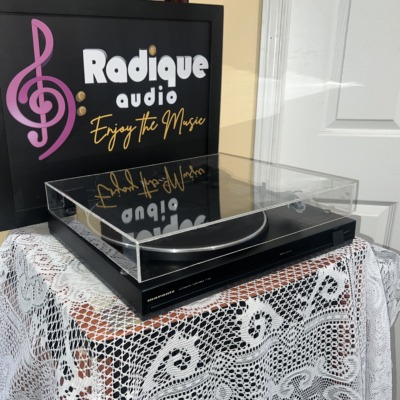
Marantz TT151 Belt-Drive Turntable – 1980s, Serviced
A Marantz TT151 belt-drive turntable from the mid-1980s, fully serviced, with a new hinged dust cover and a new Audio-Technica cartridge and stylus. It is in very good condition.
✔️ Very good condition, with a new hinged dust cover
✔️ Fully serviced: new belt, new Audio-Technica cartridge and stylus
✔️ Belt drive with auto-return, P-mount — easy to live with
✔️ Covered by Radique Warranty
✔️ Includes Perpetual Trade-Back Program eligibility
✔️ Curbside delivery, local collection or freight within Canada
