
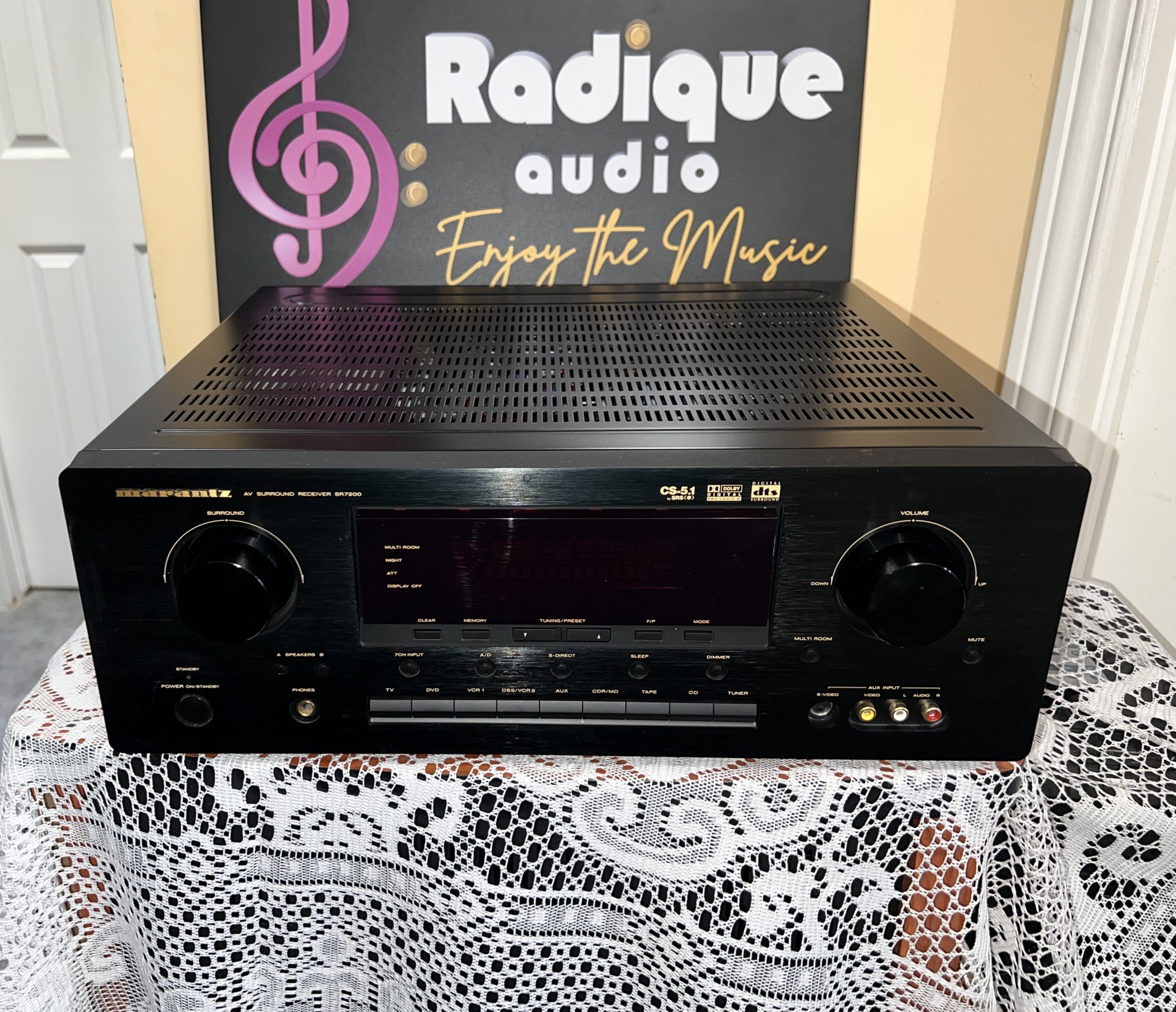
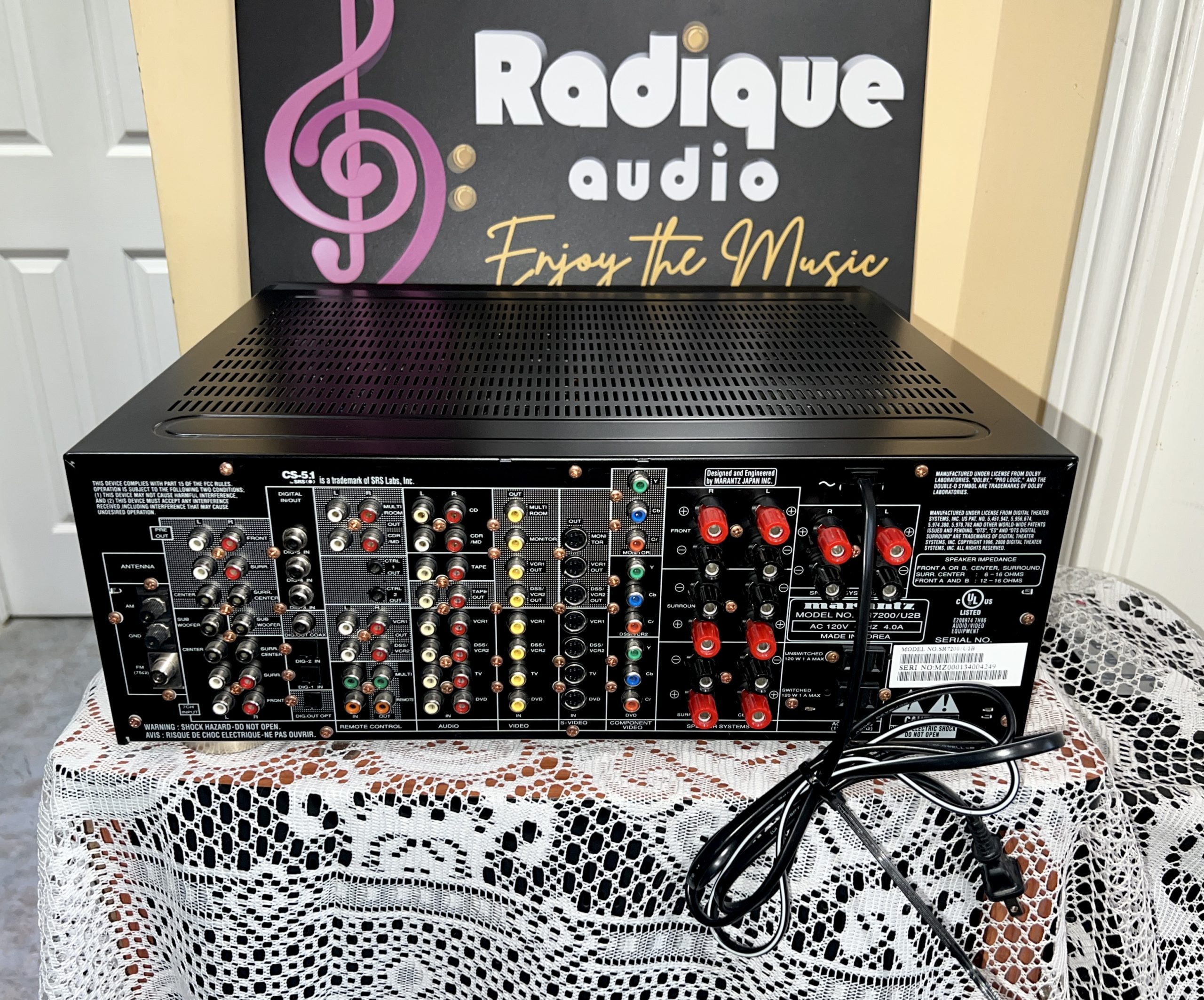

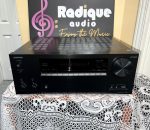
Marantz SR7200 6.1 AVR, 110WPC – Powerful, Excellent sound
$395.00
Out of stock
This one has sold. Want first dibs on the next one?
We take these in regularly. Leave your name and email, and we’ll email you the moment one is listed, so you hear first. No cost, no obligation.
Email me when one is listed
Give your next receiver Bluetooth. RA-Twin II, $39.00 →
Other AV receivers we have in stock now
3 in stock · $225.00–$395.00 · all ship
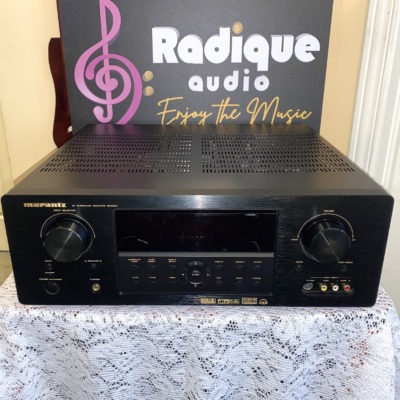 Marantz SR5500 630 Watt 7.1 AVR with Multi-Room support$225.00Ships
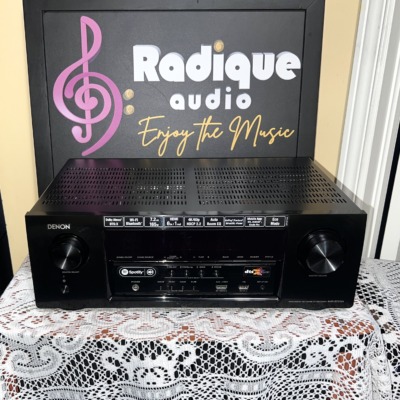 Denon AVR-S720W 7.2 AVR 75 WPC - Dolby Atmos, 4K, Wi-Fi$395.00Ships
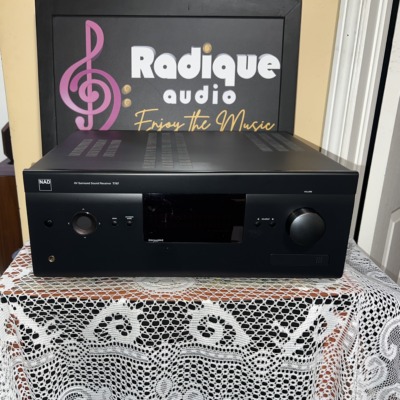 NAD T 757 7.1 AV Receiver – 7 x 60W, 7 Digital Inputs, Remote$395.00Ships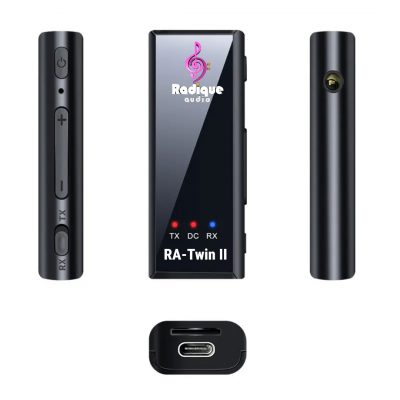
Give your next receiver Bluetooth.
The RA-Twin II adds Bluetooth streaming to any vintage receiver or amp with a spare input. Phone to stereo in about a minute, and nothing on the receiver is modified.
RA-Twin II, $39.00 →Marantz SR7200 6.1 AV Receiver 110WPC – Powerful, Excellent sound, with Remote
6.1-channel Marantz surround receiver with 110 watts per channel, original remote, and classic Marantz sound, in clean condition with one minor remote limitation.
The Marantz SR7200 is a substantial 6.1-channel AV surround receiver from the early 2000s, known for strong stereo performance and a warm, musical presentation compared with many mass-market home theater receivers of its era. Rated at 110 watts per channel into 8 ohms for all main channels, it was designed to drive full-size loudspeakers with ease in both music and movie applications. This unit is working perfectly and comes with the original RC7200SR remote; all core functions are available, although the power on/off function on the remote is not working. Front-panel controls provide full power and input access, so operation is unaffected aside from that one remote button.
The SR7200 supports Dolby Digital, DTS, Dolby Pro Logic II, and Marantz’s own surround enhancement modes, with 6.1-channel processing and pre-outs for all channels for system expansion. Multiple digital inputs (coaxial and optical), component and S-video switching, and a healthy number of analog inputs make integration with classic and early HDMI-era sources straightforward. The amplifier section uses Marantz’s discrete topology rather than inexpensive IC power blocks, contributing to its reputation for above-average stereo sound in a home theater receiver.
Key Specifications:
Configuration: 6.1-channel AV surround receiver
Power output: 110 watts per channel into 8 ohms (all main channels, 20 Hz–20 kHz, 0.05% THD)
Frequency response: 20 Hz – 20 kHz
Total harmonic distortion: 0.05% (line, rated output)
Input sensitivity (line): 340 mV
Signal-to-noise ratio (line): 105 dB
Supported formats: Dolby Digital, DTS, Dolby Pro Logic II, Marantz surround modes
Digital inputs: Coaxial and optical (multiple)
Video connections: Component, composite, and S-video
Speaker load impedance: 6–16 ohms
Multi-channel analog input: 7.1/6.1-channel input for DVD-A/SACD-era players
Pre-outs: Full 6.1 pre-outs for external amplification
Remote: Original Marantz RC7200SR included (power on/off button not functioning; other functions OK)
Condition: Very clean overall with only light cosmetic wear; fully functional amplifier and processing
Dimensions: (Width x Height x Depth) 440 x 164 x 425 mm (17.3 x 6.5 x 16.7 inches)
Weight: 14.9 kg (32.8 lbs)
At nearly 15 kg, the SR7200 has the kind of heavy transformer, robust power supply, and metal chassis expected of early-2000s Marantz receivers, contributing to its ability to drive real-world speakers with authority and composure.
This Marantz SR7200 offers a solid foundation for a music-focused home theater or a vintage-leaning multichannel setup, particularly attractive to buyers who value Marantz’s sonic character and build quality over the latest HDMI standards. The original remote is included, with the only limitation being the non-working power button on the handset; the receiver itself powers on and off normally from the front panel.
Backed by Radique Audio’s 90-day warranty and our perpetual trade-back policy, you can purchase with confidence.
Originally retailed for $1200 Cnd. Asking just $325
| Weight | 35 lbs |
|---|---|
| Dimensions | 20.7 × 21.3 × 10.5 in |
Marantz began in 1953 in Queens, New York, where Saul Marantz built tube preamplifiers and amplifiers, and by the 1970s it was making receivers with champagne-gold faceplates, blue-lit dials and flywheel tuning. We carry Marantz receivers, amplifiers and preamps, turntables, tuners, CD players and cassette decks. We've had more than 150 Marantz listings so far, covering nearly 100 different models. Every used Marantz here is inspected, tested and serviced as required, then photographed in-house and covered by our Bumper-to-Bumper Warranty and Perpetual Trade-Back Program. Many Marantz components were sold without their wood case, so we also make new cherry WC-22 and WC-10 style cabinets. Don't see the model you want? Tell us on First Dibs and we'll email you when one arrives.
Our five best-selling Marantz models so far: the SR4023 stereo receiver, the vintage 2225, the SR7000 AV receiver, the SR4320 stereo receiver and the vintage 2238B.
The Marantz story, 1953 to today
Saul B. Marantz founded the company in New York in 1953. His first product, the Audio Consolette preamplifier, became the Model 1, and Marantz dates the first Consolettes to 1952–53. Marantz says the early factory was in Woodside, Queens.
The tube years. Through the late 1950s and early 1960s Marantz built a small run of tube separates in New York that collectors still chase: the Model 7 preamplifier (1958), the Model 9 power amplifier (1960) and the Model 10B tuner (1964).
Superscope and the move to Japan. In 1964 Superscope, the company that also distributed Sony tape recorders in the US, bought Marantz, and Saul Marantz resigned at the end of 1967. The Model Eighteen of 1968 was the first Marantz receiver, rated at 40 watts per channel. Under Superscope, design moved to California and, from the late 1960s, production moved to Japan through Standard Radio, which became Marantz Japan in 1975. Receivers such as the 2230 and 2270 are listed as designed in the USA and produced in Japan.
The power race. After a 1974 Federal Trade Commission rule tightened how amplifier power was rated, receiver makers competed on watts. Marantz's Model 2500 of the late 1970s was rated at 250 watts per channel and had an oscilloscope tuning display.
Philips, Denon and today. In 1980 Philips bought Superscope's stake in Marantz Japan and the brand outside the US and Canada. Marantz says its CD-63 of 1982 was one of the first CD players, and its "KI Signature" models carry the initials of Ken Ishiwata, who joined in 1978. In 2001 Marantz Japan bought the trademark back from Philips, and in 2002 it combined with Denon to form D&M Holdings. In September 2025 HARMAN, a Samsung company, completed its purchase of Sound United, the parent of Marantz and Denon.
Which Marantz is which?
Tube separates (1950s–60s): the Models 1, 7, 8B, 9 and 10B, built in New York. Rare collector pieces.
First receivers (from 1968): the Model Eighteen, followed by the Nineteen at the end of 1969.
22xx receivers (from 1972): the first set was the 2215, 2230, 2245 and 2270, with the champagne-gold faceplate, blue-lit dial and "Gyro-Touch" flywheel tuning. A higher number generally means more power: the 2230 is rated at 30 watts per channel, the 2270 at 70. Later "B" versions such as the 2220B and 2285B followed.
Big late-1970s receivers: the 2325 (125 watts per channel), the 2500 flagship and four-channel "Quad" receivers.
1000-series integrated amplifiers: for example the 1060 (30 watts per channel, from 1971), the 1070 and the 1150 (75 watts per channel). The slim 1030, 1040, 1060 and 1070 share their case size with tuners such as the 104, 105 and 112.
Tuners: from the tube Model 10B to solid-state models such as the 2130, with its oscilloscope display.
Wood cases: Marantz sold its wood cases separately: the WC-22 for the 22xx receivers, the WC-10 for the slim 1000-series amplifiers and 100-series tuners, and the WC-1 for larger models such as the 1200. That is why so many turn up bare. A customer who sold Marantz in Ontario in the 1970s told us the cases his shop ordered were built here in Canada, by Westinghouse. Our own cherry WC-22 and WC-10 style cabinets are made in Canada too.
CD players: from the CD-63 of 1982 to the KI Signature versions.
Buying used Marantz: what to check
Dial and meter lamps. Burnt-out bulbs are common on 1970s receivers and are often replaced, sometimes with LEDs. Ask which, if the look of the dial matters to you.
The dial itself. The diffuser sheet behind the dial ages and can dull the glow. Check that the Gyro-Touch pointer moves smoothly and tracks the stations; dial cords are a common replacement part.
Controls and switches. Crackle when you turn a control or work a switch usually means dirt. Try every input, and walk away from a unit that drops a channel.
Capacitors and bias. Electrolytic capacitors in 1970s gear are often past their best, and full restorations replace them. Restorers also set the bias and DC offset.
Cosmetics. Pitting on the faceplate points to damp storage, and dents or water stains to rough handling.
Everything we list is inspected, tested and serviced as required here, and comes with our warranty.
Related Products
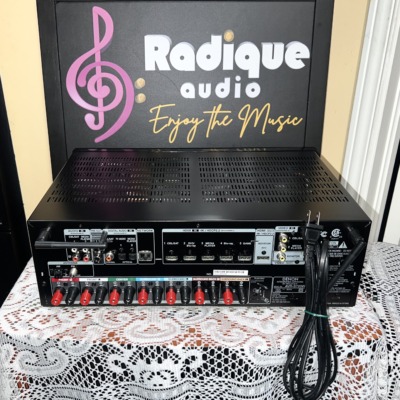
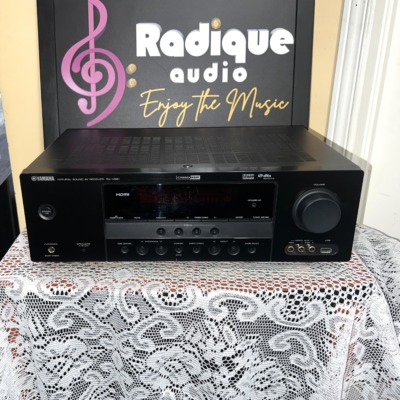
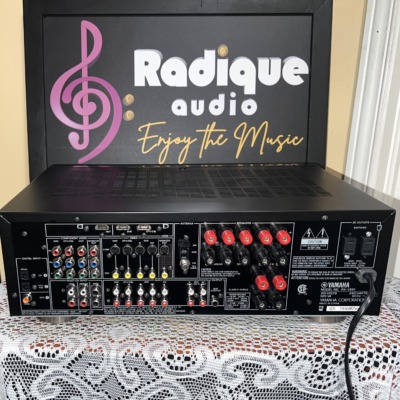
Yamaha RX-V561 5.1 AVR 500W — 2x HDMI, 3 Digital In, Remote
100 watts minimum RMS on every one of the five channels into 8 ohms, and dynamic power that climbs to 110, 130, 160 and 180 watts into 8, 6, 4 and 2 ohms — a receiver that keeps increasing output as the load gets harder has a supply with something in reserve. Where it earns its keep is bass management: a crossover selectable across nine points from 40 Hz to 200 Hz with a 12 dB per octave high-pass on front, centre and surround. Two HDMI inputs, three digital, remote included. Very good condition.
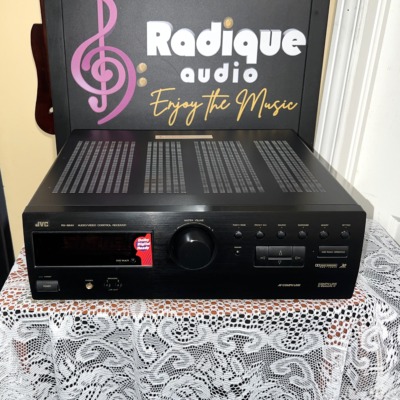
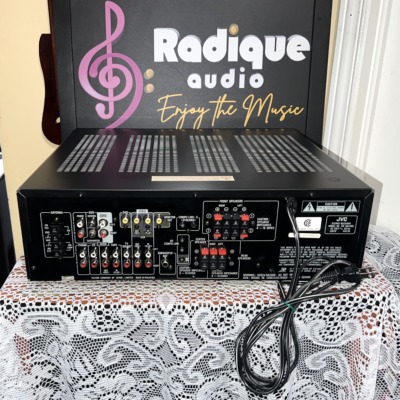
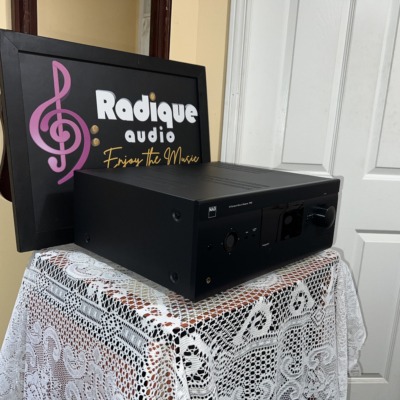
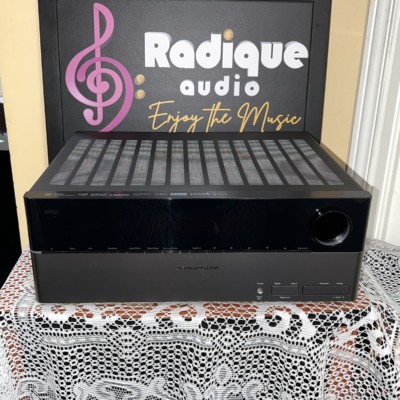
NAD T 757 7.1 AV Receiver – 7 x 60W, 7 Digital Inputs, Remote
A 7.1-channel NAD surround receiver in very good condition, rated at 60 watts per channel with all seven channels driven, with seven digital audio inputs, NAD's modular design and a remote.
✔️ Very good condition — free of significant marks; remote included
✔️ 7 x 60 W, all channels driven — Dolby TrueHD and DTS-HD Master Audio
✔️ Seven digital audio inputs and four HDMI inputs (1080p and 3D)
✔️ Covered by Radique Warranty
✔️ Includes Perpetual Trade-Back Program eligibility
✔️ Expertly packed for safe shipping
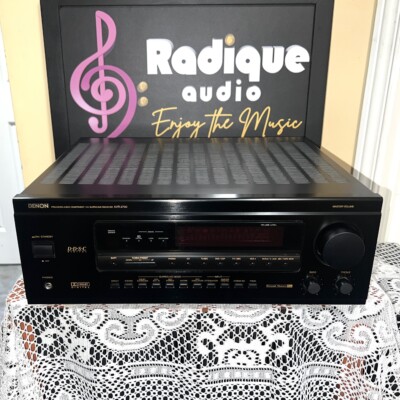
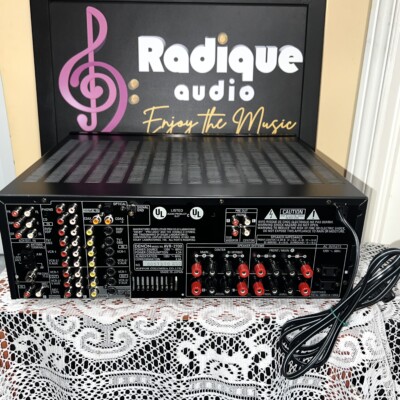
Denon AVR-2700 5.1-Channel AV Receiver 400W w/ Remote – Japan
Eighty watts to every one of the five channels, equally rated, at 0.05% distortion. Coaxial and optical digital inputs, composite and S-video switching, Dolby Digital and Pro Logic, a five-channel stereo mode, and a moving-magnet phono stage at 2.5 mV. Tape monitor loop for an outboard EQ. Made in Japan in 1999, original Denon remote included. Very good condition.
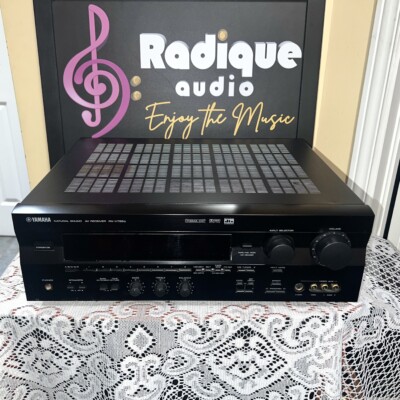

Yamaha RX-V795A 5.1 AV Receiver – 425W Peak, Phono
Eighty-five watts into 8 ohms on each of five channels at 0.04% distortion, with Dolby Digital, DTS and Yamaha’s Cinema DSP modes. An MM phono input, three optical and one coaxial digital input, and a full set of 5.1 pre-outs if you later want outboard amplification. Ships with a new compatible remote, not the original. Level 1 serviced; very good condition.
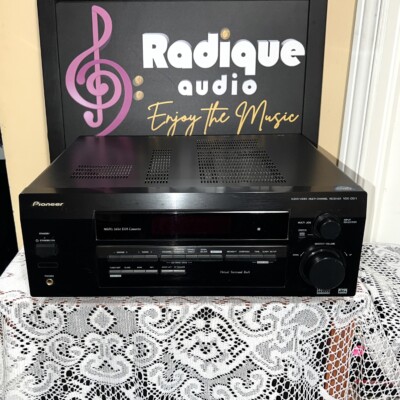
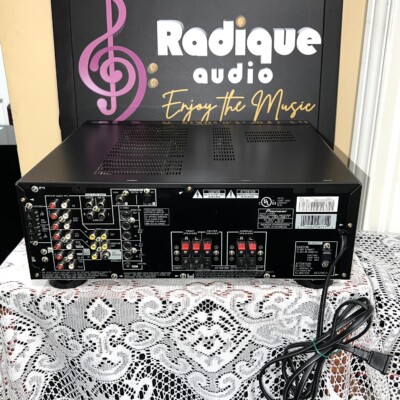
Pioneer VSX-D511 5.1 AVR — 500W Total, Coax & Optical
One hundred watts a channel across all five into 8 ohms, so 500 watts of system power, with Dolby Digital, DTS and Pro Logic II decoding through a 96kHz/24-bit DAC. One coaxial and one optical digital input, three composite/S-Video inputs, a subwoofer pre-out, and a 30-preset AM/FM tuner. Original Pioneer remote. Very good condition, tested.
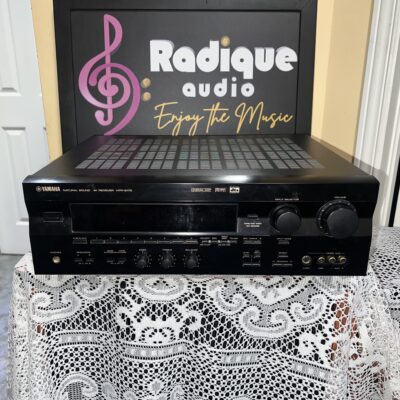
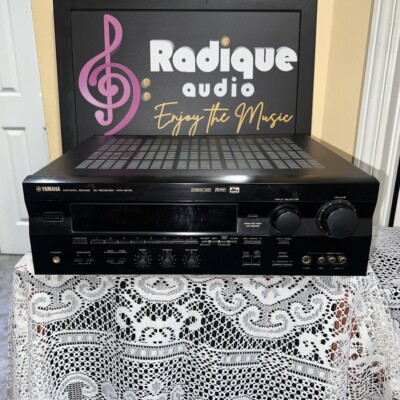
Yamaha HTR-5170 425W AV Receiver – Phono, Dolby Digital & DTS
Eighty-five watts into 8 ohms on all five channels, measured across 20 Hz to 20 kHz at 0.04% distortion — rated the honest way rather than at a single frequency. A rear-panel selector takes the mains down to 4 ohms. Dolby Digital, DTS and Cinema DSP, MM phono, three optical and one coaxial digital input, and full 5.1 pre-outs. Same platform as the RX-V795a; 28.7 lbs.
Harman Kardon AVR 1510S 375W 5.1 Receiver – 4K HDMI, Spotify
Seventy-five watts to each of five channels, four 3D-ready HDMI inputs with 4K pass-through, and one HDMI output with ARC. Spotify Connect, vTuner and DLNA over Ethernet, front-panel USB, optical and coaxial digital in. A digital supply keeps the whole thing to ten pounds. Level 1 serviced here; cosmetically graded Good.
