
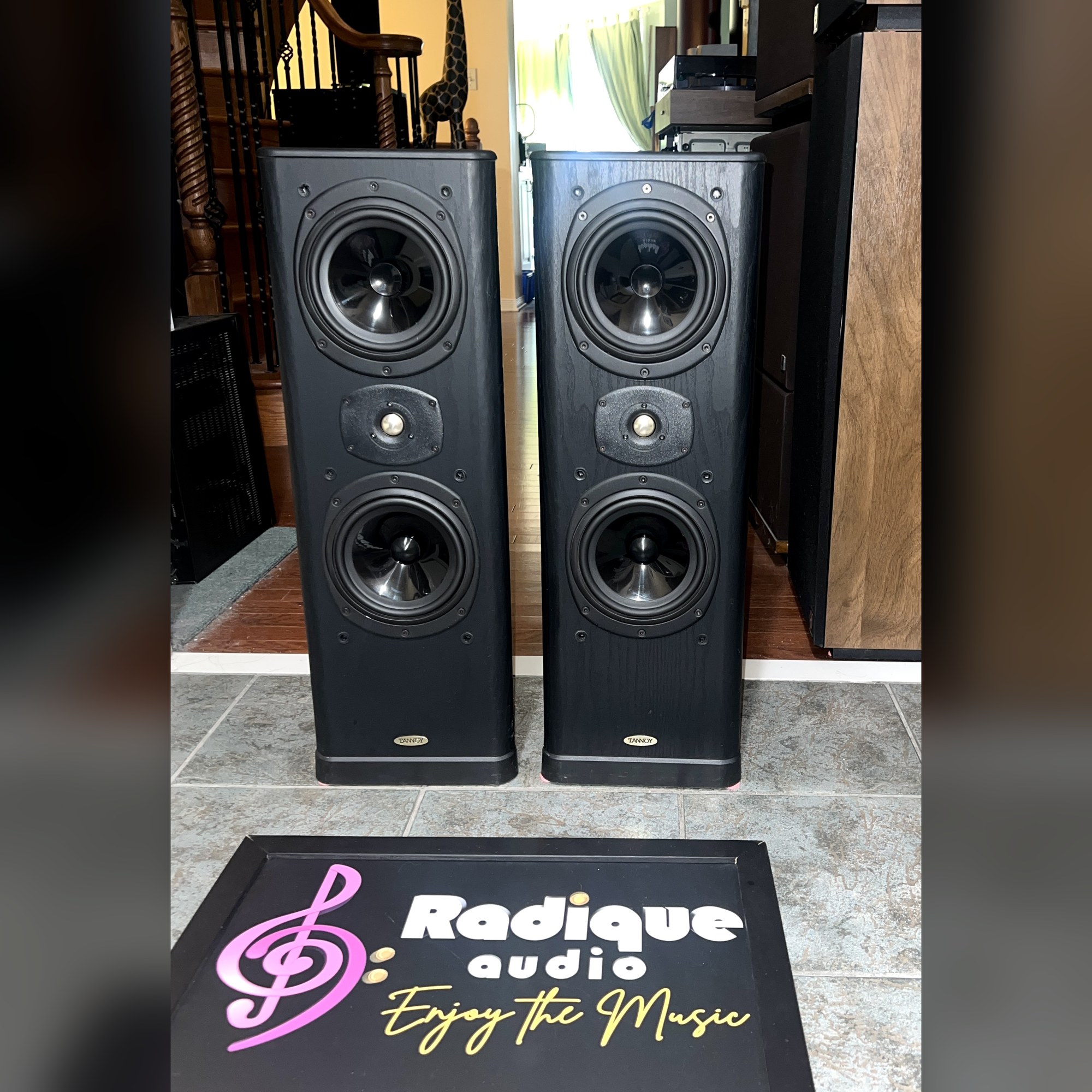
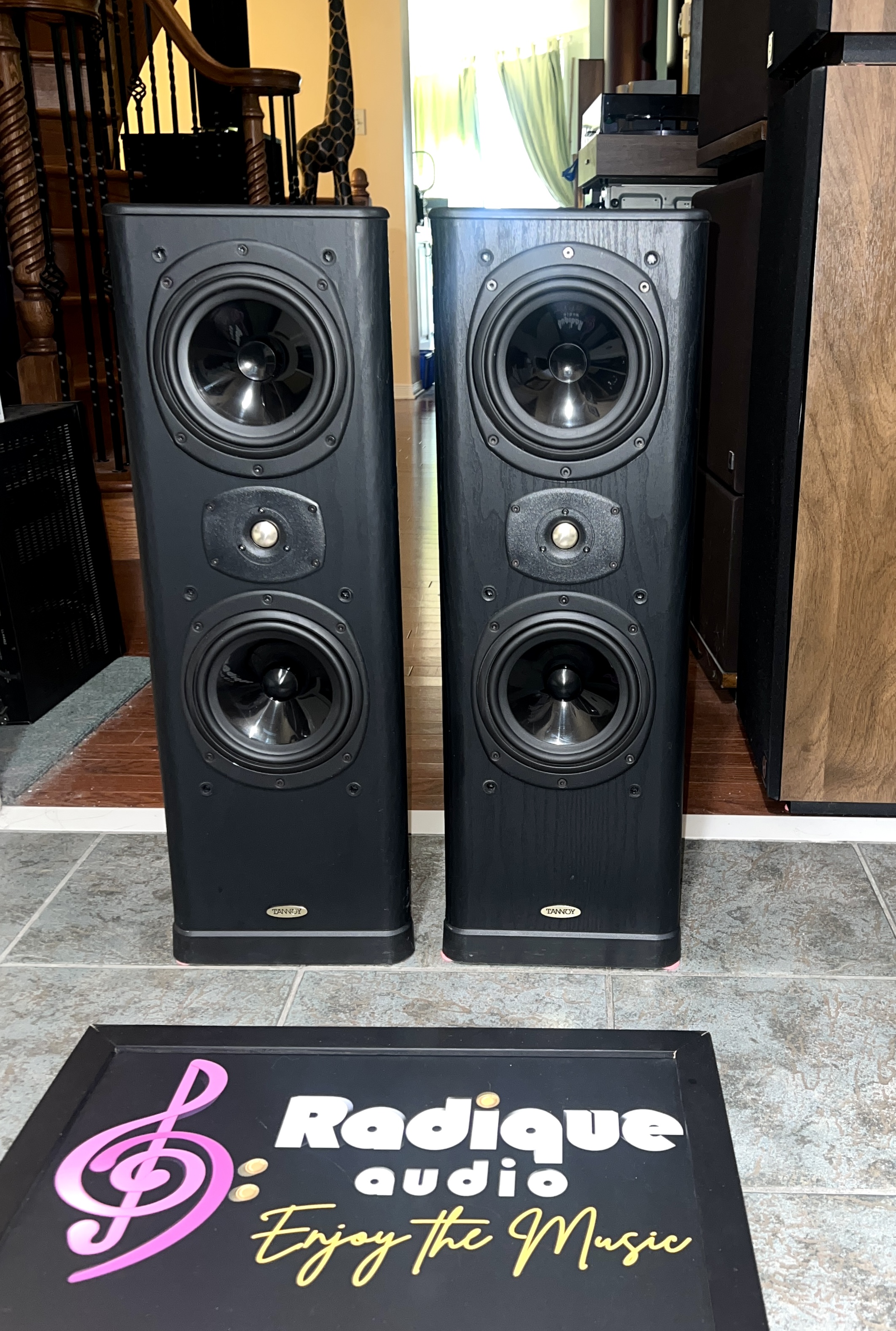
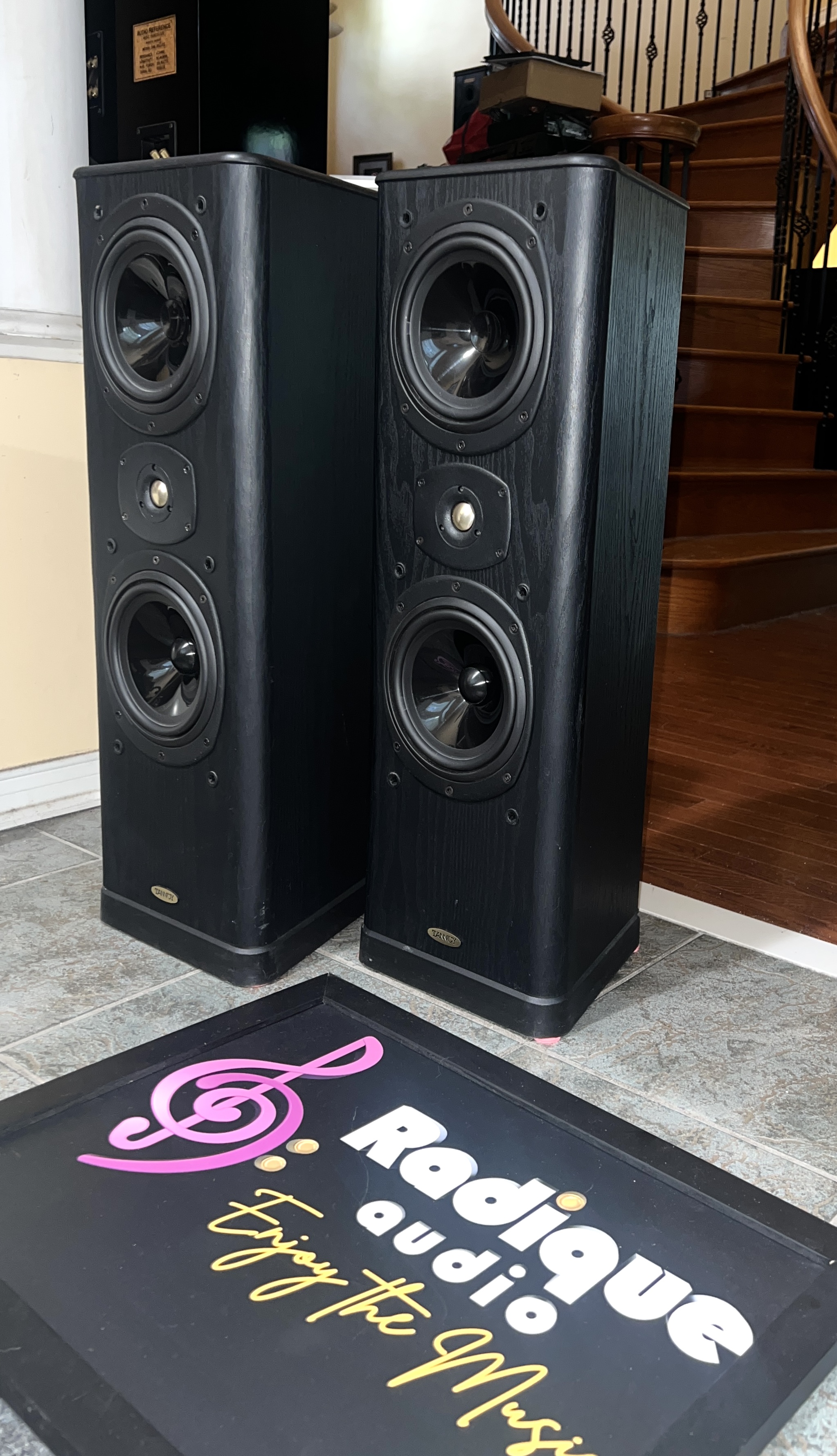
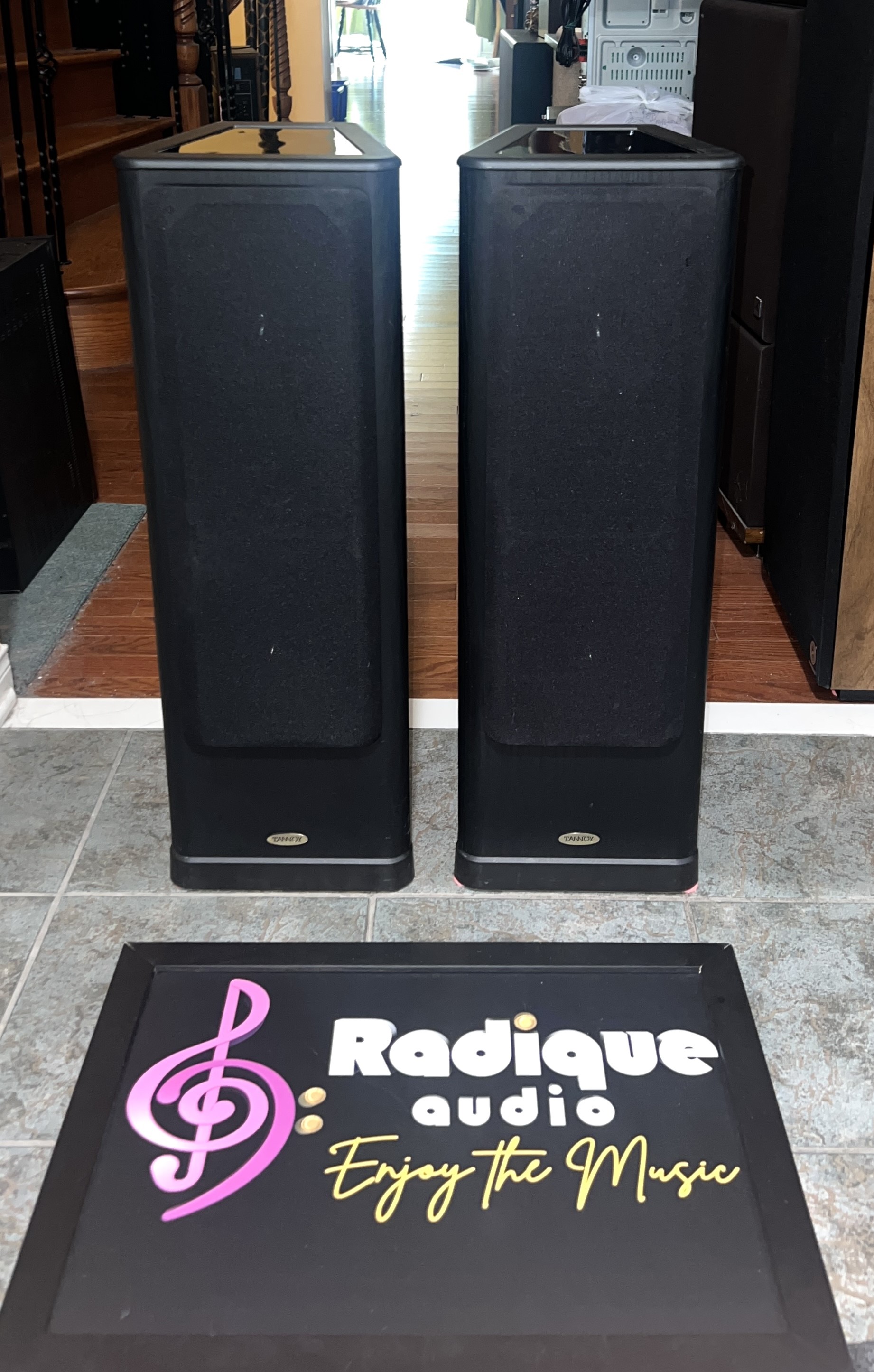



Tannoy Profile 633 (D30) Towers — Black Ash, UK-Built, Bi-Wire
$545.00
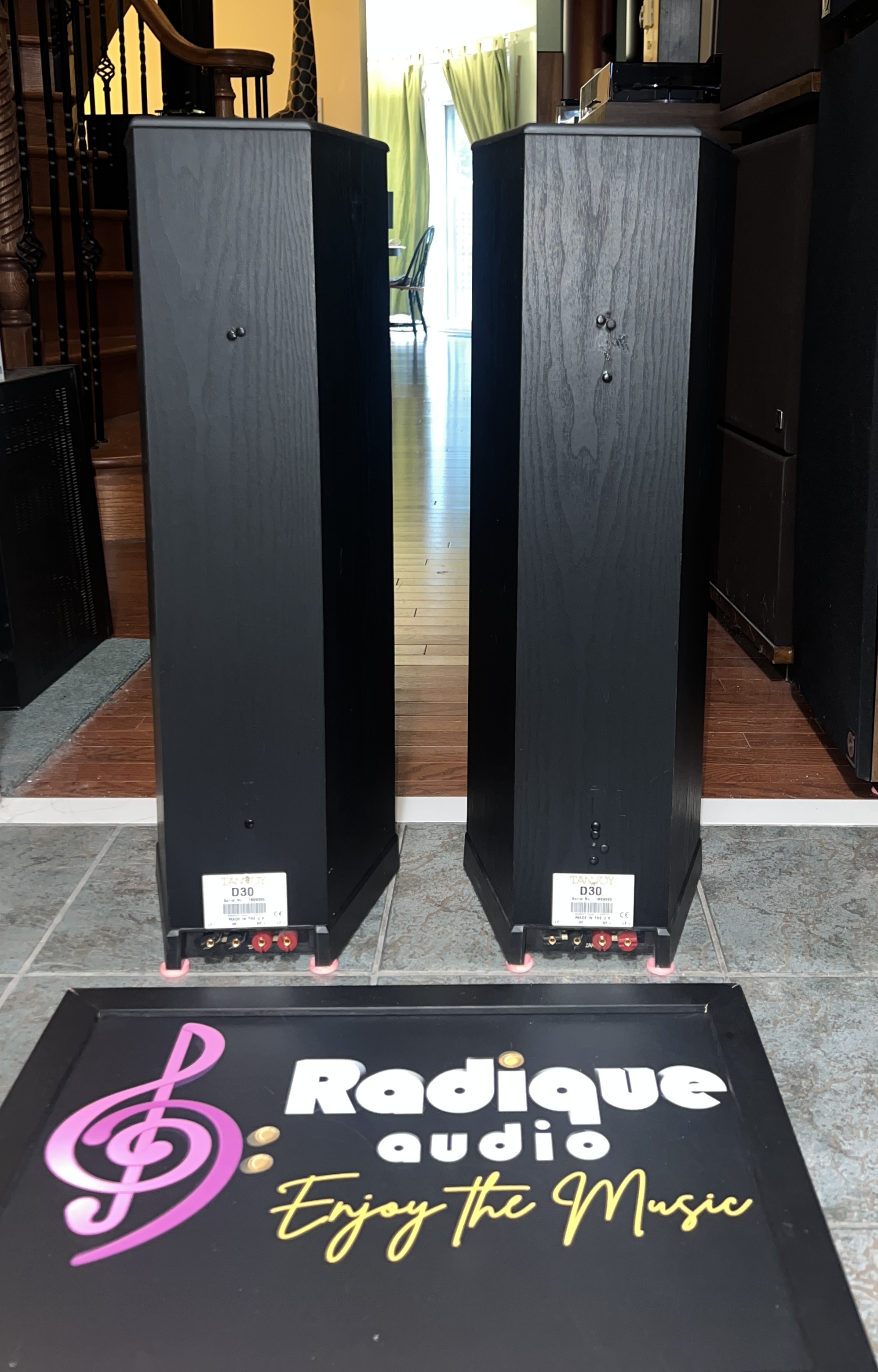
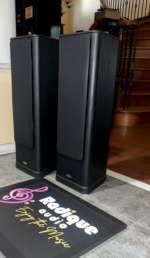
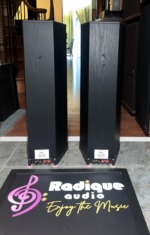
Badged Profile 633 in some markets and D30 in others — the same UK-built Tannoy, and not related to the dearer Definition line. A three-way sealed box with factory bi-wire terminals, 89 dB and an easy 8-ohm load. Black ash, very good condition, built between 1994 and 1998.
1 in stock
Tannoy Profile 633 (D30) Three-Way Floorstanding Speakers — Sealed Cabinet, Factory Bi-Wire Terminals, Black Ash, Made in the United Kingdom
A pair of British-built Tannoy floorstanders from the mid-1990s in black ash, in very good condition, with a sealed cabinet and factory bi-wire terminals.
Profile 633 or D30
First, the name, because it causes confusion even among Tannoy owners. Tannoy built this speaker in the United Kingdom from 1994 to 1998 and badged it two ways: Profile 633 in some markets, D30 in others. They are the same loudspeaker. It is not related to the Definition D300, which is a different and considerably more expensive Tannoy line — a distinction worth knowing before you shop the model number anywhere else.
Built in the United Kingdom
These were built in Britain, and that is not a detail of provenance so much as a description of the speaker. The Profile range sat above Tannoy’s volume lines, and it shows in the things that cost money to build: a sealed cabinet, twin terminal pairs, and a driver complement that runs to three ways rather than two.
The Sealed Cabinet
The sealed cabinet is the most interesting of those. Almost every tower built in the last thirty years uses a port to extend the bass, which works, but ties the speaker to a particular distance from the wall behind it and gives up control below the tuning frequency. A sealed box trades a little ultimate depth for bass that stops when the music stops, and for placement that is far more forgiving. These will sit closer to a wall than a ported tower of the same size without the low end turning thick.
Bi-Wire Terminals
Both speakers carry two sets of five-way binding posts from the factory, with the stock jumpers still fitted. Left as they are, a single run of cable per side drives the speaker normally. Take the jumpers out and the bass and treble sections separate for bi-wiring or bi-amping. Nothing to lose and nothing to source — the hardware is all there.
Amplifier Matching
They are also genuinely easy to drive. Sensitivity is 89 dB, the nominal load is 8 ohms and never drops below 5, and Tannoy rated them for amplifiers from 10 watts to 100 with peaks to 175. That range is the reason these suit a vintage receiver so well: thirty or forty honest watts from a 1970s Pioneer or Marantz drives a pair of these properly, with headroom left over.
A Slim Floor Footprint
The proportions are worth a mention. At 28 inches tall, 9.3 inches wide and 8.6 inches deep, this is a slim floorstander that takes up about the same floor space as a pair of stands and puts the drivers at seated ear height without them. At 20.9 pounds each they are manageable to move and position, which matters more than it sounds when you are still deciding where they live.
What Owners Say
Owners rate them 4.9 out of 5 across ten reviews on AudioReview, and the recurring theme is bass that goes deeper and louder than the cabinet size suggests.
Condition and Service
Condition grades very good. The drivers are original and correct, and both speakers have been tested here to confirm they perform as originally designed, which every pair we sell goes through.
Why This Pair
Tannoy towers are among the models we sell most consistently, and the British-built ones do not come up often.
A British-built sealed-cabinet Tannoy tower with factory bi-wire terminals, from the years Tannoy was still making them at home.
Features
- Three-way sealed cabinet design — tolerant of near-wall placement
- Two sets of five-way binding posts with stock jumpers — bi-wire or bi-amp ready
- 89 dB sensitivity — drives easily from a vintage receiver
- 8 ohm nominal load, 5 ohm minimum — an undemanding amplifier match
- Rated 10 to 100 watts, 175 watts peak
- Slim 28-inch cabinet with a small floor footprint
- Black ash finish
- Built in the United Kingdom
- Sold as a pair
Tannoy Profile 633 (D30) Three-Way Floorstanding Speakers Specifications
- Model: Profile 633
- Secondary Model Number: D30
- Design: Three-way sealed box floorstanding loudspeaker
- Frequency Response: 48 Hz to 30 kHz
- Sensitivity: 89 dB
- Nominal Impedance: 8 ohms
- Minimum Impedance: 5 ohms
- Recommended Amplifier: 10 to 100 watts per channel
- Peak Power Handling: 175 watts per channel
- Terminals: Two sets of five-way binding posts with stock jumpers, bi-wire capable
- Country of Manufacture: United Kingdom
- Production: 1994 to 1998
- Finish: Black Ash
- Condition: Very good
- Dimensions: (Width x Height x Depth) 9.3 x 28.2 x 8.6 inches (237 x 717 x 219 mm)
- Weight: 20.9 lbs (9.5 kg) each
🔌 Speaker Cable, Bi-Wiring and Connectors
The dual posts here take bare wire, spades, pins or bananas, and they mean you can bi-wire or bi-amp if you ever want to. Our bi-wire speaker bridges replace the factory straps with something considerably better made. We hand-build speaker cable here in any length you need on our Custom Speaker Cable Builder, terminated with our own gold-plated banana plugs or spade connectors. 👉
✅ Buy With Confidence — The Radique Promise
Backed by Radique Audio’s Bumper-to-Bumper Warranty and our Perpetual Trade-Back Program. When you’re ready to move on, we’ll take it back. That’s the Radique difference.
📦 Watch how we protect your gear — our unboxing video.
📺 Curious about our business? Check out our YouTube channel for behind-the-scenes videos and more!
📞 Questions? Use the Ask a Question button above, or call us at 613-416-9995.
⭐ Don’t Just Take Our Word For It
Radique Audio holds over 600 customer ratings averaging 4.97 stars across six public platforms — Facebook Marketplace, Kijiji, Canuck Audio Mart, Google and others. Every rating lives somewhere we don’t control, so you can read the originals yourself, including the less flattering ones. See what our customers say. 👉
| Weight | 43.8 lbs |
|---|---|
| Dimensions | 23.2 × 13.3 × 32.2 in |
Tannoy began in London in 1926, and since the late 1940s it has been known for its Dual Concentric driver, with the tweeter set in the centre of the woofer. We carry Tannoy towers, bookshelf speakers, centre channels and subwoofers. We've had more than 210 Tannoy listings so far, covering more than 65 different models. Every used Tannoy here is inspected, tested and serviced as required, then photographed in-house and covered by our Bumper-to-Bumper Warranty and Perpetual Trade-Back Program. Don't see the model you want? Tell us on First Dibs and we'll email you when one arrives.
Our five best-selling Tannoy models so far: the Mercury mx3 towers, the Mercury mx2 and mx1 bookshelf speakers, the PS 110 subwoofer and the Mercury mxC centre.
The Tannoy story, 1926 to today
Guy R. Fountain founded the company in London in 1926 as the Tulsemere Manufacturing Company, making rectifiers and battery chargers for radio sets. It became Tannoy in 1928, a name taken from the tantalum alloy in his rectifier.
The Dual Concentric. Ronnie Rackham's Dual Concentric driver first appeared as the "Monitor Black" in 1947 or 1948 (sources differ). The Monitor Silver, Red and Gold generations followed through the 1950s and 1960s, then the HPD in 1974.
Scotland. Harman International bought Tannoy in 1974, and production moved from London to Coatbridge, Scotland, in 1976. Managers bought the business in 1981, Tannoy merged with Goodmans in the mid-1980s and joined Denmark's TC Group in 2002.
Today. Music Group, later Music Tribe, bought TC Group in 2015. From 2016 the lower-priced ranges, such as Mercury, were made in China, while Prestige stayed in Scotland, where Tannoy's headquarters and assembly are now in Hamilton.
Which Tannoy is which?
1970s HPD cabinets: the Arden, Berkeley, Cheviot, Devon and Eaton, all with Dual Concentric drivers. The Arden, Cheviot and Eaton were reissued as the "Legacy" series in 2017.
Mercury (early 1980s onward): the entry range, through many generations. Our best-selling mx3, mx2, mx1 and mxC come from this family.
Profile (1991 to 1994) and Sensys DC (about 2004): Dual Concentric ranges between Mercury and Prestige.
Revolution (1998 onward): cherry-veneered models such as the R1, R2 and R3.
Prestige (1980s onward): the traditional-styled Dual Concentric range, such as the Westminster and Stirling, later in Gold Reference versions.
Definition (2009): birch-ply Dual Concentric models built in Scotland, such as the DC8 and DC10T.
Buying used Tannoy: what to check
HPD-era surrounds. The surrounds on 1970s drivers rot with age, and many have been replaced. Ask what was replaced and with what.
Dating the drivers. Frame colour alone is not a reliable guide to a Dual Concentric's age; construction details date it better.
Reused names. An Arden, Cheviot or Eaton may be a 1970s original or a 2017 Legacy reissue.
Origin label. From 2016, Mercury and Revolution models were made in China and Prestige in Scotland. Check the label if it matters to you.
Everything we list is inspected, tested and serviced as required here, and comes with our warranty.
You may also like…


IsoAcoustics GAIA II Speaker Isolators (Set of 4)
- ✔️ Genuine IsoAcoustics, brand new, from an authorized Canadian dealer
- ✔️ A set of 4 isolators for one floor-standing speaker or subwoofer up to 120 lb (54 kg)
- ✔️ Screws in place of your spikes: M6-1.0, M8-1.25 and 1/4″-20 adaptors included
- ✔️ Machined stainless steel, dark chrome, 2 × 1.7 in (51 × 43 mm) per isolator
- ✔️ Pick up in Kanata by appointment, or shipped across Canada and internationally
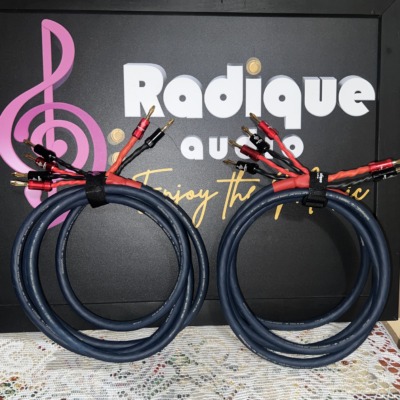
AudioQuest Indigo+ 8′ Bi-Wire Speaker Cables – Made in USA
AudioQuest Indigo+ core wire — solid-core conductors in AudioQuest's Hyperlitz spiral, long out of production and still sought after. Re-terminated here for true bi-wire on freshly stripped core with our own gold-plated bananas: one pair at the amplifier end, two at the speaker. Eight-foot matched pair.


IsoAcoustics GAIA III Speaker Isolators (Set of 4)
- ✔️ Genuine IsoAcoustics, brand new, from an authorized Canadian dealer
- ✔️ A set of 4 isolators for one floor-standing speaker or subwoofer up to 70 lb (32 kg)
- ✔️ Screws in place of your spikes: M6-1.0, M8-1.25 and 1/4″-20 adaptors included
- ✔️ Stainless steel, 1.7 × 1.5 in (43 × 39 mm) per isolator
- ✔️ Pick up in Kanata by appointment, or shipped across Canada and internationally
Related Products
Paradigm 11se Mk II Towers, Pair — Dual 8″, Made in Canada
Built in Canada by Paradigm, and the largest speaker in the SE range — the one the rest of the series was working up to.
✔️ Condition: Good — cabinets touched up; repaired and working correctly
✔️ Covered by Radique Warranty
✔️ Includes Perpetual Trade-Back Program eligibility
✔️ Curbside delivery, local collection or freight within Canada
Klipsch RF-62 Reference IV Floorstanding Speakers, Pair — 97dB
The RF-62 is the tower that made Klipsch's Reference line the default answer for anyone who wanted a big, unforced sound without buying a big, expensive amplifier to get it.
✔️ Condition: Good — cabinets carry touched-up wear; drivers Very Good throughout
✔️ Covered by Radique Warranty
✔️ Includes Perpetual Trade-Back Program eligibility
✔️ Curbside delivery, local collection or freight within Canada
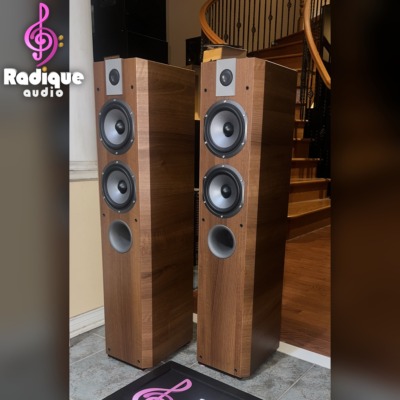
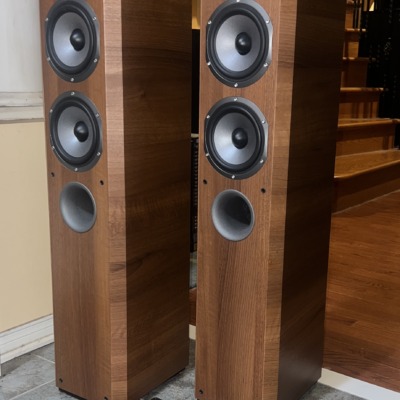
Focal Chorus 714V Floorstanders, Pair — Light Walnut, France
A pair of Focal Chorus 714V floorstanding loudspeakers in Light Walnut, made in France.
✔️ Condition: Very Good — thoroughly inspected and tested
✔️ Covered by Radique Warranty
✔️ Includes Perpetual Trade-Back Program eligibility
✔️ Expertly packed for safe shipping
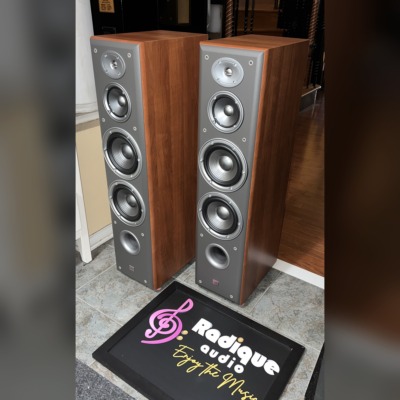
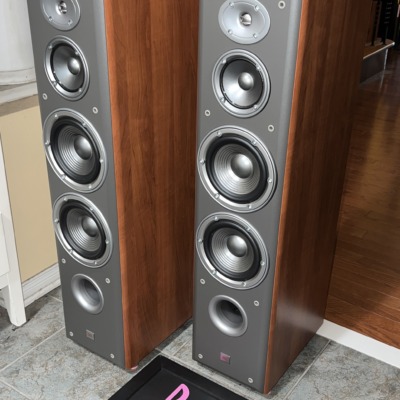
JBL Northridge E80 3-Way Towers – Cherry, Bi-Wirable, Pair
A four-driver JBL tower in the Cherry finish, with a genuine bi-amp panel.
✔️ Condition: Very Good — cabinets present well, working properly
✔️ Covered by Radique Warranty
✔️ Includes Perpetual Trade-Back Program eligibility
✔️ Expertly packed for safe shipping
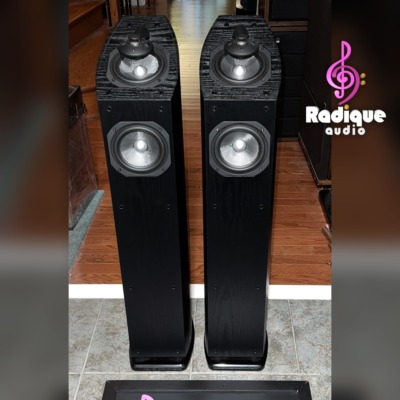
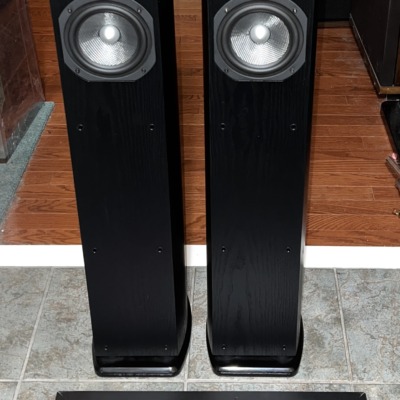
Mirage OMNI 350 Omnipolar Towers – Designed in Canada, Black Ash
A pair of slim Mirage towers built around the company's Omnipolar design, in very good condition, that fill a room with sound instead of aiming it at one chair.
✔️ Very Good condition — black ash cabinets, drivers and grilles present cleanly
✔️ Designed and engineered in Canada around Mirage's room-filling Omnipolar sound
✔️ Covered by Radique Warranty
✔️ Includes Perpetual Trade-Back Program eligibility
✔️ Expertly packed for safe shipping
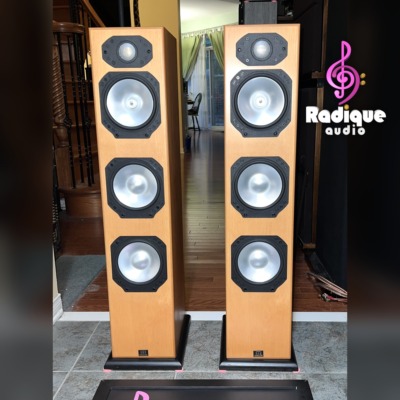
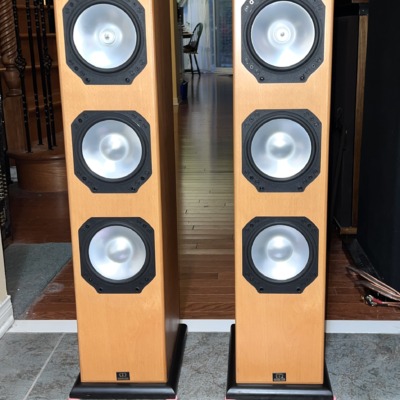
Monitor Audio Silver S8 Towers – Made in England, Warm Beech
A pair of three-way Monitor Audio towers from the Silver S range, in very good condition, with a metal driver in every position and a warm beech veneer that suits almost any room.
✔️ Very good condition — free of significant marks, in Warm Beech real wood veneer
✔️ Made in England, with Monitor Audio's C-CAM metal drivers throughout
✔️ Bi-wire and bi-amp ready — two pairs of 5-way binding posts per speaker
✔️ Covered by Radique Warranty
✔️ Includes Perpetual Trade-Back Program eligibility
✔️ Expertly packed for safe shipping
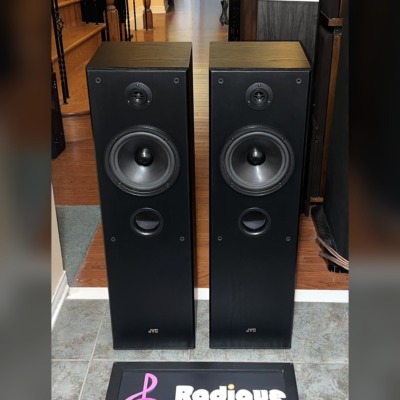
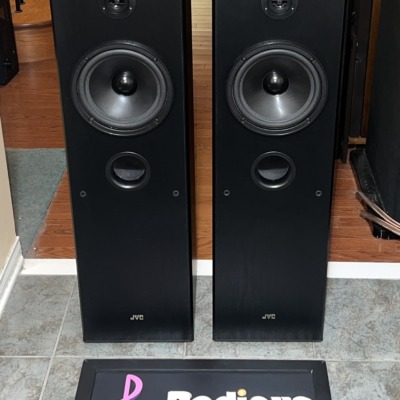
JVC Theatre Series SP-5500 Tower Speakers, Pair – 8-inch Woofers
A pair of JVC Theatre Series SP-5500 two-way tower speakers in black woodgrain, with front-ported bass-reflex cabinets, tested on our bench and in very good condition.
✔️ Very good condition — free of significant marks, grilles included
✔️ 8-inch woofers in front-ported Theatre Series towers
✔️ Built-in circuit breaker protects the tweeters
✔️ Covered by Radique Warranty
✔️ Includes Perpetual Trade-Back Program eligibility
✔️ Expertly packed for safe shipping
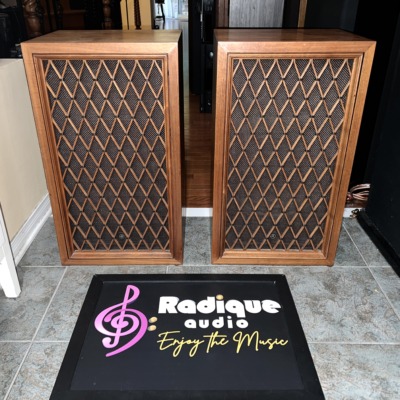
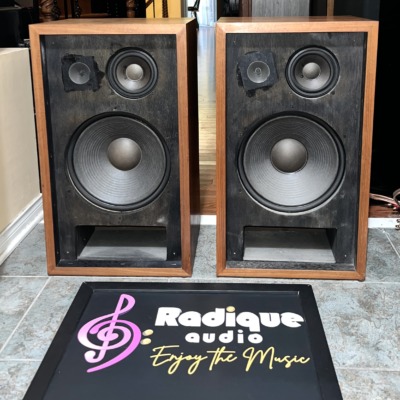
Vintage Pioneer CS-77 12″ 3-Way Speakers, Pair – Made in Japan
A pair of late-1960s Pioneer CS-77 three-way speakers, made in Japan, in walnut veneer cabinets with their wooden diamond-lattice grilles. Their High Level controls have been freshly serviced, they have been tested on our bench, and they are in good condition.
✔️ Good condition — walnut veneer, wooden lattice grilles included
✔️ High Level controls freshly serviced, tested on our bench
✔️ 12-inch woofer, three-way design — made in Japan, late 1960s
✔️ Covered by Radique Warranty
✔️ Includes Perpetual Trade-Back Program eligibility
✔️ Expertly packed for safe shipping
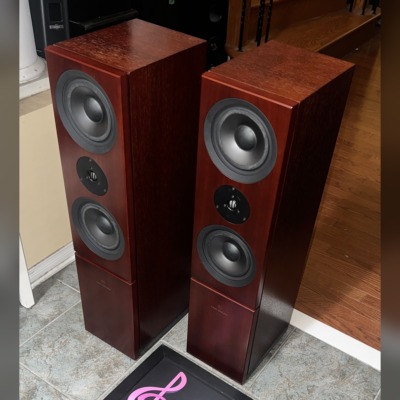
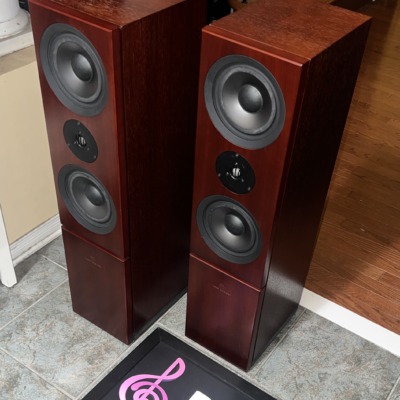
Linn Keilidh Floorstanding Speakers, Pair – Made in Scotland
A pair of Linn Keilidh floorstanding speakers, built in Glasgow, Scotland, in Linn's deep red Rosenut veneer, set up for bi-wiring.
✔️ Tested on our bench
✔️ Very good condition
✔️ Bi-wire ready: build your cable with our Cable Builder
✔️ Covered by Radique Warranty
✔️ Includes Perpetual Trade-Back Program eligibility
✔️ Expertly packed for safe shipping
