
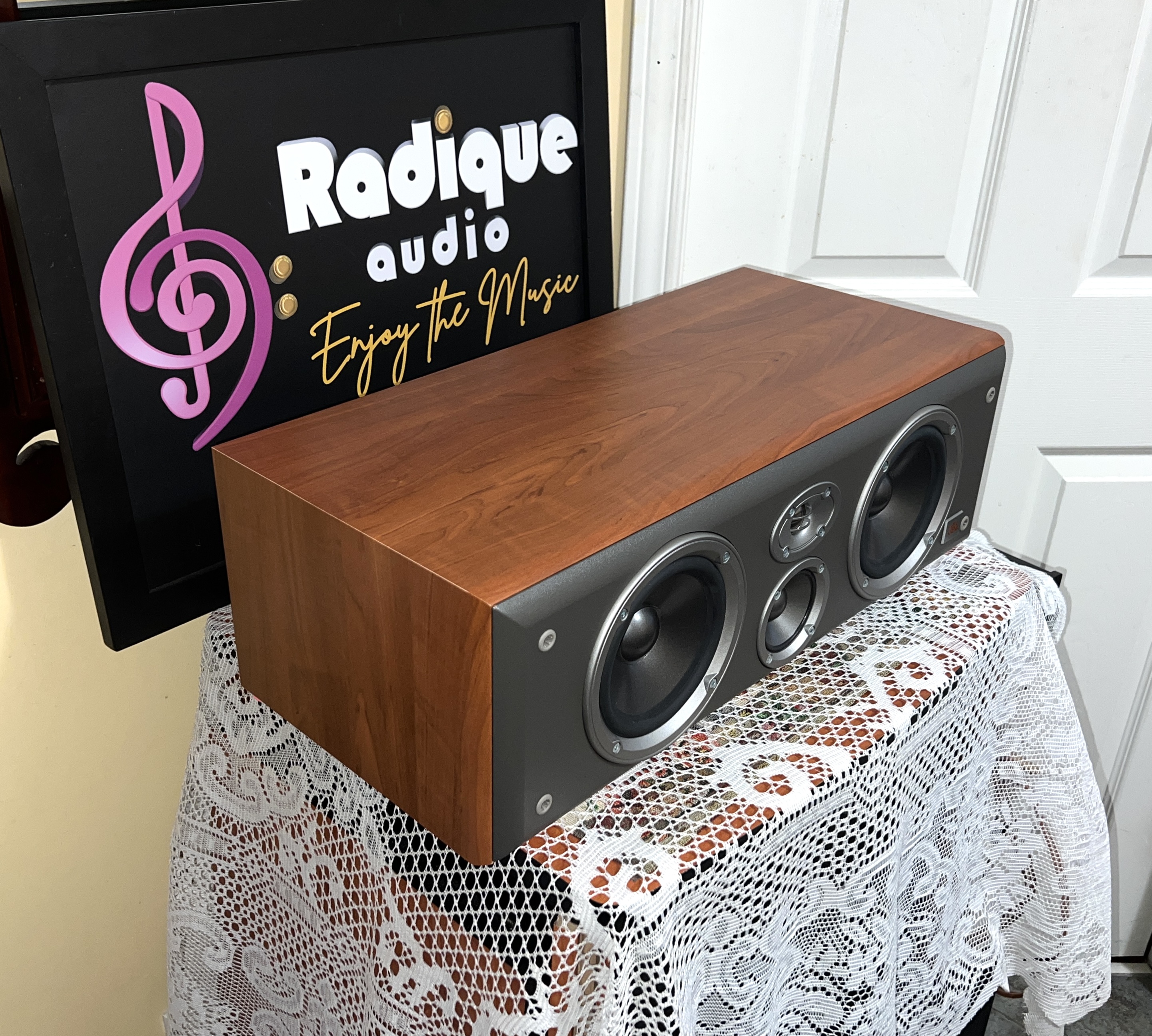
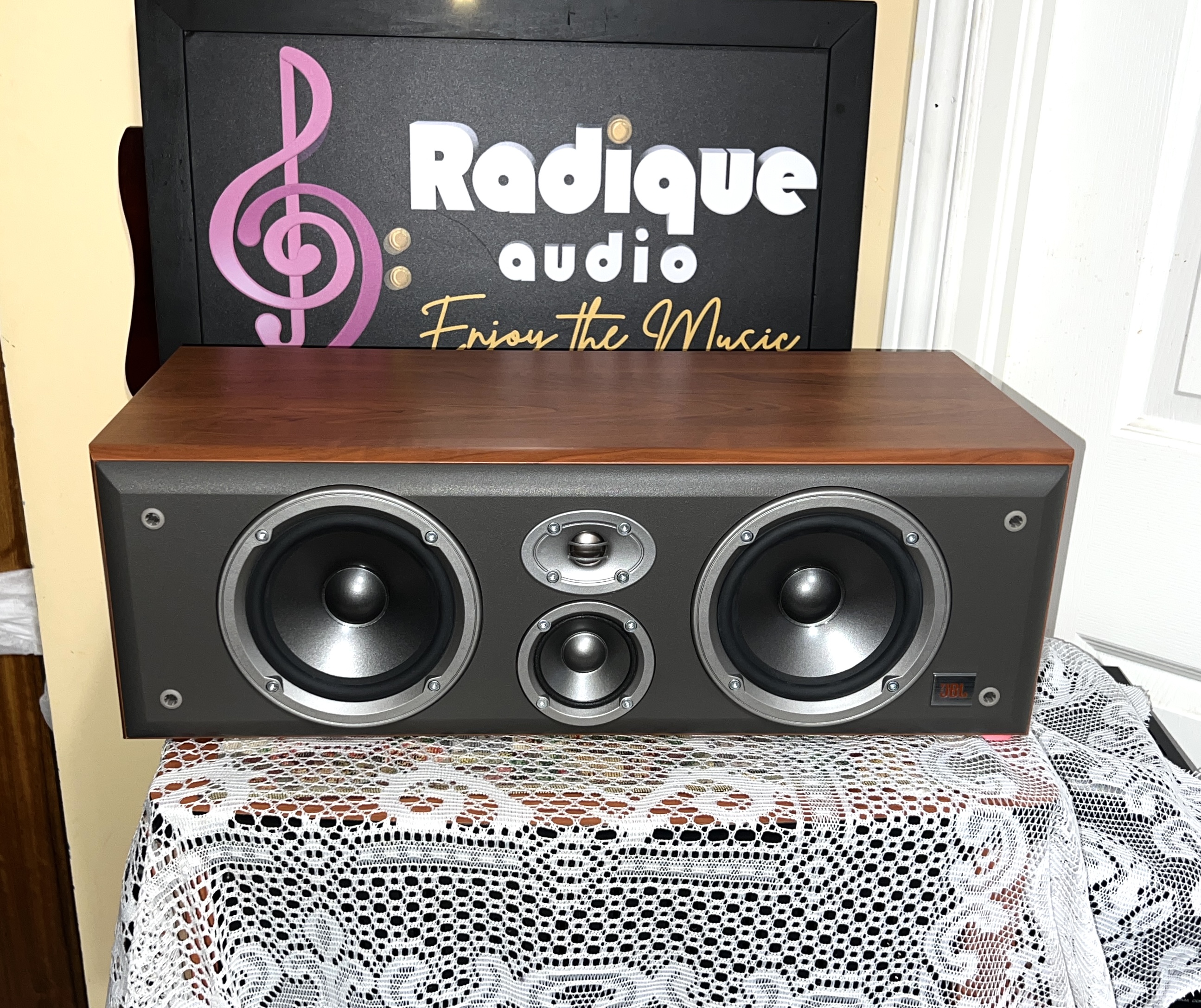
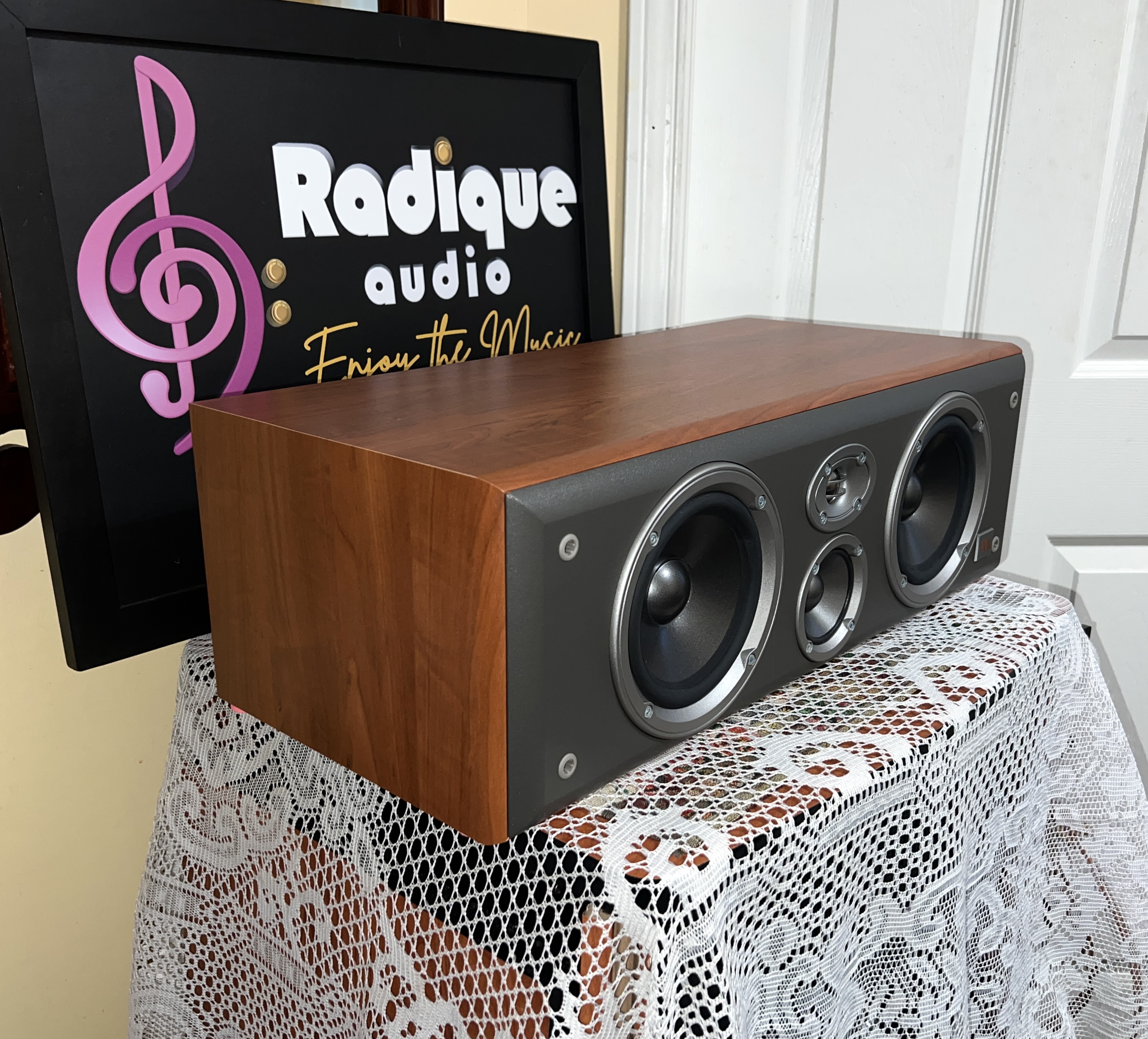
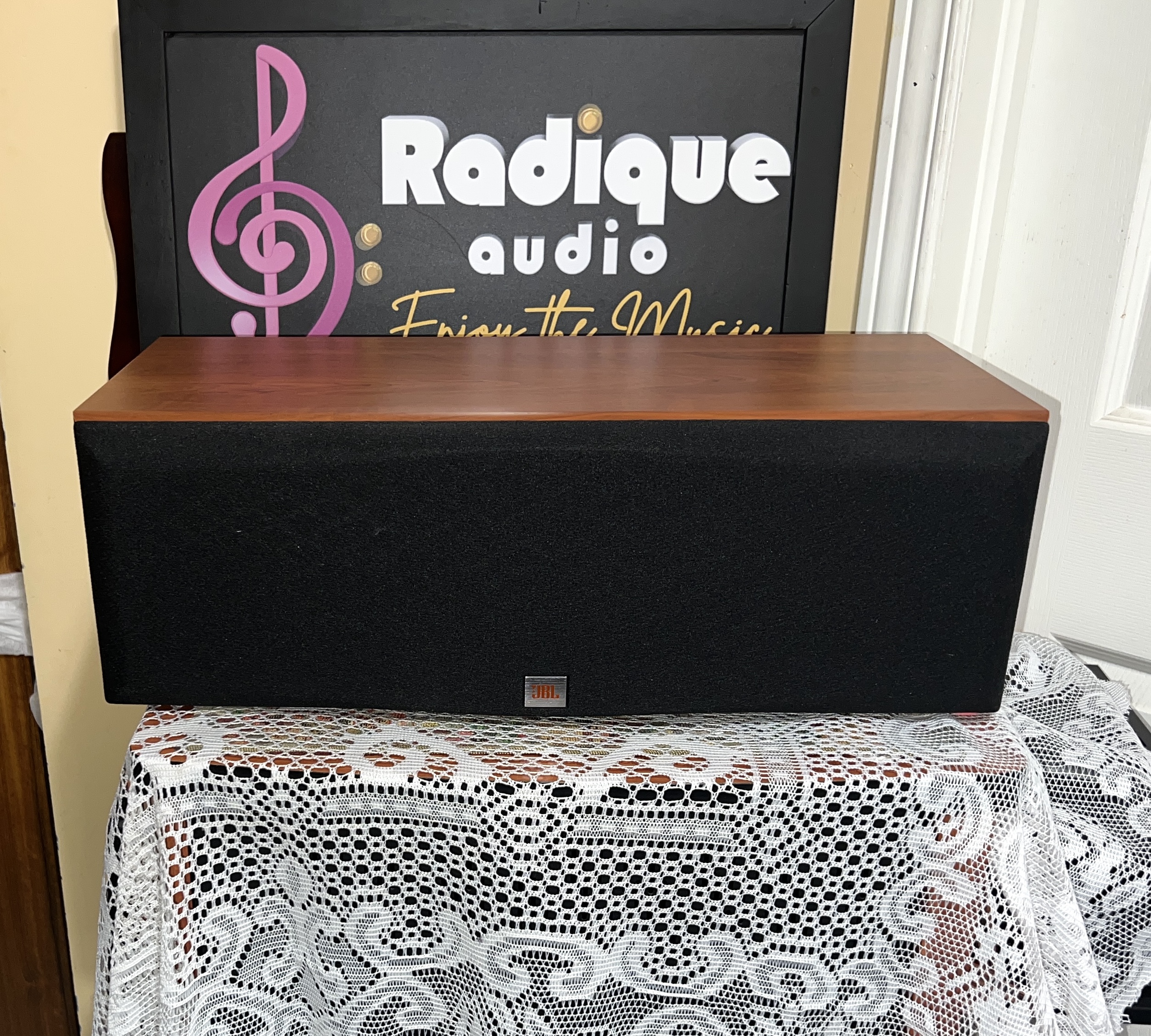
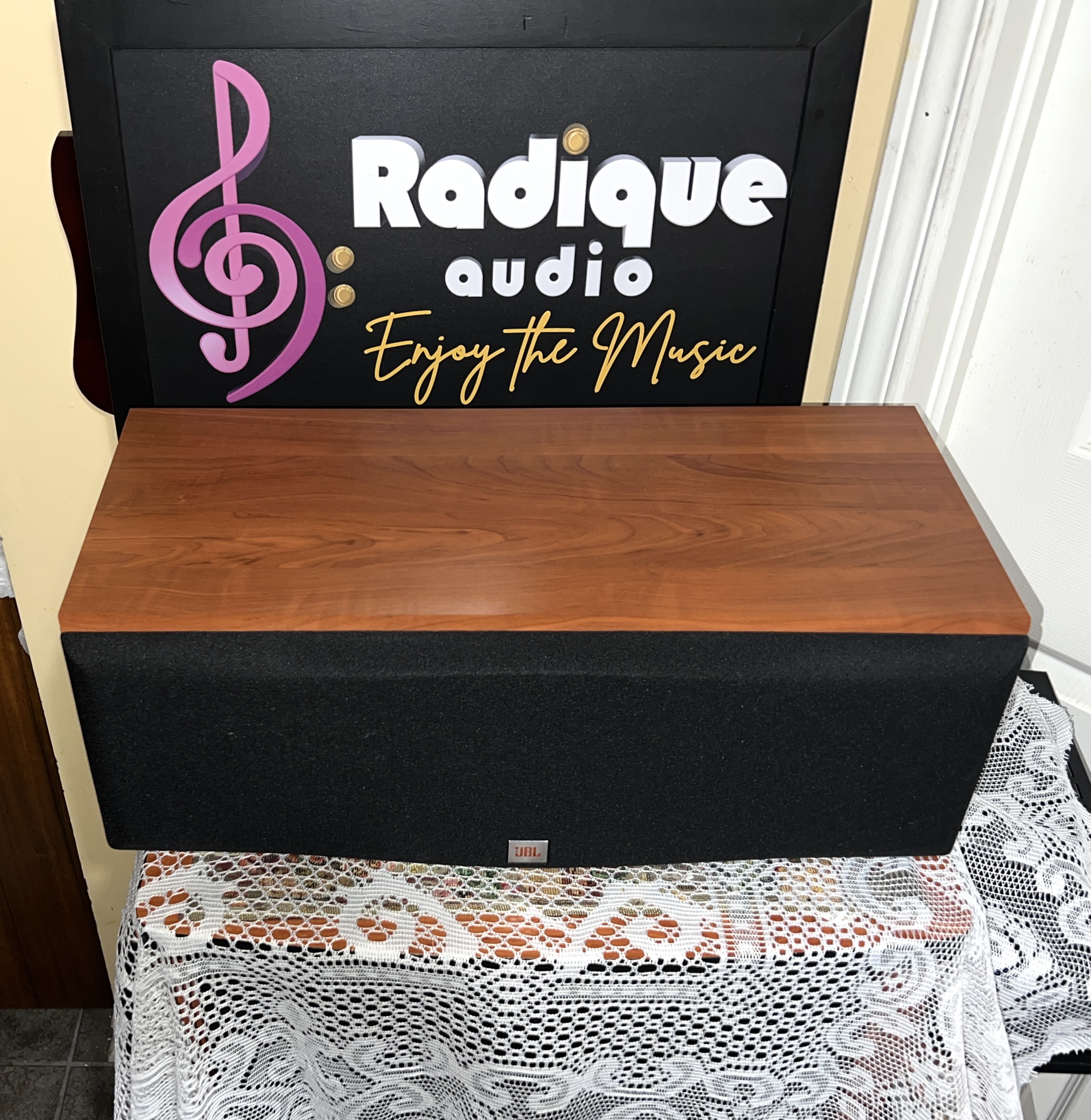

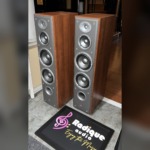
JBL Northridge EC35 3-Way Center Channel – Cherry, Bi-Wireable
$245.00
The three-way EC35 in the uncommon Cherry finish, four transducers and a genuine bi-amp panel.
✔️ Condition: Very Good — cabinet presents well, working properly
✔️ Covered by Radique Warranty
✔️ Includes Perpetual Trade-Back Program eligibility
✔️ Expertly packed for safe shipping
Out of stock
This one has sold. Want first dibs on the next one?
We take these in regularly. Leave your name and email, and we’ll email you the moment one is listed, so you hear first. No cost, no obligation.
Email me when one is listed
Whatever you end up with, it needs cable. Build a set to length →
Other center channels we have in stock now
3 in stock · $245.00 · all ship
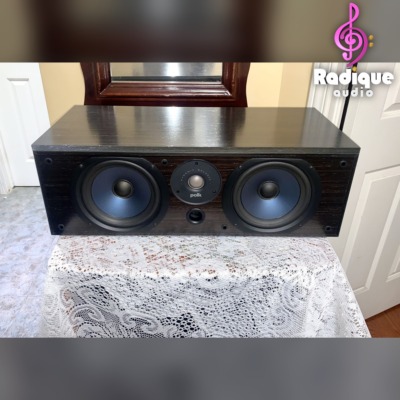 Large, Heavy TOTL Polk Center Channel w/ Real Wood CSi40$245.00Ships
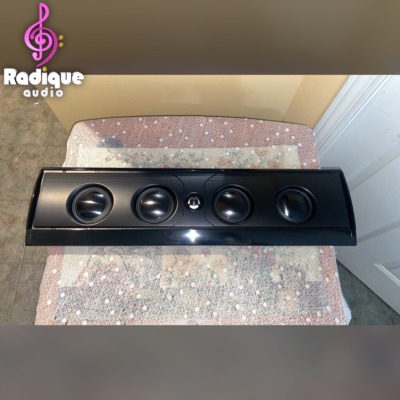 Definitive Technology 5-Driver Wall-mount Speaker XTR-40$245.00Ships
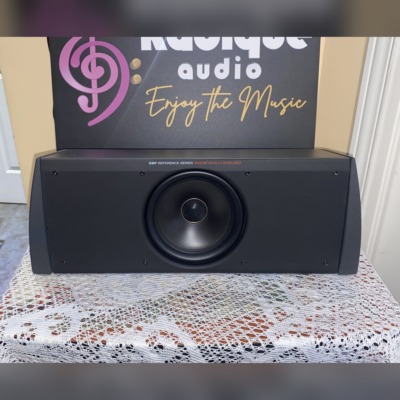 Refined British Center Speaker from KEF with Uni-Q Model 100$245.00Ships
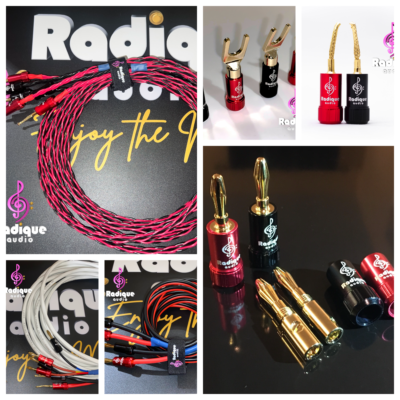
Whatever you end up with, it needs cable.
We hand-build speaker cable to your exact length and terminate it however you like: banana, spade, pin or bare wire. Tell us the run and the ends, and it ships ready to plug in.
Build a set to length →The three-way EC35 in the uncommon Cherry finish, four transducers and a genuine bi-amp panel.
What it is
Most center channel speakers are two-way designs with a tweeter wedged between a pair of woofers, and they spend their lives doing the hardest job in the system with the fewest resources. Dialogue sits squarely in the midrange, and a two-way center asks its woofers to cover that midrange while also producing the bass — which is why so many of them turn muddy the moment an action scene starts underneath the talking.
The EC35 is the three-way answer to that. It carries four transducers: two 5.25-inch PolyPlas woofers, a dedicated 3-inch PolyPlas midrange, and a three-quarter-inch titanium-laminate dome tweeter. The crossover hands off at 800 Hz and again at 3.2 kHz, which means the voice band belongs to one driver that is doing nothing else. With the high, mid and low frequencies properly isolated, each transducer works a narrower range and works it more accurately. That is the whole argument for a three-way center, and it is audible on exactly the material that defeats lesser ones.
The JBL engineering
The PolyPlas cones are JBL’s patented material — a layer of viscous polymer over a corrugated cellulose base, stiff enough for clean bass and internally damped enough to keep the midrange free of ringing.
Above them the titanium-laminate dome sits in an Elliptical Oblate Spheroidal waveguide, JBL’s method of controlling how the treble spreads across a room. On a center channel that matters more than anywhere else, because the seat that matters is rarely the one directly in front of it. The waveguide is what keeps dialogue intelligible from the end of the sofa.
Between them is JBL’s Straight-Line Signal Path network, a deliberately simple crossover built on the principle that the less circuitry the signal passes through, the more of it survives to the drivers. The cabinet is ported with JBL’s FreeFlow flared design, which reduces the chuffing that plagues straight-cut ports when the bass gets demanding, and it is lock-mitred rather than butt-jointed.
The connection panel
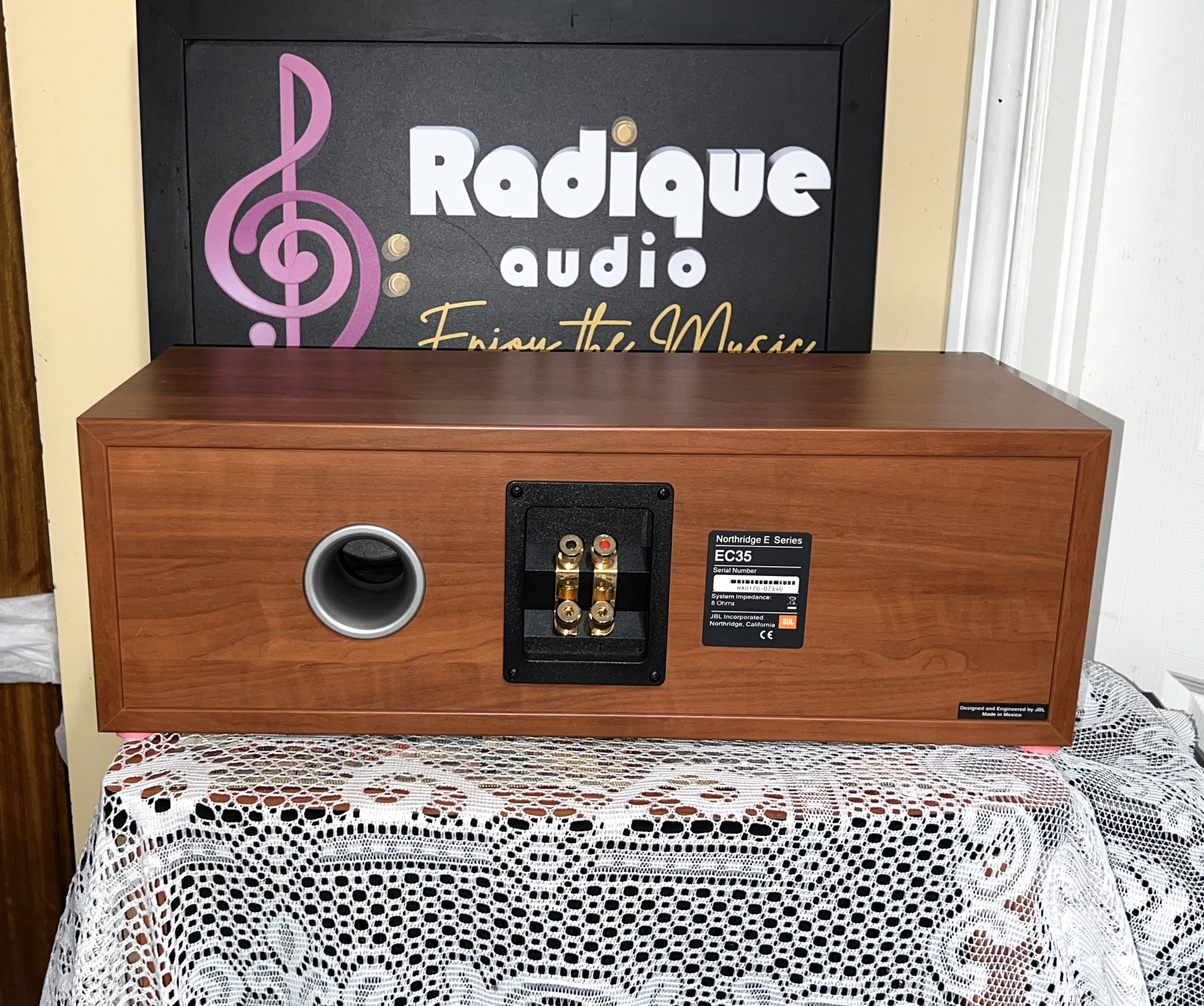
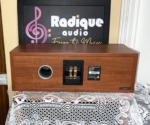
This is the part people miss. The EC35 carries dual sets of gold-plated five-way binding posts — four posts rather than two, joined by removable jumpers. That is a real bi-wire and bi-amp capable panel on a center channel, which is uncommon at any price and close to unheard of at this one. Run it conventionally with the jumpers in place, and the option is waiting whenever you want it. The posts take bare wire, spades or bananas.
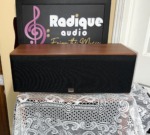
It is magnetically shielded, so it will sit on or beside a television without complaint, and the grilles are removable.
The finish
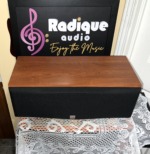
JBL offered the Northridge E Series in three finishes — Black Ash, Beech and Cherry. Almost every one you find is Black Ash. This is the Cherry, a warm red-brown that reads as furniture rather than as home theatre equipment, and it is much the least common of the three on the used market.
It is worth knowing that it is a very close match for Paradigm’s Light Cherry. If you are running cherry-finished towers and have spent any time looking for a center channel that does not clash with them, that search is a familiar kind of misery, and this is the sort of thing that ends it.
Condition
Very good. The cabinet presents well and the speaker is working properly.
The three-way center for people who have worked out that the center channel is doing most of the work.
Available for pickup in Kanata, or shipped across Canada and internationally — we have sent equipment to fifteen countries in the past year, each piece packed in-house in 275 lb test double-wall boxes. Live shipping rates for your address are calculated at checkout. Backed by Radique Audio’s Bumper-to-Bumper Warranty and our Perpetual Trade-Back Program. Available for audition by appointment in Kanata.
JBL Northridge EC35 Specifications
- Design: 3-way, 4-driver center channel, magnetically shielded
- Low-frequency drivers: two 133 mm (5.25 in) PolyPlas cones
- Midrange driver: 76 mm (3 in) PolyPlas cone
- High-frequency driver: 19 mm (3/4 in) titanium-laminate dome with EOS waveguide
- Crossover: Straight-Line Signal Path network at 800 Hz and 3.2 kHz
- Port: FreeFlow flared
- Frequency response: to 75 Hz (-3 dB)
- Sensitivity: 91 dB
- Impedance: 8 ohms
- Power handling: 75 watts continuous, 300 watts peak
- Maximum recommended amplifier power: 150 watts
- Terminals: dual sets of gold-plated 5-way binding posts, bi-wire and bi-amp capable
- Cabinet: lock-mitred, removable grille
- Finish: Cherry (one of three offered: Black Ash, Beech, Cherry)
- Dimensions: (Width x Height x Depth) 22 x 7.3 x 10.4 inches (558 x 185 x 264 mm)
- Weight: 22 lbs (10 kg)
🔌 Speaker Cable, Bi-Wiring and Connectors
The dual posts here take bare wire, spades, pins or bananas, and they mean you can bi-wire or bi-amp if you ever want to. Our bi-wire speaker bridges replace the factory straps with something considerably better made. We hand-build speaker cable here in any length you need on our Custom Speaker Cable Builder, terminated with our own gold-plated banana plugs or spade connectors. 👉
✅ Buy With Confidence — The Radique Promise
Backed by Radique Audio’s Bumper-to-Bumper Warranty and our Perpetual Trade-Back Program. When you’re ready to move on, we’ll take it back. That’s the Radique difference.
📦 Watch how we protect your gear — our unboxing video.
📺 Curious about our business? Check out our YouTube channel for behind-the-scenes videos and more!
📞 Questions? Use the Ask a Question button above, or call us at 613-416-9995.
| Weight | 24 lbs |
|---|---|
| Dimensions | 14.4 × 26 × 11.3 in |
| Impedance | 8 Ω |
| Power Handling | 51–100 W |
| Sensitivity | 90–92 dB |
| Woofer Size | 5″ and under |
JBL was founded in Los Angeles in 1946 by loudspeaker engineer James B. Lansing, first as Lansing Sound, Inc., and the JBL name came into use in the 1950s. We carry JBL bookshelf speakers, towers, centre channels, subwoofers and portable speakers. We've had more than 75 JBL listings so far, covering more than 50 different models. Every used JBL here is inspected, tested and serviced as required, then photographed in-house and covered by our Bumper-to-Bumper Warranty and Perpetual Trade-Back Program. Don't see the model you want? Tell us on First Dibs and we'll email you when one arrives.
Our best-selling JBL models so far: the Link 10 portable speaker, then the Northridge EC25 and N Center centre channels, the E30 bookshelf speakers and the vintage L46.
The JBL story, 1946 to today
James B. Lansing, who had been vice-president of engineering at Altec Lansing, set up Lansing Sound in Los Angeles in 1946. Its first product was the D101 15-inch woofer, and the D130 followed in 1948. Altec objected to the Lansing name, so the company became James B. Lansing Sound, and later simply JBL.
After Lansing. Lansing died in 1949, and William H. Thomas took the company over and cleared its debts. JBL drivers went into Fender guitar amplifiers, the Paragon stereo cabinet of the late 1950s and, through Capitol Records, recording studios.
Harman. In 1969 Sidney Harman's Jervis Corporation bought JBL, and the L100 bookshelf speaker followed in 1970. Harman calls it the best-selling speaker system of the decade. Harman sold JBL to Beatrice Foods in 1977 and bought it back in 1980.
Today. JBL is part of HARMAN, which Samsung Electronics has owned since 2017, and it marked its 80th anniversary in 2026. Harman's acoustic research was long led by Floyd Toole, who came to Harman from Canada's National Research Council here in Ottawa.
Which JBL is which?
Classic L series (1970s to 1980s): the L100 of 1970 and its successors, and two-ways such as the L46 of 1982, with its 8-inch 117H woofer.
Studio monitors: the 4310 of 1968, and the 4311 and 4312.
HLS series (late 1990s): such as the HLS610 and the HLS Center, with polycarbonate dome tweeters on horns.
Northridge N series (about 1999 to 2003): the N24, N26, N28 and N38, the N Center and their II versions, with titanium-laminate tweeters.
Northridge E series (2003 to 2005): from the E10 to the E100, the EC25 and EC35 centres and the E150P and E250P powered subwoofers. JBL's support pages say the E30, EC25 and E150P were made in Mexico.
Portables and today's ranges: the Link 10 and other Link speakers of 2017, the Stage series, and the L100 Classic of 2018.
Buying used JBL: what to check
Foam surrounds. A factory-authorized service centre says older JBL foam surrounds dry-rot, faster in humid climates, causing weak bass and buzzing. Repair shops add that JBL woofers have a tight voice-coil gap, so re-foaming needs care.
Tweeters. Play every tweeter. Owners report dead tweeters on 2000s Northridge models, and some original replacement tweeters are no longer available.
Crossovers. On older models, ageing crossover capacitors can dull the treble.
Link portables. Run a Link 10 on its battery to see how much capacity is left. JBL rated it at about five hours when new.
Fakes. JBL warns about counterfeit portables. A genuine one has a flush power button and an embedded grille logo.
Everything we list is inspected, tested and serviced as required here, and comes with our warranty.
You may also like…
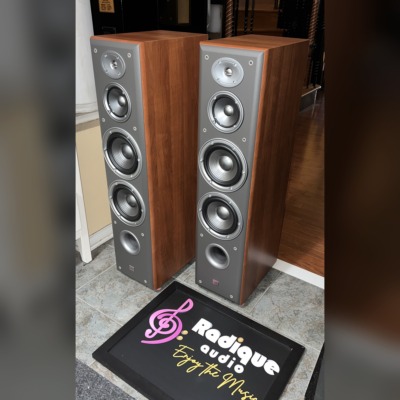
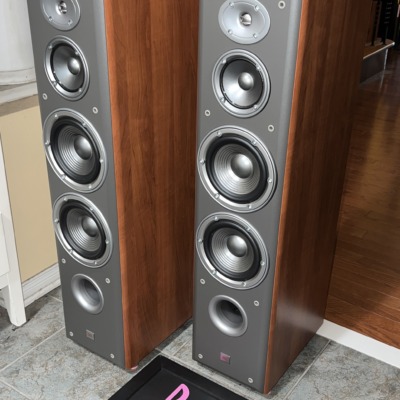
JBL Northridge E80 3-Way Towers – Cherry, Bi-Wirable, Pair
A four-driver JBL tower in the Cherry finish, with a genuine bi-amp panel.
✔️ Condition: Very Good — cabinets present well, working properly
✔️ Covered by Radique Warranty
✔️ Includes Perpetual Trade-Back Program eligibility
✔️ Expertly packed for safe shipping
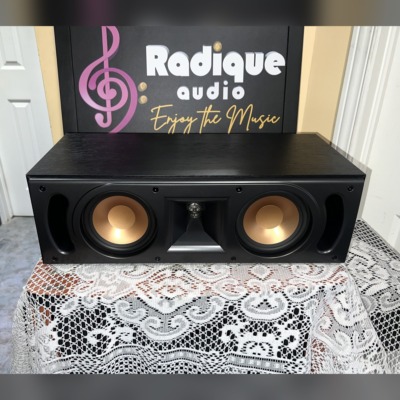

Klipsch RC-500 Center Channel Speaker 500 Watt Peak! – Black Ash
Ninety-six decibels from a Tractrix horn over a 1-inch titanium compression driver, with dual 5.25-inch Cerametallic woofers in a 2.5-way Tapered Array that stops the two woofers interfering off-axis. 67 Hz to 23 kHz, 125 watts RMS and 500 peak. Both ports fire forward, so it will sit in a cabinet. Black ash, grille included. Condition very good.
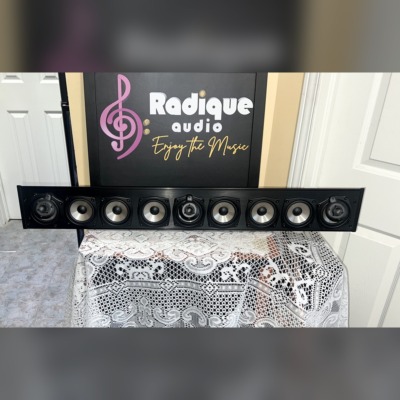
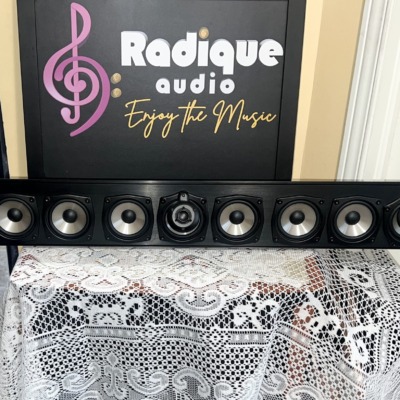
Mirage Uni-Theater 3-in-1 LCR Speaker – Omnipolar – Glass Stand
One aluminum cabinet holding three acoustically isolated channels — each with a 3/4-inch titanium hybrid dome in Mirage's Omniguide module, a 3-inch woofer and two 3-inch passive radiators. The left and right modules angle outward; the centre fires straight ahead. It is passive, so it needs an AVR with discrete L, C and R outputs. 36.5 inches wide, 19 lbs, with the original glass table stand and wall bracket.
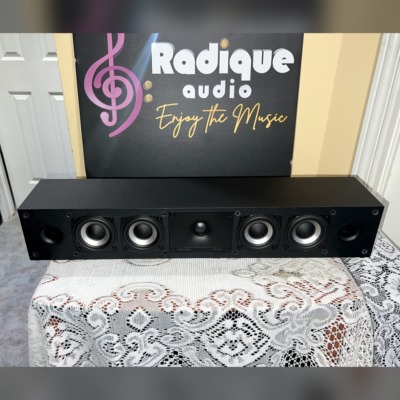

Polk Monitor XT35 Center Channel Speaker; Ultra-Low Profile
A one-inch Terylene dome tweeter with four three-inch bi-laminate paper woofers, front-ported, in a cabinet 24.4 inches wide and only 4.2 high — low enough to sit under a screen without covering it. Nickel-plated five-way binding posts, keyhole slots and a 1/4-20 threaded insert for wall mounting. Excellent condition, fully tested.
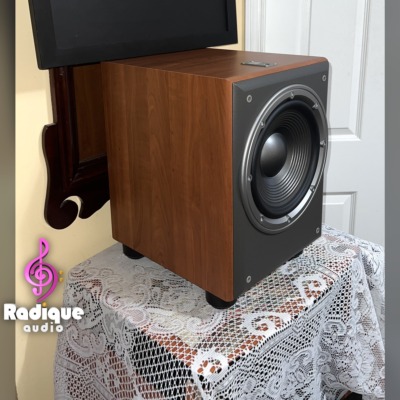
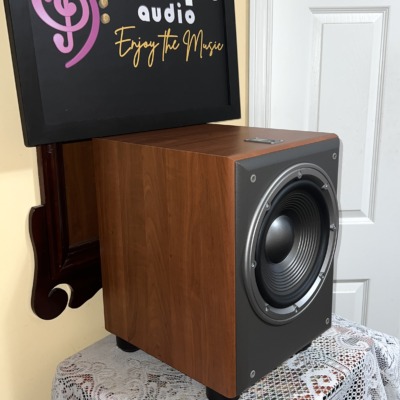
JBL Northridge E150P 10-Inch Powered Subwoofer – Cherry, 150W
A solidly built JBL powered ten, in the uncommon Cherry finish rather than the usual black.
✔️ Condition: Very Good — cabinet presents well, working properly
✔️ Covered by Radique Warranty
✔️ Includes Perpetual Trade-Back Program eligibility
✔️ Expertly packed for safe shipping
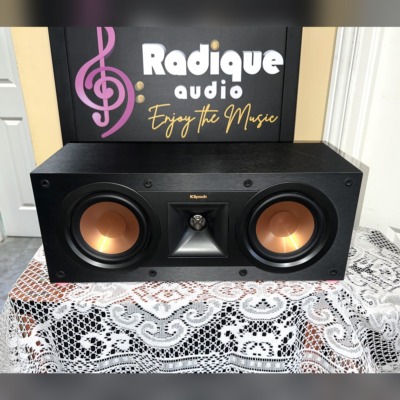
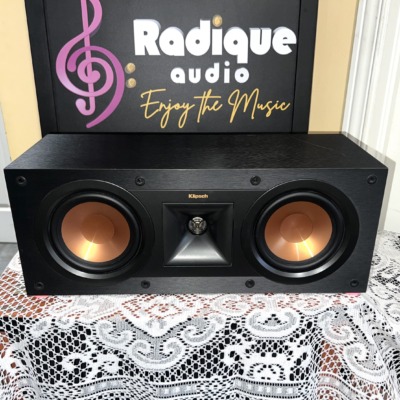


Highly Efficient Energy Center Channel Speaker AC-300
Two 5.5-inch carbon/mica polypropylene woofers either side of a 1-inch aluminum dome, all magnetically shielded — 93 dB sensitive, rated to 175 watts at 6 ohms, 40 Hz to 22 kHz. High gloss piano black with the full wrap-around sock still in good shape, dual 5-way binding posts for bi-wiring, 19.3 inches wide and 22 lbs. Cosmetics 8.5 out of 10.
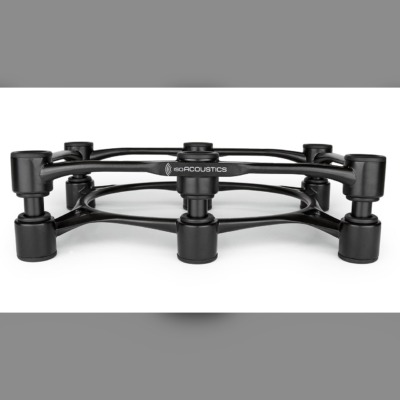

IsoAcoustics Aperta 300 Center Channel Isolation Stand
- ✔️ Genuine IsoAcoustics Aperta 300 center channel isolation stand, brand new in box
- ✔️ Single stand for center-channel speakers and similar applications up to 60 lbs (27.2 kg)
- ✔️ Available in Black or Silver with up to 6.5 degrees of tilt adjustment
- ✔️ Helps reduce cabinet resonance and improve clarity, focus, and dialogue intelligibility
- ✔️ Backed by a 2-year manufacturer's warranty in Canada
Related Products
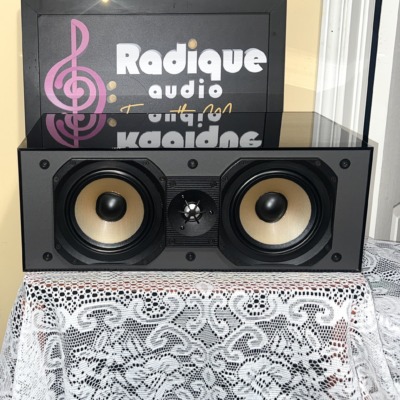
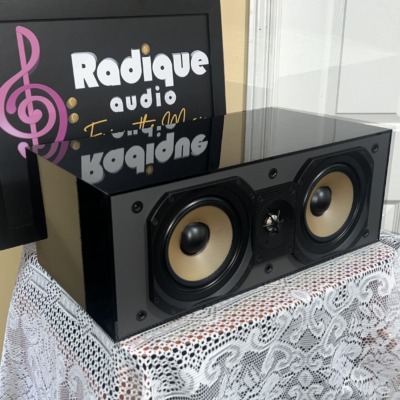
Paradigm Reference LCR-450 — Made in Canada, High Gloss Black
A Canadian-built Reference monitor in a high gloss black we have not had this model in before — the line of this era usually turns up in black, light cherry or dark rosenut. Sealed MTM design with Paradigm's pure-aluminium dome tweeter, and it works as a centre or as a left or right. Excellent, with its original box.
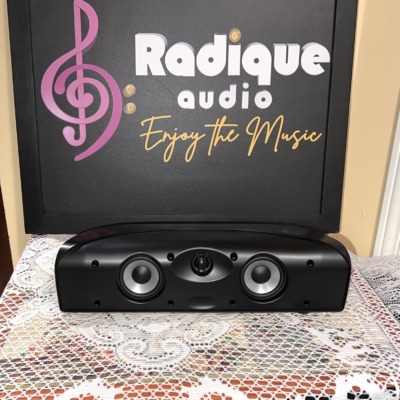
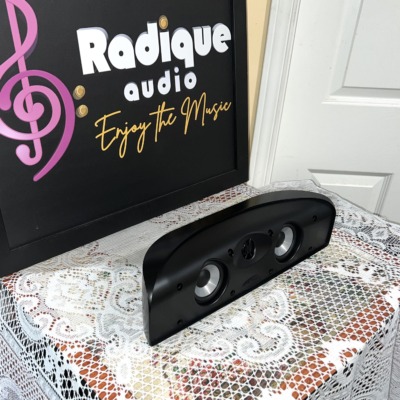
Polk Audio Blackstone TL1 Center Channel Speaker – Gloss Black
A slim, wall-mountable center channel from Polk Audio's Blackstone series, in very good condition, that gives movie dialogue the clarity and presence it deserves.
✔️ Very Good condition — cabinet, baffle and drivers present cleanly; grille included
✔️ Slim and wall-mountable — keyhole slots and a threaded insert on the back
✔️ Covered by Radique Warranty
✔️ Includes Perpetual Trade-Back Program eligibility
✔️ Expertly packed for safe shipping
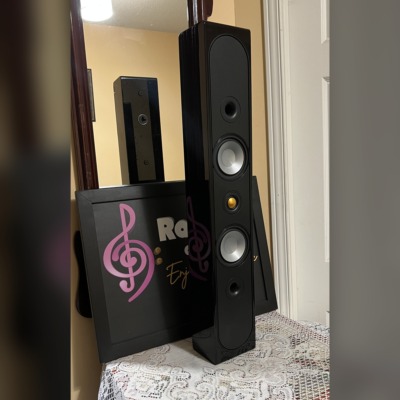
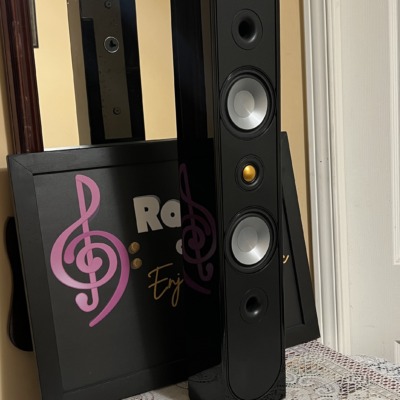
Monitor Audio Radius 250HD LCR Speaker – Gloss Black, Wall-Mount
A slim gloss black Monitor Audio speaker from the Radius HD range, in good condition, built to work as a left, center, right or rear speaker, standing upright, lying flat or hung on a wall.
✔️ Good condition — light scratches visible under bright light; grille included
✔️ One slim speaker for left, center, right or rear duty
✔️ Two rear keyhole slots; the matching wall bracket is listed separately
✔️ Covered by Radique Warranty
✔️ Includes Perpetual Trade-Back Program eligibility
✔️ Expertly packed for safe shipping
Monitor Audio Radius 250HD LCR Speakers, Pair – Gloss Black
A matched pair of slim gloss black Monitor Audio speakers from the Radius HD range, in good condition, each built to work as a left, center, right or rear speaker, standing upright, lying flat or hung on a wall.
✔️ Good condition — light scratches visible under bright light; grilles included
✔️ Two slim speakers for a stereo pair, left and right of a center, or a set of rears
✔️ Two rear keyhole slots on each; the matching wall bracket is listed separately
✔️ Covered by Radique Warranty
✔️ Includes Perpetual Trade-Back Program eligibility
✔️ Expertly packed for safe shipping
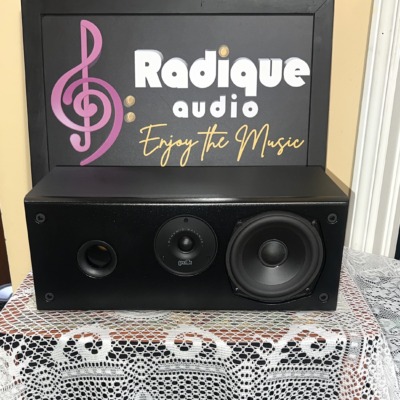
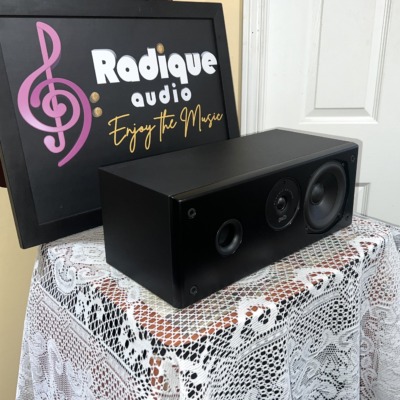
Polk Audio CS175 Center Channel Speaker – Front-Ported, Black
A Polk Audio CS175 two-way center channel speaker in black, a solidly built cabinet at nearly 14 pounds, with a front port and proper 5-way binding posts, fully tested on our bench and in very good condition.
✔️ Very good condition — free of significant marks, grille included
✔️ Front-ported two-way center with 5-way binding posts
✔️ Solidly built, at nearly 14 pounds
✔️ Covered by Radique Warranty
✔️ Includes Perpetual Trade-Back Program eligibility
✔️ Expertly packed for safe shipping
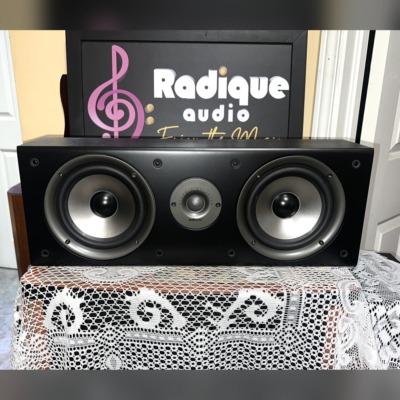
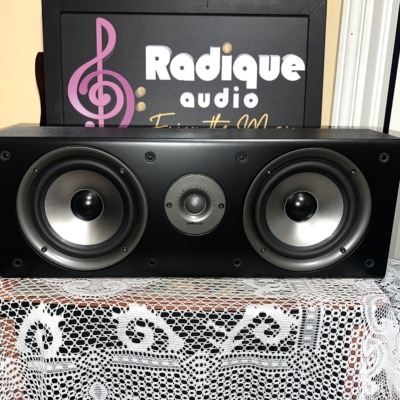
Polk CS2 Series II Center Channel Speaker – Dual 6.5″ Woofers
A Polk Audio Monitor CS2 Series II center channel speaker in black, with dual 6½-inch woofers for full-bodied, clear dialogue. It has been tested on our bench and is in very good condition.
✔️ Very good condition — black wood-grain, black cloth grille included
✔️ Dual 6½-inch Dynamic Balance woofers for clear, full-bodied dialogue
✔️ 90 dB, 8 ohms, magnetically shielded — tested on our bench
✔️ Covered by Radique Warranty
✔️ Includes Perpetual Trade-Back Program eligibility
✔️ Expertly packed for safe shipping
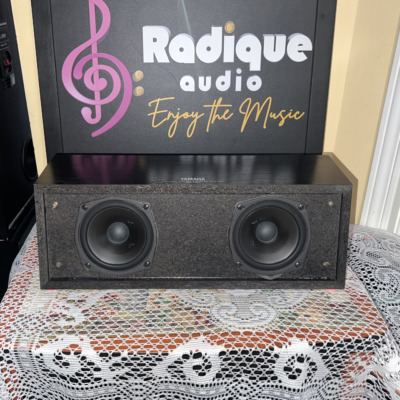
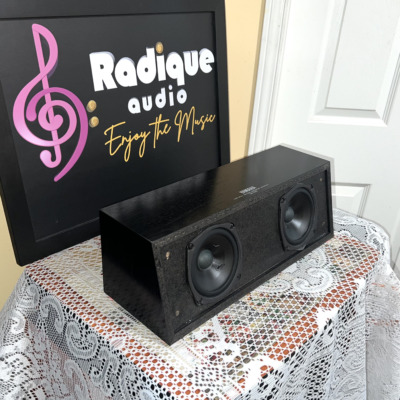
Yamaha NS-C90 Center Speaker – Dual-Angle Tilt, Made in Japan
The cabinet is asymmetrical on purpose: flip it over and it tilts the other way, aiming up at you from a low shelf or down at you from the top of a cabinet. Sealed rather than ported, so it needs no rear clearance. Two full-range drivers, nothing crossing in the vocal band. 6 ohms, 50 watts nominal. Built in Japan; very good condition.
