
Mirage 550 Towers — Made in Canada, Sealed 10-Inch, Walnut
$295.00
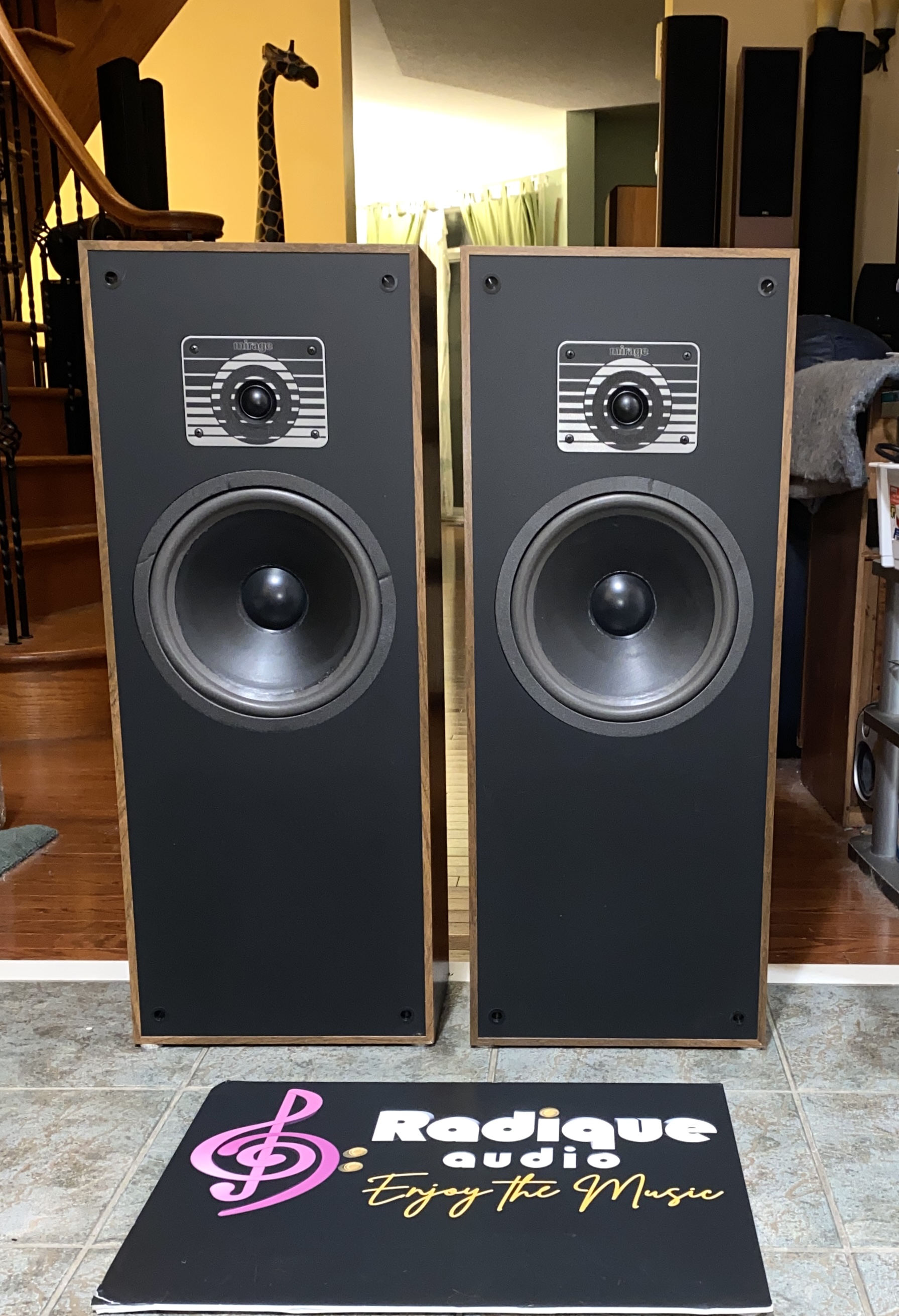
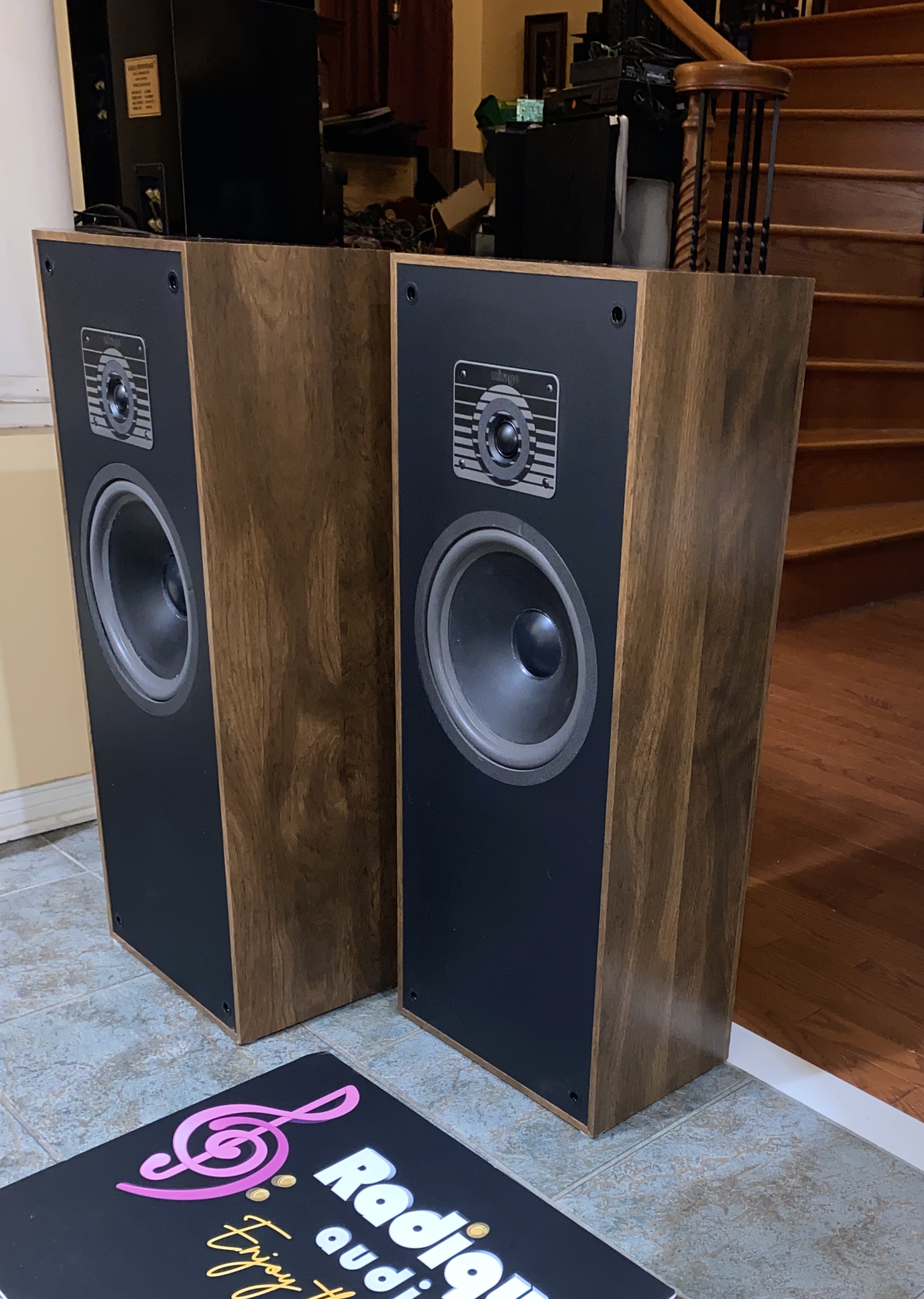
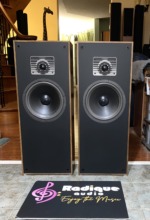
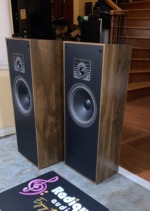
A sealed 10-inch two-way from Mirage’s first decade in Toronto, designed by Kevin Voecks before he left for Snell and then Revel. Acoustic suspension rather than a port, five-way binding posts, walnut woodgrain. Good condition and bench-tested here; 36 lbs each.
Out of stock
This one has sold. Want first dibs on the next one?
We take these in regularly. Leave your name and email, and we’ll email you the moment one is listed, so you hear first. No cost, no obligation.
Email me when one is listed
Whatever you end up with, it needs cable. Build a set to length →
Other towers we have in stock now
3 in stock · $295.00–$395.00 · all ship
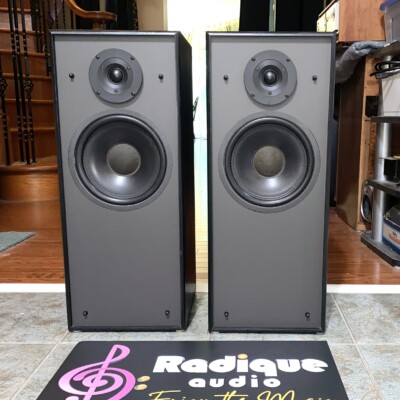 High-Fidelity Canadian Mirage Floorstanding Speakers 460$345.00Ships
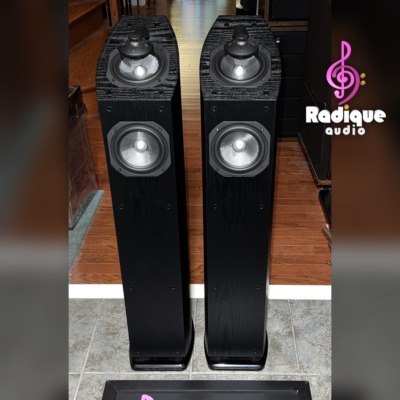 Mirage OMNI 350 Omnipolar Towers – Designed in Canada, Black Ash$395.00Ships
 Pioneer CS-G301Q 12" 3-Way Floor Speakers, Upgraded$295.00Ships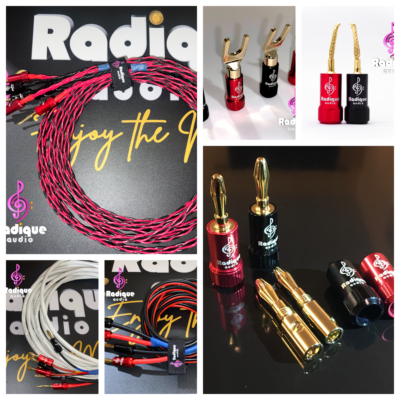
Whatever you end up with, it needs cable.
We hand-build speaker cable to your exact length and terminate it however you like: banana, spade, pin or bare wire. Tell us the run and the ends, and it ships ready to plug in.
Build a set to length →Mirage 550 Two-Way Floorstanding Loudspeakers — Made in Canada, 10-Inch Woofer, Sealed Acoustic Suspension Cabinet, Five-Way Binding Posts, Walnut Woodgrain, Pair
A Canadian-built vintage pair in walnut woodgrain, in good condition and bench-tested here.
Mirage of Toronto, and Kevin Voecks
Mirage was founded in Toronto in 1979, and the company’s first decade was spent doing one thing well: high-quality, affordable, conventional two-way boxes. That is exactly what the 550 is. The founding designer was Kevin Voecks, who sold his own American speaker company and moved to Toronto to take the job, and who went on from Mirage to Snell Acoustics and then to Revel — three of the most respected names in loudspeaker design, in that order. Robert Reina of Stereophile, looking back on the era, called Voecks “a genius, no ifs, ands, or buts.” He wrote that in a review of the Mirage 750, and in the same piece recommended the 350. The 550 sits between those two speakers in the same series. We will be straight about the limits of that: the praise was for its siblings, not for this model, and no review of the 550 itself appears to exist.
The Ten-Inch Two-Way
The architecture is the reason to want them. A ten-inch woofer in a two-way is a configuration that has almost vanished — modern towers use two or three small drivers to move the same air. One large cone moves that air with far less excursion, and the audible result is a bass that sounds unforced rather than worked-for. It also means the woofer is handling midrange up to the crossover, so voices come from a single source rather than being handed between drivers in the middle of the vocal range. That is the trade this design makes, and it is why speakers of this shape still have a following.
The Sealed Cabinet
These are sealed cabinets — acoustic suspension, no port. That matters in a practical way most spec sheets never explain. A sealed box rolls off gently at the bottom instead of falling off a cliff below a port’s tuning frequency, which is why a well-made sealed speaker often sounds like it goes deeper than its numbers suggest, and why the bass stops when the music stops rather than ringing on. It also makes them far easier to live with: without a port to excite the wall behind them, you can place these closer to a wall than a ported tower of the same size without the low end turning thick and boomy. In a real room, that is worth more than a specification.
Terminals
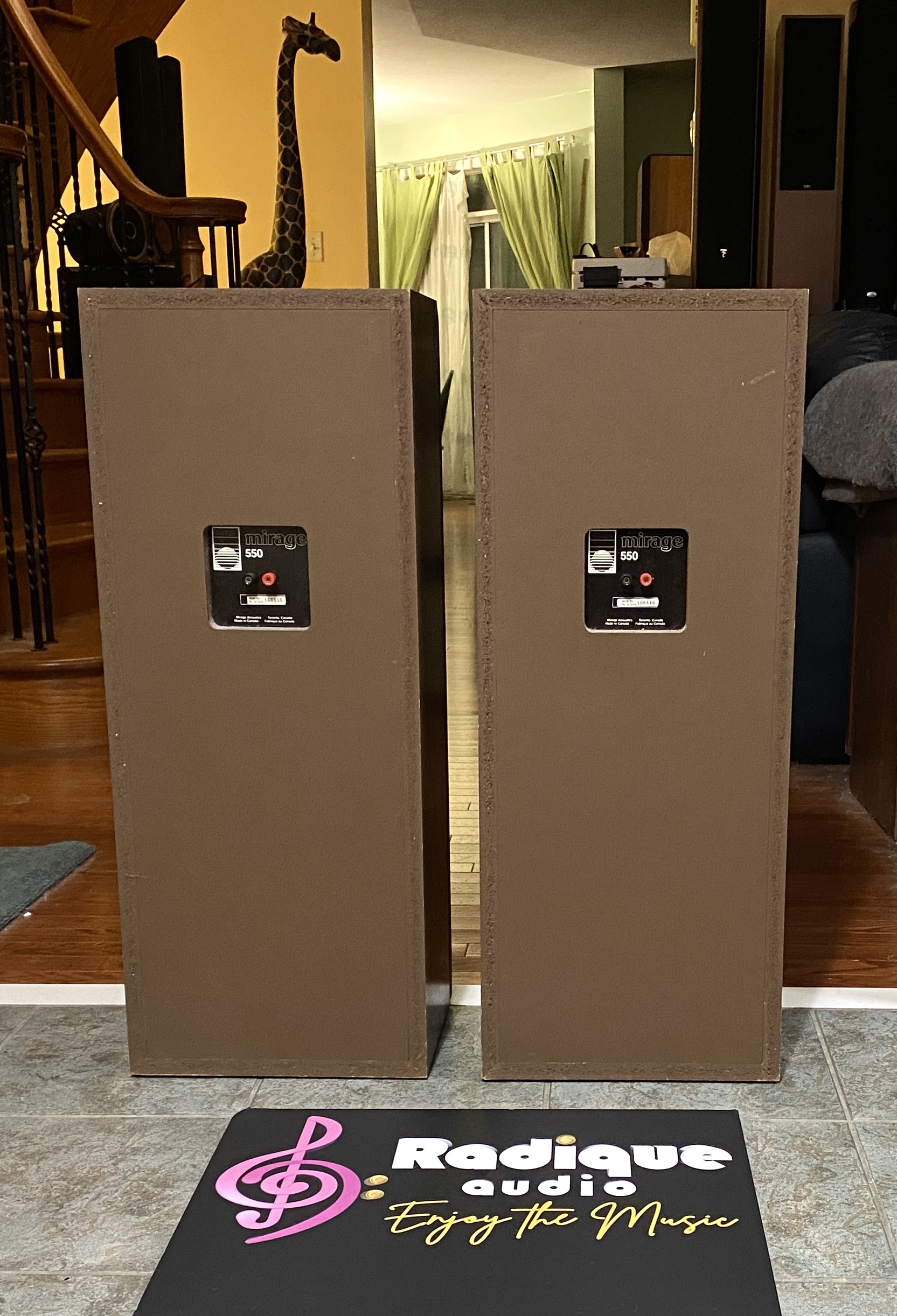
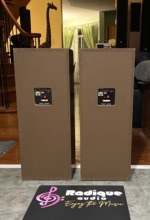
Around the back are five-way binding posts, which take banana plugs, spades or bare wire, and which were not a given at this price in the 1980s.
How This Series Was Built
Mirage’s own brochure for the 450 — the model directly below this one, and near enough identical in cabinet width and depth — is worth reading for what it says about how this series was built. The crossover is a Mirage design they called the Multi Time-Constant, which deliberately overlaps two different network types so the woofer and tweeter blend gently where they meet and roll off sharply only where distortion would start, rather than compromising on one or the other. The cabinets are internally cross-braced. Every speaker was run through a computer-driven test rig checking sixteen separate points before it was allowed to leave the factory, and Mirage backed them with a ten-year warranty when new. That is not marketing about how they sound — it is a description of how they were made, and it is the reason a set of these is still working forty years on.
Cabinets and Finish
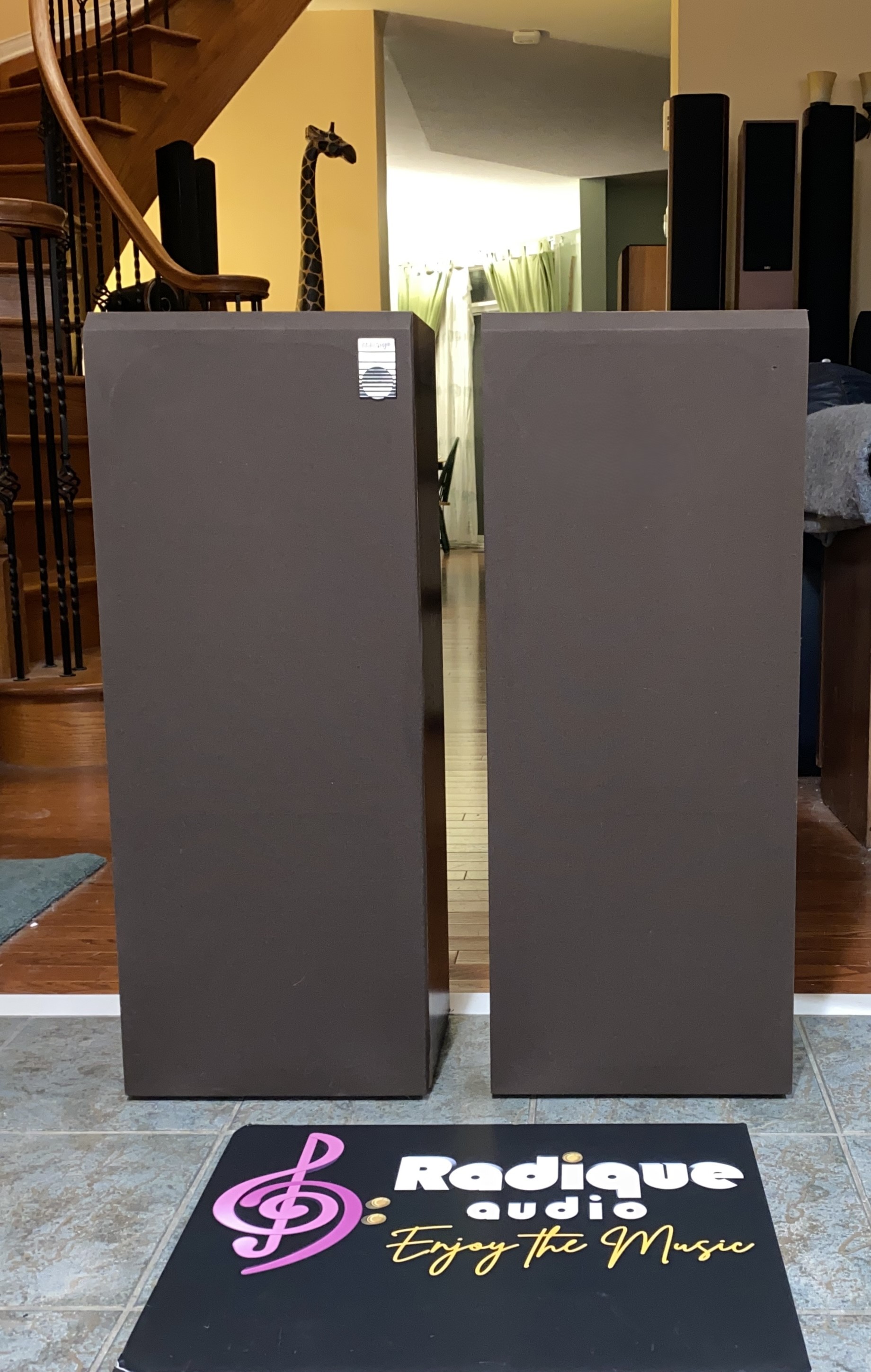
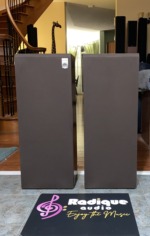
The cabinets measure 32 inches tall and only 9.25 inches deep — tall and shallow, in the manner of the whole series. The finish is walnut woodgrain laminate rather than real veneer, which is what these came with from the factory and what nearly all of them look like today. They look their age, and we would rather say so than let a photograph do the arguing. What they look like is honest 1980s Canadian hi-fi, and they sit naturally beside a silver-face receiver of the same era.
On the Specifications
A word on the specifications, because we would rather explain this than quietly paper over it. There is no factory specification sheet for the 550 to be found. Mirage’s literature for this series is scarce, the model does not appear in the usual buyer’s guides, and we are not going to invent numbers or borrow them from a different Mirage.
How We Arrived at the Figures
So we did the three things that were actually available to us. We measured the cabinets and the drivers ourselves. We listened to the speakers. And we checked what we heard against the factory data for the model directly below this one. The physical figures below are our own measurements. The performance figures — 35 Hz to 20 kHz, a recommended amplifier power range of 25 to 140 watts, and 91 dB efficiency — are our estimates, and they are labelled as estimates everywhere they appear.
The Reasoning, So You Can Weigh It
Here is the reasoning behind them, so you can weigh it yourself. Mirage rated the 450 at 90 dB and 15 to 120 watts, on an eight-inch woofer in a cabinet eight inches shorter than this one. Stepped ranges of this era almost always specified the larger models a little higher — more cone area, a bigger voice coil, and more cabinet behind it. The 550 sits a rung above the 450 on every one of those counts, so we have placed our estimates a step above its numbers rather than level with them. We have kept Mirage’s own way of putting it — a recommended amplifier range rather than a power-handling rating — because a range is honest guidance about what will drive them properly, and a single wattage figure would imply a measurement we have not made. If a factory document for the 550 ever surfaces and it disagrees with us, the document wins.
Condition and Service
Both cabinets grade good. They have been tested here to confirm the drivers and crossovers perform as designed, which is what every pair we sell goes through.
A big-woofer Canadian two-way from Mirage’s best years, built far better than it looks and priced accordingly.
Features
- Two-way design with a ten-inch woofer — a configuration modern towers have abandoned
- Sealed acoustic suspension cabinet — tight bass, and tolerant of a wall behind it
- 1.25-inch dome tweeter
- Five-way binding posts — banana plugs, spades or bare wire
- Drivers and cabinets measured here, not copied from a spec sheet
- Walnut woodgrain finish, factory original
- Built in Canada by Mirage of Toronto
- From the series designed under Kevin Voecks, later of Snell Acoustics and Revel
- 32-inch cabinets, shallow depth — easier to place than the height suggests
- Sold as a pair
Mirage 550 Two-Way Floorstanding Loudspeakers Specifications
- Model: Mirage 550
- Design: Two-way passive loudspeaker, sealed acoustic suspension enclosure
- Low Frequency Driver: 10-inch woofer (measured)
- High Frequency Driver: 1.25-inch dome tweeter (measured)
- Frequency Response: 35 Hz to 20 kHz (our estimate — see note above)
- Recommended Amplifier Power Range: 25 to 140 watts (our estimate)
- Sensitivity: 91 dB (our estimate)
- Terminals: Five-way binding posts
- Finish: Walnut woodgrain
- Country of Manufacture: Canada
- Condition: Good
- Dimensions (measured): (Width x Height x Depth) 12.5 x 32.0 x 9.25 inches (318 x 813 x 235 mm)
- Weight: 36 lbs (16.3 kg) each
🔌 Speaker Cable, Built on Our Own Bench
The speaker terminals here are five-way binding posts, so they take banana plugs or spade lugs and you have the run of the options. We hand-build speaker cable here in any length you need — choose the gauge and the terminations on our Custom Speaker Cable Builder. If you would rather terminate cable you already own, we make our own gold-plated banana plugs and spade connectors as well. 👉
✅ Buy With Confidence — The Radique Promise
Backed by Radique Audio’s Bumper-to-Bumper Warranty and our Perpetual Trade-Back Program. When you’re ready to move on, we’ll take it back. That’s the Radique difference.
📦 Watch how we protect your gear — our unboxing video.
📺 Curious about our business? Check out our YouTube channel for behind-the-scenes videos and more!
📞 Questions? Use the Ask a Question button above, or call us at 613-416-9995.
⭐ Don’t Just Take Our Word For It
Radique Audio holds over 600 customer ratings averaging 4.97 stars across six public platforms — Facebook Marketplace, Kijiji, Canuck Audio Mart, Google and others. Every rating lives somewhere we don’t control, so you can read the originals yourself, including the less flattering ones. See what our customers say. 👉
| Weight | 74 lbs |
|---|---|
| Dimensions | 24.5 × 16.5 × 36 in |
You may also like…
Related Products
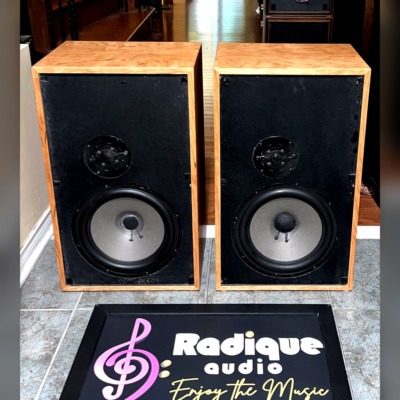
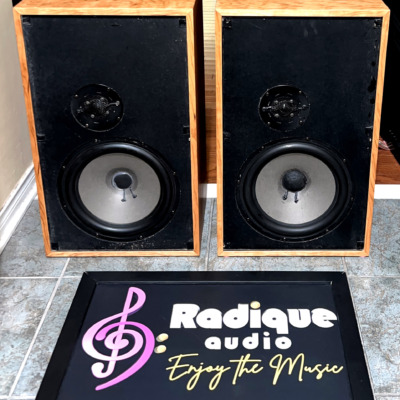
Dynaco A-35 Floor Standers — Ottawa Valley Cherry, Denmark
A pair of the famous Dynaco A-35 floor-standing loudspeakers, rebuilt in our shop with brand-new cabinets in genuine Ottawa Valley cherrywood veneer, expertly applied by hand, serviced, and fitted with upgraded five-way binding posts.
✔️ Condition: brand-new cabinets in Ottawa Valley cherry; grilles not included
✔️ Drivers through our service bench and performing as they should
✔️ Covered by Radique Warranty
✔️ Includes Perpetual Trade-Back Program eligibility
✔️ Expertly packed for safe shipping
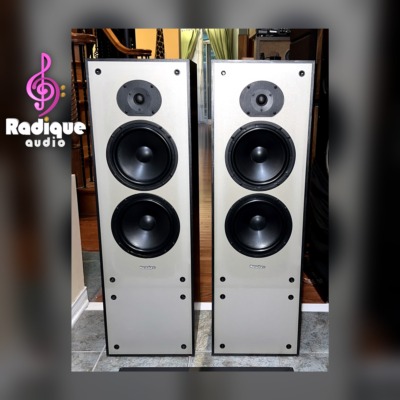
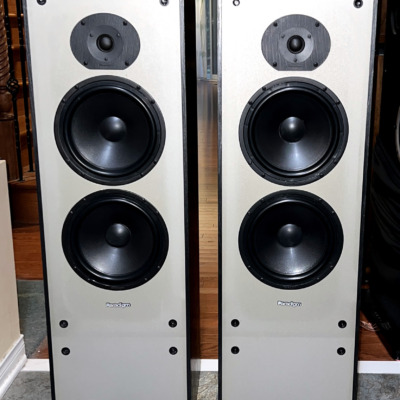
Paradigm 11se Mk II Towers, Pair — Dual 8″, Made in Canada
Built in Canada by Paradigm, and the largest speaker in the SE range — the one the rest of the series was working up to.
✔️ Condition: Good — cabinets touched up; repaired and working correctly
✔️ Covered by Radique Warranty
✔️ Includes Perpetual Trade-Back Program eligibility
✔️ Curbside delivery, local collection or freight within Canada
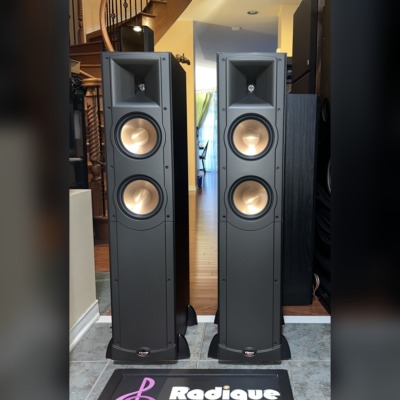
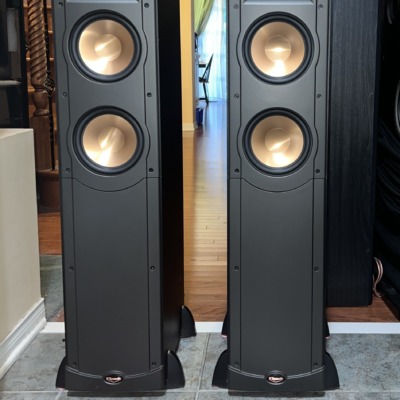
Klipsch RF-62 Reference IV Floorstanding Speakers, Pair — 97dB
The RF-62 is the tower that made Klipsch's Reference line the default answer for anyone who wanted a big, unforced sound without buying a big, expensive amplifier to get it.
✔️ Condition: Good — cabinets carry touched-up wear; drivers Very Good throughout
✔️ Covered by Radique Warranty
✔️ Includes Perpetual Trade-Back Program eligibility
✔️ Curbside delivery, local collection or freight within Canada
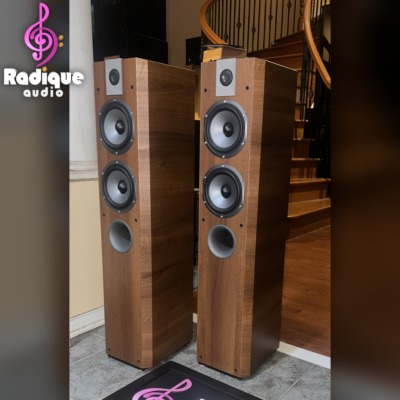
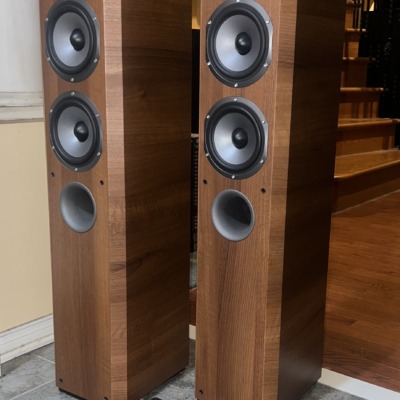
Focal Chorus 714V Floorstanders, Pair — Light Walnut, France
A pair of Focal Chorus 714V floorstanding loudspeakers in Light Walnut, made in France.
✔️ Condition: Very Good — thoroughly inspected and tested
✔️ Covered by Radique Warranty
✔️ Includes Perpetual Trade-Back Program eligibility
✔️ Expertly packed for safe shipping
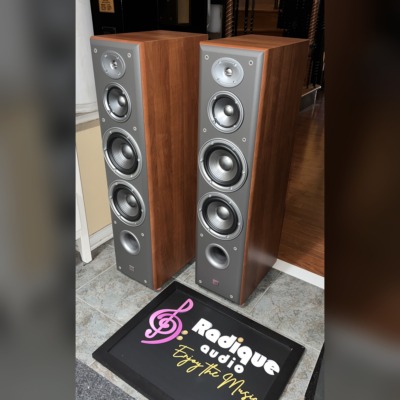
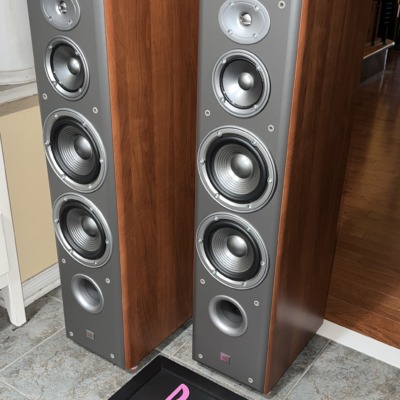
JBL Northridge E80 3-Way Towers – Cherry, Bi-Wirable, Pair
A four-driver JBL tower in the Cherry finish, with a genuine bi-amp panel.
✔️ Condition: Very Good — cabinets present well, working properly
✔️ Covered by Radique Warranty
✔️ Includes Perpetual Trade-Back Program eligibility
✔️ Expertly packed for safe shipping
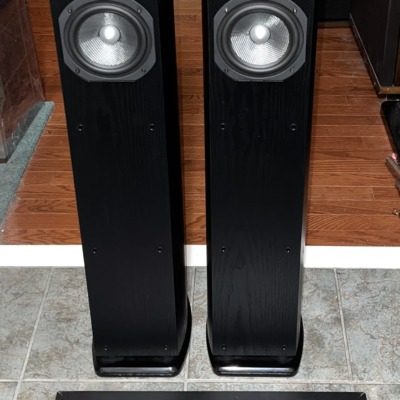
Mirage OMNI 350 Omnipolar Towers – Designed in Canada, Black Ash
A pair of slim Mirage towers built around the company's Omnipolar design, in very good condition, that fill a room with sound instead of aiming it at one chair.
✔️ Very Good condition — black ash cabinets, drivers and grilles present cleanly
✔️ Designed and engineered in Canada around Mirage's room-filling Omnipolar sound
✔️ Covered by Radique Warranty
✔️ Includes Perpetual Trade-Back Program eligibility
✔️ Expertly packed for safe shipping
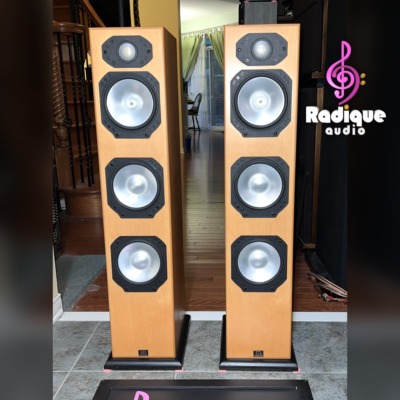
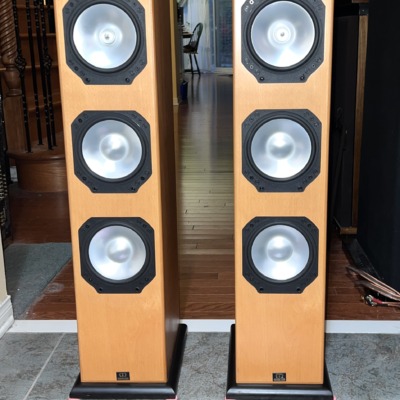
Monitor Audio Silver S8 Towers – Made in England, Warm Beech
A pair of three-way Monitor Audio towers from the Silver S range, in very good condition, with a metal driver in every position and a warm beech veneer that suits almost any room.
✔️ Very good condition — free of significant marks, in Warm Beech real wood veneer
✔️ Made in England, with Monitor Audio's C-CAM metal drivers throughout
✔️ Bi-wire and bi-amp ready — two pairs of 5-way binding posts per speaker
✔️ Covered by Radique Warranty
✔️ Includes Perpetual Trade-Back Program eligibility
✔️ Expertly packed for safe shipping
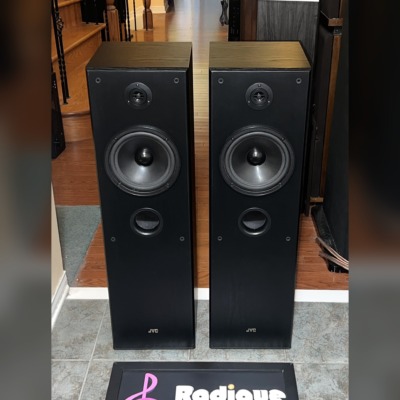
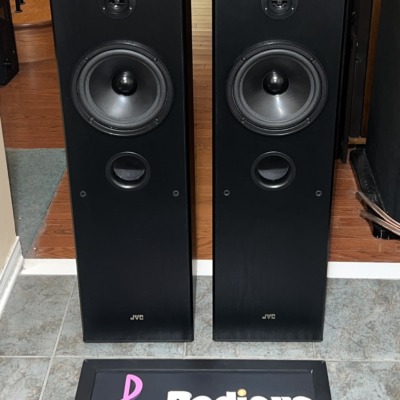
JVC Theatre Series SP-5500 Tower Speakers, Pair – 8-inch Woofers
A pair of JVC Theatre Series SP-5500 two-way tower speakers in black woodgrain, with front-ported bass-reflex cabinets, tested on our bench and in very good condition.
✔️ Very good condition — free of significant marks, grilles included
✔️ 8-inch woofers in front-ported Theatre Series towers
✔️ Built-in circuit breaker protects the tweeters
✔️ Covered by Radique Warranty
✔️ Includes Perpetual Trade-Back Program eligibility
✔️ Expertly packed for safe shipping
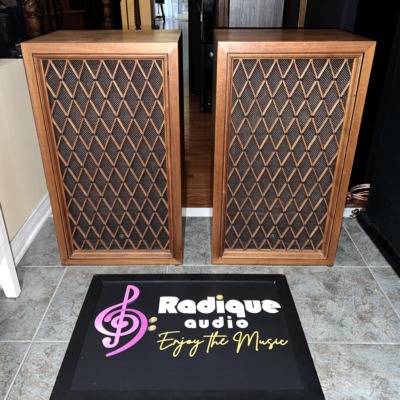
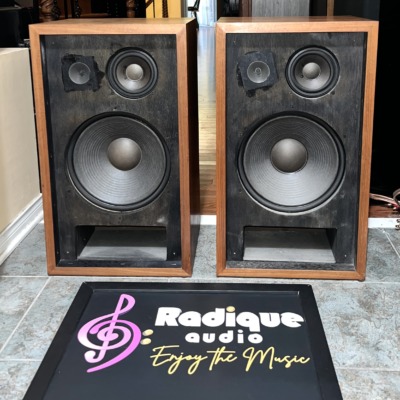
Vintage Pioneer CS-77 12″ 3-Way Speakers, Pair – Made in Japan
A pair of late-1960s Pioneer CS-77 three-way speakers, made in Japan, in walnut veneer cabinets with their wooden diamond-lattice grilles. Their High Level controls have been freshly serviced, they have been tested on our bench, and they are in good condition.
✔️ Good condition — walnut veneer, wooden lattice grilles included
✔️ High Level controls freshly serviced, tested on our bench
✔️ 12-inch woofer, three-way design — made in Japan, late 1960s
✔️ Covered by Radique Warranty
✔️ Includes Perpetual Trade-Back Program eligibility
✔️ Expertly packed for safe shipping
